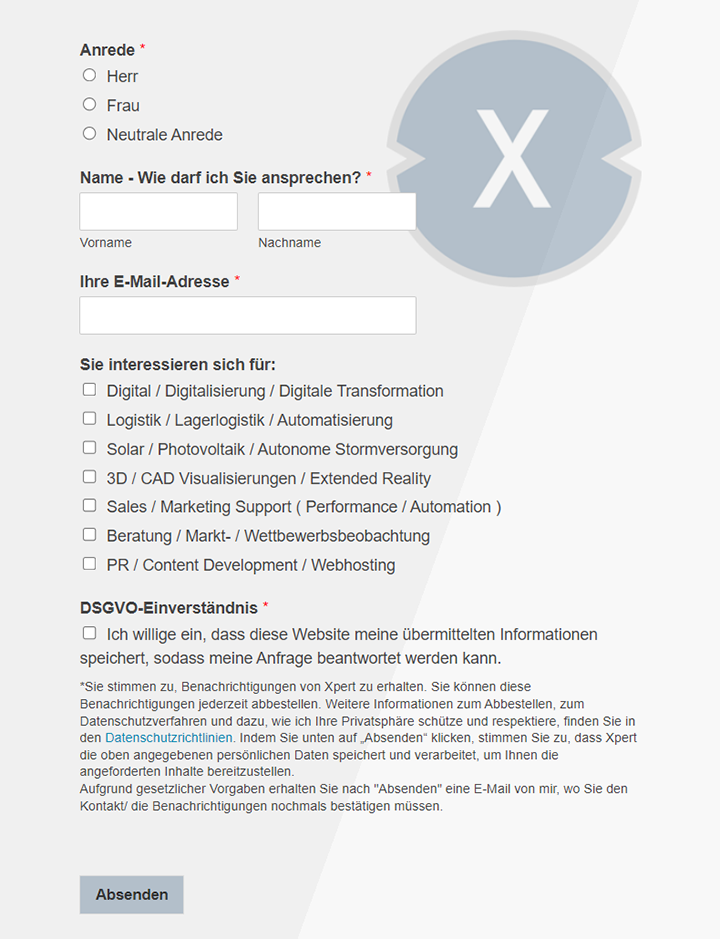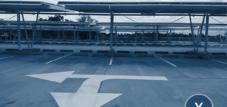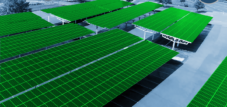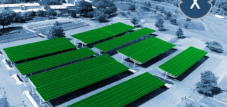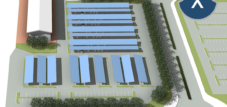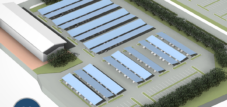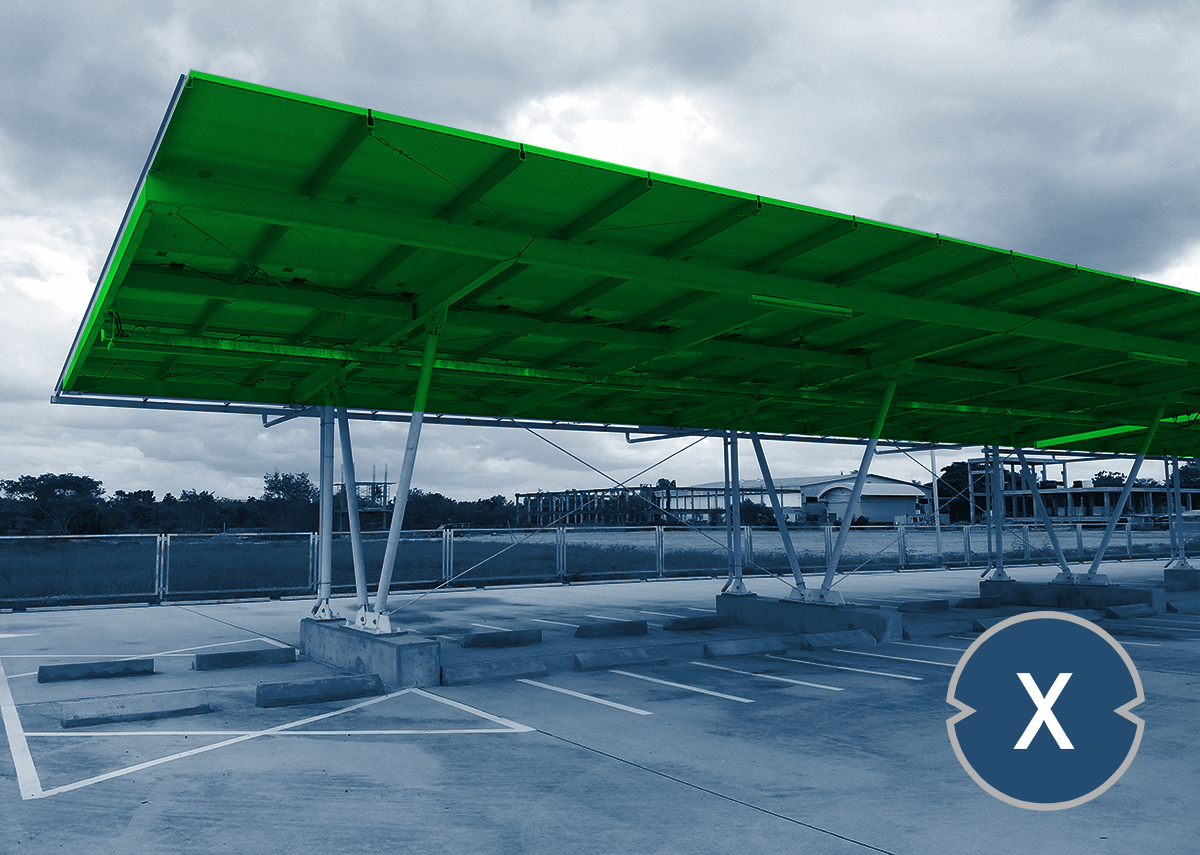
Solar carport parking lot for companies or shopping centers – Image: Xpert.Digital / PATSUDA PARAMEE|Shutterstock.com
Solar Vanguard – The solar pioneer into a new energy world
For many, it's nothing special and commonplace, and many remember it from their childhood: the fascinating celestial bodies "satellites" and their far-reaching solar cell antennas. In an online survey, many associated photovoltaics with rooftop solar panels, solar parks, or ground-mounted PV systems, but no one mentioned space-based solar energy. In 1958, the first satellite, Vanguard I, was launched with solar cells for power generation. It was the first professional use of a photovoltaic system and simultaneously the starting point for an impressive technological development. Oil, coal, and nuclear power were the main sources of energy production at that time.
📣 Parking lot solar solutions for industry, retail and municipalities
Everything from a single source, specifically designed for solar solutions for large parking areas. Refinance or offset your future costs with your own electricity generation.
🎯 For solar installers, plumbers, electricians and roofers
Consultation and planning including a non-binding cost estimate. We connect you with strong partners in photovoltaics.
👨🏻 👩🏻 👴🏻 👵🏻 For private households
We have a regional presence throughout the German-speaking world. We have reliable partners who will advise you and implement your wishes.
At the time, no one could have even remotely imagined that this solar cell technology would one day revolutionize energy supply. But now it has. With solar carports and solar facades, the technology and its applications have further developed.
Related to this:
In addition to mandatory solar installations and EU directives, many are now working to accelerate the transition from fossil fuel energy production to solar energy generation. Currently, electromobility is a key focus, as mobility in general is one of the main drivers of CO2 emissions, which must now be reduced for the sake of the environment, humanity, and the Earth, and minimized to a minimum within the next 20-30 years, at least in Europe. CO2 is detrimental to the climate. As a greenhouse gas, it prevents heat from escaping from the Earth into space. This causes the Earth to heat up more and more.
Related to this:
- Balcony solar: 600W balcony power plant with storage as a balcony solar system
- Plug-in solar device: the solar system for balconies and gardens, especially interesting for permanent campers
Photovoltaics also makes it possible to take the step towards decentralized, autonomous power supply. Everyone has the opportunity to produce their own electricity at a comparatively lower price, without dependence on third parties. This was not possible with coal-fired power plants and nuclear energy.
It also concerns the higher costs that will accompany environmental protection regulations, peak electricity demand (infrastructure and grid stability) and CO2 balance in the future.
The CO2 balance, also called greenhouse gas balance or CO2 footprint, will gain more decisive influence in the future if it is subject to tax and cost-related surcharges in the CO2 labeling of goods and services.
Related to this:
This means that anyone who doesn't participate in their own autonomous power supply but continues to rely on external fossil fuel and nuclear energy technologies must expect to pay a CO2 surcharge (CO2 footprint) in the future, which represents a significant competitive disadvantage compared to others. Products that are more expensive than those of the competition are not viable in the long run. Therefore, it's no coincidence that companies like Amazon started expanding their autonomous power supply early on.
Vanguard I - The first professional use of photovoltaics
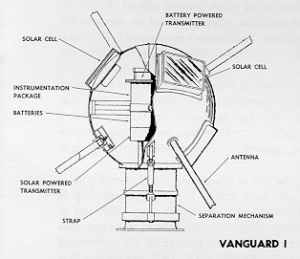
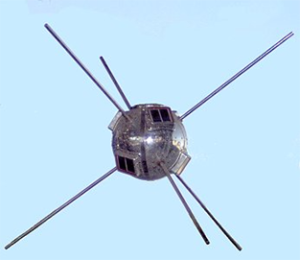
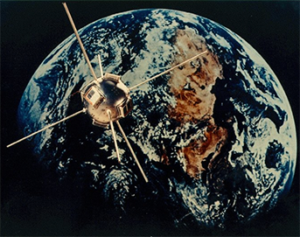
On March 17, 1958, the second US satellite, Vanguard I, was launched into space, powered by a chemical battery and photovoltaic cells to operate a transmitter. After much hesitation on the part of the US military, Hans Ziegler (1911–1999) had prevailed with his idea that a solar power supply would ensure the transmitter's operation for longer than batteries. Contrary to the military's expectations, the transmitter's signals could be received until May 1964, before it ceased transmission.
The success of this small satellite and the scientists involved laid the foundation for the first practical application of solar cells, which were previously almost unknown and, above all, very expensive. For many years afterward, solar cells were further developed primarily for space applications, as they proved to be an ideal power source for satellites and space probes even as far as Mars. The resulting long operating times for spacecraft, compared to battery power, far outweighed the still high price of solar cells per kilowatt-hour. Furthermore, solar cells were and are cheaper and less risky than radioisotope thermoelectric generators, which allow for similarly long operating times. Most spacecraft were and are therefore equipped with solar cells for power supply.
In 2008, high-efficiency solar cells supplied several kilowatts of power to communications satellites with over 30 transponders, each with a transmission power of approximately 150 watts, or even provided the propulsion energy for the ion thrusters of space probes. The Juno space probe, launched in August 2011, is the first spacecraft to draw its energy from particularly efficient and radiation-resistant solar cells while orbiting Jupiter. Almost all of the world's approximately 1,000 satellites currently in operation are powered by photovoltaics. In space, a power output of 220 watts per square meter is achieved.
Photovoltaics - Installed capacity in Germany
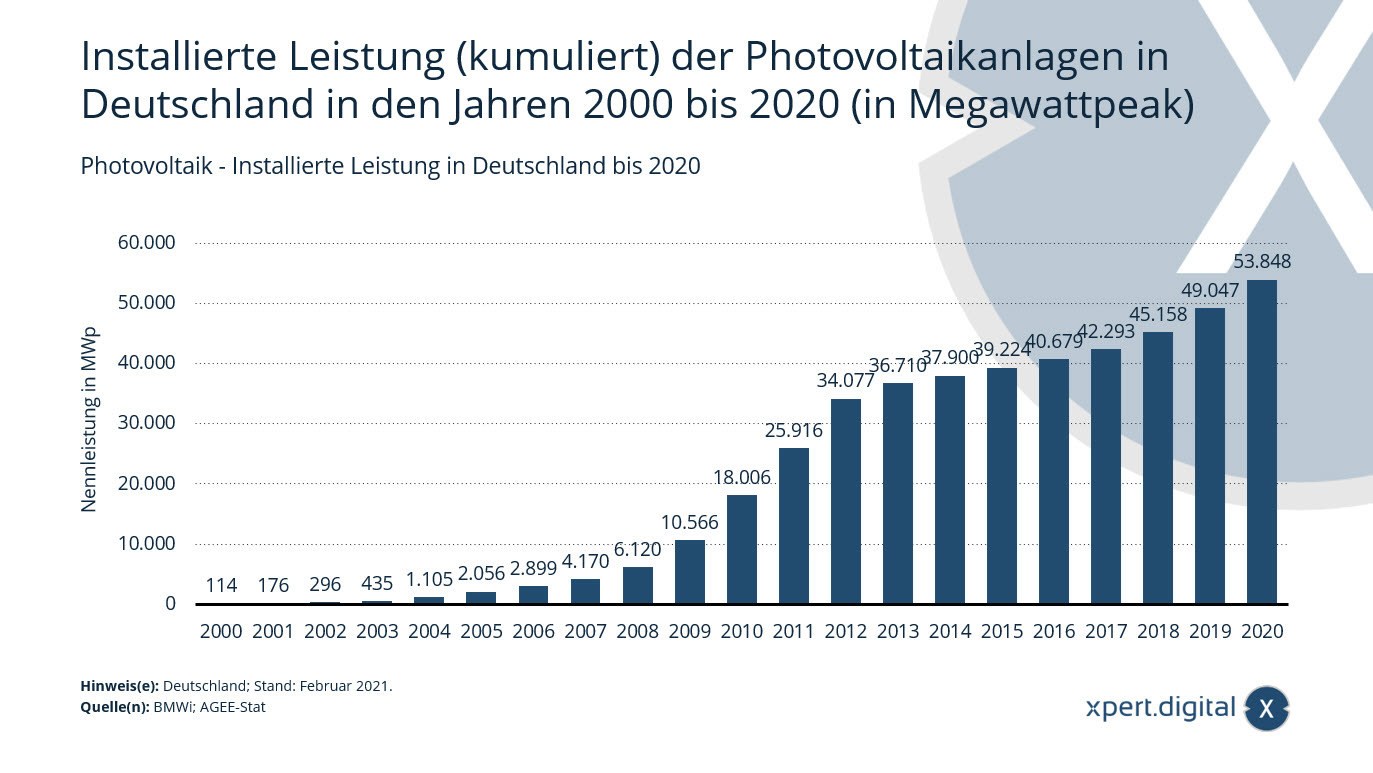
Photovoltaics – Installed capacity in Germany – Image: Xpert.Digital
The cumulative electrical output of all grid-connected photovoltaic systems in Germany amounted to approximately 54 gigawatts peak in 2020. Bavaria is by far the federal state with the most installed capacity, followed by Baden-Württemberg and North Rhine-Westphalia. The city-states of Bremen, Hamburg, and Berlin have the lowest nominal output of their photovoltaic systems.
Photovoltaics
The conversion of light energy into electrical energy using solar cells describes electricity generation by photovoltaic systems. In Germany, the installed capacity of photovoltaic systems is steadily increasing. This trend is also evident globally: approximately a quarter of the world's total installed capacity is located in China. The USA, Japan, and Germany follow, with significantly less installed photovoltaic capacity in comparison.
Renewable energy
Besides photovoltaic systems, hydropower is another example of a renewable energy source. Unlike fossil fuels, it is renewable. In Germany, wind energy is particularly important. Compared to other European countries, Germany has the highest electricity generation from wind power. The United Kingdom and Spain follow at a considerable distance.
Installed (cumulative) capacity of photovoltaic systems in Germany from 2000 to 2020
- 2000: 114 megawatts
- 2001: 176 megawatts
- 2002: 296 megawatts
- 2003: 435 megawatts
- 2004: 1,105 megawatts
- 2005: 2,056 megawatts
- 2006: 2,899 megawatts
- 2007: 4,170 megawatts
- 2008: 6,120 megawatts
- 2009: 10,566 megawatts
- 2010: 18,006 megawatts
- 2011: 25,916 megawatts
- 2012: 34,077 megawatts
- 2013: 36,710 megawatts
- 2014: 37,900 megawatts
- 2015: 39,224 megawatts
- 2016: 40,679 megawatts
- 2017: 42,293 megawatts
- 2018: 45,158 megawatts
- 2019: 49,047 megawatts
- 2020: 53,848 megawatts
Photovoltaics - share of electricity generation in Germany
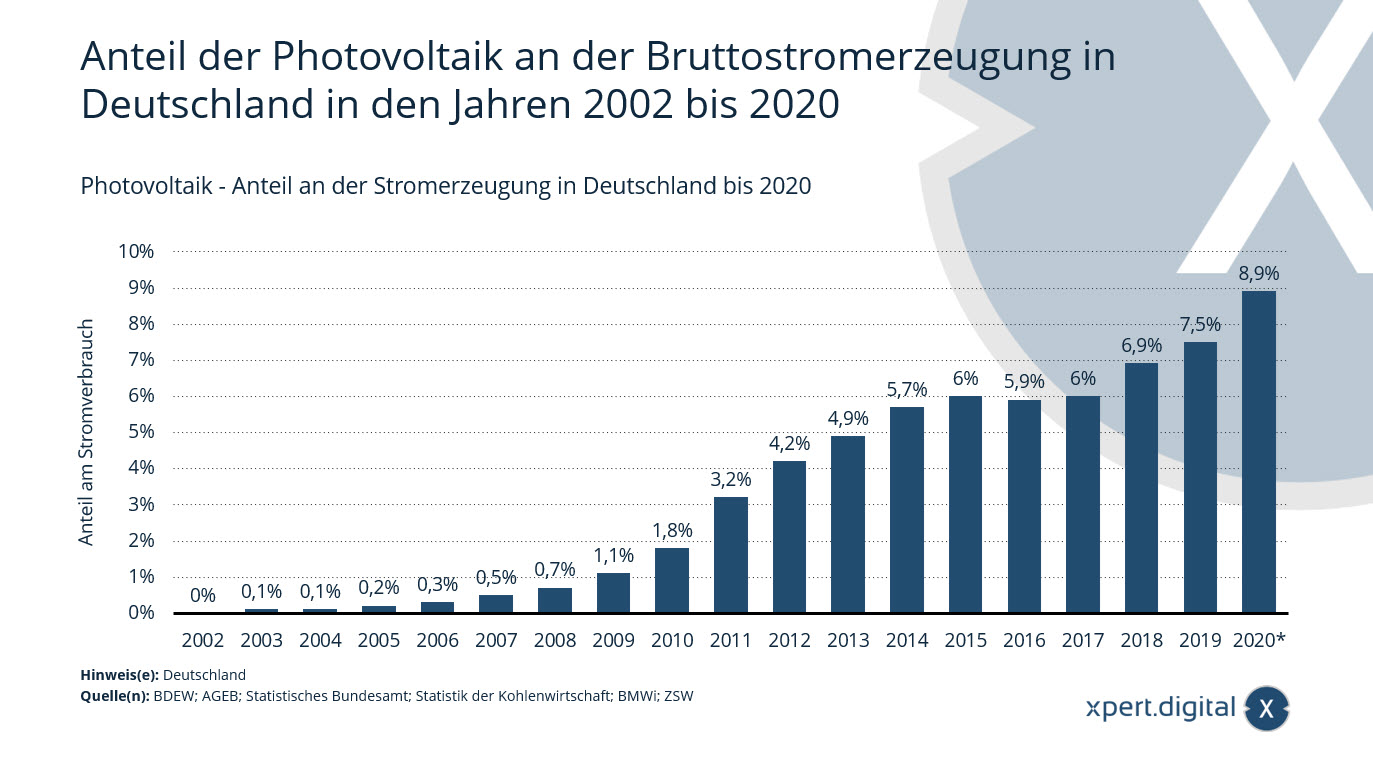
Photovoltaics – Share of electricity generation in Germany – Image: Xpert.Digital
In 2020, nine percent of the electricity generated was produced by photovoltaics. The use of photovoltaic systems has become increasingly important over the years. The share of solar energy as a renewable energy source has risen steadily since 2003.
Sunlight as an energy source
The advantage of the sun as an energy source is that it is free, unrestricted, and unlimited. Humans also take advantage of this, converting light energy into electrical energy using solar cells. The increasing share of photovoltaics in total electricity generation can be attributed, among other things, to the decreasing costs of the systems and a growing awareness of the use of renewable energies.
Renewable energy sources
While the share of nuclear power and hard coal in electricity generation in Germany is decreasing, the share of all renewable energy sources is simultaneously increasing. In addition to the use of photovoltaic systems, electricity is also generated from renewable energy sources such as hydropower, wind power, biomass, and geothermal energy. Onshore wind turbines produce by far the largest amount of renewable energy in Germany.
Share of photovoltaics in gross electricity generation in Germany from 2002 to 2020
- 2002: 0 in %
- 2003: 0.1 in %
- 2004: 0.1 in %
- 2005: 0.2 in %
- 2006: 0.3 in %
- 2007: 0.5 in %
- 2008: 0.7 in %
- 2009: 1.1 in %
- 2010: 1.8%
- 2011: 3.2%
- 2012: 4.2%
- 2013: 4.9%
- 2014: 5.7%
- 2015: 6 in %
- 2016: 5.9%
- 2017: 6 in %
- 2018: 6.9%
- 2019: 7.5%
- 2020: 8.9%
Renewable energies - distribution of electricity generation by energy source
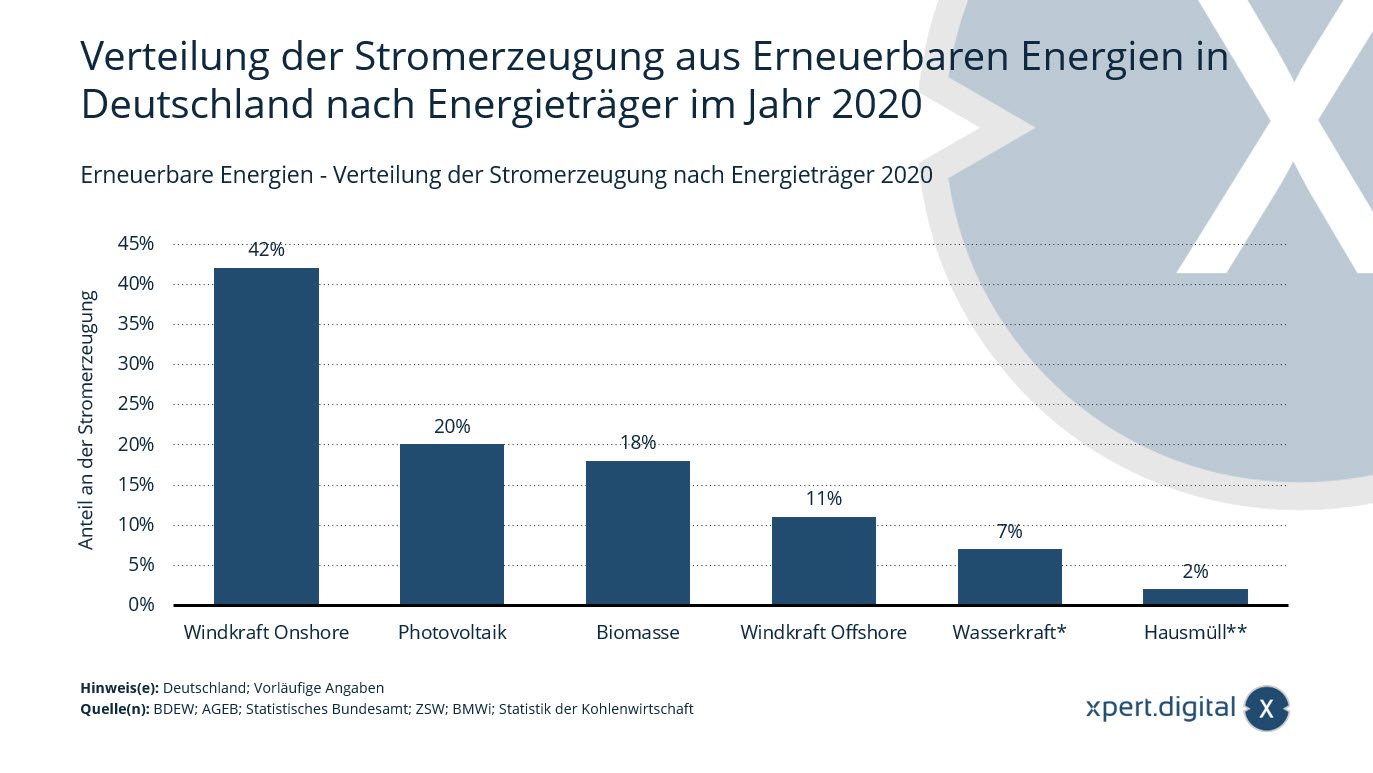
Renewable energies – distribution of electricity generation by energy source – Image: Xpert.Digital
In 2020, onshore wind power accounted for 42 percent of gross electricity generation from renewable energy sources in Germany. Considering all energy sources, including conventional ones, onshore wind energy contributed approximately 19 percent to gross electricity generation in 2020.
Electricity generation from renewable energies
Renewable energy sources, unlike fossil fuels such as coal and nuclear power, are renewable. They currently generate almost half of Germany's total electricity. Electricity generation from renewable energy sources has increased steadily over the past 30 years. Nationwide, Mecklenburg-Western Pomerania, Schleswig-Holstein, and Thuringia are among the German states with the highest share of renewable energy in their gross electricity generation.
Wind energy in Germany
In 2019, Germany, along with China and the USA, was one of the world's leading countries in terms of installed wind turbine capacity. The amount of electricity generated from wind power has increased significantly in recent years, both onshore and offshore. At the same time, the number of both offshore and onshore wind turbines has risen noticeably.
Distribution of electricity generation from renewable energies in Germany by energy source in 2020
- Onshore wind power: 42%
- Photovoltaics: 20 in %
- Biomass: 18 in %
- Offshore wind power: 11%
- Hydropower*: 7 in %
- Household waste**: 2 in %
* Generation in run-of-river and storage power plants, as well as generation from natural inflow in pumped-storage power plants.
** Generation only from the biogenic fraction of municipal solid waste (approx. 50%). Values were converted to percentages and rounded compared to the original source for better understanding of the statistics.
That's why Xpert.Solar offers consulting services for solar carports, solar systems and solar systems on flat roofs for Munich, Rosenheim, Salzburg and Vienna!

Konrad Wolfenstein
I would be happy to serve as your personal advisor.
You can contact me by filling out the contact form below or simply call me on +49 7348 4088 965 .
I'm looking forward to our joint project.
Write to me


Xpert.Digital – Konrad Wolfenstein
Xpert.Digital is a hub for industry focusing on digitalization, mechanical engineering, logistics/intralogistics and photovoltaics.
With our 360° Business Development solution, we support renowned companies from new business to after-sales.
Market intelligence, smarketing, marketing automation, content development, PR, mail campaigns, personalized social media and lead nurturing are part of our digital tools.
You can find more information at: www.xpert.digital – www.xpert.solar – www.xpert.plus
Keep in touch