Switch to English version
In intralogistics, logistics, mechanical engineering and the manufacturing industry


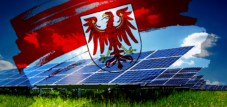
CO2 neutrality with photovoltaics – Photo: Wetzkaz Graphics|shutterstock
Some see the European Green Deal as yet another attempt by the EU to patronize or even harass its citizens. However, few realize that it is actually about providing planning certainty and transparency for industry and investors to ensure a green growth strategy. The EU's ambitious goal is to become the world's first climate-neutral continent by 2050.
But there are other ways, and there are other reasons worth considering. At online retailer Amazon, shipping and fulfillment costs have skyrocketed: total logistics costs increased more than twentyfold between 2009 and 2019.
- Last year alone, the company's shipping costs amounted to $37.9 billion.
- Fulfillment costs (e.g., costs for operating and staffing fulfillment centers) add another $40.2 billion to a hefty logistics bill.
- Although Amazon's revenue has also increased more than tenfold since 2009, this was not enough to offset the rise in logistics costs. In 2009, shipping and fulfillment costs amounted to 15.6 percent of net sales.
By 2019, this share had risen to 27.9 percent.
Competitiveness and gaining market share come at a price. Therefore, Amazon leaves nothing to chance. Amazon is not only a leader in research spending, but also invests in expanding its robotics capabilities. Robotics is not only faster and more powerful, but also less prone to errors and more reliable. The underlying principle is this: the higher the level of automation through robotics, the lower the proportion of labor costs and the less the advantage of readily available, cheap labor.
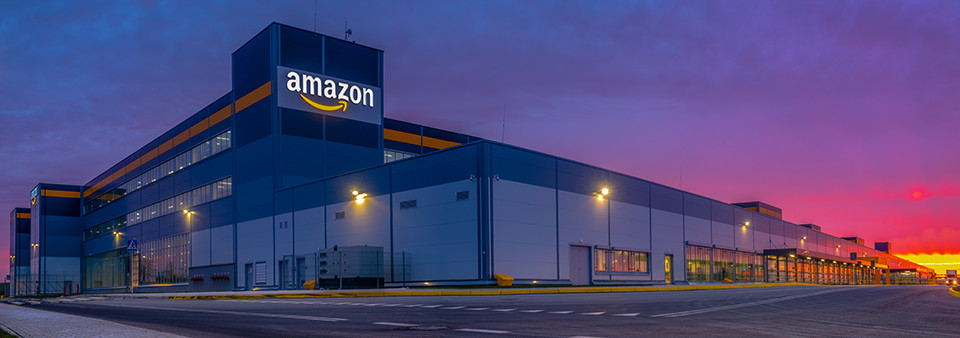
Amazon is investing heavily in research and robotics – Photo: Mike Mareen|shutterstock
Amazon has also made impressive progress in the field of photovoltaics, in just five years . This year, a 45 MW solar farm will be completed in Virginia and is expected to generate 100,000 megawatts of clean electricity annually. Solar parks are currently planned in Seville, Spain (149 MW), Lee County, Illinois (100 MW), and Northern Virginia (80 MW).
In the US, Amazon ranked first in 2018 for the number of installed solar power systems and second for the total number of solar power systems installed to date.
Worldwide, Amazon now has 70 renewable energy projects (21 wind and solar farms and 50 solar installations at logistics centers), with an estimated total capacity of 1,900 MW, providing 5.3 million megawatt hours (MWh) of climate-neutral electricity annually.
These are impressive figures! But it shows once again that Amazon, for the future, for expanding its market dominance, alongside
- Robotics and
- automation
on
- Autonomous power supply (CO2 neutrality)
sets.
The focus here is not on green intralogistics, sustainability, CO2 reduction, and decarbonization – in this still young decade, it's primarily a significant and marketing-wise positive side effect for positioning the company as a pioneer in environmental protection. Nothing more than that.
It concerns the higher costs that will accompany environmental protection regulations, peak electricity demand (infrastructure and grid stability) and CO2 balance in the future.
The CO2 balance, also called greenhouse gas balance or CO2 footprint, will gain more decisive influence in the future if it is subject to tax and cost-related surcharges in the CO2 labeling of goods and services.

Electricity price development for industry – Possible scenarios from 2021 to 2030 – Image: Xpert.Digital
Index for the development of industrial electricity prices in Germany from 1998 to 2021 (1998 = index 100). Forecast from 2021 to 2030 in various scenarios.
The statistic shows the index for the development of industrial electricity prices in Germany from 1998 to 2021. Starting from the year 1998 (index value = 100), the index value for the development of industrial electricity prices in Germany in 2021 was 195 points.
The data refers to medium-voltage supplied industries with an annual electricity consumption of 160 to 20,000 megawatt hours.
Following the decisions on phasing out coal and the Climate Protection Act in 2019, electricity prices are expected to rise by approximately 40% by 2030.
Related to this:
- Optimizing self-consumption of electricity: What is overlooked in all financing models
- Background information on petroleum, CO2 tax and renewable energies
Shipment Zero
As Amazon writes in its blog: “In-house alone, we have over 200 scientists, engineers, and product designers dedicated solely to finding new ways to leverage our size for the benefit of our customers and the planet. Amazon has a long-term goal of powering 100% of its global infrastructure with renewable energy, and we are making solid progress. With improvements in electric vehicles, biofuels for aviation, reusable packaging, and renewable energy, we can now, for the first time, see a pathway to carbon-neutral delivery of shipments to customers, and we have set the ambitious goal of achieving 50% carbon neutrality across all Amazon deliveries by 2030. We call this project Shipment Zero.”
It would be short-sighted to assume that Amazon, as a moral pioneer for a green future, is making all these efforts and investments. Its 200 scientists, engineers, and product designers aren't there to model a green future, but rather to secure and increase the company's revenue and profits, reduce costs wherever possible, and thus secure and expand its market position for the future.
Amazon relies on two pillars here:
- Automation through digitalization (digital transformation), smart technology (especially smart factory), Internet of Things and Industry 4.0.
- Autonomy in electricity supply (CO2 neutrality), increasing one's own independence and energy efficiency, climate neutrality
Photovoltaics is autonomous power supply
Falling installation costs and government incentive programs have boosted the acceptance and scalability of solar energy as a practical energy source for businesses. As costs continue to decline, business adoption rates are expected to rise, perpetuating this correlation.
The German Renewable Energy Federation (BEE) anticipates that solar energy will have the largest installed renewable energy capacity in Germany by 2030, at 100 gigawatts (GW). Wind power (onshore and offshore) will follow in second and third place with 59 GW, and bioenergy with 6 GW. Hydropower and geothermal energy will share fourth place with 0.5 GW each.
Photovoltaics is particularly well-suited for the manufacturing industry, mechanical engineering and logistics, with its large areas and halls.

Green Deal, a signal for the economy – Photo: Mr. Loeffler|shutterstock
Industry network
You don't have to be Amazon, and the course set with the European Green Deal by the EU Commission and its President Ursula von der Leyen is a strong signal for the European economy.
Now it's up to us to leverage the various skills from
- Intralogistics,
- Photovoltaics and
- Digital Transformation
to bring together.
The German economy, in particular, is ideally positioned for this. Now it is crucial to utilize this expertise and, together with Europe, catch up and expand upon this economic and competitive advantage.
In Intralogistics, Logistics, Mechanical Engineering and the Manufacturing Industry
CO2 Neutrality with Photovoltaics – Photo: Wetzkaz Graphics|shutterstock
Some see the European Green Deal as another attempt by the EU to patronize or even repress its citizens. However, few know that this is actually about the planning security and transparency for industry and investors to ensure a green growth strategy. It is an ambitious goal of the EU to be the world's first climate neutral continent by 2050.
But there are other ways to approach this, and there are plenty of other reasons worth thinking about. Shipping and fulfillment costs at the online retailer Amazon have skyrocketed in the last ten years: The total logistics costs between 2009 and 2019 had risen more than 20 times.
- Last year alone, the company's shipping costs amounted to 37.9 billion dollars.
- Fulfillment costs (eg costs for the operation and staffing of fulfillment centers) add another 40.2 billion dollars to a huge logistics bill.
- Although Amazon's revenues have also increased by more than ten times since 2009, this was not enough to compensate for the increase in logistics costs. In 2009, shipping and fulfillment costs amounted to 15.6% of net sales.
By 2019, this share had risen to 27.9 percent.
After all, competitiveness and the competition of market shares has its price. Therefore, Amazon doesn't leave anything to chance. Amazon is not only the world leader in research spending, it is also investing in the expansion of its robotics. Robotics is not only faster and more powerful, but also less prone to errors and more reliable. The idea behind it: The higher the level of automation provided by robotics, the lower the proportion of their staff costs and the lower the benefits of cheaply available workers.
Amazon invests enormously in research and robotics – Photo: Mike Mareen|shutterstock
Amazon has also made impressive progress in the field of photovoltaics, rising from zero to almost 330 megawatts of energy output in just five years. This year, a 45 MW solar farm will be completed in Virginia and is expected to provide 100,000 megawatts of clean electricity annually. Further solar parks have been planned in Seville (Spain) with 149 MW, in Lee County, Illinois (100 MW) and in Northern Virginia (80 MW).
In the USA (2018), Amazon ranked first for the number of solar plants installed and second for the total number of solar plants installed to date.
Amazon now operates 70 renewable energy projects worldwide (21 wind and solar parks and 50 solar parks on logistics centers), with an estimated total capacity of 1,900 MW, providing 5.3 million megawatt hours (MWH) of climate-neutral electricity annually.
These are remarkable numbers! But this shows once again that Amazon is not only counting on
- robotics and
- automation
for the expansion of its market leadership in the future, but also on
- autonomous power supply.
The focus here is not on green intralogistics, sustainability, CO2 reduction and decarbonization – in this still relatively new era it is a significant positive side effect being able to market itself as a pioneer in the field of environmental protection. But that's all it is.
Actually, it is about the costs of environmental protection requirements, power peaks (infrastructure and grid stability) and CO2 Balance, which will most likely increase in the future.
In the future, the CO2 Balance, also known as the Greenhouse Gas Balance or CO2 Footprint, will gain more of a decisive influence when the CO2 labeling of goods and services will be subject to tax and cost-related surcharges.
Electricity price development for industry – Possible scenarios from 2021 to 2030 – Image: Xpert.Digital
Index for the development of the industrial electricity price in Germany from 1998 to 2021 (1998 = index 100). Forecast from 2021 to 2030 in various scenarios.
The statistics show the index for the development of the industrial electricity price in Germany in the years 1998 to 2021. Starting from 1998 (index value = 100), the index value for the development of the industrial electricity price in Germany in 2021 was 195 points.
The figures relate to medium-voltage supplied industry with an annual electricity consumption of 160 to 20,000 megawatt hours.
Following decisions on coal phase-out and climate protection legislation in 2019, electricity prices are expected to rise by around 40% by 2030.
More information:
- Electricity self-consumption optimization: what is overlooked in all financing models
- Background knowledge on oil, CO2 tax and renewable energies
Shipment Zero
This is what Amazon writes in their blog: "In operations alone, we have over 200 scientists, engineers, and product designers dedicated exclusively to inventing new ways to leverage our scale for the good of customers and the planet. Amazon has a long-term goal to power our global infrastructure using 100% renewable energy, and we are making solid progress. With improvements in electric vehicles, aviation bio fuels, reusable packaging, and renewable energy, for the first time we can now see a path to net zero carbon delivery of shipments to customers, and we are setting an ambitious goal for ourselves to reach 50% of all Amazon shipments with net zero carbon by 2030. We are calling this project Shipment Zero.”
It would be short-sighted to assume that Amazon is making all the effort and investment as a moral leader for a green future. 200 scientists, engineers and product designers are not there to set an example for a green future, but to secure and increase the company's sales and profits, to reduce costs where possible, and to ensure and expand the market position for the future.
Here Amazon relies on 2 principles:
- Automation with the help of digitalization (Digital Transformation), Smart Technology (especially Smart Factory), Internet of Things and Industry 4.0.
- Autonomy in power supply, increase of the own independence and energy efficiency, climate neutrality.
Photovoltaics is an autonomous power supply
Decreasing installation costs and government subsidy programs have promoted the acceptance and scalability of solar as a practical energy source for companies. As costs continue to decrease, it is expected that company acceptance rates will increase, continuing this correlative trend.
The German Renewable Energy Federation (BEE) assumes that solar energy will have the largest installed renewable energy capacity in Germany by 2030, at 100 gigawatts (GW). In second and third place are wind turbines (onshore and offshore) with 59 GW and bioenergy with 6 GW. Hydropower and geothermal energy share fourth place with 0.5 GW each.
Photovoltaics is just perfect for the manufacturing industry, engineering and logistics, with its large areas and halls.
Green Deal, a signal for the economy – Photo: Mr. Loeffler|shutterstock
Industry Network
There is no need to be Amazon and the course set with the European Green Deal by the EU Commission and its President Ursula von der Leyen, is a strong signal for the European economy.
Now it's up to us to combine the skills of:
- Intralogistics,
- Photovoltaics, and
- Digital Transformation
Particularly the German economy has the best conditions for this. Now is the time to use the know-how and, together with Europe, to catch up and expand the economic and competitive advantage.
► Contact me or join the discussion on LinkedIn
How we secure the infrastructure of our key industries will be crucial for the future!
Three areas are of particular importance here:
- Digital Intelligence (Digital Transformation, Internet Access, Industry 4.0 and Internet of Things)
- Autonomous power supply (CO2 neutrality, planning security, environmental safety)
- Intralogistics/Logistics (Full automation, mobility of goods and people)
Xpert.Digital delivers to you here from the Smart AUDA series.
- Autonomization of energy supply
- urbanization
- Digital Transformation
- Automation of processes
New information is constantly being added and updated regularly.


Keep in touch