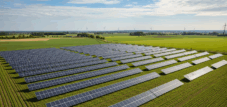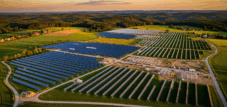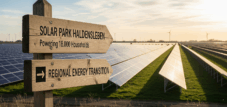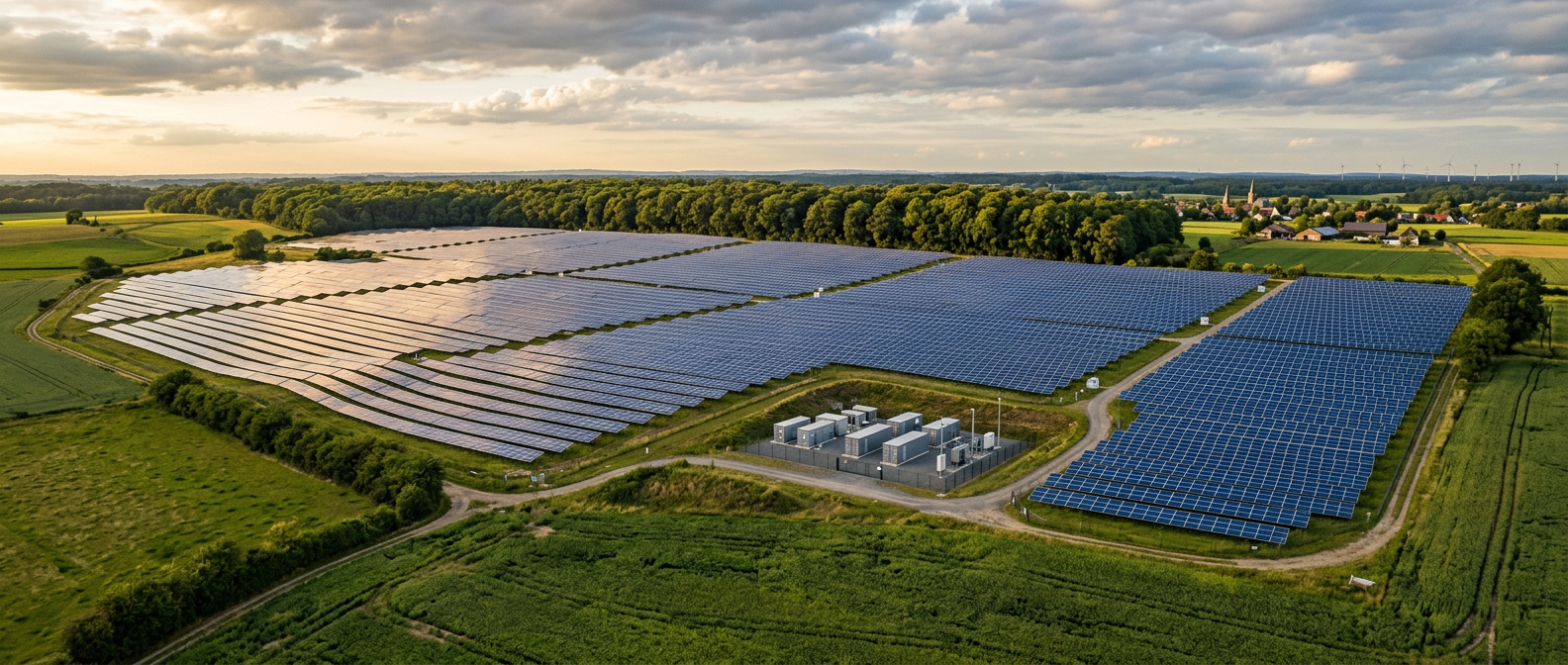
81 hectares for the energy transition: How Kamp-Lintfort is making history with two mega solar parks – creative image on the topic, with AI: Xpert.Digital
From landfill to power plant: Why a new solar project on the Lower Rhine is a nationwide model
Without government funding: How a huge solar park in Kamp-Lintfort is revolutionizing the electricity market
A windfall from Paragraph 6? What the planned solar giants mean for Kamp-Lintfort
In Kamp-Lintfort, the course is set for the future: Two massive solar park projects, covering a total area of approximately 81 hectares, are set to sustainably transform the energy landscape of the Lower Rhine region in the coming years. While a former landfill at Asdonkshof is being cleverly repurposed as a giant battery and power source by a municipal alliance, the "Leucht" project is simultaneously developing into a privately owned solar power giant. Its electricity will flow directly to industry without any government subsidies. Both projects are far more than just local construction projects – they exemplify a rapid nationwide structural transformation in which large-scale solar parks have long since overtaken traditional rooftop installations. Read on to discover how a municipality is becoming a pioneer, what enticing financial opportunities this presents for the city coffers, and why these two models are exemplary for Germany's energy transition in 2026.
Two solar parks for Kamp-Lintfort
When the landfill becomes a power plant and the energy transition suddenly arrives at your doorstep
In Kamp-Lintfort, the urban development committee is currently discussing two project-specific development plans that together aim to open up approximately 81 hectares of land for ground-mounted photovoltaic systems. At first glance, this appears to be just another municipal approval process, the kind that now takes place weekly in German town councils. However, closer examination reveals that these two projects exemplify a profound structural transformation in the German energy system that extends far beyond the city limits of Kamp-Lintfort.
The first project at Asdonkshof covers approximately 21 hectares and is being developed by Solarpark Asdonkshof GmbH, a joint venture between the Wesel district waste management company and the Kamp-Lintfort municipal utility company. The area was originally designated for waste disposal, which is why the photovoltaic use is conceived as an interim solution. Plans include a peak output of around 20 megawatts and a battery storage system, operated for a period of 25 years.
The second and significantly larger project is called Leucht and is being developed by Kronos Solar Projects GmbH from Munich, a company specializing in solar park and battery storage development, located on Widenmayerstrasse. According to the company, they are handling all preparatory construction measures, from market analysis to ensuring grid connection. The total area is approximately 60 hectares, of which 14 hectares are within the municipality of Kamp-Lintfort and the remainder in the neighboring municipality of Issum. The planned output of up to 82 megawatts peak will be marketed directly to large-scale consumers over a 30-year period, bypassing the traditional feed-in tariff system.
Why now of all times: The nationwide solar boom in agriculture
The two projects in Kamp-Lintfort coincide with a period of structural realignment in the German photovoltaic market. In the first half of 2026, approximately 7,394 megawatts of new solar capacity were added nationwide, roughly the same level as the previous year, but with a remarkable shift within the market: ground-mounted systems, with around 4,010 megawatts generated from just 1,002 projects, produced more power for the first time than all rooftop systems combined, despite the latter comprising over 185,000 individual installations. This further solidified the trend that was already apparent in the first quarter of the year.
The German Wind Energy and Solar Association (Fachagentur Wind und Solar) considers the first half of 2026, with approximately 4.1 gigawatts of gross installed capacity on ground-mounted systems, to be the strongest first half-year ever recorded in this segment, significantly exceeding the figures for the preceding years, 2025 and 2024. Germany's total photovoltaic capacity now stands at around 125 gigawatts, a tenfold increase since 2015, with growth accelerating further since 2021. According to the Federal Network Agency, nearly 9,620 megawatts of new photovoltaic capacity were installed in the first seven months of 2026, more than half of which was in ground-mounted systems.
This development is no coincidence, but rather the result of several overlapping factors. Ground-mounted solar installations can generally be implemented more quickly and cost-effectively than complex rooftop installations, as they can be planned and built on a large scale using standardized methods. At the same time, the number of newly registered installations is declining noticeably overall, indicating a certain degree of market consolidation in the small-scale installation segment, while ground-mounted systems more than compensate for the resulting gap. The German Solar Association (BSW) confirms this finding for the first quarter of 2026: With a slight overall decrease in new installations to 3.5 gigawatts, ground-mounted systems increased by 20 percent, thus already accounting for more than half of the quarter's total capacity.
The principle of interim use: How a landfill becomes an energy source
What is particularly noteworthy about the Asdonkshof project is its legal and planning structure as an interim use. The area in question was originally designated for waste disposal, but will instead be dedicated to solar energy generation for the next 25 years. This approach allows municipalities and their waste management companies to productively utilize economically unprofitable transitional phases of an area without permanently abandoning its original purpose.
For the Wesel district waste management company and the Kamp-Lintfort municipal utilities, as joint operators of Solarpark Asdonkshof GmbH, this results in a dual benefit. Firstly, the area generates reliable revenues over a long period; secondly, the fundamental option of later reverting to waste management remains theoretically intact, thus creating planning certainty for various municipal needs. This form of dual land use is gaining importance nationwide because traditional agricultural land is increasingly caught in a conflict of objectives between food production, nature conservation, and energy generation, and former landfill or conversion areas are considered less sensitive alternatives from a planning law perspective.
New: Patent from the USA – install solar parks up to 30% cheaper and 40% faster and easier – with explanatory videos!

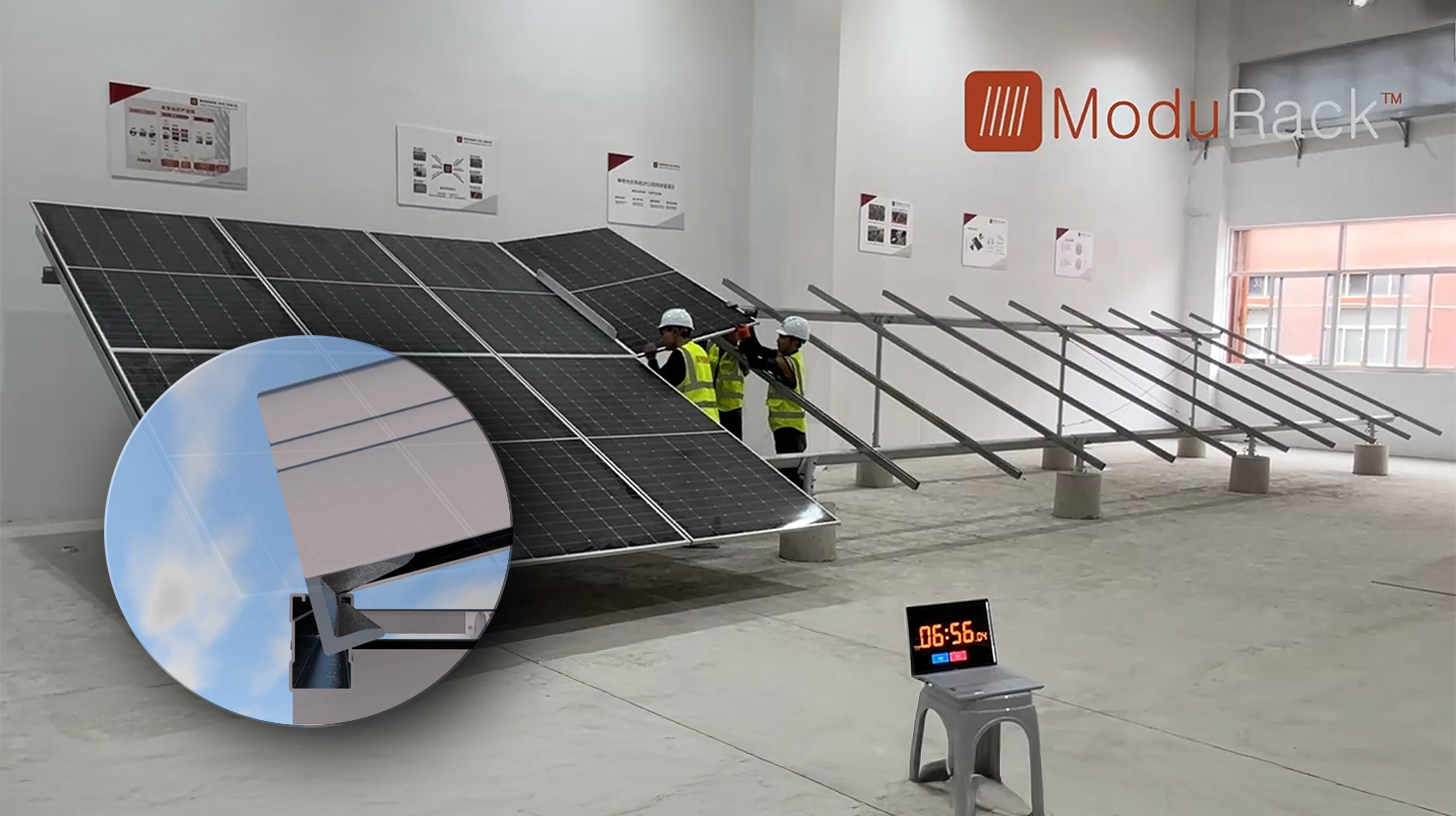
New: Patent from the USA – Install solar parks up to 30% cheaper and 40% faster and easier – with explanatory videos! - Image: Xpert.Digital
The core of this technological advancement is the deliberate departure from conventional clamp mounting, which has been the standard for decades. The new, more time- and cost-effective mounting system addresses this with a fundamentally different, more intelligent concept. Instead of clamping the modules at specific points, they are inserted into a continuous, specially shaped support rail and held securely in place. This design ensures that all forces – whether static loads from snow or dynamic loads from wind – are distributed evenly across the entire length of the module frame.
More information here:
Energy transition without EEG: How direct marketing and battery storage are changing the solar park economy
Direct marketing instead of subsidies: The Leucht project as a blueprint for the post-EEG era
While the Asdonkshof project follows familiar paths in municipal energy management, the flagship project by Kronos Solar Projects GmbH embodies a second, more economically significant trend. The electricity generated is not intended to be marketed via the traditional feed-in tariff under the Renewable Energy Sources Act (EEG), but rather directly to large consumers, for example through long-term power purchase agreements (PPAs). This direct marketing allows industrial companies to secure predictable, often more affordable, electricity volumes for decades, while the plant operator benefits from a stable sales model free from the political uncertainty of future subsidy regulations.
Kronos Solar Projects describes its business model as integrated project development, encompassing market analysis, land acquisition, technical planning, and grid connection, complemented by investment in battery storage systems. Through a subsidiary located at the same Munich address, the company is also explicitly positioned for the planning, construction, and operation of storage facilities, as well as their direct marketing. This vertical integration of project development, storage technology, and marketing is typical of the new generation of professional solar park developers who are increasingly independent of government subsidy programs and are positioning themselves as self-sufficient energy providers in the liberalized electricity market.
The combination of a large open space, high installed capacity, and battery storage follows a clear business logic. Storage makes it possible to shift the solar power generated during the day, thereby increasing grid stability and benefiting from price fluctuations in the electricity market by feeding electricity into the grid during periods of high demand and higher prices. For operators who already operate outside the scope of feed-in tariffs, this flexibility is a key value driver, as they are not limited by fixed feed-in tariffs.
The municipal bill: How Section 6 of the EEG turns acceptance into capital
A key, often underestimated aspect of such projects is the financial participation of the local communities. Section 6 of the Renewable Energy Sources Act (EEG) allows operators of ground-mounted and onshore wind turbines to offer the affected communities up to 0.2 cents per kilowatt-hour actually fed into the grid as a unilateral payment without any return service. This regulation has been in effect since 2021 and was extended to existing wind power plants with the 2023 amendment to the EEG, while its basic structure remained unchanged for ground-mounted turbines.
Legally, this is explicitly not a lease or consideration for a permit, but rather a legally defined voluntary contribution, which is precisely why it is unproblematic under state aid law. While the payment remains formally voluntary at the federal level, in practice it has long since become standard practice: With the Solar Package I from May 2024, operators of new ground-mounted solar power plants with a capacity of one megawatt or more are required to offer such a contribution to the host municipality. For the Kamp-Lintfort projects with 20 and up to 82 megawatts peak, respectively, the implementation of this contribution is therefore highly likely, even though the specific contractual details remain a matter for negotiation between the operator and the municipality.
It is also noteworthy that operators are generally reimbursed by the responsible grid operator for the amounts paid to municipalities, provided the underlying electricity volumes are eligible for EEG subsidies and these subsidies have actually been claimed. However, this reimbursement mechanism does not apply to the Leucht project with its planned direct marketing to large consumers, as plants in power purchase agreements or other direct marketing arrangements do not receive EEG subsidies and therefore have no claim to reimbursement of the municipal participation. This means that if Kronos Solar were to offer Leucht a participation under Section 6, the company would have to bear this entirely itself, which significantly alters the economic calculations compared to conventionally subsidized plants.
Two models, one goal: Municipal versus private value creation logic
The two projects in Kamp-Lintfort can be seen as an exemplary comparison of two fundamentally different business models for the energy transition, which increasingly exist in parallel and compete with each other.
| feature | Asdonkshof | Light |
|---|---|---|
| Area | approximately 21 hectares | approximately 60 hectares, of which 14 hectares are in Kamp-Lintfort |
| Performance | approximately 20 megawatts peak | up to 82 megawatts peak |
| Duration | 25 years | 30 years |
| Support structure | Joint venture of municipal actors | private project development company |
| marketing | presumably predominantly EEG-based | Direct marketing to large-scale buyers |
| Surface prehistory | former waste disposal site, interim use | agricultural area spanning two municipal boundaries |
In the Asdonkshof model, value creation remains largely in municipal hands, which politically aligns with the goal of broad societal participation in the energy transition and simultaneously secures direct access to revenues and strategic control options for the city of Kamp-Lintfort and the Wesel district. In contrast, the Leucht model places the entrepreneurial initiative and risk with a specialized private project developer who possesses economies of scale, market access to major customers, and technical expertise that municipal structures often cannot develop to a comparable extent. The two models are not mutually exclusive but rather complement each other in practice: municipalities often provide the necessary planning and legal framework and work to gain local acceptance, while private developers bear the technical and financial risks of large projects.
Business tax, competition for land and the limits to growth
Besides generating electricity, such projects also have fiscal benefits for the participating municipalities. Through trade tax revenues from the respective operating companies and the subsidies described in Section 6 of the German Renewable Energy Sources Act (EEG), host municipalities generate reliable, predictable income for decades. This represents a significant additional source of revenue, particularly for structurally weaker municipalities like Kamp-Lintfort within the context of the Ruhr region's structural transformation. This financial outlook is likely a key reason why municipal bodies have become increasingly receptive to open-field power plant projects in recent years.
At the same time, the nationwide boom in open-space solar projects is intensifying competition for land between agriculture, nature conservation, and energy production. With a tendered volume of 9,900 megawatts in the first solar segment of 2026 alone, spread across three bidding rounds, the land requirement for photovoltaics is growing at a pace that is increasingly challenging local planning authorities. Given a land requirement of approximately one hectare per megawatt peak, the 82 megawatts of the Leucht project correspond to an expected land consumption roughly equivalent to the actually designated area of 60 hectares, thus reflecting the typical land efficiency of modern large-scale installations. Regionally, the expansion continues to be concentrated in states such as Bavaria, Brandenburg, and Schleswig-Holstein, while North Rhine-Westphalia, where Kamp-Lintfort is located, is among the states with particularly high relative growth.
A dual transformation under municipal observation
The two development plans in Kamp-Lintfort may appear to be manageable administrative procedures at the municipal level, but they exemplify the central tensions of Germany's energy transition in 2026. On the one hand, there is the municipal model of interim use, which enables cities and districts to productively utilize underutilized areas such as former landfill sites, thereby keeping the added value in public hands. On the other hand, there is the private-sector model of direct marketing, in which specialized project developers like Kronos Solar Projects develop large areas across municipal boundaries and sell the generated electricity directly to industry without relying on government subsidies.
Both approaches contribute to a nationwide trend that is unequivocally reflected in the figures from the Federal Network Agency: Ground-mounted solar installations have definitively become the dominant growth segment of German photovoltaics in 2026, overtaking the traditionally focused rooftop segment in both absolute and relative terms. For municipalities like Kamp-Lintfort, this means the opportunity for reliable additional revenue and a visible positioning as a location for the energy transition, coupled with the need to carefully balance land-use conflicts, citizen participation, and the appropriate marketing structure.
📈🚀 From visibility to trust 👀🤝 Your scalable path with Xpert.Digital


From visibility to trust: Your scalable path with Xpert.Digital - Image: Xpert.Digital
In industrial B2B, sustainable business relationships rarely emerge overnight. They develop step by step – through visibility, professional relevance, recurring touchpoints, and growing trust. Xpert.Digital's 4-stage model addresses precisely this: It offers a structured path that begins with a manageable entry point and can evolve into deeper collaboration in business development if needed.
Instead of relying on loud marketing promises, this model puts the relationship at the forefront. Companies start with clearly defined, easily calculable measures and then decide, based on their own experience, how far they want to expand the collaboration. A key factor for this undisturbed trust-building process: The platform completely avoids annoying advertising ads, so the editorial focus remains solely on the companies' expertise.
More information here:
Your partner for business development in the fields of photovoltaics and construction
From industrial rooftop PV to solar parks and larger solar parking lots
☑️ Our business language is English or German
☑️ NEW: Correspondence in your native language!

Konrad Wolfenstein
I and my team are happy to be available to you as your personal advisor.
You can contact me by filling out the contact form here wolfenstein@xpert.digital:or simply call me at +49 7348 4088 965. My email address is
I'm looking forward to our joint project.