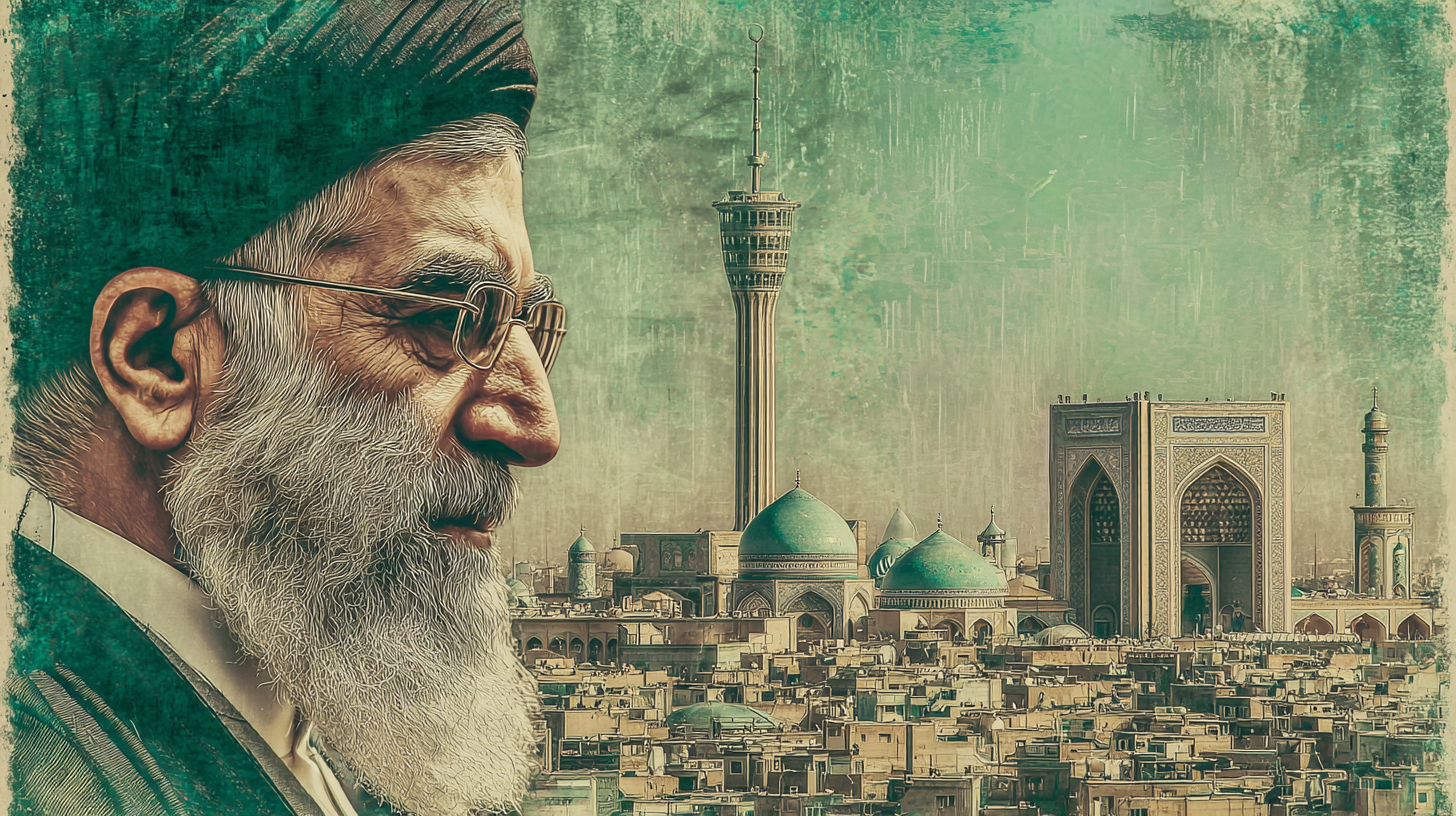
Iran 2026 | Power politics and economic collapse of the Islamic Republic – forecasts from China, the USA and Europe – Image: Xpert.Digital
By 2026, Iran will be under the influence of economic problems, international isolation, and internal unrest
Power vacuum in Tehran after the "12-day war": Why Iran's shadow fleet can no longer save the regime
At the beginning of 2026, a scenario is emerging in the Islamic Republic of Iran that goes far beyond mere political instability: the state is on the verge of complete systemic failure. Following the devastating military setbacks of the "Twelve-Day War" in June 2025 and the merciless reactivation of UN sanctions (snapback), a nation in a state of total exhaustion is revealed. What was once considered Tehran's strategic patience has proven to be a dangerous illusion, now being overtaken by the reality of internal disintegration.
The following analysis paints a bleak picture: A currency collapse that has rendered the rial virtually worthless coincides with a leadership vacuum at the top of the state, caused by the critical health of Ayatollah Ali Khamenei. While power struggles paralyze political action, the military-industrial complex of the Revolutionary Guard increasingly assumes control—but even this power apparatus is reaching its limits. From the unleashed street protests spreading from Tehran's bazaar to the provinces, to the dangerous nuclear escalation with uranium enrichment reaching 90 percent: This forecast illuminates the mechanisms of a state whose survival strategy has become a deadly trap.
Iran Forecast 2026: The Scenario of Total System Collapse and Tehran's Economy in Free Fall
The strategic landscape of the Islamic Republic of Iran at the beginning of 2026 is defined by a state of systemic exhaustion that transcends traditional geopolitical and economic categories. Following a year of historic military and foreign policy setbacks in 2025, the Iranian state finds itself in the most difficult phase of its existence since the 1979 revolution. While the leadership in Tehran has historically equated perseverance with strategic success, the current environment suggests that this perseverance has merely masked a profound internal disintegration. The confluence of the Twelve-Day War in June 2025, the reactivation of UN sanctions in September 2025, and a catastrophic currency collapse have created a self-reinforcing cycle of instability that threatens the very survival of the state.
The architecture of political paralysis and leadership weakness
The political system of the Islamic Republic is currently undergoing a process of structural disintegration, driven primarily by the physical and mental decline of the Supreme Leader, Ayatollah Ali Khamenei. At 86, Khamenei's mortality has become a source of paralysis affecting every sector of the Iranian government. The leader is reportedly facing serious health crises, including advanced cognitive impairment and coma-like episodes, which have led to his extended absence from the political stage. This leadership vacuum has plunged the country into unprecedented power struggles at a time when it faces its most acute external and internal challenges.
During the critical phases of the 2025 conflict, the state's institutional mechanisms appeared to break down. Neither the president nor the Supreme National Security Council could directly reach the Supreme Leader, forcing figures like the Speaker of Parliament to unilaterally assume emergency military powers without a clear constitutional basis. This erosion of absolute rule transformed what were once controlled rivalries—orchestrated by the Supreme Leader to keep competing power centers in check—into an unrestrained war of attrition. Hardline factions exploited the vacuum to oust moderate ministers like Economy Minister Abdolnaser Hemati, while the Islamic Revolutionary Guard Corps increasingly accused reformist elements of treason.
The state's efforts to maintain the chain of command have led to the creation of new bureaucratic units, such as the Defense Council, established in early August 2025. These steps are intended to institutionalize leadership so that the system can function without the direct presence of the Supreme Leader. The appointment of Ali Larijani as Secretary of the Supreme National Security Council is a further step in this direction and signals an attempt to bridge factions and forge consensus in times of crisis. However, the fundamental tension between the need for swift decisions in wartime and the traditional requirement of the Supreme Leader's approval for all major council actions remains.
Institutional hierarchy and strategic status 2026
| Primary mandate | Operational status | Factional alignment | |
|---|---|---|---|
| Office of the Supreme Leader | Supreme religious authority | Paralyzed/Isolated | Traditionalist/Hardline |
| Corps of the Islamic Revolutionary Guard | Defense of the Revolution/Economic Engine | Ascending/Interventionist | Radical/Ideological |
| Defense Council | Military coordination in times of war | Newly active (2025) | Technocratic/Military |
| Supreme National Security Council | Foreign policy and security integration | Shattered/Blocked | Pragmatic/Hardline Hybrid |
| Presidency (Masoud Pezeshkian) | Executive management/economic reform | Marginalized/Fighting | Reformist/Pragmatic |
The rise of the military-industrial foundation complex
In the wake of the military setbacks of 2025, the Islamic Revolutionary Guard Corps has proven itself the indispensable backbone of the Iranian state. Despite the loss of high-ranking commanders, including Commander-in-Chief Hossein Salami and Aerospace Chief Amir Ali Hajizadeh, in Israeli attacks on June 13, 2025, the organization demonstrated a remarkable ability to rapidly fill command gaps and maintain internal security. The organization's role has expanded beyond its traditional military function to include the management of vast economic cartels, often referred to as the military-bonyad complex (foundation complex), which dominate large swathes of the Iranian economy.
The organization is currently prioritizing strategic reconstruction, with a particular focus on its ballistic missile program. Following the destruction of key production facilities during the war in June 2025, Tehran has accelerated the procurement of new specialized solid-propellant mixers from external partners. This strategy, described as deterrence by mass, aims to overwhelm regional missile defense systems in any future conflict. The domestic political trade-offs for this military focus are substantial, as resources channeled into industrial-military reconstruction are unavailable for economic stabilization or social assistance. This reflects the Iranian leadership's calculation that maintaining military strength outweighs the risk of public discontent.
The Quds Force, the external arm of the Guard, remains a crucial instrument for projecting power abroad and maintains links with armed groups in Iraq, Lebanon, Palestine, Syria, and Yemen. However, the fall of the Assad regime in late 2024 and the subsequent rise of new power actors in the Levant have undermined the long-standing deterrence model of the “axis of resistance.” This has shifted the organization into a reactionary stance, as it seeks to rebuild its diminished capabilities while theoretically remaining open to negotiations at the international level.
Escalating civil unrest and the bazaar uprising
The domestic security situation at the beginning of 2026 is characterized by the largest and most prolonged outbreak of unrest since the 1979 revolution. Mass demonstrations erupted on December 28, 2025, initially triggered by soaring inflation and the collapse of the national currency. These protests, which began with shopkeepers and merchants in Tehran's Grand Bazaar, quickly evolved into a nationwide movement demanding an end to the Islamic regime. The movement is notable for its shift from economic grievances to explicit political demands, with demonstrators calling for freedom and speaking out against the Supreme Leader himself.
The protests have a wide geographical reach, with activity in 28 of Iran's 31 provinces. While major cities like Tehran, Isfahan, Shiraz, and Mashhad remain hotspots, the frequency and geographical scope of the protests increased significantly in early January 2026. Demonstrators have increasingly employed aggressive tactics, including the use of Molotov cocktails against security forces in provinces such as Markazi and Gilan. The regime's response has shifted from an initial attempt at containment with less violence to a harsher, more coercive crackdown. Security forces have arrested nearly 1,000 people and killed at least 16 since the demonstrations began, even raiding hospitals to detain wounded protesters.
A critical development in the unrest of 2026 is the role of the newly formed "Mobarizoun Popular Front," a coalition of Baloch organizations in southeastern Iran. The Front issued a statement in January 2026 declaring its support for the nationwide protests and warning that it would respond to any instance of regime violence against civilians. This group, which includes the radical organization Jaish al-Adl, seeks profound political change and sees itself as the vanguard of a popular uprising. The emergence of an organized, potentially armed opposition on the ethnic periphery adds a dangerous new dimension to the current crisis.
Regional distribution of protests (Jan 2026)
| Period | Number of protests | Active provinces | Notable tactical shift |
|---|---|---|---|
| December 31 – January 2 | 126 | 22 | Expansion into rural areas |
| January 2nd – January 3rd | 62 | 18 | Night marches |
| January 3rd – January 4th | 81 | 23 | University student strikes |
| January 4th – January 5th | 37 | 15 | Use of Molotov cocktails |
Financial chaos and the devaluation of the rial
By 2026, the Iranian economy is defined by a state of total financial chaos, in which the national currency has effectively lost its utility as a store of value. In early January 2026, the rial broke the catastrophic threshold of 1.47 million rials to the US dollar on the free market. This unprecedented devaluation was accelerated by the invocation of the UN sanctions mechanism in September 2025 and the introduction of a tiered gasoline pricing system, which saw unsubsidized fuel prices soar to 50,000 rials per liter. The free market has effectively adopted the dollar as the leading currency, rendering the national currency obsolete for approximately 90 percent of private transactions.
Hyperinflationary pressures have driven consumer price inflation to over 42 percent, with food inflation estimated at a staggering 75.4 percent. The government has moved to end subsidized foreign currency for the import of basic goods—a system critics said fostered corruption, but whose abolition has led to steep price increases for essential items such as rice and medicine. In an attempt to quell public anger, the administration has proposed issuing monthly electronic food vouchers worth about one million toman, or seven dollars at the free market rate. However, analysts remain skeptical that such measures can bring stability given the scale of the currency collapse.
Macroeconomic indicators and forecasts 2026
| Metric | Value / Percentage | Trend direction |
|---|---|---|
| Projected real GDP growth | 0.6% to 1.1% | Stagnant/Declining |
| Projected consumer price inflation | 42,4% | Hyperinflationary |
| Rial exchange rate (Jan 2026) | 1.47 million / $1 USD | Volatile/Collapsing |
| Food inflation | 75,4% | Accelerating |
| unemployment rate | 9,2% | Rising |
| Gross national debt | 36.4% of GDP | Increasingly |
The 2026 budget statement and tax dependency
The draft budget for Iran's fiscal year beginning in March 2026 reflects a state under extreme financial pressure, prioritizing security and religious institutions over economic relief for the population. A central and controversial feature of the budget is its unprecedented reliance on tax revenues rather than oil sales. Projected tax revenues have increased by approximately 63 percent, signaling a heavier burden for households and businesses already struggling with high inflation and weak purchasing power. The head of the tax administration reported that the ratio of tax revenues to oil revenues in financing the state budget reached an unprecedented 5.5 times by the end of 2025.
Economists warn that this trend is economically unsustainable in an environment of negative or stagnant growth. Higher taxes on small businesses such as hair salons, restaurants, and grocery stores have already led to widespread closures and rising unemployment. Furthermore, the government plans to raise the value-added tax (VAT) rate from 10 to 12 percent, a move critics say will further weaken consumption and fuel inflationary pressures. The shift toward taxation is widely seen as an artificial consequence of declining oil revenues caused by sanctions, export restrictions, and deep discounts for buyers in the black market.
The allocation of remaining oil revenues reinforces the regime's survival priorities. Funding for military and security institutions accounts for at least 16 percent of the total budget, while funding for religious institutions is estimated at nearly half of the government's direct oil revenues. This discrepancy between export earnings and overall economic output remains a key puzzle for analysts, given that Iran has earned billions from oil exports over the past five years, even as its gross domestic product shrank from 600 billion in 2010 to an estimated 356 billion in 2025.
Our global industry and economic expertise in business development, sales and marketing

Our global industry and economic expertise in business development, sales and marketing - Image: Xpert.Digital
Industry focus areas: B2B, digitalization (from AI to XR), mechanical engineering, logistics, renewable energies and industry
More information here:
A thematic hub offering insights and expertise:
- Knowledge platform covering global and regional economies, innovation and industry-specific trends
- A collection of analyses, insights, and background information from our key areas of focus
- A place for expertise and information on current developments in business and technology
- A hub for companies seeking information on markets, digitalization, and industry innovations
The ghost fleet at its limit: How Tehran's secret oil empire is beginning to crumble
Industrial stagnation and the resource crisis
Iran's industrial sector entered 2026 on the brink of a deep recession. The manufacturing purchasing managers' index fell below the neutral 50 mark at the end of 2025, indicating a slowdown in industry following a brief rebound after a reduction in summer power outages. Industrial output contracted by 1.1 percent in the first half of Iran 1404, with sectors such as agriculture and mining experiencing even steeper declines. New orders, commodity inventories, and new hires remain weak, reflecting continued pressure on production and investment, exacerbated by volatile exchange rates and delays in foreign exchange allocation.
The construction sector, traditionally a major engine of employment and a driver for related industries, has experienced an unprecedented recession, with growth falling to minus 12.9 percent. This decline is attributed to a combination of reduced purchasing power, higher costs for building materials, and extreme uncertainty about the future of the economy. Furthermore, the agricultural sector has been hit by severe drought, with wheat production falling by more than 30 percent in 2025, leading to rising bread prices and increased reliance on imports.
Beyond the industrial slowdown, Iran faces a critical resource crisis that is increasingly seen as a matter of national security. Man-made water and electricity shortages are rampant, with reports that Tehran is literally running out of water. By 2026, water scarcity is expected to exacerbate international disputes over the Euphrates and Tigris basins as nations prioritize control of upstream resources. This environmental mismanagement has become a significant driver of protests, with a growing group of citizens, often referred to as “the Thirsty,” organizing to demand accountability for the state’s failure to provide basic services.
Key figures for industrial performance 2025-2026
| sector | Growth (%) | Sector PMI Index | Strategic constraints |
|---|---|---|---|
| Industry and mining in total | -3,4% | 49,9 | Electricity/Currency |
| agriculture | -2,9% | N/A | Drought/Input costs |
| Construction | -12,9% | N/A | Financing/Purchasing Power |
| Order intake Production | N/A | 50,3 | Demand uncertainty |
| Material stocks | N/A | 45,4 | Supply chain/sanctions |
The global energy pariah and the capacity of the shadow fleet
Despite the reimposition of extensive sanctions, Iran has maintained a significant presence in the global oil market through the use of a sophisticated shadow fleet. Exports of crude oil and condensate remained between 1.5 and 1.7 million barrels per day until 2025, a feat that demonstrated the resilience of Tehran's logistical capabilities for evading sanctions. However, by early 2026, this system was showing signs of reaching its physical and operational limits. Fleet utilization for tankers associated with Iran reached 58 percent at the end of 2025, its highest level in over five years, leaving minimal spare capacity for further growth.
The shadow fleet, consisting of approximately 1,423 tankers, operates outside traditional shipping, insurance, and regulatory systems. More than 65 percent of these vessels are currently subject to sanctions by the United States, the United Kingdom, or the European Union. The fleet is aging rapidly, with nearly 44 percent of the global VLCC (supertanker) fleet over 15 years old, leading to increased safety risks and higher maintenance costs. The volume of Iranian oil stored on tankers, known as the "floating warehouse," reached new highs of nearly 200 million barrels in October 2025, indicating significant unloading difficulties and increasing strain on the logistics network.
China remains the primary destination for Iranian crude oil, accounting for 85 to 90 percent of total exports. These shipments are often delivered to small, independent refineries in Shandong province, known as "teapot refineries," which operate outside the large Chinese state-owned enterprises. To avoid detection, these tankers employ deceptive practices such as disabling their automatic identification systems, falsifying flags, and conducting ship-to-ship transfers at sea. While these tactics remain effective, the increasing average distance of the journeys and the growing logistical effort indicate that the system must work harder just to maintain current output levels.
The nuclear eruption and the snapback break
The geopolitical position of the Islamic Republic was fundamentally altered in September 2025 by the reactivation of pre-2015 UN sanctions via the snapback mechanism. Triggered by the E3 – the United Kingdom, France, and Germany – the snapback reinstated six Security Council resolutions that had previously been lifted under the 2015 Joint Comprehensive Plan of Action (JCPOA). The E3 cited Iran's substantial non-compliance with its obligations, including the 60 percent enrichment of uranium and the systematic restriction of the IAEA's monitoring and verification activities.
The snapback sanctions reinstated a full arms embargo, a ban on ballistic missile technology, and the freezing of assets belonging to individuals named for involvement in the nuclear program. The E3 highlighted that Iran lacks a credible civilian justification for its stockpile of highly enriched uranium, which now exceeds nine significant quantities—enough material to potentially manufacture multiple nuclear devices. Furthermore, the suspension of cooperation with the IAEA in June 2025 removed key sites of concern regarding proliferation from international oversight.
In response to this legal and economic isolation, Tehran has adopted a nuclear stance focused on survival and deterrence. Intelligence reports indicate that Iran has increased enrichment to as high as 90 percent as an ultimate measure to deter regime change. The diplomatic window for a renewed agreement has effectively closed, and the approaching expiration of Resolution 2231 in October 2025 has created a critical and perilous timeframe for regional stability. The Iranian leadership's refusal to comply with inspection-related agreements, combined with threats to withdraw from the Nuclear Non-Proliferation Treaty (NPT), reflects a strategy of "risky recklessness" that has brought the region to the brink of a second major military conflict.
Status of nuclear thresholds 2025-2026
| Metric | Value / Status | implication |
|---|---|---|
| Enrichment level | 60% -> 90% Project. | Weapon capability |
| Hay stock | > 440 kg at 60% | Potential for multiple warheads |
| IAEA supervision | Suspended (June 2025) | Control gap |
| UN sanctions status | Snapback Active (Sept 2025) | Global legal isolation |
| NVV status | Withdrawal threatened | End of the non-proliferation regime |
United States forecast: Maximum Pressure 2.0 and the Locked Doctrine
The United States enters 2026 with a foreign policy toward Iran defined by a revival of the “Maximum Pressure 2.0” doctrine. The administration has modified or eliminated remaining sanctions exemptions and significantly increased the naming of key enablers of Iranian oil exports, including refineries in China and companies in India, Turkey, and the UAE. This systematic pressure is designed to drive up costs for Iranian exporters and reduce the revenue available to the regime for its military and regional activities.
The American strategic stance is increasingly pragmatic and focused on domestic security objectives. The National Security Strategy of 2025 reflects a desire to reduce the time and energy spent on Iran and emphasizes its diminished status after the June 2025 war. Washington appears to have three primary options for dealing with the Iranian problem: hoping that the current containment status quo holds, outsourcing Iran's military management to Israel, or pursuing a lasting new deal that addresses not only the nuclear issue but also missile activity and support for non-state proxies.
The risk of renewed military confrontation remains high, however. US officials have adopted a "locked-and-loaded" doctrine, warning that any violent suppression of peaceful protesters in Iran could trigger a direct American military response. The administration has also sought to strengthen regional anti-Iran coalitions, possibly by normalizing relations between Saudi Arabia and Israel. While the US remains theoretically open to direct and meaningful dialogue, it insists on a zero-enrichment policy, a demand Tehran has repeatedly rejected as a violation of its rights under the NPT.
China Forecast: The two-pronged approach and the strategic pause
China's strategic outlook on Iran for 2026 is defined by a two-pronged approach that balances immediate energy security with long-term geopolitical opportunism. Beijing remains Iran's most important trading partner and primary energy customer, importing record amounts of crude oil that reached 1.91 million barrels per day in March 2025. China's main concern is the security of the Strait of Hormuz, as any closure would be disastrous for both Iranian and Saudi Arabian supplies passing through this bottleneck.
Politically, Beijing publicly advocates for de-escalation and rejects the use of snapback sanctions, arguing that they do not help build trust between the parties. China has stated that, amid the ongoing protests, it firmly opposes any external interference in Iran's internal affairs and has expressed hope that the Iranian government can maintain national stability. However, Beijing also benefits from US military entanglement in the Middle East. If Washington is tied down in a conflict with Iran, its capacity to counter China in the Indo-Pacific diminishes, giving Beijing a strategic respite to consolidate its influence in Asia and build its own military capabilities.
The implementation of the comprehensive 25-year strategic partnership remains a cornerstone of China's regional strategy, although actual investments have fallen short of initial expectations. Official data shows that China's total direct investment in Iran between 2005 and 2025 amounted to only 4.7 billion dollars, a fraction of the widely cited potential of 400 billion. This suggests that while China is willing to offer Tehran diplomatic protection and logistical support, it has limited appetite for the substantial economic risk associated with large-scale circumvention of Western sanctions.
Forecast for Europe: Risky strategy and security policy realignment
The European position, led by the E3 and the EU High Representative, has shifted from a mediating role to one of intense economic and political pressure. The activation of the snapback mechanism in 2025 brought the sanctions policies of the UK and the EU much more in line with those of the United States. European leaders remain committed to the principle that Iran must never acquire a nuclear weapon, but now recognize the urgency of the situation, given the effective collapse of the nuclear agreement framework.
Europe's forecast for 2026 centers on the expiration of UN Resolution 2231 in October, a date that will mark the end of the legal framework underlying the 2015 agreement. The E3 have called on Iran to change course, de-escalate, and choose diplomacy, but also stress that Iran's non-compliance is now clear and deliberate. European officials are increasingly concerned that, without a way out, Iran could rapidly bring its nuclear program to weapons-grade maturity or be attacked—both outcomes they have been trying to avoid for over two decades.
The European business landscape is expected to be characterized by heightened due diligence and a complete withdrawal from all activities that could be linked to sanctioned Iranian entities. The E3 are likely to support national oil and gas sanctions to cut off the financial flows that prop up the regime, working in coordination with Washington to maintain a united Western front. While Europe remains open to a political agreement to replace the JCPOA, the primary focus for 2026 is on regional security and preventing a broader military escalation that could destabilize the global energy market.
The development of systemic collapse
The Islamic Republic of Iran in 2026 is in a state of profound and perhaps irreversible systemic failure. The political system is paralyzed by a leadership crisis at the top, leaving a vacuum that is filled by an increasingly powerful but fragmented military apparatus. The social contract has been destroyed by hyperinflation, currency collapse, and the state's inability to manage basic resources such as water and electricity. The resulting protests pose a fundamental challenge to the regime's legitimacy, driven not only by the youth but also by the traditional merchant class and marginalized ethnic groups.
Internationally, the regime is more isolated than at any time since the end of the nuclear agreement. The snapback of UN sanctions has removed the last vestiges of international legal protection, and the move toward 90 percent enrichment has put the country on a collision course with the United States and Israel. While China provides a limited economic lifeline, the operational ceilings of its shadow fleet and Beijing's own risk aversion restrict the extent of this support.
The most likely prognosis for the remainder of 2026 is a continuation of this multi-layered decline, punctuated by further military escalation. The regime's chances of survival have reached a critical low, and its strategy of perseverance through coercion is being tested by a population that has largely lost faith in the state's ability to govern. Whether through an internal uprising, a regional war, or a chaotic succession of leaders, the Islamic Republic will enter a final stage of disintegration in 2026 that will fundamentally reshape the Middle East for the next decade.
Your global marketing and business development partner
☑️ Our business language is English or German
☑️ NEW: Correspondence in your native language!

Konrad Wolfenstein
I and my team are happy to be available to you as your personal advisor.
You can contact me by filling out the contact form here wolfenstein@xpert.digital:or simply call me at +49 7348 4088 965. My email address is
I'm looking forward to our joint project.
☑️ SME support in strategy, consulting, planning and implementation
☑️ Creation or realignment of the digital strategy and digitization
☑️ Expansion and optimization of international sales processes
☑️ Global & Digital B2B trading platforms
☑️ Pioneer Business Development / Marketing / PR / Trade Fairs
🎯🎯🎯 Benefit from Xpert.Digital's extensive, five-fold expertise in one comprehensive service package | BD, R&D, XR, PR & Digital Visibility Optimization

Benefit from Xpert.Digital's extensive, five-fold expertise in a comprehensive service package | R&D, XR, PR & Digital Visibility Optimization - Image: Xpert.Digital
Xpert.Digital possesses in-depth knowledge across various industries. This allows us to develop tailored strategies precisely aligned with the requirements and challenges of your specific market segment. By continuously analyzing market trends and monitoring industry developments, we can act proactively and offer innovative solutions. The combination of experience and expertise generates added value and provides our clients with a decisive competitive advantage.
More information here: