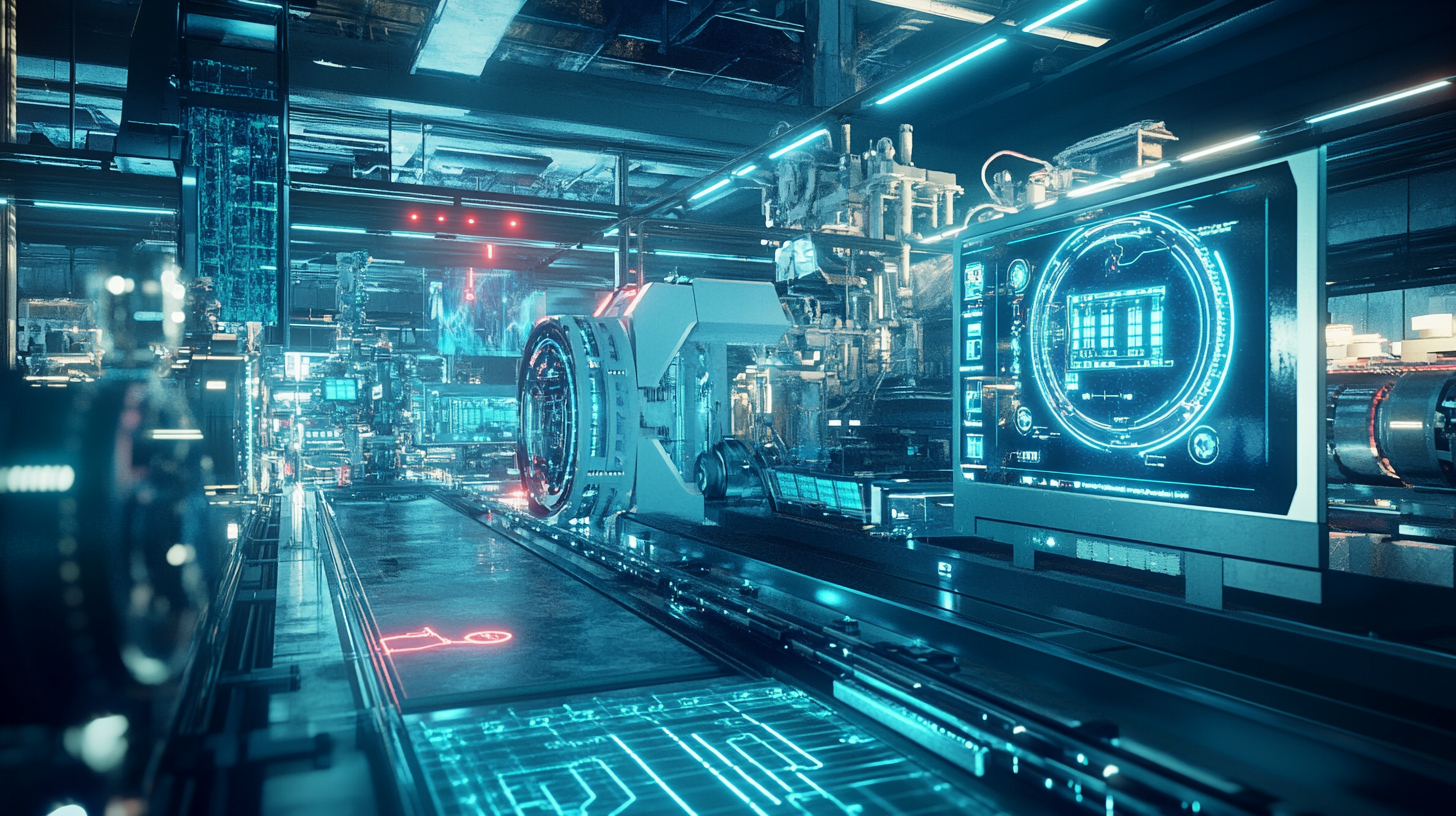
Economic security is a crucial factor for investments in mechanical engineering – Image: Xpert.Digital
🚀🔧💡 How does economic uncertainty affect investments in mechanical engineering?
🌐💡 Economic uncertainty is a crucial factor significantly impacting investments in mechanical engineering, a central pillar of German industry. This uncertainty stems from a multitude of elements, including geopolitical conflicts, rising energy prices, fluctuating financial markets, skills shortages, and the challenges of digital transformation. Traditionally a pioneer in technology and innovation, mechanical engineering faces profound decisions during this period of economic turmoil.
This article examines the impact of economic uncertainty on mechanical engineering and outlines strategies for how companies can meet these challenges.
🌍📉❗ Impact of economic uncertainty on investments in mechanical engineering
1. Decline in willingness to invest
One of the most obvious effects of economic uncertainty is a reluctance to invest. Companies that have to plan long-term in light of unclear conditions postpone major investments or forgo them altogether.
- Planning uncertainty: Volatile energy and commodity markets, as well as uncertain geopolitical developments, make planning difficult for companies. Confidence in stable framework conditions is a fundamental prerequisite for the willingness to finance new machinery, equipment, or production capacities.
- Financial strain: Increased interest rates and energy costs are putting additional pressure on companies. Many firms are forced to direct financial resources towards maintaining current operations rather than investing in the future.
2. Weakness in demand and declines in production
The uncertainty is also affecting sales markets, leading to a significant decline in demand:
- In the first seven months of 2024, production in the German mechanical engineering sector fell by 6.8%. At the same time, capacity utilization decreased to an average of 79.4%. These figures illustrate that many production facilities are no longer operating at full capacity.
- Customer industries such as the automotive industry are undergoing massive transformations, for example through the transition to electromobility. This is resulting in a reluctance to procure new machinery.
3. Delay or cancellation of projects
Uncertainty particularly affects projects with high investment volumes and a long-term time horizon.
- Research and development (R&D) projects: Given tight budgets, funding for innovation is often the first to be cut or postponed. This has serious long-term consequences for competitiveness.
- Expansion of modern production capacities: Projects aimed at automation, digital networking or sustainability are also frequently postponed indefinitely.
4. Impact on employment and competitiveness
In addition to the financial consequences, the uncertainty also affects companies' personnel policies:
- Short-time work and staff reductions: Companies are trying to reduce their costs through flexible measures such as short-time work. At the same time, they are trying to retain qualified specialists in order to be prepared for the next economic upswing.
- Threatened competitiveness: Companies that fail to invest in new technologies and digital transformation risk falling behind internationally. Competitors, particularly from Asia, are increasingly focusing on digitalization and sustainable innovations.
### 🌐⚠️📊 Causes of economic uncertainty
It is important to examine the main causes of the current economic uncertainty, as these provide the context for the aforementioned effects:
- Geopolitical conflicts: The war in Ukraine has severely destabilized energy and commodity markets. Supply chains are disrupted, and export markets in Eastern Europe have become more uncertain.
- Rising energy costs: The explosion in costs for gas, electricity and other forms of energy has put a massive strain on Germany as a production location.
- Regulatory burdens: Bureaucratic requirements, uncertain tax frameworks and changing funding structures contribute to planning uncertainty.
- Skills shortage: Demographic change and the lack of qualified personnel are putting additional pressure on companies.
🌟💻🔧 Solutions and perspectives
Despite the numerous challenges, there are promising strategies to put the mechanical engineering sector back on a growth path.
1. Improvement of the economic policy framework
A stable, reliable economic policy is a cornerstone for a return to an investment-friendly environment. Experts emphasize:
- Less bureaucracy: Reducing regulatory hurdles and simplifying application procedures are necessary to relieve the burden on companies.
- Targeted funding programs: Initiatives such as the Growth Opportunities Act can help to boost investment in research, development and production.
- Energy policy: A long-term, sustainable energy policy can reduce uncertainty about future energy costs.
2. Focus on innovation and digitalization
Companies that actively invest in new technologies gain a competitive advantage:
- Digital transformation: The introduction of Industry 4.0 solutions, such as networked production facilities or artificial intelligence (AI), can make processes more efficient and enable new business models.
- Sustainable technologies: Investments in environmentally friendly production methods and technologies such as hydrogen can help companies adapt to changing market conditions.
3. Diversification and international partnerships
A broad presence in new markets, as well as collaboration with other companies and research institutions, offers additional security:
- Opening up new markets: Diversification into high-growth regions such as Southeast Asia or Africa can mitigate risks from saturated markets.
- Partnerships along the supply chain: Closer cooperation allows for better management of supply bottlenecks and uncertainties.
4. Flexible business models
Companies that rely on more flexible business models are better equipped to react to uncertainties:
- Servitization: The transition from simply selling machines to providing services such as maintenance, consulting, and software solutions offers new revenue streams.
- Pay-per-use models: These models allow customers to use machines without having to buy them outright. This creates planning security for both sides.
🌈💪⚙️ A positive outlook: Resilience and adaptability
Despite the challenges, the mechanical engineering sector is demonstrating impressive resilience. Many companies have already begun adapting to the new conditions. "German industry has repeatedly proven in the past that it remains innovative and adaptable even in times of crisis," is a common mantra among industry experts. The combination of government support, entrepreneurial initiative, and technological advancements offers the opportunity to strengthen the mechanical engineering sector in the long term.
Economic uncertainty undoubtedly dampens investment in the mechanical engineering sector. However, times of crisis also present opportunities. Companies that proactively focus on digitalization, innovation, and cooperation can secure competitive advantages. The industry also needs reliable economic policies and targeted support to fully realize this potential. The path back to stability and growth requires decisive action – from businesses, policymakers, and society alike.
📣 Similar topics
- 🌍 Mastering economic risks: Strategies for mechanical engineering
- ⚙️ Digitalization as an opportunity: How modern technologies create security
- 📉 Production declines in mechanical engineering: What's behind them?
- 🔋 Rising energy costs: Impact on the investment market
- 📈 Investing in times of crisis: Success strategies for the future
- 🚀 Innovation drivers in mechanical engineering: Ways out of uncertainty
- 💡 Geopolitics and mechanical engineering: How companies can react
- 🔧 Skilled worker shortage in mechanical engineering: Challenges and solutions
- 🌐 Accessing international markets: Diversification is the focus
- 📊 Research, development and digitalization: Key to competitiveness
#️⃣ Hashtags: #MechanicalEngineering #EconomicUncertainty #Digitalization #Innovation #EnergyCosts
🔄📈 B2B trading platform support – Strategic planning and support for export and the global economy with Xpert.Digital 💡


B2B trading platforms - Strategic planning and support with Xpert.Digital - Image: Xpert.Digital
Business-to-business (B2B) trading platforms have become a critical component of global trade dynamics and thus a driving force for exports and global economic development. These platforms offer significant advantages to companies of all sizes, especially SMEs—small and medium-sized enterprises—which are often considered the backbone of the German economy. In a world where digital technologies are increasingly prominent, the ability to adapt and integrate is crucial for success in global competition.
More information here:
🌐 What role does digital transformation play in investment security in mechanical engineering?
💡💼 Digital transformation has become an indispensable driver for securing investment in mechanical engineering. It not only offers the opportunity to make processes more efficient and establish new business models, but also helps companies protect themselves against risks and challenges in the long term. In an industry characterized by innovation pressure and global competition, digitalization is a fundamental prerequisite for remaining competitive and ensuring sustainable growth.
🚀 Increased efficiency and productivity through digitalization ⚙️
A key aspect of digital transformation is the optimization of production processes. By using modern technologies such as the Internet of Things (IoT), artificial intelligence (AI), and big data, companies can significantly increase the efficiency of their equipment. Predictive maintenance is one example: This technology uses sensor data and algorithms to monitor machine conditions in real time and identify maintenance needs early on. The result is reduced downtime and lower maintenance costs. At the same time, overall equipment effectiveness (OEE) is improved, as potential malfunctions are addressed before they lead to larger problems.
Another advantage of digitalization lies in the automation of recurring processes. Robots and automated production lines can not only increase productivity but also reduce error rates and ensure consistently high product quality. This is crucial for remaining competitive in a globalized market.
🌟 Developing new business models and markets 📊
Digital transformation is opening up entirely new perspectives for companies in the mechanical engineering sector. By introducing data-driven business models, machine manufacturers can generate additional value. Technologies such as digital twins – virtual representations of physical machines – enable precise simulation and optimization of production processes. Companies can not only sell machines to their customers, but also offer accompanying services such as remote monitoring or performance optimization.
One example of this is the "pay-per-use" model, where customers only pay for the actual use of the machines. This offers a flexible and cost-effective alternative to traditional purchasing. Such innovative business models foster long-term customer relationships and create new revenue streams.
Furthermore, digitalization enables entry into new markets. Data-driven insights into customer needs allow companies to develop tailored products and respond more quickly to changing market demands.
🤝 Flexibility and adaptability 🛠️
The ability to react quickly to market changes and individual customer needs is a crucial competitive advantage. Digital technologies make companies more agile and flexible. Production processes can be flexibly adapted through modular plant concepts and software-controlled systems to accommodate smaller batch sizes or customer-specific requirements.
In addition, technologies such as augmented reality (AR) and virtual reality (VR) are playing an increasingly important role in mechanical engineering. They not only facilitate the development of new products but also provide support for maintenance and employee training. Virtual prototypes can be tested more quickly and cost-effectively, which shortens development times and reduces the time to market for new products.
🔍 Risk minimization and improved transparency 🔐
The digital integration of data from across the entire value chain increases transparency and minimizes risks. Real-time data from machines and production facilities enables better decision-making and faster response times in the event of malfunctions. Companies can better monitor processes and identify potential bottlenecks or sources of error early on.
Another advantage is the use of digital twins, which enable companies to simulate complex production processes and products even before manufacturing begins. This allows development times to be shortened, production errors to be avoided, and ultimately costs to be reduced.
🌱 Sustainability and resource efficiency ♻️
Sustainability is not only a major societal trend, but also a key factor for investment security. Digitalization enables more efficient use of resources, thereby reducing costs and achieving environmental goals. Smart energy management systems can optimize the energy consumption of machines, while data-driven analyses help minimize material waste.
One example is the use of AI to optimize production processes. AI algorithms can recognize patterns in large datasets and provide recommendations for resource-efficient production. This not only contributes to cost reduction but also improves the company's environmental footprint.
⚠️ Challenges of digital transformation 💻
Despite its numerous advantages, digital transformation also presents challenges that companies in the mechanical engineering sector must overcome. These include the high investment costs for implementing new technologies and the need to modernize existing IT infrastructures. Furthermore, employees must be trained and internal resistance overcome to successfully implement digital transformation.
Another key issue is cybersecurity. The increasing networking of machines and systems increases their vulnerability to cyberattacks. Companies must therefore develop comprehensive security strategies to protect their sensitive data and systems. This requires investment in modern security technologies and raising employee awareness of potential risks.
📌 Strategic importance and success factors 🗂️
For digital transformation to contribute to long-term investment security, companies need a clear strategy. It is not enough to simply introduce individual technologies – rather, these must be integrated into a holistic concept. Key success factors include:
- Clear objectives: Companies should define the specific goals they want to achieve through digitalization.
- Employee qualification: Training the workforce is essential to promote the acceptance and effective use of digital technologies.
- Partnerships: Collaborations with technology providers and research institutes can accelerate the implementation of new solutions.
- Iterative approach: Instead of digitizing everything at once, companies should proceed step by step and start pilot projects to achieve initial successes and minimize risks.
Digital transformation is a key factor for investment security in mechanical engineering. It enables companies to work more efficiently, develop innovative business models, and adapt flexibly to market changes. At the same time, it offers solutions for using resources sustainably and minimizing risks. Despite the challenges it presents, digitalization is not an option, but a necessity for long-term success in global competition.
Companies that consistently leverage the opportunities of digital transformation will not only increase their competitiveness but also create a solid foundation for future investments.
📣 Similar topics
- 📣 Digital transformation in mechanical engineering: A key to securing the future
- 🚀 Increased efficiency with IoT, AI and Big Data
- 🔍 Transparency through digital twins and real-time data
- 🌍 Sustainability: Digitalization as an environmental driver for mechanical engineering
- 🤖 Automation and flexibility in production processes thanks to digitalization
- 🔒 Cybersecurity: The weak point in the networking of machines
- 💡 New business models: Pay-per-use and data-driven services
- 📊 Data integration to minimize operational risks
- ❗ Challenges and success factors of digital transformation
- 🏭 The competitive mechanical engineering market and the power of digitalization
#️⃣ Hashtags: #DigitalTransformation #MechanicalEngineering #EfficiencyIncrease #Sustainability #Industry40
We are here for you - Consulting - Planning - Implementation - Project Management
☑️ SME support in strategy, consulting, planning and implementation
☑️ Creation or realignment of the digital strategy and digitization
☑️ Expansion and optimization of international sales processes
☑️ Global & Digital B2B trading platforms
☑️ Pioneer Business Development

Konrad Wolfenstein
I would be happy to serve as your personal advisor.
You can contact me by filling out the contact form below or simply call me on +49 7348 4088 965 .
I'm looking forward to our joint project.
Write to me


Xpert.Digital - Konrad Wolfenstein
Xpert.Digital is a hub for industry focusing on digitalization, mechanical engineering, logistics/intralogistics and photovoltaics.
With our 360° Business Development solution, we support renowned companies from new business to after-sales.
Market intelligence, smarketing, marketing automation, content development, PR, mail campaigns, personalized social media and lead nurturing are part of our digital tools.
You can find more information at: www.xpert.digital - www.xpert.solar - www.xpert.plus
Keep in touch