Germany's red carpet for capital: A summit can attract billions – but cannot simulate a competitive location – Creative image on the topic, with AI: Xpert.Digital
Invest in Germany Summit: Germany is courting investors – but the biggest location problems remain unresolved
Nvidia, BlackRock and Siemens in Berlin: What's behind Germany's investment summit
New factories, data centers, AI: Why investors in Germany are still hesitant
With the Invest in Germany Summit, the German government aims to attract international investors to Germany and restore lost confidence in the country as a business location. Top figures from politics, industry, and finance are meeting in Berlin – including representatives from Siemens, BlackRock, and Nvidia. The focus is on potential investments in factories, data centers, energy, infrastructure, and industrial artificial intelligence. The political signal is important: personal discussions can reveal obstacles and advance concrete projects. However, a summit alone will neither lower electricity prices nor expedite permitting processes or fill the skills gap. Germany's chances therefore depend on whether the discussions result in reliable projects and tangible improvements in business conditions. What matters is not how many billions are pledged, but how much capital actually flows – and what new capacities, jobs, and technologies will emerge as a result.
From location promise to economic policy stress test
The summit is just the beginning: Germany needs these reforms to attract more investment
With the Invest in Germany Summit, the German government is attempting to signal a shift in its investment policy. International investors are no longer meant to view Germany primarily as a regulated sales market, but rather as a location for new factories, data centers, research facilities, energy plants, and digital business models. The ambition is high: the two-day summit in Berlin is intended to become a permanent platform that fosters closer ties between political decision-makers, international companies, institutional investors, and German corporations. The meeting is therefore far more than a conference. It is a publicly staged test of whether the German government can regain lost trust and translate investment intentions into actual projects.
Considerable political rank is being mobilized for this event. In addition to Chancellor Friedrich Merz and Federal Minister for Economic Affairs Katherina Reiche, Vice Chancellor and Federal Minister of Finance Lars Klingbeil, as well as the cabinet members responsible for research, transport, construction, digitalization, and public sector modernization, are participating. In thematically focused discussions, investors will have the opportunity to speak directly with the government about industrial artificial intelligence, semiconductors, energy, infrastructure, financing, high technology, aerospace, the construction industry, digital business models, geopolitics, and security. A digital application will also facilitate the scheduling of bilateral meetings. This direct access is a deliberate part of the initiative: Germany wants to signal that major investment projects should no longer fail due to fragmented responsibilities and a lack of designated contacts.
The political signal is understandable, because location decisions aren't based solely on spreadsheets. Trust, personal contacts, reliability, and the expectation of being heard when problems arise can influence decisions worth billions. Other countries have been pursuing active, top-level investment policies for years. Germany is catching up with something that has long been standard practice in the USA, France, the Gulf States, and Asian economies. Nevertheless, success isn't determined by the number of high-profile guests. A summit can generate attention and identify obstacles. But it can neither lower electricity prices nor expedite permitting, train skilled workers, or improve transportation infrastructure. The true significance of the meeting lies precisely in this discrepancy between the political arena and economic reality.
Five million euros for a new narrative about Germany
A total of five million euros has been earmarked in the budget of the Federal Ministry for Economic Affairs and Energy for the summit and the development of a new location marketing strategy. This sum is not solely for the event budget. It also includes a new digital presence and the development of an internationally competitive brand for Germany as an investment location. Compared to the potential investment volumes, the amount is small. A single additional data center, a semiconductor plant, or a major industrial investment can mobilize many times that amount. Purely from a financial perspective, the expenditure would therefore be justified if it positively influences even one major location decision.
Economically, location marketing only makes sense if it conveys a compelling offer. An advertising campaign can make existing strengths more visible, but it cannot compensate for a lack of competitiveness. Germany continues to boast a large domestic market, industrial value chains, high-performing research institutions, a broad higher education landscape, a well-qualified workforce, a strong export base, and a high degree of legal certainty. In addition, it offers a thriving small and medium-sized enterprise (SME) sector, mechanical engineering, automation, chemicals, automotive engineering, electrical engineering, and a growing ecosystem for industrial software and artificial intelligence. This combination is rare internationally and fundamentally attractive to investors.
These advantages are countered by structural disadvantages. High energy and labor costs, comparatively high corporate taxes, lengthy planning and approval processes, slow administrative digitalization, a shortage of skilled workers, and deficiencies in networks and transport infrastructure all negatively impact expected returns. International companies do not compare Germany to its own past, but rather to alternative locations. What matters is not only the size of a market, but also how quickly a plant can be built, how reliable the grid connection is, and the total costs incurred over its entire lifespan.
The five million euros are therefore not an investment policy, but a communication and coordination budget. They can only be effective if the summit becomes the gateway to a lasting reform process. If it remains merely a well-organized event, the money would not necessarily be wasted, but its economic impact would be limited. The crucial factor is whether the government derives measurable consequences from the discussions and follows up on them transparently.
Capital doesn't come for the red carpet
The economic backdrop to the summit is serious. Germany's real gross fixed capital formation declined by 0.5 percent in 2025. Construction investment performed particularly poorly, falling again and thus recording its fifth consecutive year of decline. Investment in equipment also remains below the level required for a comprehensive modernization of industry in the long term. While total gross fixed capital formation amounted to approximately €908 billion in nominal terms in 2025, rising prices can mask the actual expansion of the capital stock. For productivity and growth, what matters is not the nominal amount of money invested, but rather the additional machinery, buildings, networks, software solutions, and research facilities that are created as a result.
So far, 2026 has not seen a strong, broad-based investment boom. Adjusted for inflation, total fixed capital formation in the second quarter was roughly at the same level as the same quarter of the previous year. Investment in equipment increased slightly, while construction investment continued to decline. This suggests a fragile stabilization, not a fundamental change in the trend. While the German economy is growing again, a significant portion of the recovery is being driven by government spending on infrastructure and defense, as well as by more robust exports. The German government and the International Monetary Fund expect real growth of 1.3 percent for 2026 and 1.1 percent for 2027. The government forecast for 2028 is already considerably weaker at 0.6 percent.
These figures highlight the core problem: Germany is experiencing an economic recovery, but not yet a convincing structural transformation. Investors distinguish precisely between growth resulting from temporary government spending and growth based on higher productivity, new business models, and competitive private investment. The summit is therefore intended to mobilize capital that will amplify the public stimulus. The government does not need to finance every investment itself. However, it must create conditions under which private capital can find profitable projects in the long term.
This also means keeping expectations realistic. An announced investment is not yet a completed project, a memorandum of understanding is not yet a cash flow, and a political discussion is not yet a site decision. Years can pass between announcement, approval, financing, the start of construction, and commissioning. A credible assessment of the summit's success would therefore not only have to mention the billions of euros announced, but also later document how many projects were implemented, how much new capacity was created, and how much private funding was actually committed.
Foreign direct investment sends mixed signals
The data on foreign direct investment (FDI) presents a mixed picture. According to the balance of payments, Germany received a gross inflow of €86 billion in FDI from abroad in 2025, significantly more than in the previous year. At the same time, German companies increased their foreign investments to €97.5 billion. Overall, Germany remained a net capital exporter. At the end of 2025, the stock of foreign direct investment in Germany amounted to approximately €2.2 trillion. This demonstrates that the Federal Republic is by no means being avoided by international capital.
The picture changes when considering concrete new business establishments and expansion projects rather than financial flows within corporations. Germany Trade & Invest registered a total of 1,564 foreign greenfield, expansion, and relocation projects for 2025. This was 9.3 percent fewer than in 2024. The announced investment volume fell by 49.1 percent to €11.8 billion. However, this decline was part of a global slowdown: worldwide, the number of projects decreased by 9.5 percent, and in the European Union by as much as 18.1 percent. Germany thus lost projects, but its development remained relatively stable compared to the European average.
These apparent contradictions arise from different measurement methods. Direct investment statistics include equity capital and intra-group loans. Project statistics, on the other hand, record actual business establishments, usually exclude acquisitions, and are partly based on announced projects. Both perspectives are important for location policy. High capital inflows can indicate financial interdependence even without the construction of a new factory. Conversely, a smaller technology project can be strategically significant even if its initial scope remains limited.
That's precisely why the summit is primarily aimed at foreign greenfield investors. They are building new capacities, creating additional demand, bringing technologies, and integrating the site into international value chains. Around 550 personal and non-transferable invitations were sent out. The selection was based primarily on investment interest, potential volume, and a balanced distribution across industries and countries of origin. Approximately 200 executives are expected on the main conference day, and up to 500 participants at the reception. The difference between invitations and actual attendance is normal, but it also underscores that the quality of the decision-makers reached is more important than the size of the guest list.
Personal access becomes a location factor
The government is deliberately focusing on exclusive discussions. In addition to the ministers, eight so-called business co-hosts will participate: Roland Busch from Siemens, Valérie Baudson from Amundi, Hélène Huby from The Exploration Company, Larry Fink from BlackRock, Bastian Nominacher from Celonis, Bettina Orlopp from Commerzbank, Christian Sewing from Deutsche Bank, and Jeannette zu Fürstenberg from General Catalyst. This group connects industry, banking, asset management, software, aerospace, and venture capital. Its purpose is not merely to provide representation, but to shape the discussion from the perspective of major investors and technology-oriented companies.
The selection is economically sound. Siemens stands for industrial automation and the transition to software-driven production. Celonis represents process data and digital efficiency. The Exploration Company embodies the growing commercial space market. General Catalyst represents international growth and venture capital. Deutsche Bank, Commerzbank, Amundi, and BlackRock contribute access to credit, equity, and infrastructure financing. Taken together, these companies cover precisely those financing and technology chains that Germany needs for major transformation projects.
The close access to the government nevertheless raises legitimate questions. The summit includes confidential, non-press-accessible elements, while only selected program items are publicly available. Members of the German Bundestag were not invited due to the event's format. From the government's perspective, confidentiality is necessary because companies do not discuss sensitive location decisions, investment volumes, and regulatory hurdles in front of cameras. From a democratic perspective, however, a tension arises when economically powerful actors gain direct access to several cabinet members, while parliamentary and media scrutiny remains limited.
This problem cannot be solved by making all discussions public. Investment negotiations require protected spaces. However, clear transparency after the summit would be beneficial: What topics were discussed, what obstacles to reform were identified, what government commitments were made, and which projects were pursued? Anonymized documentation could protect trade secrets and simultaneously prevent political priorities from being formed behind closed doors. Exclusivity can be a useful tool, but it must not become a permanent style of governance.
Nvidia is becoming a symbol of a new industrial policy
The planned collaboration with Nvidia is attracting particular attention. The German government intends to mobilize a three-figure million-euro sum to advance industrial and so-called physical artificial intelligence. Physical AI refers to systems that interact with the real world: robots recognize objects, autonomous vehicles assess traffic situations, machines adapt processes, and digital twins simulate factories. Unlike generative text or image models, pure computing power is insufficient for this. What's needed are industrial data, simulations, sensors, control technology, domain knowledge, and a secure transition from the model to real production environments.
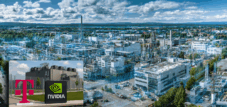
According to current plans, government funding will be used, among other things, for computing capacity in Deutsche Telekom's Industrial AI Cloud. The technical infrastructure is based on Nvidia systems and comprises approximately 10,000 high-performance processors. The investment in the Munich AI data center amounts to roughly one billion euros. Nvidia is contributing not only hardware but also, presumably, engineers. Around a dozen German companies are expected to participate, including Siemens, Audi, and the AI company Black Forest Labs. Furthermore, the initiative builds upon existing work on sovereign, open-source base models.
Economically, this approach is plausible. Germany's greatest opportunity in the AI competition does not lie in copying American platforms for general consumer goods. The country's strongest competitive advantages lie in industrial processes, machinery, vehicles, energy technology, logistics, and enterprise software. By combining these data sets with modern AI, productivity, quality, maintenance, and resource efficiency can increase significantly. Physical AI could thus become a link between traditional engineering and data-driven value creation.
The risks are equally obvious. Nvidia controls a key part of the global AI infrastructure. State-supported cooperation can provide short-term access to powerful technology, but at the same time deepen technological dependencies. Germany must therefore focus on open interfaces, data sovereignty, portable models, competition among cloud providers, and the development of European expertise. Funding should not simply finance computing hours at a dominant provider. It must demonstrably create knowledge, models, applications, and skills that remain within German and European institutions.
Our EU and German expertise in business development, sales and marketing

Our EU and German expertise in business development, sales and marketing - Image: Xpert.Digital
Industry focus areas: B2B, digitalization (from AI to XR), mechanical engineering, logistics, renewable energies and industry
More information here:
A thematic hub offering insights and expertise:
- Knowledge platform covering global and regional economies, innovation and industry-specific trends
- A collection of analyses, insights, and background information from our key areas of focus
- A place for expertise and information on current developments in business and technology
- A hub for companies seeking information on markets, digitalization, and industry innovations
Computing power alone will not create an AI economy
Computing power alone will not create an AI economy
The planned acquisition of computing capacity solves a real bottleneck problem. Many medium-sized companies, startups, and research institutions cannot train modern models with their own infrastructure. At the same time, access to high-performance chips is scarce and expensive. A shared industrial AI platform can create economies of scale, shorten development times, and lower barriers to entry. It would be particularly valuable if companies could use secure data rooms, specialized base models, and proven development tools without relinquishing sensitive production data.
Nevertheless, it would be a mistake to reduce AI policy to data centers. The economic return only materializes in application. This requires data cleansing, process redesign, employee training, machine integration, and liability issues resolution. Particularly in small and medium-sized enterprises (SMEs), the lack of awareness of AI's importance is often not the issue, but rather the ability to transform a pilot project into a stable production process. Therefore, funding programs should not only finance the training of large models but also support transfer centers, testbeds, standardized data spaces, and industry-specific implementation.
Germany isn't starting from scratch. Almost 40 percent of companies already use artificial intelligence in some form. Among large companies, its adoption rate is comparable to leading European countries and the USA. At the same time, its use remains unevenly distributed. Large corporations have access to data, IT departments, and budgets, while smaller businesses struggle with limited resources, a lack of skilled workers, and uncertainty about the economic benefits. A successful initiative must close this gap; otherwise, government seed funding will only have an impact on companies that could invest anyway.
The energy issue is also crucial. AI data centers require large, continuous electricity supplies and high-performance grid connections. In Germany, planning, permitting, and connection procedures can significantly extend the internationally typical implementation time of one to three years. Without sufficient available grid capacity and competitive electricity costs, a contradiction arises: the government subsidizes computing power, while the fundamental operating conditions hinder the development of new data centers. A credible AI strategy must therefore consider technology, energy, land-use, and permitting policies together.
High costs remain the toughest location test
The investment barriers faced by German companies are well documented. More than nine out of ten companies report difficulties in finding suitable skilled workers. Almost three-quarters consider the shortage of skilled workers a major obstacle to investment. A similar number of companies see high energy prices and the uncertain economic outlook as burdens. These factors interact: If qualified employees are lacking, the introduction of new technologies takes longer. If energy prices are high, the expected return on automated and electrified processes decreases. If demand and regulation remain uncertain, investments are postponed or limited to mere replacements.
In fact, around two-thirds of corporate investments in Germany flow into the modernization of existing capacities. Replacement investments are necessary, but only increase the capital stock to a limited extent. For a genuine boost in productivity, Germany needs more expansion investments, new production lines, additional research capacities, and scalable digital business models. The fact that almost nine out of ten companies continue to invest demonstrates the resilience of the location. However, the composition of these investments shows that many companies are acting defensively.
Germany remains a high-cost location when it comes to electricity prices. Small and medium-sized industrial companies paid an average of approximately 17.2 cents per kilowatt-hour in 2026. For larger industrial consumers, the figures for 2025 ranged from around 14 to 16 cents, depending on the consumption group. This puts Germany above the European average and significantly above cheaper locations in Scandinavia, France, or parts of North America. Relief measures regarding electricity tax and grid fees help, but do not completely eliminate the problem. A temporary industrial electricity price can stabilize energy-intensive companies, but it creates new questions about demarcation and does not replace a cost-efficient energy supply.
Added to this is the tax burden. The total tax burden on corporations, including trade tax and the solidarity surcharge, is around 30 percent. This places Germany among the high-tax countries in the OECD. The planned gradual reduction to approximately 25 percent by 2032 improves the outlook, but its effects are slow. For current location decisions, what matters is not only the announced rates in six years, but also reliable conditions throughout the entire investment phase.
Bureaucracy is not a nuisance, but a cost factor in capital
Regulation is often discussed abstractly in political debates. For investors, it is a measurable cost factor. Every additional month until approval ties up capital, delays revenues, and increases the risk of changes in technology, demand, or financing conditions. International companies factor this time into their return requirements. A location with higher construction and energy costs can remain competitive if it impresses with speed, reliability, and well-coordinated procedures. Germany currently often offers the opposite: high costs and lengthy processes.
Many companies report delays and higher operating costs due to administrative interactions. The fragmentation between federal, state, and local governments, as well as specialized agencies, is particularly problematic. Investors must simultaneously navigate land-use planning, building regulations, environmental impact assessments, grid connection requirements, fire safety regulations, water rights, and potentially issues related to state aid or foreign trade law. Even if each individual regulation is objectively justifiable, the overall system can become unpredictable.
The German government aims to reduce administrative costs for businesses by 25 percent during the current legislative period. While this goal is commendable, it is insufficient as a metric. Businesses primarily need shorter processing times, binding deadlines, digital procedures, consistent points of contact, and decisions that are not subject to multiple reviews. A permit can only be considered economically efficient if it also facilitates subsequent network connection, development, and implementation.
The summit could prove practical here. International investors could pinpoint exactly where Germany is losing out compared to its competitors. This should lead to the creation of an anonymized investment barometer that identifies recurring obstacles and assigns responsibilities. A central project manager for major strategic investments would also be necessary—one who coordinates processes rather than circumventing permitting procedures. A personal meeting with a minister is helpful; however, a robust process that functions even without special political access is more important.
Infrastructure determines private returns
Private investment depends more heavily on public infrastructure than the simple dichotomy between state and market might suggest. A factory needs roads, railways, power grids, water, digital connections, and skilled workers. A data center requires network access, fiber optics, and space. Housing and transportation determine whether skilled workers can reach a new location and live there affordably. If public infrastructure is inadequate, the costs of private projects increase, or they may not even be started in the first place.
The perceived investment backlog of German municipalities reached approximately €231 billion in 2026. Nearly €69 billion of this was earmarked for schools, and almost €54 billion for roads and transport infrastructure. While municipalities are planning increased investments, financial constraints, staff shortages in building departments, and complex procedures limit implementation. This is relevant for location policy because investors do not invest in an abstract Germany, but rather in specific cities and regions.
Despite rising expenditures, the government investment rate remains below average. Gross government investment reached approximately €147.5 billion in 2025, 12.3 percent higher than the previous year. Its share of gross domestic product was 3.3 percent, compared to 3.7 percent in the euro area and 3.9 percent in the European Union. The direction is right, but the initial gap is significant. Furthermore, additional budget funds must actually be translated into built infrastructure. Without sufficient planning resources, larger budgets initially increase prices and order backlogs without correspondingly expanding real capacity.
This creates opportunities for private investors, for example in energy, grid, digital, and transport infrastructure. A clear division of roles is essential. Private capital can finance projects and assume risks if revenues, regulation, and responsibilities are predictable. However, it should not be used to outsource core government functions without sufficient oversight or to buy short-term budget relief at the cost of higher long-term user costs.
The private investment pool needs clear boundaries
One component of the investment strategy is the planned Private Investment Pool in the energy sector. It aims to bring together private investors and energy suppliers and facilitate the raising of private equity. So-called project enabling companies are planned for this purpose. KfW is working on the concept and would handle its implementation on behalf of the federal government. Operating costs are estimated at approximately one million euros per year. According to the current concept, no government guarantees, sureties, or securities are planned.
The basic idea makes sense. Energy grids, storage facilities, generation plants, and municipal supply infrastructure require substantial investments with long investment horizons. At the same time, insurance companies, pension funds, and asset managers are seeking stable, long-term investments. A standardized platform can reduce transaction costs, bundle projects, and provide smaller utilities with access to institutional capital. Bundling is particularly important because many municipal or regional projects are individually too small to be economically attractive to large investors.
The structure nevertheless presents conflicting objectives. Equity capital is more expensive than state-refinanced loans because investors expect a risk-adjusted return. In the case of regulated networks or public service facilities, higher return requirements can indirectly be passed on to network charges, fees, or prices. Furthermore, there is a risk that attractive and low-risk projects will be privatized, while more challenging tasks will remain under public control. The public sector would then not necessarily be relieved of burdens, but would instead lose out on long-term returns.
Therefore, before implementation, it must be clarified which projects are accessible, how returns are limited or regulated, what say municipalities retain, and how conflicts of interest are avoided. A platform is not an end in itself. It should demonstrate that it enables additional investments that would not materialize without pooling resources. Equally important is transparent cost accounting across the entire life cycle. The decisive factor is not whether private capital is involved, but whether the chosen financing is more cost-effective, faster, and appropriate to the risk.
Greenfield investors are valuable, but not free
The focus on greenfield investments follows a clear logic. Building a new plant expands the production base, creates jobs, and often brings new technologies and international supply chains. Unlike an acquisition, it's not just a change of ownership of an existing company. Additional real capital is generated. For regions undergoing structural change, such projects can trigger significant multiplier effects, as suppliers, services, housing, and training follow suit.
However, states are increasingly competing for large-scale projects with subsidies, tax breaks, favorable land deals, and energy contracts. This increases the risk of costly location competition. An investment can appear politically spectacular yet be economically weak if the state bears a disproportionately large share of the risk. Funding decisions should therefore consider not only the announced jobs, but also productivity, knowledge transfer, local procurement, energy demand, additional infrastructure costs, and the project's long-term viability.
A strategic rationale is particularly plausible for semiconductors, batteries, data centers, and AI infrastructure. These sectors possess significant economies of scale, network effects, and are crucial for economic security. Government seed funding can be justified if it accelerates market development or reduces dependencies. However, it should be tied to verifiable milestones. If investments are not implemented, capacities are not created, or committed research activities are relocated, funding must be subject to reduction or repayment.
At the same time, the intense focus on large international investors must not overshadow domestic SMEs. German companies often invest abroad because growth markets, energy costs, or permitting processes are more attractive there. Therefore, a location policy that attracts foreign capital must credibly improve investment conditions for existing companies as well. Otherwise, a paradoxical situation arises: New investors receive individual support, while existing businesses are left to cope with everyday problems on their own.
Between openness and strategic dependence
Germany needs foreign capital, technology, and international markets. An economy with an aging population, significant transformation needs, and major infrastructure challenges cannot finance the necessary capital stock solely from public budgets. Openness is therefore not a weakness, but a source of productivity and innovation. International companies bring management expertise, supply networks, and access to global markets.
Openness, however, does not mean accepting every dependency. Investments in AI chips, cloud infrastructure, energy components, defense technology, and communication networks touch upon issues of security and technological sovereignty. The state must distinguish between desirable cooperation and critical dependency. A blanket policy of isolation would be economically damaging. Equally risky would be prioritizing short-term investment commitments over long-term control over data, infrastructure, and key knowledge.
The Nvidia collaboration highlights this tension. Without American high-performance processors, it's virtually impossible to build a competitive industrial AI infrastructure in the short term. At the same time, this support must not lead to a permanently closed ecosystem in which one provider controls hardware, software, and development tools. Germany and Europe should use this collaboration to develop their own models, applications, skilled workforce, and alternative technology stacks. Strategic sovereignty in this context does not mean autarky, but rather the ability to switch providers, control data, and manage critical functions independently.
The same applies to financial investors. Large asset managers can mobilize substantial funds and professionalize projects. Their return targets are legitimate, but not identical to public objectives. The state must set rules, ensure competition, and protect long-term interests in critical infrastructure. The presence of BlackRock, Amundi, banks, and venture capitalists at the summit is therefore neither proof of problematic financialization nor automatically a success for economic policy. What matters is the quality of the resulting projects and contracts.
What the summit must be measured against
The Invest in Germany Summit should not be judged solely on its atmosphere, the prominence of its guests, or the number of non-binding letters of intent. An economically sound framework for success would need to differentiate between several levels. In the short term, what matters is whether concrete projects are identified and responsible contacts are named. In the medium term, it is crucial whether investment decisions are made, permits are granted, financing is secured, and construction projects commence. In the long term, it must be demonstrated whether new capacities, productivity, employment, and technological capabilities are created.
This requires reliable tracking. An annual report that clearly distinguishes between announced, committed, and actually invested capital would be beneficial. It should itemize greenfield projects, expansions, research sites, and purely financial transactions separately. Similarly, it should present information on jobs created, additional production capacity, private and public financing shares, and the progress of implementation. Company-sensitive data can be aggregated. Without such a systematic approach, political communication remains vulnerable to double-counting and inflated figures in the billions.
A second criterion is the impact of the reforms. If investors repeatedly cite the same obstacles, the government must derive concrete changes from this. These include binding approval deadlines, faster grid connections, digital administrative procedures, more competitive energy prices, tax planning certainty, and more effective skilled worker immigration. The summit would be particularly valuable if it not only attracts projects but also facilitates governmental learning.
A third criterion is broad impact. Investments must not be concentrated on a few corporations, metropolitan regions, or politically visible mega-projects. Small and medium-sized enterprises (SMEs), startups, industrial regions in eastern Germany, and structurally weak municipalities must have access to capital, infrastructure, and transfer programs. Industrial AI, in particular, will only realize its full economic benefit when it improves productivity and quality not just in a few flagship factories, but in thousands of businesses.
The real summit begins after the summit
With the Invest in Germany Summit, the German government is sending a necessary signal. In the global competition for capital, Germany cannot rely on market size, industrial history, and legal certainty alone to be sufficient. Actively engaging with international companies is legitimate and sensible. Direct dialogue can reveal investment barriers, build trust, and accelerate projects. Even a budget of five million euros is justifiable if it results in sustained and professional investor support.
The event also reveals the weaknesses of current location policy. The fact that a red carpet, personal ministerial appointments, and a new marketing brand seem necessary demonstrates how hard Germany has to fight for attention and trust. The real competition isn't in the Berlin conference hall, but rather in electricity costs, taxes, permitting times, skilled workers, networks, and digital administration. No communication strategy can mask these structural disadvantages.
The planned AI alliance with Nvidia has the potential to combine industrial strengths with modern computing power. However, it can only become a model project if the government ensures open structures, data sovereignty, competition, and measurable technology transfer. The same applies to mobilizing institutional capital for infrastructure. Private financing can fill gaps, but it must not replace public responsibility with opaque profit-making models.
The clear perspective is therefore this: The summit is the right thing to do from an economic policy perspective, but only as a starting point. Its value lies not in exclusivity, but in implementation. Germany needs less symbolic investment friendliness and more reliable investment opportunities. If confidential discussions lead to faster procedures, concrete projects, and a permanently improved investment landscape, five million euros can generate a high return for the economy. If it remains merely a series of images, declarations of intent, and high-profile networking, the red carpet will become an expensively lit signpost to a location whose fundamental problems remain unresolved.
🎯🎯🎯 Data-driven B2B industry hub as a quasi-in-house solution


The quasi-in-house solution: How Xpert.Digital closes operational gaps in B2B marketing and sales – Smart Content-Driven Business - Image: Xpert.Digital
Xpert.Digital is a data-driven B2B industry hub led by Konrad Wolfenstein . The company acts as an external, quasi-in-house solution for industrial partners, closing operational gaps in marketing, content, and sales – without requiring additional resources on the client side.
More information here:
Your global marketing and business development partner
☑️ Our business language is English or German
☑️ NEW: Correspondence in your native language!
Konrad Wolfenstein
I and my team are happy to be available to you as your personal advisor.
You can contact me by filling out the contact form here wolfenstein@xpert.digital:or simply call me at +49 7348 4088 965. My email address is
I'm looking forward to our joint project.