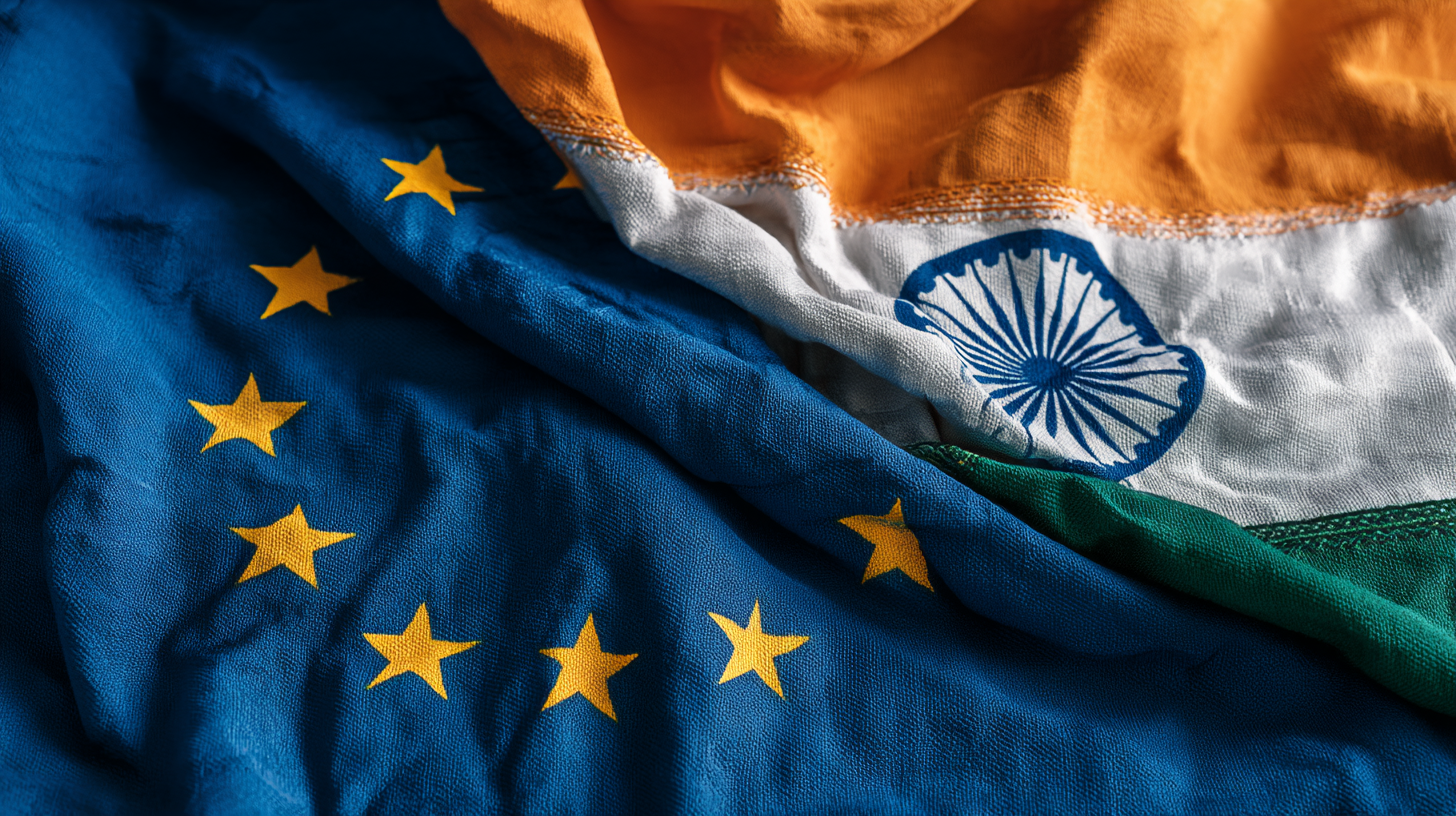
India: Free trade agreement with the EU as early as the end of January? Bilateral arms cooperation with Germany – Image: Xpert.Digital
Fear of US tariffs: How Trump's policies are uniting the EU and India
Navy's billion-dollar deal: Why India is suddenly relying on German submarines
Chancellor Friedrich Merz's trip to New Delhi is far more than the usual introductory visit of a German head of government to Asia. It symbolizes a fundamental reorientation of strategy. For decades, Berlin primarily focused on Beijing. Now, however, attention is turning fully to India – driven by global political constraints and the urgent desire to broaden economic ties.
At the heart of this new alliance are two monumental projects with the potential to fundamentally transform the relationship between Germany and India: Firstly, a historic arms deal for six submarines from Thyssenkrupp Marine Systems worth eight billion US dollars. Secondly, the conclusion of a free trade agreement with the EU is imminent, and after almost twenty years of stagnation, it is now to be finalized at breakneck speed.
But behind the impressive sums and diplomatic gestures of friendship lies a complex web of vested interests and risk management. The return of American protectionist tariffs under the Trump administration, as well as the need to break free from dependence on Chinese supply chains, is forcing Germany and India to cooperate. At the same time, India's traditional ties to Russia and its idiosyncratic neutrality in the Ukraine conflict remain a diplomatic challenge for its Western partners.
The following article examines the economic background of this change of course, highlights the opportunities that the Indian labor market offers for Germany's skilled worker shortage, and poses the critical question: Is India truly the hoped-for alternative to China, or is Germany entering into new, difficult-to-calculate dependencies?
Related to this:


Moving away from Russia and China: The German government's risky 8 billion euro plan
For the first time in decades, a German chancellor's first major trip to Asia will not be to China or Japan, but to India. This symbolic decision reflects a profound strategic shift that goes far beyond mere diplomatic courtesies. Relations between Germany and India have transformed: what was once a partnership focused on development aid is now a comprehensive strategic cooperation in which economic interests are increasingly intertwined with security concerns.
The latest figures illustrate this trend. Trade between the two countries reached a new record high of approximately US$33.4 billion in 2024. German exports to India climbed to US$18.3 billion, while imports totaled US$15.1 billion. This places India 23rd among Germany's most important trading partners. However, considering the enormous size of the Indian economy, this is still comparatively little. It is precisely this gap between economic potential and actual cooperation that is the starting point for the current diplomatic initiative.
The background to this realignment is India's economic dynamism. With projected economic growth of 7.4 percent in fiscal year 2026, India maintains its position as the fastest-growing major economy among the G20 countries. The World Bank anticipates stable growth of approximately 6.7 percent in both 2025 and 2026. This makes India one of the most reliable growth engines of the global economy. This strong performance stands in stark contrast to the stagnant economy in Europe and the structural problems that Germany is currently grappling with.
The eight-billion-dollar deal: Technology transfer as political calculation
At the heart of the current rapprochement is a massive arms deal. Thyssenkrupp Marine Systems is on the verge of signing a contract to build six conventional submarines for the Indian Navy. The contract is valued at eight billion US dollars, making it the largest deal in Indian defense history. The submarines are to be built in Mumbai, meaning that extensive technical expertise will be transferred to India as part of the Indian "Make in India" initiative.
The technological centerpiece of this contract is fuel cell technology. Thyssenkrupp Marine Systems claims to be the world's only supplier producing an air-independent propulsion system based on this technology in series production. This technology allows submarines to remain submerged for up to two weeks without surfacing, significantly expanding their tactical capabilities. India's decision to choose this German technology after the last competitor from Spain withdrew underscores the leading role of the German naval industry in this field.
The strategic importance of this deal extends far beyond its purely economic benefits. According to the Stockholm International Peace Research Institute (SIPRI), India is the world's second-largest arms importer after Ukraine, accounting for 8.3 percent of global imports between 2020 and 2024. Between 2019 and 2023, India still sourced 36 percent of its arms from Russia, although this share is declining. German arms exports could therefore contribute to further reducing India's dependence on Russian arms supplies—an aspect that has gained additional strategic weight due to the war in Ukraine.
The knowledge transfer associated with this deal reflects a fundamental shift in global arms markets. With its "Atmanirbhar Bharat" initiative, which focuses on self-sufficiency and domestic industry, India is pursuing the ambitious goal of reducing its need to import armaments. The Indian Ministry of Defence has decided to allocate 65 percent of its budget to domestic procurement, signaling a clear preference for local production. For German companies, this means that access to the Indian market is increasingly only possible through joint ventures and technology exchange, which presents both opportunities and risks.
France's experience in the Indian arms market illustrates this trend. Safran Electronics & Defense has established a joint venture with Bharat Electronics Limited to manufacture components for air-to-ground weapons locally, aiming for a domestic production rate of approximately 60 percent. Similar agreements exist for guided missiles from KNDS France. These examples demonstrate that successful cooperation with India requires the gradual development of local capabilities. Critical technologies are initially protected, while less sensitive components are increasingly produced locally.
Free trade as a way out: The European answer to US protectionism
Parallel to arms cooperation, the issue of a free trade agreement between the European Union and India has also gained momentum. Chancellor Merz surprisingly suggested that such an agreement could be signed as early as the end of January 2026, when EU Commission President Ursula von der Leyen and Council President António Costa travel to New Delhi for the summit on January 27. This prediction seems very ambitious, considering that the negotiations have been ongoing for 18 years and a conclusion was originally expected only at the end of 2025.
The sudden acceleration of the talks can be explained by the increasing protectionist tendencies in US trade policy. Merz emphasized that Germany and India, in particular, are suffering from the return of this protectionism and therefore need to cooperate more closely. This assessment aligns with recent developments in global trade. The Trump administration imposed tariffs on India, initially 25 percent and later even 50 percent – among the highest tariffs ever levied against US trading partners. Trump justified this with India's oil purchases from Russia and threatened further punitive tariffs in connection with the war in Ukraine.
A free trade agreement between the EU and India could increase EU exports to India by more than 50 percent, according to the European Parliament. German businesses are hoping for significant tariff reductions, potentially down to zero percent, across all industrial sectors, particularly mechanical engineering, the automotive industry, and the chemical sector. Tariffs are expected to be eliminated on approximately 90 percent of goods, which would give German products a major competitive advantage. The Association of German Chambers of Industry and Commerce (DIHK) is demanding that noticeable reductions take effect from day one and that a transition period of more than ten years be avoided.
However, there are still hurdles in the negotiations. India is particularly opposed to the so-called Carbon Border Adjustment Mechanism (CBAM), which is scheduled to take effect in 2026. This mechanism obliges importers into the EU to make compensation payments for CO2 emissions generated during the production of their goods. The European Commission estimates the annual revenue from this mechanism at between €9 billion and €17 billion by 2030. For India, which exports a significant amount of goods from high-emission sectors such as steel, cement, and aluminum, this represents an enormous additional cost burden.
Furthermore, India is demanding duty-free access for labor-intensive sectors such as textiles, as well as exemptions from the European carbon price for its exports. The EU, in turn, insists on greater market access for cars, agricultural products, and medical technology, as well as binding sustainability standards. These differing positions explain why the negotiations are not yet concluded, despite the political will. Technical barriers to trade, bureaucratic certifications, and the demand for flexible rules on product origin are also points of contention that still need to be resolved.
Related to this:

Migration as an economic factor?
An often overlooked but economically crucial aspect of German-Indian relations is the immigration of skilled workers. The number of Indian citizens in Germany has more than tripled, rising from 86,000 in 2015 to 280,000 in 2025. The number of Indians in jobs subject to social security contributions increased from just under 25,000 to almost 170,000 during the same period. Furthermore, with nearly 60,000 students, Indians constitute the largest group of international students at German universities.
The importance of this development for the economy is evident in the qualification level of immigrants. The proportion of highly qualified individuals, particularly in the fields of mathematics, computer science, natural sciences, and technology (STEM), is exceptionally high. Indians lead the wage ranking among foreign employees in Germany, reflecting their high level of education. Over 32,800 Indian citizens work in STEM professions – a number that has increased almost ninefold between 2012 and 2024.
In October 2024, the German Federal Government adopted a "Skilled Workers Strategy for India." Thirty concrete measures aim to expand the recruitment of skilled workers. These include simpler and digital visa applications, more German language courses at Goethe Institutes in India, and increased involvement of the Federal Employment Agency. Furthermore, the Federal Cabinet concluded an agreement with India on mobility and migration, creating a solid foundation for cooperation in this area.
The economic logic behind this strategy is clear. Germany is facing a massive shortage of skilled workers, which is increasingly hindering growth. For Schleswig-Holstein alone, a gap of 327,000 workers is predicted by 2035. India, on the other hand, with its young population, possesses a huge pool of potential workers. The Indian labor market would need to create seven to nine million new jobs annually to absorb all job seekers. Therefore, the Indian government also has an interest in facilitating labor migration.
This migration policy gains additional strategic importance by being linked to other areas. The German government plans to systematically connect topics such as digitalization, artificial intelligence, and climate protection with the exchange of knowledge and the mobility of skilled workers. This will create a holistic cooperation model that goes far beyond traditional development aid.
Related to this:

The China alternative: Risk diversification as a necessary strategy
Deepening relations with India is closely linked to Germany's strategic realignment towards China. In recent years, Germany has recognized the risks of its economic dependence on China. According to a study by the German Economic Institute (IW), German industry has barely begun to diversify its activities in China, despite the significant increase in political risks. German direct investment in China exceeded €100 billion for the first time in 2021, demonstrating the close economic ties between the two countries.
The Russian invasion of Ukraine in 2022 and the subsequent exploitation of Germany's energy dependence have fueled discussions about similar vulnerabilities to China. Since then, Germany has been reconsidering its dependence, scrutinizing infrastructure investments more rigorously, and questioning Huawei's involvement in the 5G network. Nevertheless, German policy remains less restrictive than that of the US. Unlike Japan or India, Germany is less inclined toward complete decoupling.
In this context, India is increasingly seen as an alternative to China as a production location. The "China Plus One" strategy, in which companies expand their production without leaving China entirely, makes India a preferred destination. India's position is further strengthened by the fact that other countries are also trying to make their supply chains less dependent on China. This offers India the opportunity to gain market share in manufacturing.
India's perspective on the global shift away from China is quite unique. India views the restructuring of global supply chains as an opportunity, but at the same time remains dependent on Chinese intermediate goods for building its own industries. Nevertheless, since 2020, India has banned a total of 321 Chinese apps and excluded Huawei from its 5G network rollout – measures that are among the strictest in the world. This policy is partly a consequence of the border conflict with China, which led to deadly clashes in the Galwan Valley in 2020.
The rivalry between India and China extends beyond border issues and encompasses the entire South Asian region. China has massively expanded its influence in India's neighborhood through the "Belt and Road Initiative," which India perceives as strategic encirclement. A major project within this initiative runs through the Pakistani-controlled part of Kashmir, which India views as a violation of its territorial integrity. These tensions create opportunities for Western partners like Germany to pursue closer security cooperation with India.
Our global industry and economic expertise in business development, sales and marketing

Our global industry and economic expertise in business development, sales and marketing - Image: Xpert.Digital
Industry focus areas: B2B, digitalization (from AI to XR), mechanical engineering, logistics, renewable energies and industry
More information here:
A thematic hub offering insights and expertise:
- Knowledge platform covering global and regional economies, innovation and industry-specific trends
- A collection of analyses, insights, and background information from our key areas of focus
- A place for expertise and information on current developments in business and technology
- A hub for companies seeking information on markets, digitalization, and industry innovations
Why Germany is now focusing on India: What Germany really wants from India
Security in the Indo-Pacific: Germany's cautious engagement
The security policy aspect of German-Indian relations has gained considerable importance in recent years. In its guidelines on the Indo-Pacific region from autumn 2020, Germany acknowledged India's new geopolitical significance and began to broaden its relations in the region. In summer 2024, German units participated in a multinational military exercise in India for the first time. This opened the door to closer cooperation on security issues, something long desired by India.
This development must be considered within the context of the overall security architecture in the Indo-Pacific. India, along with the US, Japan, and Australia, is a member of the Quadrilateral Security Dialogue (Quad). This group functions as an informal alliance intended to safeguard a free and open Indo-Pacific. China views the Quad group very critically, seeing it as a kind of anti-China alliance modeled on NATO. In May 2022, the Quad states announced an initiative for improved maritime surveillance, the data from which is also to be made available to partners in Southeast Asia.
Germany is not a member of the Quad group, but its growing defense cooperation with India signals a cautiously stronger commitment to the Indo-Pacific region. The memorandum of understanding on enhanced arms cooperation, signed during Chancellor Merz's visit, is a further step in this direction. Prime Minister Modi also announced a joint development plan for future cooperation and thanked the German government for its willingness to simplify arms trade regulations.
However, security cooperation operates within a complex geopolitical triangle. India pursues a policy of strategic independence, which it maintains even after the incident with China. India also continues to cultivate close ties with Russia, from which it obtains significant amounts of military equipment and inexpensive oil. In December 2024, Modi warmly received Russian President Vladimir Putin, an event interpreted as a signal to the West.
This balancing act reflects India's complex situation. On the one hand, the country is concerned about China's growing power and seeks closer ties with the West. On the other hand, it does not want to abandon its historical relationship with Russia, which is also important as a counterweight to China. Indian foreign policy has shifted from the strict non-alignment of the Cold War to a more flexible strategy: it aims to maintain good relations with all major powers while simultaneously safeguarding its own interests.
Related to this:

The Ukraine question: India's neutrality as a test of patience for the West
India's stance on Russia's war of aggression against Ukraine is a key point of contention with its Western partners. Unlike most countries, India has not officially condemned the invasion. Instead, it advocates for dialogue and peaceful solutions without directly criticizing either side. Indian Foreign Minister Subrahmanyam Jaishankar summarized the country's position in four points: We do not live in the age of war; there are no solutions on the battlefield; Russia must come to the negotiating table; and India is committed to finding a solution to the conflict.
This cautious choice of words avoids blaming Russia, which has drawn criticism in the West. At the same time, India is showing a willingness to contribute to a solution, as evidenced by Modi's direct talks with President Putin and Ukrainian President Zelensky. However, India is avoiding an official mediating role, as this would require its own peace plan, which in turn could strain relations with Russia.
Economically, India and Russia have grown closer since the start of the war. Russia is now India's most important oil supplier. These oil purchases are causing considerable tension with the US. The Trump administration imposed tariffs on India and threatened further sanctions because the country continues to buy cheap Russian oil and gas. Trump argued that India, along with China, is the largest consumer of Russian energy, while the world wants Russia to end the war.
This pressure from the US, however, has not yet led to a change of course in India. Prime Minister Modi declared in August 2025 that India wanted to become more independent in its energy supply – an indirect response to US criticism. The Indian government is under pressure: it must maintain its partnership with the US – its largest trading partner and important ally against China – but cannot sacrifice its own strategic interests.
This creates a dilemma for Germany and the EU. On the one hand, they seek closer ties with India as a counterweight to China and for diversifying economic risk. On the other hand, India's pragmatic approach to Russia contradicts Western sanctions and moral standards. The German strategy appears to be to avoid overemphasizing these differences and to focus on areas where cooperation is possible. This is a realistic assessment: India will not become a complete ally of the West, but it is indispensable as a partner in certain areas.
Rethinking development cooperation: Investment instead of aid
One aspect of German-Indian relations seems contradictory at first glance: Germany continues to provide development aid even though India is now the world's fifth-largest economy. In 2022, Chancellor Scholz and Prime Minister Modi agreed that Germany would provide approximately €10 billion over ten years, or about €1 billion per year.
These payments, however, are no longer traditional development aid, but rather strategic investments in climate protection and the economy. Experts emphasize that the focus is primarily on supporting the development of climate-friendly infrastructure, such as energy projects to reduce emissions or sustainable agriculture. The whole world benefits from this, including Germany, since India, as the third-largest CO2 emitter, plays a key role in global climate protection.
The German Federal Ministry for Economic Cooperation and Development also points to direct benefits for the German economy. Cooperation improves the framework for investment. German companies increasingly see India as the most important country for investment in Asia and expect significant increases in sales and profits by 2029. This shows that the lines between development aid and economic promotion are becoming increasingly blurred.
In addition, Germany and India established partnerships for green development and hydrogen in 2022, as well as agreements on migration and mobility. These agreements have elevated relations to a new level. The goal of investing at least one billion euros annually in financial and technical cooperation by 2030 underscores the seriousness of this commitment.
Opportunities and risks: The economic balance sheet of the partnership
Closer economic ties offer great opportunities but also entail risks. On the opportunity side is access to one of the largest and fastest-growing markets. According to forecasts, India will become the world's fourth-largest economy as early as 2025 and will overtake Germany by 2028. While the global economy is growing only weakly, growth rates of over 6 percent are expected for India.
The Indian market offers not only size but also dynamism. The middle class and the wealthy population are set to grow significantly, and the number of super-rich could triple. This creates a domestic market with enormous purchasing power, which is very attractive for German exporters of machinery, cars, and chemical products. A free trade agreement could significantly boost exports in these sectors by eliminating high tariffs.
Defense cooperation also enables long-term industrial partnerships. The submarine deal is not a one-off transaction, but could be the start of further projects. The joint development of defense systems would integrate German companies into the rapidly growing Indian defense industry. India's arms exports are projected to rise to over five billion euros by 2029.
On the risk side, there is the challenge of technology transfer. The "Make in India" initiative requires that more and more products be manufactured locally. For German companies, there is a risk that important know-how will flow to Indian partners or competitors. In the submarine business, fuel cell technology is being made available in India. In the long term, this could allow India to build its own production capacity and become less dependent on German supplies.
The legal framework in India also presents a challenge. The legal system is often slow, and proceedings are lengthy. Protecting trademarks and patents is difficult, which is particularly important for pharmaceutical and technology companies. Furthermore, data retention regulations require investment in local infrastructure and increase costs.
Another risk is global political uncertainty. Since India is committed to its strategic independence, it will not completely sever ties with Russia and China, which could lead to tensions with the West. The current US tariffs demonstrate that even allies are not immune to protectionist measures. German companies investing heavily in India could thus find themselves caught in the crossfire of geopolitical conflicts.
Related to this:

World politics as a driver of economic restructuring
German-Indian economic relations are at a turning point. A partnership long characterized by development aid is evolving into a strategic cooperation driven by both economic interests and geopolitical necessities. Chancellor Merz's visit in January 2026 symbolically marks this reorientation, while numerous declarations of intent and the multi-billion-euro submarine deal provide the material foundation.
The economic logic is clear: Germany needs alternatives to China, access to growing markets, and skilled workers. India offers all of this and, in turn, is seeking partners for its modernization without relinquishing its independence. A free trade agreement with the EU would solidify this complementarity between the two economies and significantly boost trade.
However, the risks should not be underestimated. Technology transfer, uncertain legal frameworks, and political instability can diminish its success. India's continued support for Russia and its neutrality in the Ukraine war demonstrate that Germany's and India's interests are not aligned. The strategic partnership is more of a marriage of convenience than a love affair.
Nevertheless, deepening relations is essential from a strategic perspective. In a world increasingly fragmented into blocs and focused on isolation, Germany must forge new partnerships that offer economic opportunities and political flexibility. India fulfills both criteria and will therefore play a central role in German foreign economic policy in the coming decade.
The big question remains whether both sides can reconcile their differing strategic cultures in such a way as to create a stable partnership. Germany must learn to accept India's independence and understand that New Delhi will not be a junior partner to the West. India, in turn, must decide how much market liberalization it will allow in order to secure long-term ties with Western partners. Success will depend on whether both sides can find this balance without compromising their core interests.
Your global marketing and business development partner
☑️ Our business language is English or German
☑️ NEW: Correspondence in your native language!

Konrad Wolfenstein
I and my team are happy to be available to you as your personal advisor.
You can contact me by filling out the contact form here wolfenstein@xpert.digital:or simply call me at +49 7348 4088 965. My email address is
I'm looking forward to our joint project.
☑️ SME support in strategy, consulting, planning and implementation
☑️ Creation or realignment of the digital strategy and digitization
☑️ Expansion and optimization of international sales processes
☑️ Global & Digital B2B trading platforms
☑️ Pioneer Business Development / Marketing / PR / Trade Fairs
🎯🎯🎯 Benefit from Xpert.Digital's extensive, five-fold expertise in one comprehensive service package | BD, R&D, XR, PR & Digital Visibility Optimization
Benefit from Xpert.Digital's extensive, five-fold expertise in a comprehensive service package | R&D, XR, PR & Digital Visibility Optimization - Image: Xpert.Digital
Xpert.Digital possesses in-depth knowledge across various industries. This allows us to develop tailored strategies precisely aligned with the requirements and challenges of your specific market segment. By continuously analyzing market trends and monitoring industry developments, we can act proactively and offer innovative solutions. The combination of experience and expertise generates added value and provides our clients with a decisive competitive advantage.
More information here: