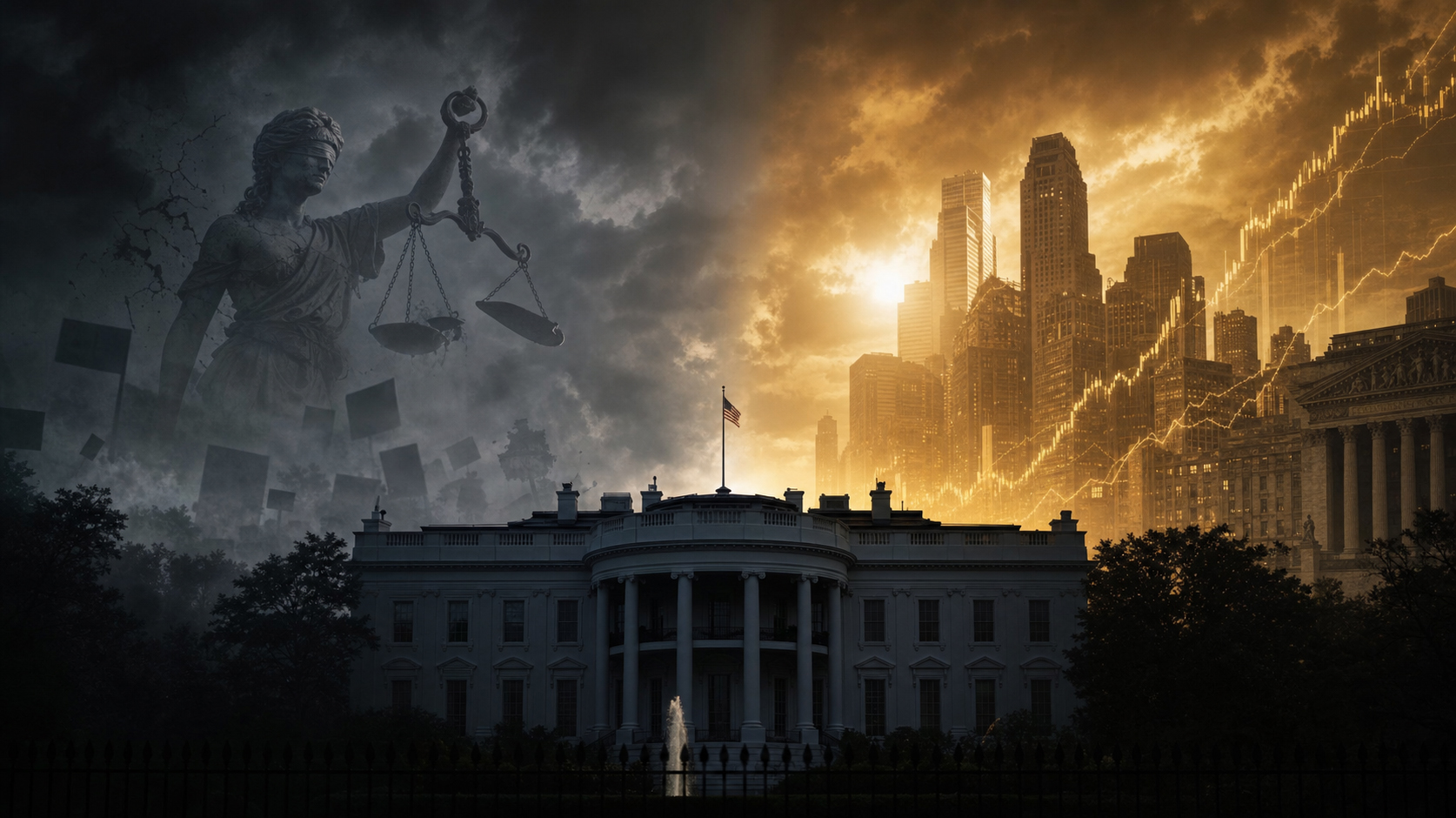
The economic and political costs of a US president in constant scandal mode: sex scandal, legal troubles and economic crisis of confidence – Image: Xpert.Digital
The economic and political costs of a president in perpetual scandal mode
How much more moral and economic collateral damage can American democracy tolerate?
Sexual scandal, justice system and economic crisis of confidence
The conviction of incumbent US President Donald Trump for sexual assault and defamation against author E. Jean Carroll marks a historic turning point: For the first time in the history of the United States, a president has been legally classified as a sex offender and defamer while simultaneously holding office and being responsible for key economic and security policy decisions. At the same time, he faces further civil and criminal proceedings for financial fraud, hush money payments, and abuse of power. This complex situation is not only a moral and legal problem, but also an economic risk: Trust in political institutions, the predictability of economic policy decisions, and international credibility are key factors of production in modern economies.
For decades, the USA was characterized by an interplay of Protestant morality, market-oriented pragmatism, and institutional resilience. Presidents like Eisenhower, Reagan, and Obama—despite political controversies—personally embodied a certain basic morality that was accepted by the majority of society. Scandals occurred, but a convicted sex offender in office was previously unthinkable. The question of what is "no longer right" in the USA can only be answered by considering the legal developments in the Carroll Complex, voter perceptions, economic data, and the long-term transformation processes of American society.
The following section first outlines the Carroll case and its legal development, followed by an analysis of its political and economic impact: on trust in the president, the functioning of the Republican Party, consumer behavior, capital markets, international economic relations, and institutional stability. At the same time, the role of US prudishness and moral double standards is examined, and the question is raised as to why such a president can politically survive despite massive losses of trust and credibility.
Historical rupture: The Carroll case and its legal development
The starting point is an incident in the mid-1990s at the New York luxury department store Bergdorf Goodman. E. Jean Carroll, a well-known columnist and author, described how she met Trump by chance and he initially asked her to help him choose a gift for a woman. The situation escalated into a mixture of playful provocation and sexual innuendo, culminating in both of them entering a dressing room. There, Carroll described a violent assault: Trump pushed her against the wall, partially undressed her , and penetrated or attempted to penetrate her with his fingers and penis —against her will and using physical force.
Carroll remained silent for decades, a common trait among many victims of sexual assault who experience shame, self-doubt, and fear of societal repercussions. It was only in the wake of MeToo and a shifting discourse on abuse of power and sexual violence that she went public with her story. Trump did not respond with legally cautious distance, but rather with open attacks: He essentially called Carroll a liar, publicly fantasized that she was "not his type," and repeatedly questioned her credibility and motives in a derogatory manner. This communication strategy was politically calculated, but legally highly risky.
In a civil trial in New York in 2023, a jury found Carroll's account of a sexual assault and subsequent defamation by Trump to be credible and provable. Legally, Trump was not convicted of "rape" in the strict criminal sense of New York law, but rather of sexual abuse or assault and defamation. The court awarded Carroll approximately five million US dollars in damages and compensation for pain and suffering.
Later, further judgments followed in the context of his ongoing defamation, leading to an additional compensation award of over $80 million in a separate proceeding. This brings the total civil payments from Carroll-related lawsuits to nearly $90 million. An appeals court upheld the core of the abuse conviction and the evaluation of evidence in late 2024, and the Supreme Court rejected an appeal in 2026, making the judgments final.
This legal thread is embedded in a broader legal front: civil judgments for alleged financial fraud related to the Trump empire, a criminal conviction in the hush money case in New York, investigations into classified documents, Trump's role in the storming of the Capitol on January 6, 2021, and election manipulation after the 2020 election. The Carroll case is particularly symbolic because it portrays the president not only as a potentially corrupt businessman or power-hungry politician, but also as a personally abusive perpetrator against a woman.
Moral double standards: prudishness, sex scandals and political calculation
The US maintains an ambivalent sexual culture. On the one hand, there are strong moral norms, particularly in conservative, evangelical circles, that highly value sexual self-discipline, traditional gender roles, and family. Scandals involving adultery, affairs, or sexual assault have destroyed careers in the past—consider politicians, pastors, or local officials who had to resign because of extramarital relationships or sexually explicit messages. On the other hand, sexualization, pornography, promiscuity, and the media's display of physicality are deeply ingrained in popular culture.
In this tense situation, a particular pattern emerges among top politicians: As long as their own candidate is portrayed as the guarantor of economic strength, a cultural battle against the "liberal left," and a defender of traditional values, many voters are willing to downplay or suppress sexual transgressions. Bill Clinton remained in office despite the Lewinsky affair; Ronald Reagan and George W. Bush, while not personally implicated in sexual scandals, tolerated instances of double standards within their respective parties.
In Trump's case, the prudishness of US society is intertwined with a highly polarized political environment. Evangelical and Christian conservative groups see him as a kind of "instrument of God" who, despite personal sins, pushes through a conservative agenda. Within their own groups, the moral condemnation of his actions is overshadowed by the feeling that they need a strong fighter in the cultural war against "gender ideology," abortion, liberal sexual morality, and supposed "wokeism.".
Opinion polls clearly show that many Americans are disgusted or shocked: A majority views the Carroll case negatively for Trump and considers the verdicts justified. At the same time, however, there is a stable minority—around a third of Americans—who continue to support the president and endorse his policies, even though they are aware of the allegations. In a majoritarian electoral system, given the appropriate geographic distribution, voter turnout, and institutional peculiarities (Electoral College, voting restrictions, gerrymandering), this minority is sufficient to maintain political power.
Economic trust: Data on approval and economic policy evaluation
What is particularly relevant from an economic perspective is not only whether voters find Trump morally acceptable, but also whether they trust him to manage the economy. For a long time, he was considered by many to be a "strong businessman," even during periods of political and personal scandals. This image has significantly tarnished during his second term.
Several polls show that approval of the president's economic policies has fallen to historic lows. In a CNBC poll, only about 34 percent of Americans approve of his handling of inflation and the cost of living, while 62 percent disapprove. Other surveys place his approval rating for economic policies at around 38 percent, with disapproval rates around 57 percent—the lowest since he took office.
A number of YouGov and Economist polls paint a similar picture: net approval ratings are clearly negative, with only around 29 to 35 percent support, while 60 to over 60 percent criticize his economic policies. His handling of inflation, the cost of living, and volatile stock markets is viewed particularly critically. In some surveys, over 70 percent of respondents believe that his policies could push the US economy into a recession, at least in the short term.
At the same time, his overall approval ratings are declining. A YouGov Economist poll shows him with just under 34 to 39 percent approval and just under 59 to 60 percent disapproval, resulting in a net approval rating of minus 19 or below. An ABC/Washington Post/Ipsos survey concludes that about 62 percent of Americans are dissatisfied with his performance in office, while only about 37 percent express satisfaction.
These figures are economically significant because they indicate that the president is losing his traditional strength—the promise of growth, jobs, and prosperity. Confidence in economic policy is a key factor in consumer spending, investment, and capital market stability. When a majority believes the president is not in control of economic challenges, higher risk premiums, greater volatility, and more cautious investment behavior are rational.
Trust in international comparison: Trump versus his predecessors
Compared to his predecessors, Trump has a significantly lower and more unstable base of trust. Presidents like Bill Clinton or Barack Obama experienced periods of approval ratings above 50 percent during their terms in office, with relatively stable ratings even when individual scandals or crises arose. George W. Bush experienced a loss of trust after the Iraq War, but his ratings typically fell to around 30 percent at their lowest point before recovering somewhat.
In contrast, Trump's approval ratings hovered around or below 40 percent for much of his presidency, often with significantly negative net approval ratings, and this persisted over extended periods. From an economic perspective, this means that the "political premium"—the uncertainty premium for economic actors regarding future political decisions—tends to be higher for him. Businesses and financial markets must factor in that political decisions are made with weak democratic support, increasing the likelihood of political backlash, legal obstacles, and sudden policy reversals.
The Carroll case exacerbates this crisis of confidence because it reinforces the perception that the president is not only politically controversial but also personally unreliable and prone to manipulation and defamation. Several polls show that a majority of Americans believe Trump primarily uses the office of the president for personal gain and abuses key institutions like the Department of Justice to persecute political opponents. This paints a picture of a president who is damaging fundamental elements of trust in the rule of law and the economy.
Economic and political consequences: consumption, investments, capital markets
The direct link between the Carroll case and macroeconomic indicators is inherently complex. Sexual offenses and defamation lawsuits are not classic economic variables. Their impact stems from trust in institutions and personal trust in leadership.
On the consumption side, political and moral uncertainty leads to more cautious spending, especially among households experiencing rising living costs and uncertain income prospects. When 76 percent of Americans are critical of the president's handling of the cost of living and 72 percent view his inflation policies negatively, this signals widespread dissatisfaction with the economic situation, which can dampen consumption and borrowing.
Companies are reacting to political and reputational risks by postponing investments or relocating them to locations perceived as more politically stable. The perception that the president is embroiled in a protracted legal dispute while simultaneously pursuing a confrontational foreign and trade policy exacerbates this uncertainty. Trade disputes with China, tariff policies, and unpredictable foreign policy reactions—all these factors, along with personal scandals, paint a picture of unpredictability.
Capital markets primarily process scandals through expectations. When political uncertainty and a loss of confidence dominate, volatility and risk premiums tend to rise. It must be soberly acknowledged that financial markets are often more cynical than the general public. As long as the president cuts corporate taxes, reduces regulation, and large corporations effectively benefit, some market participants are willing to ignore moral scandals. Nevertheless, repeated legal defeats and the possibility of further massive damage claims—for example, in the Carroll or fraud cases—pose a risk for companies in Trump's orbit and for creditors.
Another economic aspect is the president's potential personal insolvency. Legal experts believe it's possible that the combination of the Carroll rulings and other civil lawsuits could push Trump close to bankruptcy. A president whose personal finances are under immense pressure may behave differently politically: He might try to improve his own financial situation or that of his companies through political decisions, which exacerbates conflicts of interest and further erodes trust in policy-oriented politics.
Republican Party: Why is it sticking with Trump?
A key question is why the Republican Party continues to support a president despite such scandals and losses of confidence. Several mechanisms are at play here.
First, the party has been structurally aligned with Trump for years. Personnel decisions, party apparatus, local structures, and media ecosystems have largely been "Trumpified." Many officials owe their careers to his support or his voter base. An abrupt change of course would risk a massive internal party conflict and a split, potentially giving rise to new parties (the MAGA movement as a separate entity).
Secondly, despite all the scandals, Trump's core base remains remarkably stable. A third of American voters, with a higher concentration in certain states, is enough to dominate the Republican primary system. This group sees him less as a morally exemplary family man and more as an uncompromising fighter against a hated establishment. Scandals are interpreted as evidence that the system is fighting him, not that he is morally unfit.
Third, the Republican Party has cultivated a narrative over the years that portrays media outlets, courts, and academic institutions as biased, "liberal," and anti-conservative. When a court convicts Trump, the outcome is not interpreted as neutral jurisprudence, but rather as a politically motivated attack. This allows the party to downplay the consequences of the verdicts within its own voter base.
Fourth, economic self-interest plays a role. During his presidency, Trump pushed through certain economic policies popular with corporate elites and wealthy individuals: tax cuts, deregulation, and weaker environmental regulations. These groups are often willing to set aside moral objections as long as their economic interests are protected. The Republican Party is largely an alliance of economic elites and culturally conservative voters; Trump appeals to both with a mixture of economic populism and cultural warfare.
Why is Trump still in office when so much is "no longer right"?
That Trump remains in office despite the Carroll affair, the hush money conviction, and the crisis of confidence has both constitutional and political reasons. The US Constitution provides for a president with broad powers, whose removal is only possible through impeachment proceedings with high hurdles. These proceedings are political and not purely legal: The House of Representatives brings charges, the Senate delivers the verdict. A Republican majority, or at least a united Republican minority, can prevent removal.
At the same time, elections in the US are complex: Electoral College, swing states, voting laws, gerrymandering, and varying voter turnout rates mean that a candidate with fewer votes nationwide can still become president. If Trump's opponents are fragmented, the Democratic Party mobilizes poorly, or fields unpopular candidates, a president with significantly less than 50 percent approval can be re-elected through a combination of mobilizing his own base and structural advantages.
Added to this is a structural problem in American political culture: Polarization has reached a level where many voters no longer view politics in terms of "Who is competent and honest?" but rather in terms of "Who harms my enemies the most?" In such an environment, a personally scandalous president can survive as long as he is perceived politically as an effective weapon against the hated camp. This explains why, despite prudishness and moral norms, a significant portion of the population is willing to overlook Carroll, hush money, and other scandals.
Institutional erosion: What is (no longer) right in the USA?
The question of what is "no longer right" in the USA is complex. It would be wrong to condemn the entire society or to claim that moral standards have completely disappeared. Rather, a number of developments can be identified which, in combination, create a problematic dynamic.
First, economic inequality has increased dramatically. A large segment of the population experiences stagnant real wages, insecure jobs, rising living costs, and fears of downward social mobility. This breeds frustration and distrust of the political establishment. In such circumstances, voters are more inclined to support radical figures who promise to shake up the system, even if they are personally morally questionable.
Secondly, the media and communications landscape has fragmented. Traditional, relatively trustworthy media outlets compete with ideological channels, social networks, and algorithmically amplified echo chambers. Facts, legal assessments, and moral standards are no longer widely shared but selectively processed within "information tribes." For Trump supporters, the Carroll case is largely a narrative from "hostile media," while for his opponents it is proof of the president's moral bankruptcy.
Third, the Republican and Democratic parties are locked in a culture war where compromise is seen as weakness. This rewards politicians who seek maximum confrontation. Trump is an extreme manifestation of this logic.
Fourth, there is an erosion of trust in institutions. A significant portion of Americans no longer trust courts, media, academics, and government agencies to act neutrally. This distrust is further fueled by Trump's communication, but also operates independently of him: The financial crisis, the Iraq War, failed reforms, and social crises have weakened trust in the "system.".
Under these conditions, it is possible for a president to remain in office despite massive personal scandals and a loss of economic confidence. The US remains institutionally a democracy, but the quality of its democratic culture—citizen participation, trust in rules, and the willingness to accept defeat—has suffered.
Perspective: Consequences for the economy, politics and international order
From an economic perspective, a president constantly embroiled in scandals leads to several long-term risks. First, companies and investors may perceive the country as more politically volatile and be more likely to seek alternative locations, particularly for new investments with long payback periods. Second, confidence in the US's ability to uphold internationally reliable economic and trade agreements may decline. When key decisions appear dependent on a president's personal mood, the legal situation, and domestic political struggles, partner countries become more cautious.
Thirdly, such a president impacts the country's internal cohesion. When over 60 percent of the population rejects his leadership while a minority fanatically supports him, a fragile situation arises. Politically, this can lead to gridlock, institutionalized conflicts, and an inability to implement reforms. Economically, this often leaves only short-term crisis management instead of long-term structural policies.
Compared to his predecessors, trust in Trump is significantly weaker and more volatile. While previous presidents had isolated scandals that didn't polarize the public to such a lasting degree, scandal has become the norm for Trump. The Carroll case is particularly serious because—unlike a typical political scandal—it directly affects his personal integrity and his treatment of vulnerable groups (women, victims of sexual violence).
An objective, dispassionate assessment concludes that the moral and legal situation surrounding Donald Trump is noticeably impacting the US's economic risk and trust profile. American democracy is robust enough to withstand short-term shocks; it possesses checks and balances, federal structures, a vibrant civil society, and a high-performing private sector. But institutional erosion, the loss of trust in leadership, polarization, and moral double standards are not without consequences.
The crucial economic question is not whether a single scandal like the Carroll case immediately triggers a recession, but whether a prolonged state of emergency in the political culture undermines the country's ability to address collective future challenges: infrastructure, education, digitalization, climate policy, and social security. If a large portion of political energy is spent defending or fighting a president's scandals, it is lacking for constructive economic policy reforms.