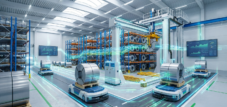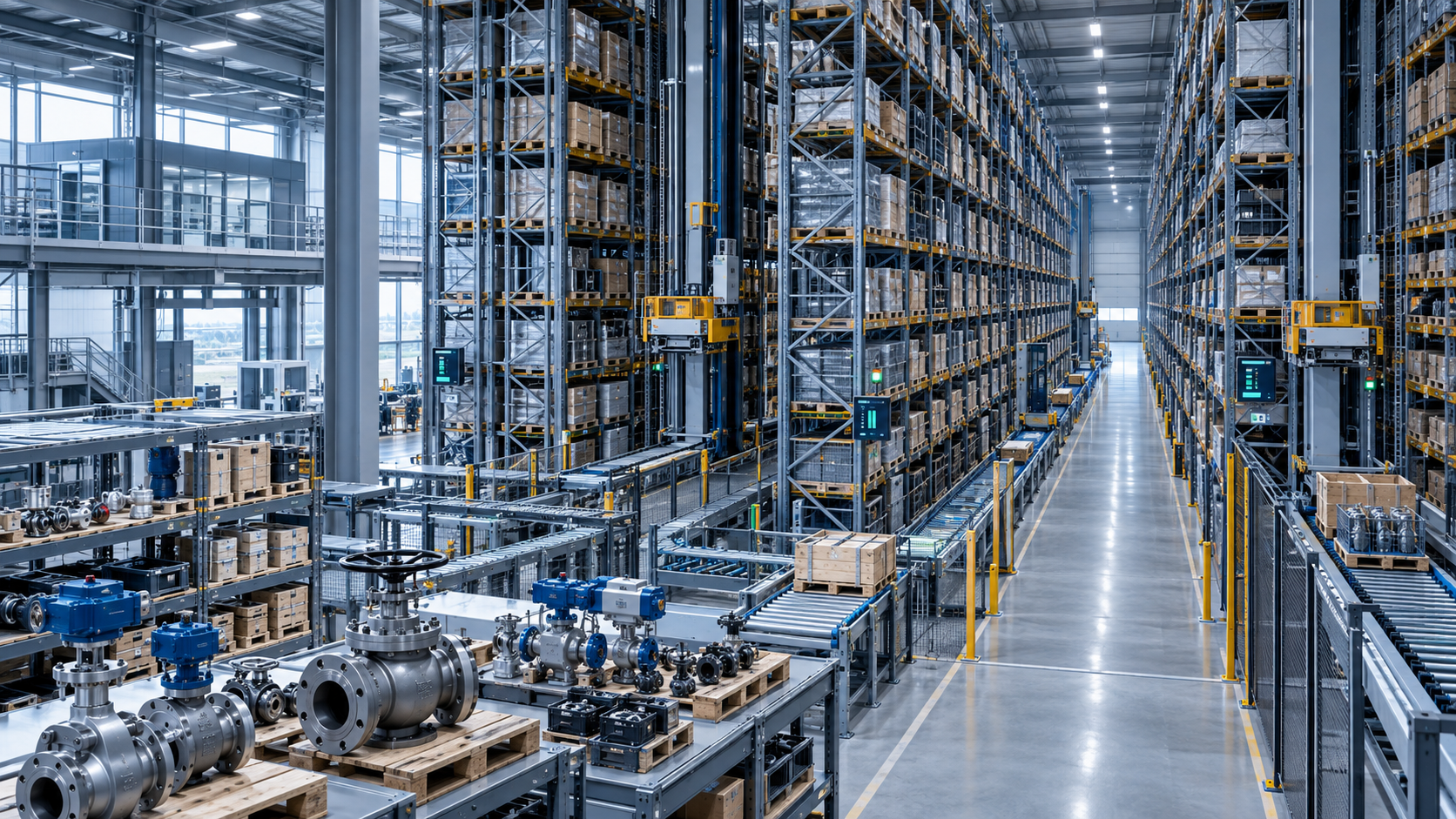
Automated spare parts warehouses: How intralogistics is becoming critical infrastructure – creative image on the topic, with AI: Xpert.Digital
Anyone who takes security of supply seriously can no longer treat the warehouse as a secondary operation
From storage room to strategic nerve center
Spare parts warehouses in industrial and infrastructure companies were long considered a necessary but secondary cost center. Their task seemed simple: receive parts, store them, and issue them as needed. This view is no longer accurate. In energy, gas, water, transportation, and telecommunications networks, material availability directly determines how quickly malfunctions can be repaired, maintenance work carried out, and systems put back into operation. If a valve, a seal, a control assembly, or a specialized tool is missing at a critical moment, a relatively minor shortage of materials can have significant economic consequences.
This changes the economic function of the warehouse. It is no longer just a place for storing inventory, but an operational security instrument. Its value is no longer measured solely by turnover rate, personnel costs, or occupied space. The crucial factor is whether the right technical component can be provided reliably, quickly, and with unambiguous identification. Especially in critical infrastructure sectors, this capability has an economic value that extends far beyond internal inventory cost accounting.
Automated pallet warehouses, digital inventory management, and software-supported material flows can significantly enhance this function. They reduce search times, improve traceability, and increase inventory accuracy. At the same time, new dependencies arise on software, power supply, control technology, and specialized service resources. The crucial question, therefore, is not whether a warehouse can be automated as much as possible. It is which combination of technology, organization, and human expertise generates the highest supply reliability at acceptable overall costs.
Spare parts logistics follows a different economic model
A spare parts or intervention warehouse differs fundamentally from a traditional distribution center. In e-commerce or consumer goods retail, the focus is on high order volumes, short delivery times, and rapid inventory turnover. Technical spare parts warehouses, on the other hand, often have a heterogeneous product structure. Besides frequently needed standard parts, they contain rarely used components, heavy fittings, sensitive measuring instruments, special tools, and assemblies with high individual values. Some parts may not be needed for years, yet they are indispensable.
This characteristic alters the usual performance indicators. A low inventory turnover rate is not automatically a sign of uneconomical inventory. For critical components, inventory serves an insurance function. The tied-up capital is the price for the ability to react immediately to disruptions. A part that is only needed once every ten years can be economically viable if its unavailability would cause a lengthy plant shutdown, a supply interruption, or significant consequential damages.
Optimization must therefore differentiate between capital commitment and default risk. A blanket reduction in inventory can improve key performance indicators in the short term, but weaken resilience in the long term. Conversely, excessive safety stocks lead to unnecessary costs, space requirements, and obsolescence risks. Digital warehouse technology provides a crucial lever here: When inventory levels are reliably recorded, consumption patterns analyzed, and replenishment times taken into account, reserves can be dimensioned more precisely.
The criticality of an item is particularly relevant. An inexpensive component can be more important from a business perspective than an expensive machine if it is used in a central location and cannot be procured quickly. Therefore, classification should not be based solely on value and consumption. Technical significance, delivery time, interchangeability, shelf life, consequences of failure, and the number of potential suppliers must also be evaluated. Only this multidimensional approach leads to a robust inventory strategy.
Automation is not an end in itself
The appeal of automated warehouse technology is obvious. High-bay racking systems utilize available space more efficiently, stacker cranes handle repetitive movements, conveyor technology connects functional areas, and software coordinates storage and retrieval. Manual processes are shortened, errors can be reduced, and material flow becomes more transparent. In regions with high labor costs and a growing shortage of skilled workers, the economic incentive is even greater.
Nevertheless, maximum automation is not automatically the best solution. Technical inventory levels are often too diverse to be fully integrated into a single, uniform system. Standardized pallets, containers, and regularly moved items are particularly well-suited for automated processes. Very long, heavy, irregularly shaped, or infrequently used goods can be stored more economically in conventional areas. A robust architecture therefore combines different storage configurations instead of treating each item group with the same technology.
The degree of automation should be derived from the actual process. Factors to be examined include article dimensions, weights, movement frequencies, load carriers, access speed, inventory growth, and operational peaks. Requirements for safety, traceability, and emergency operation must also be considered. A technologically impressive system can fail economically if it is designed without regard to the actual product structure. Conversely, a targeted, partially automated solution can offer greater benefits if it stabilizes critical processes and maintains sufficient flexibility for exceptional cases.
The overall process is crucial. A fast storage and retrieval machine is of little use if master data is incorrect, goods receipts are booked late, or picking orders are unclearly prioritized. Automation enhances existing process quality. Well-defined processes become faster and more reliable. Conversely, poor data and unclear responsibilities are also transmitted through the system more quickly. Therefore, organizational streamlining must precede any technical modernization.
Inventory accuracy becomes an economic asset
In a manually managed warehouse, system inventory and physical inventory can diverge. This can be caused by incorrect postings, misplaced items, inconsistent labeling, damaged tags, or withdrawals without immediate recording. In a typical warehouse, this results in search efforts and reordering. In a critical operational situation, incorrect inventory information can be far more serious: The system reports a part as available, when in reality it is either missing or unusable.
Automated processes improve inventory accuracy because every movement is triggered and confirmed by the system. Barcode, RFID, or sensor technology can support identification. However, this technical control is only effective if the master data is correct. Incorrect dimensions, weights, serial numbers, or storage conditions remain incorrect even in a highly automated system. Data quality must therefore be understood as an ongoing management responsibility.
Traceability plays a crucial role. For safety-relevant components, it may be necessary to document batches, serial numbers, test results, certificates, and usage histories. This makes the warehouse management system an integral part of quality and asset management. It answers not only the question of where an item is located, but also whether it has been tested, approved, and is suitable for a specific application.
The resulting data has its own economic value. Movement profiles show which components are used regularly, which stocks are aging, and where bottlenecks occur. Condition data can provide indications of wear and tear or unfavorable storage conditions. Linked with maintenance and plant data, this creates a better basis for demand forecasting. The warehouse thus transforms from a reactive issuing point into a data-driven component of maintenance planning.
High availability requires more than just high-performance machines
Availability in automated warehouses is often expressed as a percentage. While such a value seems straightforward, its meaning depends entirely on its definition. It must be clarified whether planned maintenance periods are included, whether a partially functional system is considered available, and what system boundaries are being considered. Mechanical components, controls, software, network, and higher-level IT systems can each have different availability levels. If just one central interface fails, the entire material flow can still come to a standstill.
For critical spare parts logistics, average annual availability alone is insufficient. A brief outage during an urgent intervention can be more damaging than several hours of downtime during a quiet operating phase. Therefore, availability must be combined with recoverability. Crucially, a fault must be detected, isolated, and rectified with increasing speed. Equally important is whether limited access to prioritized items remains possible during the disruption.
A robust concept requires technical and organizational fallback mechanisms. These can include redundant servers, alternative communication channels, local control options, defined manual removal procedures, and secure emergency lists. Not every component needs to be duplicated. Redundancy should be implemented where a single failure would have disproportionately large consequences. For less critical elements, rapid spare parts supply and clearly defined repair processes can be more economical.
Restarting deserves special attention. After a power, network, or control system failure, the system must know the location of charge carriers and which movements have been completed. Inconsistent data can be more dangerous than the initial shutdown. Restart procedures must therefore be planned, documented, and regularly tested. A system is only considered resilient when it not only operates stably but can also return to normal operation in a controlled manner after a disruption.
Maintenance is transforming from a cost center into a performance factor
Automated warehouses integrate mechanics, electrical systems, sensors, control technology, and software. This complexity necessitates a predictive maintenance strategy. Simply repairing equipment after a failure is too risky when high availability is required. At the same time, excessive preventive maintenance can lead to unnecessary costs and downtime. The most economically sound solution combines fixed inspection intervals with condition-based maintenance.
Sensors and operating data enable the early detection of wear. Motor currents, vibrations, temperatures, operating times, and energy consumption can indicate changing system conditions. If such signals are interpreted correctly, interventions can be planned before an unplanned breakdown occurs. The benefits extend beyond simply reducing downtime. Planned maintenance can be scheduled during off-peak hours, personnel can be deployed more efficiently, and the necessary spare parts can be provided in a timely manner.
Predictive maintenance should not be confused with automatic fault-free operation. Data models require sufficient historical information, accurate measurements, and expert interpretation. Rare types of failure are difficult to predict statistically. Furthermore, too many warning messages can overwhelm staff. A good system therefore prioritizes relevant deviations and combines data analysis with the technicians' experience.
Maintainability must be considered during the plant design phase. Easily accessible components, user-friendly diagnostic functions, standardized parts, and comprehensive documentation reduce repair times. A compact design can save space but may complicate maintenance. This trade-off must be evaluated economically. A slightly larger footprint may prove more cost-effective over the plant's lifespan if maintenance can be performed more safely and quickly.
Software determines future viability
A modern automated warehouse consists of several digital layers. The overarching enterprise or maintenance system manages material requirements and operational processes. The warehouse management system organizes inventory, storage locations, and orders. A material flow control system coordinates machines and prioritizes transport. Programmable logic controllers (PLCs), sensors, drives, and safety devices operate beneath this level.
The quality of the overall system is determined at its interfaces. If information is transmitted with delays, incompletely, or inconsistently, even high-performance hardware becomes ineffective. Open, documented, and traceable interfaces are therefore strategically important. They facilitate expansion, reduce dependencies, and allow for the replacement of individual components later on. Proprietary structures can simplify implementation, but in the long run, they generate high adaptation and switching costs.
Future-proofing doesn't mean immediately installing every conceivable function. It means enabling changes without a complete system replacement. Inventories, energy sources, and technical requirements can change significantly over the warehouse's lifespan. New load carriers, mobile robots, additional sensors, or data-driven maintenance models should be integrable. A modular architecture therefore protects against technological and strategic uncertainty.
Equally important is data sovereignty. Operational, movement, and status data should be fully available to the operator. Only then can they independently evaluate performance, conduct analyses, and integrate new applications as needed. If access to raw data is lacking or exports are only possible in proprietary formats, a long-term dependency arises. Data access is therefore not a secondary technical issue, but an essential component of economic control.
LTW Intralogistics Solutions

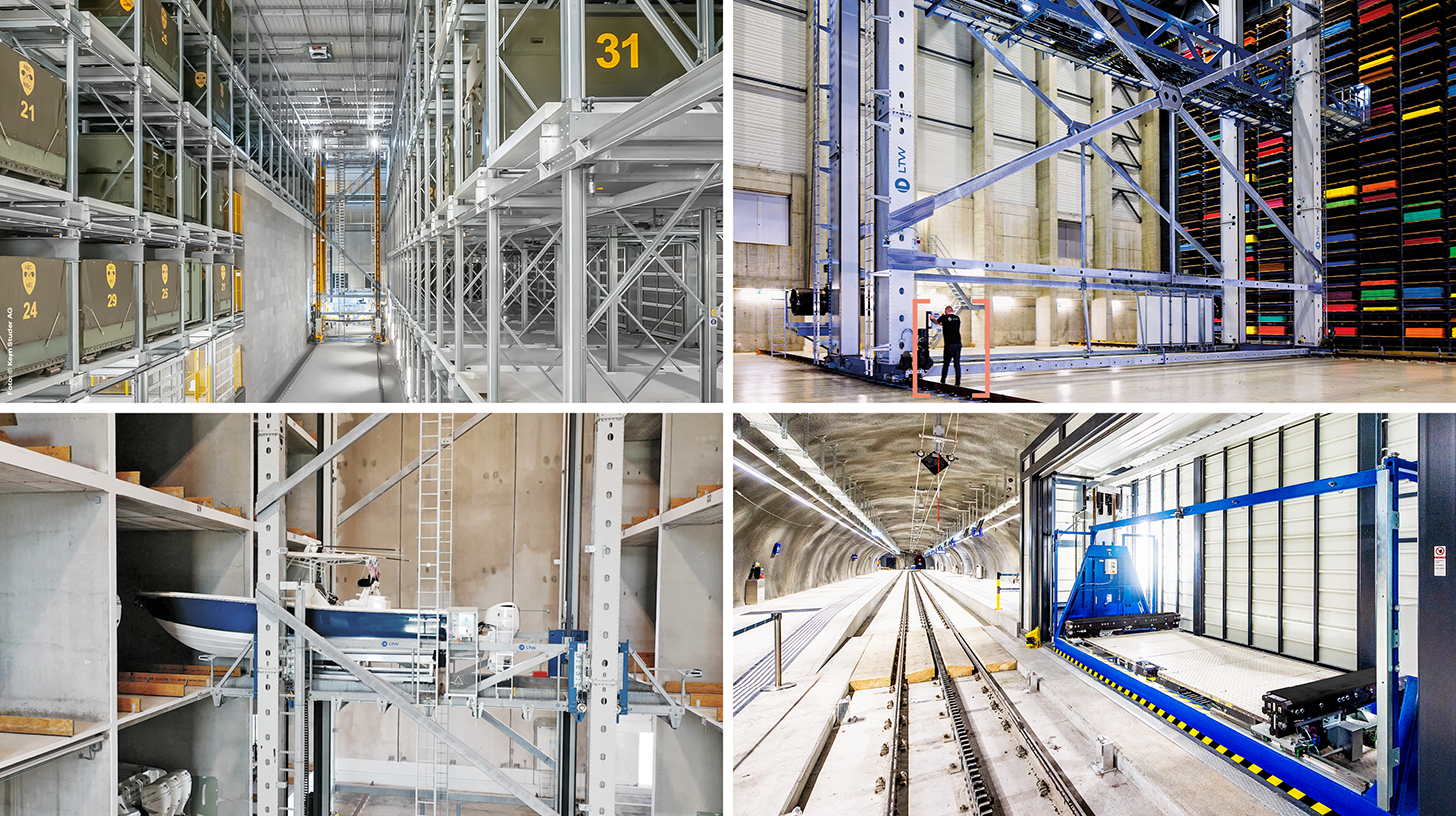
LTW Intralogistics – Engineers of Flow - Image: LTW Intralogistics GmbH
LTW offers its customers not individual components, but integrated complete solutions. Consulting, planning, mechanical and electrotechnical components, control and automation technology, as well as software and service – everything is networked and precisely coordinated.
In-house production of key components is particularly advantageous. This allows for optimal control of quality, supply chains, and interfaces.
LTW stands for reliability, transparency, and collaborative partnership. Loyalty and honesty are firmly anchored in the company's philosophy – a handshake still means something here.
Related to this:
Optimization of inventory key performance indicators for critical infrastructures
Cybersecurity protects the physical flow of materials
With increasing connectivity, digital and physical risks are merging. An automated warehouse can be mechanically sound and yet fail if software, user management, or network connections are disrupted. Especially in energy supply and other critical sectors, warehouse technology must therefore be integrated into the overall security architecture.
Remote maintenance access is a typical example. While it enables rapid support and reduces travel time, it also creates a potential attack surface. Secure authentication, time-limited access, logging, and clear responsibilities are essential. Shared default accounts or permanently open connections contradict a modern security concept.
Network segmentation limits the spread of potential attacks. Control technology, warehouse IT, and office communication should not operate uncontrolled on the same network. At the same time, necessary data flows must function reliably. Security must not be weakened by improvised workarounds that unnecessarily hinder operations. This requires an architecture that considers operational requirements and security objectives together.
Backups must do more than just store data. They must be complete, protected against manipulation, and practically recoverable. Regular tests demonstrate whether configurations, master data, and transaction information can actually be reconstructed. Software updates also require a controlled process. Operational technology cannot always be updated quickly because changes must be reviewed and coordinated with machine controls. This is precisely why clear responsibilities and long-term supported components are crucial.
Skills shortages are accelerating and changing the nature of work
In many European countries, demographic change is exacerbating the shortage of skilled personnel in logistics, technology, and maintenance. Automation can take over physically demanding tasks, long distances, and repetitive transport. It not only increases productivity but can also make workplaces more ergonomic and attractive.
The need for personnel doesn't disappear, however. It shifts from manual handling to monitoring, diagnostics, data management, and technical maintenance. Employees must understand malfunctions, set priorities, and act confidently in exceptional situations. This requires different qualifications than traditional warehouse work. Therefore, further training is a key component of any automation strategy.
Internal expertise is particularly important. If all diagnostic competence lies outside the company, a dangerous dependency arises in the event of a malfunction. Internal employees don't need to be able to perform every complex repair, but they should be able to classify fault patterns, establish safe operating conditions, and manage limited operations. These skills reduce downtime and improve collaboration with external specialists.
Employee acceptance also influences project success. Systems developed without sufficient involvement of end users often result in workarounds. Operators are familiar with special cases, practical obstacles, and informal processes that are not visible in process models. Their experience should be leveraged without uncritically perpetuating inefficient habits. Good automation combines technical design with real-world operational knowledge.
Security begins in states of emergency
In normal, automated operation, movements are predictable and protected by safety devices. The greatest risks often arise outside of this normal operation: with blocked load carriers, manual interventions, maintenance work, or restarts. It is precisely during these situations that employees are frequently under time pressure. Secure access, clear release procedures, and easily understandable displays are therefore essential.
The layout must allow for maintenance and troubleshooting without unnecessarily bringing people into hazardous areas. Separating protective devices, safe shutdowns, escape routes, and controlled access must be coordinated with the material flow. Safety cannot be added retroactively. It influences buildings, racking, conveyor technology, and control logic from the outset.
Fire protection also places high demands on fire safety. Dense storage alters fire load, smoke development, and accessibility. Packaging, plastics, oils, batteries, and technical operating fluids can create various risks. Storage zones, detection, and extinguishing technology must be tailored to the actual goods. Subsequent modifications are often expensive and can reduce usable capacity.
A sound safety architecture also supports economic efficiency. Fewer accidents, faster approvals, and clear processes reduce downtime. Conversely, complicated or impractical safety measures lead to workarounds. Safety and productivity are therefore not mutually exclusive when planned together.
Energy efficiency affects costs and resilience
Automated technology requires electricity, but can simultaneously reduce travel distances, floor space, and errors. The actual energy efficiency depends on the design, utilization, and control system. Efficient drives, energy recuperation, intelligent driving strategies, and demand-based standby modes lower consumption. A compact high-bay warehouse can also require less heated and illuminated space per storage location.
For cost accounting, an average annual consumption figure is insufficient. Peak loads, standby consumption, and operation at low utilization should be considered separately. Measuring points at the system level enable precise allocation. They also aid in condition monitoring: If consumption per movement increases, this can indicate wear and tear, unfavorable operating profiles, or mechanical problems.
Energy supply is also a matter of resilience. In the event of a power outage, the system and its load carriers must be brought to a safe state. Data must not be lost, and the restart must be controlled. For particularly critical items, limited emergency access may be advisable. However, supplying the entire system with emergency power would likely be prohibitively expensive.
The appropriate solution arises from a risk assessment. Which functions must remain immediately available? Which can be paused in a controlled manner? How long can access be interrupted? These questions lead to an economically justified hierarchy of uninterruptible power supply, emergency power, data backup, and manual fallback processes.
Life cycle costs are more meaningful than the purchase price
Automated warehouses are long-term systems. Their economic viability is determined not only by the initial investment, but also by energy consumption, maintenance, spare parts, software updates, training, inspections, and subsequent upgrades. Added to this are the costs of unplanned downtime and limited operational capability. A seemingly inexpensive system can become costly in the long run if components are discontinued prematurely or require specialized expertise for maintenance.
A reliable assessment therefore considers the total life cycle costs. This requires realistic assumptions about service life, operating hours, cycles, load profiles, and maintenance intervals. Price increases for energy and personnel, as well as major technological upgrades, should also be factored in. Especially with control systems, servers, and software, it is likely that they will need to be replaced or updated several times within their mechanical lifespan.
Sensitivity analyses reveal how stable the economic viability remains under changing conditions. What happens with increased usage, higher energy prices, or rising maintenance costs? How does a changed product range affect the outcome? What are the consequences of a longer operating life? A solution is economically robust if it proves convincing not only under ideal assumptions.
In addition to direct costs, avoided damages must be considered. Faster fault resolution, reduced stockouts, and improved traceability have economic value, even if this is not always reflected in ongoing savings. For critical infrastructure, reducing infrequent but serious outages can represent the most significant benefit.
Key performance indicators must reflect the company's mission
Traditional warehouse metrics such as throughput, occupancy rate, and cost per movement remain relevant, but are no longer sufficient. A critical spare parts warehouse must primarily support operational readiness. Therefore, inventory accuracy, lead time for prioritized items, technical availability, and recovery time should be measured.
Average values can mask weaknesses. A very good average delivery time says little about whether rarely needed critical parts can be reliably located. Inventory errors are also not synonymous. A missing consumable has different consequences than an unavailable safety-relevant assembly. Key performance indicators should therefore differentiate according to criticality.
The measurement logic must be transparent. Raw data, definitions, and calculation rules should remain traceable. Only in this way can causes be identified and improvements derived. If a key performance indicator (KPI) decreases, it must be possible to distinguish whether mechanical factors, software, master data, or organizational processes are responsible.
Key performance indicators (KPIs) must not encourage misconduct. A one-sided optimization of throughput can lead to postponed maintenance or inadequate handling of special cases. A balanced system combines productivity, safety, quality, energy, and resilience. This ensures that performance is not reduced to speed, but rather aligned with the actual operational task.
Belgium demonstrates the European dimension of change
With its ports, transport routes, industrial clusters, and cross-border energy networks, Belgium holds particular logistical significance. The geographical proximity of major consumption and industrial regions increases the demands on reliable technical infrastructure. Efficient intervention and spare parts logistics therefore not only support individual locations but can also stabilize supra-regional supply chains.
At the same time, labor, energy, and land costs are comparatively high in Western Europe. This strengthens the incentive to use existing buildings more efficiently and to automate recurring processes. However, high investments must remain productive for many years. Flexibility and scalability are therefore more important than short-term performance maximization.
The transformation of the energy system increases uncertainty. Natural gas will initially remain significant, while biomethane, hydrogen, CO₂ transport, and other energy carriers create new technical requirements. Components, materials, and safety regulations may change. A modern warehouse should not have to predict such developments in detail, but should enable spatial and digital adjustments.
This challenge affects all of Europe. Critical infrastructure is becoming more complex, more interconnected, and simultaneously facing higher expectations for availability. Warehouse automation is therefore becoming part of industrial resilience policy. It can reduce dependencies, but also creates new technological constraints. The strategic benefits depend on how consciously these constraints are managed.
The greatest risks arise in data, transitions, and interfaces
Large-scale technical projects rarely fail due to a single machine. Often, the causes lie in incomplete master data, underestimated building interfaces, delayed software integration, or unclear responsibilities. The transition from the existing to the new system is particularly critical. During the migration, existing systems must remain available, data must be transferred, and processes must be relearned.
A phased implementation reduces risk. First, items, dimensions, weights, movements, and criticality factors are clarified. This is followed by layout verification, simulation, and interface testing. Before full operation, the system should be tested with realistic loads and deliberately induced disruptions. Incorrect labeling, damaged pallets, network interruptions, and blocked conveyor lines are all part of a robust test program.
The organization also needs to prepare. Roles, escalation paths, and emergency procedures should be defined before the start. Employees need sufficient time to practice not only standard procedures but also exceptional cases. Documentation must be understandable, up-to-date, and available in case of a malfunction. A technically complete system is not yet an operational system.
After launch, a stabilization phase begins. Performance data, error patterns, and user feedback reveal where adjustments are needed. Small improvements to prioritization, user interfaces, or handover points can have a significant impact. Continuous optimization is therefore not a sign of poor planning, but a normal part of complex automation.
Strategic teachings for critical infrastructure
Automated spare parts warehouses mark a fundamental shift in intralogistics. Their value stems not only from reduced personnel or increased speed. They integrate inventory management, maintenance, risk mitigation, and digital control, thus becoming an integral part of the operational safety architecture.
For operators, this leads to a clear priority: material data and warehouse processes must receive the same management attention as other operational systems. It is contradictory to invest large sums in networks and facilities while the availability of comparatively small spare parts depends on opaque inventory or person-specific knowledge. Even seemingly insignificant bottlenecks can slow down large infrastructures.
Automation is a means to an end, not an end in itself. It creates value when built on clean data, clear processes, qualified personnel, and robust cybersecurity. Without these foundations, it can digitize existing weaknesses and create new dependencies. Therefore, the appropriate benchmark is not the visible level of technology, but the demonstrable improvement in security of supply, responsiveness, and life-cycle costs.
What matters is not how modern the warehouse looks
An automated high-bay warehouse can be technologically impressive. However, for critical infrastructure, it's not the external appearance that counts, but performance in an emergency. The right part must be available, clearly identified, securely accessible, and provided in the shortest possible time. Even in the event of malfunctions in the company's own technology, manageable operations must remain possible.
The strongest solution therefore combines several features: high inventory accuracy, robust automation, open software architectures, effective cybersecurity, good maintainability, and competent staff. In addition, it includes a cost-benefit analysis that goes beyond the purchase price, taking into account failure risks, energy consumption, modernization costs, and subsequent organizational expenses.
If this holistic view is implemented, the spare parts warehouse evolves from a passive cost center into a physical and digital reinsurance tool. It reduces operational risks, improves intervention capabilities, and strengthens the resilience of a system upon which the economy and society depend. This is precisely where its true economic significance lies.
Consulting - Planning - Implementation

Konrad Wolfenstein
I would be happy to serve as your personal advisor.
You can contact me at wolfenstein∂xpert.digital or
Just call me on +49 7348 4088 965 .
Your intralogistics experts

Consulting, planning and implementation of complete solutions for high-bay warehouses and automated storage systems - Image: Xpert.Digital
More information here: