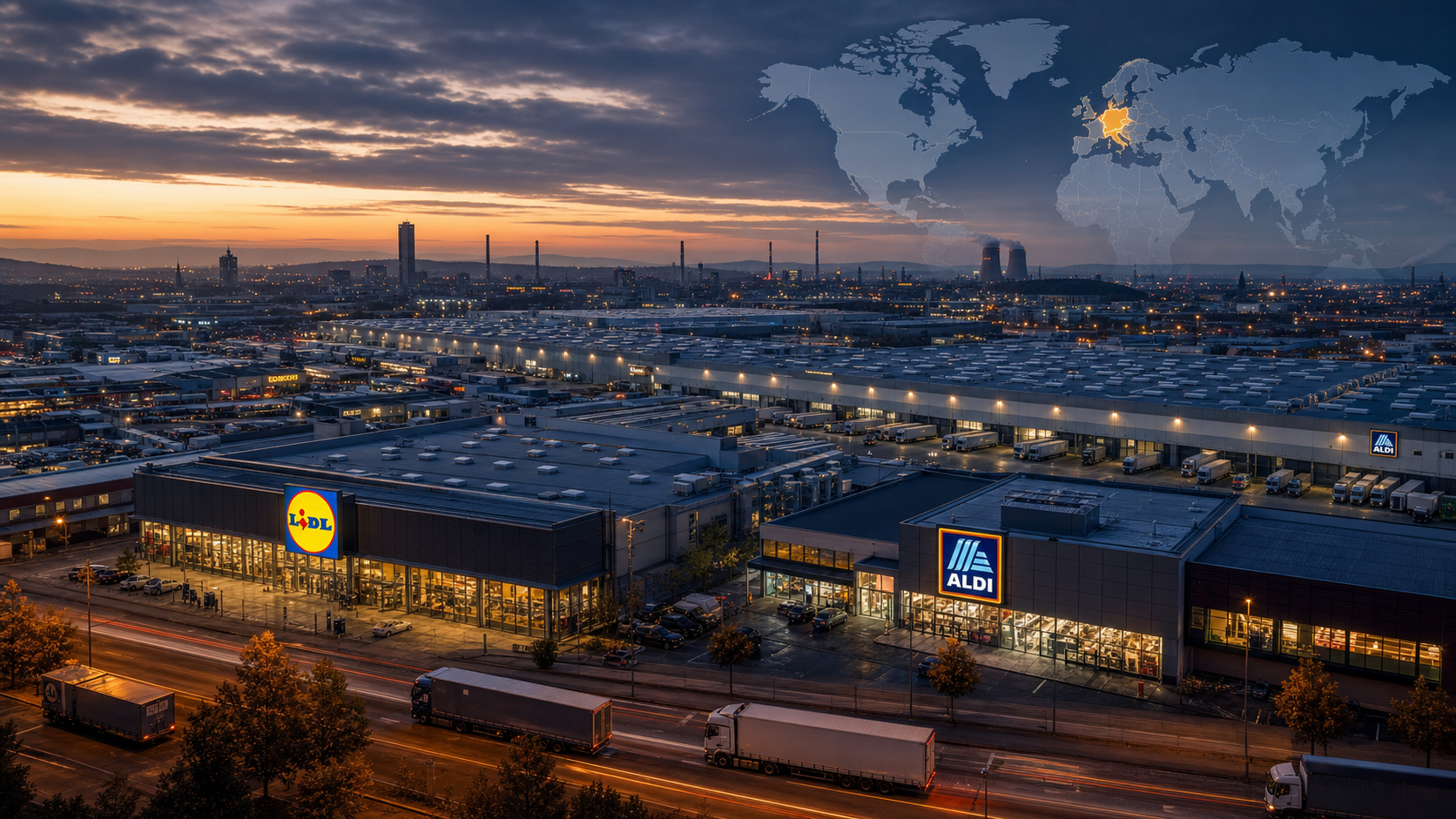
Aldi, Lidl and Kaufland | Hardly anyone knows this ranking: Two German discount retailers are among the most powerful corporations in the world – Creative image: Xpert.Digital
More revenue than entire countries: The incredible secret to success behind Aldi, Lidl and Kaufland
From discount store to tech giant: The secret master plan of Germany's supermarket kings
The true giants of the global economy often operate behind the scenes. When people think of the most powerful companies on Earth, tech giants like Apple, Google, or Amazon immediately come to mind. But a closer look at the global balance of power in the retail sector reveals a huge surprise: Two family-owned businesses from Germany are among the top five largest retail groups worldwide. The Schwarz Group (Lidl, Kaufland) and Aldi are among the top players – far removed from Wall Street or Silicon Valley, deeply rooted in rural Germany, including towns like Neckarsulm, Essen, and Mülheim an der Ruhr. Without being publicly listed, but with iron discipline, extreme efficiency, and billions in investment, they have developed into global economic empires that no longer simply sell groceries, but also support real estate markets and are transforming into digital ecosystems. This analysis reveals how these hidden world powers dominate the market and why they are even defying the online boom.
A quiet world power from Germany: How two family businesses dominate global retail
The billion-dollar empire of discount retailers – and why Europe's biggest economic giants are located where no Silicon Valley and no stock exchange await them
When people think of the most powerful companies on Earth, they usually think of Apple, Google, or Microsoft. When they think of global retail, they think of Walmart or Amazon. But a glance at the world's most prestigious industry ranking, the annual Deloitte report "Global Powers of Retailing," shakes up this perception in a surprising way. Among the five largest retailers on the planet are two German family-owned companies, the Schwarz Group and Aldi, whose headquarters are not in New York, Seattle, or Tokyo, but in Neckarsulm near Heilbronn, and in Mülheim an der Ruhr and Essen, respectively.
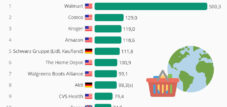
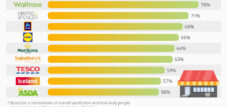
The ranking described in the article reveals a remarkable constellation. Walmart reigns supreme with a revenue of 648 billion US dollars, followed by Amazon with 574 billion US dollars (total group revenue including AWS and other segments) and Costco with 242 billion US dollars. The Schwarz Group ranks fourth with 175 billion euros, and Aldi follows in fifth place with approximately 126 billion US dollars. The fact that these figures still surprise many Germans is due to a structural peculiarity of the two corporations: they are not publicly traded, publish their figures sparingly, and avoid any form of media self-promotion. This makes them perhaps the most underestimated economic giants of our time.
Figures that speak for themselves – and yet hardly anyone knows them
The Schwarz Group, which includes Lidl and Kaufland, achieved total sales of €175.4 billion in fiscal year 2024, an increase of 4.9 percent compared to the previous year. Lidl alone increased its store sales by 5.3 percent to €132.1 billion, while Kaufland achieved €35.2 billion. In the following fiscal year, 2025, the group grew again: Total sales climbed to €185.6 billion, an increase of 5.8 percent. At the same time, 9,000 new jobs were created, and 300 new Lidl and Kaufland stores were opened worldwide.
Although Aldi doesn't present its financial statements in a single consolidated report, as the company has been split into two independent entities since a family dispute in the 1960s, Aldi Nord, headquartered in Essen, generated sales of approximately €29.3 billion in Germany in 2024. Aldi Süd, with its administrative headquarters in Mülheim an der Ruhr, recorded sales of around €19.45 billion in Germany alone and approximately €83 billion worldwide in 2023. Together, the two groups achieved consolidated sales of approximately €112 billion in 2023, which secured their place in the global top five ranking. For the image-based ranking, which reports sales in US dollars based on more recent Deloitte data, Aldi is listed with sales of approximately US$126 billion.
These figures only become less significant when viewed in a global context: For comparison, Deloitte cites an aggregate total revenue of approximately US$6.03 trillion for the world's top 250 retailers. Of this enormous pie, the ten largest retailers alone account for roughly 34.9 percent of the total volume, and two of the ten most powerful are German.
The foundation of success: decades of consistent strategy
One might be tempted to dismiss the discount store phenomenon as simple: cheap store, cheap assortment, cheap concept. But this view is fundamentally flawed. The discount store business model is, in reality, a highly complex, high-performance machine perfected over decades, based on a philosophy of radical efficiency. The core principle is: maximum purchasing power through scaling, minimal overhead costs through standardization, and maximum customer growth through consistent price leadership.
Aldi, founded by brothers Theo and Karl Albrecht after World War II, developed in Essen and Mülheim that revolutionary concept of a concentrated product range with minimal overhead, which has fundamentally changed the entire global food retail industry. The Schwarz Group, originating from a food wholesaler in Neckarsulm under Dieter Schwarz, grew into Europe's largest discount chain through the Lidl model and complemented its portfolio with the full-range supermarket Kaufland. Both groups remained family businesses, privately owned, and true to their DNA, even long after they had grown into multinational corporations.
The success of this strategy is manifested in a fact that is hard to surpass: In a German market environment characterized by stagnation, insolvencies, and structural change, both groups are experiencing stable and continuous growth. According to its own figures, the Schwarz Group has invested more than €30 billion in Germany over the past ten years and created over 60,000 new jobs in its home country. In fiscal year 2025 alone, €3.7 billion in investments flowed into Germany, €400 million more than in the previous year.
Neckarsulm and the Ruhr region: When global corporations choose the provinces
A little-noticed but economically highly relevant aspect of this story is the geographical anchoring of these corporations in their home regions. The Schwarz Group is effectively headquartered in Neckarsulm, a medium-sized town with just under 27,000 inhabitants in the Heilbronn district of Baden-Württemberg. What at first glance appears to be a structural anachronism, upon closer inspection reveals itself to be a highly rational decision and an economic boon for the entire Heilbronn-Franken region.
With approximately 604,000 employees worldwide, the Schwarz Group is one of the world's largest private employers. In Germany alone, 5,000 new jobs were recently created, making the Schwarz Group the largest employer in the Heilbronn-Franken region. Administrative offices, logistics centers, IT infrastructure, and production facilities characterize the region. In addition, substantial investments in local commercial real estate, logistics facilities, and company buildings are structurally stabilizing and enhancing the regional real estate market.
A similar situation exists in the Ruhr region. Mülheim an der Ruhr is considered the German center of food retailing because Aldi Süd has been headquartered there for decades. The city has managed the transition from a heavy industrial past to a service-based society relatively well, and the presence of a global retail giant has played a significant stabilizing role in this process. Aldi Nord, in turn, is based in Essen, one of the largest cities in the Ruhr region, and its administrative buildings, logistics networks, and supply chains significantly shape the region's economic structure.
The unsung stabilizer: Discount stores as anchor tenants of the German real estate market
The idea that large discount chains act as stabilizers of the German commercial real estate market initially sounds like a bold exaggeration. It isn't. By definition, anchor tenants in the retail real estate segment are those tenants whose brand recognition, foot traffic, and financial stability increase the attractiveness of an entire location, prevent vacancies, and ensure predictable cash flows for owners. And for decades, Aldi, Lidl, and Kaufland have been among the most established, creditworthy, and reliable anchor tenants in German retail properties.
Aldi is considered one of the most reliable retail tenants in the German real estate market, boasting an extremely low insolvency rate and long, stable lease terms. Professional real estate investors like DEFAMA, specializing in neighborhood shopping centers and retail parks, explicitly emphasize that anchor tenants like Aldi Süd are invaluable because they pay reliably, often remain for decades, and ensure predictable cash flows. In contrast to volatile office real estate markets or the textile retail sector, which is under pressure from online commerce, the food-anchored retail sector proves to be structurally resilient to crises.
Classic anchor tenants in German shopping centers, specialty stores, and local supply centers explicitly include hypermarkets like Kaufland and grocery retailers such as Aldi, Edeka, Lidl, and Rewe. These tenants differ from ordinary tenants in one crucial aspect: they lease larger spaces, negotiate individual terms, often have a say in the building's design, and their presence shapes the entire location. Their financial stability secures the value of thousands of properties across Germany, in metropolitan areas as well as in economically disadvantaged regions.
While tech companies occupy office towers and, in the worst-case scenario, reduce their footprint from one year to the next, discount supermarkets are typically tied to a location for decades. This long-term commitment not only protects owners and investors but also secures a stable business tax base for municipalities and provides local populations with essential services. This effect is chronically underestimated in public and media discourse.
The silent transformation: Discount stores become ecosystem corporations
What also largely flies under the public radar is the Schwarz Group's strategic diversification far beyond the traditional food retail sector. The company is on its way to transforming itself from a retail chain into an integrated economic ecosystem that unites production, trade, recycling, and digitalization under one roof.
In the recycling and circular economy sector, the Schwarz Group operates PreZero, one of Europe's leading environmental service providers. PreZero generated revenue of €3.9 billion in fiscal year 2024, an increase of 5.4 percent. The Schwarz Group has set itself the ambitious goal of recovering 95 percent of its total internal waste by 2030 – that is, reusing, recycling, composting, or anaerobically processing it. In fiscal year 2024, this figure already stood at 89 percent, corresponding to over 3 million tons of recovered material.
Even more surprising is the digital strategy. In September 2023, the Schwarz Group founded the Schwarz Digits division, which, with 7,500 employees, consolidates solutions in the areas of cloud computing (STACKIT), cybersecurity (XM Cyber), e-commerce, and retail media. The strategic logic behind this is remarkably pragmatic and compelling: The company first develops IT solutions for its own enormous internal needs and then markets them externally to third parties. Revenue in the IT and digital division grew by 15 percent to approximately €2.2 billion in fiscal year 2025. The Schwarz Group explicitly states its intention to remain as independent as possible from non-European IT providers – an approach that is gaining strategic importance in the context of the increasing debates about digital sovereignty in Europe.
The ecosystem is complemented by Schwarz Produktion, its own food production facility with a value of €4.6 billion for self-produced products such as ice cream, baked goods, chocolate, coffee, and pasta. This allows the group to increasingly control large parts of its own value chain, from production and distribution to disposal and recycling. This is not discounting; this is integrated management at the highest level.
Our EU and German expertise in business development, sales and marketing

Our EU and German expertise in business development, sales and marketing - Image: Xpert.Digital
Industry focus areas: B2B, digitalization (from AI to XR), mechanical engineering, logistics, renewable energies and industry
More information here:
A thematic hub offering insights and expertise:
- Knowledge platform covering global and regional economies, innovation and industry-specific trends
- A collection of analyses, insights, and background information from our key areas of focus
- A place for expertise and information on current developments in business and technology
- A hub for companies seeking information on markets, digitalization, and industry innovations
Why discount retailers are more resilient than e-commerce prophets expect
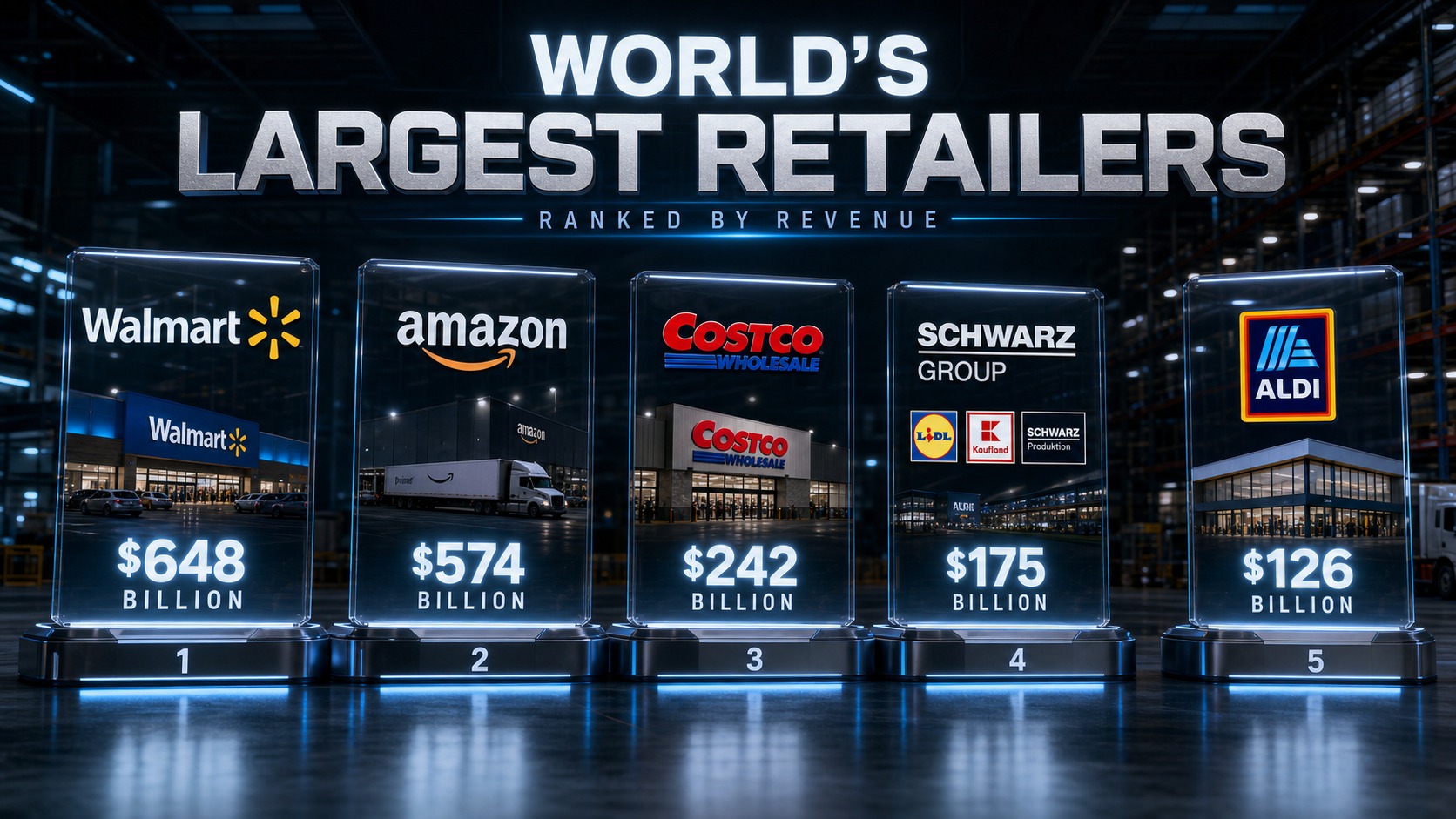
The world's largest retail companies – Image: Xpert.Digital
The e-commerce stress test: Is brick-and-mortar grocery retail really invulnerable?
The burning strategic question raised by the ranking is not one of current strength, but rather one of future vulnerability. Is the business model of the brick-and-mortar discount supermarket a rock in a storm or a boulder slowly eroding? The answer is more nuanced than either optimists or pessimists are willing to admit.
The actual data on online grocery shopping in Germany is sobering for those expecting rapid digital disruption. In 2024, online grocery sales in Germany amounted to approximately €3.9 billion. While this sounds substantial, it is negligible compared to the overall market with its hundreds of billions of euros in revenue. The online market share of total grocery sales was recently around 4.3 percent, with a growth rate of 8.2 percent in 2024. By comparison, the online share in the non-food sector is already well over 20 percent.
Why is the grocery retail sector lagging so far behind other segments? The reasons are structural and profound. First, grocery shopping is highly habit-driven and spontaneous; the ability to check freshness before buying plays a significant psychological role. Second, online grocery retail is hardly profitable from a business perspective. A study by the credit insurer Euler Hermes shows that every percentage point of grocery sales shifting to the internet threatens at least €500 million in profits for brick-and-mortar stores, assuming zero margins in the online segment. With negative online margins, the figure can reach as high as €1.9 billion. In other words, grocery e-commerce is structurally unprofitable and has so far failed to develop viable profitability models.
At the same time, discounters are paradoxically benefiting from a trend that, at first glance, appears to be a headwind: price pressure from inflation and a loss of purchasing power. Consumers' downward price trend, meaning the conscious choice of cheaper products and shopping locations, is driving customers into the arms of discounters. The market share of discounters in the German food retail sector grew by 0.2 percentage points to 38.1 percent in 2024. Simultaneously, private label brands, the core of the discount model, continue to gain market share: their share of the German food retail sector rose to a new record high of 36.2 percent in 2024.
This doesn't mean that online retail will remain permanently irrelevant. Competition is intensifying, and global providers like Amazon Fresh or specialized delivery services are expanding their capacities. However, the structural cost advantages of brick-and-mortar discount stores—high sales velocity, minimal warehousing costs, and extremely efficient logistics—cannot simply be replicated digitally. The physical discount market will be modified by e-commerce, but it will not be displaced. The social roots of the in-store shopping experience are too deeply ingrained, and the structural cost barriers of online grocery retail are too significant.
The merger debate: Are Aldi Nord and Aldi Süd on the path to unity?
Another strategic issue currently affecting the industry is the reports of potential merger talks between Aldi Nord and Aldi Süd. According to consistent media reports from spring 2025, the families behind both lines are in discussions about closer integration. A complete merger would be a sensation in German economic history, as it would create a single group from two already powerful corporations with a combined revenue of over €112 billion, a group that could easily compete on equal terms with the Schwarz Group.
Regardless of the outcome of these talks, one thing is clear: Aldi recognizes that the future of global discounting is a matter of scaling, purchasing power, and coordination. The era of deliberate separation as a strategic means of differentiation within the domestic market may have served its historical purpose. However, the challenges of today—global supply chains, digital transformation, and international expansion—demand a new form of collaboration.
Despite sales growth, Aldi Nord recorded a net loss of €839 million in 2024, attributable to high investments in expansion and modernization. At the same time, the international expansion of both Aldi lines demonstrates considerable growth potential: In Spain alone, Aldi Nord plans to open 40 new stores in 2025, aiming to increase its market share to over 3 percent for the first time. The store network in Poland is developing dynamically, and in Portugal, the discounter is growing despite a challenging market environment. This international momentum shows that the discount model is finding fertile ground not only in its home market but also globally.
Family businesses as growth engines: The secret of long-term orientation
A key factor in the sustained success of both companies is their ownership structure. Family businesses are not subject to the quarterly return expectations of the capital market. They can accept massive losses or lower profits in a given year if this serves a long-term strategy. They can invest billions in new markets without fear of a stock market crash. And they can pass on their corporate culture and core values across generations without being subjected to the constant pressure of short-term investors.
The Schwarz Group invested a total of €8.6 billion in fiscal year 2024, an increase of 7.5 percent compared to the previous year, including €3.3 billion in Germany. Investments were further increased to €9 billion in fiscal year 2025, and over €10 billion is planned for the current year, of which €3.7 billion is earmarked for its German operations. This willingness to invest in a challenging economic environment, where other companies are cutting costs and streamlining operations, is a privilege of this privately held, family-owned business. While listed corporations are relocating abroad due to cost pressures, the Schwarz Group, as a de facto patriot of its German locations, remains committed to its German operations.
This long-term orientation has historically generated immense advantages over capital market-driven competitors. Walmart, although unchallenged as number one, is under constant pressure from the financial markets. Amazon struggles with the challenge of simultaneously optimizing three completely different business areas – retail, cloud computing, and advertising. Costco is limited in its geographic expansion. German discount chains, on the other hand, operate with surgical focus, clear value propositions, and without the distractions of activist investors.
Regional economic centers of gravity: What the headquarters really mean
The question of headquarters is not a matter of corporate history, but rather a question of ongoing economic gravitational pull. A global corporation that keeps its headquarters in one location creates an ecosystem of suppliers, consultants, service providers, logistics companies, and specialists that extends far beyond the immediate workplaces.
In the Heilbronn-Franken region, the presence of the Schwarz Group has sparked an economic dynamism that is remarkable for a structurally rather rural area. Logistics centers, administrative buildings, data centers for Schwarz Digits, and the production facilities of Schwarz Produktion shape the economic landscape of the district and the neighboring municipalities. The construction and operation of data centers, which the Schwarz Group is promoting as part of its STACKIT cloud strategy, attracts technology-savvy professionals and medium-sized IT companies that benefit from the Group's contracts.
For the Ruhr region, which has been undergoing structural change for decades, the presence of Aldi Nord in Essen and Aldi Süd in Mülheim an der Ruhr is a stabilizing factor in an otherwise turbulent environment. As its urban development demonstrates, Mülheim an der Ruhr has largely completed the transition from an industrial to a service-based society, and Aldi Süd's historical roots in the city play a significant role in this process. Urban and corporate development in Mülheim have been intertwined for decades; the city and the companies are jointly planning the future of the location.
The global perspective: What the ranking reveals about the economic system
The ranking of the world's five largest retailers is more than just a reflection of individual entrepreneurial achievements. It mirrors structural economic systems and their strengths. The USA dominates the top three spots with Walmart, Amazon, and Costco, reflecting the enormous market power of the American domestic market, capital market efficiency, and technological lead in e-commerce. Walmart alone generates more revenue than the economies of entire middle-power nations.
In contrast, Germany has produced an economic powerhouse from two family-owned companies in the Mittelstand – or rather, the large Mittelstand – that is impressive in its substance and sustainability. The Schwarz Group and Aldi are not short-term winners of a stock market boom or technological disruption. They are the result of decades of disciplined work on a business model based on genuine customer value and operational excellence. While tech companies often leave only digital traces, these retail giants shape physical realities: thousands of stores, hundreds of thousands of jobs, and billions invested in real infrastructure.
In addition, there is a demographic and societal factor that is often overlooked in long-term forecasts. People need to eat. Every day. Regardless of the economic cycle, the emerging technologies, or the political systems that develop. The need for basic foodstuffs is the most fundamental and stable of all consumer needs, and whoever efficiently meets this need possesses a market position that no app or algorithm can diminish in the short term.
Germany as a retail exporter: The quiet globalization from the provinces
Finally, rounding off the economic analysis is the international dimension of both companies. Lidl currently operates over 12,000 stores in 31 European and American countries. Aldi, with its two lines, is present on several continents: in Europe, the USA (where Aldi Süd operates under its own name and Aldi Nord through Trader Joe's), and Australia. This globalization strategy was achieved without grand gestures, IPOs, or media hype, but rather gradually, patiently, and consistently.
The result is a form of German economic globalization that operates largely under the radar of public perception, yet rivals the automotive or mechanical engineering sectors in its economic significance. The Lidl and Aldi brands are as ubiquitous in much of Europe as McDonald's or IKEA, but without the cultural baggage and the reputation for superficiality. They export a German principle of efficiency that works across all cultures: quality at a fair price, without unnecessary frills.
The brick-and-mortar grocery retail sector isn't the glamorous face of the German economy. It's not an Oktoberfest for investment bankers, nor a keynote address at a tech conference. But, as the global rankings unequivocally demonstrate, it is a quiet, powerful, and persistent giant. And this giant isn't located in Berlin, Munich, or Frankfurt, but in Neckarsulm, Mülheim an der Ruhr, and Essen. This isn't provincial. This is world-class.
🎯🎯🎯 Data-driven B2B industry hub as a quasi-in-house solution

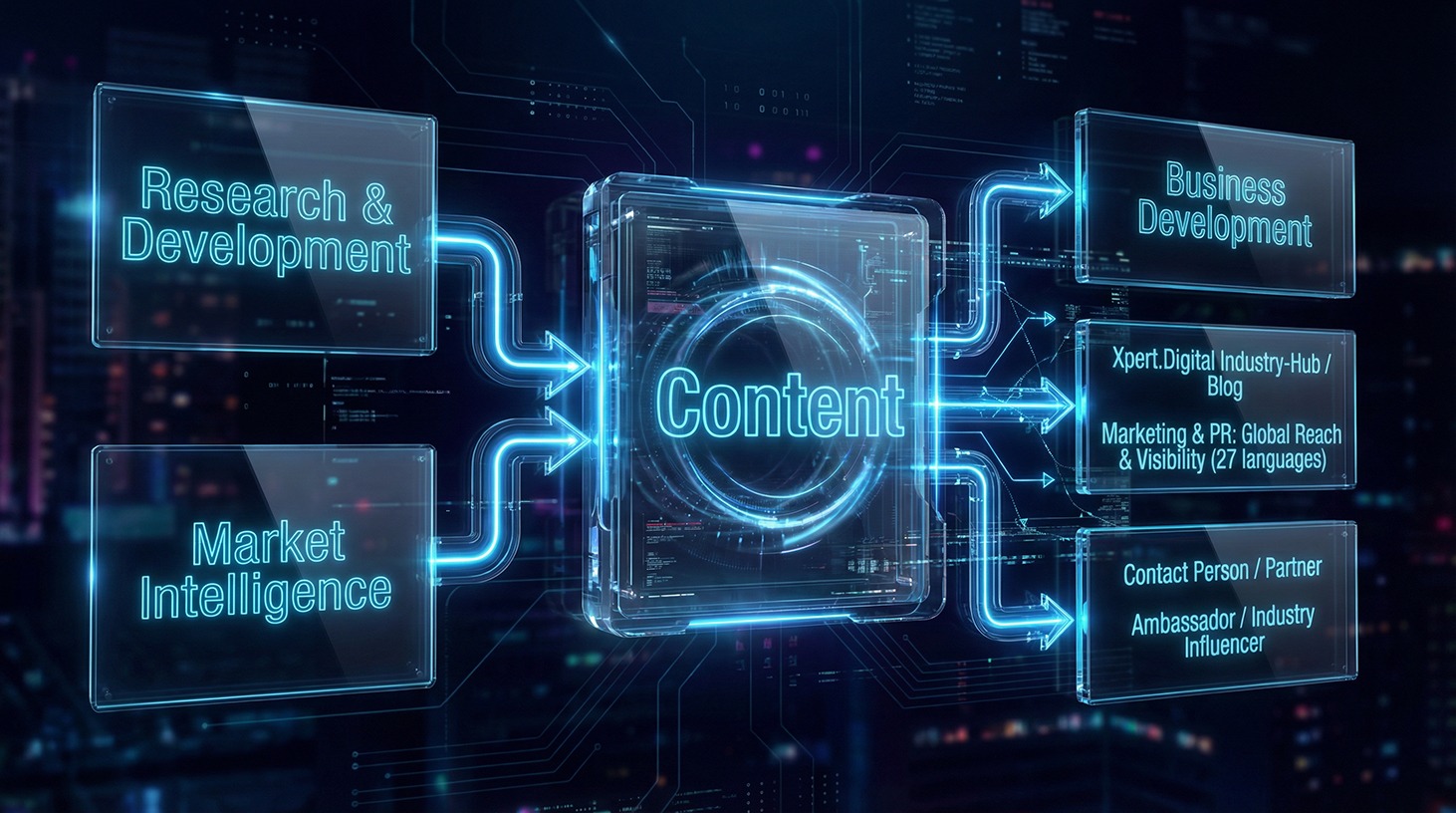
The quasi-in-house solution: How Xpert.Digital closes operational gaps in B2B marketing and sales – Smart Content-Driven Business - Image: Xpert.Digital
Xpert.Digital is a data-driven B2B industry hub led by Konrad Wolfenstein . The company acts as an external, quasi-in-house solution for industrial partners, closing operational gaps in marketing, content, and sales – without requiring additional resources on the client side.
More information here:
Your global marketing and business development partner
☑️ Our business language is English or German
☑️ NEW: Correspondence in your native language!

Konrad Wolfenstein
I and my team are happy to be available to you as your personal advisor.
You can contact me by filling out the contact form here wolfenstein@xpert.digital:or simply call me at +49 7348 4088 965. My email address is
I'm looking forward to our joint project.