Growing tensions on NATO's eastern flank: Following the drone attack in Poland, now the Russian Zapad 2025 maneuver – Image: Xpert.Digital
Red alert at the border: How Russia is testing the West with drones and maneuvers
Putin's dangerous game: Why the "Suwalki gap" is now becoming NATO's Achilles' heel
The security situation on NATO's eastern border has deteriorated dramatically after Russian drones were shot down over NATO territory by allies for the first time since the start of the war in Ukraine. The incident in Poland marks a turning point in Russia's hybrid warfare against the Western alliance and raises fundamental questions about the alliance's defense strategy.
Precedent in Polish airspace
On the night of September 10, 2025, at least 19 Iranian-made Shahed drones entered Polish airspace. The drones moved through the territory of the NATO member state for seven hours, with the locations where the downed drones were found spanning several hundred kilometers. Polish fighter jets, with the support of NATO allies, shot down Russian drones over their own territory for the first time since the beginning of the war.
The distribution of drone debris demonstrates the extraordinary scale of the airspace violation. Remains were found in the Lublin, Lodz, Świętokrzyskie, and Warmian-Masurian Voivodeships. A residential building in Wyryki-Wola, near the Belarusian border, was severely damaged by a drone; fortunately, no one was injured. Polish authorities discovered debris from a total of 16 unmanned aerial vehicles on their territory.
Polish Foreign Minister Radoslaw Sikorski described the incidents as an impossible coincidence, given the 19 airspace violations in seven hours. EU Commission President Ursula von der Leyen called the events a reckless and unprecedented violation of European territory. Poland subsequently invoked Article 4 of the NATO Treaty and requested an emergency meeting of the UN Security Council.
Related to this:

Russia's military exercises Sapad 2025
Just three days after the drone incidents, the strategic military exercise Zapad 2025 between Russia and Belarus began. The exercise, which ran from September 12 to 16, 2025, took place in close proximity to NATO member states Poland and Lithuania, as well as Ukraine. According to the German Armed Forces, approximately 13,000 soldiers participated in the exercise in Belarus and another 30,000 on Russian territory.
The maneuver evokes particularly alarming memories of its predecessor, Zapad 2021, which Russia used to deploy weapons and heavy equipment for its invasion of Ukraine in February 2022. The current exercise includes, for the first time, the testing of nuclear-capable Oreshnik medium-range missiles, as confirmed by Belarusian Defense Minister Viktor Khrenin. The Oreshnik missiles can carry up to six warheads and have a range of several hundred kilometers.
Security experts interpret the timing of the maneuver immediately after the drone incident as a deliberate escalation. The Russian leadership is thus signaling its willingness to combine hybrid warfare with conventional military threats. Particularly worrying is the announcement that the exercise will also simulate the occupation of the so-called Suwalki Gap.
Related to this:
The critical Suwalki gap
The Suwalki Gap between Poland and Lithuania is considered the most strategically vulnerable point on NATO's eastern flank. This land corridor, only 65 kilometers wide, represents the sole land connection between the Baltic states and the rest of NATO territory. Military experts warn that Russia could seal off this Achilles' heel of the alliance within 30 to 60 hours through coordinated attacks from Belarus and Kaliningrad.
A successful blockade of the Suwalki Gap would cut off the Baltic states of Estonia, Latvia, and Lithuania from their NATO allies, making them accessible only via the Baltic Sea and by air. Former British intelligence officer Philip Ingram describes the area as NATO's Achilles' heel, which Putin could exploit as a strategic route for Russian troops.
The Baltic states have responded to the growing threat with comprehensive defense preparations. Since 2022, Lithuania has built more than 3,300 shelters for almost a third of its population. Together with Latvia and Estonia, it is constructing a dense defense network of 600 bunkers along its border with Russia. Germany announced the permanent stationing of a brigade of up to 5,000 soldiers in Lithuania by 2027.
Hybrid warfare as the new normal
Russia's hybrid attacks against European states have reached a new dimension since the beginning of the war in Ukraine. While these tactics previously served as an alternative to open military operations, since 2022 they have formed the backbone of a comprehensive strategy against Europe. The Russian military intelligence agency GRU coordinates the majority of these operations, while particularly sensitive attacks are authorized by the National Security Council.
Moscow relies on a decentralized recruitment model with so-called disposable agents, which reduces costs and makes tracing more difficult. In 2024 alone, over two dozen suspected saboteurs were arrested in several European countries. The attacks aim to sow social unease, create political instability, and undermine collective security mechanisms.
Russian drones flying over NATO countries are not a new phenomenon. As early as March 2022, a Soviet drone crashed in Croatia after flying over Romania and Hungary. In 2023 and 2024, Russian drones and aircraft were repeatedly detected in the airspace of Latvia, Romania, and even Germany. However, the Polish incident represents a significant escalation, as it was the first time NATO fighter jets actively destroyed Russian military equipment over alliance territory.
NATO response and alliance solidarity
NATO responded immediately and decisively to the airspace violations. NATO Secretary General Mark Rutte condemned Russia's reckless behavior and sent a clear message to Putin: End the war in Ukraine and stop violating Allied airspace. Following Article 4 consultations, the North Atlantic Council reaffirmed its solidarity with Poland.
Germany significantly increased its support for Polish airspace surveillance. The German Armed Forces doubled the number of Eurofighter jets deployed from Rostock-Laage from two to four and extended the deployment, originally planned to end in September, until December 31, 2025. France additionally provided three Rafale fighter jets for monitoring NATO's eastern border.
Chancellor Friedrich Merz described the incidents as a serious threat to peace throughout Europe and spoke of a new level of Russian attacks. Defense Minister Boris Pistorius assessed the events as a deliberate provocation against the entire NATO alliance and the European security order. The German government also announced the intensification of its support for Ukraine and the acceleration of a 19th EU sanctions package against Russia.
Related to this:
Hub for Security and Defense - Advice and Information

Hub for Security and Defense - Image: Xpert.Digital
The Security and Defence Hub offers expert advice and up-to-date information to effectively support companies and organizations in strengthening their role in European security and defence policy. Working closely with the SME Connect Defence Working Group, it particularly promotes small and medium-sized enterprises (SMEs) that wish to further develop their innovative capacity and competitiveness in the defence sector. As a central point of contact, the Hub thus creates a crucial bridge between SMEs and European defence strategy.
Related to this:
Maneuver collision: Quadriga, Iron Defender and Sapad increase the risk of escalation
Poland tightens security measures
Poland reacted to the Russian provocation with drastic security measures. The government closed the entire border with Belarus for the duration of the Belarusian military exercises and restricted airspace near the border. The Polish air traffic control authority established a no-fly zone along the borders with Belarus and Ukraine until December. During the day, only manned aircraft with flight plans and radio contact with the authorities are permitted; at night, a complete flight ban is in effect, with the exception of military flights.
Latvia also closed its airspace along its eastern border with Belarus and Russia for a week, with the option to extend. These coordinated measures demonstrate the seriousness with which the threat situation on NATO's eastern flank is being taken. Prime Minister Donald Tusk also announced a comprehensive modernization program for the Polish military.
The Russian Foreign Ministry criticized Poland's border closure as a confrontational step to justify further escalation. This reaction underscores Moscow's strategy of shifting responsibility for the tensions onto NATO states, even though Russia itself is fueling the situation through airspace violations and military exercises.
International diplomatic efforts
Poland successfully mobilized the international community to condemn Russian aggression. At Poland's request, the UN Security Council convened an emergency meeting for September 12. Several Security Council members supported the request, including the veto-wielding powers Great Britain and France, as well as the NATO member Slovenia.
EU foreign policy chief Kaja Kallas described the events as a game-changer requiring strong and decisive action. She considered convening European defense and foreign ministers to discuss possible courses of action. Sweden summoned the Russian ambassador and declared the Russian violations unacceptable.
However, Russia can block any resolutions against it due to its veto power in the UN Security Council. This underscores the limitations of international legal mechanisms when dealing with a permanently aggressive veto-wielding member and the need for alternative forms of response.
NATO's large-scale Quadriga 2025 maneuver as a counterpoint to the Zapad exercise
NATO responded with the ongoing multinational exercise series Quadriga 2025. Around 8,000 German soldiers from all branches of the armed forces are practicing the protection of the Baltic Sea region together with armed forces from 13 other nations.
The Northern Coasts core exercise
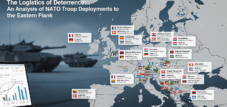
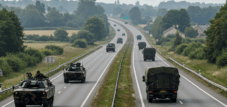
Under German command, approximately 40 ships and 30 aircraft are conducting exercises to practice the safe deployment of troops to Lithuania and the protection of strategic sea lanes. All German forces, along with over 1,000 vehicles, successfully arrived in Lithuania on September 10th.
Temporal overlap increases tensions
General Breuer confirmed the deliberate overlap of the two maneuvers. While Quadriga 2025 runs until today, September 12, Sapad 2025 begins today – a situation that increases the risk of unintended incidents.
Poland is also conducting its largest military exercise of the year: Iron Defender 25, involving over 30,000 soldiers. These coordinated NATO responses send a clear signal of deterrence to Russia, while simultaneously demonstrating the defense capabilities of its eastern flank.
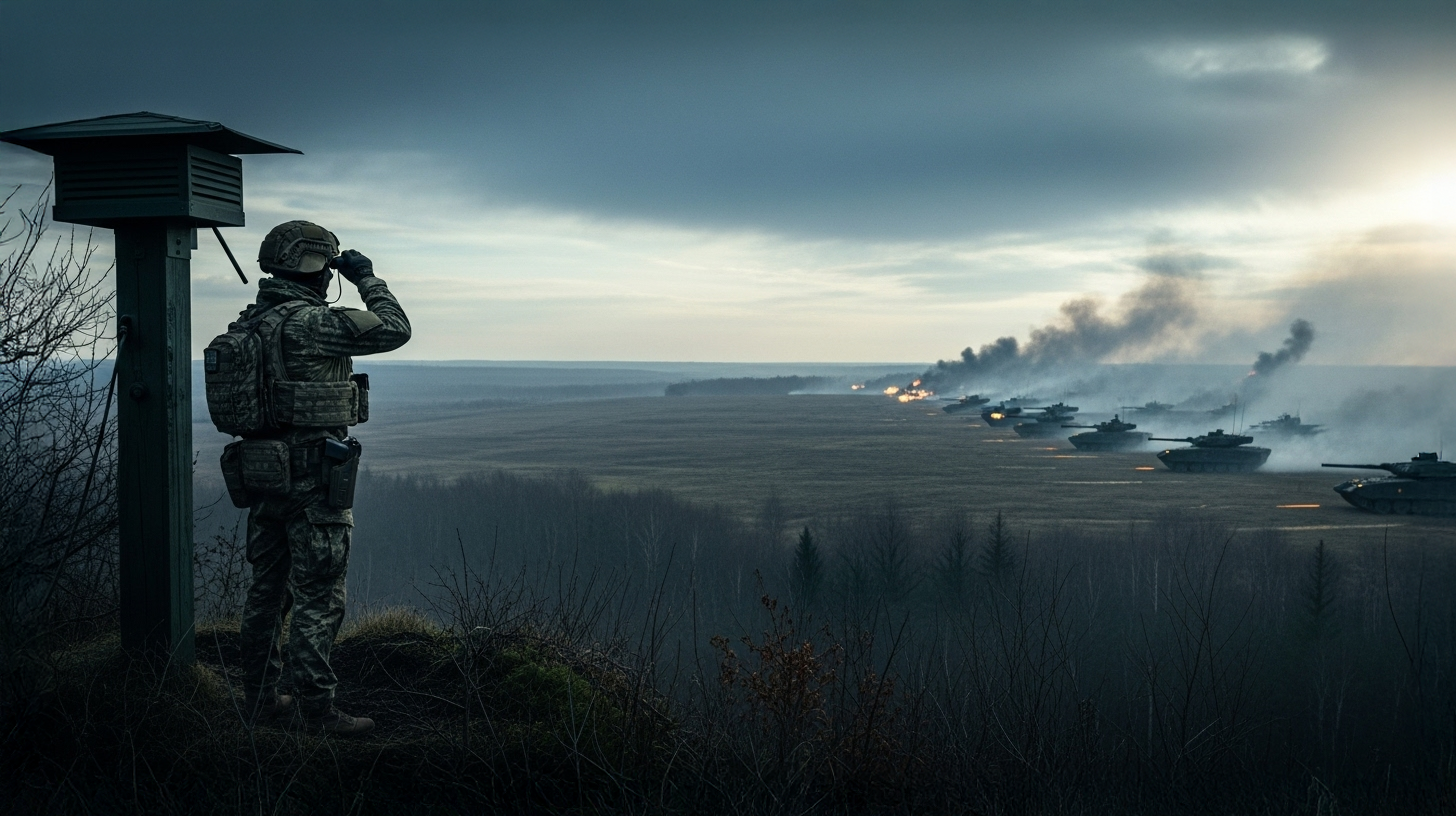
The parallel large-scale military exercises mark a new peak in military tensions in Europe since the beginning of the war in Ukraine. The simultaneous nature of the exercises on both sides increased the risk of unintended incidents, as both sides were operating with live ammunition only a few kilometers apart. However, NATO demonstrated the effectiveness of its command and control structures through its coordinated responses.
Iron Defender 25: Poland's answer to Russian-Belarusian military exercise
The Polish military exercise Iron Defender 25 began on September 1, 2025. The exercise was deliberately scheduled for September 1 – the anniversary of the German invasion of Poland in 1939. Approximately 30,000 Polish soldiers, as well as troops from other NATO countries, are participating in the exercise.
The timing is strategic: Iron Defender 25 is running parallel to the Russian-Belarusian Zapad 2025 exercises, which begin today (September 12). Poland is explicitly conducting this exercise as an "appropriate response" to Zapad 2025.
The exercise spans various locations (Orzysz, Ustka, Nowa Dęba, Baltic Sea) and tests new weapon systems such as Abrams tanks, K9 howitzers, and Chunmoo rocket launchers. A key focus is the division-wide fire control system JAGIC.
Related to this:
Maneuver addendum
Iron Defender 25 (Poland)
- Start date: September 1, 2025
- Participants: 30,000 Polish and NATO soldiers
- Polish national maneuver in response to Zapad 2025
Tarassis 25 (Joint Expeditionary Force)
- Period: Parallel to Sapad 2025 (September 12-16, 2025)
- Participants: 10 northern European NATO states under British leadership
- Multinational JEF (Joint Expeditionary Force) exercise
The confusion arises from
- Iron Defender 25 is Poland's largest national military exercise of the year, which began on September 1st.
- Tarassis 25 is a separate multinational Joint Expeditionary Force exercise running concurrently with Sapad 2025.
- Additionally, Lithuania is conducting the "Thunder Strike" exercise.
Poland is therefore conducting both Iron Defender 25 (ongoing since September 1st) and Tarassis 25 (parallel to Sapad 2025). The various sources mention different maneuvers, which is why the confusion has arisen.
Technical challenges of drone defense
The drone incidents revealed significant shortcomings in European air defense. Of the 19 Russian drones that penetrated Polish territory, only three were successfully intercepted. This success rate of less than 16 percent raises questions about the effectiveness of current defense systems. Chancellor Merz admitted that NATO air defense had not functioned as well as it should have.
The Gerbera drones used, of Russian origin, have a range of several hundred kilometers and can include various versions equipped with explosives or electronic warfare capabilities. CDU foreign policy expert Norbert Röttgen warned that Germany is not yet sufficiently capable of defending itself against drone warfare and that these shortcomings must be addressed.
Theoretically, Russian drones could reach German cities from Belarus or mainland Russia. The distance between Bryansk and Berlin is approximately 1,500 kilometers as the crow flies, which would correspond to an eight-hour drone flight. However, such drones would have to cross Polish airspace, where Polish air defenses would be activated.
Geopolitical implications
These events mark a turning point in European security architecture. For the first time since the end of the Cold War, NATO forces shot down Russian military equipment over their own territory. This sets a precedent that blurs the line between hybrid and conventional warfare.
Russia's strategy aims to test NATO solidarity and create rifts within the alliance. CDU politician Norbert Röttgen interpreted the incidents as a test of NATO cohesion and an attempt at intimidation, conveying the message of staying out of the war in Ukraine. At the same time, Moscow is demonstrating its capacity for escalation and signaling its willingness to cross further lines.
The coordinated European response also demonstrates the resilience of the Western alliance. The swift activation of Article 4, the strengthening of airspace surveillance, and the diplomatic mobilization of the international community demonstrate the functionality of NATO structures under stress. EU Commission President von der Leyen reaffirmed full European solidarity with Poland.
Further developments?
Tensions on NATO's eastern flank are not expected to decrease in the foreseeable future. Russia announced plans to deploy Oreshnik missiles in Belarus by the end of the year. These nuclear-capable hypersonic missiles are slated for mass production, as President Putin announced. The continued militarization of Belarus as a staging area against NATO territory poses a strategic challenge to the alliance's defense.
NATO must adapt its defense concepts to the new reality of hybrid threats. This includes not only improving air defense and drone countermeasures, but also developing appropriate response mechanisms to gray-zone tactics below the threshold of conventional warfare. German security services are already warning of a systematic intensification of Russian sabotage acts in Europe.
At the same time, NATO is continuously strengthening its presence on its eastern flank. The planned permanent German brigade in Lithuania, the increased air patrols over Poland, and the regular large-scale exercises signal its determination to defend the alliance. The challenge lies in ensuring deterrence without contributing to escalation.
Recent events demonstrate that the post-Cold War era is definitively over. Europe must prepare for an era of sustained confrontation with Russia and align its defense structures accordingly. The peace dividend has been exhausted, and societies must mentally adjust to the new security realities. Only through a united front and adequate defense capabilities can the Western alliance deter Russian aggression and secure long-term peace in Europe.
Consulting - Planning - Implementation

Markus Becker
I would be happy to serve as your personal advisor.
Head of Business Development
Chairman SME Connect Defense Working Group
Consulting - Planning - Implementation
Konrad Wolfenstein
I would be happy to serve as your personal advisor.
You can contact me at wolfenstein∂xpert.digital or
Just call me on +49 7348 4088 965 .