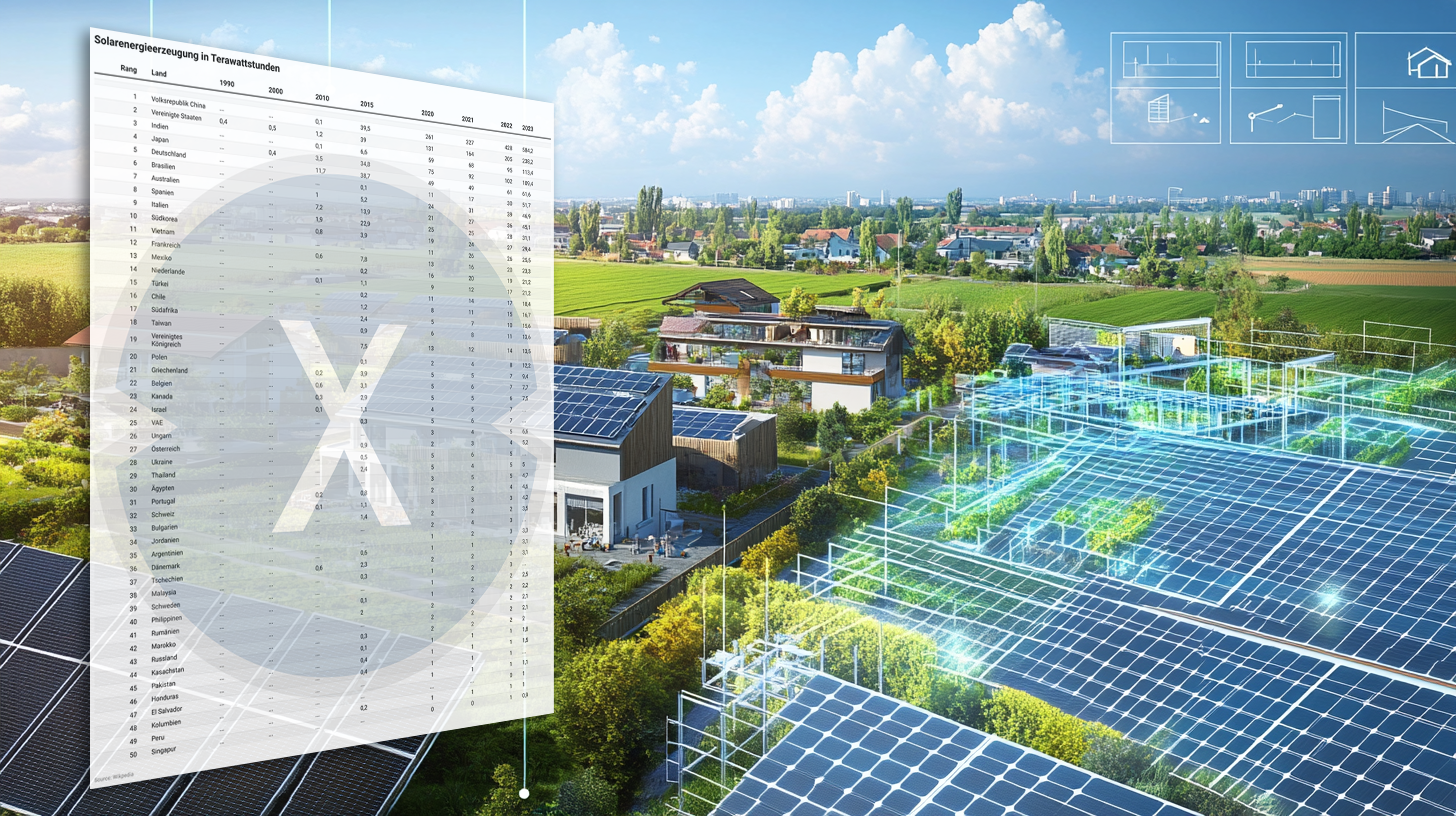
Global solar power – From niche product to engine of the energy transition – How innovations made solar energy affordable – Image: Xpert.Digital
🌞 Solar energy: Progress and potential of the global energy transition
🌐 Solar energy is one of the central pillars of the global energy transition. The technology has developed dramatically in recent decades, and numerous countries have expanded their capacities to meet the growing demand for clean energy. Actual energy production from solar sources reflects not only technological advances but also strategic investments and climatic conditions. In this text, we analyze the progress in solar energy production, the underlying trends, and future potential.
1. 🌄 The development of solar energy production
The history of solar energy began on a small scale, with photovoltaic (PV) systems initially used in niche applications such as space travel. However, with technological advances and decreasing production costs, solar energy experienced an explosive increase in its use.
1990 to 2000: The pioneering years
The early 1990s were marked by initial initiatives to promote renewable energies. Solar energy production was minimal at the time, as high costs and low efficiency of the modules prevented widespread use. Nevertheless, research initiatives and government subsidies in countries like Germany, Japan, and the USA laid the foundation for growth.
💡 2000 to 2010: Market entry and innovations
During this decade, solar energy became increasingly affordable, driven by technological innovations and economies of scale in production. Countries like Germany, which pioneered the Renewable Energy Sources Act (EEG), invested heavily in expanding solar power capacity. The US and China also began to expand their capacities. Globally installed capacity grew exponentially, although actual energy production lagged behind potential, as many plants only became operational towards the end of the decade.
🚀 2010 to 2020: The Breakthrough
With the introduction of highly efficient solar modules and the continuous decline in prices, solar energy experienced a decade of growth. Countries like China, India, and the USA took the lead in expanding capacity. Solar energy became competitive with fossil fuels in many regions, particularly due to decreasing costs per kilowatt-hour generated. Furthermore, climate agreements such as the Paris Agreement contributed to the increased promotion of renewable energies.
🌍 2020 to 2023: Consolidation and new markets
In recent years, solar energy production has reached new record highs. Leading countries such as China, the USA, and India have significantly expanded their production capacities, while new markets like Brazil, Vietnam, and Mexico have emerged. In Europe, too, solar energy remains a key component of the energy transition, particularly given geopolitical tensions and the need to reduce dependence on fossil fuels.
2. 🌤️ Factors influencing solar energy production
Although installed capacity is increasing rapidly worldwide, several factors influence actual energy production:
🗺️ Geographical and climatic conditions
The availability of sunlight varies greatly depending on the region. Countries near the equator benefit from consistently high levels of sunshine, while more northerly countries like Germany are catching up despite fewer hours of sunshine, thanks to efficient technologies and subsidies.
⚙️ Technological developments
The efficiency of solar modules has improved continuously over the last few decades. Modern modules can now convert up to 22% of solar energy into electricity, compared to around 10% in the early 2000s. Energy storage technologies also play an important role, as they make the use of solar energy more flexible.
📜 Political and economic framework
Government subsidies, feed-in tariffs, and legal regulations have significantly accelerated the expansion of solar energy in many countries. However, in some countries, particularly developing countries, the necessary political incentives to fully exploit the potential of solar energy are lacking.
🔋 Challenges in network integration
Fluctuations in solar power production due to weather conditions pose a challenge for integration into existing power grids. Advances in energy storage and smart grids are necessary to overcome this challenge.
3. 🌟 International Trends in Solar Energy Generation
The leading countries in solar energy production are often also the largest investors in renewable energies. An interesting dynamic is emerging here:
- 🌞 China is the undisputed leader, both in terms of installed capacity and actual production. The country is investing heavily in the expansion of solar parks and exporting solar technology worldwide.
- 🌎 The USA and India follow at a considerable distance, but are driving regional innovation. Solar energy is particularly crucial in India to meet the growing energy demand.
- 🌍 Europe, especially Germany and Spain, remains an important player despite lower levels of solar radiation, as the region focuses heavily on efficiency and technological innovation.
- 🌱 New markets such as Brazil, Mexico and Vietnam show that solar energy is also gaining importance in emerging economies.
4. ⚡ Challenges and solutions
Despite impressive progress, solar energy faces several challenges:
💰 Costs for energy storage
To compensate for fluctuations in electricity generation, cost-effective energy storage solutions are needed. Lithium-ion batteries currently dominate the market, but research into alternatives such as sodium-ion and solid-state batteries is showing promising results.
🌾 Space requirements
Large solar parks require significant land areas, which often compete with other uses. Solutions such as floating solar installations or rooftop systems could help overcome this challenge.
🔄 Materials and Recycling
The production of solar modules is material-intensive, and there are concerns regarding the availability and recycling of materials such as silicon and rare earth elements. Sustainable production methods and effective recycling are crucial.
🌍 Access in developing countries
Many regions lack the infrastructure and financial resources to implement solar energy on a large scale. International cooperation and funding programs could remedy this.
5. 🌠 The future of solar energy
Solar energy has the potential to play a leading role in the global energy supply. With advancing technology and decreasing costs, it could account for the majority of global energy production by 2050. Hybrid solutions that combine solar energy with other renewable sources such as wind or hydropower could further increase security of supply.
Furthermore, innovations such as agrivoltaic systems, in which agricultural land is used simultaneously for electricity production, could further increase the acceptance and efficiency of solar energy.
Solar energy is undoubtedly one of the most important solutions for a sustainable energy future. Its rapid growth and continuous innovations show that the world is on the right track to leaving fossil fuels behind. Nevertheless, much remains to be done to fully exploit the potential of this technology while simultaneously addressing social, economic, and environmental challenges.
📣 Similar topics
- ☀️ Future security through solar energy: Trends and developments worldwide
- 🌍 Solar energy in global focus: Opportunities and challenges
- ⚡ Energy of the future: How solar energy is replacing fossil fuels
- 💡 Technological innovations in solar energy: An overview
- 🌞 Solar energy worldwide: Which countries are leading the development?
- 🌿 Sustainability and solar energy: Solutions for the energy transition
- 🔋 Energy storage and solar energy: Overcoming production fluctuations
- 🌱 From agrivoltaics to floating installations: New approaches to solar energy
- 🔧 Overcoming challenges: materials, recycling and space requirements
- 📈 New markets in solar energy: Emerging countries in focus
#️⃣ Hashtags: #SolarEnergy #EnergyTransition #RenewableEnergies #TechnologyTrends #Sustainability
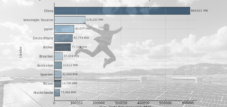
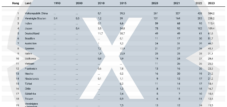
🌍☀️ Global solar energy generation up to 2023 – Difference between cumulative solar capacity and solar energy generation

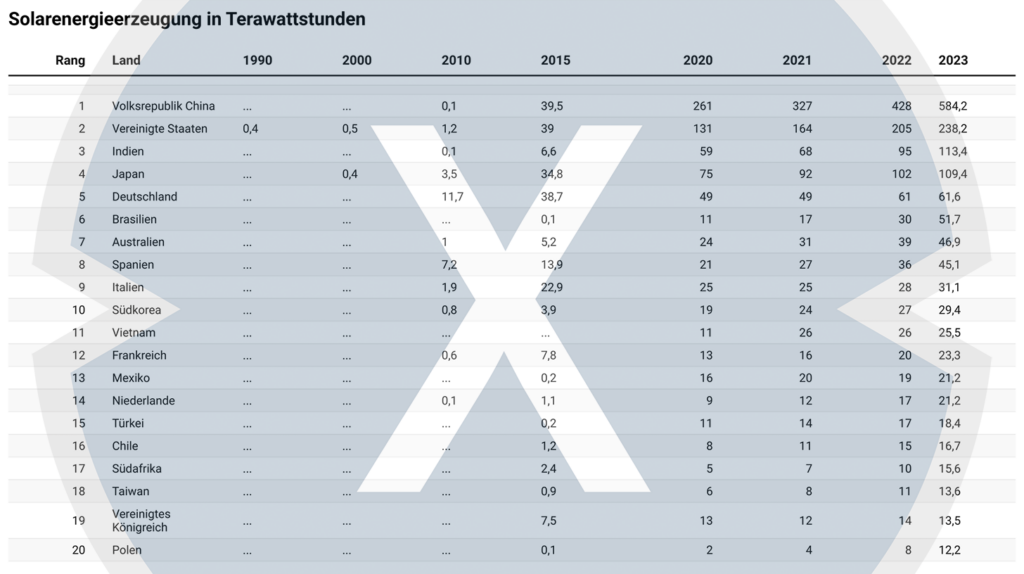
Global solar energy generation until 2023 – Difference between cumulative solar capacity and solar energy generation – Image: Xpert.Digital
The difference between cumulative solar capacity and solar energy generation lies in their definition and application within the field of solar energy. Both terms are essential for understanding global developments and the actual use of solar energy to meet energy demand.
More information here:
Our recommendation: 🌍 Limitless reach 🔗 Connected 🌐 Multilingual 💪 Sales power: 💡 Authentic with strategy 🚀 Innovation meets 🧠 Intuition


From local to global: SMEs conquer the world market with a clever strategy - Image: Xpert.Digital
In an era where a company's digital presence determines its success, the challenge lies in creating an authentic, personalized, and far-reaching presence. Xpert.Digital offers an innovative solution that positions itself as the intersection of an industry hub, a blog, and a brand ambassador. It combines the advantages of communication and sales channels in a single platform and enables publication in 18 different languages. Cooperation with partner portals and the ability to publish articles on Google News and a press distribution list with approximately 8,000 journalists and readers maximize the reach and visibility of the content. This represents a crucial factor in external sales and marketing (SMarketing).
More information here:
We are here for you - Consulting - Planning - Implementation - Project Management
☑️ SME support in strategy, consulting, planning and implementation
☑️ Creation or realignment of the digital strategy and digitization
☑️ Expansion and optimization of international sales processes
☑️ Global & Digital B2B trading platforms
☑️ Pioneer Business Development

Konrad Wolfenstein
I would be happy to serve as your personal advisor.
You can contact me by filling out the contact form below or simply call me on +49 7348 4088 965 .
I'm looking forward to our joint project.
Write to me



Xpert.Digital - Konrad Wolfenstein
Xpert.Digital is a hub for industry focusing on digitalization, mechanical engineering, logistics/intralogistics and photovoltaics.
With our 360° Business Development solution, we support renowned companies from new business to after-sales.
Market intelligence, smarketing, marketing automation, content development, PR, mail campaigns, personalized social media and lead nurturing are part of our digital tools.
You can find more information at: www.xpert.digital - www.xpert.solar - www.xpert.plus
Keep in touch