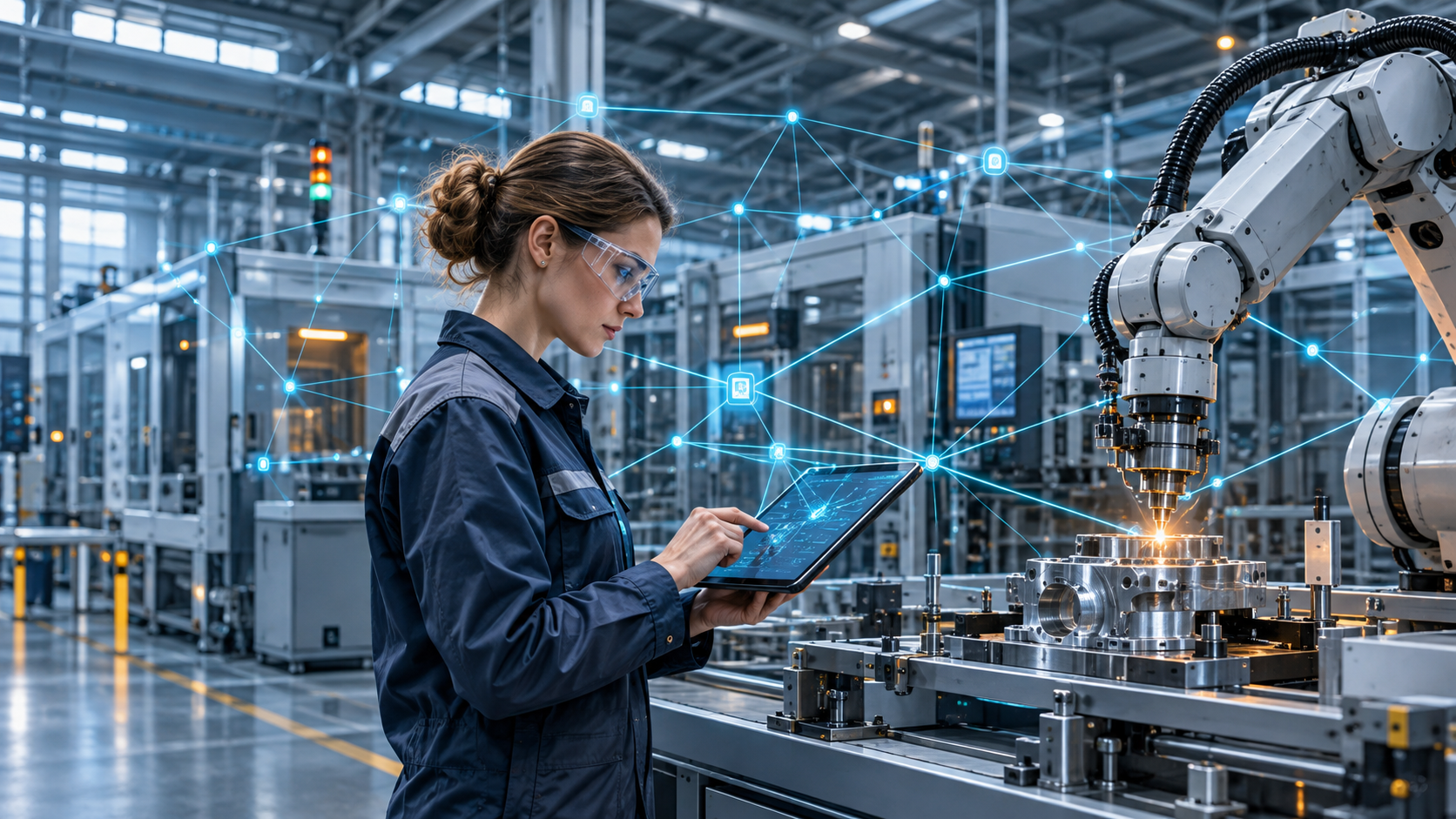
Germany's AI opportunity: What factories need now to remain competitive – Creative image on the topic, with AI: Xpert.Digital
Industrial AI: Why Germany's future won't be decided in the data center
More than artificial intelligence: The three crucial challenges for Germany's industry
Raw materials, reforms, AI: How Germany can secure its industrial strength
Germany boasts decades of expertise in mechanical engineering, production, and materials technology – but industrial experience alone doesn't guarantee a future. Companies must translate their strengths more quickly into competitive products, more efficient processes, and new business models. Artificial intelligence can help: for example, by reducing downtime, improving quality, or better coordinating production processes. But new software and additional computing power aren't enough. Reliable political frameworks, usable factory data, a skilled workforce, and robust supply chains are also crucial. This overview shows why Germany's industrial AI opportunity depends on how well these factors interact – and why the pace of reform and raw material security are just as important as technology.
Simply announcing reforms and building data centers does not create a competitive factory
Germany doesn't lack industrial expertise. What it lacks is the speed to translate that expertise productively under changing economic and technological conditions. This is the common thread running through two debates that are often conducted separately: the call for faster economic policy reforms and the hope for a productivity boost through artificial intelligence. Both address the same question: Can Germany translate its existing strengths into new investments, improved production processes, and internationally competitive business models in time?
The starting point is contradictory. Germany possesses industrial experience, specialized companies, and in-depth knowledge of machinery, materials, and production processes. At the same time, this substance alone is no longer sufficient to make domestic investment a given. Companies compare locations based on costs, market access, infrastructure, labor availability, and reliability. Industrial tradition is an advantage, but no guarantee of continued success.
Artificial intelligence can change this situation. However, its economic value doesn't arise simply from companies acquiring the corresponding software or from the availability of additional computing power. What matters is whether waste is reduced, systems run longer without disruption, employees are better able to handle complex tasks, and new products are developed more quickly. Only then will a technological possibility translate into a measurable competitive advantage.
The appropriate perspective therefore lies between technological optimism and industrial fatalism. Germany has a realistic chance of playing a significant role in industrial AI. However, this chance cannot be secured through political targets or individual showcase projects. It requires a coherent economic model comprised of investment readiness, technological integration, skilled labor, and resilient supply chains.
Reforms must change investment calculations, not just document political activity
The demand by industry president Peter Leibinger to implement roughly half of the 33 announced measures by the North Rhine-Westphalia state elections at the end of April 2027 is primarily a political timeframe. Economically, however, it addresses a more fundamental issue: companies should be able to see that promised improvements actually materialize and don't get bogged down in administrative processes.
Investments are based on expectations spanning several years. A company doesn't expand its production simply because the current order situation is favorable. It must be able to expect that the invested capital will generate a reasonable return under future cost, demand, and regulatory conditions. The more uncertain these conditions are, the more attractive it can become to postpone a decision.
This wait-and-see approach is not necessarily an expression of pessimism. It can be rational from a business perspective. Anyone making an irreversible investment today forgoes the opportunity to wait for additional information. In times of high uncertainty, this flexibility has economic value. Political unpredictability thus effectively increases the required return on investment that a project must meet.
Rapid reforms can break this mechanism if they genuinely reduce relevant uncertainties. A reliable grid connection, a predictable permitting process, or permanently simplified reporting requirements change the cost calculations for specific projects. Another letter of intent does not.
However, it would be too simplistic to measure economic policy progress solely by the number of implemented measures. A minor procedural change and a fundamental improvement in investment conditions can each statistically appear as a completed item, even though their macroeconomic significance differs considerably. What matters are the scope, the relief effect, and the actual usability.
A credible reform process therefore requires not only deadlines but also impact criteria. The central question is not how many measures have been formally completed, but how much costs, waiting times, and planning risks for companies are reduced as a result.
Trust is built through reliable implementation, not optimistic messages
The relationship between reforms, trust, and investment is often described in psychological terms. In reality, it has a solid economic foundation. For businesses, trust means that government rules, procedures, and promises are reasonably likely to hold up and function effectively in practice.
A manufacturer planning a new production line must coordinate numerous decisions. Machines are ordered, skilled workers are recruited, buildings are adapted, and supplier contracts are signed. If a single critical step is delayed, costs already incurred can continue to accrue without generating any additional revenue. Uncertainty regarding administrative procedures is therefore not merely an inconvenience, but an integral part of the project costs.
Reliability can be more economically valuable than a nominally generous subsidy. A grant loses its appeal if its approval takes a long time, conditions remain unclear, or later repayment demands are difficult to predict. Conversely, a location can be attractive despite higher individual costs if companies can implement projects there more quickly and reliably.
This leads to an important caveat for the reform debate: acceleration must not be confused with constant rule changes. If companies have to continually adapt their planning to new support programs, exemptions, and transitional provisions, additional political activity can actually increase uncertainty.
What is needed is a combination of rapid implementation and long-term predictability. A streamlined, understandable, and stable set of rules can support investments more effectively than a comprehensive set of tools whose practical application requires specialized knowledge.
The rise of AI is measurable, but its industrial depth remains unclear
The use of artificial intelligence in the German economy is increasing significantly. By 2026, 37 percent of companies with at least ten employees will be using such technologies. This compares to 26 percent in the previous year. The increase of eleven percentage points shows that AI is increasingly becoming part of everyday business. However, it does not yet demonstrate the extent to which this will generate additional value.
The distribution by company size is particularly revealing. For large companies with 250 or more employees, the usage rate is 73 percent. Among companies with 50 to 249 employees, it is 49 percent, and for smaller companies with 10 to 49 employees, it is 33 percent. The difference between large and small companies thus reaches 40 percentage points.
These figures must be interpreted carefully. They record whether a company uses AI, not how deeply the technology is integrated into its processes. A company with a single AI tool for text generation can appear in such usage statistics just as easily as a company that optimizes numerous production lines using data. Furthermore, companies with fewer than ten employees are excluded from the aforementioned population.
The application areas also demonstrate why an increasing adoption rate does not automatically translate into a leap in industrial productivity. Among companies using AI, marketing and sales (35 percent), administrative and management processes (31 percent), and accounting, controlling, and financial management (28 percent) are most frequently cited. These areas can be economically important. However, they reveal little about the extent to which AI has already penetrated machine control, quality control, or production planning.
The crucial next stage of development is therefore not simply the further proliferation of any AI application. It is about its integration into those processes that directly determine costs, quality, delivery capability, and the speed of innovation.
Germany doesn't have to win every AI competition, but rather occupy the right value creation areas
The international AI race is not a single discipline. Different markets with different success factors exist between the development of large-scale models, the operation of data centers, the manufacturing of technical components, and application in specialized industrial processes.
Germany and Europe lag behind leading international providers in key areas of general AI infrastructure. However, this does not mean that industrial value creation must necessarily originate entirely elsewhere. Production-related applications require additional expertise that cannot be replaced solely by greater computing power. It is precisely this combination of data and specific industry competence that forms the basis for Germany's potential for strength in industrial AI.
Optimizing a plant economically requires, for example, knowledge of wear, material behavior, temperature ranges, safety limits, and the interactions of successive processing steps. A generally efficient model does not automatically possess this knowledge with the necessary operational accuracy.
The strategic approach should therefore not consist of imitating every technological development step of international market leaders. A more promising strategy is a clear positioning where existing industry expertise improves the performance of digital systems and customers are willing to pay for this added value.
However, specialization must not become a justification for permanent dependency. If German companies merely supply data and integrate applications, while central platforms, customer relationships, and recurring software revenues lie entirely outside Europe, a significant portion of the economic potential remains untapped.
The goal should therefore be an independent position in selected value chain stages. This includes industrial software, industry-specific models, automation solutions, secure data rooms, and exportable applications.
Factory data only becomes an asset when it is technically and legally usable
The idea of a vast industrial data repository is plausible, but incomplete. Data does not possess a fixed economic value independent of its quality and use. A large collection of poorly documented machine data can be less useful than a small, well-structured database with a clear process reference.
In a factory, information is often generated in separate systems. Machine controls record different data than quality labs, maintenance departments, or production planning. Timestamps don't match, labels differ, and changes to equipment are not fully documented. Without processing, such data can only be combined to a limited extent.
For predictive maintenance, simply measuring vibrations is insufficient. The system must be able to identify which measurements correspond to which operating conditions, when damage actually occurred, and which maintenance measures were successful. Without this context, the risk of incorrect conclusions increases.
Furthermore, there are economic and legal issues to consider. Machine manufacturers, operators, and software providers may have differing interests in the same data. The operator wants to protect their trade secrets. The machine manufacturer needs information to improve their products. The software provider wants to further develop their model. Without clear agreements, uncertainty about usage rights can hinder cooperation.
The real competitive advantage, therefore, lies not in simply possessing large amounts of data, but in the ability to use it effectively. Data architecture, process documentation, and reliable contracts are not mere administrative side issues. They form part of the productive infrastructure of industrial AI.
Predictive maintenance shows how forecasts translate into economic benefits
Predictive maintenance is one of the most obvious applications of industrial AI. This involves using condition data to detect potential malfunctions early and to better plan maintenance work. This application area, along with process optimization and employee support, is one of the key industrial uses.
The economic benefits stem from several sources. Unplanned downtime can be reduced, maintenance work can be scheduled more cost-effectively, and components may need to be replaced less frequently as a precaution. At the same time, spare parts and technical personnel can be provided more efficiently.
An explicitly illustrative example calculation clarifies the scale of the impact. Let's assume a production line causes 200 hours of unplanned downtime annually. Each hour is internally valued at a lost contribution margin of €5,000. The calculated initial loss is then €1 million. If a system reduces the economically relevant downtime by 20 percent, this initially results in a gross annual benefit of €200,000.
This amount does not yet represent profit. From this, deductions must be made for additional sensors, software, integration, ongoing monitoring, and potentially more planned maintenance. It must also be assessed whether the lost production could be made up for later. If this is possible, simply multiplying the downtime by the hourly rate overestimates the actual damage.
False alarms and overlooked damage are equally important. A system that predicts failures too frequently can trigger unnecessary downtime. A system that rarely warns but misses critical damage may create a dangerous false sense of security. Therefore, the most economically optimal solution is not necessarily the highest isolatedsegenaccuracy, but rather the best balance between avoided damage and additional intervention costs.
🎯🎯🎯 Data-driven B2B industry hub as a quasi-in-house solution

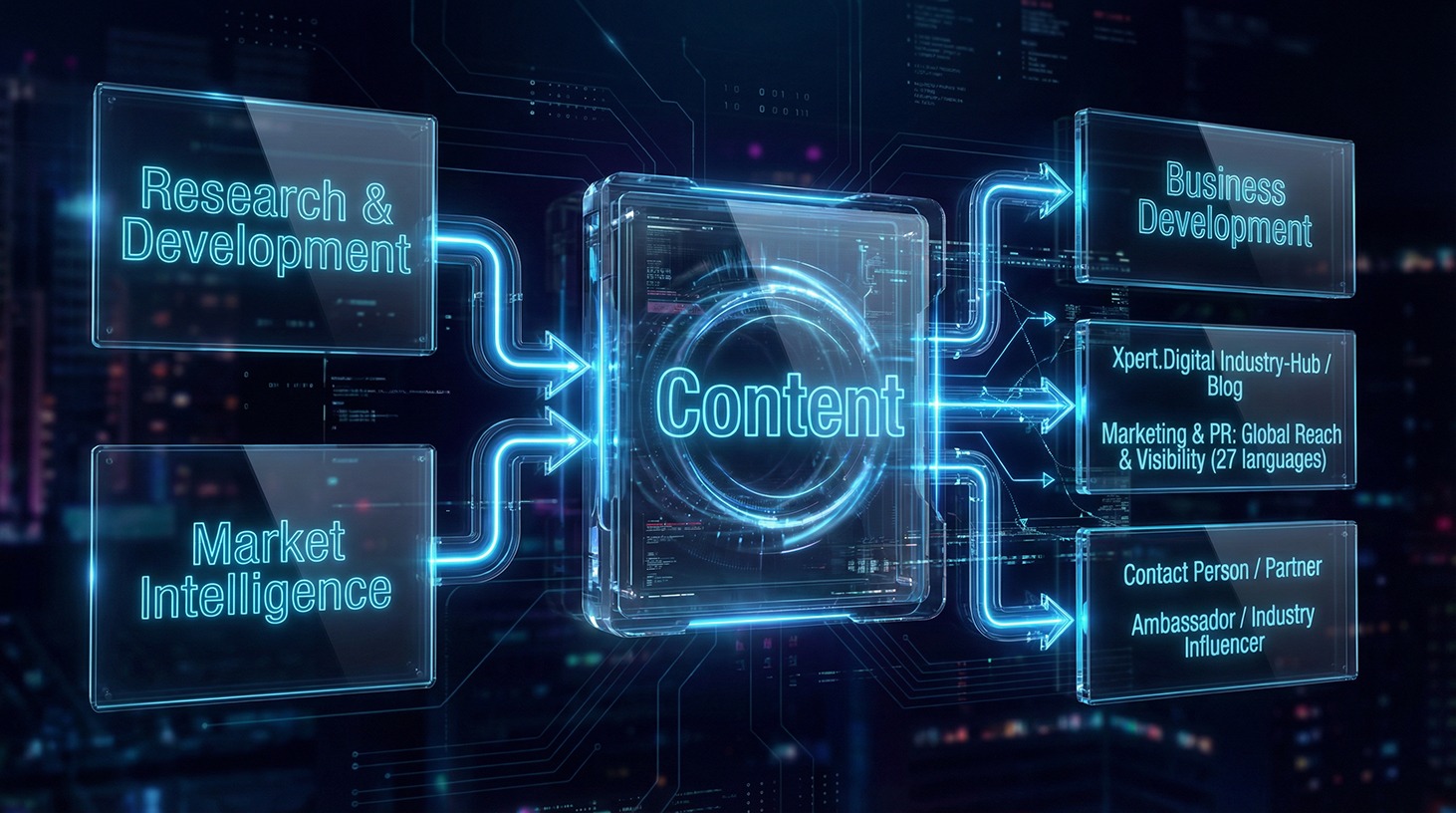
The quasi-in-house solution: How Xpert.Digital closes operational gaps in B2B marketing and sales – Smart Content-Driven Business - Image: Xpert.Digital
Xpert.Digital is a data-driven B2B industry hub led by Konrad Wolfenstein . The company acts as an external, quasi-in-house solution for industrial partners, closing operational gaps in marketing, content, and sales – without requiring additional resources on the client side.
More information here:
The greatest productivity gain can lie between the individual machines
The greatest productivity gain can lie between the individual machines
Industrial AI is often explained using individual machines as examples. However, significant benefits can arise precisely from the coordination of entire production systems. A factory is not simply a collection of independent machines. It consists of interconnected processes whose efficiency is limited by bottlenecks, material availability, and timing.
If one machine operates faster while the next processing step is already at capacity, the output of the entire plant does not automatically increase. Instead, intermediate inventories can grow. Material then ties up capital and space without producing any additional saleable products.
Therefore, economically sound optimization must consider throughput, delivery dates, inventory levels, energy consumption, and quality together. AI can, for example, help adapt production sequences to changing conditions or identify impending bottlenecks earlier. However, its usefulness depends on whether the underlying target variables are correctly chosen.
The same applies to quality control. Highly sensitive image recognition can detect more potential defects, but at the same time, it can also reject more flawless products. Conversely, overly lenient classification can increase complaints and subsequent costs. The decisive factor is the economic and safety significance of each type of defect.
Another illustrative calculation demonstrates the impact of small improvements. With an annual material input of ten million euros, a one percentage point reduction in material-related losses would theoretically free up 100,000 euros. Whether this amount is achievable depends on the process. However, this example shows why seemingly insignificant improvements in large material and production flows can have substantial economic consequences.
Employees are not the residual factor of automation, but rather an integral part of its productivity
The joint emphasis on industrial AI by industry president Peter Leibinger and IG Metall vice president Jürgen Kerner points to a crucial prerequisite for successful transformation: Technological modernization requires a viable link between competitiveness and employee interests. The technology offers opportunities for both sides, but does not automatically eliminate potential conflicts.
AI can support employees by making technical documentation more accessible, accelerating troubleshooting, or providing situation-specific guidance for complex tasks. Especially in systems with many variants and long operating times, knowledge is often distributed across different systems and people. A well-designed assistance system can help make this knowledge available more quickly.
A distinction must be made between support and decision-making authority. A system can suggest a plausible maintenance step without being able to reliably assess whether it is permissible under all specific conditions. Therefore, employees need not only operating skills but also an understanding of limitations, uncertainties, and escalation procedures.
At the same time, AI is changing the nature of work. Some tasks will become less time-consuming, others more demanding. This does not automatically lead to a corresponding reduction in jobs, nor does it guarantee that jobs will remain unchanged. The impact depends on whether productivity gains enable additional demand, new products, and more competitive locations.
A credible HR strategy must openly address this ambivalence. Professional development should not begin only after tasks have already been eliminated. It must be linked to the early implementation of new systems. Equally important are transparent rules for performance data, monitoring, and accountability.
Acceptance is not a mere added benefit. If employees withhold process knowledge, ignore warnings, or circumvent systems, a technically sound project can fail economically.
Small and medium-sized enterprises (SMEs) need fewer barriers to entry and more reusable solutions
The significant differences in AI adoption based on company size are economically understandable. Large companies can employ specialized teams, test multiple projects simultaneously, and spread the impact of failures across a broader business. Smaller companies often have to address the same fundamental questions with considerably fewer staff. The adoption rates of 73 percent for large companies and 33 percent for small companies illustrate this structural gap.
For a medium-sized company, the problem often isn't finding a viable use case. Reliable implementation is more difficult. Who handles the data preparation? How is an older machine integrated? Who is liable for errors? What are the ongoing costs? And can the solution be continued with a different provider later on?
These questions incur fixed costs. If they are answered anew for each company, many projects remain too expensive. A high-performing market for industrial AI therefore requires standardized interfaces, reusable integration components, and service providers with robust industry expertise.
Shared testing facilities can also be beneficial. Companies should be able to test the suitability of a solution under realistic conditions before it significantly impacts their production. Crucially, the test must be capable of becoming a commercially viable, standard operating procedure.
Funding policies should therefore not solely reward spectacular demonstrators. The less obvious prerequisites for widespread adoption are at least as important: clean, reliable data, secure networking, employee training, and integration into existing business processes. It is precisely at these points that it will be decided whether AI remains a tool of large corporations or achieves broad industrial penetration.
An AI ecosystem is a functioning market, not a political label
The political goal of establishing the world's first industrial AI ecosystem in Germany by 2030 is ambitious. However, it should be understood as a goal, not as a guaranteed outcome or a proven international unique selling proposition. Industrial AI activities already exist elsewhere. The decisive factor will be the actual performance of the emerging network.
An ecosystem emerges when different stakeholders benefit from each other in the long term. Research institutions develop processes, software providers make them usable, machine manufacturers integrate them, user companies create real-world operating conditions, and investors finance growth. Employees and educational institutions ensure the necessary skills are acquired.
This interrelationship only works if transitions are successful. Research findings must be translated into robust products. Young suppliers need access to industrial customers. Users need reliable maintenance and support. Successful solutions must scale beyond individual pilot plants.
This last step is particularly challenging. An application might work perfectly in one plant but incur high adaptation costs at another location due to differing machines, data structures, or product variants. Scalability, therefore, doesn't simply mean installing the same software multiple times. It requires that additional applications can be implemented with a reasonable integration effort.
The distribution of revenues is also important. A sustainable ecosystem needs companies that can generate revenue from their services. If every project relies solely on new funding, the economic foundation may be lacking. Government support can mitigate start-up problems, but it should enable a viable market, not become its permanent replacement.
Computing power is necessary, but its effectiveness depends on energy and integration
The industrial AI debate must not become an artificial dichotomy between data centers and factory floors. Without computing power, sophisticated models cannot be developed or reliably operated. At the same time, additional capacity alone does not automatically create better production processes. The current German AI strategy debate therefore links the expansion of infrastructure with the question of whether this will lead to industrial applications and reduced technological dependencies.
Centralized and decentralized computing tasks differ economically. Complex training may have different requirements than the continuous evaluation of sensor data in a machine. For time-critical decisions, short response times and operation close to the machine can be crucial. For other tasks, a central platform is more economical.
A sound architecture will therefore often combine several layers. Not every factory needs its own large data center, and not every calculation should be outsourced to a remote service without careful consideration. Cost, availability, data security, and the requirements of the specific process are crucial factors.
Energy is doubly relevant here. It is a production factor for industry and, at the same time, a resource for digital infrastructure. AI can help to avoid peak loads or to control processes more energy-efficiently. However, it cannot compensate for structurally unfavorable energy conditions indefinitely.
Accuracy is also essential when making efficiency promises. A technically feasible reduction in consumption only saves money if it is achieved under real-world operating conditions and if the additional system costs do not exceed the savings. Therefore, the economic evaluation must consider the entire life cycle, not just a successful demonstration.
Resource dependencies also limit digital sovereignty
Industrial AI appears intangible, but is based on a material foundation. Data centers, semiconductors, electric drives, networks, sensors, and automation technology require raw materials and complex industrial components. Therefore, securing critical supply chains belongs in the same location-related debate as digitalization and productivity.
The dependencies are particularly evident in the case of rare earth elements and the magnets made from them. According to current figures, around 90 percent of rare earth elements are processed in China; approximately 95 percent of magnet production takes place there. This concentration thus affects not only the availability of deposits, but above all industrial processing capacities and technical expertise.
The distinction is crucial. A new raw material partnership does not create an independent supply chain if the material can subsequently still only be processed in China. Likewise, an alternative source of supply is insufficient if companies remain dependent on the same dominant supplier for critical production facilities or intermediate products.
The raw materials debate should not conflate different groups of materials. Rare earths are important for certain magnetic applications. Batteries, semiconductors, and other technologies each require different combinations of materials and intermediate products. The common risk lies not in a single universal raw material, but in concentrated and difficult-to-replace supply stages.
A robust strategy must therefore be product- and material-specific. It should identify where critical dependencies actually exist, how quickly alternatives would be available, and what economic damage a disruption could cause.
Resilient supply chains cost money, but can prevent greater losses
Diversification rarely comes without a price. Additional suppliers need to be qualified, inventories financed, and alternative production methods developed. Those who focus solely on the lowest short-term purchase price will easily perceive such measures as inefficient.
This view falls short when supply disruptions can cause significant consequential costs. The economically relevant price of a component then consists of more than just the invoice amount. It also includes anticipated risks due to disruptions, price volatility, and limited availability.
Components that represent a small share of the total costs, but whose absence would halt entire production, are particularly critical. In such cases, a relatively small surcharge for a second source of supply can be rational. Economically, it is similar to an insurance premium.
A recent example from magnet recycling illustrates how significant the cost differences can be: Recycled magnets manufactured in Germany are expected to command a price premium of approximately 30 percent compared to Chinese products. This figure is not a general surcharge for all alternative supply chains, but it does illustrate the conflict between short-term procurement efficiency and building additional security of supply.
Government intervention may be justified where individual companies cannot fully account for the overall economic benefits of resilient supply chains. However, support should adhere to clear criteria. The crucial factor is whether it actually results in additional capacity, verifiable risk reductions, and sustainable business models in the long term.
Autarky would be neither realistic nor necessarily economically sensible. The appropriate goal is controlled interdependence: utilizing the international division of labor without becoming completely incapacitated in the event of critical bottlenecks.
The economic impact depends on the widespread adoption of effective applications
Individual successful AI projects can achieve impressive results without yet noticeably changing overall economic productivity. This is not a contradiction. An economy consists of many companies with different technological capabilities, investment cycles, and business models.
Between a new technology and its widespread impact lie adaptation costs. Companies must prepare data, change processes, train employees, and integrate existing systems. This phase initially incurs expenses. Additional revenue often follows later and is by no means guaranteed in every project.
Therefore, the economic evaluation should differentiate between short-term implementation and long-term use. A company may temporarily incur higher costs, even though its competitiveness improves later. Conversely, a rapidly implemented application may initially appear modern without ever making a positive economic contribution.
For Germany, it is particularly important whether productivity gains remain with a few pioneers or spread along industrial value chains. If large manufacturers become more efficient, but their suppliers are not technologically up to par, new disruptions can occur. Common standards and affordable integration solutions are therefore important beyond individual companies.
The demand side must also be considered. Higher productivity does not automatically guarantee sales. It improves the ability to produce more cheaply, faster, or with higher quality. Whether this translates into growth also depends on attractive products, market access, and international competitive position.
By 2030, what counts is not the number of pilot projects, but the economic viability
A credible industrial AI strategy requires measurable milestones. This includes, first and foremost, how many applications are actually deployed in day-to-day operations. Equally important is whether they sustainably reduce costs, improve quality, or generate additional revenue.
The evaluation should differentiate between several levels. At the company level, investment costs, ongoing expenses, amortization, and operational impact are relevant. At the industry level, the focus is on market penetration, the compatibility of suppliers, and new business models. At the macroeconomic level, productivity, value creation, innovative capacity, and the quality of resulting employment are key factors.
The origin of key services should also be examined transparently. An application operated in Germany is not automatically technologically independent. Conversely, the use of international components is not proof of a failed strategy. The crucial factor is whether companies have sufficient control over their processes, data, and further development opportunities.
The assessment of political reforms requires the same realism. Formal decisions are a necessary interim step, but not yet a guarantee of success for the business location. More meaningful would be whether approval times are shortened, projects can be implemented more quickly, and companies are once again more willing to invest domestically for the long term.
The timeframe until 2030 is short for building entirely new industrial structures, but sufficient for implementing many concrete improvements. That's precisely why clear priorities are more important than the broadest possible catalog of non-binding projects.
Germany's opportunity lies in combining its strengths
Germany's industrial AI opportunity is neither a guaranteed success story nor a mere slogan of perseverance. Its economic core is understandable: existing process knowledge, industrial data, and automation expertise can form the basis for valuable applications. But this foundation will only become productive when companies can invest, technical systems can collaborate, and employees embrace the change.
The pace of reform, the use of AI, and raw material security are therefore not separate policy areas. Reliable framework conditions increase the willingness to invest. Investments create the conditions for digital modernization. Productive AI applications improve competitiveness. Resilient supply chains secure the material foundations for this development.
None of these prerequisites can completely replace the others. Cheaper energy alone does not create innovative software. A high-performance model does not eliminate missing data. A new data center does not shorten the approval process. And a highly optimized factory remains vulnerable if an irreplaceable component fails.
The rationale is therefore ambitious, but not pessimistic. Germany doesn't have to wait for a single technological breakthrough. It needs to better integrate its many existing capabilities and reduce the costs of this integration.
Whether this will lead to a new industrial growth trajectory will ultimately depend on a single, objective metric: whether companies in Germany can sustainably generate more economic value from labor, capital, energy, materials, and knowledge. This is precisely where industrial AI must prove its worth.
📈🚀 From visibility to trust 👀🤝 Your scalable path with Xpert.Digital

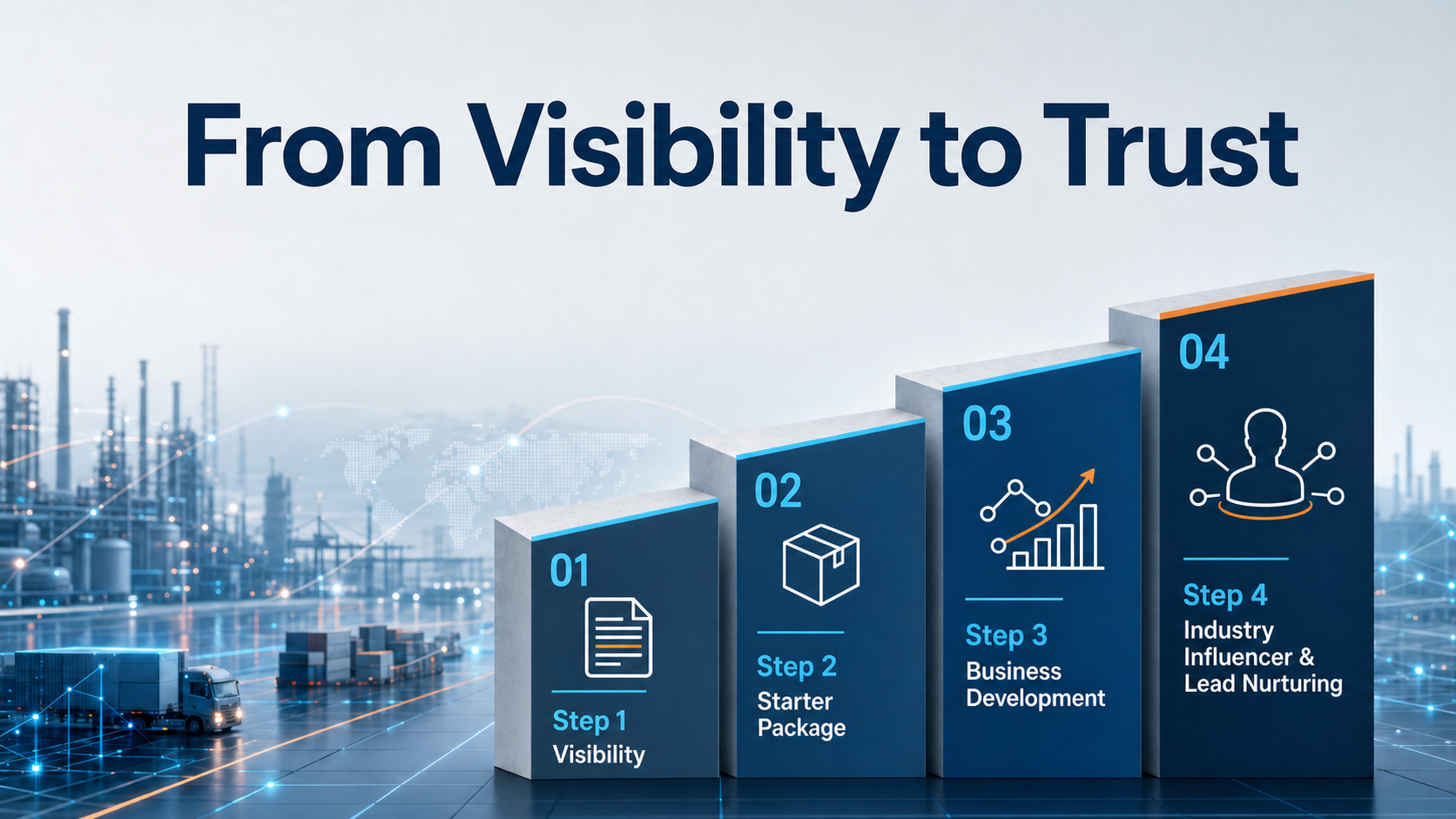
From visibility to trust: Your scalable path with Xpert.Digital - Image: Xpert.Digital
In industrial B2B, sustainable business relationships rarely emerge overnight. They develop step by step – through visibility, professional relevance, recurring touchpoints, and growing trust. Xpert.Digital's 4-stage model addresses precisely this: It offers a structured path that begins with a manageable entry point and can evolve into deeper collaboration in business development if needed.
Instead of relying on loud marketing promises, this model puts the relationship at the forefront. Companies start with clearly defined, easily calculable measures and then decide, based on their own experience, how far they want to expand the collaboration. A key factor for this undisturbed trust-building process: The platform completely avoids annoying advertising ads, so the editorial focus remains solely on the companies' expertise.
More information here:
Your global marketing and business development partner
☑️ Our business language is English or German
☑️ NEW: Correspondence in your native language!

Konrad Wolfenstein
I and my team are happy to be available to you as your personal advisor.
You can contact me by filling out the contact form here wolfenstein@xpert.digital:or simply call me at +49 7348 4088 965. My email address is
I'm looking forward to our joint project.