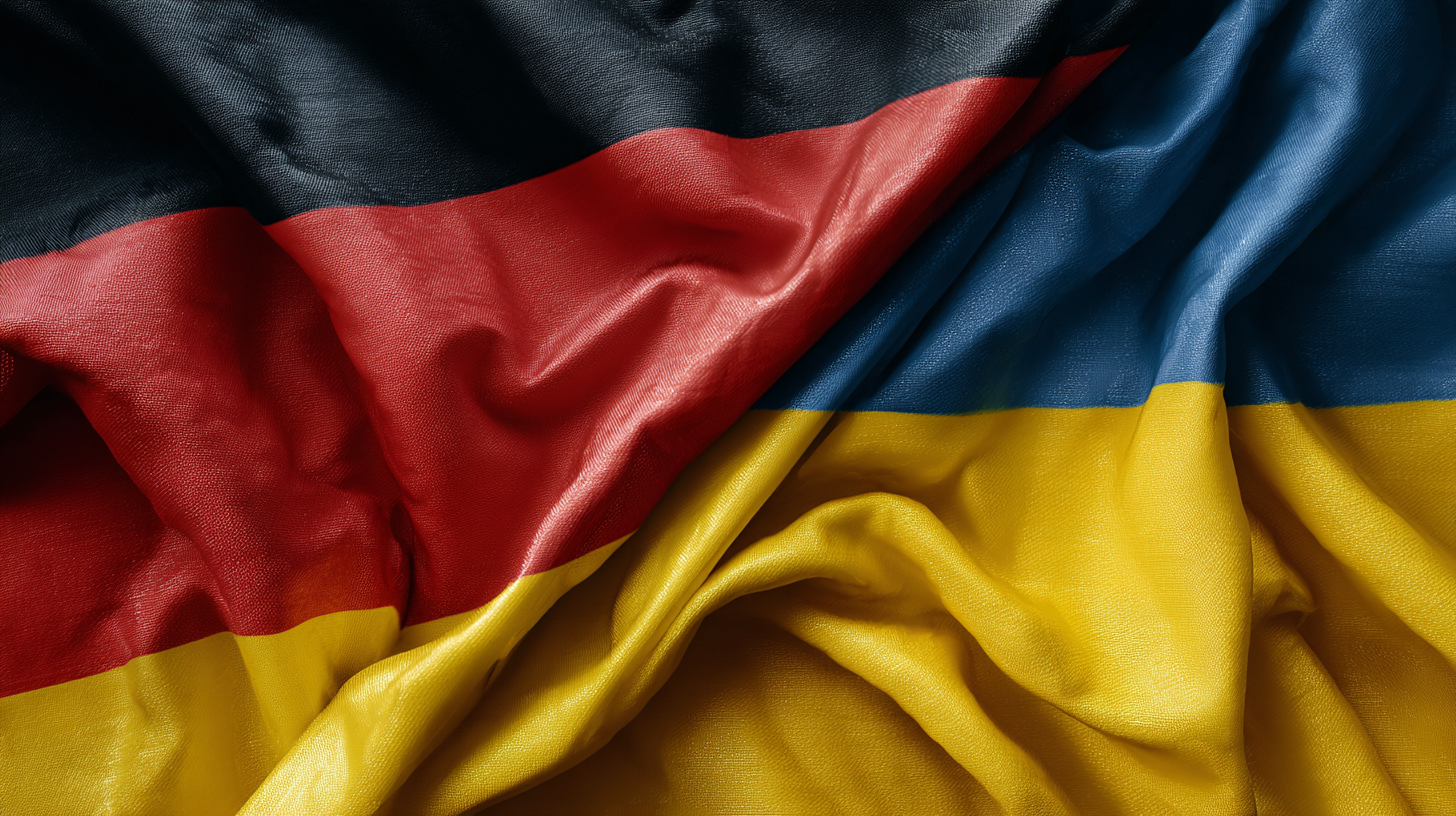
Germany and Ukraine Energy Support Fund – From war economy to geopolitical business model – Image: Xpert.Digital
Billions for Kyiv: The secret economic plan behind German aid to Ukraine
How Germany is transforming the Ukraine billions into strategic industrial partnerships
The economic dimension of the Ukraine conflict has fundamentally changed over the past three and a half years. What initially began as a humanitarian emergency and military support is increasingly developing into a complex economic network in which Germany plays a key role. The visit of Federal Minister for Economic Affairs Katherina Reiche to Kyiv at the end of October 2025 marks a turning point in this transformation, where the primary focus is no longer on providing aid, but on establishing long-term business relationships that should benefit both sides equally.
The raw figures speak for themselves. Since the beginning of Russia's war of aggression, Germany has provided Ukraine with over fifty billion euros, with roughly half of this sum going toward the reception and care of Ukrainian refugees. Military support amounts to approximately twenty-eight billion euros, financed through the German government's so-called Capacity Building Initiative, which is budgeted at nine billion euros annually for the coming years. These financial figures are supplemented by the Ukraine Energy Support Fund, to which Germany has contributed 390 million euros to date, with a further sixty million euros pledged at the end of October 2025.
Related to this:

The realignment of German-Ukrainian economic relations
But behind these impressive sums lies a fundamental strategic realignment. Ukraine is no longer merely a recipient of German aid payments, but is developing into a key partner in an economic ecosystem that is increasingly blurring the lines between security and economic policy. The statement by the Minister of Economic Affairs that security policy is always also economic policy is more than a political platitude. It marks the admission that Germany is not only fulfilling humanitarian obligations in Ukraine, but is simultaneously investing in its own economic and security future.
Despite, or perhaps because of, the war, bilateral trade between Germany and Ukraine has developed dynamically. In 2023, it reached a record high of 9.9 billion euros, and in the first nine months of 2024, it already exceeded the total volume for 2022. Particularly noteworthy is that trade with Ukraine surpassed trade volume with Russia for the first time in the first half of 2024, a development that is not only politically significant but also reflects the economic reality of Germany's reorientation. German exports to Ukraine rose by 30 percent in the first half of 2025 to over 4.6 billion euros, while imports from Ukraine declined slightly, a consequence of the war-related reduction in production capacity.
The structure of these trade relations reveals the deeper economic logic of the cooperation. Germany primarily exports machinery, electrical equipment, vehicles, and increasingly, defense goods to Ukraine. In return, Germany imports agricultural products, electrical equipment such as wiring harnesses, metals, and metal products. Ukraine has long been integrated into German value chains, as is strikingly evident in the automotive industry. When deliveries of electrical wiring harnesses from Ukraine ceased at the beginning of the war, Volkswagen had to temporarily implement short-time work in its plants, underscoring the strategic importance of Ukraine for German industrial production.
The defense industry as an engine of growth
The real economic paradigm shift, however, is taking place in the defense industry. Ukraine has transformed itself at breathtaking speed from a war-torn country into one of the leading innovation centers for defense technology. Since February 2022, over 500 defense-oriented startups have emerged, capable of testing their products directly on the front lines and improving them in near real-time. This development is coordinated by government support programs such as the Brave1 cluster, which awarded over 540 grants worth nearly 50 million euros in its first two years.
This presents a remarkable business opportunity for German companies. Ukraine offers not only a huge market for defense equipment, but also the chance to test and learn under real combat conditions. Calling Ukraine the Silicon Valley of the defense industry is no exaggeration, considering the speed of innovation and the practical application of its technology. German companies like Hensoldt, Rheinmetall, Quantum Systems, and numerous startups have recognized this opportunity and are investing heavily in Ukrainian partnerships.
In July 2025, radar specialist Hensoldt received a major order worth 340 million euros for the delivery of high-performance radars and short-range radar systems. The company has increased its investments and plans to invest one billion euros in research, development, and capacity expansion by 2027. CEO Oliver Dörre clearly articulated the new philosophy in Kyiv. A traditional supplier relationship must evolve into a shared industrial foundation. Given the ongoing threat, it is no longer just about supplying systems, but about forging genuine industrial partnerships.
Rheinmetall went a step further, establishing a joint venture with the Ukrainian state-owned company Ukrainian Defense Industry in May 2023 for the repair and subsequent production of infantry fighting vehicles. A tank factory was opened in western Ukraine in June 2024. In parallel, Rheinmetall is planning the construction of an ammunition factory in Ukraine, for which a contract in the low three-figure million-euro range was awarded in July 2024. Commissioning is scheduled to take place within 24 months, and the company will also be jointly responsible for its operation with its Ukrainian partner. These investments are not philanthropic gestures, but rather calculated business decisions in a market that offers significant growth prospects in the foreseeable future.
The DefTech boom and its economic consequences
The dynamics in the defense technology sector have triggered a remarkable wave of investment. German DefTech startups received ninety percent of the venture capital that flowed into defense technology companies in Europe, amounting to approximately 760 million euros. In 2024 as a whole, venture capitalists invested roughly 1.25 billion euros in German DefTech startups, making them the European leader. By the first half of 2025, one in every five euros invested in a German startup was going to a company in the defense industry.
This boom reflects not only the changed security landscape but also the realization that future wars will be decided primarily by drones, software, and artificial intelligence. Ukraine serves as both a testing ground and a sales market. Companies like ARX Robotics, which develops autonomous mini-tanks, Quantum Systems with its drones, and Helsing with AI-supported defense systems have already delivered initial fleets to Ukraine and are gaining invaluable experience there under real-world operational conditions.
The strategic significance of this development extends far beyond individual supply contracts. Germany, which drastically scaled back its defense industry after the Cold War, is undergoing a rapid catch-up process. Ukraine offers not only a market but also a platform for innovation. German companies can benefit from the combat experience and technological know-how of Ukrainian partners, who have developed world-class expertise in areas such as drone defense, electronic warfare, and swarm technologies. This reciprocal knowledge transfer dynamic, in which Germany not only supplies but also learns, is an essential component of the new partnership logic.
Related to this:

The energy partnership as the second pillar
Alongside defense cooperation, intensive collaboration is developing in the energy sector. Russian attacks have systematically destroyed Ukraine's energy infrastructure. Between 55 and 60 percent of the gas infrastructure is affected, and according to World Bank estimates, damage to the energy sector has increased by 70 percent year-on-year. Ukraine is facing its fourth winter of war, and the supply of electricity and heat is critically endangered.
This is where the German-Ukrainian energy partnership comes in, extending far beyond emergency aid. Germany is not only providing generators and mobile power plants, but is also investing in the systematic reconstruction and modernization of Ukraine's energy infrastructure. Increasing the Ukraine Energy Support Fund is just one element of this. More important is the establishment of a joint task force to plan and coordinate concrete reconstruction projects. A Ukrainian-German business forum is scheduled to take place in Berlin in December 2025, serving as a platform for new partnerships between energy companies in both countries.
German energy companies like E.ON and RWE, which were part of Economics Minister Reiche's delegation, see significant business opportunities in Ukraine. Rebuilding the energy infrastructure will require billions of euros in investment for decades to come, and German companies possess the necessary technological expertise. At the same time, Ukraine is pursuing an ambitious strategy of decentralization and a transition to renewable energies. As Vice Chancellor Robert Habeck stated during a visit to Kyiv, a power plant can easily be attacked, but a wind farm with forty turbines would require forty missiles. This logic makes the expansion of renewable energies not only ecologically sound but also a matter of national security.
The economic calculation of reconstruction
The World Bank estimates the total cost of rebuilding Ukraine at $524 billion over the next ten years, equivalent to 2.8 times Ukraine's projected 2024 GDP. This astronomical sum can only be mobilized through a combination of public funds and private investment. The European Union has developed various financing instruments, including the €9.3 billion Ukraine Investment Framework and a planned €140 billion loan package to be financed by interest income from frozen Russian assets.
For German companies, this reconstruction represents a unique business opportunity, albeit one fraught with considerable risks. Investment conditions in a war-torn country are complex. Security risks, an unstable energy supply, a shortage of skilled workers, and bureaucratic hurdles stand in contrast to attractive growth prospects. However, the resilience of German direct investors is remarkable. Although the value of German direct investments in Ukraine fell from nearly four billion euros in 2021 to under one and a half billion euros in 2023, the number of companies with German participation remained virtually unchanged. While these companies have written off their investments, they have not ceased operations. This perseverance signals confidence in the long-term prospects of Ukraine as a business location.
Despite all the turmoil of war, bilateral trade volume has shown remarkable resilience. It reached a new record high as early as 2024, and further growth is forecast for 2025. This development stands in stark contrast to the collapse of trade with Russia, which plummeted by 72 percent in 2024 compared to 2021. Germany's economic reorientation from East to West within Eastern Europe is proceeding at an impressive pace.
The EU perspective as an economic game changer
A key factor in Ukraine's long-term economic attractiveness is the prospect of EU accession. Formal accession negotiations have been underway since June 2024, and although the process will take years, the prospect of EU membership is already fundamentally changing investment strategies. German companies will then no longer invest in a third country, but in a future EU single market.
Studies by the Bertelsmann Foundation and the Vienna Institute for International Economic Studies conclude that Ukraine will be economically well-equipped to successfully manage EU membership. Ukraine's economic size is comparable to that of Romania, the Czech Republic, or Hungary at the time of their EU accession. Its level of prosperity is similar to that of Latvia, Lithuania, or Romania when they applied for membership. If Ukraine were to join the EU today, the Union's economic output would increase by only one percent, while its population would grow by nine percent. Therefore, Ukraine's accession would not overwhelm the EU and could be as successful as Poland's integration.
Despite the war, the Ukrainian economy is showing remarkable signs of recovery. After a dramatic 30 percent slump in 2022, GDP grew by 5.5 percent in 2023 and by about 4 percent in 2024. Growth of around 3 percent is expected for 2025. While these figures are still far below pre-war levels, they demonstrate the adaptability and resilience of the Ukrainian economy. Access to the Ukrainian maritime corridor across the Black Sea, the resumption of agricultural exports, and the booming defense industry are contributing to this growth.
Hub for Security and Defense - Advice and Information
Hub for Security and Defense - Image: Xpert.Digital
The Security and Defence Hub offers expert advice and up-to-date information to effectively support companies and organizations in strengthening their role in European security and defence policy. Working closely with the SME Connect Defence Working Group, it particularly promotes small and medium-sized enterprises (SMEs) that wish to further develop their innovative capacity and competitiveness in the defence sector. As a central point of contact, the Hub thus creates a crucial bridge between SMEs and European defence strategy.
Related to this:
How Ukraine is transforming Germany's defense industry
The strategic dimension of economic relations
German-Ukrainian economic relations have long since transcended purely bilateral considerations and acquired a pan-European and transatlantic dimension. Ukraine serves as a bridgehead for the European defense industry and as a testing ground for technologies that will also be relevant for NATO in the future. Germany is using its economic cooperation with Ukraine to build technological sovereignty in critical sectors and to reduce its dependence on non-European suppliers, particularly from the USA.
The Kiel Institute for the World Economy has demonstrated that almost 80 percent of European military equipment is procured outside the EU, with the majority of high-tech weapons originating from the USA. This dependence is strategically problematic, particularly given the uncertain transatlantic relationship. Cooperation with Ukraine offers the opportunity to build up European, and specifically German, capabilities while simultaneously benefiting from Ukrainian expertise.
The EU has created a framework with the €150 billion ReArm Europe program, which also includes investments in Ukrainian production capacities. Ukraine is explicitly named as a priority production location. By the end of July 2025, loan applications for arms production projects in Ukraine had already been submitted by nine EU member states. A key objective is for around 70 percent of Ukrainian arms production to meet NATO-compatible standards by 2026, which would significantly increase export opportunities and integrate Ukrainian manufacturers as full partners in European supply chains.
Related to this:
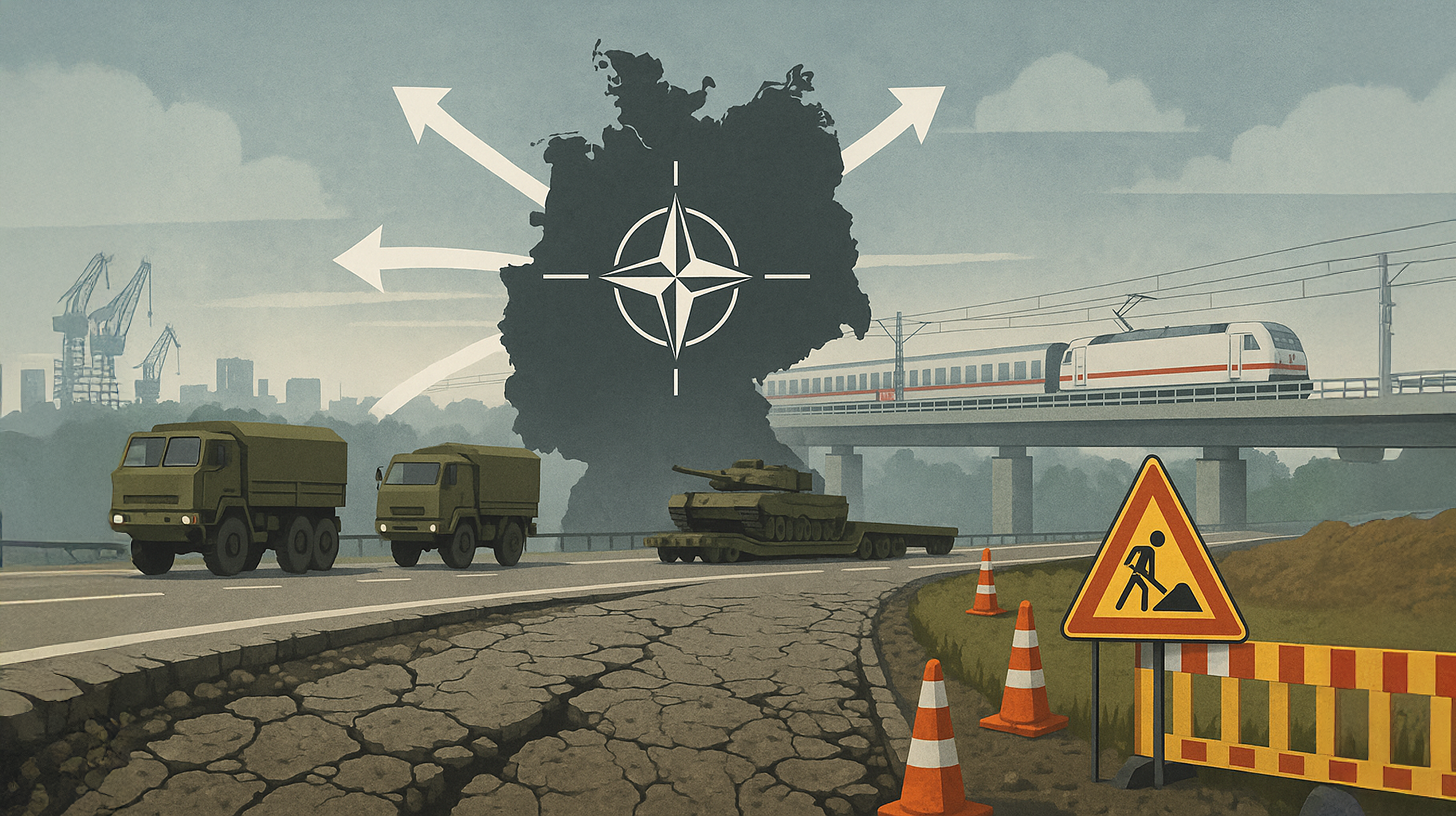
The challenges of the business model
Despite the euphoria surrounding the economic opportunities, the structural challenges must not be overlooked. Ukraine's current account balance has shifted from a surplus of 3.6 billion euros in 2021 to a deficit of almost 800 million euros in 2024. Germany's primary income from Ukraine has fallen dramatically, while secondary income, i.e., aid payments and remittances from refugees, has risen sharply. This demonstrates that, despite all the trade, the economic relationship remains heavily reliant on transfer payments.
The problem of corruption remains a barrier to investment. Cathrina Claas-Mühlhäuser, Chairwoman of the German Eastern Business Association, explicitly warned that a potential weakening of the fight against corruption is a cause for concern. Private sector engagement and capital for reconstruction depend on a legally secure environment. Ukrainian politicians must build trust in this area, not erode it.
Added to this are the risks associated with the war. The ongoing Russian attacks on infrastructure, the unstable energy supply, weak physical protection against missile attacks, and the increasing shortage of skilled workers pose significant operational challenges. Ihor Fedirko, CEO of the Ukrainian Council of Defence Industry, cites these factors as the greatest risks for potential investors. Nevertheless, he emphasizes that both demand and the necessary capital exist, and that the business potential outweighs the risks.
German support programs attempt to mitigate these risks. The German government provides nine billion euros annually through its Capacity Building Initiative, which not only finances direct arms deliveries but also supports the development of production capacities in Ukraine. Export credit insurance and investment guarantees are intended to facilitate economic engagement for German companies. The KfW development bank, together with European partners, has established a fund that, through an initial loss guarantee of 220 million euros, reduces the risks for private investors and aims to mobilize approximately one billion euros in capital for reconstruction projects.
The Ukraine business case as a strategic calculation
The phrase "Ukraine is a business case for the German economy" initially seems cynical in light of the human suffering and destruction. However, from an economic perspective, it describes a reality that cannot be ignored. Ukraine offers German companies a market where they can conduct business in the long term while simultaneously pursuing strategic interests.
The combination of cost-efficient production, a highly skilled workforce, government support, and direct combat testing under real-world conditions makes Ukraine a unique location for the defense industry. Companies that generate at least 90 percent of their revenue from the defense sector and establish a branch in Ukraine receive tax breaks, customs benefits, and simplified export controls. These incentives should not be underestimated.
At the same time, Germany benefits from Ukrainian innovations. Ukraine has developed world-class expertise in areas such as drone defense, electronic warfare, swarm technologies, and AI-supported sensor technology. German companies can access this know-how through collaborations and joint ventures and integrate it into their own products. The "Test in Ukraine" test platform, offered by the state-supported defense cluster Brave1, enables international manufacturers to test their systems under near-combat conditions that cannot be simulated in any laboratory worldwide. Diehl was the first foreign company to use this platform.
The strategic logic behind this business model extends far beyond short-term profit interests. Through cooperation with Ukraine, Germany is developing technological expertise that is essential for its own security. After decades of underfunding, the German armed forces are not operational in many areas. Cooperation with Ukraine helps to address these shortcomings and simultaneously build a European defense industry that can operate independently of non-European suppliers.
German Defense Minister Boris Pistorius clearly articulated this logic. The nature of warfare has changed. While jets and tanks were initially the focus, followed by artillery, the emphasis is now increasingly on electromagnetic warfare and drone combat. This highlights what Germany can learn from Ukraine. Therefore, it is beneficial to jointly engage in production. The Ukrainian government sees untapped capacity in its own defense industry amounting to thirty billion euros annually, which could be activated through Western cooperation.
The long-term prospects of the economic partnership
German-Ukrainian economic relations will undergo fundamental development in the coming years. The state of war will eventually end, and Ukraine will enter a phase of massive reconstruction. German companies that invest now and build partnerships will then enjoy significant competitive advantages. They possess local presence, market knowledge, and established relationships.
The prospect of EU accession is fundamentally changing the entire investment landscape. Integration into the European single market will eliminate many of today's risks. Legal certainty, stable institutions, and harmonized standards will transform Ukraine into a typical investment location within Europe. Experience with the EU accessions of Central and Eastern European countries demonstrates that this transformation process can be highly successful economically. Poland, the Czech Republic, the Baltic states, and Romania have all undergone impressive catch-up processes since their accession and are now firmly integrated into European value chains.
Ukraine possesses significant structural advantages that will persist even after the war ends. The country has a highly skilled population with strong expertise in engineering, IT, and technological research. The IT sector was already one of the strongest pillars of the Ukrainian economy before the war and has continued to develop despite the conflict. Agriculture is among the most productive in the world and will be able to fully resume its export capacity after the war. Ukraine's strategic location on the Black Sea and its transit routes to Asia make it an important logistics hub.
In addition, there are the natural resources. Ukraine possesses significant deposits of critical raw materials needed for high-tech industries and renewable energy technologies. The processing of these resources within the country could become a key pillar of its future economy. The EU has recognized this and defined critical raw materials as one of its priority areas for investment in Ukraine.
The demographic situation, however, presents a significant challenge. Millions of Ukrainians have fled the war, many of them highly skilled professionals. Their return is essential for reconstruction. The Ukrainian government is working on programs to facilitate refugees' return by providing housing, jobs, and educational opportunities. German investments can play a key role in creating the economic prospects necessary for their return.
The geopolitical embedding of the economic model
German-Ukrainian economic relations cannot be viewed in isolation from the broader geopolitical context. The conflict between Russia and the West will shape the European security architecture for decades to come. The economic integration of Ukraine into Western structures is a key component of this new order.
Germany is pursuing a two-pronged strategy. On the one hand, it secures Ukraine's strategic alignment with the West through economic integration and prevents the country from falling back into Russia's sphere of influence. On the other hand, it uses this cooperation to strengthen its own economic and security position. This strategy is not altruistic, but rather based on a realistic assessment of German interests.
The fact that the Minister of Economic Development was accompanied on her trip to Kyiv by representatives of the defense industry, drone manufacturers, and energy companies demonstrates the new priorities. The focus is no longer primarily on humanitarian aid, but on building long-term business relationships in strategically important sectors. The statement that traditional supply relationships must evolve into shared industrial bases underscores this transformation.
The agreements between Germany and Ukraine to deepen their defense cooperation, signed at NATO headquarters in October 2025, include concrete projects in air defense, the simplification of work and study visits, and the promotion of cooperation in the training of armed forces. German Defense Minister Pistorius described it as a win-win situation. The agreement strengthens Ukraine's defense and deterrence capabilities while simultaneously allowing Germany to benefit from Ukraine's innovative potential.
This formulation is remarkably honest. It acknowledges that Germany not only gives but also receives. Ukraine is no longer merely a recipient of aid, but an equal partner with expertise that Germany needs. This recognition is an important step toward a more symmetrical relationship, one characterized not by a give-and-take dynamic, but by mutual benefit.
A critical examination of the business model
Despite the economic logic behind Germany's involvement in Ukraine, it is crucial to critically examine whether the conflation of security and economic policy creates problematic incentive structures. If German companies profit massively from the war, this could create an incentive to maintain the conflict, or at least a long-term unstable security situation that justifies high military spending.
This danger cannot be ignored, even if it is rarely addressed in political debate. The arms industry has historically always profited from conflicts, and the resurgence of the defense industry in Germany and Europe is a direct result of the war in Ukraine. The massive investments in DefTech startups, the increasing defense budgets, and the new business opportunities are creating an economic dynamic that makes a peaceful conflict resolution, at least from an economic perspective, unattractive.
At the same time, it must be acknowledged that the threat from Russia is real and that Europe urgently needs to restore its defense capabilities after decades of neglect. Cooperation with Ukraine offers a pragmatic, mutually beneficial approach. The alternative would be to abandon Ukraine to its own devices while simultaneously struggling to rebuild its own defense industry at great expense, without being able to benefit from Ukraine's experience.
The ethical dimension of this situation remains ambivalent. The human suffering in Ukraine is immense, and the destruction will shape generations. At the same time, it is economically rational and strategically sound for Germany to seize the economic opportunities arising from this situation, as long as this does not come at the expense of Ukrainian interests, but rather occurs within a partnership from which both sides benefit.
Ukraine as a test laboratory: How Germany links technology and security
German-Ukrainian economic relations are undergoing a historic transformation. What began as a humanitarian catastrophe and security crisis is evolving into a complex economic network in which Germany plays a central role. The more than fifty billion euros that Germany has provided to Ukraine to date are only the beginning of long-term economic cooperation that extends far beyond aid payments.
Ukraine has become a business case for the German economy, particularly in the defense and energy sectors. German companies are investing in Ukrainian production facilities, establishing joint ventures, and using Ukraine as a testing ground for new technologies. In return, Germany benefits from Ukrainian expertise, which is a world leader in many areas of defense technology.
This cooperation is not altruistic, but follows a clear strategic logic. Through its cooperation with Ukraine, Germany is building up technological expertise that is essential for its own security, while simultaneously positioning itself for the post-war period when Ukraine enters a phase of massive reconstruction and may eventually join the EU.
The risks of this strategy are considerable. The war continues, the destruction persists, and Ukraine's political future is uncertain. Corruption, unstable institutions, and war-related operational challenges complicate economic engagement. Nevertheless, the perseverance of German companies, which remain committed to Ukraine despite massive losses in the value of their investments, demonstrates that confidence in the long-term prospects prevails.
The notion that security policy is always also economic policy is more than mere rhetoric. It describes a new reality in which the boundaries between these areas are increasingly blurred. The billions of euros for Ukraine are not just aid, but investments in a strategic partnership from which Germany intends to benefit economically, technologically, and in terms of security policy. Whether this calculation proves correct will become clear in the coming years. However, the course has been set, and the momentum is impressive.
Consulting - Planning - Implementation

Markus Becker
I would be happy to serve as your personal advisor.
Head of Business Development
Chairman SME Connect Defense Working Group
Consulting - Planning - Implementation
Konrad Wolfenstein
I would be happy to serve as your personal advisor.
You can contact me at wolfenstein∂xpert.digital or
Just call me on +49 7348 4088 965 .
Your dual-use logistics experts
Dual-use logistics experts - Image: Xpert.Digital
The global economy is currently undergoing a fundamental transformation, a watershed moment that is shaking the foundations of global logistics. The era of hyper-globalization, characterized by the relentless pursuit of maximum efficiency and the "just-in-time" principle, is giving way to a new reality. This new reality is marked by profound structural breaks, geopolitical power shifts, and increasing fragmentation of economic policy. The once taken-for-granted predictability of international markets and supply chains is dissolving and being replaced by a period of growing uncertainty.
Related to this: