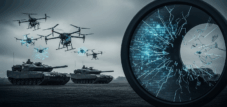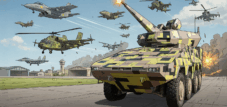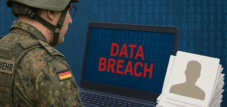
The Bundeswehr procurement process is considered one of the biggest obstacles: The dilemma of Bundeswehr procurement – Creative image: Xpert.Digital
Ignored & held back: How Germany's bureaucracy sabotages its own high-tech companies
The paradoxical business: Why foreign armies are queuing up while the German army hesitates
The "turning point" has bestowed upon German defense policy a historic special fund of €100 billion to modernize and ensure the operational readiness of the Bundeswehr (German Armed Forces). But while the billions are flowing, frustration is growing in eastern Germany. Particularly in Saxony, a center of highly specialized industry, numerous defense companies feel systematically overlooked. The core problem lies in a cumbersome procurement system, historically rooted in western Germany, which favors established corporations and hampers innovative medium-sized companies from the former East Germany with lengthy bureaucratic procedures.
The paradox is this: while German authorities hesitate, Saxon companies like Spekon and MWK Defence are sought-after partners on the global market. Their products, ranging from military parachutes to precision components for weapons systems, are successfully exported – proof of their competitiveness that, however, receives little attention at home. This article examines the dilemma of the East German arms industry: a tension between untapped potential, political failures, and a deeply rooted societal debate. It is the story of an economic struggle where more than just contracts are at stake – it is about equitable participation, technological sovereignty, and the future of an entire industry in eastern Germany.
Related to this:
Billions are flowing – but whose hands are holding the pie? Why East German companies are left on the sidelines despite their know-how
The debate surrounding the role of the East German defense industry has gained renewed momentum due to political developments in recent years. Saxony serves as a prime example of the struggle for equitably distributed innovation opportunities, economic participation, and security policy responsibility within the national context. The industry is experiencing a rollercoaster of emotions: the federal government is providing unprecedented funding, while key Saxon companies like MWK Defence, PMG Precision Mechanics Group, and Spekon emphasize their expertise and willingness to invest, yet are often more successful with international inquiries than domestically.
The central problem appears to be the procurement practices within Germany. Despite a special fund of €100 billion for the modernization of the Bundeswehr (German Armed Forces), many East German arms manufacturers feel overlooked or trapped in lengthy bureaucratic procedures. At the same time, global demand for military equipment is growing – particularly in light of the war in Ukraine – driving export figures for German companies to record levels.
This analysis is structured according to the relevant building blocks of a well-founded consideration: from historical roots, through current mechanisms, practical examples and critical controversies, to an outlook and a final evaluation.
Related to this:

Historical influences and economic shifts: The development of the arms industry in East Germany
The starting point for the defense industry in Saxony and the new federal states is characterized by deep historical and structural differences. After the end of the GDR and the reunification of Germany, West German industry dominated the markets and value chains for security and defense-related products. Supplier relationships and symbiotic partnerships with the Bundeswehr (German Armed Forces) developed firmly in the West, while East German companies had to painstakingly position themselves within new market structures.
This trend is still reflected in procurement practices today. Saxony's Minister-President Michael Kretschmer and Economics Minister Dirk Panter consistently demand that the billions of euros in investments also reach eastern Germany and not solely benefit western German corporations. Figures confirm the inequality: Of the 100 billion euros in federal funding, Saxon companies have so far received only a minimal share, further exacerbating the historical gap.
Nevertheless, Saxony's industry is technologically and qualitatively on par with its West German competitors. The region has produced a strong research landscape and highly specialized companies that enjoy an excellent reputation, particularly in mechanical engineering, automotive engineering, and high-tech sectors. Companies like MWK Defence in Königswartha demonstrate this with their extensive expertise and broad product portfolio.
Related to this:
Changing Mechanisms: How Procurement Structures and Innovation Dynamics Shape the Industry
The German Armed Forces' procurement process is considered one of the biggest obstacles to the growth and integration of East German companies. While in countries like Poland or Norway, direct negotiations with military authorities lead to contracts within weeks, Saxon companies in Germany experience lengthy and often opaque processes with the Federal Office of Bundeswehr Equipment, Information Technology and In-Service Support (BAAINBw) in Koblenz. Decision-making authority usually lies with established suppliers in the West; new providers are rarely integrated.
The nationwide bureaucratic dilemma in Germany affects not only procurement but also innovation capacity: Complex tendering requirements prevent rapid solutions and lead to a fixation on so-called "gold-plated solutions"—tailor-made projects that are hardly competitive in an international context. The German Armed Forces maintain a silo mentality, from which interdepartmental cooperation and open innovation ecosystems have so far failed to emerge.
In addition, there are specific requirements and approval procedures for new technologies that particularly hinder small and medium-sized enterprises (SMEs). However, examples such as the Cyber Innovation Hub show that collaboration with startups and research institutes can produce market-ready solutions within three months – provided the structures are adapted to modern needs.
Hub for Security and Defense - Advice and Information

Hub for Security and Defense - Image: Xpert.Digital
The Security and Defence Hub offers expert advice and up-to-date information to effectively support companies and organizations in strengthening their role in European security and defence policy. Working closely with the SME Connect Defence Working Group, it particularly promotes small and medium-sized enterprises (SMEs) that wish to further develop their innovative capacity and competitiveness in the defence sector. As a central point of contact, the Hub thus creates a crucial bridge between SMEs and European defence strategy.
Related to this:
Saxony's arms boom: Export records instead of Bundeswehr orders – Why East German suppliers often only receive "crumbs from the pie"
Current realities: Status quo and economic importance of East German arms companies
The current state of the defense industry in Saxony is characterized by both hope and frustration. Around 2,000 people are employed in approximately 80 companies, most of which see themselves as specialized suppliers, primarily manufacturing components for major weapon systems, sensors, optics, or precision engineering. Some companies, including MWK Defence, PMG, and Spekon, emphasize that their expertise meets international standards and that they regularly and promptly receive orders from abroad.
Spekon Sächsische Spezialkonfektion GmbH is a globally established manufacturer of military parachutes and has seen a massive increase in sales since the start of the war in Ukraine – primarily due to exports, however, and not because of contracts with the German Armed Forces. PMG Precision Mechanics Group is considered a specialist for sophisticated precision parts, serving mainly the aerospace, motorsport, and defense industries – here, too, international business partners predominate.
The economic potential for the region is enormous, especially since the transformation of the automotive industry is putting new pressure on the defense sector to become more attractive, and numerous suppliers are seeking new markets. Politicians and industry experts therefore emphasize the need for structural reforms to anchor value creation in the East and secure jobs.
Related to this:
Reality on the ground: Influential company examples and their international significance
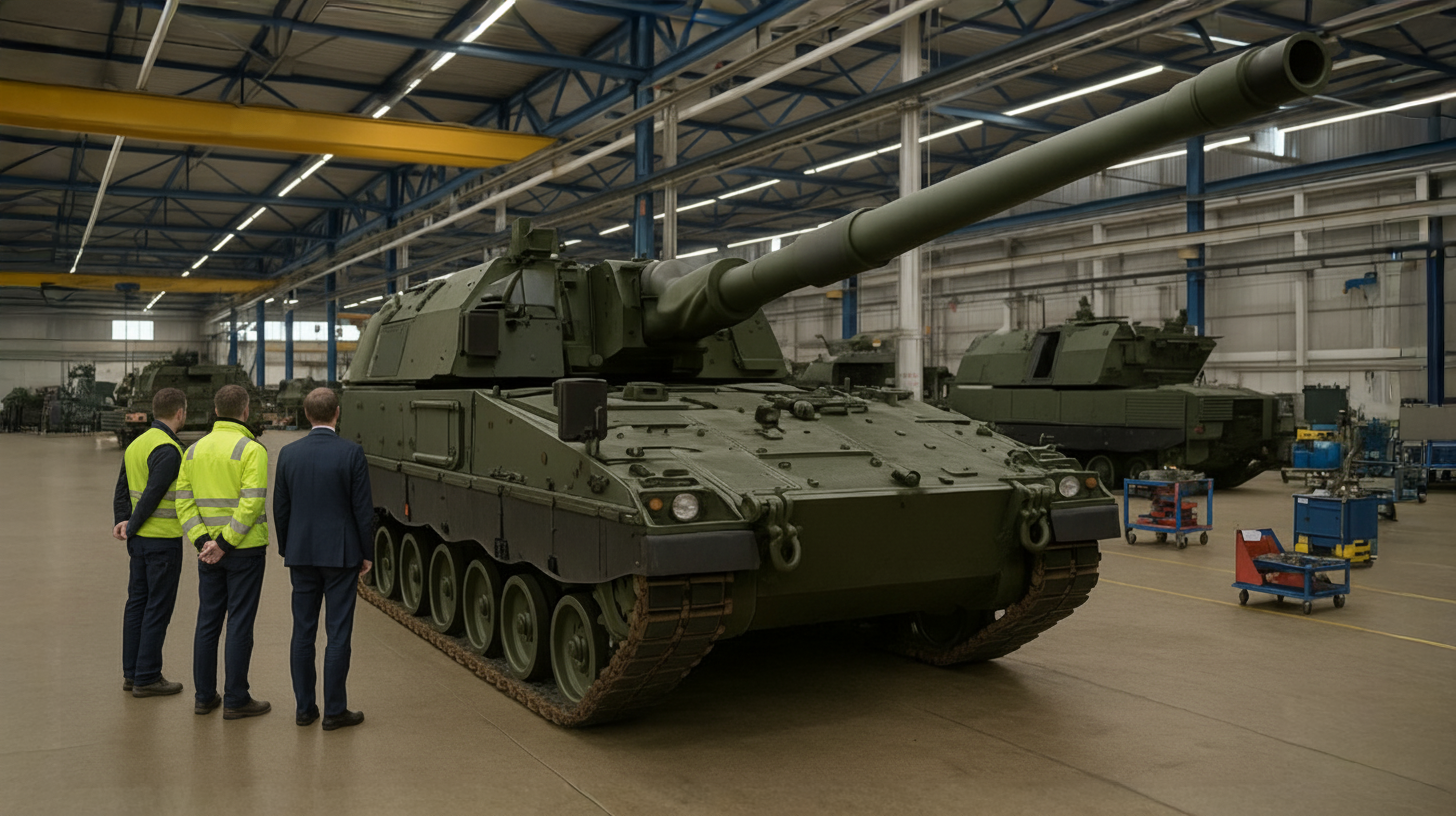
MWK Defence, based in Königswartha, impressively demonstrates that it possesses the know-how and skills to manufacture even rocket launchers, but that the volume of orders from Germany hardly reflects its capabilities. While international customers decide on orders within a few weeks, German bureaucracy often drags on for years. The company specializes in custom machine construction and tank components, but sees little opportunity in the current situation to substantially benefit from the German Armed Forces' special fund.
PMG Precision Mechanics Group in Wilsdruff also demonstrates how Saxon medium-sized companies are positioning themselves to benefit from the announced arms offensive. With investments in new machinery and facilities, PMG is continuously expanding and focusing on innovative and sustainable production. Nevertheless, major contracts continue to go to West German companies, while East German suppliers have to make do with "crumbs from the pie.".
The case of Spekon in Seifhennersdorf is particularly striking: The company supplies parachutes to more than 50 countries, including numerous armies worldwide, but the German Armed Forces are not among its major customers. Since the war in Ukraine, its revenue has almost doubled to five million euros, but exports are primarily to countries outside of Germany.
Controversies and criticism: Between pacifism, protests and economic responsibility
The debate surrounding the establishment and promotion of the arms industry in Saxony is deeply rooted in social and historical controversies. Particularly in eastern Germany, many people hold pacifist values, invoking the Peaceful Revolution and the motto "swords into plowshares." Protests against planned factories, such as tank production in Görlitz or munitions factories in Großenhain, still run deep today. Critics doubt that expanding the arms industry is sustainable and effective, and warn of the historical consequences of economic arms buildup.
The political debate is nuanced: While Economics Minister Panter calls for greater industrial participation and innovation, emphasizing that he is not preparing for war, others advocate for alternative forms of economic development. The BSW parliamentary group, for example, criticizes the focus on weapons production and calls for sustainable solutions instead of military buildup.
Despite this criticism, many stakeholders agree that a defensible Federal Republic, economic transformation, and job security must go hand in hand. The path to achieving this remains controversial and requires public debate.
Related to this:
Innovation, dual-use and disruptive technologies: Outlook on future trends in Saxony
Dual-use technology and AI: How Saxony can become a high-tech defense hub
The future of the defense industry in eastern Germany will be significantly shaped by technological innovations and the transformation towards dual-use technologies. Mechanical engineering, microelectronics, and the high-tech cluster "Silicon Saxony" provide an excellent foundation for advancing disruptive technologies such as autonomous systems, AI applications, laser defense, and digital twins. In particular, the trend towards the integration of civilian and military research opens up opportunities that have not yet been fully exploited.
The EU and NATO are increasingly focusing on these areas and are also supporting start-ups that develop innovative solutions for defense and security. Saxony therefore has the opportunity to establish itself as a pioneer of new value chains and logistical hubs – especially due to its geographical location on NATO's eastern flank.
Political decisions, such as raising the thresholds for direct awards and making tendering conditions more flexible, could significantly facilitate the participation of East German companies in the future. It remains to be seen to what extent these measures will break down existing structures and bring about substantial change.
Reform hour for Saxony: More participation instead of piecemeal economy
The analysis of the defense industry in Saxony reveals a complex interplay between technological innovation potential, economic attractiveness, and political framework conditions. East German companies can impress with their quality and technology, but often remain marginal players in national procurement processes. Their economic significance—given structural changes and job losses in other sectors—is immense, yet it is the subject of controversial political and social debate.
Existing shortcomings in the Bundeswehr's procurement system, the dominance of West German suppliers, and the sluggishness of bureaucratic processes are hindering development. While the export orientation of Saxony's industry mitigates some losses, it does not replace national participation in the German defense budget. Protests and ethical concerns, as reflections of societal values, must be respected, but they must not lead to a blockage of the necessary economic transformation.
Looking to the future, there is hope that innovations, dual-use concepts, and disruptive technologies will give new impetus to the East – provided the right political course is set. Saxony has the potential to get more than just a crumb. The crucial question is whether the current reforms, social discourses, and industrial investments will lead to genuine participation or simply perpetuate the old structures.
Consulting - Planning - Implementation

Markus Becker
I would be happy to serve as your personal advisor.
Head of Business Development
Chairman SME Connect Defense Working Group
Consulting - Planning - Implementation
Konrad Wolfenstein
I would be happy to serve as your personal advisor.
You can contact me at wolfenstein∂xpert.digital or
Just call me on +49 7348 4088 965 .
Your dual-use logistics experts
Dual-use logistics experts - Image: Xpert.Digital
The global economy is currently undergoing a fundamental transformation, a watershed moment that is shaking the foundations of global logistics. The era of hyper-globalization, characterized by the relentless pursuit of maximum efficiency and the "just-in-time" principle, is giving way to a new reality. This new reality is marked by profound structural breaks, geopolitical power shifts, and increasing fragmentation of economic policy. The once taken-for-granted predictability of international markets and supply chains is dissolving and being replaced by a period of growing uncertainty.
Related to this: