


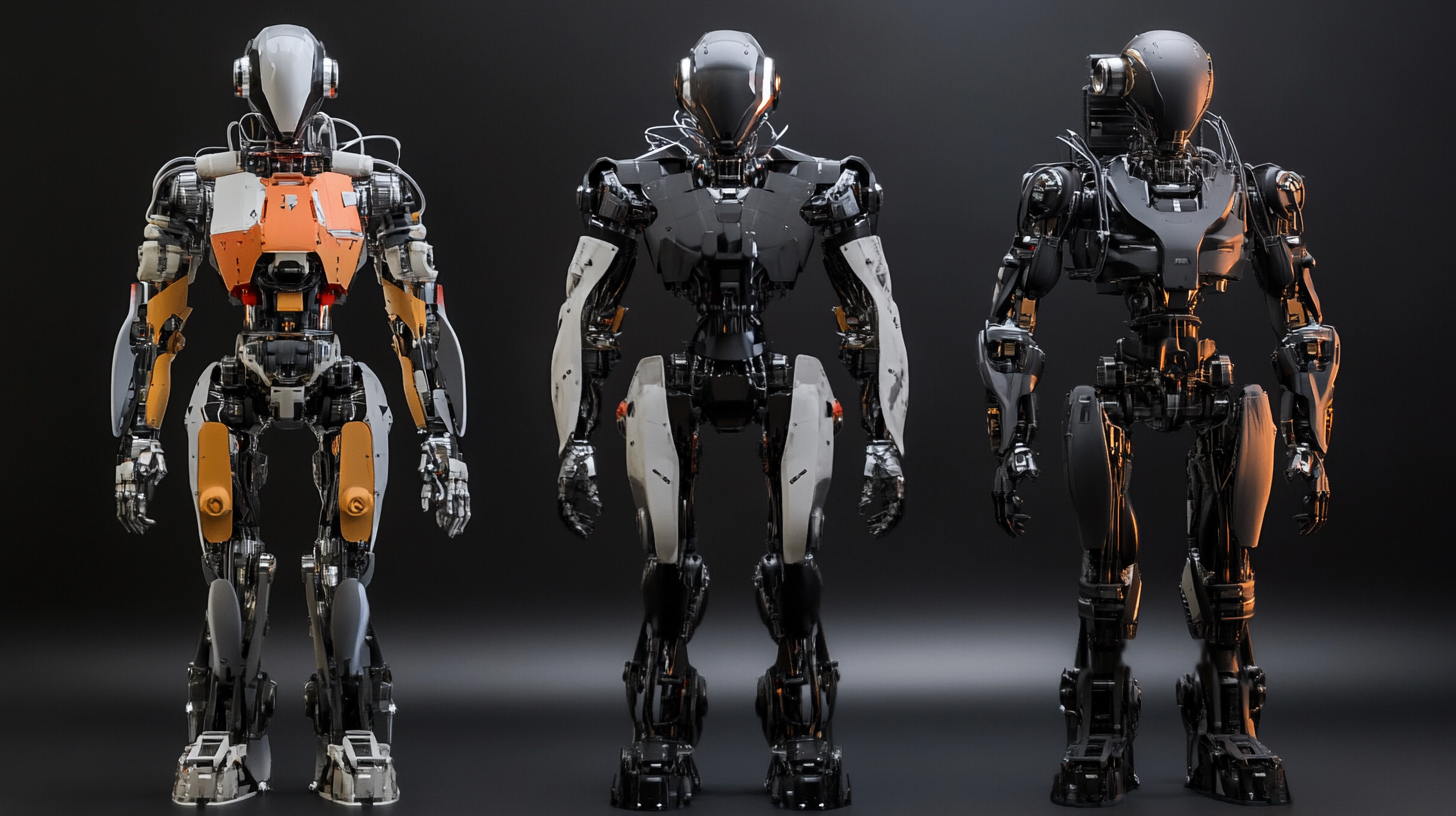
Future-proof through robotics: – Myths debunked: How robotics is changing the world of work, even in small companies – Image: Xpert.Digital
Robotics myths debunked: How SMEs can become future-proof through automation
Why robotics is the key to digitalization – The opportunities of robotics for medium-sized companies
Automation through robotics is no longer a future scenario, but an integral part of modern production processes – including in small and medium-sized enterprises (SMEs). Despite the clear efficiency gains and increased innovation potential, persistent myths still prevent many companies from taking the step towards automation. These prejudices range from the fear of massive job losses to the assumption that financial hurdles and complex technical adjustments make entry virtually impossible.
In reality, however, modern robotics solutions have proven to be specifically tailored for SMEs: Flexible, scalable, and cost-effective systems free employees from monotonous routine tasks, allowing them to focus on more creative and strategically important activities. Companies that invest in digital transformation not only benefit from higher production quality and speed, but also strengthen their competitiveness in an increasingly globalized market.
Related to this:
This article examines the central myths that hinder the adoption of robotics in SMEs and demonstrates how current case studies and technological innovations refute these prejudices. From the transformation of job profiles and flexible financing models to intelligent human-machine collaboration, robotics offers diverse opportunities to actively shape the future of SMEs. Decision-makers and other interested parties will find it clear that digital transformation is not a radical upheaval, but rather an evolutionary process that leads step by step to a sustainably optimized and innovative production landscape.
The following provides detailed answers to frequently asked questions, addressing common myths that hinder the implementation of robotics in small and medium-sized enterprises (SMEs). The article examines the advantages and disadvantages, presents practical case studies, and debunks myths that often arise in discussions about automation in SMEs. It answers questions regarding job losses, financial hurdles, technological requirements, and barriers to innovation.
What are some common myths regarding the introduction of robotics in SMEs?
Numerous prejudices and misunderstandings circulate, preventing SMEs from investing in modern robotics solutions. Among the most frequently cited myths are:
1. Robotics inevitably leads to job losses
The notion that the use of robots leads exclusively to a reduction in human labor is widespread. However, it is often overlooked that robots can take over repetitive and dangerous tasks, thus relieving the burden on employees.
2. Robotics is financially unaffordable
There is a common misconception that automation solutions require extremely high investment costs and can only be afforded by large corporations. However, modern financing models and technological advancements are making affordable solutions possible for SMEs as well.
3. Only large companies have processes that can be automated
Many people think that automation requires complex, large-scale industrial production processes. They ignore the fact that modular and scalable robotics solutions were specifically developed for flexible applications in small businesses.
4. Robotics requires radical and disruptive process changes
Another misconception is that the implementation of robots requires a complete overhaul of existing production lines, which would lead to significant operational disruptions.
5. Automation stifles innovation
There are concerns that the use of robots will lead to a loss of creative processes and individual innovative power, as machines take over predetermined tasks.
These myths often prevent companies from fully utilizing the potential of modern robotics technologies, thereby missing opportunities to increase efficiency and competitiveness.
Does the use of robotics in small businesses actually lead to a loss of jobs?
The myth that robotics inevitably leads to job losses is widespread and often stems from a fear of the unknown. However, numerous practical examples and studies paint a more nuanced picture:
Transformation of job profiles
Instead of destroying jobs, the introduction of robotics transforms employee job profiles. For example, Trelleborg Sealing Solutions has not only secured existing jobs but also created additional positions by deploying 42 collaborative robots (cobots). The cobots take over monotonous, repetitive tasks—such as polishing or quality control—while employees can focus on more complex activities like process optimization and strategic planning.
Demographic challenges and skills shortage
Given the ongoing shortage of skilled workers in many sectors (in Europe, for example, 75% of companies struggle to find qualified personnel), robots represent a valuable addition. Cobots can help fill vacant positions and reduce the workload on existing employees. The company Stela Laxhuber was able to eliminate monotonous tasks through the use of welding robots and also create more attractive positions in plant control and optimization.
Related to this:
New skills and qualification requirements
While the introduction of robotics requires new qualifications and retraining measures, it leads to a long-term improvement in the workforce. Employees learn to use modern technology, making them future-proof for the job market.
Experience shows that automation leads to a restructuring of the working world rather than simply job losses. Instead, repetitive and dangerous tasks are taken over by robots, while humans can contribute their strengths to creative and strategic tasks.
Is robotics financially unaffordable for SMEs, or can small businesses also benefit from automation?
The widespread myth that automation solutions are financially unaffordable is often based on the high investments required for earlier generations of robots. However, modern developments have largely disproven this notion
Life cycle costs versus return on investment (ROI)
Previously, companies had to budget for investments of several hundred thousand euros for industrial robots. Nowadays, systems like the HORST robots from fruitcore robotics exist that enable amortization within 12 to 24 months. With a total life cycle cost of around 80,000 euros over a ten-year period, SMEs achieve ROI rates comparable to those of large industrial companies.
Financing models and Robotics-as-a-Service (RaaS)
A crucial factor for SMEs is the availability of flexible financing models. Models like RaaS (Software as a Service) transform high upfront investments into monthly operating costs. This significantly lowers the barrier to entry and allows even smaller companies to benefit from automation.
Hidden Costs of Manual Manufacturing
Traditional manufacturing processes can be associated with significant costs due to errors. Analyses show that automation can achieve savings of up to 90% in rework costs. At Stela Laxhuber, for example, the machining time for fan components was drastically reduced from eight hours to 50 minutes, representing a capacity increase of 210%.
This shows that modern robotics solutions are also financially attractive for small and medium-sized enterprises – especially when long-term savings and efficiency gains are taken into account.
Related to this:
Can only large companies benefit from automated processes, or are there also suitable solutions for SMEs?
Another common myth is that automation is only suitable for large companies, as they possess the necessary resources and complex production lines. However, this assumption is clearly refuted by today's technology
Modularity and scalability
Modern cobots, which often handle payloads of up to 10 kg, are designed to integrate seamlessly into any factory floor – regardless of company size. Hans Weber Maschinenfabrik impressively demonstrates this with its HS-4-1000 handling cell, which can be adapted to individual production needs and achieves a payback period of less than twelve months for batch sizes as small as one.
Fast changeover times
Flexibility is one of the greatest advantages of modern robotics. For example, the KUKA LBR-iisy robot needs less than an hour to switch between different processing tasks. This makes it ideal for environments where production orders vary and a high degree of adaptability is required.
Cross-industry application areas
Cobots are not only used in traditional manufacturing, but also in sectors traditionally dominated by SMEs. In food packaging, medical technology, and even woodworking, robots are employed to perform tasks such as precise grinding, painting, or even the inspection of microscopic defects in products.
These developments demonstrate that it is not only large corporations that benefit from automatable processes. Rather, flexible and scalable robotics solutions also offer SMEs the opportunity to optimize their processes and thus increase their competitiveness.
Does the implementation of robotics require radical process changes that disrupt ongoing operations?
A frequently expressed concern is that the introduction of robotics requires radical changes in production processes and can therefore lead to significant disruptions in operations. However, the reality is different:
Plug-and-play integration
Modern robots, such as the UR3e from Universal Robots, are specifically designed for easy integration into existing production environments. Thanks to advanced software solutions like KUKA.Sim, a digital twin of the production line can be created. This allows necessary adjustments to be tested virtually before physical changes are made. A real-world example is the seamless transition at Stela Laxhuber, where a welding robot was implemented without interrupting ongoing operations.
AI-supported adaptability
The latest generation of robots is equipped with artificial intelligence (AI), enabling them to analyze and adapt production processes in real time. Systems like HORST use algorithms that automatically optimize parameters, minimizing programming effort. This allows even employees without in-depth robotics knowledge to control complex processes via intuitive graphical user interfaces – such as those used in the Siemens NX controller.
These advances demonstrate that integrating robotics into existing production processes no longer necessarily involves radical changes or operational disruptions. Instead, modern solutions enable a gradual, low-risk transition to automated production.
Can automation limit innovation in small businesses?
Another widespread myth claims that automation and the use of robotics stifle creativity and innovation. Critics fear that strict process optimization reduces the space for creative ideas. However, reality paints a different picture:
Unleashing creative potential
By having robots take over repetitive and monotonous tasks, employees gain valuable time for research and development activities. A study by the Fraunhofer IPA shows that automated medium-sized companies file 23% more patents than their non-automated competitors. This demonstrates that automation can act not as an obstacle to innovation, but as a catalyst for creative processes.
Synergies between humans and machines
Modern human-robot collaboration (HRC) concepts enable close cooperation between technical systems and employees. In a furniture factory, for example, designers work on the individual design of products, while cobots handle the precise manufacturing. This synergy leads to higher product quality and simultaneously strengthens the company's innovative capacity.
Support through AI tools
In addition to mechanical support, AI-powered tools offer valuable insights into market trends, material innovations, and production data. These analytical tools help SMEs identify new business areas and develop innovative products.
Relieving employees of repetitive tasks not only increases productivity but also expands their creative scope. Automation and innovation are therefore by no means mutually exclusive; rather, they reinforce each other in many areas.
How can SMEs manage the transition to automation gradually and with minimal risk?
Successful robotics implementation in small businesses requires a well-planned, phased approach. Some proven strategies include:
Step-by-step implementation
Instead of a one-off, radical overhaul, many successful SMEs opt for a phased implementation of automation solutions. This can mean initially automating individual, clearly defined process steps before undertaking a comprehensive digital transformation. This allows companies to test efficiency gains while simultaneously minimizing potential risks.
Use of pilot projects
Pilot projects offer an excellent opportunity to evaluate the impact of automation on a small scale. Prototypes and test runs allow for the identification of weaknesses and the optimization of human-machine collaboration. Success in pilot projects also fosters the necessary acceptance and motivation within the company.
Use of funding programs
Political initiatives and funding programs, such as the German "Digital Now" program, offer financial support and consulting services specifically tailored to SMEs. With grants of up to 50% and the expertise of neutral consulting platforms like Go4Robotics, companies can significantly facilitate their entry into automation.
Further education and training
One of the most important measures in the transition to automation is targeted employee training. Through training and retraining programs, employees can acquire the necessary skills to work effectively with modern robotics solutions. This not only contributes to the smooth integration of the technology but also strengthens employee confidence in the transformation process.
Through a strategically well-planned and gradual transition, SMEs can not only increase the efficiency of their processes, but also minimize risk and achieve a sustainable digital transformation.
Related to this:
- Cars, telecommunications, cloud computing, robotics: DeepSeek AI – Chinese companies are focusing on the next stage of innovation – What we currently know
- Amazon, Zebra Technologies and Ambi Robotics: AI and robotics improve warehousing through intelligent automation
What role do political and governmental initiatives play in promoting robotics in SMEs?
Government initiatives and funding programs are a crucial success factor for the introduction of robotics in small and medium-sized enterprises (SMEs). These measures aim to reduce the financial burden and promote knowledge transfer
Financial support
Programs like "Digital Now" in Germany provide SMEs with grants and low-interest loans to facilitate the transition to automation. Such funding helps to reduce initial investment costs and make the economic viability of robotics projects more transparent.
Consulting services and networks
In addition to financial resources, government initiatives often offer expert advice. Platforms like Go4Robotics act as neutral consultants, supporting companies in selecting and implementing suitable technologies. These networks foster exchange between companies, research institutions, and technology providers.
Creating framework conditions
Legal regulations and strategic programs create an innovation-friendly environment that promotes SMEs in the areas of research, development, and digitalization. In the long term, this contributes to securing and expanding the competitiveness of SMEs.
The support from political initiatives shows that digital transformation and the implementation of modern robotics is not only a business objective, but also a socio-political one.
What practical examples demonstrate that robotics can be successfully implemented in SMEs?
There are numerous case studies and practical examples that impressively demonstrate that robotics can be successfully implemented even in small and medium-sized enterprises:
Trelleborg Sealing Solutions
By deploying 42 collaborative robots (cobots), this company succeeded in automating repetitive and dangerous tasks. This not only preserved existing jobs but also created new fields of activity for employees, such as process optimization and quality control.
Stela Laxhuber
This company has not only reduced processing time from eight hours to 50 minutes by using welding robots, but has also increased production capacity by 210%. At the same time, monotonous tasks were eliminated and new, more attractively qualified positions were created.
Hans Weber Machine Factory
With its HS-4-1000 handling cell, this company demonstrates how modular robotics solutions can also be used for small batch sizes (batch size 1). The technology's flexible application and rapid reconfiguration enabled amortization in less than twelve months.
Use in niche markets
In industries such as medical technology, food packaging, and woodworking, cobots are used to perform highly precise tasks. Vision-guided systems, for example, can detect microscopic defects with an accuracy of 99.98%, thus optimizing quality assurance.
These examples demonstrate that modern robotics solutions are specifically tailored to the needs of SMEs and can be flexibly adapted to different production processes.
What future developments can be expected in the field of robotics for SMEs?
Robotics is in a constant state of development, and future trends will further drive its integration into SMEs:
Advanced AI algorithms
The increasing integration of artificial intelligence will further improve robots' ability to analyze production data in real time and make autonomous adjustments. This will lead to even more efficient and flexible production processes, minimizing human intervention.
Improved human-robot collaboration
As technology advances, human-robot collaboration (HRC) concepts are being further optimized. In the future, cooperation between humans and machines will become even more seamless, so that robots will not only take over tasks but also be involved in joint decision-making.
Enhanced modularity and adaptability
Future robotics systems will be even more modular and easier to integrate. Plug-and-play solutions will further reduce conversion efforts and maximize the flexibility of the production environment.
New financing and service models
Models like Robotics-as-a-Service are being further developed so that even smaller companies can benefit from modern technologies without large upfront investments. This lowers the barrier to entry and enables even wider use of robotics in medium-sized businesses.
Stronger networking and Industry 4.0
The ongoing digitalization leads to greater networking of machines and systems. This allows production processes to be monitored and optimized even better, resulting in increased transparency and efficiency.
Continuous technological advancements will enable SMEs to remain competitive in a dynamically changing market environment and to sustainably benefit from the advantages of automation.
What strategic advantages does the use of robotics offer for small and medium-sized enterprises?
The targeted use of robotics brings numerous strategic advantages for SMEs:
Competitiveness and market dynamics
By automating repetitive and dangerous tasks, companies can make their production processes more efficient. This leads to a better competitive position, as products can be manufactured faster and to a higher quality.
Flexibility and adaptability
Modern robotics solutions are designed to adapt to different production processes and volumes. This flexibility enables SMEs to react quickly to changing market conditions and individual customer requirements.
Optimizing resource utilization
The use of robots can significantly reduce production errors and rework costs. This leads to better resource utilization and lowers operating costs in the long term.
Increasing employee satisfaction
By having robots take over dangerous, monotonous, or stressful tasks, employees can concentrate on more demanding activities. This increases motivation and enables targeted professional development for the workforce.
Innovation and research
Relieving employees of routine tasks creates more space for creative and innovative projects. This allows them to focus more intensively on research and development, leading to new products and improved processes.
The strategic advantages of well-thought-out automation can therefore extend far beyond mere cost savings and secure a company's long-term innovation and competitiveness.
What challenges do SMEs face when introducing robotics?
Despite the numerous advantages, small and medium-sized enterprises also face some challenges when introducing robotics:
Prejudices and cultural barriers
Widespread myths – such as the fear that robots will destroy jobs or radically disrupt production – must be dispelled through education and practical examples. An open corporate culture that welcomes technological innovations is crucial in this regard.
Investment and conversion costs
Even though modern financing models lower the barriers to entry, SMEs still need to invest in the necessary infrastructure and training. Careful planning and phased implementation help minimize financial risks.
Technological complexity
Integrating robotics solutions into existing processes requires a certain level of technical expertise. External consultants and partnerships with technology providers can help reduce complexity in this area.
Data security and IT infrastructure
With the increasing networking of robotic systems, the need for secure IT infrastructure and protection against cyberattacks is also growing. Companies must invest in modern security solutions and implement appropriate processes.
Employee acceptance
Fear of job losses and changes can lead to resistance within the workforce. To counter this, comprehensive training programs and transparent communication about the benefits of automation are essential.
By identifying these challenges early and taking targeted measures to overcome them, SMEs can successfully master the path to a digitized and automated future.
How does human-machine collaboration contribute to increased business performance?
The collaboration between humans and machines, often referred to as collaborative robotics (cobots), offers numerous advantages that directly impact business performance:
Ergonomics and occupational safety
Cobots take over physically demanding and dangerous tasks, thereby reducing the risk of injury for employees. This leads to fewer sick days and overall greater job satisfaction.
Optimization of workflows
While robots perform repetitive and standardized tasks, employees can contribute their expertise in areas such as process optimization, quality management, and strategic planning. The combination of technical precision and human creativity leads to more efficient workflows.
Flexibility in production
Cobots are often modular in design and can be quickly reconfigured to respond to different production requirements. This flexibility allows companies to remain adaptable even with fluctuating demand or varying batch sizes.
Quality improvement
The use of robots capable of performing processes consistently and flawlessly significantly increases product quality. This leads to a reduction in scrap and rework costs, as well as greater customer satisfaction.
The synergy between human expertise and machine precision creates real added value and enables small and medium-sized enterprises to hold their own in a highly competitive market environment.
What conclusions can be drawn from the deconstruction of these myths for the future of robotics in SMEs?
A comprehensive analysis of commonly held myths shows that the benefits of robotics for small and medium-sized enterprises (SMEs) extend far beyond initial investment costs or concerns about job losses. Modern robotics and automation technologies are specifically tailored to the needs of SMEs and offer the following key insights:
- Transformation instead of displacement: The use of cobots leads to a restructuring of work processes and opens up new professional perspectives, instead of simply destroying jobs.
- Financial attractiveness: With innovative financing models and shorter amortization periods, robotics has long been economically attractive even for small companies.
- Flexibility and modularity: Modern systems are designed to be easily integrated into existing production environments – without radical changes or long downtimes.
- Promoting innovation: By relieving employees of repetitive tasks, space is created for creative and strategic tasks, which leads to more innovation and patent applications in the long term.
- Government support: Funding programs and advisory networks facilitate entry into digital transformation while simultaneously reducing economic risk.
Ultimately, it becomes clear that the real challenge lies not in the technology itself, but in the willingness of companies to question traditional ways of thinking and boldly take the step towards an automated future. SMEs that actively shape this transformation can benefit from increased efficiency, greater innovation, and a stronger competitive position.
The introduction of robotics in small and medium-sized enterprises (SMEs) is more than just technological progress – it represents an evolutionary shift in how work is organized and valued. Numerous case studies and academic research demonstrate that robots do not act as competitors to humans, but rather as enablers of a new era of innovation in SMEs. The combination of technical precision, flexible adaptability, and the fostering of creative potential creates genuine added value for both companies and employees.
The fear of job losses, high investment costs, or radical process changes is often based on outdated ideas. Modern robotics solutions are, in fact, designed to relieve the burden on people while simultaneously increasing the efficiency and quality of products. These myths can be effectively dispelled through targeted information campaigns, practical demonstrations, and government funding.
Companies venturing into automation should see this transformation as an opportunity to optimize their processes, boost their innovation, and prepare for future challenges in global competition. Human-machine collaboration is not a zero-sum game, but rather an integrative approach that optimally leverages the strengths of both.
Why robotics makes SMEs future-proof: Myths debunked, potential utilized
The myths often cited as obstacles to the introduction of robotics in SMEs are mostly based on outdated assumptions and fears. However, reality shows that modern robotics solutions are flexible, cost-efficient, and, above all, beneficial for the further development of the working world. Companies that actively shape this change and involve their employees in the transformation process lay the foundation for a sustainable and successful future in an increasingly digitalized and automated economy.
Through the continuous development of technologies, support from government funding programs and the open exchange between industry, research and practice, robotics is becoming a central element in SMEs, not only optimizing production processes but also unlocking new potential for innovation and growth.
This comprehensive analysis and numerous practical examples aim to overcome existing prejudices and pave the way for the successful integration of robotics in small and medium-sized enterprises. The future belongs to those who have the courage to question traditional ways of thinking and fully exploit the opportunities of digitalization and automation.
Related to this:
Your global marketing and business development partner
☑️ Our business language is English or German
☑️ NEW: Correspondence in your native language!

Konrad Wolfenstein
I and my team are happy to be available to you as your personal advisor.
You can contact me by filling out the contact form here wolfenstein@xpert.digital:or simply call me at +49 7348 4088 965. My email address is
I'm looking forward to our joint project.