

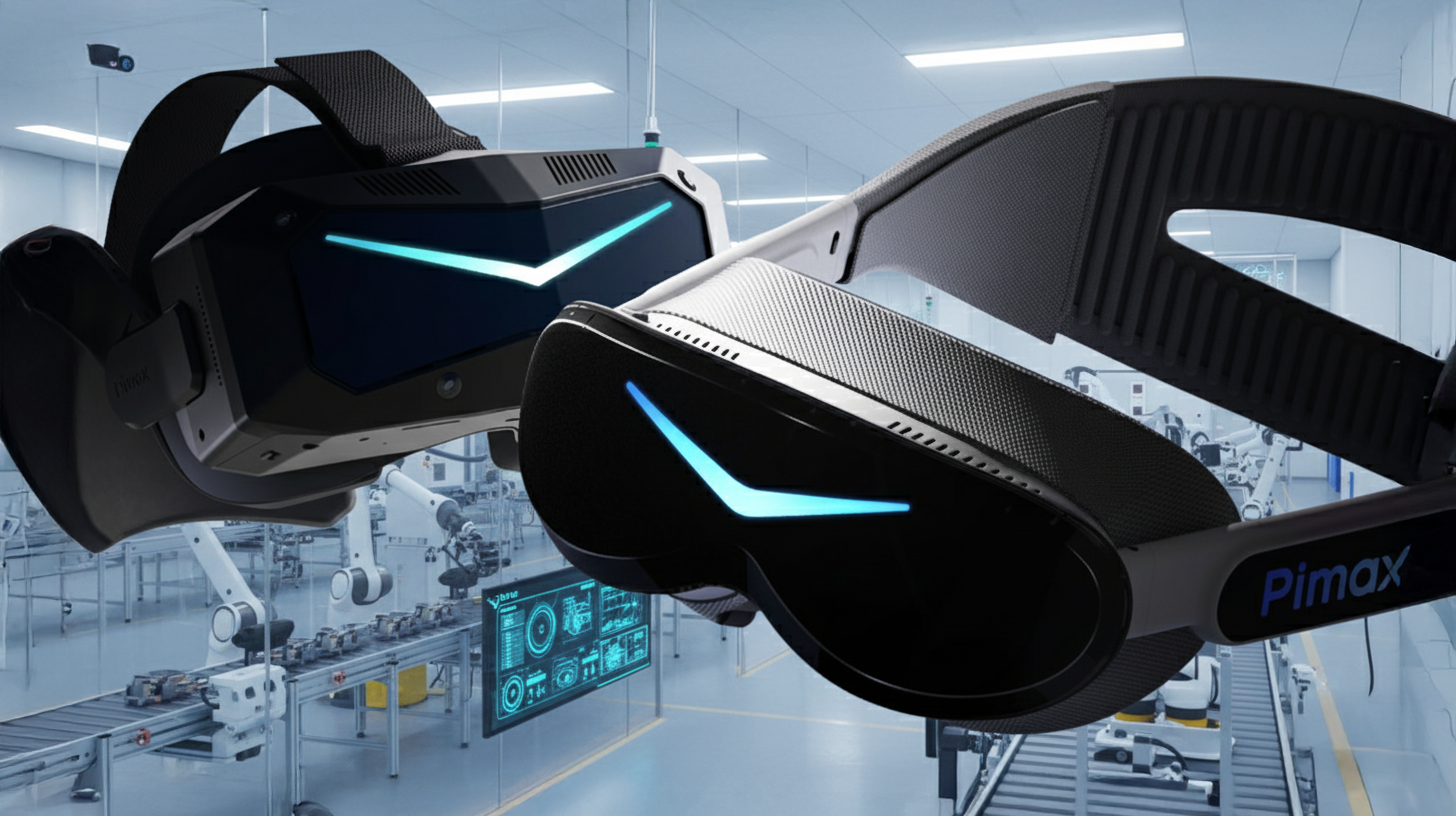
Pimax and the new generation of VR glasses: A look at the future of virtual reality – Original/Template: Pimax / Creative image: Xpert.Digital
VR more real than ever before: What's behind the new Pimax glasses and why they could change everything
What are Micro-OLED and pancake lenses?
Virtual reality headsets are constantly evolving, and two technologies in particular are revolutionizing how we experience virtual worlds: micro-OLED displays and pancake lenses. These technologies promise to overcome the current limitations of VR headsets by improving image quality while also reducing the weight and size of the devices.
Micro-OLED displays are an evolution of the well-known OLED technology. While conventional OLED screens use organic substrates, micro-OLEDs are manufactured directly on silicon wafers. This approach makes it possible to achieve an exceptional pixel density of over 4,000 pixels per inch. The technology offers perfect black levels and virtually infinite contrast, as each pixel can be switched on and off independently. Response times are in the nanosecond range, minimizing motion blur and latency.
Another significant advantage of micro-OLED displays is their compact design. The panels are extremely thin and don't require bulky backlighting, resulting in lower power consumption and reduced heat generation. Sony, a leading manufacturer of micro-OLED technology, has developed displays capable of reaching peak brightness of up to 10,000 nits. This high brightness is particularly important for outdoor applications and AR headsets.
Pancake lenses represent a different approach to improving VR headsets. Unlike conventional Fresnel lenses, which have a ring-shaped structure, pancake lenses use a system of multiple lens elements and film layers packed closely together. Light is reflected back and forth between the layers, creating a folded optical path. This design allows for a significant reduction in the overall length of the optical path.
The biggest advantage of pancake lenses lies in their compact design. They can be positioned much closer to the display—sometimes less than a millimeter away—compared to Fresnel lenses, which require a distance of more than 50 millimeters. This results in significantly slimmer and lighter VR headsets. Additionally, pancake lenses eliminate the distracting "god rays" and light scattering that can occur with Fresnel lenses.
However, pancake lenses also have disadvantages. Due to the folded light path and the numerous optical surfaces, a significant amount of light is lost. While aspherical glass lenses transmit up to 99 percent of the display light, pancake systems often only achieve around 15 percent. This results in lower brightness, reduced contrast, and less vibrant colors, especially at the edges of the viewing area.
Related to this:

Who is Pimax and what is the company's history?
Pimax was founded in May 2014 with the ambitious goal of developing VR headsets that do not exhibit the screen-door effect. From the outset, the Chinese company has specialized in innovative hardware solutions for virtual reality, constantly pushing technological boundaries.
Pimax's first commercial product was the Pimax 2K in March 2015, followed by the Pimax 4K in April 2016. The Pimax 4K was a milestone, as it was the first consumer VR headset with 4K resolution. With a total resolution of 3840 × 2160 pixels (1920 × 2160 per eye) and a 110-degree field of view, the company focused on high resolutions early on.
Pimax achieved its major breakthrough in 2017 with a Kickstarter campaign for the Pimax 8K. This campaign was exceptionally successful, raising approximately $4.24 million. The $200,000 goal was reached in just 73 minutes. The Pimax 8K even received a Guinness World Record as the most successful crowdfunded VR project.
The Pimax 8K revolutionized the VR market with its impressive resolution of 7680 × 2160 pixels (3840 × 2160 per eye) and an extremely wide field of view of 200 degrees. This was a significant leap compared to the competition, which at that time was mostly limited to 110-degree fields of view.
In 2017, Pimax closed a $13.5 million Series A funding round. The following year, the company announced the development of a "knuckle style" controller that would be fully compatible with SteamVR 2.0 and Vive accessories.
Pimax positioned itself as one of the largest VR hardware manufacturers in the Chinese market. From the outset, the company focused on developing high-quality and innovative VR headsets for enthusiasts willing to pay a premium price for the latest technology.
In recent years, Pimax has significantly expanded its portfolio. In 2024, the company founded 314 Labs, its own innovation center for research and development with locations in Elkton, Maryland, and Qingdao, China. The focus here is on proprietary SLAM algorithms for tracking, as well as key technologies such as 60G Airlink and interchangeable optical systems.
Over the years, Pimax has earned a reputation as a technology pioneer, consistently at the forefront of VR innovation. The company was the first to bring 4K resolution to VR headsets, followed by 8K resolution, and is already working on 12K systems. This continuous drive for innovation has made Pimax a key player in the high-end VR segment.
What new VR headsets has Pimax announced?
Pimax recently unveiled the final specifications for three new PC VR models featuring Micro-OLED technology: the "Dream Air SE", "Dream Air", and "Crystal Super Micro-OLED". All three devices utilize Pimax's proprietary "ConcaveView" pancake optics and are designed to combine high resolution with a wide field of view.
Dream Air SE
The most affordable model in the new product line is the "Dream Air SE," aimed at users seeking a lightweight, everyday VR headset. Weighing less than 140 grams, it is significantly lighter than most competing VR headsets. It boasts a resolution of 2560 × 2560 pixels per eye, equating to over 13 million pixels in total.
The Dream Air SE features integrated 6DoF tracking via SLAM, meaning no external tracking stations are required. SLAM stands for "Simultaneous Localization and Mapping" and is an advanced tracking method that combines camera technology and sensors to both determine the headset's position and simultaneously create a map of its surroundings.
A special feature of the Dream Air SE is its integrated Tobii eye tracking. This technology enables dynamic foveated rendering, an optimization technique that mimics human vision. Only the area the eye is focused on is rendered sharply, while peripheral areas are rendered at a lower resolution. This can reduce GPU processing requirements by 30 to 60 percent while maintaining perceived visual quality.
The Dream Air SE also offers spatial audio, which contributes to greater immersion. The starting price is €802 net, which is very attractive compared to other high-end VR headsets.
Dream Air
The "Dream Air" model represents the mid-range of the new product line and utilizes Sony Micro-OLED panels. With a resolution of 3840 × 3552 pixels per eye, it achieves over 27 million pixels, significantly surpassing most current VR headsets.
Despite its compact design and a weight of under 170 grams, the Dream Air is said to achieve a horizontal field of view of 110 degrees. Diagonally, a field of view of over 120 degrees is even specified. These figures are remarkable, as pancake lenses typically offer a smaller field of view than Fresnel systems.
A key optimization of the Dream Air is its improved stereo overlay. This refers to the area of the field of view where the images for the left and right eyes overlap, thus enhancing depth perception. Pimax advertises the device as currently the "smallest fully featured VR headset with this resolution.".
The Dream Air is designed for both mobile and professional use. Pre-order prices range from €1,783 to €2,050 before taxes, depending on the configuration. This pricing positions the device in the premium segment, but significantly below professional headsets from manufacturers like Varjo.
Crystal Super Micro-OLED
As part of the modular Crystal series, the "Crystal Super Micro-OLED" offers interchangeable optical units, including a micro-OLED module. This modular concept allows users to configure their headset according to the application and expand it as needed.
The Crystal Super Micro-OLED offers a field of view of 116 degrees horizontally and over 128 degrees diagonally. With a resolution of 3840 × 3552 pixels per eye, it matches that of the Dream Air. According to Pimax, the target audience is simulation enthusiasts and professional users who require the highest image quality and flexibility.
Of particular interest is the support for specialized setups for flight simulations and racing games. These applications especially benefit from the high resolution and wide field of view, as they require precise instrument rendering and good all-around visibility.
The modular design of the Crystal series was already a unique selling point of Pimax in its predecessor models. Users can combine various optical modules, tracking systems, and accessories according to their specific requirements.
Shipping of all three headsets is expected to begin this year, and pre-orders are already being accepted. According to Pimax, early adopters will receive accessories such as prescription lens inserts and a free copy of the racing game "Le Mans Ultimate".
How does SLAM tracking work in VR headsets?
SLAM tracking, short for "Simultaneous Localization and Mapping," is a sophisticated tracking method used in modern VR headsets. This technology combines camera technology, sensors, and special algorithms to accomplish two tasks simultaneously: precisely capturing the position and orientation of the VR headset in real time and simultaneously creating a three-dimensional map of the environment.
The basic principles of SLAM
The SLAM system works by detecting and tracking distinctive features and structures in the environment. These features can be edges, corners, textures, or other visual landmarks captured by the headset's integrated cameras. The system uses this information to create a point cloud or mesh representing the spatial structure of the environment.
Pimax is one of the few VR companies that has developed its own SLAM tracking technology. Unlike conventional base-station tracking systems, which rely on infrared sensors and can be susceptible to occlusion and interference, Pimax's SLAM tracking uses four cameras to generate over a million tracking points. These are combined with inertial measurements to achieve exceptional accuracy.
Advantages over other tracking methods
The main advantage of SLAM tracking lies in its autonomy. While external tracking systems like Lighthouse technology require separate base stations that need to be installed in the room, SLAM operates entirely without external hardware. This makes setup significantly easier and allows for greater flexibility in use across different environments.
SLAM tracking is considered the most precise tracking method for placing virtual objects in space. The technology can continuously correct the headset's position by recognizing previously tracked areas. When the user returns to a previously visited location, the system can use this recognition to correct any drift errors.
Another advantage is the system's robustness. By using multiple cameras and combining them with inertial sensors, SLAM can function even in challenging, dynamic, and changing environments. Modern SLAM implementations utilize AI models to ensure position accuracy even under difficult conditions.
Technical Implementation
The technical implementation of SLAM tracking requires significant computing power. The system must process image data from multiple cameras in real time, extract features, compare them with known landmarks, and simultaneously update the map of the surroundings. Modern implementations utilize specialized processors and optimized algorithms to handle these tasks with minimal latency.
Pimax combines SLAM tracking with other sensors such as gyroscopes and accelerometers. This sensor fusion enables the precise detection of even rapid movements and further improves tracking accuracy. The combination of visual and inertial data makes the system less susceptible to interference from poor lighting or moving objects in the environment.
Future scenario AR/VR: Improved segmentation changes tracking
SLAM technology is rapidly evolving. Future improvements could include even better object recognition and semantic segmentation. This would make it possible not only to capture the position of objects, but also to understand what those objects are and to react accordingly.
Pimax is continuously working to improve its SLAM algorithms. The company has established its own research lab specifically focused on developing this technology. The goal is to develop SLAM tracking that can compete with or even surpass traditional base station systems.
What is Eye Tracking and Foveated Rendering?
Eye tracking and foveated rendering are two closely related technologies that have the potential to fundamentally improve the VR experience. Eye tracking captures the user's eye movements in real time, while foveated rendering uses this information to optimize rendering performance.
Eye-tracking technology
Eye tracking in VR headsets typically uses infrared cameras to detect pupil movements. These systems must operate with extreme precision and speed, as even minor inaccuracies can impair foveated rendering. The challenge lies in the fact that people have very different eyes – varying pupil sizes, eye colors, and individual anatomical differences must be taken into account.
Modern eye-tracking systems, such as those from Tobii used in Pimax headsets, must not only capture current eye movements but also predict where the eyes will move next. This predictive capability is crucial because the rendering system needs time to calculate the corresponding image areas.
Understanding Foveated Rendering
Foveated rendering is based on a fundamental principle of human vision: only a small central area of the retina, the so-called fovea, can see clearly. This area comprises only about two degrees of the total field of vision. The rest is perceived as increasingly blurry the further it is from the center.
Foveated rendering utilizes this biological property by rendering only the area the user is currently looking at in full resolution and detail. Peripheral areas are rendered with reduced resolution, fewer texture details, and simplified geometry. Since the human eye does not perceive these areas sharply anyway, this loss of quality is not noticeable.
Different types of foveated rendering
There are two main forms of foveated rendering: static and dynamic. Static, or "fixed," foveated rendering defines a fixed point in the center of the image, which is displayed at full resolution. Headsets like the MetaQuest 2 use this method. The advantage is its simple implementation; the disadvantage is that the user must always look straight ahead to obtain the best image quality.
Dynamic foveated rendering, on the other hand, uses eye-tracking to shift the high-resolution area according to the actual viewing direction. This is the more advanced and effective method, used in premium headsets such as the Pimax Crystal series or the Varjo VR-3.
Performance advantages
The performance benefits of foveated rendering are considerable. The system can reduce GPU processing requirements by 30 to 60 percent without the user perceiving any loss of quality. In extreme cases, it is estimated that only about ten percent of the total resolution actually needs to be rendered.
Pimax states that their Dynamic Foveated Rendering can increase FPS by 10 to 50 percent. In practical terms, this means that users can run demanding VR applications like DCS World on hardware that would normally be insufficient – for example, a GeForce RTX 2060.
Challenges and future prospects
The biggest challenge with dynamic foveated rendering lies in the precision and speed of eye tracking. If the system isn't accurate enough or reacts too slowly, the visual experience is ruined and immersion is lost. The latency between eye movement and the corresponding rendering adjustment must be minimal.
Future developments could make foveated rendering even more efficient. Improved algorithms for predicting eye movements, better hardware integration, and optimized rendering pipelines will further enhance the technology. In the long term, foveated rendering could enable mobile VR headsets to display graphically demanding applications in high quality.
🗒️ Xpert.Digital: A pioneer in the field of Extended and Augmented Reality

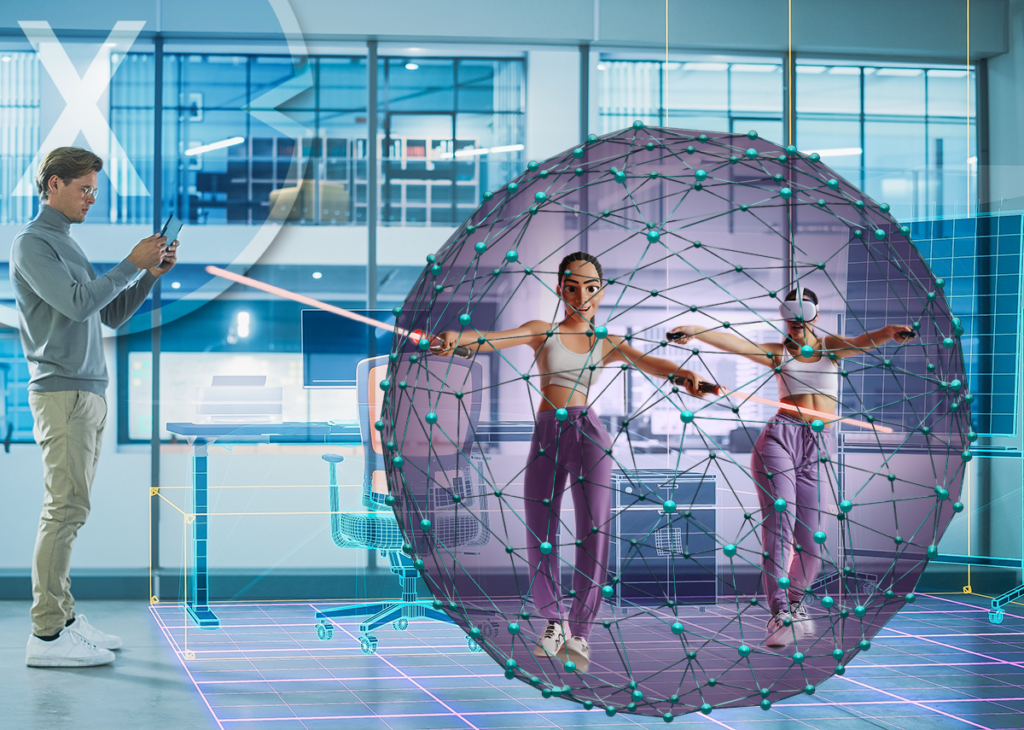
Finding the right Metaverse agency, planning office, or consulting firm - Image: Xpert.Digital
🗒️ Finding the right Metaverse agency, planning office, or consulting firm – Search and search: Top Ten Tips for Consulting & Planning
More information here:
Pimax: Between innovation and chaos: Tech fans love it, buyers are skeptical
What role does Sony play in Micro-OLED development?
Sony occupies a key position in the development of micro-OLED technology for VR applications. The company primarily acts as a technology supplier, providing the most advanced micro-OLED displays to various headset manufacturers, rather than producing consumer VR headsets itself.
Related to this:
Sony's OLED-on-Silicon technology
Sony has developed a unique OLED-on-Silicon (OLEDoS) architecture in which millions of microscopic OLED pixels are directly deposited onto a silicon wafer. The pixel drivers and circuitry are already embedded within this silicon wafer, enabling exceptionally high integration. This technology differs fundamentally from conventional OLED displays that use organic substrates.
The result of this architecture is a pixel density of over 4,000 pixels per inch, eliminating the distracting screen-door effect. Sony combines its decades of experience in OLED technology with the backplane technology the company developed for image sensors. This combination makes it possible to combine high resolution with high contrast, a wide color gamut, and fast response time.
Technical specifications
Sony offers various Micro-OLED models for different applications. The ECX350F model from 2024 is a 0.44-inch Full HD display (1920×1080) with 5.1-micrometer pixels and an impressive peak brightness of 10,000 nits. This extreme brightness is particularly important for AR applications, where the display must compete with bright ambient light.
For VR applications, Sony developed the ECX344A model, a 1.3-inch 4K Micro-OLED display with 3840 x 2160 pixels. This display is used in premium VR headsets and offers the resolution and image quality required for immersive VR experiences. Another model, the ECX348E, offers Full HD resolution with 5,000 nits of brightness in a 0.55-inch size.
All Sony Micro-OLED displays utilize a top-emission structure with white light emission and a color filter system. This maximizes light efficiency and extends the lifespan of the organic materials. Contrast ratios reach up to 100,000:1 with a response time of 0.01 milliseconds or less.
Use in VR headsets
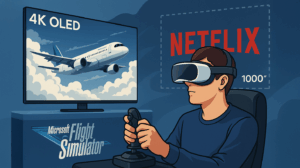
Sony Micro OLED displays are found in various high-end VR headsets. Pimax uses Sony panels in its new Dream Air model, which achieves a resolution of 3840 × 3552 pixels per eye. This unusual resolution suggests that Pimax may be using a modified version of Sony's 4K displays or employing them in a special configuration.
Other manufacturers, such as Shiftall, use Sony Micro-OLEDs in headsets like the Meganex Superlight. Users report that these displays "deliver the best visuals they have ever seen in VR" and even appear sharper than those of the Apple Vision Pro. The high pixel density and fill factor ensure that the image appears incredibly lifelike and individual pixels are no longer discernible.
Challenges and limitations
Despite their impressive specifications, Sony Micro-OLEDs also face challenges. Production costs are significantly higher than for conventional displays, which is reflected in the prices of VR headsets. The displays also require specialized driver electronics and thermal management, as the high pixel density can lead to concentrated heat generation.
Another limiting factor is the display size. Sony Micro-OLEDs are currently limited to relatively small sizes – the largest available models have a diagonal of 1.3 inches. This limits the achievable field of view in VR headsets unless manufacturers use special optics or multiple displays per eye.
Related to this:
Future prospects
Sony is continuously working on the further development of its Micro-OLED technology. Future generations could offer even higher pixel densities, larger display sizes, and improved energy efficiency. The technology is crucial for the development of the next generation of AR and VR headsets, which are expected to be lighter, more compact, and visually more impressive.
The combination of Sony's Micro-OLED displays and advanced optics such as Pimax's pancake lenses could form the basis for VR headsets that offer both the image quality of professional systems and the comfort and ease of use of consumer devices.
Why does Pimax have a dubious reputation in the VR community?
Over the years, Pimax has acquired a mixed reputation in the VR community. On the one hand, the company is respected for its technical innovations and commitment to high-end VR; on the other hand, there are recurring problems with quality assurance, customer service, and product reliability.
Quality control problems
One of Pimax's biggest problems lies in its inconsistent quality control. Users regularly report defective lenses, tracking issues, and hardware failures. One particularly well-documented case involved a YouTube reviewer who received a Crystal Light headset for review that was already defective upon arrival. After 21 days, he received replacement lenses, but the device was subsequently remotely disabled and rendered unusable.
Defective lenses were a widespread problem with the Crystal Light for a time. Pimax attributed this to a faulty batch from a supplier. Even more concerning is that newer models like the Crystal Super are also experiencing occasional focusing problems in one eye. This suggests ongoing issues in manufacturing or assembly.
One industry observer commented that without an automated system for evaluating the distortion profile of assembled units, the probability of receiving a device with high-quality lenses remains "somewhat random." This assessment reflects the chronic quality issues that Pimax struggles with.
Customer service difficulties
Pimax's customer service is another critical issue. Users report long wait times, inadequate responses, and complicated return procedures. One user described how Pimax support accidentally corrupted the Ethernet driver on his brand-new PC during a remote troubleshooting session. When he requested a return, the company refused to provide a shipping label.
Remote device disabling is particularly problematic. Pimax has implemented a business model where expensive headsets are sold at reduced prices, with the expectation that customers will eventually pay more. However, if devices can be permanently "bricked," significant concerns arise regarding customers' property rights.
Software instability
Pimax's software platform is another weak point. Users report frequent crashes, compatibility issues, and unstable tracking. The PiTool software, used to configure the headsets, is notoriously complex and not user-friendly. Updates can sometimes exacerbate existing problems or introduce new ones.
One user reported that the Pimax software conflicted with other drivers on their system, disabling various functions. Such problems undermine customer trust in the brand and make using the otherwise technically impressive hardware frustrating.
Controversy surrounding purchased reviews
In 2025, Pimax became embroiled in controversy over a secret bonus program designed to reward users for positive social media posts. A Reddit user published private Discord messages revealing a "Community Engagement Program" that required at least 70 percent of content to be positive.
The rewards ranged from $5 Steam vouchers to $1,000 travel grants to the company headquarters in Shanghai. Jaap Grolleman, Pimax's communications director, called the program a "major misjudgment" and emphasized that it was "extremely damaging" to the company. A total of nine Discord users were contacted, three of whom received the full guidelines.
Positive aspects and attempts at improvement
Despite these problems, Pimax is also showing positive developments. The company is transparent about its challenges and is actively working on improvements. Recent devices like the Pimax Crystal Super and Crystal Light have been described in tests as excellent devices for simulation enthusiasts, offering clear and high-resolution VR images.
Under communications chief Jaap Grolleman, Pimax seemed to be on the right track for a time before the review controversy arose. The company invests significantly in research and development, as demonstrated by the founding of 314 Labs. These efforts toward innovation are certainly appreciated within the VR community.
The VR community remains divided regarding Pimax. Enthusiasts appreciate the company's technological innovations and willingness to push boundaries. At the same time, many potential buyers warn of documented issues with quality and service. The company will only be able to overcome this reputation through consistent improvements across all areas.
How do the new Pimax models compare to the competition?
The VR market of 2025 will be highly competitive, with established players such as Meta, Apple, HTC, Sony, and Varjo. Pimax positions itself within this environment as a specialist for high-end VR headsets aimed at enthusiasts and professional users.
Comparison with Meta Quest 3 series
The Meta Quest 3 Pro, one of the most popular VR headsets, offers a total resolution of 4,320 × 2,200 pixels with a 110-degree field of view for €999. In direct comparison, even the cheapest Pimax Dream Air SE, with 2,560 × 2,560 pixels per eye, offers a significantly higher total resolution of over 13 million pixels compared to approximately 9.5 million for the Quest 3 Pro.
The crucial difference, however, lies in the display technology. While Meta relies on LCD panels with pancake lenses, Pimax uses micro-OLED displays. These offer perfect black levels, higher contrast, and better color reproduction. Micro-OLED technology also completely eliminates the screen-door effect, which can still be visible on LCD displays.
However, the MetaQuest 3 has advantages in terms of user-friendliness and ecosystem. As a standalone headset, it doesn't require a PC and offers a wider selection of optimized applications. Pimax headsets are primarily designed for PC VR and require powerful hardware.
A competitor to Apple Vision Pro
The Apple Vision Pro 2 is positioned as a premium mixed reality headset for €3,799. With 4K resolution per eye and micro-OLED displays, it is technically comparable to Pimax's higher-end models. However, Apple focuses on mixed reality and productivity applications, while Pimax is primarily geared towards VR gaming and simulation.
The Pimax Dream Air, with 3840 × 3552 pixels per eye, even offers a slightly higher resolution than the Vision Pro, at a fraction of the price. However, Pimax lacks the sophisticated mixed reality features and seamless integration into a closed ecosystem that Apple offers.
High-end competition: Varjo and HTC
In the professional segment, Pimax competes with manufacturers like Varjo. The Varjo XR-5 costs €6,000 and is aimed at industrial applications. Here, Pimax can score points with significantly lower prices while offering similar or even superior technical specifications.
The HTC Vive XR Elite, priced at €1,399, offers a total resolution of only 2,880 × 1,600 pixels – significantly less than even the cheapest Pimax Dream Air SE. However, HTC has advantages in terms of market maturity, support network, and enterprise integration.
A new dimension of digital transformation with 'Managed AI' (Artificial Intelligence) - Platform & B2B solution | Xpert Consulting


A new dimension of digital transformation with 'Managed AI' (Artificial Intelligence) – Platform & B2B solution | Xpert Consulting - Image: Xpert.Digital
Here you will learn how your company can implement customized AI solutions quickly, securely and without high entry barriers.
A managed AI platform is your all-inclusive, worry-free solution for artificial intelligence. Instead of dealing with complex technology, expensive infrastructure, and lengthy development processes, you receive a ready-made solution tailored to your needs from a specialized partner – often within just a few days.
The key advantages at a glance:
⚡ Rapid implementation: From idea to ready-to-use application in days, not months. We deliver practical solutions that create immediate added value.
🔒 Maximum data security: Your sensitive data stays with you. We guarantee secure and compliant processing without sharing data with third parties.
💸 No financial risk: You only pay for results. High upfront investments in hardware, software, or personnel are completely eliminated.
🎯 Focus on your core business: Concentrate on what you do best. We take care of the entire technical implementation, operation, and maintenance of your AI solution.
📈 Future-proof & scalable: Your AI grows with you. We ensure continuous optimization and scalability, and flexibly adapt the models to new requirements.
More information here:
Will ultra-lightweight headsets become everyday devices? Weight, field of view, price: What makes Pimax a viable alternative?
Weight and ergonomics
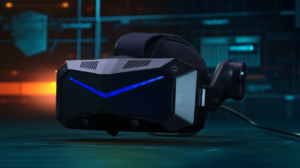
A major advantage of the new Pimax models is their weight. The Dream Air SE weighs under 140 grams, and the Dream Air under 170 grams. In comparison, full-fledged VR headsets typically weigh between 380 and 600 grams. Even the Quest 3 weighs around 515 grams. This drastic weight reduction is primarily due to the micro-OLED technology and the compact pancake lenses.
The low weight is crucial for wearing comfort. Heavy headsets can quickly lead to fatigue and pain, especially during extended use. The new Pimax models could offer a decisive advantage here.
Related to this:
Field of view comparison
Pimax has always been known for wide fields of view. The new models offer 110 to 128 degrees, which is among the upper end of current VR headsets. Most competitors, including the MetaQuest 3 and Apple Vision Pro, offer around 110 to 120 degrees.
A wider field of view significantly increases immersion, as it more closely resembles the natural human field of vision. Pimax's tradition of wide fields of view remains with the new Micro-OLED models, which is an important differentiating factor.
Price-performance ratio
Pimax's pricing is aggressive. The Dream Air SE, priced at €802 net, offers micro-OLED displays, eye tracking, and advanced SLAM tracking. Comparable technology costs significantly more from other manufacturers. Even the more expensive Dream Air, at up to €2,050, is cheaper than many professional alternatives with similar specifications.
This aggressive pricing could, however, be related to Pimax's well-known quality issues. While the technical specifications are impressive, it remains to be seen whether the company can resolve the production and quality problems that have damaged its reputation.
Market positioning
Pimax has cleverly positioned itself in a niche between consumer and professional VR. The new models offer professional specifications at consumer-friendly prices. This could be particularly attractive to simulation enthusiasts, content creators, and VR arcade operators.
However, success will depend on whether Pimax can resolve its chronic problems with quality control and customer service. The impressive technical specifications are only valuable if they are implemented in reliable, well-supported products.
What technical challenges do Micro-OLED and pancake lenses present?
The combination of micro-OLED displays and pancake lenses offers both remarkable advantages and significant technical challenges. These technologies represent the current state of VR innovation, but are complex to manufacture and implement.
Challenges with Micro-OLED Displays
Manufacturing micro-OLED displays is extremely demanding. The pixels are only a few micrometers in size – Sony has achieved pixel sizes of 5.1 micrometers with its latest displays. With such tiny structures, even the slightest irregularities in production become visible defects.
Manufacturing yield is a critical factor. While individual defective pixels may be tolerable in large OLED displays, even a single defective pixel in micro-OLEDs leads to a noticeable loss of image quality. Production yields are correspondingly lower, which drives up costs.
Thermal management presents another challenge. The high pixel density leads to concentrated heat generation in a very small area. This heat can damage the organic materials of the OLEDs and reduce their lifespan. Manufacturers must develop sophisticated cooling systems to protect the displays from overheating.
Color calibration is particularly challenging with micro-OLEDs. Each display must be individually calibrated to ensure consistent color reproduction. Due to the tiny size of the pixels, even the slightest variations in the organic layer thickness can lead to color deviations.
Complexity of pancake lentils
Pancake lenses are optically highly complex systems that combine multiple lens elements and special polarizing filters. The precise alignment of all components is critical – even the slightest deviations can lead to image defects, ghosting, or halos.
Manufacturing requires extremely tight tolerances. The paraxial optical axes of all surfaces must coincide perfectly, and the aspheric axes must align with the paraxial system axis. The center thicknesses of the lenses and their spacing must be exact, and the polarizing elements must be correctly aligned with each other.
A major problem is the low light transmission. While simple glass lenses transmit up to 99 percent of light, pancake systems often only achieve 15 to 20 percent. This necessitates significantly brighter displays, which increases power consumption and heat generation.
The optical quality of pancake lenses can vary. Every additional optical surface absorbs light and can cause reflections. Using polycarbonate components instead of glass further reduces optical transparency.
Precision manufacturing and quality control
The combination of these two technologies demands precision manufacturing of the highest standard. At Pimax, even small manufacturing tolerances led to the documented lens problems. The alignment of micro-OLED displays with pancake lenses must be performed with sub-millimeter accuracy.
Automated quality control is essential but complex to implement. Each unit must be checked for distortion profiles, color calibration, image sharpness, and exit pupil position. Without such systems, as observed with Pimax, the quality remains "somewhat random.".
System integration and calibration
Integrating eye-tracking with foveated rendering requires precise calibration for each user. The system must learn individual interpupillary distances, pupil positions, and gaze patterns. Inaccuracies lead to distorted foveated rendering and a poor VR experience.
Software integration is complex because all components must be coordinated in real time. SLAM tracking, eye tracking, display output, and foveated rendering must work together with minimal latency. This requires specialized drivers and optimized algorithms.
Energy management
Micro-OLED displays and their associated electronics consume significantly more energy than conventional VR displays. The high brightness required to compensate for the light loss of the pancake lenses exacerbates this problem. With wireless headsets, this considerably limits battery life.
Future solutions
Manufacturers are working on various solutions. Improved OLED materials can increase efficiency and lifespan. New pancake lens designs with higher light transmission are under development. Advanced production systems with AI-based quality control could improve yields.
The integration of all systems will be optimized through machine learning. AI can improve eye movement predictions and make foveated rendering more efficient. Adaptive calibration systems could simplify setup for end users.
How will the VR market develop as a result of these innovations?
The innovations from Pimax and other manufacturers in micro-OLED displays and pancake lenses represent a significant turning point in the VR industry. These technologies have the potential to lower the barriers to acceptance and transform VR from a niche technology into a mainstream medium.
Impact on hardware evolution
The trend towards ultra-lightweight VR headsets is accelerating. With devices like the Pimax Dream Air SE weighing under 140 grams, VR headsets are approaching the weight of regular glasses. This is a critical factor for mass adoption, as heavy headsets have long been considered a major obstacle to extended VR use.
The drastic improvement in image quality offered by micro-OLEDs will open up new fields of application. Professional areas such as medicine, architecture, and engineering can benefit from the level of detail that was previously only available in very expensive, specialized systems. The elimination of the screen-door effect makes VR suitable for applications that require high text readability.
The combination of higher image quality and lower weight will extend the average usage time of VR sessions. This is crucial for the development of more complex applications that require longer attention spans – from virtual workplaces to immersive learning environments.
Price dynamics and market penetration
Pimax's aggressive pricing could trigger a downward price spiral. With the Dream Air SE at €802, the company offers Micro-OLED technology at a price significantly lower than professional alternatives. This is forcing other manufacturers to rethink their pricing strategies.
At the same time, the initially high production costs of micro-OLEDs will decrease due to economies of scale. Sony and other display manufacturers are investing heavily in production capacity. As production volumes increase, the cost per unit will fall, enabling further price reductions.
Market dynamics indicate a differentiation between budget, mid-range, and premium segments. Premium manufacturers like Apple focus on mixed reality and productivity applications, while companies like Pimax cater to gaming and simulation. Meta and others concentrate on the mass market with autonomous systems.
Changes in the application landscape
Foveated rendering will dramatically reduce hardware requirements for VR. Pimax reports FPS increases of 10 to 50 percent through dynamic foveated rendering. This means that demanding VR applications can run on less powerful hardware, expanding the market for VR-ready computers.
Mobile VR headsets will particularly benefit. The energy efficiency of foveated rendering can extend battery life while simultaneously improving graphics quality. This could mean a breakthrough for truly portable, high-performance VR systems.
The improved image quality will enable new content categories. Virtual tourism, immersive documentaries, and social VR experiences will benefit from the increased visual fidelity. Professional applications such as medical simulations or architectural visualizations will become more realistic thanks to the precise rendering.
competitive landscape
The VR market is transitioning from a two-horse race between Meta and Apple to a multi-venue competition. Samsung and Google are working on Android XR, which could establish a third major platform. Specialized manufacturers like Pimax will position themselves in high-end niche markets.
Market consolidation will accelerate. Companies that cannot keep pace with innovations in display technology and optics will be marginalized or acquired. At the same time, new opportunities will arise for specialized providers who focus on specific application areas.
Chinese manufacturers will play a larger role. Companies like Pimax, Pico, and new players like RayNeo are bringing innovative technologies to market at aggressive prices. This increases competitive pressure on established Western manufacturers.
Infrastructure development
The proliferation of high-end VR will drive investment in digital infrastructure. Cloud rendering services will become more important to reduce hardware costs for end users. 5G networks will be used for wireless, high-quality VR transmission.
Content creation will become more professional. Higher image quality demands correspondingly higher-quality content. This will drive investment in new production tools and methods. At the same time, opportunities will arise for specialized content studios.
Challenges for mass acceptance
Despite technological advances, hurdles remain. The complexity of new technologies can lead to reliability issues, as Pimax's quality problems demonstrate. Consumers will only switch to VR if the technology is reliable and user-friendly.
The fragmentation of VR standards could hinder adoption. Different tracking systems, platforms, and accessory standards make it difficult for developers and consumers. Standardization would accelerate the market.
Long-term perspectives
In five to ten years, VR headsets could become as commonplace as smartphones are today. The combination of drastically improved hardware, falling prices, and richer content will propel VR out of its niche as a gaming device.
Mixed reality will become more important. The clear distinction between VR and AR is blurring, as headsets support both modes. This will enable new applications that seamlessly combine virtual and real elements.
The social and economic impacts will be significant. From virtual workplaces and immersive education to new forms of entertainment, VR will transform industries and enable new business models.
The current innovations from Pimax and others are just the beginning of a development that has the potential to fundamentally change the way we interact with digital content. The next few years will determine whether this potential translates into mass adoption.
Your global marketing and business development partner
☑️ Our business language is English or German
☑️ NEW: Correspondence in your native language!

Konrad Wolfenstein
I and my team are happy to be available to you as your personal advisor.
You can contact me by filling out the contact form here wolfenstein@xpert.digital:or simply call me at +49 7348 4088 965. My email address is
I'm looking forward to our joint project.
☑️ SME support in strategy, consulting, planning and implementation
☑️ Creation or realignment of the digital strategy and digitization
☑️ Expansion and optimization of international sales processes
☑️ Global & Digital B2B trading platforms
☑️ Pioneer Business Development / Marketing / PR / Trade Fairs
Our global industry and economic expertise in business development, sales and marketing

Our global industry and economic expertise in business development, sales and marketing - Image: Xpert.Digital
Industry focus areas: B2B, digitalization (from AI to XR), mechanical engineering, logistics, renewable energies and industry
More information here:
A thematic hub offering insights and expertise:
- Knowledge platform covering global and regional economies, innovation and industry-specific trends
- A collection of analyses, insights, and background information from our key areas of focus
- A place for expertise and information on current developments in business and technology
- A hub for companies seeking information on markets, digitalization, and industry innovations