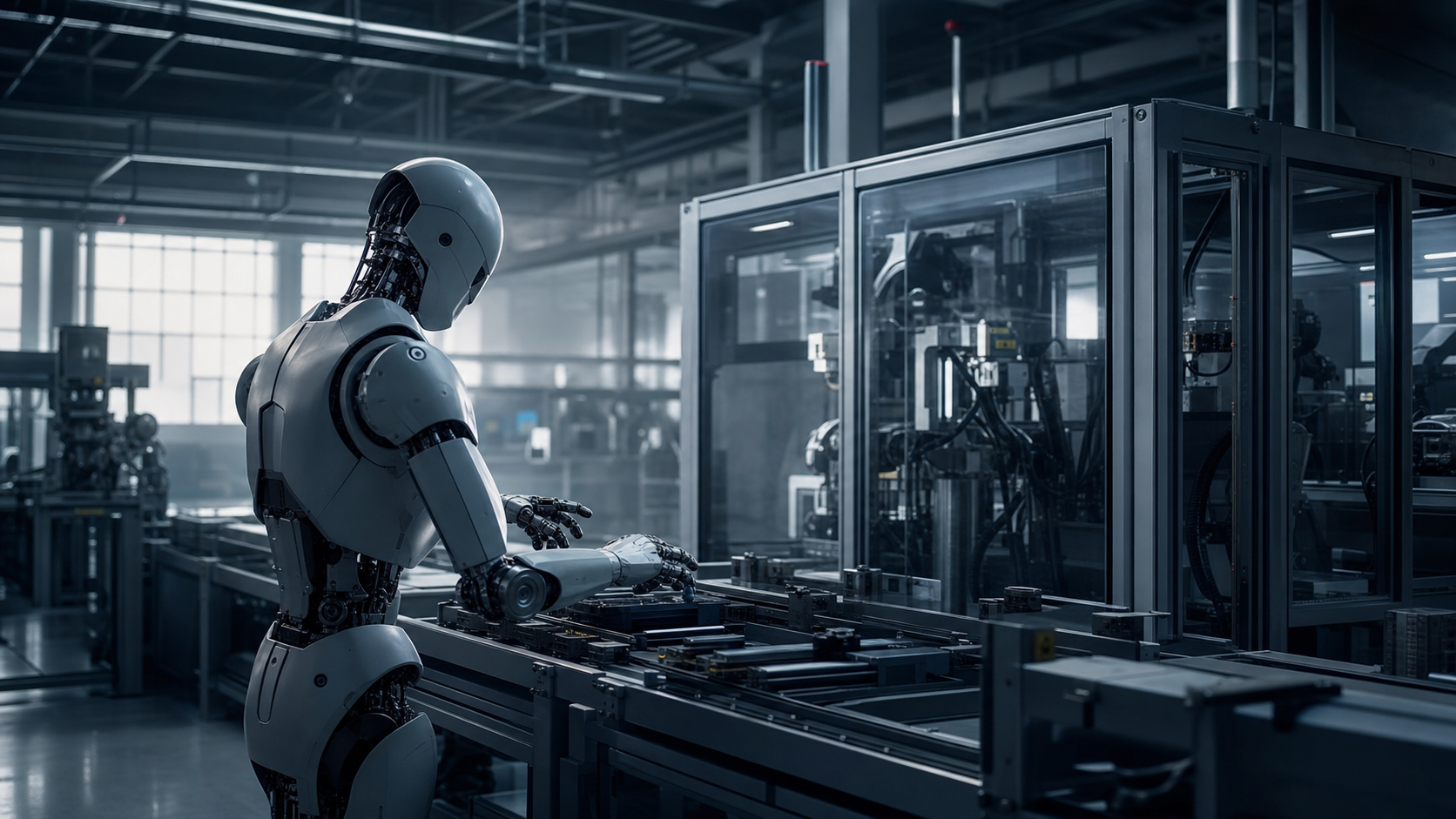
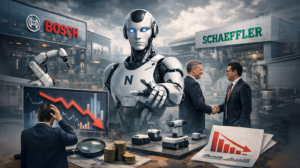
Bosch and robotics: From pioneer to contract manufacturer – From trailblazer to helper – Creative image on the topic, with AI: Xpert.Digital
Is Bosch selling its future in robotics? Billions in losses and job cuts: The drama surrounding the tech giant
Innovator's Dilemma: Why Bosch simply abandoned its best robotics projects
Once a pioneer, now a contract manufacturer: Bosch's fatal mistake with AI robots
Bosch was once considered the undisputed pioneer of industrial robotics – today, the long-established company only builds humanoid robots as a contract manufacturer for others. Behind this remarkable role reversal lies far more than just a strategic shift in a single division. It is a warning symptom of a profound structural crisis currently shaking the once-proud automotive supplier. Faced with billions in losses, a massive job-cutting program that could cost up to 35,000 jobs worldwide, and an abrupt change at the top, the company is visibly struggling to define its direction. But while competitors from Asia and the USA are rapidly shaping the era of "Physical AI," Bosch risks regressing to the role of a mere hardware supplier – without its own brand and without the valuable data from real-world operations. How could it happen that a pioneer abandoned its own future technologies and increasingly has to submit to the dictates of short-term profit expectations?
Related to this:


How a global corporation sold out its own future
The dramatic fall of a global corporation: How Bosch lost touch with the future
The Stuttgart- and Gerlingen-based corporation has been considered a symbol of German engineering for decades, but the robotics sector presents a different picture: Bosch will manufacture humanoid robots for a British start-up instead of launching its own systems. At its Bühl site in the Black Forest, series production of the "HMND 01" humanoid robot from the company Humanoid is scheduled to begin in 2027, following a successful field test in intralogistics in March 2026. Bosch is explicitly assuming the role of contract manufacturer, thus foregoing its own brand and intellectual property rights to the finished product, contributing only its manufacturing expertise and experience in the industrialization of complex systems. The Franconian automotive supplier Schaeffler is expected to be among the first customers for the robots from Bühl. This role reversal from technological leadership to pure contract manufacturing raises a fundamental question, as Bosch was once a global leader in human-robot collaboration.
The forgotten pioneering achievement from 2014
Back in 2008, Bosch launched the APAS project, the Automatic Production Assistant, and after several years of development, presented a mobile robot in 2014 that could work directly alongside people without safety barriers. The APAS assistant featured a skin equipped with more than 120 sensors that prevented collisions by automatically stopping the robot before contact occurred when a person approached. APAS was the first industrial robot system ever to be certified by the German Social Accident Insurance (DGUV) for collaborative operation, allowing it to be used in ongoing production in compliance with CE marking and occupational safety regulations.
In addition to the actual assistant, the APAS family included other specialized devices such as the APAS inspector for optical quality inspection using 3D imaging and the APAS speedswitch, which used a laser scanner to monitor the environment and dynamically adjust the operating speed to the presence of people. In industrial practice, the system achieved a return on investment (payback period) of less than a year and was already designed for the "push, plug & produce" principle, meaning particularly easy commissioning without complex mechanical setup. At CES 2016 in Las Vegas, Bosch even demonstrated the versatility of the technology by having an APAS serve coffee like a barista, underscoring the symbolic value of its early innovation leadership. This combination of safety certification, sensor technology, and series production readiness predates what is now discussed under the buzzword "physical AI.".
Why a lead turned into a deficit
The central economic question is why Bosch was unable to translate this early technological leadership into a sustainable market advantage. A key factor lies in the time-cost ratio: In a market environment that was only slowly embracing collaborative robotics, the APAS systems were comparatively expensive, and production scaling fell short of expectations. Instead of further developing the platform with a second generation, making it more robust, and reducing costs through economies of scale, the company decided to discontinue its in-house development.
Instead of continuing to develop its own technology, Bosch Rexroth acquired a majority stake in the Danish company Kassow Robots in 2022, gaining access to new markets in the already crowded cobot segment. This decision to abandon an existing and field-proven technology in favor of an acquired solution can be seen from a business perspective as a classic innovator's dilemma: short-term return expectations and pressure from established business units overshadowed the consistent development of a strategically important, but initially unprofitable, future technology.
Related to this:

The latest withdrawal from intralogistics
The pattern continues in 2026. Effective October 1, 2026, NEURA Mobile Robots GmbH will acquire the ACTIVE Shuttle driverless transport system from Bosch Rexroth, including the associated ACTIVE Fleet Manager software and the ROKIT navigation solution. The ACTIVE Shuttle has been deployed in numerous Bosch Group plants and has established itself, particularly in the automotive industry, as a solution for automated material transport, for example, for transporting small load carriers between the warehouse and the assembly line.
What's particularly noteworthy about this transaction is the constellation of parties involved: Bosch is acting simultaneously as both the seller and an investor in NEURA. The startup closed a Series C funding round in June 2026, raising up to $1.4 billion at a valuation of $7 billion. Participants included NVIDIA, Amazon, Qualcomm, and the European Investment Bank. Through its equity stake, Bosch is thus indirectly relinquishing influence over a technology that was once part of its core industrial automation business, while the buyer is integrating the systems into a broader European physical AI ecosystem. According to the company, the change initially means continuity for existing customers, but strategically, the value creation is shifting from hardware and systems expertise to software integration with a different provider.
🎯🎯🎯 Data-driven B2B industry hub as a quasi-in-house solution

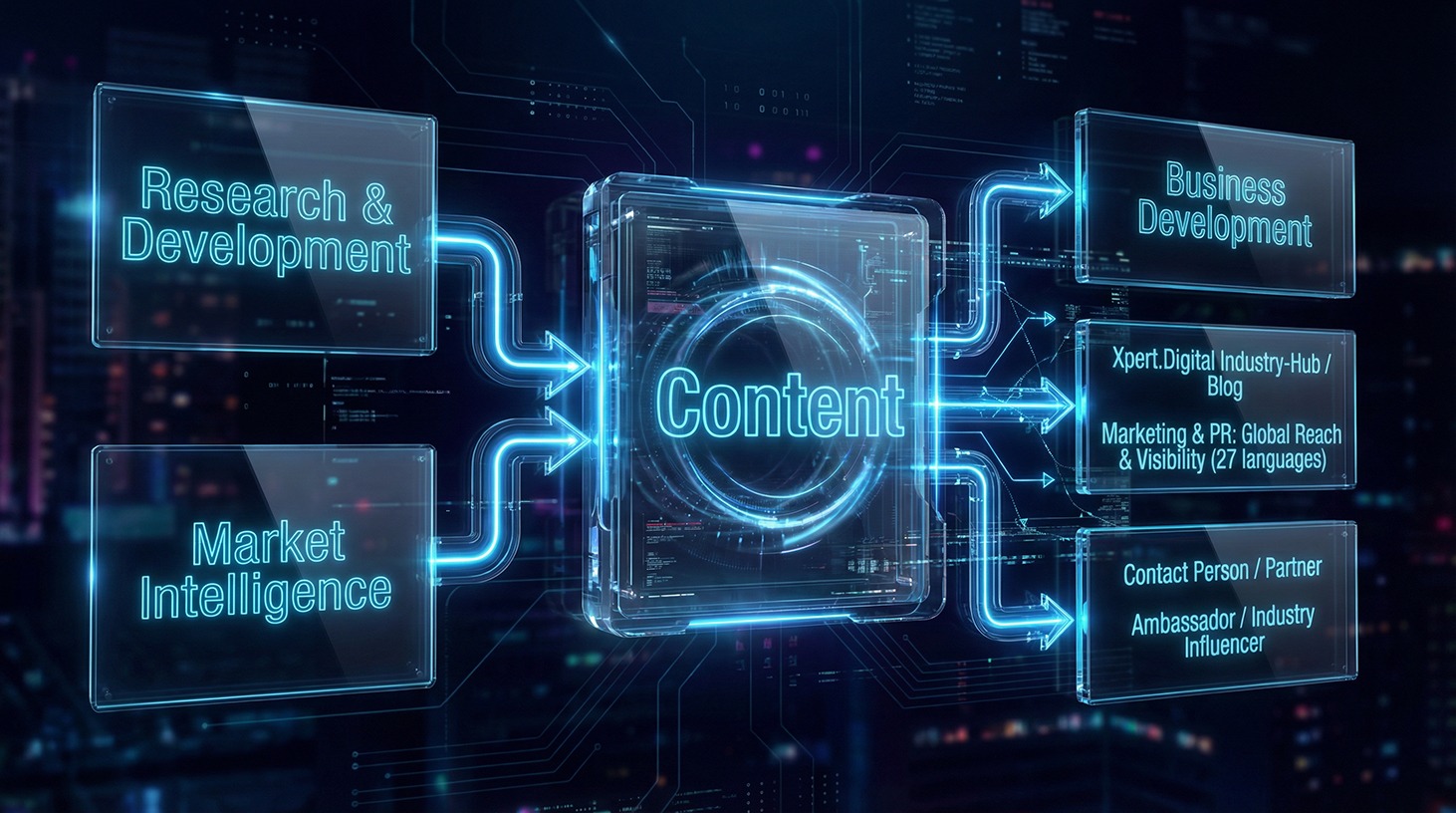
The quasi-in-house solution: How Xpert.Digital closes operational gaps in B2B marketing and sales – Smart Content-Driven Business - Image: Xpert.Digital
Xpert.Digital is a data-driven B2B industry hub led by Konrad Wolfenstein . The company acts as an external, quasi-in-house solution for industrial partners, closing operational gaps in marketing, content, and sales – without requiring additional resources on the client side.
More information here:
Robotics strategy under pressure: Why Bosch risks falling behind international competitors
A crisis that extends far beyond robotics
The reluctance to invest in robotics cannot be viewed in isolation, but rather reflects a deeper structural crisis within the entire Bosch Group. For fiscal year 2025, Bosch recorded its first after-tax loss since the 2009 financial crisis, amounting to €363 million; with sales of €91 billion, the operating margin plummeted from 3.5 to 2.0 percent. This is due, among other things, to provisions of €2.7 billion for a comprehensive job reduction program affecting around 22,000 of the approximately 130,000 jobs in the Mobility division in Germany – roughly one in six positions in the largest subgroup.
The company plans to cut up to 35,000 jobs worldwide by 2030, with around 6,000 positions in Germany already eliminated in 2025, resulting in nearly €900 million in severance payments. The mobility division alone has an annual cost shortfall of €2.5 billion, which will be addressed through job cuts over several years. At the end of 2025, the company employed approximately 412,774 people worldwide, about 5,085 fewer than the previous year, while production is increasingly shifting abroad. These figures illustrate that the reluctance to embrace future technologies such as humanoid robots is not an isolated management failure in one division, but rather a symptom of a corporation under immense pressure from declining margins in its traditional automotive supply business.
Related to this:

The surprising change at the top of the company
A particularly clear indication of the depth of the current crisis was the abrupt change in leadership in the summer of 2026. CEO Stefan Hartung resigned from his position on June 30, 2026, at his own request, even though his contract had only been extended until 2031 in October of the previous year. His successor, effective July 1, 2026, was his former deputy, Christian Fischer, who had previously headed the consumer goods division with the BSH home appliances and power tool brands and played a key role in the multi-billion-euro acquisition of the ventilation and air conditioning businesses of Johnson Controls and Hitachi.
With only around four and a half years in office, Hartung's tenure is one of the shortest in the company's roughly 140-year history. According to the company, the change was made in close consultation with the shareholders and the supervisory board, without any specific reasons being publicly disclosed. For a company like Bosch, traditionally known for exceptional continuity at the top, such an abrupt and unplanned change represents a historic warning sign, reflecting the palpable nervousness within the shareholder structure.
The strategic pattern behind the individual decisions
Looking at APAS, Kassow Robots, the ACTIVE Shuttle, and the collaboration with Humanoid together, a recurring strategic pattern emerges. In all cases, Bosch possessed technological substance, qualified engineers, and sufficient capital, yet repeatedly chose not to develop its own platforms in the long term. Instead, they were either discontinued, sold to competitors, or the value creation was outsourced to external technology providers as contract manufacturers.
This pattern, according to consistent reports, is evident not only in robotics but also in battery technology, vehicle software, and central control units, where initiatives have been repeatedly launched, delayed, and ultimately halted. Economically, this behavior can be interpreted as an expression of an organization that, under the pressure of short-term profitability metrics, systematically tends to undervalue long-term but uncertain technology investments—even if these investments could decisively shape its future competitive position. Those who prematurely measure pioneering projects against short-term return expectations risk losing practical data, skilled personnel, customer access, and ultimately, influence over the standards that will define the entire industry in the future.
The international competitive context
In international comparison, it is striking that Chinese manufacturers in particular are deploying humanoid and collaborative robot systems in large numbers into real-world operating environments, continuously learning from operational use, while traditional European companies often remain stuck in the business case evaluation phase. This difference in the speed of innovation has direct consequences for market positioning: Whoever is the first to collect sufficient field data from real-world operations gains a virtually insurmountable advantage in training the underlying AI models and defining future technical standards.
Through its cooperation with Humanoid, Bosch is repositioning itself as an industrial player in the field of humanoid robotics, but in the role of a supplier and manufacturer – rather than as a provider of its own platform with its own brand and access to the resulting usage data. This division of roles means that the most strategically valuable assets of such a partnership, namely the training data from real-world field use and the customer relationship with the end user, remain predominantly with the British partner company, while Bosch primarily benefits from the pure manufacturing margins.
Between renovation and new role
For the current CEO, Christian Fischer, and his leadership trio, which also includes CFO Markus Forschner and Mobility CEO Markus Heyn as deputy chairmen, a twofold challenge arises. On the one hand, the ongoing cost reduction in the mobility division, with its annual shortfall of €2.5 billion, must be consistently implemented. On the other hand, the company needs a credible answer to how it intends to participate in the value creation of future technologies such as humanoid robotics, autonomous intralogistics, and physical AI without being relegated once again to the role of a mere contract manufacturer.
For 2026, management is aiming for revenue growth of between two and five percent, an ambitious target given the structural restructuring costs. The planned mass production of humanoid robots in Bühl starting in 2027 can certainly be seen as a first step back into a growth area. However, as long as Bosch primarily retains control over production logistics and not technological control over the product, it remains questionable whether the company can ever regain its former role as a pacesetter in industrial robotics. The coming years will show whether the current restructuring phase truly serves as the foundation for renewed technological independence, or whether the pattern of missed first-mover potential in robotics, observed for over a decade, will continue.
📈🚀 From visibility to trust 👀🤝 Your scalable path with Xpert.Digital


From visibility to trust: Your scalable path with Xpert.Digital - Image: Xpert.Digital
In industrial B2B, sustainable business relationships rarely emerge overnight. They develop step by step – through visibility, professional relevance, recurring touchpoints, and growing trust. Xpert.Digital's 4-stage model addresses precisely this: It offers a structured path that begins with a manageable entry point and can evolve into deeper collaboration in business development if needed.
Instead of relying on loud marketing promises, this model puts the relationship at the forefront. Companies start with clearly defined, easily calculable measures and then decide, based on their own experience, how far they want to expand the collaboration. A key factor for this undisturbed trust-building process: The platform completely avoids annoying advertising ads, so the editorial focus remains solely on the companies' expertise.
More information here:
Your global marketing and business development partner
☑️ Our business language is English or German
☑️ NEW: Correspondence in your native language!

Konrad Wolfenstein
I and my team are happy to be available to you as your personal advisor.
You can contact me by filling out the contact form here wolfenstein@xpert.digital:or simply call me at +49 7348 4088 965. My email address is
I'm looking forward to our joint project.