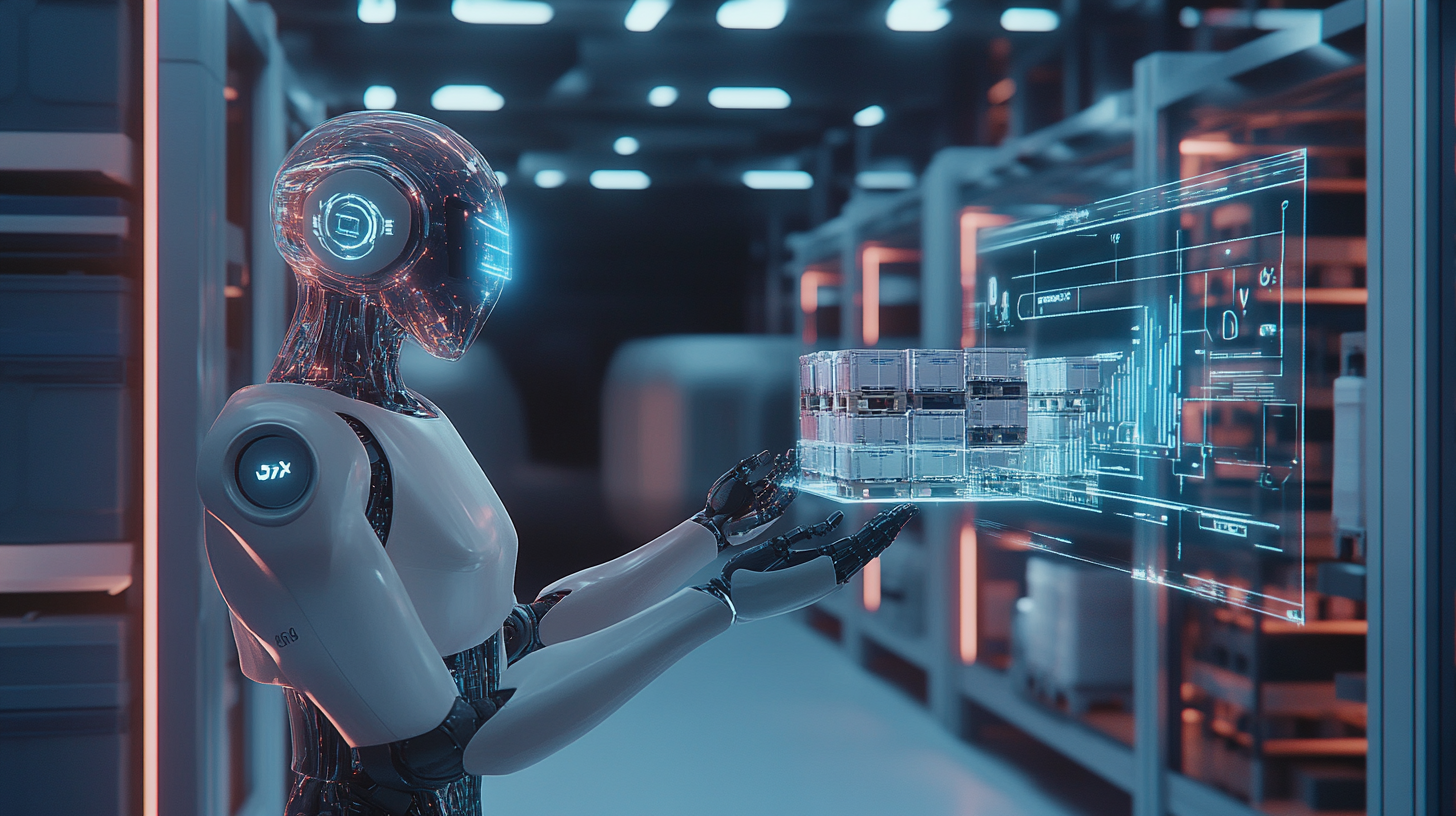
AI, robotics and automation: The last hurdles on the road to intelligent production – Image: Xpert.Digital
Unleashing the potential: Innovations through automation and artificial intelligence
AI and robotics in practice: The main obstacles and how to overcome them
Artificial intelligence (AI), robotics, and automation are driving forces behind the transformation of modern industry. These technologies promise to increase productivity, efficiency, and flexibility. However, despite their widely recognized potential, companies face numerous challenges before they can implement these innovations on a large scale. This report highlights the key obstacles, opportunities, and recommendations for the successful implementation of AI, robotics, and automation.
Related to this:
Obstacles to the implementation of AI, robotics and automation
Security concerns and regulatory requirements
The safety of AI systems and robots is a key concern for companies. Collaborative robots (cobots), in particular, which work closely with humans, require strict safety precautions to prevent accidents. Furthermore, these technologies are subject to regulatory requirements that vary from country to country. This complexity makes integration into existing processes difficult.
Companies must develop comprehensive security concepts that include both technical and organizational measures. In addition to physical safeguards, algorithms for detecting and preventing potential hazards are crucial. This is particularly true in industries such as automotive manufacturing or the chemical industry, where human-machine collaboration is frequently required.
High costs and limited financing options
Implementing AI and robotics technologies requires significant financial investment. This includes both the development costs of new algorithms and the acquisition costs of hardware such as sensors, processors, and actuators. Maintenance and training costs are also incurred, which pose a particular challenge for small and medium-sized enterprises (SMEs).
One solution to this hurdle is the use of "Robot-as-a-Service" (RaaS) models. This concept allows companies to rent robots for a monthly fee instead of incurring high upfront costs. At the same time, cloud-based AI services can reduce dependence on expensive hardware and offer companies more flexible access to AI technologies.
Skills shortage and lack of know-how
The rapid development of AI technology has led to a high demand for highly qualified specialists. Experts in machine learning, data science, and robotics are in high demand, but the supply of qualified workers often cannot meet this demand. Companies must therefore invest in training and further education to prepare their existing staff for the challenges of the future.
Initiatives such as public-private partnerships and specialized training programs can help close this gap. Furthermore, online learning platforms like Coursera or Udemy offer companies the opportunity to provide their employees with access to high-quality professional development.
IT infrastructure and data availability
A high-performance IT infrastructure is the foundation for the successful deployment of AI systems. Companies lacking the necessary hardware and software face significant challenges. Furthermore, the availability of high-quality data is crucial for training and operating AI algorithms. However, data protection regulations and inadequate data formats hinder access to relevant information.
Developing standardized data protocols and establishing secure data platforms can improve data availability. At the same time, companies must ensure that their IT infrastructure is scalable and flexible enough to meet the demands of future AI applications.
Ethical and legal challenges
The use of AI technologies raises ethical and legal questions. Data protection, discrimination, and liability for incorrect decisions are just some of the aspects that companies must consider. Particularly in areas such as medical diagnostics or autonomous mobility, incorrect decisions can have serious consequences.
Companies should develop ethical guidelines for the use of AI and regularly review their systems for transparency and fairness. Furthermore, cooperation with regulatory authorities is necessary to ensure compliance with existing laws.
Success factors for implementation
Human-machine collaboration
The future of work lies in the collaboration between humans and machines. AI systems can relieve people of monotonous or dangerous tasks while simultaneously complementing their creativity and problem-solving skills. For example, companies like BMW use humanoid robots to support employees in physically demanding tasks.
Related to this:
Pilot projects and gradual integration
Instead of immediately undertaking large-scale AI implementations, many companies are focusing on pilot projects. These allow them to test the benefits of new technologies in a controlled environment and gain insights for gradual scaling.
Sustainability and energy efficiency
Another key to success is considering sustainability goals. AI-powered systems can help reduce energy consumption and use resources more efficiently. Companies that prioritize sustainability in their automation strategies can both lower their costs and increase their competitiveness.
Examples of successful applications
Walmart: Supply chain optimization
Walmart is using AI to optimize its supply chain. Through machine learning models, the company has been able to shorten delivery times and make warehousing more efficient. AI-powered robots help with automated inventory management, thus contributing to cost and error reduction.
Siemens: Predictive Maintenance
Predictive maintenance is another example of the successful use of AI. Siemens uses machine data to detect potential failures early and proactively plan maintenance measures. This has not only minimized downtime but also increased productivity.
Sereact: Embodied AI
The company Sereact specializes in the development of embodied AI, a technology that enables robots to perform tasks for which they have not been explicitly trained. This flexibility allows companies to effectively deploy robots even in dynamic environments.
Recommendations for companies
Clear objective
Companies should define clear goals before investing in AI and robotics. These goals should be measurable and aligned with the specific requirements of the respective industry.
Employee training
Employee training is crucial for promoting the acceptance of new technologies and fully realizing their potential. Companies should invest strategically in further training programs and provide platforms that facilitate knowledge transfer.
Collaboration with technology partners
Collaborating with experienced technology partners can help accelerate the implementation of AI and robotics systems. These partners can offer valuable insights into best practices and support companies in developing tailored solutions.
Consideration of ethical aspects
Ethical considerations should be integrated into the development process from the outset. Companies should ensure that their AI systems operate transparently, fairly, and responsibly.
Intelligent production: Increased efficiency through human-machine collaboration
AI, robotics, and automation offer enormous opportunities for industrial production. Companies willing to invest in these technologies and overcome the associated challenges can gain significant competitive advantages. Crucial to success is a strategic approach that considers safety, costs, ethical issues, and employee acceptance equally. The future of smart manufacturing lies in the meaningful collaboration between humans and machines—and in understanding technology as an enabler of innovation and sustainability.
Our recommendation: 🌍 Limitless reach 🔗 Connected 🌐 Multilingual 💪 Sales power: 💡 Authentic with strategy 🚀 Innovation meets 🧠 Intuition


From local to global: SMEs conquer the world market with a clever strategy - Image: Xpert.Digital
In an era where a company's digital presence determines its success, the challenge lies in creating an authentic, personalized, and far-reaching presence. Xpert.Digital offers an innovative solution that positions itself as the intersection of an industry hub, a blog, and a brand ambassador. It combines the advantages of communication and sales channels in a single platform and enables publication in 18 different languages. Cooperation with partner portals and the ability to publish articles on Google News and a press distribution list with approximately 8,000 journalists and readers maximize the reach and visibility of the content. This represents a crucial factor in external sales and marketing (SMarketing).
More information here:
How smart technologies are transforming the manufacturing industry - background analysis
Why automation is the key to competitiveness
The rapid development of artificial intelligence (AI), robotics, and automation has fundamentally changed the industrial paradigm. These technologies are no longer viewed as futuristic visions but have become tangible tools with the potential to revolutionize the manufacturing landscape. Business leaders are increasingly recognizing the immense opportunities these technologies offer and see them as key to future competitiveness and innovation. However, the transformation to intelligent manufacturing environments is not without its challenges. Despite the widespread interest and high expectations, hurdles remain that must be overcome to ensure the successful and widespread implementation of AI, robotics, and automation in companies.
This background analysis highlights the key obstacles on the path to smart manufacturing. It examines these challenges using studies, expert opinions, and practical examples. Furthermore, it presents strategies and solutions for successfully overcoming these obstacles and fully realizing the potential of these technologies.
Key obstacles to the implementation of AI, robotics and automation
The introduction of new technologies is always accompanied by challenges. In the context of AI, robotics, and automation, these manifest themselves in various interconnected areas that require a holistic approach.
1. Safety concerns and regulatory requirements
One of the biggest hurdles, particularly in safety-conscious industries like automotive manufacturing or aerospace, is safety concerns. A study by Universal Robots illustrates that these concerns are especially hindering investment in new technologies in Germany. Worries about employee safety when working with robots, the potential risks of unforeseen AI decisions, and compliance with complex regulatory requirements create a climate of caution.
The integration of collaborative robots (cobots) working alongside humans requires sophisticated safety concepts. These must guarantee both the physical safety of employees and ensure that the AI systems in the robots function reliably and predictably. Adherence to stringent safety standards, which vary from country to country and industry to industry, presents a further challenge. Companies must not only comply with local regulations but also consider international guidelines and recommendations to operate legally.
To overcome this hurdle, it is essential to invest in robust and multi-layered safety concepts. These include the implementation of emergency stop systems, the use of sensors to detect obstacles, and training employees in the safe handling of robots. Furthermore, companies must ensure that their AI systems are continuously monitored and reviewed for their safety implications.
2. High costs and lack of financing
The initial investment costs for AI-based systems are often considerable. They represent a significant burden, especially for small and medium-sized enterprises (SMEs). Developing and implementing AI solutions requires not only the purchase of expensive hardware and software, but also investment in research and development necessary for adapting and optimizing algorithms. State-of-the-art sensors, complex robotic arms, and the necessary infrastructure for training AI models quickly add up to substantial sums.
The difficulty of accurately quantifying the return on investment (ROI) of AI projects further complicates the process of securing funding. Unlike traditional investments, where costs and benefits are often easier to predict, the impact of AI implementations is more complex and multifaceted. The fact that many AI projects only reach their full potential after some time can further complicate the investment decision.
To overcome this cost hurdle, companies should consider alternative financing models, such as government funding programs, leasing options, or cloud-based AI services. The phased implementation of AI solutions, starting with pilot projects in selected areas, can also help reduce initial investments and minimize risks.
3. Lack of know-how and shortage of skilled workers
The shortage of skilled AI professionals is a global problem that significantly hinders the adoption of new technologies in companies. Developing and operating AI systems requires highly qualified specialists capable of developing complex algorithms, analyzing data, and training AI models. These specialists are in high demand on the job market and difficult to find.
Companies must invest in the further training of their employees and explore new recruitment methods to develop the necessary skills. This includes not only training specialists in AI and robotics, but also further training employees in other areas to meet the changing demands of the workplace. The ability to interact with AI-based systems and interpret their results will be essential for many professions in the future.
4. IT infrastructure and data availability
A high-performance IT infrastructure is the foundation for the successful deployment of AI systems. However, many companies lack the necessary hardware and software to run AI applications. The computing power required to train complex AI models demands powerful servers and storage systems. Furthermore, a fast and reliable network connection is essential for exchanging data between different locations and systems.
The availability of high-quality data is another critical success factor. AI models require large amounts of data to learn and improve. This data must not only be available, but also clean, complete, and relevant to the specific applications. Building a suitable data infrastructure that integrates data from various sources and prepares it for AI analysis is a complex task that poses significant challenges for many companies.
5. Ethical and legal concerns
The use of AI raises a number of ethical questions that must be carefully examined. These include the question of responsibility for incorrect decisions made by AI systems, the protection of user privacy, and the prevention of discrimination through algorithmic biases. The legal framework for the use of AI remains unclear in many areas. Companies must be aware that they are responsible for the impact of their AI systems and that existing laws and regulations may not be sufficient to cover all aspects of AI deployment.
The development of AI systems capable of making autonomous decisions requires careful ethical consideration. Companies must ensure that their AI systems operate fairly, transparently, and responsibly. Furthermore, they must develop clear guidelines and processes to guarantee compliance with ethical and legal standards. The rapid development of AI necessitates an adaptation of existing laws and regulations.
6. Employee acceptance and trust
The introduction of AI systems can lead to uncertainty and anxiety among employees. The fear of job losses due to automation is widespread and can hinder the acceptance of new technologies. Furthermore, the idea that AI systems monitor employees' work can lead to mistrust and resistance.
To overcome these challenges, it is crucial to involve employees in the transformation process early on and to communicate the benefits of AI transparently. Companies must train employees on how to collaborate with AI systems and how these systems can support them in their daily work. Employees need to feel that AI systems are not intended to replace them, but rather to support and relieve them in their work.
7. Sustainability and energy efficiency
Sustainability and energy efficiency are not only societal obligations but also key factors for the competitiveness of companies. Robotics plays a crucial role in achieving sustainability goals, as it can reduce material consumption, improve energy efficiency, and minimize waste. The development and implementation of sustainable robotics solutions that minimize the ecological footprint is therefore of great importance.
Companies must meet the United Nations' sustainability goals and related regulations to remain competitive. Integrating robots into production processes not only enables more efficient resource use but also reduces emissions and improves waste management.
New business models and technologies
The development of new business models, such as "Robot-as-a-Service" (RaaS), enables companies to rent robots and access their maintenance and support. This model reduces initial investments and makes robotics technologies more accessible to small and medium-sized enterprises (SMEs). RaaS allows companies to respond more flexibly to changing production needs and benefit from automation without having to make large initial investments.
Expert opinions on the challenges
Experts from industry and research emphasize the importance of human-centered workplace design when implementing AI, robotics, and automation. They see the combination of humans and machines as the greatest opportunity for the future of work. AI systems should support people and relieve them of monotonous or dangerous tasks, not replace them.
Dr. Susanne Bieller, Secretary General of the International Federation of Robotics (IFR), emphasized that artificial robot intelligence will not be available in the foreseeable future, and will not surpass human intelligence in all areas. Robots, even those equipped with AI, will not be able to completely replace human adaptability, flexibility, and problem-solving abilities. She sees the most promising applications for AI in robotics in environmental perception and the optimization of robot performance.
Professor Dr. Jan Peters, head of research at the German Research Center for Artificial Intelligence (DFKI), sees great potential in industrial robotics if the environment no longer needs to be adapted to the robot. He is convinced that robots will find their way into millions of households once they become affordable.
Michael Mayer-Rosa of Delta Electronics emphasized the need to address challenges such as ensuring safety and reliability, the complexity of data processing, integration into existing systems, and compliance with ethical and legal standards.
Jens Kotlarski, CEO of Voraus Robotik, emphasizes the importance of AI for making robot use more flexible, especially for complex tasks or processes with dynamic changes.
Success stories for the implementation of AI, robotics and automation
Numerous companies have already successfully integrated AI, robotics and automation into their business processes and achieved impressive results.
Walmart
The retail company uses AI to optimize its supply chain. By employing machine learning, Walmart can shorten delivery times and optimize inventory levels. AI-powered robots are used for inventory management and automated warehousing.
Brother International
The company has successfully integrated AI into its recruiting process. An AI-powered system helps identify suitable candidates, schedule interviews, and answer frequently asked questions. As a result, Brother has been able to significantly increase the number of applications and considerably reduce the time it takes to fill open positions.
Siemens
The technology company is using AI to implement predictive maintenance in its manufacturing processes. By analyzing machine data, potential failures can be detected early and maintenance measures can be planned proactively. This minimizes downtime and increases productivity. Furthermore, Siemens also uses AI models to optimize and control production processes in its manufacturing facilities.
BMW
The car manufacturer is testing the use of humanoid robots in production to support employees with physically demanding tasks. BMW is also examining the use of cognitive robots equipped with AI that can better perceive their surroundings.
Sereact
The Stuttgart-based company specializes in developing embodied AI for robots. It combines visual zero-shot reasoning with natural language chat instructions. These features allow robots to perform tasks for which they were not explicitly trained.
The role of robots in automation
There are different types of robots used in automation, and each type has its own advantages and areas of application:
Collaborative robots (cobots)
Cobots are designed to work safely alongside humans. They are often used for tasks requiring precision and dexterity, such as assembly work or quality control.
Autonomous Mobile Robots (AMRs)
AMRs can move independently in their environment and are frequently used in logistics and warehousing to transport materials or pick goods.
Humanoid robots
Humanoid robots resemble humans in shape and are used for tasks that require human skills, such as interacting with customers or assisting with complex manual tasks.
Related to this:
Legal and ethical dimensions
The ethical and legal issues surrounding AI and robotics are complex and require comprehensive discussion and clear guidelines.
Legal challenges
The legal issues primarily concern liability and approval, particularly in the healthcare sector. Since AI systems are designed as learning systems, problems arise in risk assessment and the clear allocation of responsibility.
Ethical aspects
Ethical challenges arise concerning data protection, discrimination, and the autonomy of AI systems. It is crucial that AI systems operate fairly and transparently and respect user privacy. A particular dilemma arises for companies developing AI technologies that can also be used for military applications.
Costs and ROI of AI, robotics and automation
Investing in AI and robotics comes at a cost, but it is also important to consider the potential return on investment.
Cost factors
The costs include acquisition costs, implementation costs, license fees, maintenance costs, and training costs. The exact amount depends on the complexity of the system and the specific use case.
ROI calculation
Calculating ROI is complex and must consider various factors, such as time savings, increased productivity, increased revenue, and cost savings. Studies show that companies using RPA achieve a high ROI and can recoup their investments within a short time.
Impact on the world of work and qualification requirements
AI, robotics and automation will fundamentally change the world of work.
Changing world of work
Many routine tasks are being automated, which can lead to job losses. At the same time, new jobs are being created in areas such as AI development, robotics, and data analysis.
New qualification requirements
The increasing prevalence of AI requires new skills from employees. Studies predict that a large proportion of the workforce will need retraining or further education to keep pace with the changes in the world of work. In particular, Large Language Models (LLMs) have the potential to take over a significant portion of job tasks.
The triangle of automation
The concept of the "automation triangle" emphasizes the importance of a balanced approach to automation. This triangle aims to balance the capabilities of hardware automation, the possibilities of software automation, and human labor with its adaptability, creativity, and resilience.
Human-machine collaboration
The future of work lies in the collaboration between humans and machines. AI systems are intended to support people and relieve them of monotonous or dangerous tasks. Human creativity and flexibility will remain essential.
Humans and machines: The key role of collaboration in the digital age
AI, robotics, and automation offer companies enormous potential to increase efficiency, reduce costs, and enhance competitiveness. However, implementing these technologies is fraught with challenges. Security concerns, high costs, skills shortages, ethical and legal issues, and employee acceptance must all be taken into account.
Successful companies demonstrate how AI, robotics, and automation can be used profitably. Walmart optimizes its supply chain, Brother International automates its recruiting process, and Siemens uses AI for predictive maintenance and process control.
The future of work lies in human-machine collaboration. AI systems are intended to support people and relieve them of monotonous or dangerous tasks. Human creativity and flexibility will remain essential.
To fully leverage the potential of AI, robotics, and automation, companies must actively address the challenges and create the necessary framework. Investments in further training, the development of a high-performance IT infrastructure, and consideration of ethical and legal aspects are crucial for success.
Future trends in AI-based robotics will drive the development of even more intelligent and flexible robots that can better adapt to dynamic environments and take on more complex tasks. The integration of AI into robotics will further accelerate automation across various industries and lead to new applications in areas such as logistics, healthcare, and agriculture.
Recommendations for companies
Companies that want to successfully implement AI, robotics and automation should consider the following recommendations:
- Clear goal definition: Define clear goals for the use of AI and robotics to select the right solutions and maximize ROI.
- Step-by-step implementation: Start with pilot projects to test the added value of the technologies and gradually scale successful approaches.
- Invest in further training: Train your employees in the use of AI systems and robots to promote acceptance and fully exploit the potential of the technologies.
- Collaboration with experts: Work with technology partners and AI experts to develop customized solutions and overcome the challenges of implementation.
- Ethical and legal aspects: Consider the ethical and legal implications of AI and robotics and ensure that your systems operate fairly, transparently, and responsibly.
By considering these recommendations, companies can leverage the benefits of AI, robotics, and automation and successfully overcome the challenges on the path to smart manufacturing. The transformation to smart manufacturing is an ongoing process that demands flexibility, a willingness to innovate, and the ability to keep pace with constantly evolving technologies. Only in this way can companies secure their competitiveness and capitalize on the opportunities these technologies offer.
We are here for you - Consulting - Planning - Implementation - Project Management
☑️ SME support in strategy, consulting, planning and implementation
☑️ Creation or realignment of the digital strategy and digitization
☑️ Expansion and optimization of international sales processes
☑️ Global & Digital B2B trading platforms
☑️ Pioneer Business Development

Konrad Wolfenstein
I would be happy to serve as your personal advisor.
You can contact me by filling out the contact form below or simply call me on +49 7348 4088 965 .
I'm looking forward to our joint project.
Write to me


Xpert.Digital - Konrad Wolfenstein
Xpert.Digital is a hub for industry focusing on digitalization, mechanical engineering, logistics/intralogistics and photovoltaics.
With our 360° Business Development solution, we support renowned companies from new business to after-sales.
Market intelligence, smarketing, marketing automation, content development, PR, mail campaigns, personalized social media and lead nurturing are part of our digital tools.
You can find more information at: www.xpert.digital - www.xpert.solar - www.xpert.plus
Keep in touch