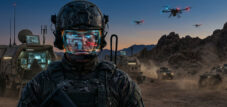
Expensive simulators are a thing of the past: How Rheinmetall is now relying on Varjo's mixed reality for soldier training – Images: Varjo Technologies Oy
A turning point through high-tech: How a German-Finnish alliance is using mixed reality to upgrade Europe's armies
Mixed reality instead of a real tank: Rheinmetall and Varjo's ingenious plan for the German Armed Forces
High-tech training for emergencies: How mixed reality drastically accelerates military training
Russia's war of aggression against Ukraine has shaken the foundations of European security architecture. Suddenly, billions are flowing into armaments again, but money alone does not win modern conflicts. True superiority on the 21st-century battlefield arises from speed, digital networking, and the ability to seamlessly translate cutting-edge civilian technologies into military strength. It is precisely here that an unprecedented alliance is currently forming: Germany and the new NATO member Finland are joining forces to radically modernize European defense. From high-resolution satellite reconnaissance from space (SAR) to revolutionary soldier training via mixed reality – the Finnish-German partnership demonstrates how the so-called dual-use principle dramatically shortens arms cycles. It offers a profound insight into a new, agile ecosystem that not only massively increases the military striking power of NATO's eastern flank but could also become the blueprint for the entire European defense industry.
Technological alliance in the service of security: How Germany and Finland are rethinking NATO defense
When civilian innovation becomes a weapon – and why that makes Europe stronger than any rearmament
Helsinki/Berlin, June 2026. Europe is undergoing a period of security policy reorientation unlike anything the continent has seen since the end of the Cold War. Russia's war of aggression against Ukraine, the increasing destabilization of the Baltic Sea region, and the strategic unpredictability of the transatlantic alliance have accelerated a realization that defense strategists have long considered: military superiority today no longer stems primarily from the sheer quantity of heavy equipment, but from speed, networking, and the ability to rapidly translate cutting-edge civilian technologies into operational defense capabilities. Germany and Finland are at the forefront of this transformation – as partners within NATO and as a model for a new quality of European defense industrial policy.
From a turning point in history to a technology partnership
Germany's security policy shift, initiated with the €100 billion special fund for the Bundeswehr (German Armed Forces), has dramatically increased the demand for highly specialized defense technologies. At the same time, it has become clear that a cornucopia of budgetary resources alone does not produce a rapid effect if the industrial supply chain and the technological ecosystem fail to keep pace. It is precisely at this intersection that Finland proves to be a strategic partner of unique quality. The Nordic country not only brings decades of experience in robust national defense but also possesses a mature industrial ecosystem that systematically links cutting-edge civilian technology with defense innovation.
Finland's accession to NATO in April 2023 marked a paradigm shift that goes far beyond the mere expansion of the alliance's territory. Finland contributed not only approximately 1,300 kilometers of shared border with Russia to the alliance, but also one of the most sophisticated concepts of comprehensive defense in Europe, as well as a defense industry experiencing unprecedented growth. For Germany, which for decades relied on the peace dividend and comparatively neglected its own arms industry, cooperation with Finland is therefore a strategic boon: it provides access to an innovation ecosystem that is internationally recognized as a benchmark in civil-military technology transfer.
Mixed Reality on the battlefield: The partnership between Varjo and Rheinmetall
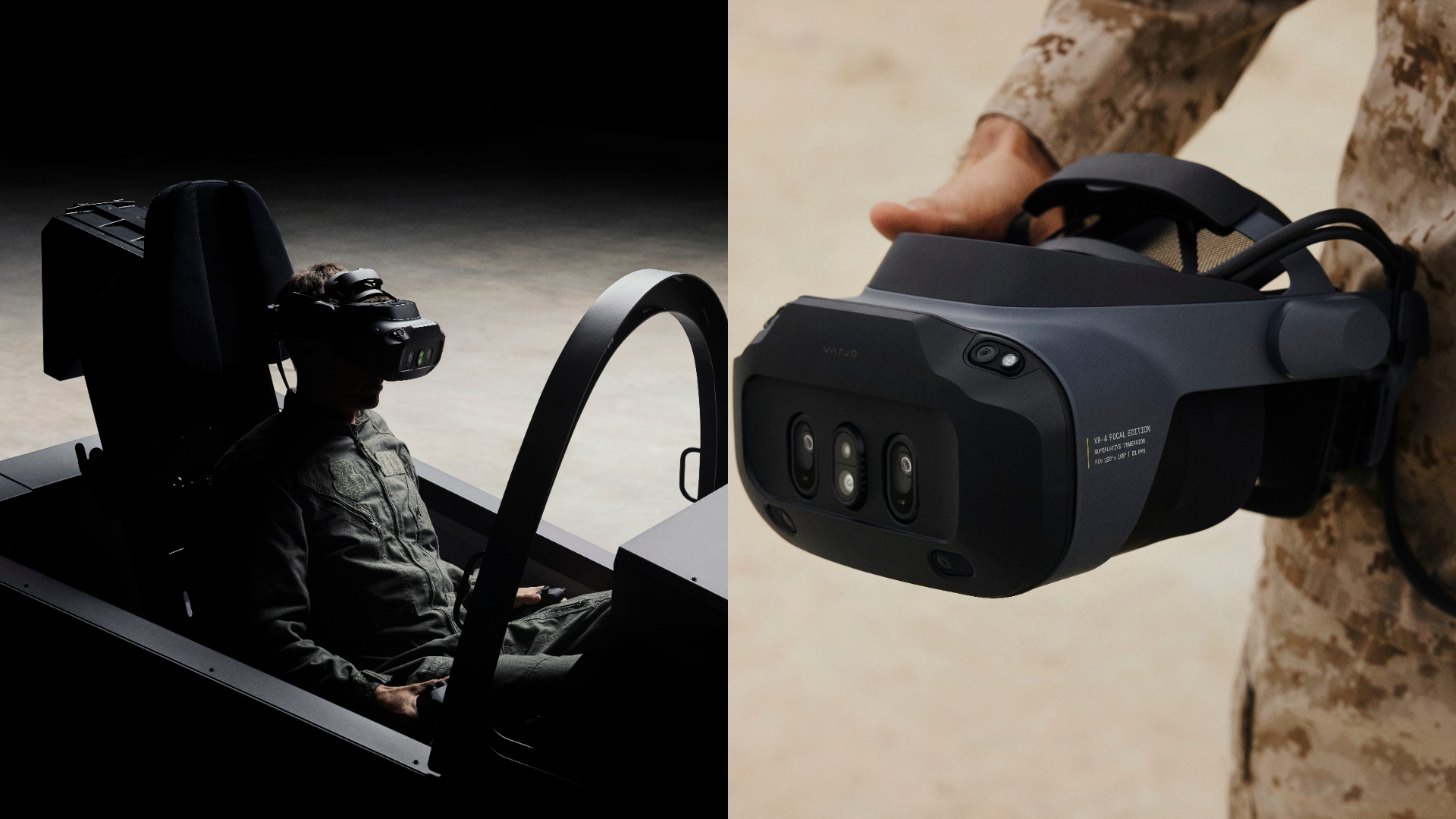
One of the most striking examples of this new type of German-Finnish defense cooperation is the strategic partnership between Varjo Technologies Oy from Helsinki and the German defense company Rheinmetall. Founded in 2016, Varjo has become the world's leading provider of military mixed-reality technology. The company's XR-4 headsets deliver a visual resolution that far surpasses conventional simulation solutions, enabling training scenarios that are virtually indistinguishable from real-world combat situations in terms of realism and operational relevance. The fact that the technology is already being used in over 120 defense programs worldwide demonstrates the platform's market-ready capabilities.
The cooperation with Rheinmetall aims to equip the German corporation's modular driving and weapons simulation systems with the XR-4 series. The technological core of the solution: soldiers sit in true-to-life vehicle cabins, operate real controls, and experience a high-resolution, three-dimensional virtual combat environment through mixed-reality headsets. This combination of physical hardware and a synthetic environment makes it possible to drastically scale training capacities – without having to build costly, permanently installed simulator facilities. This is an aspect whose strategic importance cannot be overstated in times of rapidly growing armed forces and increasing training requirements within NATO.
The economic and operational logic of this partnership is compelling. Mixed reality significantly reduces training costs per soldier, shortens training cycles, and allows for decentralized implementation without being tied to specific locations. In December 2025, at the important I/ITSEC defense trade fair in Orlando, Rheinmetall and Varjo jointly presented an XR-based truck driving simulator that demonstrates how high training throughput can be achieved in a compact format. For Germany and its NATO partners, this means specifically: Training readiness can be increased more quickly than would ever be possible through traditional simulator procurement – and precisely where soldiers are needed, not just where a simulator happens to be located.
The Finnish-German understanding of security: More than an alliance on paper
The depth of cooperation between Germany and Finland stems not only from concrete industrial projects, but also from a growing conceptual convergence in security policy. Finland's model of comprehensive security has gained considerable traction in the European debate in recent years – and rightly so. The concept, which was developed in Finland during the Cold War under the term "total defense" and further refined into a comprehensive security strategy after 1991, is based on a fundamental principle: resilience is a societal responsibility, not the sole domain of the military.
In practice, this means that ministries, armed forces, the private sector, and civil society work hand in hand to maintain vital societal functions—from energy and telecommunications to food supply—even under conditions of hybrid warfare and military escalation. This model has proven exceptionally effective against the threats of the 21st century: hybrid attacks, disinformation, and sabotage of critical infrastructure. Germany, which is intensively searching for its own integrated security concept after the turning point of the era, can benefit enormously from this wealth of Finnish experience.
In February 2026, eight NATO allies – including Germany and Finland – signed an agreement to accelerate the joint development and procurement of new technology-based capabilities for naval operations in the Baltic Sea region. This step exemplifies how bilateral cooperation is embedded in multilateral alliance architectures, thereby generating a multiplier effect that extends far beyond purely bilateral benefits. At the same time, Finland plans to deploy naval vessels to the Standing NATO Maritime Group One and the Standing NATO Mine Countermeasures Group One in 2026 – a concrete contribution to collective security in the Baltic Sea region.
SAR from space: ICEYE and Rheinmetall make industrial history
No other project illustrates the transformative potential of Finnish-German defense cooperation more impressively than the joint venture Rheinmetall ICEYE Space Solutions. In December 2025, the joint venture – consisting of Rheinmetall with 60 percent and the Finnish satellite operator ICEYE with 40 percent – received a contract from the German procurement agency BAAINBw with a total volume of approximately €1.7 billion. The contract runs until the end of 2030 with extension options and provides for the delivery of satellite-based reconnaissance data from a synthetic radar aperture constellation (SAR), which is primarily intended for the protection of the German Lithuania Brigade and for securing NATO's eastern flank.
ICEYE is a well-known name in this field. Founded in 2014, the company operates the world's largest commercial SAR satellite constellation, delivering high-resolution radar images of the Earth's surface regardless of weather conditions or time of day. This technological capability makes SAR satellites particularly valuable for military reconnaissance: where optical satellites become ineffective due to cloud cover, SAR sensors continue to provide usable reconnaissance images. ICEYE made significant contributions to Ukrainian defense during Russia's war of aggression against Ukraine – an early field test under real-world combat conditions that demonstrated the operational maturity of the technology.
In June 2026, the formal establishment of the joint venture was officially confirmed, with its headquarters in Neuss, North Rhine-Westphalia. Alongside ICEYE, the initial partners include the German aerospace startups Reflex Aerospace, OroraTech, ConstellR, and LiveEO, forming part of the expanded partnership architecture – a deliberately open ecosystem focused on scalability and sovereign resilience. Satellite manufacturing is scheduled to begin in the summer of 2026, with full operational capability planned for the end of 2027. This timeline is ambitious but reflects the political will to overcome Germany's dependence on non-European ISR capabilities in the medium term.
From an economic perspective, this project is of considerable importance. It combines Finnish technological expertise with German financing capacity and industrial manufacturing strength, creates highly skilled jobs in both countries, and lays the foundation for a European space intelligence infrastructure that is not dependent on American or other third-party states. Sovereignty in intelligence gathering is not an abstract ideal in modern warfare, but a fundamental operational requirement.
Dual-use as a strategic principle: When the marketplace supplies the barracks
The conceptual foundation upon which much of Finnish defense innovation rests is the dual-use principle – or, increasingly common in Finnish defense debates, the concept of "New Defense." The core idea is simple, yet strategically profound: technologies primarily developed for the civilian market should be designed so that they can also be used for military purposes with minimal adaptation. This dramatically accelerates innovation cycles, reduces development costs, and leverages the significantly shorter time-to-market in the civilian sector.
Varjo and ICEYE are the most prominent, but by no means the only, proponents of this approach in Finland. Another notable player is NestAI Oy, a Finnish AI company that has been collaborating with the Finnish Defence Forces since 2025 to develop AI-powered capabilities for unmanned systems, autonomous operations, and command and control systems. In November 2025, NestAI secured €100 million in funding—led by the Finnish sovereign wealth fund Tesi and telecommunications giant Nokia—to establish Europe's leading physical AI lab. Nokia is contributing not only capital but also expertise in 5G/6G communications infrastructure, which is essential for networked weapon systems and autonomous swarm technologies.
The economic rationale of the dual-use approach is evident: In the civilian sector, innovations emerge in cycles that are structurally superior to traditional arms programs. While a classic procurement program for a military simulator can take ten to fifteen years from conception to operational readiness, a civilian technology company brings product generations to market every two to three years. The challenge lies in leveraging this speed without compromising safety-relevant standards – and Finland has developed this balance in an exemplary manner over the past few years.
🎯🏢🥽 Enterprise XR Solution Hub for B2B projects – from digital twins to customized extended reality solutions

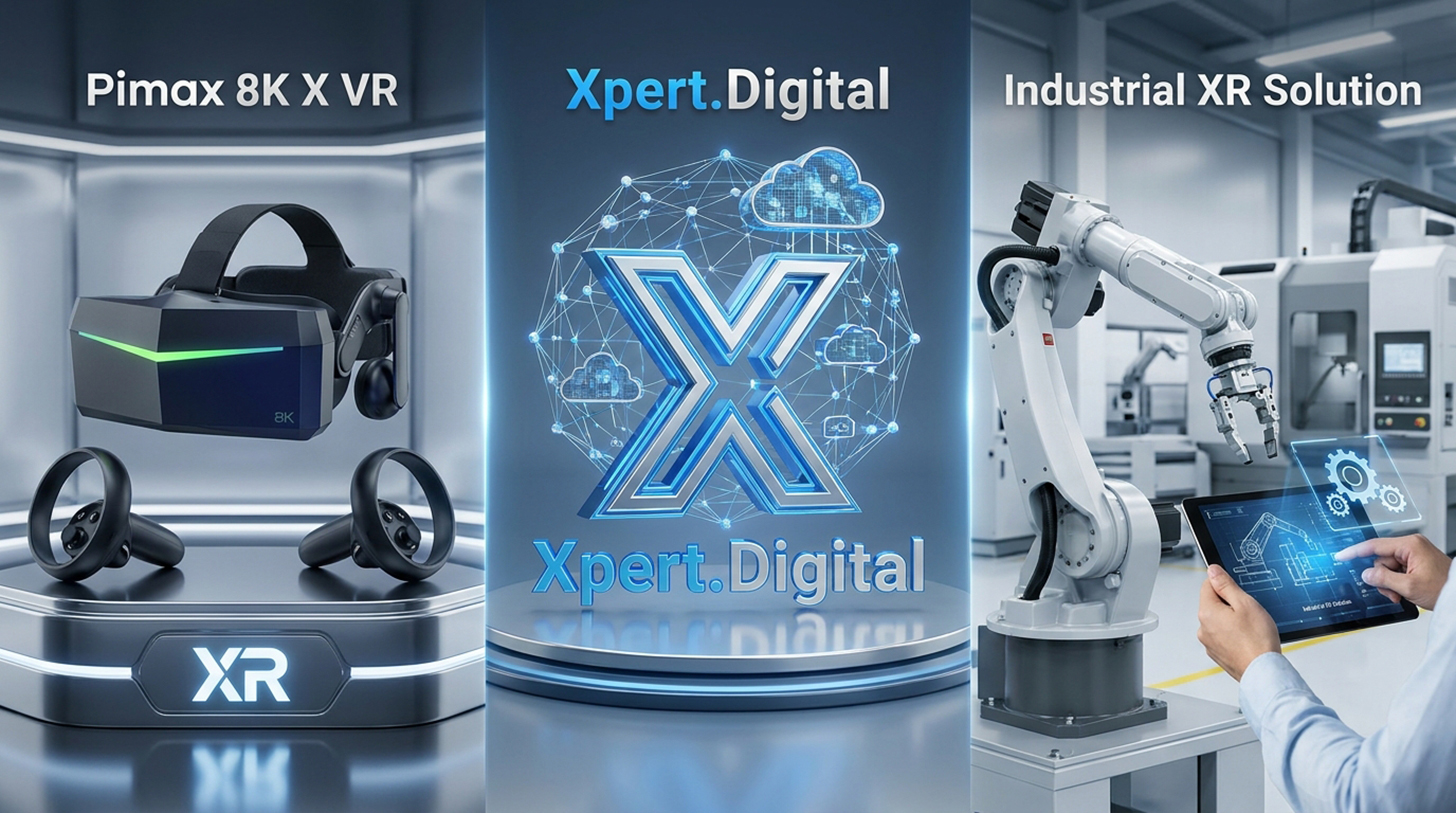
Enterprise XR Solution Hub for B2B projects – from digital twins to customized mixed reality solutions – Image: Xpert.Digital
Xpert.Digital acts as a holistic Enterprise XR Solution Hub, seamlessly integrating high-performance Pimax hardware into industrial B2B workflows. From digital twin analysis in engineering ("top floor") to immersive training on the production floor ("shop floor"), companies receive a customized, comprehensive solution including strategic consulting and support.
More information here:
German-Finnish defense cooperation: Faster capabilities through dual-use partnerships
The innovation ecosystem: Regional clusters as a competitive advantage
Finland's strength in defense innovation is not a product of chance for individual companies, but rather the result of systematically developed regional ecosystems that combine cutting-edge research, entrepreneurship, and military expertise. These clusters are of particular interest to investors from Germany and other NATO countries because they make the entire spectrum of innovation – from basic research to mass production – available in close geographical proximity.
The DEFINE Accelerator in Riihimäki, the garrison town north of Helsinki, is perhaps the most direct showcase of this ecosystem logic. The three-month program, managed by the Berlin-based venture capital firm Redstone VC in cooperation with the city of Riihimäki and the DEFINE network, brings together startups from across NATO and offers direct access to the Finnish Armed Forces, leading defense companies, and universities. With over 100 applicants for the spring 2025 cohort alone – from Finland, Sweden, Germany, and other NATO countries – the program has developed a reach that extends far beyond the Nordic region.
In Espoo, the technological heart of Finland's innovation economy centered around the Otaniemi campus, NATO has established its DIANA Accelerator program (Defence Innovation Accelerator for the North Atlantic). The program is operated by VTT (the Finnish equivalent of the Fraunhofer Society), Aalto University, and the University of Helsinki. Its focus is on quantum technologies and future communication systems – areas in which Finland is internationally recognized as an early mover. In January 2026, the first official DIANA Accelerator program launched at VTT, supporting six internationally selected startups from the UK, the US, Canada, and Germany in the development of dual-use communication technologies.
Oulu, Finland's northernmost major city and a global hub for wireless communications research, is home to the official NATO DIANA Test Centre for 6G technology. The University of Oulu's 6G Test Centre offers companies from across NATO a unique infrastructure for validating communications and dual-use technologies under Arctic conditions – a testing environment unparalleled in Europe. By 2025, companies from several NATO countries had already validated their technologies at the site, accelerating their entry into defense and export markets.
In Jyväskylä, central Finland, expertise is concentrated at the intersection of cybersecurity and digital technologies, while the Pirkanmaa cluster in southern Finland – with the university city of Tampere as its center – unites highly specialized manufacturing expertise for mechanical and digital precision technologies. International corporations such as the Swedish-American defense company Saab have long since identified this cluster as a preferred area for cooperation.
The role of the state: Public programs as innovation accelerators
Finnish defense industry policy is characterized by a differentiated set of government support instruments that leverage private investment rather than replacing it. Business Finland, the state innovation promotion agency, is the central instrument in this process. In April 2024, Business Finland launched the "Defense and Digital Resilience" program with a total budget of €120 million and a duration until the end of 2028. The program aims to create synergies between dual-use technologies, cybersecurity, critical communication systems, and defense solutions – and explicitly promotes international partnerships with allied nations and multilateral frameworks such as the EU and NATO.
An important complementary instrument is national co-financing for the European Defence Fund (EDF). The EDF has a total budget of approximately €7.3 billion for the period 2021 to 2027, of which €2.7 billion is for research projects and €5.3 billion for capability development. Business Finland can increase EDF-funded projects with national co-financing to up to 90 percent of the project costs – an exceptionally strong incentive for international consortia to include Finnish partners. For German companies seeking European defence projects within the framework of the EDF, this means that Finnish partners contribute not only technology and expertise, but also significant state co-financing capacity.
The European Defence Fund has selected a total of 57 projects in its 2025 call for proposals, including key areas in artificial intelligence, cyber defense, and drone and drone defense systems. This year alone mobilizes €675 million for capability development and €332 million for research projects. The strategic importance of this European co-financing lies not only in the funding amounts but also in the institutional logic it creates: European countries are compelled to think in terms of consortia, develop common standards, and plan for interoperability from the outset – all factors that are of vital importance for a powerful NATO defense.
Growth dynamics of an industry: Finland's defense industry as an emerging anchor
The economic figures of the Finnish defense industry tell a story of spectacular growth. According to the industry association PIA (Puolustus- ja Ilmailuteollisuus), member companies recorded total sales of approximately €4.2 billion in 2025 – an increase of about 42 percent compared to the previous year, when sales were around €3 billion. With exports accounting for approximately 55 percent of total sales, Finland's defense industry has clearly positioned itself as an export-oriented sector – proof of the international competitiveness of Finnish products and systems.
The industry's investment intensity is remarkable. PIA member companies consistently invest around 15 percent of their annual turnover in research, development, and innovation – a figure that is exceptionally high for a medium-sized defense industry by international standards and forms the basis for technological leadership in selected niche segments. By comparison, the EU average for R&D spending in the defense industry is significantly lower.
The strategic growth path is ambitious. The industry has set itself the goal of quadrupling total revenue to €12 billion by 2030 and increasing direct employment from the current 14,000 to 40,000 people. This would transform Finland's defense industry from a significant niche sector into one of the mainstays of the national economy. Defense spending was projected to reach approximately 2.9 percent of Finnish GDP in 2025 – a figure well above the NATO target of 2 percent and underscoring Helsinki's political commitment to concrete burden-sharing within the alliance.
For Germany, whose defense industry is far larger but less technologically agile in some areas, the Finnish growth dynamic offers a dual opportunity: as a buyer of innovative supplier technologies and as an industrial partner in joint European procurement projects, where Finnish agility and German manufacturing capacities complement each other.
Geopolitical calculations: Why the Baltic Sea is becoming a focal point of European security
The intensification of German-Finnish defense cooperation is not an isolated bilateral phenomenon, but rather embedded in a profound geopolitical reorganization of the Baltic Sea region. With Finland's accession to NATO in 2023 and Sweden's in 2024, the alliance has secured almost complete strategic control over the Baltic Sea – with all the implications for deterrence, collective defense, and maritime logistics. Russia's access to the open sea is thus limited to a few key points, significantly increasing the strategic value of the entire Baltic Sea region for NATO defense planning.
In spring 2025, Finland announced its intention to contribute naval vessels to NATO naval forces in 2026 and indicated its willingness to participate in NATO ground force initiatives in northern Finland. In June 2025, the Finnish Minister of Defence welcomed the decision by six NATO partners—including the United Kingdom and France—to contribute to ground forces in northern Finland. This marked Finland's transformation from a newcomer to the alliance, far removed from the front lines, to an active shaper of NATO's defense architecture in northern Europe.
This development is directly relevant for Germany. A stable, well-defended northern flank of NATO, which includes Finland as a capable actor, reduces pressure on the alliance's Central European flanks. At the same time, the joint use of innovative Finnish reconnaissance systems – such as Rheinmetall ICEYE Space Solutions – provides the Bundeswehr with capabilities it would only acquire years later using purely national resources. In this context, bilateral cooperation becomes an instrument for rapid capability development, leaving no time for lengthy national procurement cycles.
The model for Europe: Lessons from a successful partnership
German-Finnish defense cooperation provides a model that can be transferred to other European partners. It demonstrates that effective defense cooperation does not have to begin with heavy, expensive platform programs, but rather with highly specialized, digitally networked technology components that are rapidly scalable and can be integrated into existing system architectures. It shows that government support for innovation – if designed correctly – does not crowd out private investment, but rather leverages it. And it proves that the dual-use principle is not a theoretical construct, but a proven industrial strategy that shortens innovation cycles and makes defense spending more efficient.
For Germany, which is seeking direction in its current security policy paradigm shift, Finland serves as a model in several respects. Not only as a supplier of technological solutions, but also as a role model for a defense culture that understands security as a societal responsibility, in which ministries, companies, universities, and citizens collaborate. This is a concept that Europe urgently needs in its entirety if it is to meet the security challenges of the 21st century – not with more bureaucracy, but with greater resilience.
The collaborations between Varjo and Rheinmetall, as well as ICEYE and Rheinmetall, are therefore not merely industrial deals. They are blueprints for a new European defense economy: fast, networked, innovation-driven and sovereign – and thus better equipped for the uncertainties of a world order that is currently being fundamentally rewritten.
🎯🎯🎯 Data-driven B2B industry hub as a quasi-in-house solution


The quasi-in-house solution: How Xpert.Digital closes operational gaps in B2B marketing and sales – Smart Content-Driven Business - Image: Xpert.Digital
Xpert.Digital is a data-driven B2B industry hub led by Konrad Wolfenstein . The company acts as an external, quasi-in-house solution for industrial partners, closing operational gaps in marketing, content, and sales – without requiring additional resources on the client side.
More information here:
Your global marketing and business development partner
☑️ Our business language is English or German
☑️ NEW: Correspondence in your native language!

Konrad Wolfenstein
I and my team are happy to be available to you as your personal advisor.
You can contact me by filling out the contact form here wolfenstein@xpert.digital:or simply call me at +49 7348 4088 965. My email address is
I'm looking forward to our joint project.
☑️ SME support in strategy, consulting, planning and implementation
☑️ Creation or realignment of the digital strategy and digitization
☑️ Expansion and optimization of international sales processes
☑️ Global & Digital B2B trading platforms
☑️ Pioneer Business Development / Marketing / PR / Trade Fairs
Hub for Security and Defense - Advice and Information

Hub for Security and Defense - Image: Xpert.Digital
The Security and Defence Hub offers expert advice and up-to-date information to effectively support companies and organizations in strengthening their role in European security and defence policy. Working closely with the SME Connect Defence Working Group, it particularly promotes small and medium-sized enterprises (SMEs) that wish to further develop their innovative capacity and competitiveness in the defence sector. As a central point of contact, the Hub thus creates a crucial bridge between SMEs and European defence strategy.
Related to this: