
The next hammer is looming: EU obligation to renovate – the Building Energy Act (GEG) is just the calm before the storm

Available in 27 languages 📢
Prefer Xpert.Digital on GoogleⓘPublished on: August 24, 2023 / update from: August 24, 2023 - Author: Konrad Wolfenstein

The next hammer looms: EU obligation to restructure – Image: Xpert.Digital
The EU obligation to renovate old houses and buildings
The future of the Building Energy Act (GEG) and the challenges for homeowners
🗒️ The discussions about the heating law in Germany do not stop despite the traffic light coalition agreeing on a final version. A CDU politician is planning to stop the Building Energy Act through a lawsuit. Meanwhile, Robert Habeck's heating plans are encountering headwinds from various political and economic directions. But it could be that the new Building Energy Act (GEG) is just the calm before the storm for apartment and homeowners, because there is already a new challenge on the horizon: the EU obligation to renovate old houses and buildings.
The debate about the Building Energy Act (GEG)
The discussions about the Building Energy Act (GEG) reflect the tensions between different political parties and economic interests. While the traffic light coalition has agreed on a final version of the law, there is still resistance from the CDU, which is even considering legal action to stop the law. This controversy highlights the importance of the GEG and its potential impact on homeowners and the energy transition in Germany.
Robert Habeck's heating plans and their challenges
The heating plans of Robert Habeck, chairman of Alliance 90/The Greens, have met with widespread criticism. From both a political and economic perspective, there are concerns about its feasibility and the financial burden on homeowners. The planned obligation to gradually switch to climate-friendly heating systems poses major challenges for many owners. This raises questions about how the necessary investments can be financed and what support will be offered by the government.
➡️ The EU obligation to renovate old houses and buildings
While the discussions about the GEG are underway, a new challenge is already emerging: the EU obligation to renovate old houses and buildings. This requirement could have far-reaching implications for homeowners. The EU plans to make energy renovations mandatory within a certain time frame in order to improve energy efficiency and reduce CO2 emissions. This could mean that many owners will need to undertake additional renovation work in the foreseeable future.
The role of politics and economics
The political dispute over the GEG and Robert Habeck's heating plans illustrates the complex connections between political goals, economic interests and the needs of homeowners. Politicians must make trade-offs between climate protection, energy efficiency and the financial burden on citizens. At the same time, innovative solutions are needed to advance the energy transition while making it socially just.
Future challenges and possible solutions
The discussions about the GEG and the EU renovation obligation show that homeowners are facing new challenges that include financial, technical and organizational aspects. It is crucial that they are informed early about the potential impacts in order to make informed decisions. At the same time, government and industry must provide support measures to facilitate the implementation of legal requirements.
📣 Similar topics
- Building Energy Act (GEG): Controversy and plans to sue 🏠⚖️
- Heating plans in focus: Robert Habeck's initiative 🔥🌿💰
- EU renovation obligation: New challenge for homeowners 🏢🌍
- Politics, business and homeowners: A complex interaction 🤝💡💼
- Future energy transition: challenges and solutions ⚡🔍🌱
#️⃣ Hashtags: #Building Energy Act #Energy Transition #Homeowners #Climate Protection #EU Renovation Obligation
📣 Energy-related renovation and new construction, consulting, planning and implementation for industry, retail and municipalities
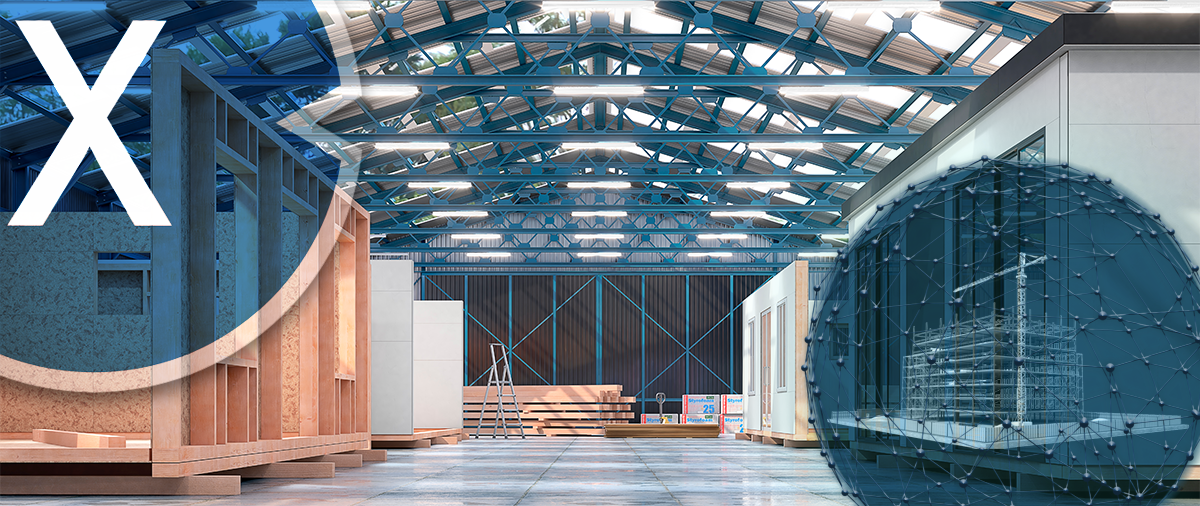
Our experienced team will support you in optimizing your buildings to reduce energy consumption and promote sustainable energy use with photovoltaics. We analyze your individual needs and create tailor-made concepts that make sense both economically and ecologically. Regardless of whether it is about the energy-efficient renovation of existing buildings or the construction of new energy-efficient structures, we are at your side. Industrial facilities, retail buildings and municipal facilities can reduce their energy costs and reduce environmental impact while improving the comfort and efficiency of their buildings through our tailored solutions.
👨🏻 👩🏻 👴🏻 👵🏻 Energy-saving renovation and new construction, advice, planning and implementation for private households
We offer comprehensive support for private households in the energy-efficient renovation and construction of new buildings with photovoltaics. Our experienced team is at your side to help you advise, plan and implement your sustainable energy solutions. We analyze your energy consumption, identify savings potential and develop tailor-made concepts to improve your energy efficiency. From improving building insulation to installing energy-efficient windows and doors to installing photovoltaic and solar systems - we accompany you step by step to make your home more energy efficient and environmentally friendly. Trust in our expertise and benefit from the numerous advantages that energy renovation and the use of renewable energies offer you. Together we will create a sustainable future for your home.
Plan your solar system for the most common applications conveniently online with our solar system planner!
With our user-friendly solar system planner you can plan your individual solar system online. Whether you need a solar system for your home, your business or for agricultural purposes, our planner offers you the opportunity to take your specific requirements into account and develop a tailor-made solution.
The planning process is simple and intuitive. You simply enter relevant information. Our planner takes this information into account and creates a tailor-made solar system that meets your needs. You can try out different options and configurations to find the optimal solar system for your application.
Additionally, you can save your plan to review later or share with others. Our customer service team is also available to answer your questions and provide support to ensure your solar system is optimally planned.
Use our solar system planner to plan your individual solar system for the most common applications and advance the transition to clean energy. Start now and take an important step towards sustainability and energy independence!

The solar system planner for the most common applications: Plan the solar system online here - Image: Xpert.Digital
More about it here:
EU renovation obligation: energy transition for buildings by 2030
🏢 Energy renovation in the EU: A look into the future
The European Union sets ambitious goals to improve the energy efficiency of buildings and reduce CO2 emissions. As part of the “EU directive on the overall energy efficiency of buildings” (EPBD), the EU plans to introduce a binding energetic renovation obligation by 2030. This measure is part of a comprehensive plan to promote sustainability in the construction sector.
🌟 Classification into energy efficiency classes: A to G for buildings
In order to assess energy efficiency transparently, buildings should be divided into classes from A to G according to their energy consumption. The harmonized energy certificate serves as the basis for this. The classification allows owners, tenants and buyers to see at a glance how efficient a building is in terms of energy consumption.
🏠 The EU obligation to renovate by 2030: From class G to class E
The EU renovation requirement stipulates that existing residential buildings must at least achieve efficiency class E by 2030. This is an essential step in making older buildings more energy efficient and reducing their environmental footprint. This requirement is set to become even stricter by 2033: buildings must then achieve at least efficiency class D.
☀️ The solar obligation as a future-oriented approach
As part of the EU renovation obligation, a groundbreaking solar obligation is also being discussed. From 2033, all existing buildings that are undergoing major renovations will be equipped with solar systems. This approach reflects the desire to increasingly integrate renewable energies into everyday life and reduce dependence on fossil fuels.
🌍 The challenges and opportunities of implementation
The introduction of the EU restructuring obligation brings with it both challenges and opportunities. The challenge is to modernize existing buildings so that they meet the new standards. This requires investment, innovative technologies and expertise. At the same time, however, the renovation obligation opens up the possibility of making the EU's building stock more sustainable and reducing operating costs in the long term.
💡 Timing and implementation of the measures
The exact time when the energy renovation obligation will be introduced has not yet been determined. However, experts assume that the EU will concretize its plans in the near future. It is expected that the EU will set standards in close cooperation with member states and provide clear guidelines for the implementation of the renovation obligation.
📈 Impact on the construction industry and economy
The introduction of the EU renovation obligation will undoubtedly have an impact on the construction industry and the economy as a whole. The increased demand for energy renovations and modern technologies will create new business opportunities. Companies that specialize in energy-efficient solutions could benefit from this development.
🌐 Europe-wide approach for more sustainability
The planned EU renovation obligation illustrates the common approach of European countries to increase energy efficiency and reduce environmental impacts. This measure is a step towards a sustainable future for EU member states.
📣 Similar topics
- 🏢 Energy transition: The future of energy renovation in the EU
- 🌟 Energy efficiency classes: From A to G for transparent evaluation
- 🏠 EU renovation obligation 2030: Buildings on the way to efficiency class E
- ☀️ Solar obligation: Sustainable energy integration in existing buildings
- 🌍 Opportunities and challenges: Implementation of the EU restructuring obligation
- 💡 Outlook: time frame and expectations for the renovation measures
- 📈 Economic stimulus: impact on the construction industry and business opportunities
- 🌐 Shared sustainability: EU-wide efforts for efficient buildings
- 🏗️ Construction industry in transition: EU obligation to renovate as a driver for innovation
- 🔒 Binding standards: The future of energy-efficient building renovation
#️⃣ Hashtags: #SustainableConstruction #EnergyEfficiencyEU #BuildingRenovation2030 #SolarDuty #FutureBuilding
🏠 EU obligation to renovate: Germany's homeowners could be particularly affected 🏠
🗒️ EU obligation to renovate and its effects on Germany's homeowners
The desired EU renovation obligation, which is being discussed by the EU Parliament, could have a significant impact on Germany's homeowners. This potential obligation brings with it a variety of questions and considerations. The focus here is on the challenge that there will be no uniform limits for the classification of houses. Instead, the classification of building conditions is considered individually in each country in order to adequately take into account the relationship to the condition of the buildings. The aim of this approach is to avoid a blanket overload of countries.
💡 Flexible classification according to building condition – disadvantage for Germany
The idea of adapting the EU renovation obligation to the respective condition of the buildings has advantages and disadvantages. On the one hand, it allows for a tailored assessment that takes into account the realities of each country. On the other hand, this flexibility could lead to ambiguity as the criteria for classification could vary. Homeowners in Germany could therefore be faced with the challenge of their properties being classified as needing renovation based on specific national assessments, but which correspond to the standard in another EU country and are sufficiently energy efficient in the country.
🛠️ Need for renovation and economic stimulus
The introduction of an EU obligation to renovate could lead to an increase in the need for renovation in Germany and other EU countries. This could lead to increased demand for construction services and materials, which in turn could provide economic stimulus. However, the financial burden on homeowners must also be taken into account, especially if extensive renovation work is required.
🌱 Sustainability and energy efficiency
An important aspect of the EU renovation obligation is the promotion of sustainability and energy efficiency. If buildings are classified as requiring renovation based on their energy performance, measures to improve energy efficiency could offer both financial and environmental benefits. This could contribute to achieving climate goals and reduce energy costs for homeowners in the long term.
📚 Experiences from other countries
It might be helpful to analyze the experiences of other countries that have already introduced similar cleanup obligations. These case studies could provide insights into impacts, challenges and best practices. In this way, Germany's homeowners could benefit from proven approaches from other countries and proactively address potential stumbling blocks.
🧐 Clarity about requirements and deadlines
A key requirement for homeowners would be to gain clarity about the exact requirements and deadlines associated with the EU renovation obligation. Information on required actions, documentation and timelines would be crucial to ensure timely and correct implementation.
🔍 Take advantage of advice and expertise
Given the potential complexity of the EU renovation obligation, homeowners could benefit from the support of experts and advisors. Experts familiar with the latest regulations and requirements could provide valuable advice and guidance in taking the necessary steps to achieve compliance.
🚀 Keep an eye on future developments
The debate over the EU cleanup obligation is still ongoing and further details and guidelines may emerge in the coming months and years. It is important that Germany's homeowners stay up to date on current developments in order to be able to respond appropriately to new information.
📣 Similar topics
- 🏠 EU renovation obligation: What Germany's homeowners need to know
- 🌍 Flexibility and challenges: EU restructuring obligation in focus
- 💡 Energy efficiency and sustainability: The perspective of the EU renovation obligation
- 🏡 Future of home ownership: Effects of the EU renovation obligation
- 🏢 Country-specific assessment: EU renovation obligation and property condition
- 💰 Investments and costs: Financial aspects of the EU restructuring obligation
- 🌱 Greener real estate: Sustainability through the EU renovation obligation
- 📊 Expert view: Advice from professionals on EU restructuring requirements
- ⏳ Timely implementation: deadlines and implementation of the EU restructuring obligation
- 🚀 Current developments: The future of the EU restructuring obligation
#️⃣ Hashtags: #EUHausRenovation #BuildingClassification #EnergyEfficientReal Estate #Sustainable
Slump in sales and uncertainty: heat pump manufacturers suffer after dispute over heating law and building energy law (GEG)

Slump in sales and uncertainty: Heat pump manufacturers suffer after dispute over heating law - Image: Xpert.Digital
More about it here:
Appropriate topic: Residential construction market crisis – slump in building permits

Does the slump in building permits in the residential construction market have an impact on the photovoltaics industry? – Image: Xpert.Digital / moreimages|Shutterstock.com
A short survey we recently conducted among solar installers shows that demand for solar systems for single- and multi-family homes is stagnating and that customers' purchasing behavior is cautious. Many potential customers are postponing offers that have already been made to a later date, which will lead to increased price pressure and intensified competition in the industry.
The slump in building permits in the residential construction market has a direct impact on solar installers, as the installation of solar systems often goes hand in hand with new buildings or renovations. The fact that demand for single- and multi-family homes is stagnating has a direct impact on solar installers' installation orders and sales.
More about it here:

- Warehouses, production halls and industrial halls with their own power source from a photovoltaic roof system - Image: NavinTar|Shutterstock.com

- Industrial plant with its own power source from an outdoor photovoltaic system - Image: Peteri|Shutterstock.com

- Plan solar systems with photovoltaic solutions for freight forwarding and contract logistics
- B2B solar systems and photovoltaic solutions & advice

- Plan photovoltaics for warehouses, commercial halls and industrial halls
- Industrial plant: Plan a photovoltaic open-air system or open-space system
- Plan solar systems with photovoltaic solutions for freight forwarding and contract logistics
- B2B solar systems and photovoltaic solutions & advice
Expert advice on energy-efficient renovation and new construction with Xpert.Plus

Konrad Wolfenstein
I would be happy to serve as your personal advisor.
You can contact me by filling out the contact form below or simply call me on +49 7348 4088 965 (Munich) .
I'm looking forward to our joint project.
Write to me

Xpert.Digital – Konrad Wolfenstein
Xpert.Digital is a hub for industry with a focus on digitalization, mechanical engineering, logistics/intralogistics and photovoltaics.
With our 360° business development solution, we support well-known companies from new business to after sales.
Market intelligence, smarketing, marketing automation, content development, PR, mail campaigns, personalized social media and lead nurturing are part of our digital tools.
You can find out more at: www.xpert.digital – www.xpert.solar – www.xpert.plus
Keep in touch








