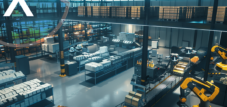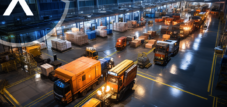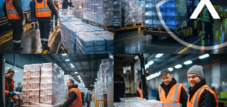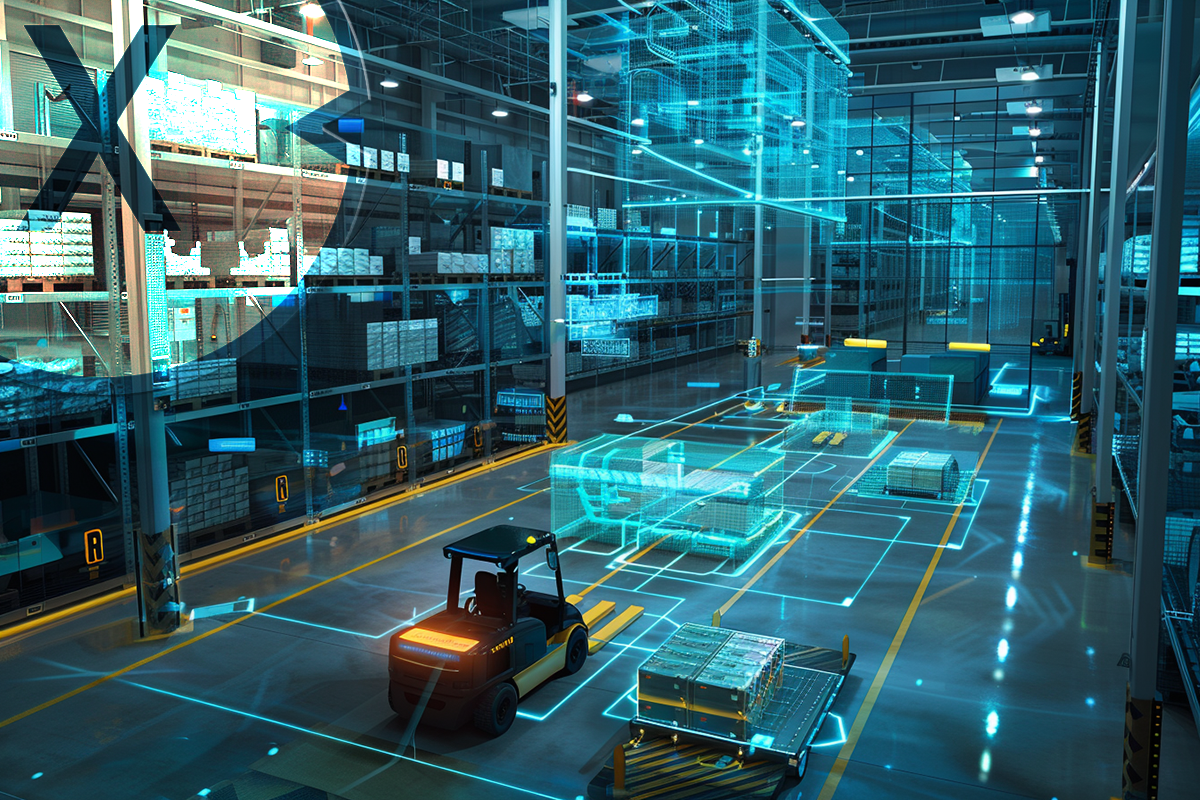
Efficient intralogistics: Automation for small and medium-sized enterprises – Image: Xpert.Digital
📦 Competitive advantage through optimized intralogistics for medium-sized companies
📦🔄 Intralogistics forms the backbone of every company
Intralogistics encompasses all internal material and information flows – from goods receipt and production to shipping. For small and medium-sized enterprises (SMEs), the efficient design of these processes is crucial to remaining competitive and meeting increasing market demands.
📊 The importance of intralogistics for SMEs
In a globalized economy, SMEs face the challenge of keeping pace with larger competitors. Customers expect short delivery times, high product availability, and customized solutions. Inefficiencies in intralogistics can lead to delays, increased costs, and customer dissatisfaction. Therefore, it is essential to continuously optimize internal processes and adapt them to current requirements.
🧩 Challenges in the intralogistics of SMEs
Compared to large companies, SMEs often have limited resources and must manage with smaller budgets. They face specific challenges:
Limited space
Many SMEs operate in existing buildings with limited storage space. Efficient use of the available space is therefore crucial.
Variable order volumes
Fluctuating demand requires flexible systems that can efficiently handle both peak times and quieter periods.
Staff shortage
The shortage of skilled workers is also affecting the logistics industry. Automation can help bridge bottlenecks and reduce dependence on manual tasks.
🚀 Automation as the key to increasing efficiency
Automation offers numerous opportunities to improve intralogistics. Modern technologies make it possible to accelerate processes, reduce errors, and lower costs. For SMEs, this means that despite limited resources, they can benefit from advantages that were once reserved for large corporations.
🔧 Intralogistics Automation Technologies
1. Warehouse Management Systems (WMS)
A WMS (Warehouse Management System) supports inventory management, optimizes storage space, and improves product traceability. Real-time information allows companies to react more quickly to changes and manage inventory more efficiently. Furthermore, WMS systems enable integration with other systems such as ERP (Enterprise Resource Planning), leading to holistic process optimization.
2. Automated conveyor technology
Conveyor belts, sorting systems, and automated storage systems accelerate the flow of materials within a company. For example, automated high-bay warehouses can optimally utilize available storage space while simultaneously speeding up access to goods. This reduces not only the space required but also the time needed for storage and retrieval.
3. Autonomous Mobile Robots (AMR)
These robots can transport goods autonomously and help to avoid bottlenecks in material flow. They are flexible in their deployment and can be easily integrated into existing systems. Unlike permanently installed conveyor systems, AMRs can be quickly adapted to changing processes.
4. Pick-by-Light and Pick-by-Voice systems
These technologies support employees during order picking. With pick-by-light, indicator lights at the storage locations show which items should be picked. Pick-by-voice uses voice control, allowing employees to keep both hands free. Both systems reduce error rates and increase order processing speed.
5. Robotics and Cobots
Robotic arms and collaborative robots (cobots) can take over repetitive tasks, such as packaging or palletizing goods. Cobots work alongside human employees and can be flexibly deployed for various tasks.
💡 Benefits of automation for SMEs
Cost reduction
More efficient processes and fewer errors allow companies to reduce their operating costs. Investments in automation often pay for themselves quickly through the resulting savings. Furthermore, personnel costs can be reduced, or employees can be deployed to more value-added tasks.
Increased productivity
Automated systems work faster and more precisely than manual processes. This leads to higher throughput and makes it possible to process more orders in less time. Especially during periods of high demand, this allows companies to remain competitive.
Quality improvement
Errors in order picking or transporting goods can be costly and damage customer trust. Automation reduces these errors and increases customer satisfaction through reliable and on-time deliveries.
Flexibility and scalability
Automated solutions can be adapted to changing requirements. Systems can be expanded to meet increasing order volumes without requiring extensive restructuring. Technologies such as AMR or modular warehouse solutions enable a rapid response to market changes.
🛠️ Implementation challenges
Despite the many advantages, there are also challenges that SMEs must consider when introducing automation technologies:
Investment costs
Acquiring automated systems initially requires a financial investment. Companies must carefully consider which solutions offer the greatest benefits and how they can be financed. Subsidies or leasing models can help reduce the initial investment.
Integration into existing processes
New technologies must be seamlessly integrated into existing processes. This may require technical adjustments and careful planning. It is important to collaborate with experienced partners who understand the specific needs of SMEs.
Employee training
Introducing new systems often means that employees need to be retrained. It is important to involve them early on and show them the benefits of the changes. A positive attitude among the workforce significantly facilitates implementation.
Technological complexity
The sheer variety of available technologies can be overwhelming. A clear strategy and expert advice help in making the right decisions and using the systems to their full potential.
🔮 Further developments and trends
Intralogistics is on the cusp of a digital revolution. Technologies such as artificial intelligence (AI), the Internet of Things (IoT), and big data analytics will play an even greater role in the future. This opens up further opportunities for SMEs:
Predictive Analytics
By analyzing data, companies can create forecasts and proactively optimize their processes. For example, maintenance intervals for machines can be planned based on usage data to prevent breakdowns.
networked systems
IoT enables communication between different devices and systems. Sensors can provide real-time data on inventory, temperature, or the location of goods. This leads to even more efficient control of material flows and increases transparency in the supply chain.
Artificial intelligence
AI can make complex decisions and autonomously control processes. In intralogistics, AI can be used, for example, for route optimization of automated guided vehicles (AGVs), inventory forecasting, or automated quality control.
Virtual and Augmented Reality
These technologies can be used in employee training or maintenance work. They enable interactive and practical training environments.
📈 Practical example: Successful automation in an SME
A medium-sized trading company faced the challenge of managing increasing order volumes with limited staff. By implementing a warehouse management system and using pick-by-voice technology, order picking performance was increased by 30%. The error rate decreased by 50%, and employee satisfaction improved due to the streamlined workflow.
🏆 Reduce costs and increase competitiveness
Automating intralogistics offers enormous potential for small and medium-sized enterprises (SMEs). By using modern technologies, they can optimize their processes, reduce costs, and increase their competitiveness. Despite the initial challenges, this investment in the future is worthwhile. With the right strategy and experienced partners, SMEs can successfully transition to automated intralogistics and benefit from its numerous advantages.
Digitalization and automation are no longer just trends, but crucial factors for long-term success. Companies that seize these opportunities position themselves for the demands of the future and can react flexibly to market changes.
📣 Similar topics
- 🚛 Intralogistics as the backbone of the company
- 🏭 Challenges and solutions for SMEs in intralogistics
- 📦 Automation technologies: The future of intralogistics
- 🤖 Robotics and cobots: Increasing efficiency in small businesses
- 🔍 WMS and ERP: Optimization through integration
- 📊 Big Data and AI: The Intralogistics Revolution
- 🌐 Networked Systems: IoT and Intralogistics
- 📈 Automation as the key to competitiveness
- 🛠️ Challenges in implementing new technologies
- 🎯 Practical example: Successful automation in intralogistics
#️⃣ Hashtags: #Logistics #Automation #SMEs #Efficiency #Technology
Expert partner in warehouse planning and construction

🌟 In detail: Automation for SMEs – More than just a trend
📦 Intralogistics, meaning all material flows and goods movements within a company, is the heart of every manufacturing or trading business. For small and medium-sized enterprises (SMEs) in particular, efficient intralogistics represents a crucial lever for competitiveness and growth. For a long time, automation solutions were considered the domain of large corporations. However, advancing technological development, decreasing costs, and the increasing shortage of skilled workers are making automation ever more attractive and affordable for SMEs. It's no longer just about the simple transport from A to B, but about the intelligent networking of all processes to save time and resources and increase productivity.
🎯 The challenges of intralogistics in medium-sized businesses
SMEs often face specific challenges in intralogistics. While keeping costs down was once the primary focus, today flexibility and adaptability to fluctuating market conditions are essential. Smaller companies often have limited storage space and must quickly adapt their processes to new product variations or seasonal peaks. The increasing prevalence of online retail and the associated demands for fast delivery times and high delivery accuracy further intensify the pressure. Added to this is the pervasive shortage of skilled workers, which makes finding qualified personnel for warehousing and logistics even more difficult. All these factors make optimizing intralogistics processes indispensable.
🤖 Automation: From simple solutions to complex systems
The range of automation solutions for intralogistics is vast, extending from simple tools to complex, fully automated systems. For SMEs, it's crucial to find the right solution for their individual needs. Not every automation project has to be expensive and complex. Often, minor adjustments are enough to achieve significant improvements.
🚚 Examples of automation solutions for medium-sized businesses
- Automated Guided Vehicles (AGVs), also known as driverless transport systems, autonomously transport goods through warehouses or production halls. They navigate using markers, sensors, or GPS and can be flexibly adapted to changing environments. AGVs relieve employees of monotonous transport tasks and reduce the risk of accidents.
- Automated storage and order picking systems: These systems range from simple stacker cranes to complex shuttle systems. They enable efficient storage and order picking of goods and optimize the use of warehouse space.
- Robot-assisted palletizing and depalletizing: Robots can automatically palletize and depalletize heavy and bulky goods. This reduces the physical strain on employees and increases the speed and accuracy of the processes.
- Pick-by-voice and pick-by-light: These systems support employees in order picking. Pick-by-voice gives instructions via voice command, while pick-by-light guides the employee to the correct storage location using visual signals. Both systems reduce errors and increase picking efficiency.
- Warehouse Management Systems (WMS): A WMS controls and optimizes all warehouse processes, from goods receipt to shipping. It provides a comprehensive overview of inventory and enables efficient warehouse location management.
🚀 Benefits of automation for SMEs
- Increased efficiency and productivity: Automated processes run faster and more precisely than manual tasks.
- Reducing sources of error: Automation minimizes human error and improves the quality of processes.
- Relief for employees: Employees are freed from monotonous and physically demanding tasks and can concentrate on value-adding activities.
- Improved workplace safety: Automated systems reduce the risk of accidents in the warehouse and in production.
- Optimizing storage capacity: Automated storage systems enable space-saving storage and maximize the use of available space.
- Flexibility and scalability: Automation solutions can be flexibly adapted to changing requirements and expanded as needed.
- Competitive advantages: Efficient intralogistics enables faster delivery times and higher delivery accuracy, which increases customer satisfaction and creates competitive advantages.
🌐 The right strategy for automation
The introduction of automation solutions should be well-planned and approached strategically. It is important to analyze the company's individual needs and select the appropriate solution. A phased approach to automation, starting with individual processes, can be beneficial for minimizing investment costs and familiarizing employees with the new technologies. Employee involvement in the automation process is crucial for success. Training and professional development programs help employees understand and use the new technologies. Open communication and transparent information about the goals and benefits of automation foster employee acceptance and motivation.
For SMEs, intralogistics automation is no longer a luxury, but a necessity to remain competitive. With the right strategy and the selection of suitable solutions, SMEs can optimize their processes, reduce costs, and sustainably strengthen their competitiveness. The future of intralogistics lies in the intelligent networking of people and machines to fully exploit the potential of automation.
📣 Similar topics
- 🤖 Intralogistics in transition: Automation for SMEs
- 🚀 Efficient processes: The key to success in medium-sized businesses
- 🏭 Automation solutions: From small tools to large systems
- 📈 Growth through technology: How SMEs can benefit
- 🔄 Flexibility in intralogistics: SMEs master challenges
- 🤖 Man meets machine: The future of intralogistics for SMEs
- 🛠️ Individual solutions: Tailor-made automation for SMEs
- 🌐 Networked processes: The future of intralogistics in SMEs
- 👷 Overcoming the skills shortage: Automation as a solution
- 💡 Step-by-step to success: Automation strategy for SMEs
#️⃣ Hashtags: #Automation #SMEs #Intralogistics #Efficiency #Technology

Xpert.Plus Warehouse Optimization - High-bay warehouses and pallet warehouses: Consulting and planning
We are here for you - Consulting - Planning - Implementation - Project Management
☑️ SME support in strategy, consulting, planning and implementation
☑️ Creation or realignment of the digital strategy and digitization
☑️ Expansion and optimization of international sales processes
☑️ Global & Digital B2B trading platforms
☑️ Pioneer Business Development

Konrad Wolfenstein
I would be happy to serve as your personal advisor.
You can contact me by filling out the contact form below or simply call me on +49 7348 4088 965 .
I'm looking forward to our joint project.
Write to me


Xpert.Digital - Konrad Wolfenstein
Xpert.Digital is a hub for industry focusing on digitalization, mechanical engineering, logistics/intralogistics and photovoltaics.
With our 360° Business Development solution, we support renowned companies from new business to after-sales.
Market intelligence, smarketing, marketing automation, content development, PR, mail campaigns, personalized social media and lead nurturing are part of our digital tools.
You can find more information at: www.xpert.digital - www.xpert.solar - www.xpert.plus
Keep in touch