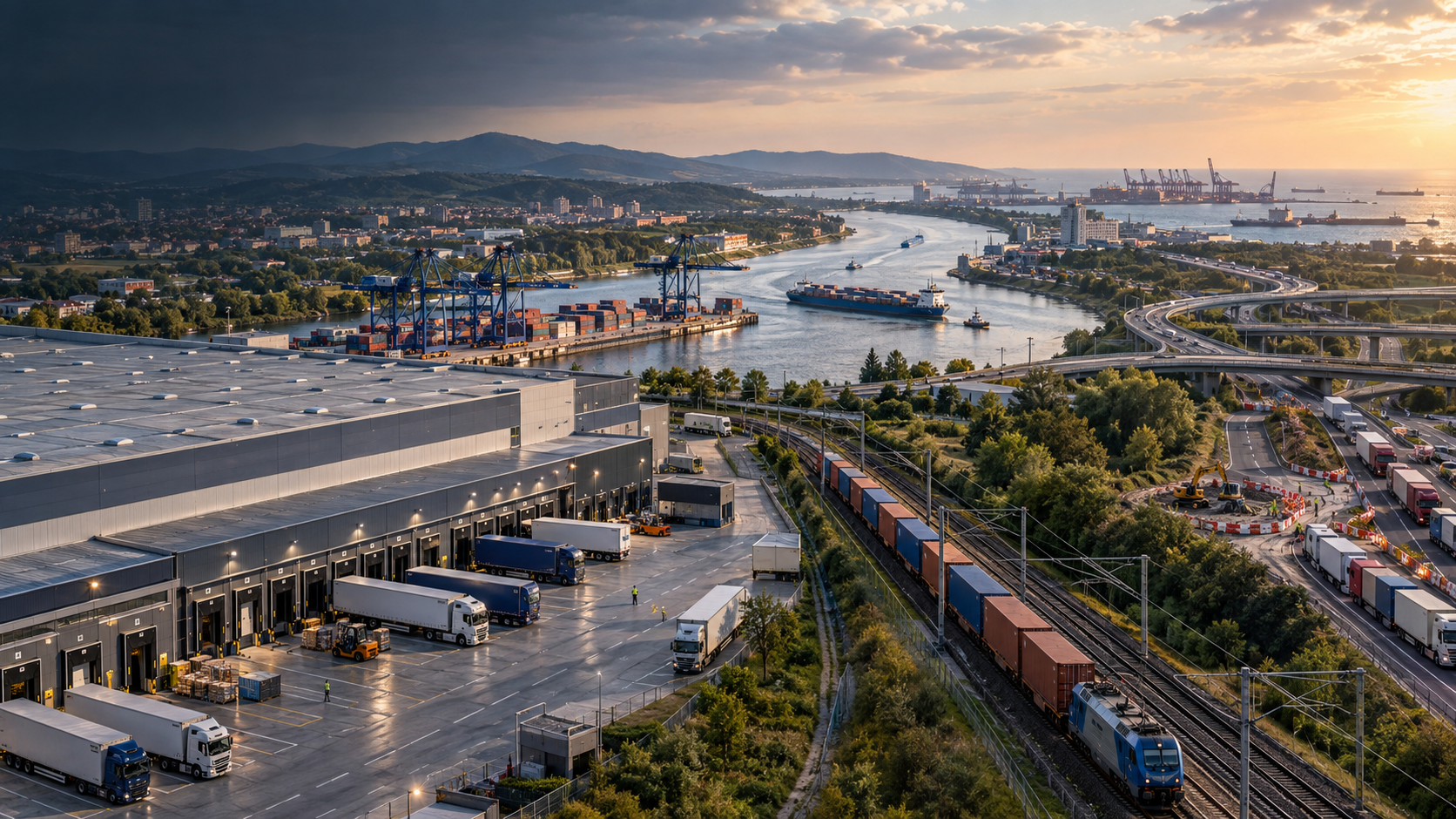
Eastern Europe's new logistics axis: From cost center to strategic backbone of Europe – Creative image on the topic, with AI: Xpert.Digital
Eastern Europe's new logistics centers: Poland, Romania and Bulgaria in focus
E-commerce and nearshoring: How Eastern Europe is changing the logistics landscape
From cost reduction to efficiency: Eastern Europe's transformation in the logistics sector
Eastern Europe has transformed in recent years from a simple cost-cutting location into a strategic backbone for the entire European logistics sector. The region, once primarily seen as an extension of Western European industry, has become a dynamic network of logistics parks, distribution centers, and high-performance transport corridors. The central economic premise is that future investments will be determined not only by low wages, but above all by a reliable combination of location, throughput, energy supply, qualified personnel, and political stability. These changes are not only the result of increasing trade volumes and the restructuring of industrial supply chains, but also of geopolitical risks and the reconstruction of Ukraine. The challenges and opportunities arising from this development are multifaceted and require a rethinking of logistics planning. The focus is increasingly shifting from pure efficiency to controlled redundancy to ensure delivery capability in a rapidly changing global environment.
Whoever controls the corridors will control Europe's ability to deliver goods in the future: The silent reorganization of trade flows
Eastern Europe's logistics infrastructure is undergoing a profound structural transformation. The image of a region primarily serving as a cost-effective extended workbench for Western Europe is no longer accurate. A network of logistics parks, distribution centers, ports, rail terminals, and cross-border transport corridors is emerging between the Baltic, Adriatic, and Black Seas, gaining importance for the supply security of the entire European Union. This development is driven not only by increasing trade volumes but also by the restructuring of industrial supply chains, the expansion of online commerce, geopolitical risks, the reconstruction of Ukraine, and the strategic enhancement of north-south connections.
However, this development is neither uniform nor without contradictions. Poland and the Czech Republic already possess large, professional logistics real estate markets and close ties to Germany. Romania is growing into a significant production, distribution, and Black Sea hub. Bulgaria connects the EU single market with Turkey, Greece, and the western Black Sea region. The western Balkan states, in turn, are gaining importance as a future enlargement and transit region, but continue to suffer from border delays, institutional friction, and incomplete infrastructure. Eastern Europe should therefore not be understood as a single market, but rather as a tiered system of logistics areas at varying stages of development.
The central economic thesis is this: The next wave of investment will not be determined by the lowest wages, but by the most reliable combination of location, throughput, energy supply, personnel, digital management, and political predictability. Simply building warehouses does not create a competitive logistics hub. Only the interplay of real estate, transport modes, customs processes, data infrastructure, and robust supply chains creates a productive hub.
Periphery locations become strategic interfaces
Eastern Europe's geographical location has long been ambivalent. On the one hand, the region lies between the major consumer and industrial centers of Western Europe, the ports of the Baltic, Adriatic, and Black Seas, and the markets of Turkey and the Middle East. On the other hand, many transport networks were historically more oriented towards national capitals or east-west connections than towards cross-border north-south axes. Differing technical standards, fragmented highways, weak rail connections, and slow border crossings limited the economic benefits of this location.
These weaknesses are now, in some cases, becoming arguments for investment. Companies are recognizing that additional corridors not only reduce costs but also lessen dependencies. The pandemic, the blockade of certain sea lanes, Russia's war of aggression against Ukraine, and repeated disruptions to global supply chains have highlighted the value of alternative routes. A location in Romania, Bulgaria, Poland, or the Western Balkans is therefore no longer evaluated solely based on its distance from a sales market. Increasingly, the decisive factor is whether it functions as a fallback, buffer, or consolidation point in multiple scenarios.
This shifts the logic from maximum efficiency to controlled redundancy. Companies sometimes accept higher ongoing costs in exchange for improved delivery capability, shorter response times, and a second procurement or distribution option. This risk premium benefits Eastern Europe. The region can combine proximity to production, comparatively competitive costs, and access to the EU single market. At the same time, it forces investors to conduct a thorough site assessment, because a good geographical location does not guarantee a reliable, real-world connection.
Poland sets the standard, the southeast is catching up
The Eastern European logistics real estate market is characterized by a significant maturity gap. With more than 36 million square meters of modern warehouse and industrial space projected for 2025, Poland represents by far the largest platform in the region. The country benefits from its proximity to Germany, a large domestic market, efficient motorway networks, several strong metropolitan areas, and its role as a bridge to the Baltic states and Ukraine. Warsaw, Upper Silesia, Central Poland, Poznań, and Wrocław have developed into distinct logistics clusters. This market depth allows for large speculative projects, although developers are increasingly focusing on pre-leasing due to higher interest rates and increased construction costs.
Romania follows with approximately eight million square meters of modern industrial and logistics space by the end of 2025, though on a different scale but with high momentum. Demand for space reached more than 1.2 million square meters in 2025. Vacancy rates around four percent and prime rents in the range of approximately €4.50 to €5.00 per square meter per month indicate a market that, despite economic uncertainty, has a solid tenant base. Bucharest dominates, but Timișoara, Cluj-Napoca, Brașov, Ploiești, and Constanța are gaining ground.
Bulgaria is smaller and more concentrated in Sofia and the Plovdiv region. However, the convergence of industrial and logistical functions is particularly evident there. The Thracian Economic Zone around Plovdiv connects production facilities, suppliers, storage areas, and the highway corridor to Turkey. Sofia remains the central consumption and distribution hub. Ruse, Varna, Burgas, Stara Zagora, and Shumen can benefit from specific corridor, port, industrial, or energy connections. In the Western Balkans, the stock of modern industrial sites is smaller, meaning that individual large-scale projects can significantly alter the market structure more dramatically than in Poland or Romania.
Retail chains are building their own infrastructure
The shift is particularly evident in the investments of large retailers. Modern retail networks require not only branches, but also temperature-controlled warehouses, automated order picking, high turnover rates, and precise inventory data. A distribution center is therefore not a secondary, ancillary function, but rather the operational prerequisite for market entry, expansion, and stable prices.
Lidl's logistics and distribution center, currently under construction in Kiseljak and Lepenica in Bosnia and Herzegovina, illustrates this scale of the project. Spanning approximately 60,000 square meters, it represents an investment of around €100 million. It lays the foundation for a nationwide network of stores and simultaneously signals that an international retail group sees sufficient demand potential to justify a long-term infrastructure investment. The economic impact extends beyond the building itself: local producers potentially gain access to standardized supply chains, transport providers benefit from more predictable volumes, and competing retailers are under pressure to modernize their own systems.
The repeated expansions of the Kaufland site in Stryama near Plovdiv also demonstrate how logistics infrastructure scales with the growth of the retail sector. Following earlier major investments, the facility was expanded to include a deep-freeze zone with additional pallet spaces. At the end of 2023, a significantly larger expansion phase with an investment volume of 64 million leva was announced. Such projects don't occur in isolation. They attract packaging companies, maintenance services, refrigeration technology providers, software vendors, and regional freight capacities. The logistics hub thus becomes a local productivity center.
Bulgaria is transforming from a transit country to a platform market
Bulgaria possesses several mutually reinforcing locational advantages. The country lies at the crossroads of Central Europe, the Black Sea, Greece, and Turkey. Since the abolition of border controls at the EU's internal land borders on January 1, 2025, Bulgaria has been fully integrated into the Schengen Area. Furthermore, it has used the euro since January 1, 2026. For logistics investors, these steps reduce transaction costs, eliminate some of the exchange rate and settlement burdens, and facilitate the integration of Bulgarian locations into regional networks.
The decisive progress lies less in a single prestige project than in the consolidation of several functions. Sofia concentrates purchasing power, workforce, and international business structures. Plovdiv connects industry and distribution. Burgas and Varna provide access to the Black Sea. Ruse forms a Danube and border hub with Romania. The axis towards Kapitan Andreevo remains of central importance for trade with Turkey and beyond. At the same time, northeastern Bulgaria offers land reserves and potential for specialized warehousing, agricultural, and energy clusters.
The planned warehouse and logistics base of solar system distributor AmonRa Energy in the Shumen Industrial Park exemplifies the connection between the energy transition and logistics. Solar modules, inverters, mounting systems, and battery storage require regionally available inventory, technical quality assurance, and rapid delivery. A traditional warehouse is thus transformed into a building block of a new industrial value chain. For Bulgaria, this presents an opportunity not only to handle goods but also to consolidate technical services, pre-assembly, repairs, project logistics, and regional distribution.
Romania connects the single market, the Danube and the Black Sea
Romania's logistical advancement is based on its size and versatility. The country boasts a large domestic market, a broad industrial base, the Danube River, the Black Sea port of Constanța, and borders with Ukraine, Moldova, Hungary, Serbia, and Bulgaria. This combination makes Romania simultaneously a production location, a sales market, a transit country, and a geopolitical hub.
The port of Constanța gained significant importance after 2022 because Ukrainian agricultural and export flows required alternative routes. In 2023, cargo throughput reached a record high of approximately 92.6 million tons. Subsequently, the volume declined to around 77.5 million tons in 2024 and approximately 67 million tons in 2025, as some Ukrainian traffic shifted back to other routes. This decline is not evidence of strategic insignificance, but rather illustrates how volatile geopolitically driven additional volumes can be. The lesson for operators and investors is to develop capacities in such a way that they remain economically viable even with changing trade flows.
Constanța can secure its position primarily through closer integration of its port, rail, road, Danube river, and hinterland terminals. Bottlenecks in shunting capacity, access routes, digital processes, or Danube shipping directly impact competitiveness. Romania therefore needs not only additional land but also reliable corridors towards Bucharest, Hungary, Bulgaria, Moldova, and Ukraine. Full Schengen integration improves passenger transport and reduces friction at internal EU borders, but it does not replace investments in bridges, railway lines, and terminal-adjacent infrastructure.
The western Balkan states will become the next growth area
Serbia, Bosnia and Herzegovina, North Macedonia, Albania, Montenegro, and Kosovo form a heterogeneous logistics region of growing strategic importance. Located between EU member states, the region connects the Adriatic Sea with the Danube and Black Sea regions, as well as Central Europe with Greece and Turkey. However, its economic integration is hampered by multiple borders, small national markets, differing administrative practices, and, in some cases, weak rail connections.
This is precisely why modern distribution centers can trigger significant productivity gains. They allow for the consolidation of imports, stabilize product availability, and create the foundation for larger retail networks. The Lidl project in Bosnia and Herzegovina is a particularly striking example of this. It also demonstrates a typical market entry strategy: first, land, central logistics, and several store locations are prepared before the network is launched on a larger scale. The high initial investment serves to reduce subsequent unit costs and ensure a consistent level of service.
The European Union is supporting the Western Balkans between 2024 and 2027 with a growth facility of up to six billion euros, of which two billion euros are non-repayable grants and four billion euros are subsidized loans. Not every euro will go toward transport infrastructure, but the facility is increasing the pressure for reform and investment. Crucially, better roads and railways will depend on faster customs procedures, mutually recognized documents, and digital pre-declarations. Without this "soft infrastructure," a truck could still be stuck at the border for hours on a new highway.
Roads remain dominant, but not without alternatives
Road freight transport remains the backbone of Eastern European logistics. At the EU level, around 1,869 billion tonne-kilometers were transported by road in 2024, slightly more than in the previous year. This dominance is due to its flexibility, dense networks, and the ability to directly connect factory gates, warehouses, and branches. For time-critical deliveries, general cargo, food, and retail, trucks are virtually irreplaceable in the short term.
This strength also creates structural risks. Congestion, driver shortages, toll costs, border waiting times, and increasing emissions requirements drive up costs. This dependence is particularly problematic where rail terminals are lacking or the rail infrastructure is slow and unreliable. A logistics park without an efficient rail connection may appear attractive in the short term, but in the long run, it binds the user to road transport.
Therefore, what makes economic sense is not artificial competition between road and rail, but a division of labor. Trucks handle pre- and post-haulage as well as time-critical transport; rail carries out planned long-distance and mass transport; ports and inland waterways extend the reach. A prerequisite is terminals that organize the transfer between modes of transport quickly, digitally, and cost-effectively. Eastern Europe can make a significant leap forward in this area if new logistics areas are planned multimodally from the outset, instead of adding rail connections later at great expense.
The rail system determines the next level of productivity
Many Eastern European rail networks have a large geographical reach, but lack the technical and operational quality required by modern supply chains. Slow sections, the need for upgrades, insufficient electrification, limited train lengths, incompatible signaling systems, and bottlenecks at border crossings reduce their competitiveness. Furthermore, cross-border freight transport requires not only infrastructure, but also coordinated timetables, locomotive availability, and reliable train paths.
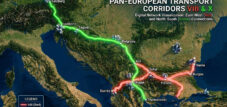
The expansion of the trans-European transport networks begins here. The TEN-T regulation, renewed in 2024, structures the European network via nine transport corridors and binding target horizons. For Eastern Europe, the connections between the Baltic Sea, the Adriatic Sea, the Black Sea, the Balkans, and Central Europe are particularly relevant. Corridor VIII, between the Bulgarian Black Sea coast, North Macedonia, and Albania, has special strategic value because it is intended to create a continuous east-west connection across the southern Balkans. Bulgaria and North Macedonia have reaffirmed their commitment to its continued construction, but financing, construction progress, and technical coordination remain challenging.
The economic impact of improved rail infrastructure extends beyond mere savings in transport costs. It expands the catchment area of ports, increases the attractiveness of production sites, and reduces dependence on a shortage of drivers. Furthermore, it facilitates the transport of heavy industrial goods, containers, and military-relevant cargo. The downsides include high initial investments, lengthy approval processes, and the risk that individual national sections will be completed while cross-border gaps remain.
The Baltic Sea, the Adriatic Sea and the Black Sea are moving closer together
Eastern Europe's ports are developing into competing yet complementary gateways. Gdańsk handled approximately 80.4 million tons of cargo in 2025, thus consolidating its position among the major European ports. Following its exceptional peak year of 2023, Constanța still managed around 67 million tons in 2025. On the Adriatic coast, ports such as Koper, Rijeka, and Trieste compete for hinterland traffic to Central Europe. Varna and Burgas handle smaller volumes but can be strategically important for Bulgaria, the southern Balkans, and certain Black Sea routes.
For shippers, port size alone is not the deciding factor. Crucial factors include ferry frequency, terminal productivity, customs clearance, storage capacity, rail connections, and the availability of empty containers. A smaller port can be more economical for certain freight flows if hinterland transport is faster and more predictable. Conversely, a large port becomes less attractive if access routes or rail hubs are congested.
The growing importance of north-south axes is changing the investment landscape. Historically, many networks were oriented towards west-east connections. Today, the value of corridors between Poland, Slovakia, Hungary, Romania, Bulgaria, Greece, and the Adriatic Sea is increasing. The Three Seas region alone estimates its investment needs for the transport sector at approximately €120 billion. This scale demonstrates that individual projects are insufficient. What is needed is a cohesive network that coordinates investments in ports, roads, rail, energy, and digital infrastructure.
The Danube remains an underestimated resource
The Danube is the natural heavy-load corridor of Southeast Europe, but its economic potential is not fully realized, given its geographical reach. It connects Germany and Austria with Slovakia, Hungary, Croatia, Serbia, Bulgaria, Romania, and the Black Sea. Bulk goods, agricultural products, building materials, heavy cargo, and certain container shipments can be transported energy-efficiently by water.
The weaknesses are well-known: fluctuating water levels, bottlenecks, inconsistent port quality, limited digitalization, and sometimes slow transshipment processes. In the first half of 2024, approximately 10.2 million tons of cargo were moved on the Danube-Black Sea Canal, slightly less than in the same period of 2023. Such fluctuations demonstrate that inland navigation cannot be considered a fixed capacity. Climatic risks must be factored into fleet planning, draft, inventory levels, and alternative routes.
Nevertheless, from an economic perspective, the Danube is too valuable to be treated merely as a niche transport mode. Modern inland ports can combine industrial areas, rail connections, customs functions, and energy logistics. For Bulgaria, Ruse, Lom, and Vidin are relevant; for Romania, among others, Galați, Brăila, and Giurgiu; and for Serbia, Belgrade, Novi Sad, and Pančevo. Investments in navigation channels, bridges, terminals, and digital river information not only increase throughput but also create resilience to disruptions on road and rail.
LTW Intralogistics Solutions

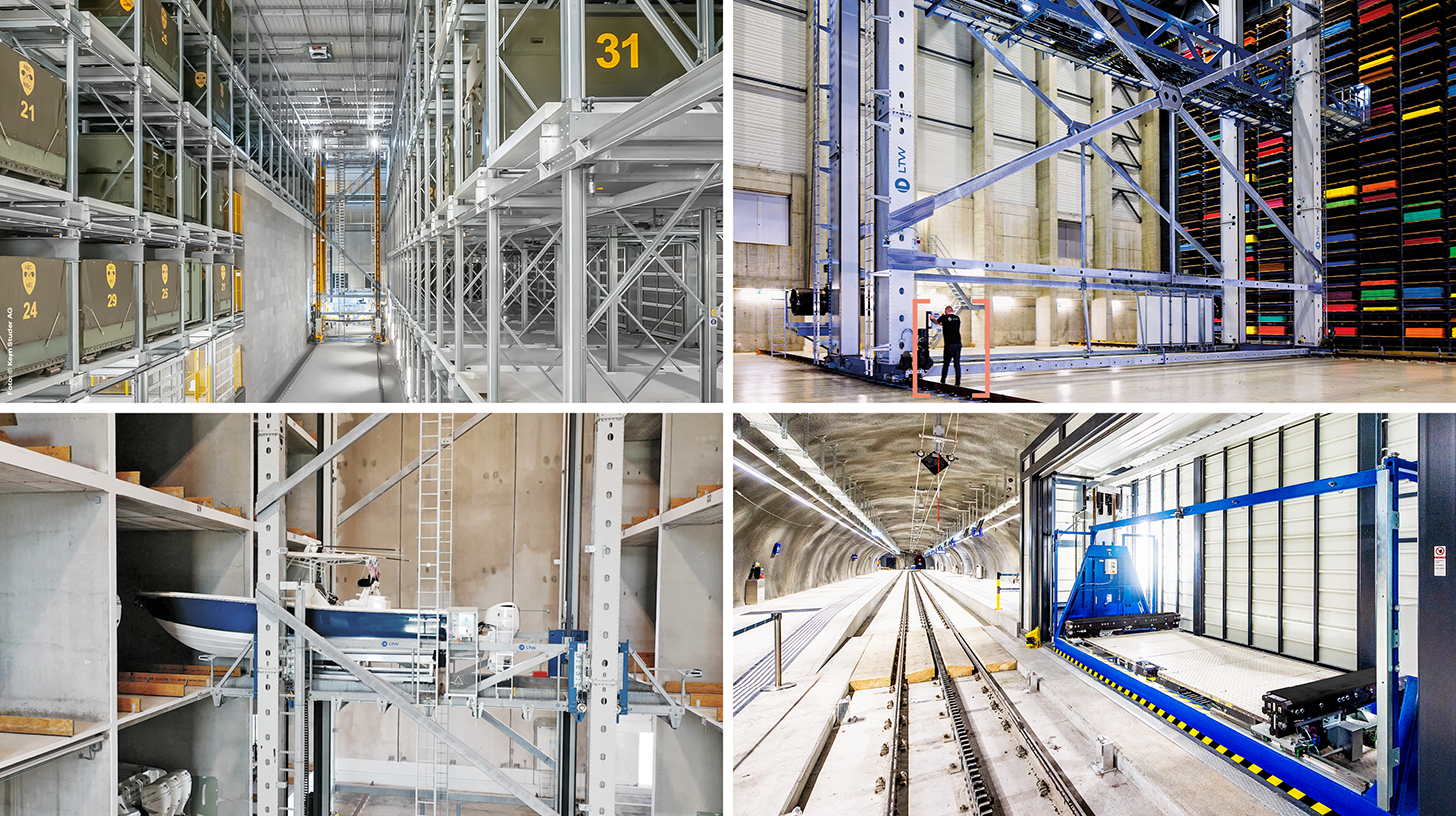
LTW Intralogistics – Engineers of Flow - Image: LTW Intralogistics GmbH
LTW offers its customers not individual components, but integrated complete solutions. Consulting, planning, mechanical and electrotechnical components, control and automation technology, as well as software and service – everything is networked and precisely coordinated.
In-house production of key components is particularly advantageous. This allows for optimal control of quality, supply chains, and interfaces.
LTW stands for reliability, transparency, and collaborative partnership. Loyalty and honesty are firmly anchored in the company's philosophy – a handshake still means something here.
Related to this:
Nearshoring remains selective rather than automatic
Warehouses are becoming technological production systems
The economic quality of a logistics location can no longer be measured solely by warehouse space and distance to the motorway. Modern centers operate with warehouse management systems, automated conveyor systems, robotics, sensors, digital twins, and precise inventory forecasting. In refrigerated and pharmaceutical logistics, seamless temperature monitoring and regulatory documentation are added. This transforms the property into a cyber-physical production system for the flow of goods.
This development is changing the cost structure. The proportion of simple manual tasks is decreasing relatively, while capital requirements, software expertise, and maintenance demands are increasing. Eastern Europe does not automatically lose its labor cost advantage as a result. Rather, the advantage is shifting to locations that can provide qualified technicians, electricians, data specialists, and process managers. Inexpensive land cannot compensate for a lack of skilled workers or an unstable power supply.
Automation is particularly attractive when high volumes, standardized products, and a limited workforce converge. Retail, parcel logistics, spare parts, and fast-moving consumer goods offer suitable applications. However, with highly fluctuating product ranges or uncertain quantities, oversized technology can tie up capital. Successful investors therefore combine modular buildings, flexible conveyor technology, and scalable software. This is especially relevant for emerging markets in the Balkans, where demand forecasts can be subject to greater uncertainty.
E-commerce is increasing the pressure on regional networks
In 2024, companies in the European Union generated approximately 19.5 percent of their revenue through e-sales. While this average reflects significant differences between sectors and countries, the trend is clear: digital orders demand higher delivery frequencies, improved inventory information, and efficient returns processes. This presents a dual opportunity for Eastern Europe. The region is both a sales market and a cost-effective location for regional fulfillment and returns centers.
The logistical challenge lies in the last mile. Large distribution centers at highway interchanges are efficient for national stockpiling, but they don't solve the problem of delivery in growing metropolitan areas or sparsely populated regions. Parcel lockers, micro-depots, regional transshipment points, and data-driven route planning are gaining importance. At the same time, operators have to deal with cash on delivery, differing payment habits, cross-border returns, and inconsistent address quality.
In smaller markets, a single national warehouse may not offer sufficient economies of scale. Regional networks connecting countries such as Bulgaria, Romania, Greece, and parts of the Western Balkans are therefore economically attractive. However, their implementation depends on stable transit times and streamlined customs procedures. Any additional border uncertainty increases the required safety stock and diminishes the advantage of centralized warehousing.
Nearshoring remains selective rather than automatic
The relocation of production closer to European markets is often portrayed as an almost inevitable boom for Eastern Europe. This view is too simplistic. Nearshoring is happening, but it is not a uniform trend. Companies primarily relocate where transport costs, delivery times, political risks, and quality requirements justify building additional European capacity. Energy-intensive or extremely labor-intensive manufacturing, on the other hand, often remains cheaper in other parts of the world.
Eastern Europe is particularly attractive for automotive suppliers, electrical engineering, mechanical engineering, household appliances, food processing, pharmaceuticals, packaging, and selected energy technologies. Logistics is becoming a key selection criterion. A factory requires timely deliveries, spare parts supply, export capacity, and, if necessary, temperature-controlled or hazardous materials-suitable infrastructure. Regions with highways, rail terminals, reliable energy, and available industrial land can therefore achieve a significant location premium.
The greatest benefits arise when nearshoring builds regional value chains, rather than simply relocating final assembly. Local suppliers, toolmaking, maintenance, packaging, software, and technical logistics increase investor loyalty. Without such networks, an investment remains mobile and can be relocated again if costs change. Economic policy should therefore not only subsidize new business locations but also promote cluster development, training, and cross-border supply relationships.
Staff shortages are becoming a severe capacity limit
The shortage of drivers and technical specialists is among the biggest risks to growth. Heavy truck drivers were reported as a shortage occupation in 21 European countries in 2024. Eastern European transport companies are doubly affected: they serve large parts of the European market but continue to lose employees to better-paying jobs abroad. Demographic decline and an aging workforce exacerbate the problem.
Higher wages are unavoidable, but not enough. Working conditions, predictable return home, secure parking, digital dispatching, and modern vehicles all influence the attractiveness of the profession. Companies that focus solely on low personnel costs get caught in a spiral of employee turnover, quality problems, and unused vehicle capacity. Automation in the warehouse can alleviate certain bottlenecks, but it doesn't completely replace drivers or maintenance personnel.
For locations, this means that labor availability must be examined just as thoroughly as transport connections. A logistics park in an economically weak region might offer inexpensive land but have too few workers in its catchment area. Commuter connections, company buses, training programs, and the integration of foreign workers thus become part of the infrastructure strategy. In the long run, productivity per hour worked is more decisive than the nominal hourly wage.
Energy and decarbonization are changing the calculations
Logistics properties are becoming energy consumers and increasingly also energy producers. Large roof areas are suitable for photovoltaics, battery storage systems can smooth out peak loads, and electrified vehicle fleets require high-performance grid connections. Cold storage facilities, automated warehouses, and computing infrastructure simultaneously increase electricity demand. The availability of grid connection capacity can therefore become more important than the land price.
From 2027, the separate European Emissions Trading System (ETS2) for fuels used in road transport, buildings, and other sectors will become fully effective. Direct obligations lie with fuel suppliers, but costs can be passed on to transport companies and shippers. This will increase the economic incentives for more efficient vehicles, alternative drive systems, better capacity utilization, and a shift of suitable transport to rail or waterways.
The transition will proceed at different speeds regionally. Battery-electric trucks are initially particularly suitable for predictable commuter traffic and regional distribution with return to the depot. International long-haul routes require a dense, high-performance charging network, robust grids, and coordinated rest periods. Biofuels, renewable diesel, and potentially hydrogen can play transitional or specialized roles. Crucially, technological openness without arbitrariness is essential: investments must be aligned with realistic driving profiles, energy prices, and infrastructure.
Borders remain the most expensive invisible storage facilities
Cross-border transport incurs high costs not only due to mileage but also due to uncertainty. When waiting times at a border fluctuate significantly, companies must plan for additional vehicles, driver time, and safety stock. A stationary truck effectively becomes an expensive mobile warehouse. This effect is particularly pronounced in the Western Balkan states because supply chains can cross multiple customs and administrative borders over short distances.
Fast-track procedures and enhanced customs cooperation between the European Union and its Western Balkan partners are therefore more economically significant than their public profile suggests. Advance notifications, risk assessment, joint inspections, and mutual data access can reduce processing times without compromising security requirements. However, these benefits only materialize if systems are interoperable and sufficient staff are available at night and on weekends.
The full Schengen membership of Bulgaria and Romania eliminated border controls for people at the EU's internal land borders from 2025 onwards. However, operational, tax-related, and security-related checks remain possible for freight transport. Schengen is therefore an important boost to productivity, but not a guarantee of completely seamless logistics. Companies should measure actual transit times instead of automatically equating regulatory milestones with guaranteed time savings.
Public billions need private discipline
Infrastructure development is largely financed by European funds. For EU cohesion policy, €392 billion was originally available for the period 2021 to 2027; together with national co-financing, the programmed framework approaches half a trillion euros. The Cohesion Fund supports, in particular, economically weaker member states with environmental and TEN-T investments. Additional funding comes from the Connecting Europe Facility, national programs, development banks, and public-private financing.
Money alone, however, does not guarantee a functioning corridor. Large-scale projects frequently suffer from planning changes, permitting problems, cost overruns, and political discontinuity. In five European mega-transport projects examined, the average delay was recently 17 years. For the logistics industry, a delayed section is particularly problematic because network effects only materialize with continuous usability. An almost completed rail link can be far less economically valuable than several smaller, but fully operational, improvements.
Public investments should therefore be prioritized according to their measurable impact on bottlenecks. This includes missing border sections, congested junctions, bridges with weight restrictions, port access roads, digital signal boxes, and multimodal terminals. Private investors, in turn, must bear demand, energy, and rental risks instead of relying on permanently rising land values. Pre-leasing, modular construction, and clear energy contracts are gaining importance in a higher interest rate environment.
Geopolitics turns logistics into security infrastructure
Since 2022, transport infrastructure in Eastern Europe has no longer been evaluated solely according to trade and climate criteria. Roads, railways, ports, bridges, and transshipment points must also support military mobility, humanitarian aid, and the supply of critical industries in times of crisis. The European Union aims for a more integrated military mobility area by the end of 2027. This requires multimodal networks, standardized procedures, and infrastructure suitable for heavy loads.
This dual-use perspective is changing investment decisions. A bridge with a higher load-bearing capacity, a longer passing loop, or a more robust terminal can have both civilian and security policy benefits. Poland, Romania, and the Baltic states are particularly important in this regard, but Bulgaria and the Western Balkans are also relevant for southeastern corridors. The economic advantage lies in additional funding and higher priority; the risk lies in conflicting political objectives and potential competition for capacity.
The reconstruction of Ukraine will further increase this importance. Building materials, machinery, energy facilities, vehicles, and consumer goods will be transported via Poland, Slovakia, Hungary, Romania, and Black Sea routes. At the same time, the timing remains uncertain. Those who build today solely for a short-term reconstruction boom face a high risk of underutilization. More sensible are facilities that are already profitable with regional customers and can scale up to meet additional demand from Ukraine.
Not every logistics park becomes a winner
The strong investment history should not obscure the fact that misallocations are possible. In emerging regions, properties are often advertised with the promise of future highways, rail connections, or industrial zones whose completion is uncertain. At the same time, municipalities may designate areas for development without providing sufficient electricity, water, or transportation infrastructure. A low initial price is then negated by high subsequent investments.
The greatest risk lies in confusing geographic centrality with operational accessibility. A location may theoretically be able to reach several capital cities within a few hours, but be unreliable due to border delays, truck bans, congested ring roads, or a lack of drivers. Similarly, a warehouse may look modern, but fail to meet the requirements of demanding users in terms of floor load capacity, ceiling height, fire protection, cooling, or data connectivity.
Market risks also arise from speculative overproduction. In mature Polish submarkets, large portfolios and cyclical waves of new construction can temporarily put pressure on rents and vacancy rates. In smaller markets, even a single project can lead to a noticeable increase in supply. Therefore, investors should not only consider national growth rates, but also examine specific user profiles, lease terms, creditworthiness, and alternative uses for the property.
Winners are corridors with multiple sources of demand
Locations that are not dependent on a single traffic flow are particularly robust. Ideally, a logistics hub should connect local consumer demand, industrial supply, international transit, and at least one additional specialized sector. This could include cold chains, pharmaceuticals, agricultural logistics, spare parts, energy components, or e-commerce. Multiple sources of demand smooth out cycles and improve infrastructure utilization.
Poland already meets this requirement in several regions. Romania can expand it between Bucharest, the western industrial centers, and Constanța. Bulgaria has opportunities along the Sofia–Plovdiv–Turkey, Sofia–Thessaloniki, Ruse–Bucharest, and Burgas/Varna–Black Sea axes. Serbia benefits from its location between Central Europe, the Adriatic, the Aegean, and the Black Sea, but needs to further improve border and rail processes. Bosnia and Herzegovina needs more integrated national and regional networks, but can be professionalized more quickly through large-scale trade investments.
Not every city needs to become an international hub. Regional specialization is often more efficient. Shumen, for example, can leverage its energy and agricultural resources, Ruse its Danube and Romania, Plovdiv its industry and retail trade, and Constanța its port and heavy logistics. Trying to establish the same functions everywhere would scatter capital and prevent cluster formation.
Capital follows reliability, not announcements
For institutional investors, the attractiveness of Eastern European logistics properties depends on predictable returns, financing costs, legal enforceability, and exit opportunities. Low vacancy rates and indexed leases are positive, but they must be weighed against currency, interest rate, construction, and tenant concentration risks. Bulgaria's adoption of the euro since 2026 has eliminated some of the currency-related friction. In non-EU and non-euro countries, the risk premium remains higher.
Sustainability requirements are influencing financing and valuation. Buildings with good insulation, photovoltaics, heat pumps, smart metering, and pre-installed charging infrastructure are not only more environmentally friendly but also more commercially resilient. Users are paying closer attention to total operating costs, while banks and funds are incorporating energy quality into their decisions. As a result, older buildings without modernization prospects may be subject to a valuation discount.
The most important indicator in the long term is not the newly constructed area, but its productive use. A fully leased, energy-efficient, and multimodally connected center generates stable cash flows and regional added value. A speculative project without guaranteed demand, on the other hand, remains an expensive gamble on future infrastructure. Especially in markets with high political scrutiny, investors should distinguish between announced volume, actual start of construction, and operational commissioning.
The competition will be decided by data
Physical infrastructure remains indispensable, but its performance is increasingly determined by data. Real-time information on arrival times, slot bookings, customs status, inventory levels, and traffic conditions reduces waiting times and enables better capacity utilization. Ports and terminals that exchange information only via separate systems or manual documents are losing out to digitally integrated competitors.
Eastern Europe can, in some cases, skip older stages of development. New systems can be equipped directly with cloud systems, sensors, automatic license plate recognition, and standardized interfaces. This reduces error rates and simplifies the management of regional networks. At the same time, the dependence on cybersecurity, stable telecommunications networks, and qualified personnel is increasing.
The biggest hurdle is often not the technology, but institutional fragmentation. Freight forwarders, ports, railways, customs authorities, and warehouse operators use different data models and protect their own information. From an economic policy perspective, open standards, binding interfaces, and clear rules for data use are therefore essential. Digital corridors can significantly increase the benefits of physical investments, while a lack of interoperability slows down even modern facilities.
A realistic agenda until 2030
By 2030, Eastern Europe is expected to have significantly more modern logistics space, more efficient port and terminal capacities, and improved main transport corridors. However, this expansion will not close all historical gaps. Cross-border rail projects, major bridges, and complex corridors, in particular, remain susceptible to delays. At the same time, decarbonization, skills shortages, and digitalization are increasing the investment needs at each location.
Governments should prioritize continuous corridors over national prestige projects. A missing section of border can diminish the benefits of hundreds of modernized kilometers. Planning and permitting capacity, transparent procurement, maintenance budgets, and digital processes are just as important as new construction. In the Western Balkans, physical projects must be consistently linked to customs and administrative reforms.
For logistics companies, the challenge is to design networks with greater resilience and overall cost efficiency. This includes multiple route options, realistic cut-off time data, tiered inventory levels, and contracts for energy and transport capacity. For real estate developers, modular spaces, energy connections, automation capabilities, and multimodal options are key quality features. For industrial companies, the crucial question is whether a location is not only cost-effective today, but will still be viable in terms of workforce, energy, and climate in ten years' time.
Europe's new center is emerging at its old edges
Eastern Europe's logistics infrastructure is more than just a consequence of growing warehousing investments. It forms the material basis of a changing European economic geography. Poland demonstrates how a large market can develop an independent logistics platform through infrastructure, industry, and proximity to Western Europe. Romania connects the single market, the Danube, and the Black Sea. Bulgaria gains strategic depth through Schengen, the Euro, industrial clusters, and its location near Turkey. The Western Balkans are being gradually brought closer to the single market through trade investments and European integration.
The region will not automatically emerge as a winner, however. Its advantages could be eroded by project delays, driver shortages, poor rail connections, energy bottlenecks, and administrative hurdles. The quality of the connection is crucial, not the number of announcements. The next step in development is to link individual halls, roads, and terminals into integrated corridors.
The provocative truth, therefore, is this: Europe's future supply capacity will depend more heavily on Plovdiv, Constanța, Gdańsk, Belgrade, Kiseljak, or Ruse than many corporate headquarters in the West are willing to admit. These locations will not replace Rotterdam or Duisburg, nor will they replace the major German industrial clusters. However, they will expand the network with urgently needed capacity, alternatives, and market proximity. Anyone who treats their development as merely a matter of catching up underestimates the strategic shift. Conversely, anyone who plans infrastructure, data, energy, and personnel together can forge a new economic backbone from Europe's supposed periphery.
Consulting - Planning - Implementation

Konrad Wolfenstein
I would be happy to serve as your personal advisor.
You can contact me at wolfenstein∂xpert.digital or
Just call me on +49 7348 4088 965 .
Your intralogistics experts

Consulting, planning and implementation of complete solutions for high-bay warehouses and automated storage systems - Image: Xpert.Digital
More information here: