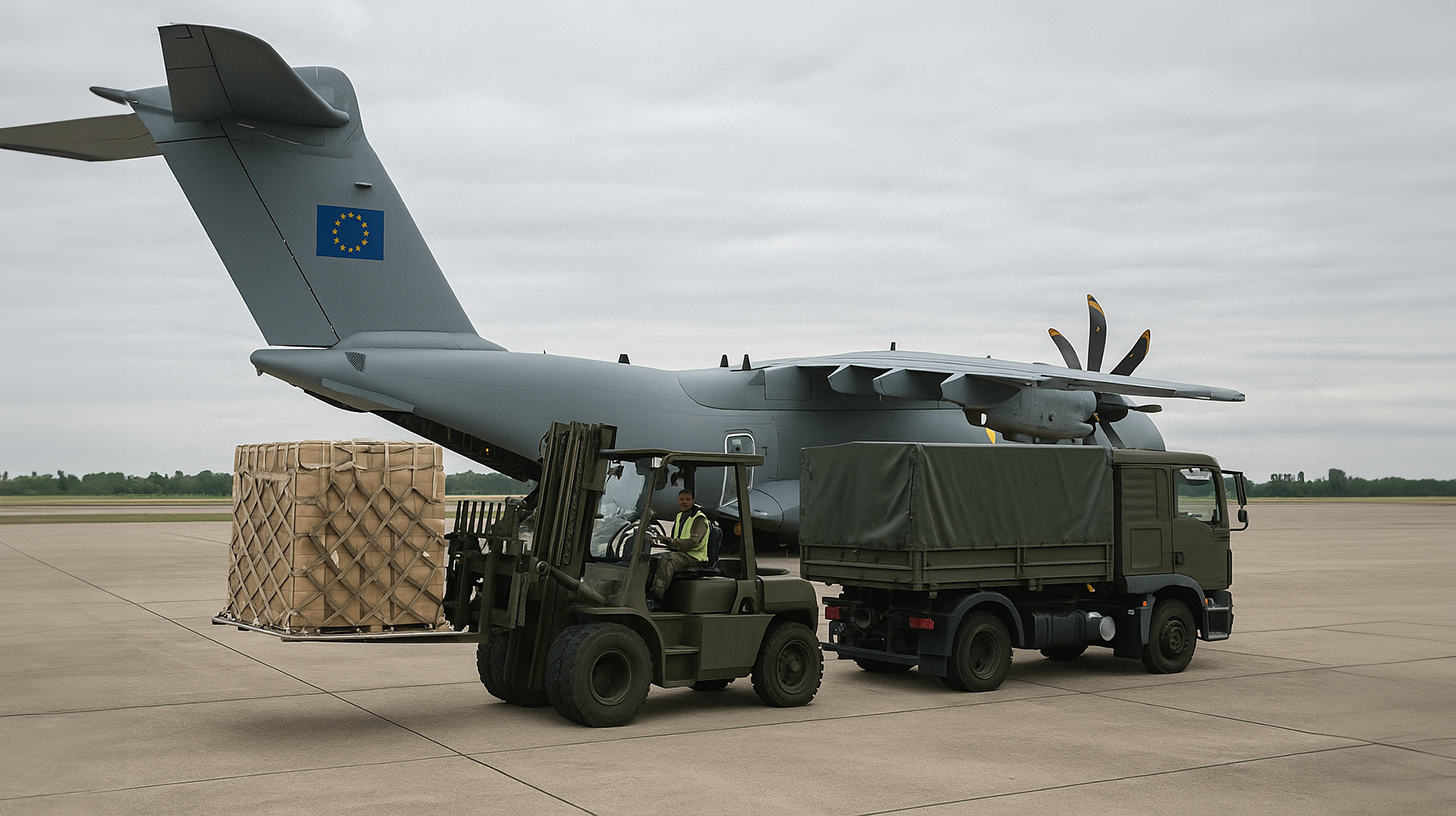
Dual-use logistics for Europe's security: The Multinational Structured Partnership in Logistics (SPiL) – Image: Xpert.Digital
Introduction to modern military logistics as a dual-use system
Czech-German-Hungarian cooperation sets new standards in military logistics – how civilian and military systems can merge
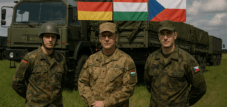
The “Multinational Structured Partnership in Logistics” (SPiL) represents an exemplary model for the development of multinational logistics capabilities in Europe. This initiative, which originally began as German-Hungarian military logistics cooperation and was later expanded to include the Czech Republic, embodies the fundamental principles of modern dual-use logistics.
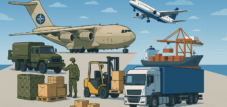
True dual-use logistics involves the strategic use of infrastructure, systems, and capacities for both civilian and military purposes. Unlike traditional dual-use goods, which encompass individual products or technologies, dual-use logistics extends to entire supply systems and transportation networks. This dual use makes it possible to create synergies between civilian economic interests and military defense requirements, thereby increasing both efficiency and resilience.
The SPiL project already demonstrates key elements of such a dual-use approach. The developed capabilities in the area of deployable field depots and medium transport companies are based on modular, standardized systems that can be used for both military exercises and real-world operations. The successful demonstration of these capabilities in multinational exercises such as Steadfast Defender 24, Brave Warrior 24, Vigorous Warrior 24, Clean Care 24, and Grand South 24 illustrates the practical potential of multinational logistics cooperation.
Related to this:

The strategic importance of the enlargement to include Croatia and Slovakia
The planned expansion of the SPiL project to include Croatia and Slovakia, which currently hold observer status, would bring significant benefits to the European security architecture. This expansion is of particular strategic importance given the changed security situation in Europe and the refocusing on national and collective defense.
Geographical diversification and redundancy
As a Mediterranean country, Croatia brings an additional maritime component to the logistics network, significantly increasing flexibility in multinational deployments. The country's strategic location on the Adriatic coast enables alternative supply routes and reduces dependence on single transport routes. This is particularly important given the experience gained from large NATO exercises, which highlighted the need for redundant logistics routes.
Slovakia, as a landlocked country with direct access to NATO's eastern flank, complements the network's geographical coverage. The country boasts a well-developed transport infrastructure and a central location in Central Europe, making it an ideal transit country for eastward operations. The Slovak logistics sector has developed significantly in recent years and could contribute valuable expertise to the multinational network.
Capacity expansion and specialization
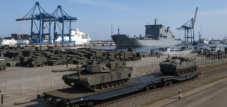
The inclusion of Croatia and Slovakia would significantly expand the overall capacity of the SPiL network. Croatia possesses modern port infrastructure and maritime logistics capabilities, which are essential for amphibious operations and the sea transport of heavy equipment. The country has already demonstrated its willingness to actively participate through its involvement in various NATO exercises.
Slovakia brings its experience from integration into European logistics networks. The country is already a fully integrated NATO member and has continuously modernized its logistics capabilities. Slovak participation would particularly strengthen connections to other Central European logistics networks and improve interoperability with other NATO partners.
Increased resilience and redundancy
The addition of these two countries would significantly increase the resilience of the entire logistics network. Diversifying geographical locations and capabilities would create alternative routes and supply lines that can be activated in the event of a crisis or the failure of individual components. This aligns with the modern requirements for resilient defense logistics as defined in NATO's "New Force Model" strategy.
Related to this:


The transformation to genuine dual-use logistics through private sector cooperation
Developing SPiL into a comprehensive dual-use logistics system through increased collaboration with the private sector holds enormous potential for efficiency gains, capacity expansions, and cost savings. The systematic integration of logistics experts and logistics companies would elevate the project to a new level of quality.
Efficiency gains through civilian expertise
Integrating private logistics companies brings proven practices from the civilian sector into military logistics systems. Companies like Deutsche Bahn, DHL, Schenker, and other major logistics providers have decades of experience in optimizing transport chains, warehousing, and resource management. This expertise can create direct added value for military logistics operations.
Modern information technologies and data analysis systems from the civilian logistics sector enable more precise planning and control of material flows. The integration of GPS tracking, automated warehouse management systems, and predictive analytics can significantly increase the efficiency of military logistics operations. Studies show that using civilian logistics service providers can result in cost savings of up to 20 percent.
Capacity expansion through resource pooling
Cooperation with the private sector provides access to significantly greater capacities than can be maintained solely by the military. Germany, as a key transit and hub nation, already relies on civilian logistics capacities to meet the requirements of Host Nation Support. The systematic integration of these capacities into multinational logistics networks would exponentially increase the efficiency of the entire system.
Private logistics companies possess flexible vehicle fleets, modern warehousing technologies, and specialized transshipment facilities that can be rapidly mobilized for military purposes when needed. This flexibility is particularly valuable for handling peak loads during large-scale exercises or in the event of an emergency. The modular design of modern logistics systems allows for the seamless integration of civilian and military components.
Cost savings through economies of scale
The dual use of logistics infrastructure and systems enables significant cost savings through economies of scale. Instead of operating separate military and civilian logistics systems in parallel, shared infrastructure can distribute fixed costs between both sectors. This is particularly relevant for cost-intensive infrastructure elements such as field fuel depots, transport terminals, and warehouses.
The German Armed Forces have already had positive experiences with public-private partnerships in logistics. The conclusion of the first full-service provider contract for "accommodation during deployment" demonstrates the potential of such collaborations. Extending this approach to multinational logistics networks would unlock further synergies.
Innovation promotion and technology transfer
Cooperation between military and civilian logistics actors promotes bidirectional technology transfer. Military requirements for robustness, security, and standardization can improve civilian logistics systems, while civilian innovations in areas such as automation, digitalization, and sustainability enhance military capabilities.
Particularly in the areas of digitalization and artificial intelligence, dual-use applications create innovation synergies. Cybersecurity requirements of military systems can strengthen the resilience of civilian logistics networks, while civilian efficiency optimizations improve military operations.
Your dual-use logistics experts

Dual-use logistics experts - Image: Xpert.Digital
The global economy is currently undergoing a fundamental transformation, a watershed moment that is shaking the foundations of global logistics. The era of hyper-globalization, characterized by the relentless pursuit of maximum efficiency and the "just-in-time" principle, is giving way to a new reality. This new reality is marked by profound structural breaks, geopolitical power shifts, and increasing fragmentation of economic policy. The once taken-for-granted predictability of international markets and supply chains is dissolving and being replaced by a period of growing uncertainty.
Related to this:
Multinational logistics partnership is becoming a model for European security architecture
Operational implementation and practical added value
The practical implementation of expanded dual-use logistics within the framework of SPiL would bring concrete operational advantages that go beyond theoretical concepts. Experience from previous exercises and deployments already demonstrates this potential.
Modular system architecture and interoperability
The SPiL's deployable field depot and medium transport company are already based on modular principles that allow for flexible adaptation to various operational scenarios. This modularity is a core principle of successful dual-use systems. Integrating additional modules from Croatia and Slovakia, as well as from the private sector, would significantly increase the flexibility and adaptability of the overall system.
NATO standardization already ensures basic interoperability between partner nations. Extending this to include civilian standards and norms would broaden this interoperability and enable a seamless transition between civilian and military operations.
Training synergies and competence development
Joint training and exercises between military and civilian personnel create valuable synergies of expertise. Military logisticians benefit from the efficiency and innovative strength of the private sector, while civilian logisticians can gain experience in areas such as crisis management, security, and standardization.
Regular multinational exercises offer ideal opportunities for such joint training. Integrating civilian partners into exercises like Vigorous Warrior or Brave Warrior would create realistic scenarios that reflect actual dual-use applications in real-world situations.
Scalable responsiveness
A key advantage of dual-use logistics lies in its scalable responsiveness. In peacetime, the systems can be used primarily for civilian purposes, while they can be quickly scaled up for military operations when needed. This meets the modern requirements of flexible defense planning.
The experiences of the COVID-19 pandemic have demonstrated the importance of such flexible logistics systems for crisis management. A dual-use logistics network would provide valuable capacity for both military and civilian emergencies.
Related to this:
Strategic implications for European security
The development of SPiL into a comprehensive dual-use logistics network would have far-reaching strategic implications for the European security architecture. These extend well beyond the immediate operational advantages and affect fundamental aspects of European defense cooperation.
Strengthening European strategic autonomy
A robust, multinational logistics system significantly strengthens Europe's strategic autonomy. By reducing dependence on external logistics providers and creating redundant European capacities, the EU and NATO's ability to act in crises is enhanced. This is particularly relevant given geopolitical tensions and the need to defend European interests independently.
Integration of civil-military planning structures
Dual-use logistics requires and promotes the integration of civilian and military planning structures. This leads to better coordination between different departments and levels of government. Germany has already taken important steps in this direction by expanding its role as a logistical hub for NATO operations.
Promoting military mobility in Europe
The expanded SPiL network would make a significant contribution to the EU's "Military Mobility" initiative. By creating standardized, cross-border logistics procedures and integrating civilian transport capacities, troop movements within Europe will be considerably accelerated and simplified. This aligns with the goals of a "Military Schengen," which aims to reduce bureaucratic hurdles for military transport.
Interoperability and cybersecurity are becoming key factors for cross-border dual-use logistics systems
Implementing comprehensive dual-use logistics also presents specific challenges that must be addressed systematically. These challenges encompass technical, legal, organizational, and security policy aspects.
Security and cyber protection
The integration of civilian systems into military logistics networks increases the attack surface for cyber threats. Especially in light of current hybrid threats from state actors, robust cybersecurity measures must be implemented. This requires close cooperation between security authorities and private logistics providers.
Legal and regulatory harmonization
The cross-border use of dual-use logistics systems requires the harmonization of national legal frameworks. This applies to dual-use export controls as well as regulations for military transport and civil-military cooperation. The EU Dual-Use Regulation already provides a framework, but it needs to be further developed for logistics systems.
Standardization and interoperability
Technical interoperability between different national and civil-military systems requires comprehensive standardization efforts. NATO standards provide a foundation, but must be supplemented by civilian norms and industry-specific standards.
Related to this:
Strategic autonomy through intelligent dual-use logistics in Europe: From military to civilian use and back
The further development of SPiL into a comprehensive dual-use logistics network should be carried out gradually and systematically. Both short-term operational improvements and long-term strategic goals must be taken into account.
Phased implementation
The expansion to include Croatia and Slovakia should initially focus on specific areas where both countries possess particular strengths. Croatia's maritime expertise and Slovakia's central location can serve as starting points for a gradual integration. Pilot projects for the involvement of private logistics providers should be launched in parallel.
Digital integration and data standards
The development of shared digital platforms and data standards is crucial for the success of the expanded network. These should meet both military security requirements and civilian efficiency standards. The integration of artificial intelligence and machine learning can significantly improve the optimization of complex logistics processes.
Investments in infrastructure and technology
Implementing comprehensive dual-use logistics requires targeted investments in infrastructure and technology. These should be financed from national defense budgets, EU structural funds, and private sources. Public-private partnerships offer proven financing models for this purpose.
SPiL as a model for the future of European defense logistics
The Multinational Structured Partnership in Logistics already represents a successful example of multinational logistics cooperation. The planned expansion to include Croatia and Slovakia, as well as the opportunities for transformation into genuine dual-use logistics through increased private sector cooperation, holds enormous potential for strengthening European security.
The advantages of such a development are manifold: increased efficiency through proven civilian practices, expanded capacities through resource pooling, cost savings through economies of scale, and improved resilience through redundancy and diversification. At the same time, dual-use logistics promotes innovation, technology transfer, and the integration of civil-military planning structures.
The strategic implications extend far beyond the immediate operational benefits. A robust, multinational, networked dual-use logistics system would strengthen Europe's strategic autonomy, improve military mobility, and make a significant contribution to the modernization of European defense architecture.
The challenges in implementation are considerable, but not insurmountable. Through systematic planning, phased implementation, and close cooperation among all stakeholders, SPiL can be developed into a flagship project for the future of European defense logistics. The timing for such a strategic initiative is favorable, as both security policy requirements and technological possibilities necessitate and enable a comprehensive modernization of logistics systems.
The expanded SPiL could thus not only make a direct contribution to the defense capabilities of the participating nations, but also serve as a model for further multinational cooperation in Europe. At a time when Europe's security faces new challenges, dual-use logistics offers a promising approach to strengthening collective defense capabilities while simultaneously promoting economic efficiency and innovation.
Hub for Security and Defense - Advice and Information

Hub for Security and Defense - Image: Xpert.Digital
The Security and Defence Hub offers expert advice and up-to-date information to effectively support companies and organizations in strengthening their role in European security and defence policy. Working closely with the SME Connect Defence Working Group, it particularly promotes small and medium-sized enterprises (SMEs) that wish to further develop their innovative capacity and competitiveness in the defence sector. As a central point of contact, the Hub thus creates a crucial bridge between SMEs and European defence strategy.
Related to this:
Consulting - Planning - Implementation

Markus Becker
I would be happy to serve as your personal advisor.
Head of Business Development
Chairman SME Connect Defense Working Group
Consulting - Planning - Implementation
Konrad Wolfenstein
I would be happy to serve as your personal advisor.
You can contact me at wolfenstein∂xpert.digital or
Just call me on +49 7348 4088 965 .