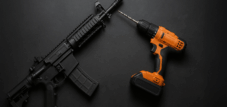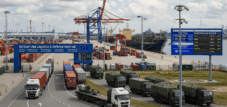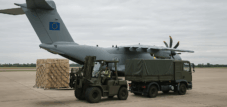
Dual-use economy: Why the invisible power of dual-use technology will determine Europe's future – Image: Xpert.Digital
More than just GPS and internet: What's really behind the term "Dual Use"
Dual Use: The overlooked economic component of civil-military interdependence
We use them daily and without a second thought: the GPS in our car, the internet on our smartphone, the microchips in our computers. Yet few are aware that many of these revolutionary technologies originated in the military or possess a hidden, secondary purpose. This phenomenon, in which technology can be used for both peaceful civilian and military purposes, is known as "dual use.".
But the world has changed: Today, it's no longer just defense research that's driving the civilian market. Rather, it's commercial innovations from fields like artificial intelligence, drone technology, and biotechnology that are shaping tomorrow's military potential. A standard camera drone can be used for reconnaissance in war zones, and an AI image recognition algorithm can also be used for autonomous target acquisition.
This convergence creates a tremendous field of tension. On the one hand, these technologies are a crucial driver of economic growth and social progress. On the other hand, they pose a growing challenge to global security and export controls. Where is the line between a useful industrial good and a potential weapon? How can states and companies harness the opportunities of innovation without incurring incalculable risks? This text delves deep into the complex world of dual-use technologies, illuminating not only the security risks but, above all, the often overlooked economic component—a dynamic that determines the technological sovereignty and future viability of entire nations.
Related to this:


The double-edged sword of progress
In today's globalized world, technological progress and economic prosperity are inextricably linked. Innovations in information technology, biotechnology, and materials science drive growth, improve quality of life, and create new markets. However, many of these groundbreaking developments possess an inherent ambivalence, a dual nature, summarized by the term "dual use." This concept describes goods, software, and technologies that can be used for both civilian and military purposes. It is a phenomenon as old as technological development itself, but one that has reached a new level of complexity and urgency in our time.
This report analyzes the multifaceted topic of dual-use not only as a challenge for export control and international security policy, but also highlights its often overlooked yet crucial economic component. The central thesis is that a deep understanding of dual-use dynamics—the intertwining of civilian markets and military requirements, of commercial innovation and strategic security—is essential for the future viability of businesses and the sovereignty of states in the 21st century.
The traditional view that military research produced civilian applications as a byproduct has been reversed in many high-tech fields. Today, it is often commercially driven innovations from the civilian sector that define tomorrow's military potential. This inversion of technology transfer presents governments and businesses with fundamentally new challenges.
The primary objective is no longer to prevent the leakage of a few state military secrets, but rather to control the proliferation of commercially available, cutting-edge technologies that possess inherent military application potential. This shift alters the nature of control, the balance between economic freedom and national security, and the strategic landscape for all actors.
From high-performance microchips to commercial drones and artificial intelligence algorithms, the line between civilian benefit and military threat has become blurred and requires a differentiated and strategic approach.
Related to this:

The foundation of dual use: definitions and the fundamental dilemma
Comprehensive definition: Goods, software and technology in a field of tension
To grasp the complexity of the topic, a precise definition is essential. According to the central European legal basis, Regulation (EU) 2021/821, dual-use goods are "goods, including data processing programs (software) and technology, which can be used for both civilian and military purposes." This definition is deliberately broad and highlights three key aspects.
Firstly, it is not only about physical goods such as machines or chemicals, but also explicitly about intangible goods such as software and technology, i.e. the specific technical knowledge required for the development, manufacture or use of a product.
Secondly, the term also includes goods that can contribute to the design, development, production or use of nuclear, chemical or biological weapons and their delivery systems – the so-called weapons of mass destruction.
Thirdly, the actual or intended end use is initially irrelevant for classifying a good as a dual-use good; what matters is solely its potential for military or proliferation-related use. A good does not become a dual-use good only through critical use, but is one due to its inherent technical characteristics.
The historic dual-use dilemma: From fertilizer to weapon
The dual-use dilemma is not a product of the digital age. One of the most striking historical examples is the discovery of the Haber-Bosch process for synthesizing ammonia at the beginning of the 20th century. This scientific masterpiece enabled the mass production of fertilizer, revolutionizing agriculture by securing the food supply for billions of people.
At the same time, however, ammonia was also the crucial raw material for the production of explosives and chemical weapons, which were used to devastating effect in the First World War. This classic example illustrates the core problem: one and the same technology can be both Segen and a curse. This ambivalence is inherent in the technology and cannot be resolved by simple bans without simultaneously sacrificing its civilian benefits.
This realization led to early international efforts, particularly in chemistry and nuclear physics, to control the proliferation of dangerous technologies without preventing their peaceful uses. Treaties such as the Chemical Weapons Convention (CWC) and the Nuclear Non-Proliferation Treaty (NPT) are direct political responses to this fundamental dual-use dilemma.
Distinction from pure military goods and the grey areas of control
For a functioning control system, the distinction between dual-use goods and pure military goods is crucial. Military goods are products that have been specifically designed, developed, or modified for military purposes. These include weapons, ammunition, and specific defense equipment.
These are generally subject to stricter and separate control regimes, which are enshrined in national laws, such as in Germany in Part I Section A of the Export List.
The real challenge of export controls, however, lies in the vast gray area in between. Many highly advanced industrial goods are not inherently military, but possess technical characteristics that make them attractive or even necessary for military applications. A classic example is high-precision machine tools. A modern, computer-controlled five-axis milling machine can be used for the mass production of highly complex components in the civilian automotive or aerospace industries, but with the same capabilities, it can also produce components for rocket engines, tank systems, or centrifuges for uranium enrichment.
The decision as to whether such a machine qualifies as a controlled dual-use good therefore depends not on its name or primary application, but on specific technical parameters such as positioning accuracy or the number of simultaneously controllable axes. These technical thresholds, defined in the goods lists of the control regimes, mark the boundary between an uncontrolled industrial good and a dual-use good requiring authorization. Even seemingly innocuous products like machines for manufacturing lipstick tubes can be considered dual-use goods if they could potentially be repurposed for the production of cartridge cases. These examples demonstrate that effective export control requires in-depth technical understanding and a precise analysis of product parameters, going far beyond a superficial consideration of intended use.
The global control regime: International politics and legal frameworks
Historical development: From the Cold War (COCOM) to the Wassenaar Arrangement
Controlling trade in sensitive goods is not a purely national task, but requires intensive international cooperation. Over the decades, a complex, multi-layered system of multilateral agreements and legal frameworks has developed, aiming to prevent the proliferation of weapons of mass destruction and conventional armaments without unduly hindering legitimate trade.
The origins of modern multilateral export controls lie in the Cold War. After World War II, the Western Allies established the Coordinating Committee for Multilateral Export Controls (COCOM). This body had the clear objective of preventing the export of strategically important Western technologies to the countries of the Eastern Bloc in order to slow their military build-up.
COCOM was an instrument of the East-West conflict, based on the principle of refusal, and lost its raison d'être with the end of the Cold War. It was dissolved in 1994.
It was replaced in 1996 by the Wassenaar Arrangement (WA), which follows a fundamentally different philosophy. Instead of targeting a specific group of states, the WA aims to promote transparency and greater accountability in the transfer of conventional weapons as well as dual-use goods and technologies.
The 42 participating states today, including most industrialized nations, commit to maintaining effective national export control systems and to informing each other about the export of certain listed goods to non-member states.
A key element is the exchange of information on rejected export licenses (“denials”) to prevent an exporter from approving a shipment in another member state that has already been prohibited elsewhere for security reasons.
The WA is not a treaty under international law, but is based on the political commitment of its members. It functions as a central forum for developing and regularly updating the control lists for conventional arms and dual-use goods, which are then incorporated by the member states into their national or supranational legal systems.
The pillars of international non-proliferation: MTCR, NSG and the Australia Group
The Wassenaar Arrangement focuses primarily on conventional arms and strategically relevant dual-use goods. For the particularly critical areas of weapons of mass destruction, specialized, overlapping control regimes exist, often referred to as the "four regimes" of international export control:
Group of Nuclear Suppliers (NSG)
The Group of Nuclear Suppliers (NSG) was established in 1975 in response to India's 1974 nuclear detonation, which demonstrated that civilian nuclear technology could be misused for weapons development. The NSG controls the export of fissile material, nuclear reactors and specific equipment, as well as nuclear-related dual-use goods that have widespread use in civilian industry but can also be crucial for a nuclear weapons program.
Australia Group
This informal forum, established in 1985, aims to prevent the proliferation of chemical and biological weapons (CW/BW). Member states harmonize their national export controls for a list of specific chemical precursors, biological agents (such as viruses and bacteria), and related equipment for the production of CW/BW.
Rocket Technology Control Regime (MTCR)
The missile technology control regime (MTCR), established in 1987 by the G7 nations, aims to curb the proliferation of unmanned delivery systems for weapons of mass destruction. This includes not only ballistic missiles, but also cruise missiles and unmanned aerial vehicles (drones) capable of carrying a specific payload over a defined range. The MTCR's control lists encompass both complete systems and key components such as rocket engines, navigation systems, and specialized materials.
Together, these four regimes form the foundation of the global non-proliferation system. Their lists of prohibited goods, developed in expert panels and regularly updated, form the basis for the control lists of the European Union and other member states.
Export control in the European Union: The Dual-Use Regulation 2021/821
For the Member States of the European Union, Regulation (EU) 2021/821 is the central and directly applicable legal basis for the control of dual-use goods. It replaces the previous regulation of 2009 and represents a comprehensive modernization of the EU export control system, responding to new technological developments, changing security risks and the growing importance of human rights.
The regulation establishes a uniform Union regime that covers the entire life cycle of an export transaction and governs the control of exports (to countries outside the EU), the brokering of transactions, technical assistance, transit and transfer (within the EU).
The principle of the EU single market stipulates that trade in dual-use goods between member states is generally free. However, an important exception is made for the particularly sensitive goods listed in Annex IV of the Regulation (e.g., from the areas of stealth technology or strategic control), the movement of which within the EU still requires authorization.
A key element of the regulation is a differentiated system of authorization types, which aims to reduce the administrative burden for non-critical exports while ensuring strict control for sensitive shipments:
Union General Authorisations (EUGEAs)
These allow the export of certain goods to specific non-critical destination countries (e.g., USA, Japan, Switzerland) under defined conditions, without the need to submit an individual application.
National General Authorisations (NGEAs)
Member States may issue their own general licenses to further facilitate exports, provided these are compatible with the EUGEAs.
Individual permits
The classic form of authorization for a specific transaction between an exporter and an end user in a third country.
Global permits (group permits)
They allow an exporter to export several goods to different end users in different countries and are valid for up to two years.
Permits for major projects
A new provision of Regulation 2021/821 that takes into account the needs of industry in large, long-term projects (e.g. the construction of a power plant).
National implementation in Germany: The role of BAFA, AWG and the export list
Although the EU regulation provides the framework, the specific licensing practices are carried out at the national level. In Germany, the Federal Office for Economic Affairs and Export Control (BAFA) is the responsible licensing authority. It reviews applications from companies and decides on the granting or rejection of export licenses based on European and national legislation.
The legal basis in Germany is the Foreign Trade and Payments Act (AWG) and the more detailed Foreign Trade and Payments Ordinance (AWV). The EU Dual-Use Regulation, as European law, is directly applicable and takes precedence over national law. However, German legislation supplements the EU rules.
The most important instrument for this is the export control list, an annex to the Foreign Trade and Payments Ordinance (AWV). While Part I, Section A of the export control list contains nationally controlled military goods, Part I, Section B lists additional dual-use goods that Germany considers worthy of control for national security or foreign policy reasons, but which are not included on the EU-wide list in Annex I of the ordinance. A German company must therefore always consult both Annex I of the EU ordinance and the German export control list when reviewing its export plans.
The increasing entanglement of the global economy with geopolitical interests is leading to a noticeable fragmentation of the international control landscape. While multilateral regimes such as the Wassenaar Arrangement provide a common denominator for the technical classification of goods, the actual application of controls is increasingly shaped by the strategic interests of major economic blocs. With its 2021 regulation and 2024 White Paper on Export Controls, the European Union has adopted a clear course that, in addition to traditional non-proliferation, also prioritizes the protection of human rights and the strengthening of its own economic security. This is reflected in new, specific controls for digital surveillance technologies, which could potentially be misused for internal repression.
At the same time, the United States traditionally pursues a very assertive export control policy, strongly influenced by foreign policy objectives. The US system, based on the Export Administration Regulations (EAR) and the International Traffic in Arms Regulations (ITAR), is characterized by its extensive extraterritorial application. Thus, German companies can also be subject to US (re-)export control regulations if their products contain US technology or components above a certain de minimis threshold.
The extensive US sanctions lists, such as the Entity List, target specific foreign companies and organizations that are classified as a risk to US national security.
In parallel, other global players such as China are also building their own comprehensive export control systems to protect their national security and economic interests.
For internationally operating companies, this development means a significant increase in complexity. A largely harmonized global system is giving way to a multipolar regulatory environment in which they must navigate not just one, but several, sometimes overlapping and occasionally conflicting legal systems. Compliance with regulations thus transforms from a purely technical classification task into a demanding strategic challenge requiring continuous analysis of geopolitical developments and legal frameworks.
Hub for Security and Defense - Advice and Information
Hub for Security and Defense - Image: Xpert.Digital
The Security and Defence Hub offers expert advice and up-to-date information to effectively support companies and organizations in strengthening their role in European security and defence policy. Working closely with the SME Connect Defence Working Group, it particularly promotes small and medium-sized enterprises (SMEs) that wish to further develop their innovative capacity and competitiveness in the defence sector. As a central point of contact, the Hub thus creates a crucial bridge between SMEs and European defence strategy.
Related to this:
Between security and progress: The complex world of dual-use goods
The anatomy of control: goods classification and corporate due diligence obligations
Systematics of goods lists: The logic of categories and genera
The effective implementation of export controls depends largely on two factors: a clear and systematic classification of the controlled goods and the implementation of robust internal processes within the exporting companies. Without precise identification of their own products and careful vetting of business partners and end uses, the legal regulations are ineffective.
The core of goods-related export control is Annex I of the EU Dual-Use Regulation. This comprehensive technical document lists all goods, software, and technologies whose export from the EU requires authorization. To make this complex list manageable, it follows a strict and logical system that is largely harmonized internationally.
Each listed good is identified by a five-digit alphanumeric code, the so-called goods list number or Export Control Classification Number (ECCN), such as 3A001 for certain integrated circuits.
The structure of this number follows a clear scheme that allows for quick assignment to technological areas and control regimes:
The first digit (0-9) designates one of ten categories, each covering a broad technological field.
The second letter (AE) indicates one of five genera that describe the type of goods.
The last three digits form the identifier, which reveals the origin of the inspection and serves for unique identification. An identifier in the range of 900-999 indicates purely national inspections that go beyond international agreements.
This systematic classification is the crucial tool for companies to classify their products and identify potential approval requirements.
Systematics of the EU Dual-Use Goods List
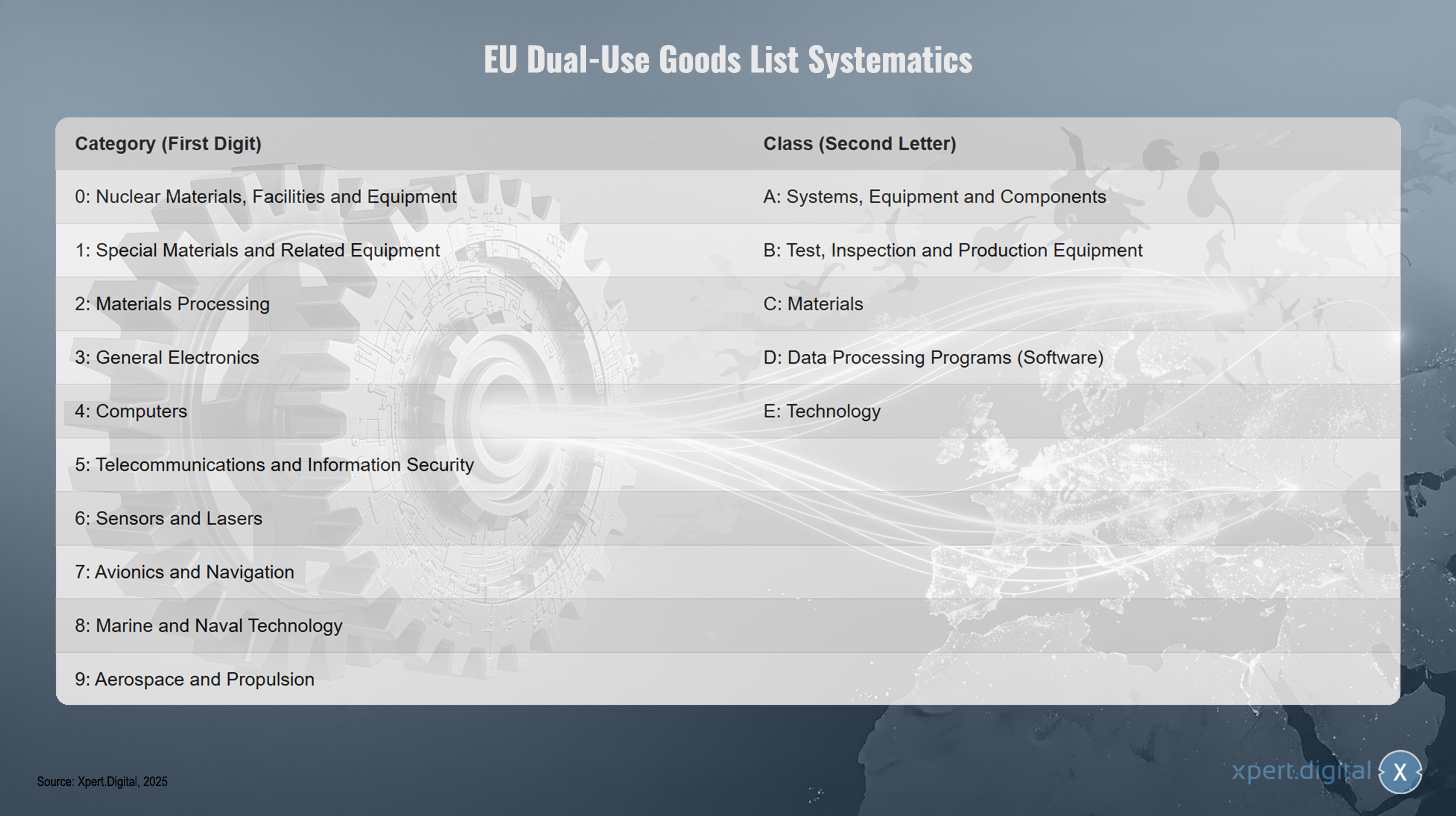
Systematics of the EU Dual-Use Goods List – Image: Xpert.Digital
The EU Dual-Use Goods List is a comprehensive classification system that structures various technical categories and types of goods. The categories are identified by the first digit and encompass important areas such as nuclear materials, installations, and equipment (Category 0) as well as special materials (Category 1). The types, represented by the second letter, further differentiate the goods, for example, into systems, equipment, and components (Category A) or materials (Category C).
The categories range from basic technical areas such as materials processing (category 2) and electronics (categories 3-4) to specific application areas such as telecommunications and information security (category 5), sensors and lasers (category 6), and aviation, aerospace, and propulsion (category 9). This systematic classification enables precise categorization and control of goods with potential dual use in international trade.
The path to compliance: Internal Compliance Programs (ICP) as a strategic necessity
The legal obligation to comply with export control regulations lies solely with the exporting company. Given the complexity of the regulations and the serious consequences of violations—ranging from hefty fines to imprisonment for responsible managers—establishing an internal compliance program (ICP) is essential for affected companies. An ICP is a systematic, internal process that ensures compliance with all foreign trade regulations.
An effective ICP typically includes several core elements:
responsibility
A clear assignment of responsibility for export control to one or more persons within the company, often in the form of an export manager at the management level.
Risk analysis
A systematic assessment of the company's specific risks, based on its products, target countries and customer bases.
Goods classification
A thorough review of the entire product portfolio is necessary to determine which goods, software, or technologies are covered by the goods lists. This often requires technical expertise from the relevant departments.
Review of business transactions
Each individual export transaction must be checked before it is carried out. This includes verifying the end user, the recipient, the country of destination, and the declared end use.
Screening of business partners
A key component is checking all parties involved in a transaction (customers, suppliers, freight forwarders) against national and international sanctions lists. This includes lists such as the US Denied Persons List or the Entity List, which list individuals and organizations with whom business dealings are prohibited or severely restricted.
Documentation and storage
All audit steps and decisions must be fully documented and kept for a legally prescribed period (five years in the EU).
training
Regular training of relevant employees to maintain awareness of the risks and knowledge of the regulations.
A functioning internal control procedure (ICP) is not only a tool for minimizing risk, but increasingly also a prerequisite for using procedural simplifications. For example, the new EU General License EU007, which facilitates the intra-group transfer of technology and software, explicitly requires an effective ICP at the exporter's end.
Beyond the lists: The “catch-all” clauses and the examination of end use and end users
Export controls are not limited to the products explicitly listed in the goods lists. So-called "catch-all" clauses play a crucial role. These clauses establish a licensing requirement for unlisted goods if the exporter is aware, or is informed by the authorities, that the goods are intended for a critical end use.
Article 4 of the EU Dual-Use Regulation defines several such critical uses. An authorization requirement for unlisted goods therefore arises if they are related to:
The development, production or use of chemical, biological or nuclear weapons (weapons of mass destruction).
A military end purpose in a country subject to an arms embargo by the EU, OSCE or UN.
The use as components for armaments that were previously exported from an EU member state without the required authorization.
These regulations shift some of the responsibility directly to the company. As part of its due diligence, it must examine whether there are any indications of such critical use. Red flags, for example, could include an implausible intended use, a customer without industry experience, or conspicuous secrecy on the part of the end user.
The human factor: Human rights as a new criterion for export control
The modernized EU Dual-Use Regulation of 2021 has expanded the scope of export controls to include an important dimension: the protection of human rights. Article 5 of the regulation introduces a new, specific catch-all provision for non-listed goods used for digital surveillance.
These goods are defined as products specifically designed to enable the covert surveillance of natural persons by extracting or analyzing data from information and telecommunications systems.
An export license for such goods is required if the exporter is informed by the competent authority (such as BAFA) that the goods are intended, or may be intended, wholly or partly, for use in connection with internal repression or the commission of serious violations of human rights or international humanitarian law.
Moreover, if the exporter becomes aware of such an intended end use through his own due diligence, he is obliged to inform the authority, which will then decide on the requirement for a permit.
This regulation presents companies with significant challenges. They must not only assess the technical specifications of their products and the economic viability of a business deal, but also evaluate the human rights situation in the destination country and the potential role of their products in this context.
The regulation attempts to mitigate this burden by clarifying that goods for purely commercial applications such as invoicing, marketing, or network security are generally not subject to this control.
Nevertheless, this human rights-based approach broadens the focus of export control from the mere non-proliferation of weapons to a values-based foreign economic policy, which significantly increases the compliance requirements for companies in the technology sector.
The economic dimension: Between strategic advantage and competitive disadvantage
Dual use as an engine of innovation: Technology transfer and civilian spillover effects
The debate surrounding dual-use technologies is often dominated by security policy considerations. This easily obscures the profound economic significance of this phenomenon. The dual usability of technologies is not only a risk that needs to be controlled, but also a key driver of innovation and a crucial factor for the competitiveness and strategic autonomy of entire economies. At the same time, the control mechanisms represent a considerable burden for companies, which can negatively impact their position in global competition.
The close integration of civilian and military research and development (R&D) is a powerful source of technological progress. Historically, many groundbreaking civilian technologies emerged as spillovers from military and defense research. The Global Positioning System (GPS) and the internet are the most prominent examples. The enormous government investments in these military projects created technological foundations that were later commercialized and revolutionized entire civilian industries.
Today, this dynamic has reversed in many areas. Particularly in key digital technologies such as artificial intelligence, quantum computing, and advanced semiconductors, cutting-edge research primarily takes place in the civilian, commercially driven sector. Defense ministries are increasingly reliant on adapting these civilian innovations for military purposes.
Regardless of the direction of technology transfer, significant synergies arise from its dual applicability. R&D investments can yield a double return by strengthening both national security and improving commercial competitiveness. Business associations such as the Federation of German Industries (BDI) and political actors such as the European Commission therefore emphasize the need to strategically strengthen synergies between civilian and defense-related research. The goal is to maximize spillover effects in both directions and create an integrated innovation base.
Economic benefits: Strengthening technological sovereignty and industrial base
At the macroeconomic level, the ability to develop and produce critical dual-use technologies domestically has become a key element of strategic autonomy. The COVID-19 pandemic and the geopolitical upheavals of recent years have highlighted the risks of one-sided dependencies in global supply chains, particularly for high-tech goods such as semiconductors.
Dual-use technologies are often key technologies with far-reaching effects on the entire economy. A strong domestic industry in fields such as microelectronics, cybersecurity, aerospace, or biotechnology is crucial not only for a country's defense capabilities but also for its overall economic resilience and innovative capacity.
Political initiatives such as the EU Commission's White Paper on promoting R&D with dual-use potential therefore aim to strengthen Europe's technological and industrial base and reduce dependence on non-European suppliers in strategically important areas.
The targeted promotion of dual-use research thus becomes an instrument of modern industrial and security policy, aiming to increase competitiveness while simultaneously ensuring economic security.
Business challenges: Compliance costs, legal uncertainty and global competitiveness
However, for exporting companies, the control regimes represent a considerable burden. Compliance with the complex regulations incurs significant business costs. These include direct costs for specialized personnel in export control departments, for expensive software solutions for goods classification and sanctions list screening, and for external legal counsel.
In addition, there are indirect costs arising from delays in the approval process. Long waiting times for an export license can lead to contractual penalties or even the loss of orders, as delivery dates cannot be guaranteed to customers.
Another key problem for businesses is legal uncertainty. In particular, the vaguely worded catch-all clauses and the new human rights-related criteria place a considerable burden of responsibility on companies. In their day-to-day operations, they must make complex and potentially criminal foreign and security policy assessments, for which they often lack the necessary information and expertise.
This uncertainty can lead companies to refrain from legal business activities out of caution (“over-compliance”) or to submit a flood of precautionary approval requests to the authorities, which overloads their capacities and further increases processing times for everyone.
These burdens can lead to a significant competitive disadvantage in the global market. If companies in the EU are subject to stricter, more complex, and more unpredictable controls than their competitors from other parts of the world, they risk losing market share. Effective export controls in a global market only work if the main competitors are subject to similar or, ideally, the same rules. The increasing geopolitical fragmentation of control regimes makes it more difficult to create such a level playing field and intensifies competitive pressure on European high-tech exporters.
The future of research: Targeted promotion of dual-use potential in Europe
In response to these challenges and to strengthen their position in the global technology race, efforts are underway at both European and national levels to promote research and development with dual-use potential more strategically. The European Commission, in its 2024 White Paper, presented various options for discussion to create a more integrated and targeted framework for dual-use innovation.
Expert commissions such as the German Expert Commission on Research and Innovation (EFI) are calling for the dissolution of the strict separation between civilian and military research funding that still exists in many countries.
Such an opening could unleash significant synergies and unlock economic opportunities that Germany and Europe would otherwise miss out on.
The debate revolves around how research funding can be made more agile and flexible in order to fully exploit the potential of technologies that can serve both civilian and security-related purposes, without neglecting basic civilian research.
This strategic realignment aims to pool Europe's innovative power and at the same time make it usable for strengthening economic and national security.
Your dual-use logistics experts

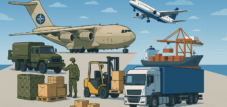
Dual-use logistics experts - Image: Xpert.Digital
The global economy is currently undergoing a fundamental transformation, a watershed moment that is shaking the foundations of global logistics. The era of hyper-globalization, characterized by the relentless pursuit of maximum efficiency and the "just-in-time" principle, is giving way to a new reality. This new reality is marked by profound structural breaks, geopolitical power shifts, and increasing fragmentation of economic policy. The once taken-for-granted predictability of international markets and supply chains is dissolving and being replaced by a period of growing uncertainty.
Related to this:
Drones, satellites, the internet: When the military and civil society converge
Dual Use in Practice: Specific Application Areas and Case Studies
Revolution from the military: GPS and the Internet as prime examples of technology transfer
The abstract concepts and legal frameworks of dual use are best understood through concrete examples from technological practice. These case studies demonstrate how deeply dual usability is embedded in our modern world – from fundamental infrastructures we use daily to the cutting-edge technologies that will shape our future.
Two of the most transformative technologies of the late 20th century have their roots directly in US military research and development. They are classic examples of successful technology transfer from the military to the civilian sector.
The Global Positioning System (GPS) was developed in the 1970s by the US Department of Defense as the NAVSTAR-GPS program to enable precise, worldwide and weather-independent navigation for military units (ships, aircraft, soldiers).
After its full commissioning in 1993, the signal was gradually released for civilian use. Initially, scientists and surveyors were the primary users of the new technology.
The real breakthrough, however, came around the year 2000 when the US government disabled Selective Availability, the artificial signal degradation for civilian users. This, combined with the ongoing miniaturization of receivers, led to an explosion of civilian applications. Today, GPS is the backbone of countless services and industries, from navigation in cars and smartphones to precision agriculture and fleet management in logistics, and the synchronization of financial markets and telecommunications networks. The economic benefits are immense; one study estimated the economic advantage generated by GPS in the US alone at $1.4 trillion by 2019.
The situation is similar with the Internet. Its predecessor, ARPANET, was developed in the late 1960s on behalf of the Advanced Research Projects Agency (ARPA) of the US Department of Defense.
The primary goal was to create a decentralized and robust computer network that would remain functional even if individual nodes failed – for example, due to a military strike. Initially, the network connected only a few universities and research institutions working on defense projects.
In the following decades, it developed into an important tool for the academic community. The decisive turning point came in the early 1990s with the development of the World Wide Web and the gradual opening and commercialization of the network.
Today, the Internet is the basic infrastructure of the global information society and has fundamentally changed the world economy by enabling electronic commerce, new services and a drastic reduction in transaction costs.
Modern Arenas: Drones, Artificial Intelligence and the Merging of Civilian and Military Domains
While GPS and the Internet are examples of technology transfer that spanned decades, the merging of civilian and military applications in modern technologies often occurs almost simultaneously.
Unmanned aerial vehicles (UAVs), commonly known as drones, vividly illustrate this trend. Originally developed for military reconnaissance and attacks, a huge commercial drone market has emerged in recent years. This market is growing rapidly in Germany and worldwide, driven by affordable prices and a wide range of applications.
Drones are now routinely used in agriculture for monitoring fields, in the construction industry for inspecting buildings, in logistics for parcel delivery, and by rescue services for assessing the situation in the event of fires or accidents.
At the same time, these commercially available and technologically advanced drones are being directly adapted for military purposes. Small, agile quadcopters from the civilian market are being used for reconnaissance at the platoon level or as carriers for small explosive charges, fundamentally changing warfare. This technology transfer from the civilian to the military sector significantly accelerates the innovation cycle of armed forces.
Artificial intelligence (AI) perhaps represents the most complex and far-reaching field of dual use. AI algorithms developed for civilian applications, such as examining MRI images for anomalies in medicine, analyzing customer behavior, or optimizing complex logistics chains, are based on the same fundamental technologies that are also of paramount importance for military purposes.
Military applications of AI include autonomous real-time target detection, control of weapon systems, analysis of huge amounts of data for intelligence gathering, and defense against cyberattacks.
The ethical “dual-use dilemma” is particularly pronounced here: Research into more powerful AI, which can bring enormous benefits to humanity, inevitably carries the risk of being misused for the development of autonomous weapons systems or totalitarian surveillance systems.
Invisible borders: Biotechnology, quantum computing and the strategic importance of space
At the forefront of scientific research, new technological fields are emerging whose dual-use potential is already foreseeable today and which will play a central strategic role in the future.
Biotechnology, particularly advances in genome editing (such as CRISPR) and synthetic biology, promises revolutionary breakthroughs in medicine and agriculture. At the same time, these technologies carry the risk of being misused for the development of novel biological weapons.
Scientific research aimed at understanding the transmissibility or pathogenicity of viruses in order to better combat pandemics can potentially also generate knowledge that could be used to create more dangerous pathogens. For this reason, special oversight mechanisms such as the National Science Advisory Board for Biosecurity (NSABB) have been established in the US and other countries to identify and assess such "dual-use research of concern" (DURC).
Quantum computing has the potential to solve computational problems that are inaccessible to today's supercomputers. This opens up immense opportunities for civilian research, such as the development of new drugs or materials. At the same time, it poses a fundamental threat to current IT security, as a powerful quantum computer would be able to break most common encryption algorithms that protect our digital communication and financial transactions.
Furthermore, quantum sensor technology promises the development of extremely precise measuring instruments that could be used in both civil geology and military submarine or stealth aircraft detection.
Space is also developing into an increasingly important dual-use domain. The era of "New Space," characterized by private companies offering cost-effective satellite launches and vast satellite constellations, is blurring the lines between civilian and military space use. Earth observation satellites, which provide high-resolution images for agriculture or disaster relief, can also be used for military reconnaissance. Communication satellites, which bring broadband internet to remote regions, are also crucial for controlling drones and connecting troops in the field.
Infrastructure as a strategic asset: ports, airports and civil-military logistics chains
The concept of dual use is not limited to individual products or technologies, but also encompasses critical infrastructures and services. The logistics chains and transport routes that form the backbone of the global economy are simultaneously essential for military mobility and a state's ability to deploy its armed forces.
Large civilian seaports are therefore often designated as "strategic ports". They must be able to make their facilities and capacities available at short notice for the loading of heavy military equipment and troops in order to enable rapid deployments to crisis areas.
Similarly, there are numerous airports worldwide that are used for both civilian and military purposes, which creates operational synergies but also requires close coordination.
Furthermore, civilian expertise is being specifically utilized for military purposes. A prime example in Germany is the cooperation between the German Armed Forces and Lufthansa Technik. The company leverages its world-leading expertise in the maintenance, repair, and overhaul (MRO) of civilian aircraft to provide technical support for complex military aircraft fleets, such as the German government fleet or the new P-8A Poseidon maritime patrol aircraft.
This partnership enables the German Armed Forces to draw on top-level civilian expertise and global logistics networks, which increases operational readiness and potentially reduces costs.
Such collaborations also exist in the area of public services, for example between the civilian German Weather Service (DWD) and the Geoinformation Service of the German Armed Forces (GeoInfoDBw), which jointly train personnel and provide meteorological data for civilian and military purposes.
Related to this:
Synergies in the service of society: Civil-military cooperation in disaster relief
One of the most positive and visible forms of dual-use application is civil-military cooperation (CMZ) in national disaster relief. When civilian authorities and aid organizations such as fire departments, the Federal Agency for Technical Relief (THW), or the Red Cross reach the limits of their capacities during major emergencies such as floods, forest fires, or pandemics, they can request support from the German Armed Forces (Bundeswehr) within the framework of administrative assistance.
The armed forces possess capabilities and resources that are often unavailable or insufficient in the civilian sector. These include heavy engineering equipment such as bridge-laying and recovery vehicles for the rapid restoration of infrastructure, air (helicopter) and ground transport capabilities, logistical expertise for supplying large numbers of people, and a large number of disciplined and readily available support personnel.
The deployment of the German Armed Forces during the devastating flood disaster in the Ahr Valley in 2021, in which soldiers built temporary bridges, cleared debris and supported logistics, is a striking example of the effectiveness of this cooperation.
To ensure smooth cooperation in an emergency, there is a fixed structure of liaison and contact persons at all administrative levels, from the state commands to the district liaison commands, who ensure close coordination between civilian and military authorities.
Related to this:

Strategic realignment – dual use as an integral part of economic and security policy
A comprehensive analysis of the dual-use phenomenon reveals a fundamental truth of the 21st century: the strict separation between the civilian economy and military security is no longer tenable in a high-tech world. Dual-use goods are not a marginal phenomenon, but rather lie at the heart of modern technological and economic development. A nation's ability to lead in these key technologies determines not only its economic competitiveness, but also its strategic autonomy and security.
The report highlighted the inherent tension that characterizes the topic.
On the one hand, there is the need to control the proliferation of technologies that can be misused to produce weapons of mass destruction, destabilize regions, or violate human rights. The international control regimes and the detailed legal frameworks of the EU and its member states are indispensable instruments for addressing these risks. However, they represent a significant burden for export-oriented economies, characterized by high compliance costs, legal uncertainty, and potential competitive disadvantages.
On the other hand, dual-use potential is a crucial driver of innovation and economic prosperity. Synergies between civilian and military research and development create spillover effects that benefit both sectors and strengthen a society's technological base. In an era where technological progress increasingly originates in the commercial sector, the ability to leverage these civilian innovations for security purposes—and vice versa—is a decisive strategic advantage.
Addressing this tension requires a strategic realignment of policy. A purely reactive export control approach based on prohibitions falls short. What is needed is a holistic approach that understands dual-use as an integral component of economic, innovation, and security policy.
Such an approach must meet several criteria:
Agility
The control lists and mechanisms must be able to keep pace with the rapid speed of technological change in order not to be overtaken by new developments.
International harmonization
To minimize distortions of competition, controls must be harmonized as much as possible at the international level. Unilateral, national tightening of regulations can weaken domestic industries without significantly increasing global security.
Partnership
Effective oversight is only possible through dialogue with industry and academia. Companies and research institutions need clear, understandable, and predictable legal frameworks. Their technical expertise must be involved in the list creation process from the outset.
Ultimately, effectively managing the dual-use dilemma is one of the central challenges for modern industrialized nations. It is about finding a wise balance: a balance between promoting openness and innovation, which secures prosperity, and applying targeted, effective controls, which guarantee security. Only a policy that considers both sides of this coin will be successful in the long term in an era of profound geopolitical and technological upheaval.
Consulting - Planning - Implementation

Markus Becker
I would be happy to serve as your personal advisor.
Head of Business Development
Chairman SME Connect Defense Working Group
Consulting - Planning - Implementation
Konrad Wolfenstein
I would be happy to serve as your personal advisor.
You can contact me at wolfenstein∂xpert.digital or
Just call me on +49 7348 4088 965 .