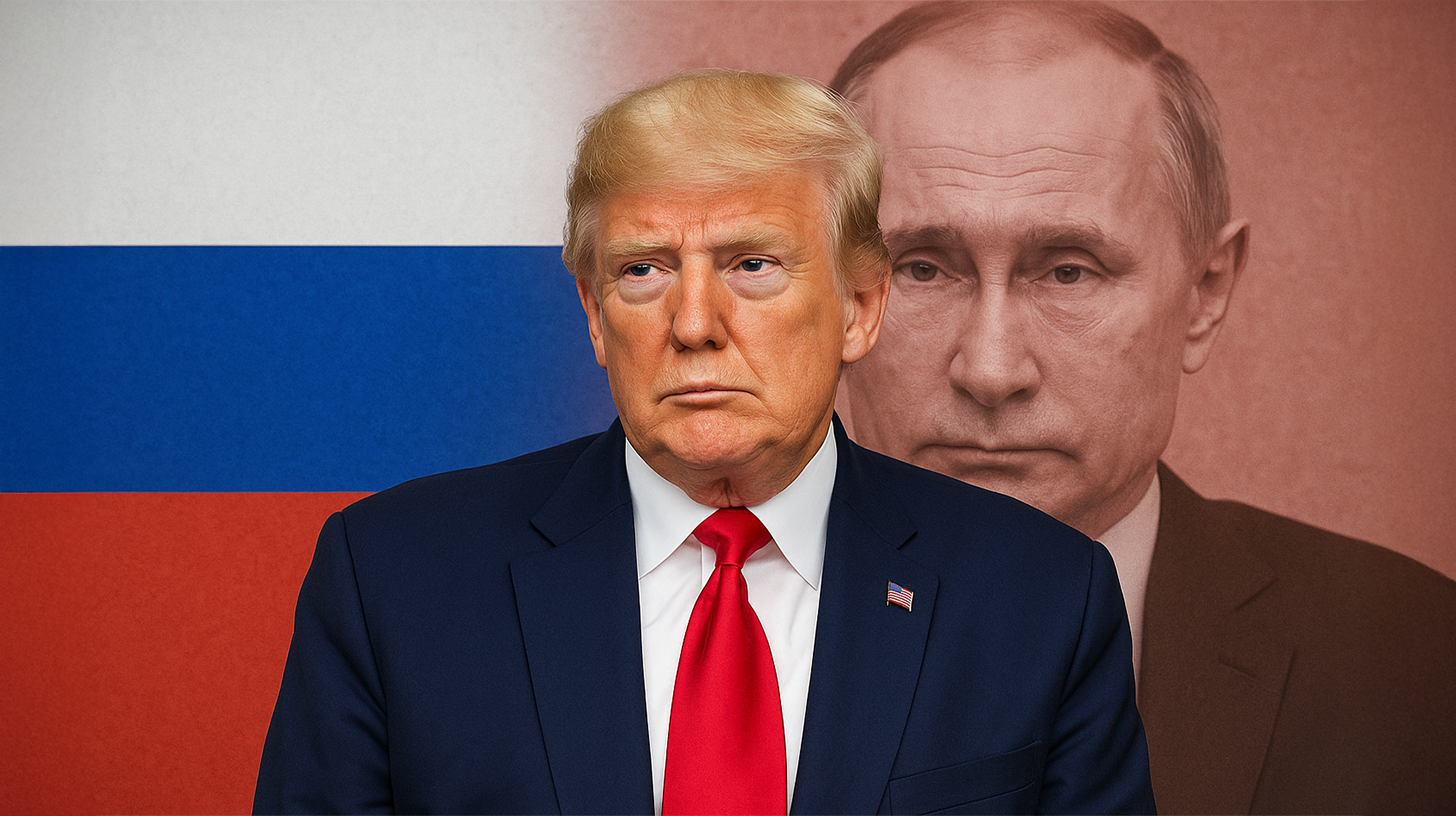
Russia | Trump needs the EU for a dual strategy against Putin: Why 100% tariffs on China and India could change everything now – Creative image: Xpert.Digital
New World Order? Trump wants to win over the EU for his tariff war against China and India
Putin is financing war with oil – Trump wants to cut him off with 100% tariffs
In a dramatic shift in his foreign policy, US President Donald Trump is calling for a radical step in the global economic conflict: Together with the European Union, he wants to impose drastic 100 percent tariffs on China and India. The goal of this unprecedented measure is clearly stated: to cut off Russia's main source of revenue for financing the war in Ukraine. Since China and India have become the primary buyers of Russian oil following the EU embargo, they are now to be held directly accountable.
This move didn't come out of the blue. It follows failed ultimatums to Vladimir Putin and a new, brutal escalation of the war, in which Russia launched its largest air strike to date against Ukraine. Trump is thus putting the European Union to a severe test: Will Brussels abandon its previous strategy of sanctions and join Trump's trade war? How will the economic powerhouses China and India, which have so far benefited from cheap Russian oil, react? The background to this demand reveals a complex web of economic pressure, diplomatic duplication, and military reality that could reshape the global balance of power.
Trump demands tariffs against Putin's friends: What's behind the 100 percent strategy?
Background of the demand
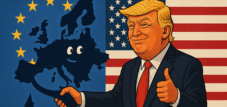
What does Trump's latest demand for 100 percent tariffs on China and India mean for international politics? In a phone call with EU sanctions officials on September 9, 2025, the US president made a remarkable strategic U-turn. Instead of acting alone, Trump is now calling on the European Union to jointly impose drastic tariffs on China's and India's oil purchases from Russia. The rationale is clear: without these two major customers, Putin's war financing would be significantly weakened.
The time frame of the demand is crucial. Trump only made this demand after his repeatedly extended ultimatums to Putin had expired. He had initially given Russia 50 days, later reducing this to just ten to twelve days. When Putin failed to respond to any of these deadlines, Trump escalated his strategy from direct threats against Russia to indirect measures against its most important trading partner.
New World Order? These three powers are now uniting against the West
### Trump's Real Fear: Why He's Really Hardening His Course Against China and India ### The Anti-Western Axis: How Putin, Xi, and Modi Want to Redistribute Global Power ### More Than Just Tariffs: What's Really Behind Trump's Aggressive Strategy ### Pact of the Giants: China, Russia, and India Forge an Alliance – With a Clear Goal ###
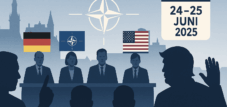
Trump is likely intensifying his strategy toward China and India also because the recent summit in Tianjin between Xi Jinping, Narendra Modi, and Vladimir Putin publicly reaffirmed the call for a "multipolar world order." This concept represents an international structure in which the dominance of the US and Europe is to be replaced by the cooperation of several major powers, primarily China, Russia, and increasingly India.
At the Shanghai Cooperation Organisation meeting, China and Russia underscored their ambition to create political and economic alternatives to the West and to play a key role in shaping the rules of global cooperation. Chinese President Xi Jinping explicitly stated that the monopoly of a few powers on global governance must end, and that all countries have a right to participate and have a say.
This symbolically and substantively united front between Moscow, Beijing, and New Delhi increases the pressure on Washington and Brussels to act. Analysts therefore interpret Trump's recent aggressive tariff demands as an attempt to counter the economic power of these states and at least economically slow the advance of a new, anti-Western order.
The new unity between China, India, and Russia is also evident in strengthened economic ties and strategic partnerships. The high-profile joint declarations are not only aimed at increasing international influence, but also signal to the West that sanctions and isolation policies are unacceptable from these powers' perspective.
Related to this:

The economic dimension of oil dependency
Why are China and India so crucial for financing Russia's wars? The numbers speak for themselves. China now imports 45 to 50 percent of all Russian oil exports, while India is responsible for another 40 percent. This drastic shift only occurred after the EU embargo against Russian oil. Before the war in Ukraine, Russia delivered 40 to 45 percent of its oil exports to Europe – today it's only four to five percent.
India has increased its Russian oil imports nineteenfold since 2021, from 0.1 million barrels to 1.9 million barrels per day. China increased its purchases by 50 percent to 2.4 million barrels per day. These purchases allow Russia to generate approximately €88 billion annually from oil exports, despite Western sanctions – comparable to the 2021 level.
Pricing plays a crucial role. Russia sells its oil to India at discounts of around five percent below the world market price. Experts estimate that India saved up to 33 billion US dollars in energy costs between 2022 and 2024 through these purchases. China is also taking advantage of the opportunity to acquire cheap oil, especially after Trump's tariffs against India altered market dynamics.
Trump's previous tariff policy in detail
What tariff measures has Trump already implemented? His trade policy reveals a complex pattern of threats, implementations, and strategic adjustments. Trump imposed additional tariffs of 25 percent on India as early as summer 2025, which were increased to 50 percent on August 27. These measures explicitly targeted India's oil purchases from Russia.
China treated Trump differently. Although he repeatedly threatened 100 percent tariffs, these have not yet materialized. Instead, China successfully negotiated a reduction of new tariffs to 30 percent. This disparate treatment reveals Trump's tactical approach: While he put pressure on India, he held back with China – possibly due to their greater economic ties.
In July 2025, Trump reached a trade agreement with the EU that limited tariffs to 15 percent. This agreement demonstrates his willingness to compromise when strategic partners cooperate. At the same time, he doubled tariffs on steel and aluminum to 50 percent and introduced 25 percent tariffs on automobiles.
The European reaction
How is the EU reacting to Trump's demands? The European position is ambivalent. EU diplomats report that the US has signaled it would impose similar tariffs if the EU follows suit. One EU diplomat summarized the American stance: "They're basically saying: We'll do it, but you have to do it with us.".
For the EU, this would represent a strategic U-turn. Until now, Brussels has favored sanctions aimed at isolating Russia over tariffs. Germany and France have already developed a joint position paper advocating for stricter sanctions against the Russian energy sector, intended as a contribution to the 19th EU sanctions package.
The Franco-German initiative targets oil companies like Lukoil and service providers in the oil industry. It also aims to sanction additional Russian banks, foreign financial institutions with SPFS connections, and cryptocurrency service providers in Central Asia. These measures complement the existing sanctions against 342 ships of the Russian "shadow fleet.".
China's and India's resistance
How are the affected countries reacting to Trump's threats? Both China and India have so far remained unmoved by American pressure. China stated: "China will always ensure its energy supply in a way that serves our national interests." This stance reflects Beijing's willingness to endure economic pressure in order to preserve strategic autonomy.
India accused the West of hypocrisy and emphasized that the EU continues to import Russian energy. New Delhi pointed out that Washington had originally supported India's oil purchases from Russia to stabilize global oil prices. This argument underscores the complexity of the situation: what was once considered a stabilizing measure is now being criticized as financing war.
The practical response reveals different patterns. Chinese banks are increasingly refusing Russian transactions, even in yuan. This is forcing Moscow to rely on opaque intermediaries and third-country solutions. India, on the other hand, temporarily reduced its imports but quickly returned to its original volumes.
Our recommendation: 🌍 Limitless reach 🔗 Connected 🌐 Multilingual 💪 Sales power: 💡 Authentic with strategy 🚀 Innovation meets 🧠 Intuition


From local to global: SMEs conquer the world market with a clever strategy - Image: Xpert.Digital
In an era where a company's digital presence determines its success, the challenge lies in creating an authentic, personalized, and far-reaching presence. Xpert.Digital offers an innovative solution that positions itself as the intersection of an industry hub, a blog, and a brand ambassador. It combines the advantages of communication and sales channels in a single platform and enables publication in 18 different languages. Cooperation with partner portals and the ability to publish articles on Google News and a press distribution list with approximately 8,000 journalists and readers maximize the reach and visibility of the content. This represents a crucial factor in external sales and marketing (SMarketing).
More information here:
Trump's tariff escalation against Russia — reaction to the drone offensive of September 7, 2025, sanctions against the "shadow fleet" and global economic risks
The military escalation in Ukraine
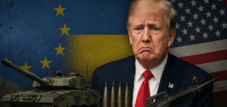
Why is Trump escalating his tariff strategy right now? The timing is closely linked to the military developments in Ukraine. On September 7, 2025, Russia carried out the largest airstrike since the start of the war, deploying 805 drones and 13 missiles. For the first time, an Iskander missile struck the Ukrainian government building in Kyiv.
These attacks mark a new level of escalation. Military experts expect even more massive attacks in the future, with up to 2,000 drones simultaneously, due to Russia's production capacity of 8,000 to 12,000 drones per month. Ukraine has already reported air defense shortages due to delayed US deliveries.
Putin's behavior during the diplomatic efforts exacerbated Trump's frustration. Although the Russian president signaled a willingness to talk, he insisted that meetings with Ukrainian President Zelenskyy had to take place in Moscow. These "knowingly unacceptable proposals" led to the failure of the diplomatic initiatives.
The Shadow Fleet as an additional sanctions target
What other measures does Trump plan to take against Russia's oil trade? Besides tariffs against China and India, sanctions against Russia's "shadow fleet" of oil tankers have also been discussed. This fleet now comprises between 1,140 and 1,202 tankers – about ten percent of the global tanker fleet.
The EU has already sanctioned 342 ships in this fleet. These tankers operate using "misleading methods" such as frequent flag changes, deactivated tracking systems, and inadequate insurance coverage. Over 80 percent of Russia's crude oil exports now pass through the Baltic Sea, making this region a "hotspot" of the conflict.
According to Western assessments, the shadow fleet fulfills several functions: circumventing sanctions, transporting oil outside the G7 price cap, and potentially espionage and sabotage of submarine cables. Russia now officially identifies with this fleet and appears prepared to protect it militarily.
Economic impact of customs policy
What would 100 percent tariffs mean for the global economy? The effects would be far-reaching and complex. For India, Trump's already imposed 50 percent tariffs could reduce its gross domestic product by half a percentage point. Bilateral trade between the US and India, worth $129 billion, would suffer considerably.
China could continue its opportunistic stance. Analysts expect Chinese refineries to take advantage of the low oil prices resulting from India's withdrawal. This would benefit China in the short term, but in the long term, China might not be able to fill the gap alone if India permanently reduces its purchases.
The EU needs to fundamentally rethink its trade strategy. The agreement with the US already limits tariffs to 15 percent for most EU goods. Participating in Trump's anti-Russian tariffs would complicate this agreement and potentially require new negotiations.
Related to this:
Trump's diplomatic dual strategy
How does Trump reconcile tariff threats with diplomatic overtures? His communication with India reveals a remarkable dual strategy. While publicly demanding 100 percent tariffs, he simultaneously announced the continuation of trade talks with Prime Minister Modi. "I am confident that there will be no difficulty in reaching a successful solution for our two great countries," Trump wrote.
This seemingly contradictory stance reflects Trump's negotiating style: maximum pressure coupled with a willingness to talk. He continued to refer to Modi as a "very good friend" and signaled interest in increased trade once India reduced its Russian oil purchases.
The strategy also reveals geopolitical considerations. Trump recognized the danger of pushing India too far in the direction of China and the BRICS nations. India is an important ally and China's biggest rival in Asia. An overly aggressive approach could shift the strategic balance in China's favor.
Putin's reaction and Russian countermeasures
How is Russia reacting to the intensified economic pressures? Putin has so far remained unmoved by Trump's ultimatums and tariff threats. Following the failed negotiations in Alaska, Russia even escalated its military attacks on Ukraine. The massive drone attack of September 7 can be interpreted as a direct response to the diplomatic and economic pressures.
Russia is developing various circumvention strategies. The expansion of its shadow fleet is one of them. Moscow is also investing heavily in alternative payment systems and expanding its economic ties with non-Western countries. The Russian SPFS (System for Transfer of Financial Messages) system is intended to replace Western financial infrastructure.
Russian diplomacy is simultaneously attempting to exacerbate divisions among its Western allies. Putin's insistence on Moscow as the venue for negotiations and his refusal to accept neutral locations aim to undermine Western unity. The concurrent intensification of relations with China and participation in BRICS summits reinforce this strategy.
Long-term strategic implications
What long-term changes could Trump's tariff strategy bring about? The demand for joint EU-US tariffs marks a potential turning point in transatlantic trade policy. Until now, both sides have often acted separately or even against each other on trade issues. A coordinated tariff policy against common strategic competitors could usher in a new chapter of Western economic diplomacy.
Strong incentives for increased cooperation are emerging for China and India. After years of border disputes, the two countries are already moving closer together again. Joint economic pressure could accelerate this rapprochement and contribute to the formation of an Asian economic bloc that deliberately bypasses Western structures.
Global energy markets would be fundamentally altered. If China and India actually reduce their Russian oil purchases, Moscow would have to find new buyers or accept massive price reductions. At the same time, global oil prices could rise, as alternative suppliers would have to expand their capacities.
The successful implementation of Trump's strategy depends crucially on European cooperation. Without EU support, the US would remain isolated with its tariff policy, which would significantly reduce its effectiveness. The coming weeks will show whether Europe is prepared to abandon its current sanctions-oriented strategy in favor of a tariff-based approach.
Your global marketing and business development partner
☑️ Our business language is English or German
☑️ NEW: Correspondence in your native language!

Konrad Wolfenstein
I and my team are happy to be available to you as your personal advisor.
You can contact me by filling out the contact form here wolfenstein@xpert.digital:or simply call me at +49 7348 4088 965. My email address is
I'm looking forward to our joint project.