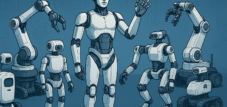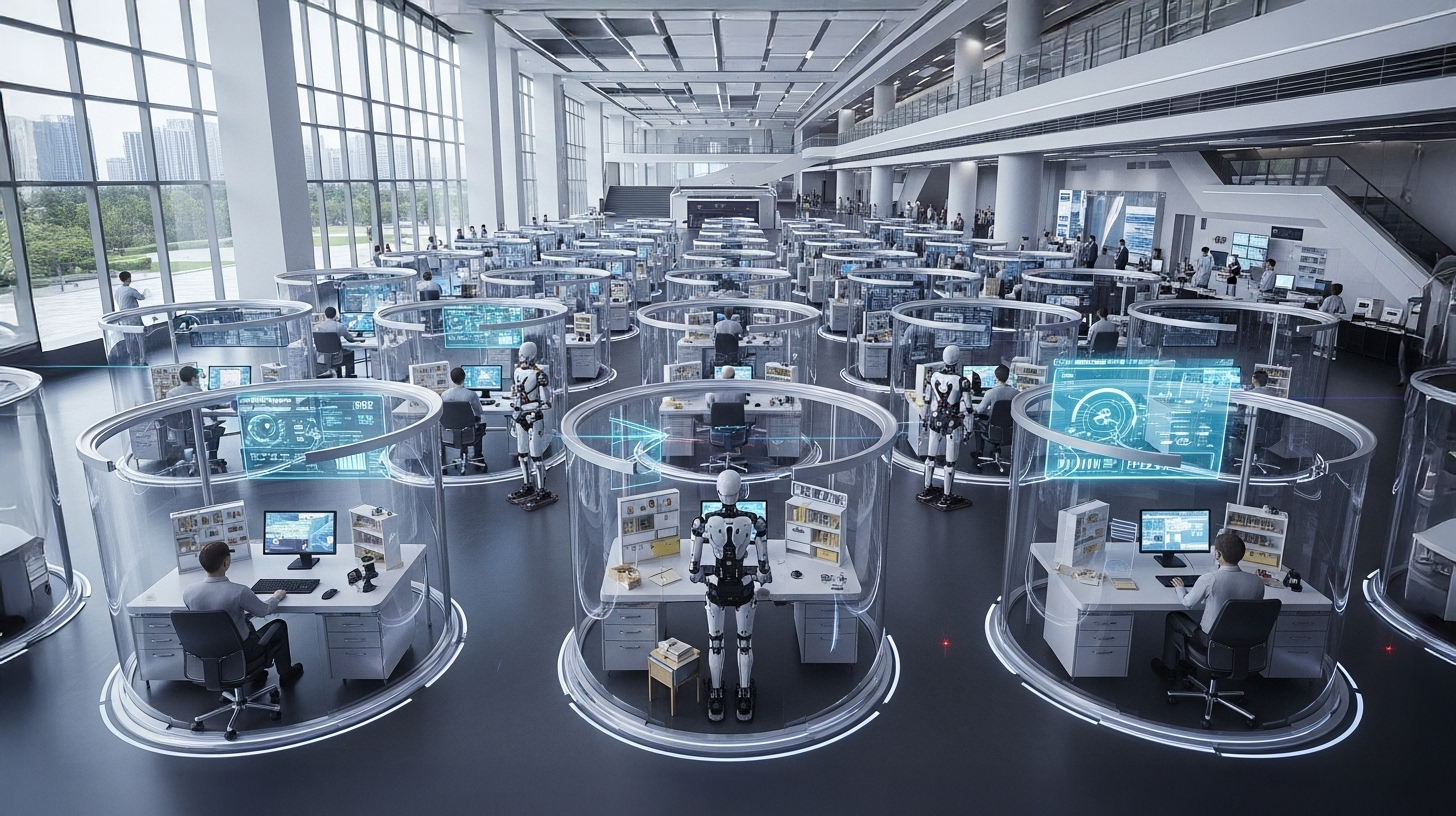
RealMan Data Training Center for Humanoid Robotics in Beijing – 108 robots learn for our everyday lives in this mega-center – Creative image: Xpert.Digital
China's master plan: With this center, Beijing aims to become the world's center for humanoid robots
### More than just code: How "embodied AI" is now teaching robots to understand the real world ### The turning point is here: Why humanoid robots will change the world of work as early as 2025 ### Robots instead of caregivers? China's new training center is preparing humanoid helpers for elderly care ###
From $80,000 to $55,000: The price of humanoid robots is falling – here's what it means for us
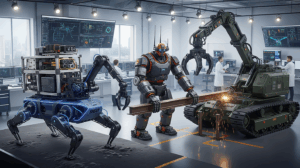
The era of humanoid robots is no longer a distant future prospect, but is beginning now. In Beijing, the Chinese company RealMan Robotics has opened a pioneering data training center designed to bridge the gap between laboratory research and real-world applications. Across 3,000 square meters, 108 robots of various designs are training in ten realistically simulated scenarios – from elderly care and retail to automotive production. The goal: to generate vast amounts of high-quality, multimodal data to massively accelerate the development of so-called "embodied AI.".
This technology enables robots to learn through physical interaction with their environment and adapt to unpredictable situations – one of the biggest hurdles in robotics to date. The center thus addresses core problems such as the lack of transferability of learned behavior to new situations and the gap between simulation and reality. This project is not only a technological milestone but also a clear signal of China's ambition to become the global center of excellence for robotics by 2029 and to lead the next industrial revolution. It marks the beginning of a new phase in which humanoid robots will increasingly shape our working and living environments.
Related to this:

What is the RealMan Data Training Center for Humanoid Robotics?
Why did RealMan open such a center in Beijing? The answer lies in the rapid development of humanoid robotics, which is currently transitioning from research labs to real-world applications. The Chinese company RealMan Robotics officially opened a humanoid robotics data training center in Beijing on August 24, 2025. This center represents a significant step toward bringing the technology from experimental environments to everyday and industrial applications.
The center serves as an innovative hub, combining research and development with scenario-based application testing, operator training, and ecosystem collaboration. As a key technology and equipment provider, RealMan Robotics plays a crucial role in both the establishment and daily operation of this facility. The initiative aims to advance the use of humanoid robotics technology in both everyday life and industry.
What are the technical specifications of the center?
How large is the center and what does it contain? The data training center covers an area of 3,000 square meters and is strategically divided into two main areas: a training area and an application area. This division allows for both theoretical training and practical testing in realistic scenarios.
At the time of its opening, 108 robots of various designs were already in operation. This impressive fleet of robots includes different types designed for various tasks: two-armed robots for handling tasks, humanoid robots on wheels, drone-based robots, and four-armed robot platforms. The diversity of robot types makes it possible to test different application scenarios and collect multimodal data.
Which areas of application are simulated at the center?
What real-world situations can be simulated at the center? To ensure data quality and provide practical scenarios, the center models ten realistic application areas. These carefully constructed environments include elderly care and rehabilitation, retail, automotive production, smart catering, special operations, and other fields.
The selection of these scenarios is strategically deliberate. They represent areas where humanoid robots could offer the greatest practical benefit. In elderly care, for example, robots can be tested in assisting the elderly, while in retail, their customer interaction and merchandise handling capabilities can be tested.
How is data generated and used at the center?
What kind of data is generated at the center and what is it used for? The center is designed to support large-scale, multimodal data generation. The various scenarios are expected to generate more than one million high-quality data points annually for training advanced AI models.
This data generation is crucial for the development of embodied AI. Multimodal data encompasses various types of information, such as visual, auditory, haptic, and motion data. This diversity enables AI systems to develop a more comprehensive understanding of their environment and respond more flexibly to different situations.
What fundamental problems does the center address?
What weaknesses in robotics will the center address? The center addresses three fundamental weaknesses in industrial robotics that have thus far limited the development and use of humanoid robots. The first weakness is the lack of scenario-spanning data generalization. Robots trained in a specific environment often struggle to transfer their knowledge to other situations.
The second major challenge is the gap between simulation and realistic conditions. Many robots are developed in controlled simulation environments but do not function optimally in the unpredictable real world. The third problem is the lack of standardized data formats and efficient closed iteration loops. Without uniform standards, it is difficult to make systematic progress in robotics.
What is Eric Zheng's vision for the future of robotics?
What challenges does the director of the Center for Humanoid Robotics see? Eric Zheng, director of the Humanoid Robotics Data Training Center, gave a keynote address at the open house entitled "Exploring the Endgame of Robotics." In his presentation, he identified three key areas in which robots need to improve before they can be used in everyday life: usability, standardization, and cost-effectiveness.
Zheng emphasized that conventional industrial robots are heavy and expensive, while service robots remain very simple in design and most lack the adaptability of humans in complex environments. Long project planning times and a lack of adaptability to individual applications, combined with high costs, continue to limit their acceptance.
How is the RealBOT Embodied Intelligence Open Platform supposed to work?
What is special about RealMan's new platform? RealMan aims to create a prerequisite for overcoming the identified shortcomings with its "RealBOT Embodied Intelligence Open Platform." This platform was specifically developed for capturing high-quality data and, through its deep integration with remote control systems, is intended to create new paradigms of human-robot collaboration.
The platform represents an important step in the development of robotics, moving from a state of "dependent on humans" to "supporting humans" and finally to "empowering and liberating humans." This evolutionary approach demonstrates how the relationship between humans and robots could develop in the coming years.
What role does embodied AI play in modern robotics?
What does "Embodied AI" mean and why is it important? Embodied AI refers to a form of artificial intelligence that is integrated into physical robots or devices and operates in the real world. The concept assumes that an AI system is equipped with a physical "body" and learns and acts through physical interactions with its environment.
This ability for physical interaction is particularly important for tasks that require human skills such as perception, motor skills, and reaction to unpredictable situations. Embodied AI has the potential to play a central role in robotics, medicine, nursing, and many other fields, as it enables robots and machines to act flexibly and dynamically in real-world environments.
Related to this:
How is humanoid robotics developing globally?
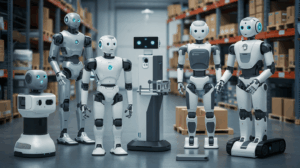
What trends will shape humanoid robotics in 2025? The International Federation of Robotics has identified humanoid robots as one of the five major robotics trends for 2025. The biggest challenge will be making humanoid robots economically viable, as manufacturing costs are currently still enormous. If this succeeds, humanoid robots could revolutionize robotics.
Studies predict that by 2030, 20 million humanoid robots will be in use worldwide, primarily in industrial applications. This number is impressive when you consider that there are currently around 4.3 million industrial robots and cobots operating in factories worldwide. Technological advances in humanoid robotics are rapid, improving by 35 to 40 percent between 2023 and 2025.
What are the possible uses in the first wave?
What tasks can humanoid robots already perform today? According to experts, in the first wave, humanoid robots can primarily handle logistical tasks such as sorting, transporting, and supplying materials, or inserting parts into machines. There are already dozens of applications in serial production, but currently only in companies with high production volumes and low product variety.
Humanoid robots could already automate up to 40 percent of tasks currently performed manually. The payback period for such investments is estimated at less than 0.56 years, making humanoid robots an attractive investment for companies. Initial industrial pilot projects have already demonstrated that investing in humanoid robots quickly becomes profitable.
What progress is planned for the second wave?
What will be possible from 2028 onwards? In the second wave, from 2028 to 2030, it is expected that even tasks with high variance, complex processes, and motor demands, such as in assembly, will be able to be performed by humanoid robots. Particularly in highly industrialized sectors like the automotive industry, significant efficiency gains can be achieved through the use of humanoid robots.
Pilot projects have already shown increases in process efficiency of up to 350 percent and quality improvements of over 90 percent. These efficiency gains are primarily due to the fact that the robots can be used 24 hours a day, 365 days a year. Furthermore, humanoid robots can completely eliminate human error.
A new dimension of digital transformation with 'Managed AI' (Artificial Intelligence) - Platform & B2B solution | Xpert Consulting


A new dimension of digital transformation with 'Managed AI' (Artificial Intelligence) – Platform & B2B solution | Xpert Consulting - Image: Xpert.Digital
Here you will learn how your company can implement customized AI solutions quickly, securely and without high entry barriers.
A managed AI platform is your all-inclusive, worry-free solution for artificial intelligence. Instead of dealing with complex technology, expensive infrastructure, and lengthy development processes, you receive a ready-made solution tailored to your needs from a specialized partner – often within just a few days.
The key advantages at a glance:
⚡ Rapid implementation: From idea to ready-to-use application in days, not months. We deliver practical solutions that create immediate added value.
🔒 Maximum data security: Your sensitive data stays with you. We guarantee secure and compliant processing without sharing data with third parties.
💸 No financial risk: You only pay for results. High upfront investments in hardware, software, or personnel are completely eliminated.
🎯 Focus on your core business: Concentrate on what you do best. We take care of the entire technical implementation, operation, and maintenance of your AI solution.
📈 Future-proof & scalable: Your AI grows with you. We ensure continuous optimization and scalability, and flexibly adapt the models to new requirements.
More information here:
Multimodal AI: The key to autonomous robot technology
When will fully autonomous robots be available?
How long will we have to wait for truly autonomous humanoid robots? Despite rapid progress, most providers are still in the prototype stage, and only a few companies have established industrial production capacities. Fully autonomous humanoid robots with highly developed fine motor skills will not be widely available until 2030.
However, the first market-ready models for industrial use are expected as early as 2025. At least five manufacturers (Agility, Figure, and Tesla from the USA, as well as Unitree and Fourier from China) will begin series production in 2025. This marks the beginning of a new era in which humanoid robots increasingly leave research laboratories and enter real-world work environments.
Related to this:

How are the costs for humanoid robots developing?
Will humanoid robots become more affordable? The cost of humanoid robots will decrease significantly in the coming years. While the purchase price for the first models averaged $80,000 in 2025, a decline to approximately $55,000 is expected by 2030. This cost reduction is due to increasing competition, technological efficiency improvements, and economies of scale in mass production.
This price trend is crucial for the market penetration of humanoid robots. The more affordable they become, the more companies will be able to integrate them into their operations. The combination of decreasing costs and increasing performance makes humanoid robots an increasingly attractive alternative to human labor in certain areas.
What role does China play in global robotics development?
Why is China a leader in robotics development? China has established itself as a global driving force in robotics development and plays a central role in the development of humanoid robots. The country is already by far the world's largest robot market and has overtaken Germany in the use of robots in industry. With 470 robots per 10,000 employees, China is showing a rapidly increasing trend.
Beijing has made humanoid robotics a strategic priority. In January 2024, the Chinese Ministry of Industry and Information Technology published guidelines for the innovative development of humanoid robots, outlining a roadmap for industrial innovation. The goal is clear: China aims to become a "global center of excellence" for robotics by 2029.
How does the Chinese government support robotics development?
What measures is China taking to promote robotics? The Chinese government is very consistently promoting the development of humanoid robots. This allows synergies to be leveraged across the entire industry chain – all areas of the supply chain, research, and development are coordinated. This enables the country to focus collectively on rapidly advancing robotics.
Beijing established funds totaling the equivalent of $137 billion to support AI and robotics startups. This is complemented by numerous local support programs. By early 2025, more than ten provinces and cities, including Beijing, Shandong, and Shenzhen, had incorporated humanoid robotics into their local economic plans. China is promoting industrial clusters focused on humanoid robots, particularly in the areas around Shenzhen and Hangzhou.
What is the significance of multimodal AI for robots?
Why is multimodal AI so important for robotics development? Multimodal AI is artificial intelligence that combines multiple types or modes of data to make more accurate observations, draw insightful conclusions, or make more precise predictions about real-world problems. Multimodal AI systems train with video, audio, speech, image, and text data, as well as a range of traditional numerical datasets.
Multimodal AI is crucial for the development of robots, as robots must interact with real-world environments, with people, and with a variety of objects such as pets, cars, buildings, and their access points. Multimodal AI uses data from cameras, microphones, GPS, and other sensors to create a detailed understanding of the environment and interact with it more effectively.
Related to this:

How does the training of multimodal AI systems work?
Which technologies enable multimodal AI in robots? Multimodal AI systems comprise various components that must work together. Natural language processing technologies offer speech recognition, speech-to-text conversion, and speech output capabilities. Computer vision technologies for image and video capture enable object recognition, including human recognition, and the differentiation of activities such as walking or jumping.
Integration systems enable multimodal AI to match, combine, prioritize, and filter data inputs across different data types. This is key to multimodal AI, as integration is central to developing context and context-based decision-making. Storage and computing resources for data mining, processing, and result generation are essential to ensure high-quality, real-time interactions and outcomes.
What are the possible applications in nursing care?
Can humanoid robots help in caregiving? The number of people requiring care in Germany has doubled in the past ten years. By 2030, an additional 130,000 caregivers are expected to be needed nationwide in nursing homes and outpatient care; by 2040, this number is projected to reach 250,000. Robots are therefore expected to eventually take over some of their tasks, such as restocking medication supplies, bringing tea, or assisting with transferring seriously ill patients.
In Germany, research teams are developing humanoid and other care robots with a wide range of applications. The Care-O-bot from the Fraunhofer Institute is now in its fourth generation and is being tested in the care sector. Depending on the needs, the robot can be equipped with different tools and functions, making it flexible for use in both private households and care facilities.
What challenges still exist in the development of care robots?
What are the biggest obstacles for care robots? Humanoid robots are not yet used in care settings because they often make mistakes and stable Wi-Fi is not available everywhere. The requirements for a robot in care are significantly more complex than for industry. While pre-programmed processes suffice in industry, in caregiving, adaptation is crucial: every movement must be sensitively tailored to the specific situation and the individual person.
The robot must grip securely, but never too firmly. It must be able to assist without causing harm or injury. Modern care robots like AIREC therefore utilize a learning system that uses sensors and deep neural networks to analyze movements, plan ahead, and precisely apply the necessary force. The developers anticipate a market launch no earlier than 2030, with an estimated starting price of around $70,000.
How will human-robot collaboration develop?
What stages of development does robotics go through? The development of robotics can be divided into different phases, which RealMan aims to advance with the RealBOT Embodied Intelligence Open Platform. The first stage is "Human-dependent," in which robots are completely dependent on human guidance. The second stage is "Assisting to humans," in which robots begin to assist humans with their tasks.
The final stage is "Empowering and liberating for humans," in which robots free people from repetitive or dangerous tasks, allowing them to focus on more creative and valuable activities. This developmental path shows how the relationship between humans and robots can evolve from dependence to cooperation and ultimately to a form of liberation.
What safety aspects need to be considered?
How can safety be ensured when interacting with humanoid robots? It is foreseeable that, following the model of Asimov's Laws of Robotics, limits will need to be defined for the activities of embodied AI in order to guarantee human safety. For example, certain guidelines are defined for digital AI so that the generative base models do not produce harmful results.
While China consolidates its position as a leading robotics hub, questions regarding safety, ethics, and interoperability remain when deploying intelligent robots. Integration into sensitive fields such as healthcare and medicine, in particular, continues to pose a significant challenge. Developing appropriate safety protocols and ethical guidelines will be crucial for the successful integration of humanoid robots into society.
What are the global implications of this development?
How will robotics development affect the global economy? The development of humanoid robots has the potential to trigger disruptive changes. Instead of simply performing repetitive tasks as before, these robots can solve complex problems in variable environments at a human-like level. This will transform intelligent robots into universal tools with a disruptive range of applications.
The RealMan Data Training Center in Beijing is more than just a research facility – it represents a turning point in global robotics development. With its combination of comprehensive data collection, realistic testing scenarios, and advanced AI integration, it could serve as a model for similar facilities worldwide. The insights gathered and technologies developed here are likely to have a significant impact on the future of human-robot interaction and pave the way for a new era of embodied intelligence.
EU/DE Data Security | Integration of an independent and cross-data-source AI platform for all business needs

Independent AI platforms as a strategic alternative for European companies - Image: Xpert.Digital
AI Game Changer: The most flexible AI platform - Tailor-made solutions that reduce costs, improve your decisions and increase efficiency
Independent AI platform: Integrates all relevant company data sources
- Rapid AI integration: Tailor-made AI solutions for businesses in hours or days, instead of months
- Flexible infrastructure: Cloud-based or hosting in your own data center (Germany, Europe, free choice of location)
- Maximum data security: its use in law firms is irrefutable proof
- Deployment across a wide variety of enterprise data sources
- Choice of own or different AI models (DE, EU, USA, CN)
More information here:
We are here for you - Consulting - Planning - Implementation - Project Management
☑️ SME support in strategy, consulting, planning and implementation
☑️ Creation or realignment of the AI strategy
☑️ Pioneer Business Development

Konrad Wolfenstein
I would be happy to serve as your personal advisor.
You can contact me by filling out the contact form below or simply call me on +49 7348 4088 965 .
I'm looking forward to our joint project.
Write to me



Xpert.Digital - Konrad Wolfenstein
Xpert.Digital is a hub for industry focusing on digitalization, mechanical engineering, logistics/intralogistics and photovoltaics.
With our 360° Business Development solution, we support renowned companies from new business to after-sales.
Market intelligence, smarketing, marketing automation, content development, PR, mail campaigns, personalized social media and lead nurturing are part of our digital tools.
You can find more information at: www.xpert.digital - www.xpert.solar - www.xpert.plus
Keep in touch