Container solutions for food security in times of crisis: From grain reserves to fully integrated food production – Image: Xpert.Digital
Germany's emergency supplies: Why you would only receive raw grain in a crisis
Blackout in Germany: How outdated is our food supply really?
Fundamentals of German emergency food preparedness
Germany has been preparing for potential supply crises for decades, but the current approaches date back to the 1960s and exhibit significant weaknesses. The state's emergency reserves currently comprise approximately 800,000 tons of food stored at over 150 secret locations. These stockpiles consist primarily of the Civil Emergency Reserve, containing rice, peas, lentils, and condensed milk, as well as the Federal Grain Reserve, including wheat, rye, and oats.
The central problem with this conventional stockpiling lies in its lack of practicality for modern crisis situations. Private households no longer possess the infrastructure of the 1960s for processing raw staple foods. While government reserves are theoretically intended to guarantee a daily meal for several weeks, there is a lack of concepts for the practical implementation of this supply under crisis conditions.
The criticisms issued by the Federal Court of Auditors in 2011 and 2019 confirm this assessment: the stockpiles are based on outdated standards, some suffer from pest infestation, and are difficult for private households to process. At the same time, high costs are incurred due to storage, administration, and regular replenishment of these emergency supplies.
Related to this:


Weaknesses in food processing during times of crisis
Germany's food supply is highly specialized and dependent on functioning infrastructure. Modern mills, bakeries, and processing plants require a stable power supply, functioning transport routes, and complex supply chains. In crisis situations such as natural disasters, prolonged power outages, or armed conflicts, these systems can fail completely.
A particularly critical issue is the dependence on large, centralized facilities. If central mills or bakeries fail, entire regions can no longer be supplied with processed food, even if sufficient raw grain is available. The COVID-19 pandemic and the war in Ukraine have already demonstrated how quickly supply chains can collapse.
To make matters worse, most large bakeries and food processing plants operate on a just-in-time basis and maintain only minimal storage capacity. In the event of supply shortages, both the raw materials and the processing capacity for a rapid response are lacking.
Container-based solutions for decentralized food production
Mobile container solutions offer an innovative approach to overcoming these weaknesses. Several manufacturers have already successfully developed production facilities in standardized 20-foot containers, enabling a complete processing chain from raw material storage to the finished product.
An Austrian supplier, for example, has built grain mills in 20-foot containers that achieve a milling capacity of around 20 tons within 24 hours. These systems are modular and can process various types of grain without complex system changes. A patented milling process enables flour production in a short time with consistent quality.
Similar concepts exist for mobile bakeries and other food processing facilities. Another container concept offers complete processing chains in container form, containing all necessary components from the production unit and cold storage to sales areas. These systems are expandable at any time and can be flexibly deployed at different locations.
Vacuum storage of grain in containers
A key advantage of container-based systems lies in the possibility of optimized raw material storage through vacuum technology. Studies by a research institute have shown that storing grain in vacuum bags at moisture levels below 14 percent yields excellent results. After two years of vacuum storage, the grain quality remained largely intact, and any existing pests were killed after just three months.
Vacuum packaging not only protects against pests but also against moisture and other environmental influences. Commercial suppliers already offer vacuum-packed organic grain in stackable plastic buckets that have a shelf life of approximately 10 years. This technology can be easily integrated into container systems and allows for space-saving storage of large quantities of grain.
Gas-tight storage in containers offers additional advantages over conventional silos. Containers can be quickly transported and used at different locations as needed. At the same time, better control of storage conditions is possible, as the sealed systems are less susceptible to external influences.
Integrated processing chains in container systems
The complete integration of a grain-to-bread production chain into container systems requires careful coordination of various processing stages. The process begins with grain cleaning to remove foreign matter, stones, and dust. Modern cleaning systems can be easily integrated into containers and ensure the necessary product quality.
Milling is carried out using compact milling systems specifically designed for containerized use. These systems achieve throughput rates of 8 to 86 tons per day and can process various types of grain without any changeover. The resulting flour quality fully meets the standards of conventional large-scale mills.
High-performance kneading machines are required for dough production; these are also available in compact designs. Modern spiral kneading machines with removable bowls allow for hygienic processing and easy cleaning. The machines are equipped with timers to prevent over-kneading and feature safety devices such as automatic shut-off when the bowl cover is opened.
The fermentation of the dough requires controlled temperature and humidity conditions. Special fermentation chambers or climate-controlled areas within the container can meet these requirements. The optimal conditions are between 25 and 28 degrees Celsius with appropriate humidity.
Energy supply through integrated solar systems
The energy supply for container-based production facilities presents one of the greatest technical challenges. Electricity demand includes the mill, kneading machines, cooling and air conditioning systems, and control electronics. However, the largest energy consumer is the oven, which requires significant amounts of thermal energy.
Innovative projects demonstrate that complete energy self-sufficiency is possible. One example is a container-based bakery in Africa that produces up to 3,000 loaves of bread daily and is powered exclusively by solar energy. The key to its success lies in the combination of energy-efficient ovens, generously sized battery storage, and optimized production processes.
Modern containerized solar systems typically comprise 24 kW photovoltaic arrays combined with 80 kWh lithium-ion battery storage. These systems are modular and can be expanded as needed. Fold-out solar panels alongside the container significantly increase the available collector area, enabling sufficient energy generation even in limited spaces.
For continuous operation, especially for nighttime bread production, generously sized battery storage systems are essential. Modern lithium-ion systems offer high energy density, a long lifespan, and reliable operation even at extreme temperatures. Containerized battery storage systems with capacities ranging from 100 kWh to the megawatt range are now commercially available and offer the necessary flexibility for various applications.
Redundant energy systems and fail-safe operation
For critical applications in crisis preparedness, the implementation of redundant energy systems is essential. In addition to basic solar power supply, supplementary energy sources such as emergency generators should be provided. Modern generators can be operated with various fuels, including conventional diesel, HVO biodiesel, or synthetic fuels.
HVO biodiesel made from hydrogenated vegetable oil offers particular advantages for long-term applications. The fuel is significantly more stable during storage than conventional diesel, less susceptible to microbial contamination, and reduces CO2 emissions by up to 90 percent. At the same time, HVO can be used in existing diesel engines without modifications and offers the same reliability as fossil diesel.
For maximum reliability, container systems should have multiple independent energy sources. A typical configuration could consist of photovoltaics for base load, battery storage for buffering, and an HVO emergency generator for extreme situations. Intelligent energy management systems can automatically switch between the different sources and smooth out peak demand.
Water and wastewater management
Water supply represents another critical aspect of container-based food production. Significant quantities of clean water are required for bread production, both for the dough and for cleaning and hygiene purposes. Container systems can be equipped with integrated water tanks that enable several days of autonomous operation.
Modern water treatment systems can convert even contaminated or saline water into drinking water. Compact, containerized reverse osmosis systems are commercially available and can be powered by solar energy. These systems significantly increase independence and enable their use even in remote areas without water supply infrastructure.
Wastewater management also requires well-thought-out solutions. Food waste and dishwater must be treated in accordance with hygiene regulations. Compact wastewater treatment plants or collection tanks for later disposal are possible approaches. For longer-term operations, biological treatment systems in additional containers can offer a sustainable solution.
Hub for Security and Defense - Advice and Information


Hub for Security and Defense - Image: Xpert.Digital
The Security and Defence Hub offers expert advice and up-to-date information to effectively support companies and organizations in strengthening their role in European security and defence policy. Working closely with the SME Connect Defence Working Group, it particularly promotes small and medium-sized enterprises (SMEs) that wish to further develop their innovative capacity and competitiveness in the defence sector. As a central point of contact, the Hub thus creates a crucial bridge between SMEs and European defence strategy.
Related to this:
Modular containers: How to increase supply security
Hygiene requirements and HACCP implementation
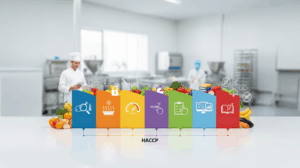
Adherence to hygiene standards is essential for all food production and particularly critical for mobile facilities in crisis situations. The HACCP (Hazard Analysis and Critical Control Points) concept must be fully integrated into container production systems.
The seven HACCP principles require a systematic analysis of all potential hazards in the production process. Biological hazards from pathogenic microorganisms pose the greatest risk. Container systems must be designed so that all surfaces that come into contact with food are made of stainless steel and are easy to clean.
Critical control points include temperature monitoring throughout the entire production chain, hygiene measures during staff changes, and contamination control during storage. Modern container systems can be equipped with automated monitoring systems that continuously record and document temperature, humidity, and other critical parameters.
Training staff in the operation of mobile production facilities is particularly important, as working conditions can differ from those in conventional factories. Standardized operating procedures and regular hygiene training ensure compliance with all regulations, even under challenging conditions.
Related to this:
Modular system architecture and scalability
The strength of container-based production systems lies in their modular design and virtually unlimited scalability. Basic modules can be combined and expanded as needed to cover different capacities and product ranges.
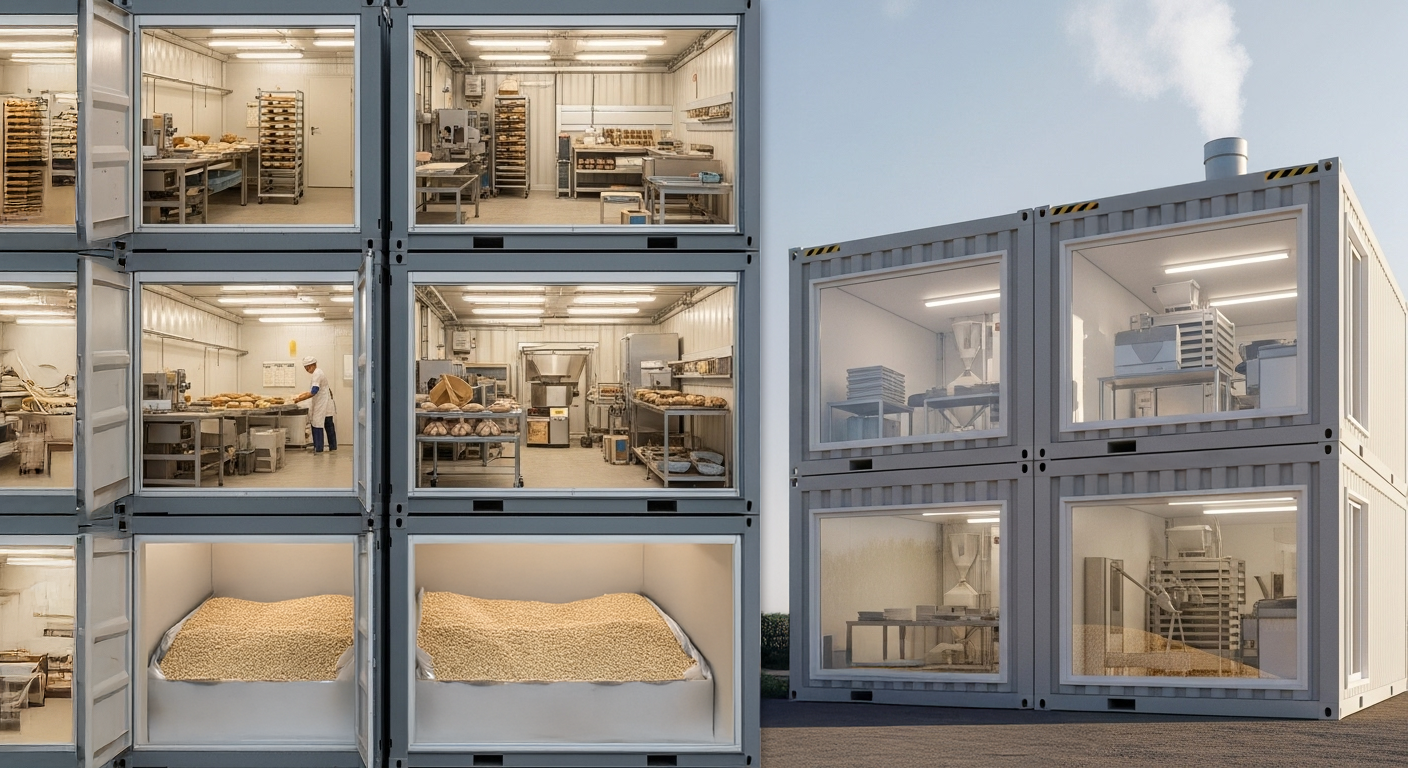
A typical basic module could consist of a single container combining storage, milling, and dough preparation. For higher capacities, additional containers can be added for separate processing steps, expanded storage, or different product lines. The containers can be arranged side-by-side or stacked to minimize space requirements.
The containers are connected via standardized interfaces, enabling rapid assembly and reconfiguration. Conveyor and transport systems can be flexibly configured to optimize material flow between modules. Central control systems coordinate production across all containers and ensure smooth operation.
This modular architecture offers crucial advantages for crisis preparedness. Systems can be built up gradually and expanded as needs increase. At the same time, distribution across multiple containers enables greater reliability, since if one module experiences problems, the others can continue to operate.
Transportability and rapid deployment readiness
The use of standardized shipping containers ensures the global transportability of the production facilities. Containers can be transported by truck, ship, or rail and quickly deployed to different locations. The standard dimensions of 20 or 40 feet allow the use of existing logistics infrastructure without special requirements.
Modern containerized production facilities are designed as plug-and-play systems that are ready for operation within two to three days of delivery. All necessary components are pre-assembled and tested. Only connections for electricity, water, and, if applicable, wastewater need to be established.
This rapid deployment capability is invaluable, especially in disaster situations. While conventional production facilities require months for planning and construction, container systems can ensure food supplies almost immediately. Their flexibility also allows for use in temporary storage, during evacuations, or in areas with destroyed infrastructure.
Related to this:
Economic aspects and cost efficiency
The investment costs for container-based production systems are significantly lower than for comparable stationary systems. The modular design allows for phased investment according to actual needs. At the same time, costs for land, buildings, and complex permitting processes are eliminated.
Operating costs are competitive with conventional systems due to the high degree of automation and energy efficiency of modern systems. The combination with renewable energies, in particular, can lead to significant cost savings, as ongoing energy costs are practically eliminated.
Container systems offer attractive financing models for public authorities. Instead of high initial investments, leasing or rental models can be used, allowing for a more even distribution of costs. Systems can be quickly expanded or relocated to other sites as needed, ensuring optimal resource utilization.
The economic benefits of decentralized container production are considerable. Local value creation, jobs, and shorter transport routes not only reduce costs but also increase security of supply. In times of crisis, these systems can replace critical infrastructure and maintain basic services.
International experiences and best practices
International projects have already proven the practical viability of container-based food production under various conditions. Container-based bakery and cold storage projects in Africa and other developing countries demonstrate that reliable bread production is possible even under extreme climatic conditions and without existing infrastructure.
These projects have provided important insights for optimizing the systems. The importance of adequately sized energy storage, the need for local maintenance capacity, and adaptation to cultural specificities are key success factors. At the same time, modular designs and standardized components have proven to be particularly easy to maintain.
Several European countries are experimenting with mobile production systems for crisis preparedness. The Netherlands has developed container systems for supplying goods during levee breaches and floods. Austria uses mobile mills for regional supply in mountainous areas where transport to central facilities is difficult.
Future prospects and technological developments
The technological development of container-based production systems is progressing rapidly. Artificial intelligence and Internet of Things (IoT) technologies enable fully automated monitoring and optimization of production processes. Predictive maintenance can forecast failures and facilitate preventative maintenance.
New battery technologies with higher energy density and longer lifespans will further improve energy self-sufficiency. At the same time, more efficient solar modules will enable higher energy yields even in limited spaces. The integration of fuel cells as an additional energy source could create further redundancy in the future.
The development of new processing technologies specifically for container applications will further increase efficiency. More compact systems with higher throughput and lower energy consumption are already under development. At the same time, new materials and manufacturing techniques are enabling more cost-effective and lower-maintenance systems.
Implementation in German crisis preparedness
Integrating container-based production systems into Germany's emergency food preparedness requires a fundamental overhaul of existing concepts. Instead of relying solely on storing raw staple foods, decentralized processing capacities should be established that remain functional even under crisis conditions.
One possible strategy could involve the regional distribution of containerized production systems that are used commercially in normal times and can be quickly activated for emergency supply in times of crisis. Private operators could be contractually obligated to provide capacity for public supply in the event of a crisis.
The existing grain storage facilities could be gradually supplemented by modern, equipped container storage facilities that offer not only optimized storage but also basic processing capacities. These hybrid approaches would combine the advantages of both systems and enable a phased modernization.
The training of skilled workers for operating mobile production facilities must begin early. Cooperation with vocational schools, chambers of crafts, and the food industry can develop the necessary skills. Regular drills and training courses ensure operational readiness in an emergency.
Strategic importance for national security
Container-based food production systems represent a paradigmatic shift in crisis preparedness. They overcome the traditional separation between storage and processing, creating flexible, decentralized capacities that remain functional even in the event of severe infrastructure damage.
The strategic advantages extend far beyond mere food supply. Decentralized production capacities increase the resilience of the entire economy and reduce vulnerability to targeted attacks on central infrastructure. At the same time, they lay the foundations for economic reconstruction after disasters.
Investing in such systems is not only insurance against crisis scenarios, but also an investment in a more sustainable and resilient future. The combination of modern technology, renewable energies, and modular construction demonstrates how industrialized societies can ensure their basic services even under extreme conditions.
The time has come for a change in crisis preparedness. Container-based production systems offer the technology and flexibility required to meet the challenges of the 21st century. Their early implementation could be crucial in determining whether Germany can reliably supply its population with food, even in severe crises.
Consulting - Planning - Implementation

Markus Becker
I would be happy to serve as your personal advisor.
Head of Business Development
Chairman SME Connect Defense Working Group
Consulting - Planning - Implementation
Konrad Wolfenstein
I would be happy to serve as your personal advisor.
You can contact me at wolfenstein∂xpert.digital or
Just call me on +49 7348 4088 965 .
Your container high-bay warehouse and container terminal experts
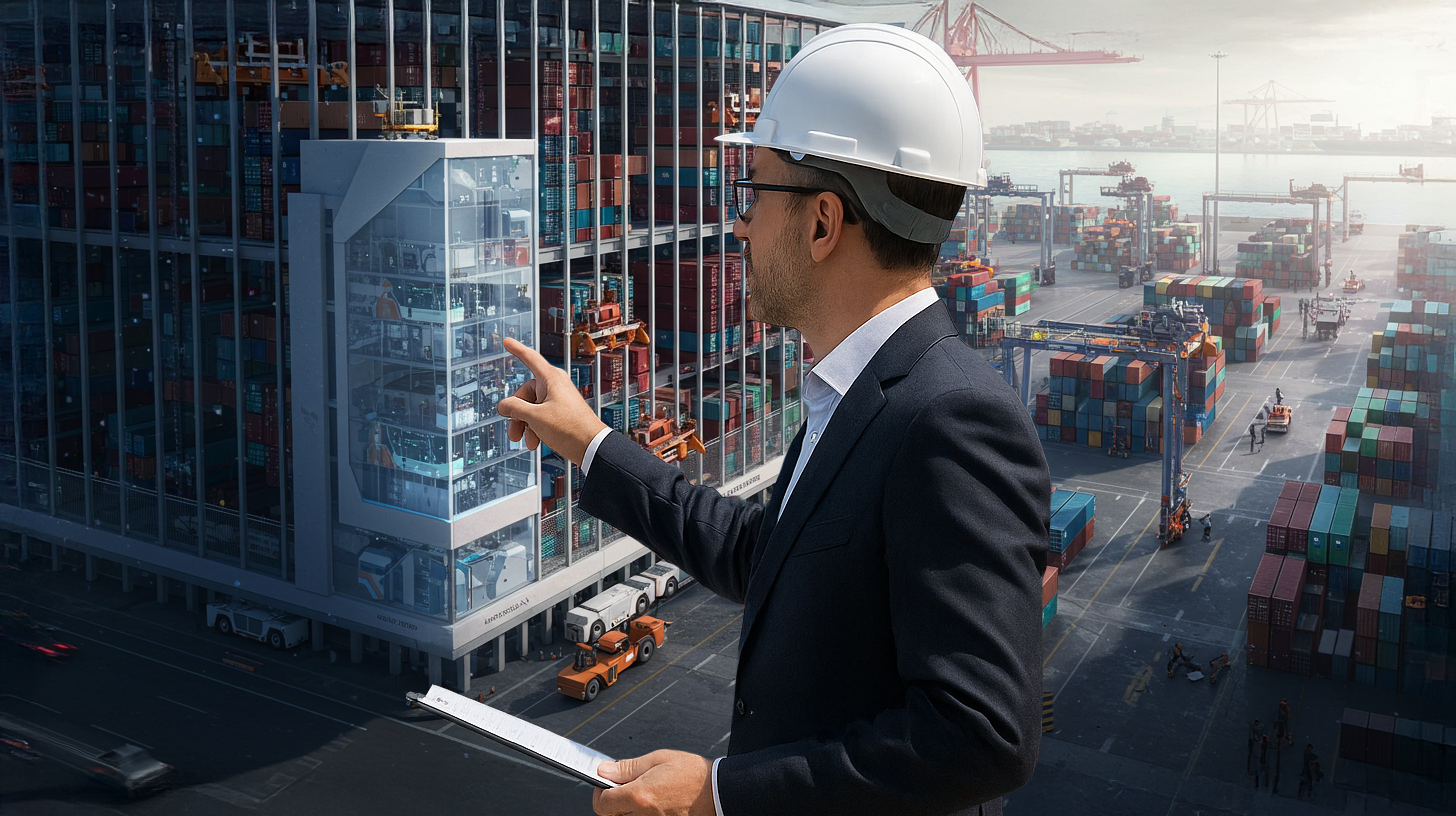
Container high-bay warehouses and container terminals: The logistical interplay – expert advice and solutions - Creative image: Xpert.Digital
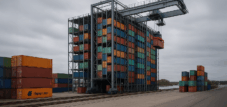
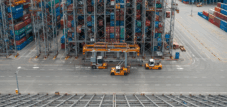
This innovative technology promises to fundamentally change container logistics. Instead of stacking containers horizontally as before, they will be stored vertically in multi-story steel racking structures. This not only allows for a drastic increase in storage capacity within the same area, but also revolutionizes all processes at the container terminal.
More information here: