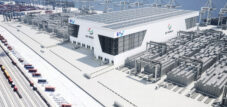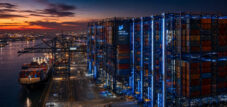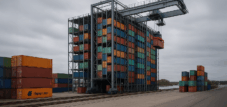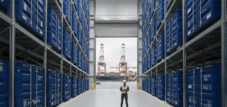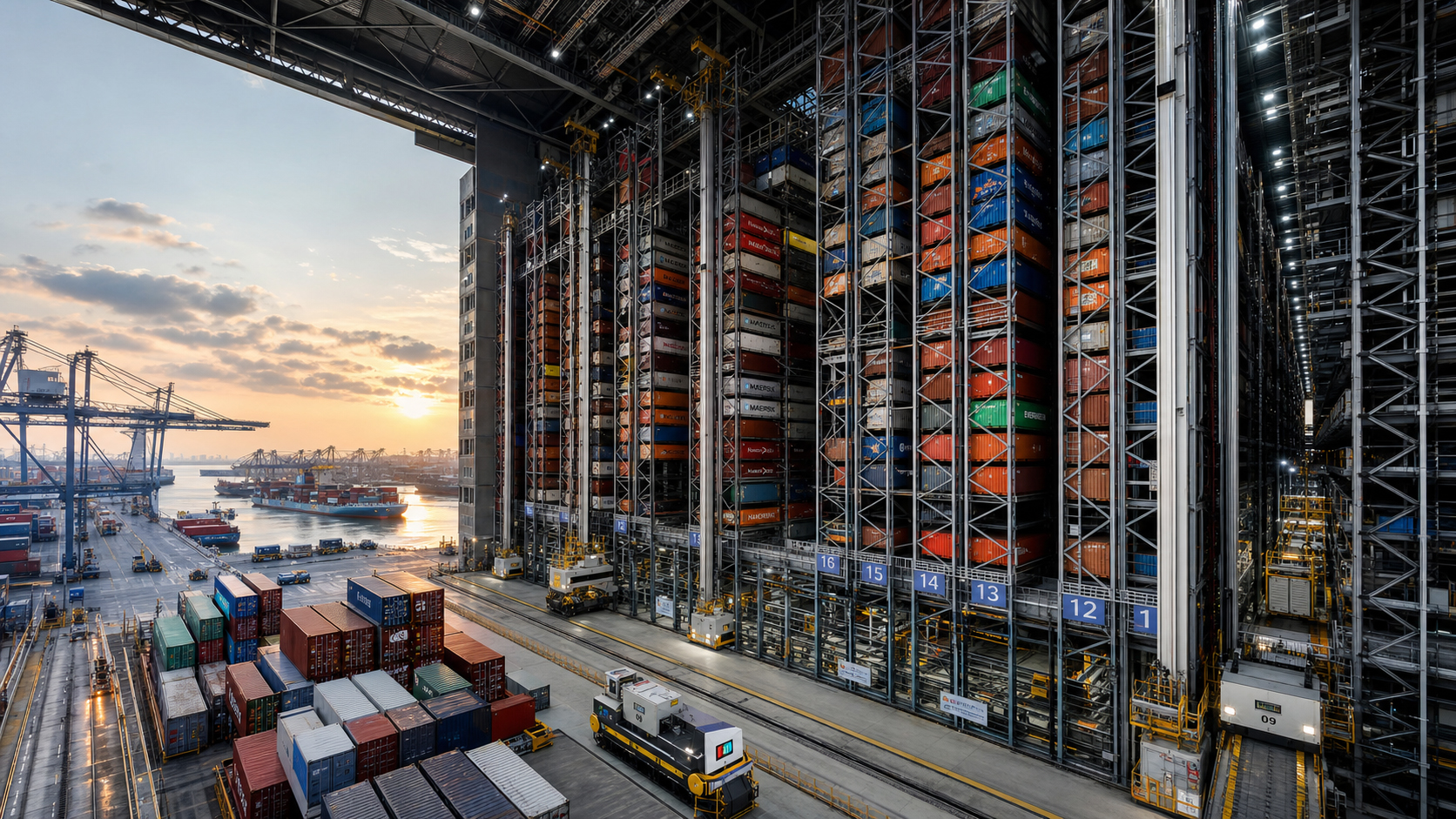
Container high-bay warehouse market: Market analysis, competition, opportunities and strategic recommendations – Creative image: Xpert.Digital
Up to 65% unproductive: How vertical high-bay warehouses end the container madness
When space in the port runs out: The billion-dollar trap of "shuffling" – Why horizontal container stacking is coming to an end
Global logistics is increasingly reaching its physical limits: While container ships are becoming ever more gigantic and world trade is growing relentlessly, the available space at the world's largest seaports is largely exhausted. The result is an inefficient bottleneck at the quays. Unproductive, time-consuming, and energy-intensive restacking processes—known as "shuffling"—currently account for up to 65 percent of all container movements at conventional terminals. To resolve this structural bottleneck, the industry is now turning to a technological solution that requires a radical rethink: the end of horizontal space utilization and a move toward vertical integration.
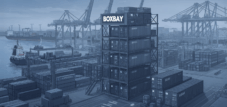
So-called container high-bay warehouses are setting entirely new standards. Pioneers like the joint venture BOXBAY are demonstrating at locations such as Dubai and soon London how storage capacity can be tripled on the same footprint, while completely eliminating shuffling. Adapting classic high-bay racking technology to shipping containers weighing up to 30 tons represents an engineering milestone, largely driven by German expertise.
The following analysis examines the rapidly growing market for automated container high-bay warehouses. It demonstrates how economic constraints, ambitious sustainability goals, and sheer lack of space are fueling this technological shift. Furthermore, it identifies the current global market leaders and identifies the enormous market opportunities that will open up for port operators, investors, and technology providers in the coming years.
When the port has no more space – why vertical container high-bay warehouses are no longer an option, but a necessity
The end of horizontal thinking: Why ports must fight against gravity
Global container logistics is caught in a structural dilemma that, with each year of growth in world trade, becomes more deeply entrenched in port operations. On the one hand, ever-larger container ships—the so-called Ultra Large Container Ships (ULCS) with capacities of up to 24,000 TEU—demand ever-increasing throughput in ever-shorter timeframes. On the other hand, available space in port areas is finite, expensive, and often politically unfeasible for expansion. The result is a paradox that has plagued the industry for years: Container throughput is growing, but available storage space on the ground is not.
Conventional container depots – so-called container yards – typically stack their units on four to a maximum of six levels. This limitation is not technical, but physical: the higher and denser the stacking, the more frequently a container has to be moved just to access another. In the industry, this phenomenon is known as "shuffling." Up to 65 percent of all container movements at a conventional terminal are non-productive restacking operations that benefit neither the customer nor the operator, but consume considerable costs, time, and energy. This is where the principle of the high-bay container warehouse comes in – and it does so with a radical approach that the industry is only just beginning to grasp.
Market volume and growth dynamics: Figures that describe a transformation
The market for automated storage and retrieval systems (AS/RS) is currently valued at approximately US$11.16 billion (2025) and is projected to grow to US$16.68 billion by 2030, representing a compound annual growth rate (CAGR) of 8.3 percent. Another market report estimates the global AS/RS market size at US$22.1 billion for 2024 and forecasts an increase to US$37.6 billion by 2033. The discrepancy between the various market definitions stems from differing scopes: some analysts only consider pure high-bay warehouse systems, while others include the entire range of automated storage technologies – from mini-load systems to robotic shuttle systems.
The submarket specifically focused on automated container terminals is estimated to reach approximately US$10.98 to US$12.65 billion in 2025 and is projected to grow to as much as US$31.27 billion by 2037, representing a CAGR of over 7.7 percent. This submarket is particularly relevant because it reflects the convergence of two megatrends: the automation of cargo handling and the structural scarcity of space in major ports. Even with conservative estimates, the European Commission forecasts an increase in cargo throughput in EU ports of around 50 percent by 2030, with container traffic growing disproportionately. German seaports alone expect average annual growth of 4.3 percent in TEU between 2010 and 2030.
The intralogistics market as a whole is the overarching growth segment: it is projected to increase from US$63.16 billion in 2026 to US$140.73 billion in 2034 – a CAGR of 10.4 percent. Europe is a major contributor to this growth, driven by Industry 4.0 strategies, the shortage of skilled workers, and stringent environmental regulations. Germany is by far the largest single market, with an operational stock of approximately 221,500 industrial robot units – roughly three times that of Italy.
The land problem as a catalyst: Economic constraints drive technological change
To understand the core structural problem driving the market for container high-bay warehouses, it's worth looking at the economic realities of a modern container terminal. Port sites in world-class locations – Rotterdam, Hamburg, Singapore, Shanghai, Dubai – are often the most expensive industrial sites available. Therefore, increasing throughput within the same area is not just a matter of operational efficiency, but a direct business necessity.
The high-bay container warehouse provides a compelling answer to this question: In direct comparison to a conventional container yard, it offers more than three times the storage capacity on the same footprint. This allows a terminal's footprint to be reduced by up to 70 percent – or, with the same footprint, storage capacity can be tripled. This is not a marketing promise, but a proven result in Dubai under real-world conditions, validated by more than 190,000 container movements since the BOXBAY pilot facility began operating at Jebel Ali Terminal 4 in 2021.
The empty container problem exacerbates this effect: empty container transport incurs estimated annual costs of €13 to €17 billion in international maritime freight for repositioning processes alone. Shipping companies invest up to US$16 billion annually in repositioning empty containers. These massive inefficiencies make smarter, space-saving storage of empty containers immediately economically attractive. It is no coincidence that the world's first commercially scaled high-bay warehouse for empty containers is currently being built at the Port of London Gateway.
BOXBAY: The flagship of a global transformation and its development path
The joint venture BOXBAY, operated jointly by DP World from Dubai and the German SMS Group – more precisely, its subsidiary AMOVA – has undergone remarkable development in just a few years. Its technological foundation is as elegant as it is robust: AMOVA had spent decades developing and operating high-bay warehouses for metal coils weighing up to 50 tons in steel mill logistics. This expertise – handling heavy, bulky objects in automated high-bay structures – could be directly transferred to container logistics. A standard 20-foot container weighs around 2.2 tons empty and up to 30 tons when loaded – manageable for a system that moves 50-ton steel coils.
The pilot plant at Jebel Ali Port in Dubai, which went into operation in 2021 and initially comprises eleven storage levels, has impressively demonstrated the feasibility of the technology. With the order for the Port of Busan in South Korea – for the terminal operated by PNC – the technology entered its first commercial implementation outside of Dubai. As one of the world's most important container transshipment ports, Busan is an ideal reference market, and its performance is being closely watched by the global port industry.
The most significant step to date, however, is the contract with DP World for the high-bay warehouse at the Port of London Gateway: A 16-story facility, designed exclusively for empty containers and with a capacity of 27,000 TEU, is being built there for approximately €91.7 million. With ten storage aisles and 15 stacker cranes, this facility is the first of its kind on a commercial scale specifically designed for the highly problematic storage of empty containers. According to current plans, the entire facility will offer a 65 percent increase in efficiency compared to conventional solutions and will rise 55 meters high, with a footprint of approximately 323 by 159 meters. The conversion work is part of a larger expansion of London Gateway into the largest container terminal in the United Kingdom, with a planned total investment of over one billion euros.
Competitive landscape: Who claims the power to define the container high-bay warehouse market?
Despite its enormous potential, the market for container high-bay warehouses is still manageable in terms of the number of direct suppliers of fully integrated systems that serve the port as a market environment.
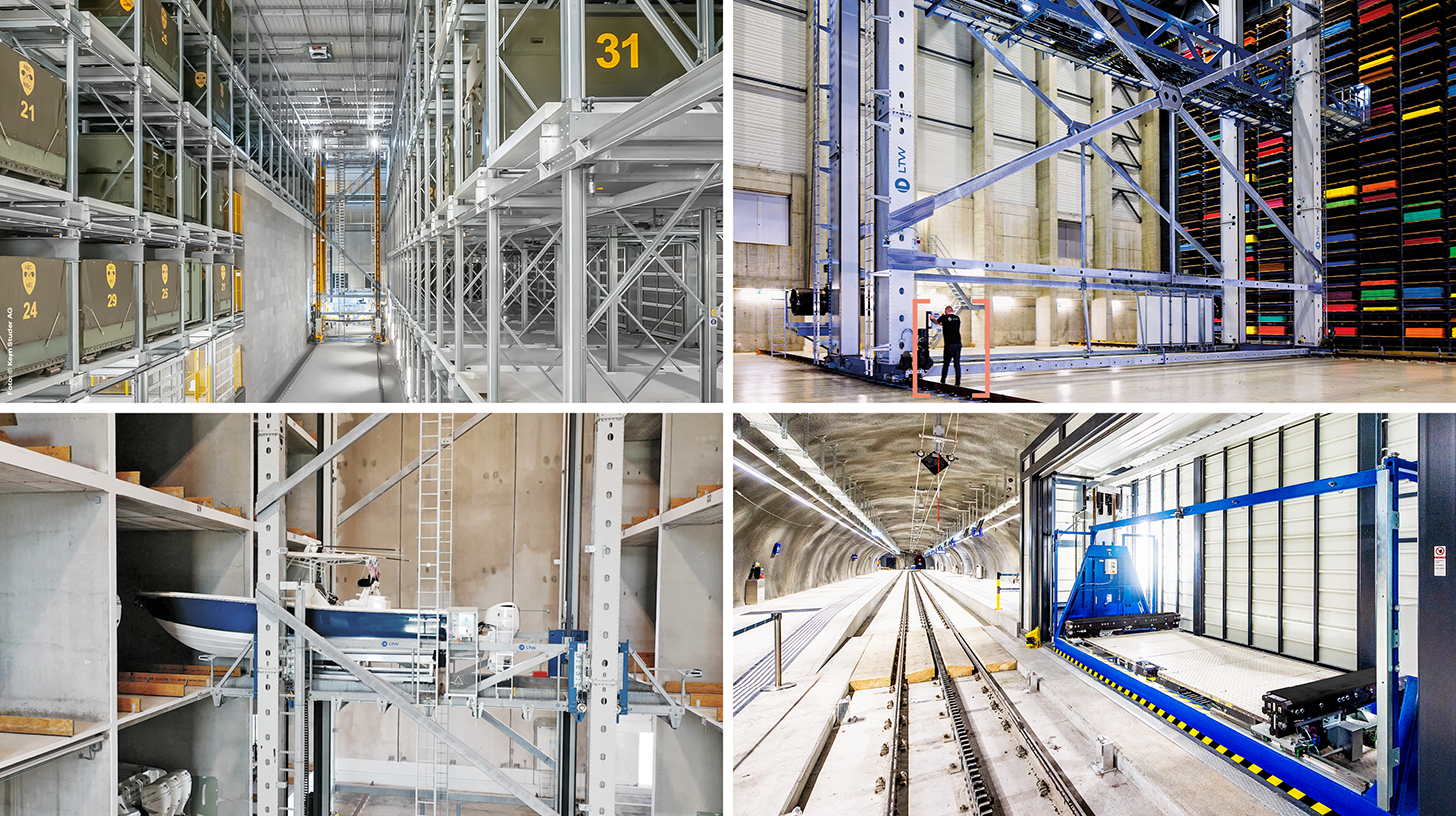
A serious player in the field is LTW Intralogistics GmbH, based in Wolfurt, Vorarlberg, Austria. Founded in 1981, the company is a wholly owned subsidiary of the globally operating Doppelmayr Holding SE – known as the world market leader in cable car construction – and manufactures its systems according to cable car standards with extremely tight manufacturing tolerances, enabling precise material handling at heights of over 40 meters. This very manufacturing philosophy makes LTW a remarkable player in the container high-bay warehouse sector: Those who build cable cars understand the physics of heavy loads under critical operating conditions. LTW has already transferred this expertise to real-world container projects: The company's first container warehouse was built for the Swiss Federal Office for Defence Procurement, armasuisse – a 20-meter-high storage and retrieval machine with a payload of 18 tons, offering 206 storage locations for containers, swap bodies, and roll-off containers. A patented gate system even allows for minor maintenance work to be carried out directly on the stored containers. The dual drive system of the storage and retrieval machine creates a redundant design for maximum availability.
LTW positions itself as a full-service provider and general contractor: mechanics, electronics, and software are supplied from a single source – turnkey solutions including its own warehouse management software. With over 850 successfully completed projects and more than 1,700 stacker cranes in over 35 countries, the company is an experienced system integrator covering the entire value chain from engineering to after-sales service. LTW generates 70 percent of its revenue in the DACH region (Germany, Austria, and Switzerland), with a growing presence in North America through a branch in Denver. Its product range extends from medium-sized projects to fully automated logistics centers with over 100,000 pallet positions.
LTW is strategically well-positioned in the container high-bay warehouse market: The company is large enough to handle technologically demanding heavy-lift projects, yet small and flexible enough to develop customized solutions that larger corporations, with their standardization approach, would not be able to accommodate. While the armasuisse project is not an industrial-scale port high-bay warehouse, it demonstrates that LTW has already successfully mastered the key technological hurdles – heavy loads, redundant systems, and special lifting devices for container geometries. The next logical scaling step would be a terminal contract in the medium-sized segment, for example, for an inland port, an intermodal terminal, or an empty container depot – precisely the niche where BOXBAY, with its Dubai-scale operations, does not yet offer the most favorable price-performance ratio.
In addition, there are a number of suppliers active in the broader field of port automation who could potentially penetrate the high-bay racking segment. The Finnish company Cargotec (with its Kalmar brand) generated approximately US$1.32 billion in revenue in 2024 with automated cranes and terminal control systems and operates 18 automated terminals worldwide. Its competitor Konecranes, also Finnish, achieved US$1.11 billion in revenue and operated 15 automated terminals. The Chinese heavy machinery giant ZPMC – Shanghai Zhenhua Heavy Industries – is the largest single installer worldwide with US$980 million in revenue and 22 automated terminals, but its focus is on automated cranes rather than high-bay racking.
In the broader AS/RS market, Daifuku (Japan, annual revenue US$4.55 billion), Dematic (part of the KION Group, US$4.06 billion), and SSI Schäfer (Germany, US$1.93 billion) dominate. These companies are technology leaders for classic intralogistics high-bay warehouses, but have so far only marginally developed container-specific solutions. AMOVA/BOXBAY thus occupies a well-defined niche segment in this competitive field – a segment, however, that will expand rapidly with increasing commercialization. LTW Intralogistics from Wolfurt demonstrates that entering this segment is also feasible for medium-sized specialist providers – provided they possess the necessary heavy-lift expertise and are willing to consistently develop reference projects.
It remains to be seen whether BOXBAY can generate the necessary development speed and capital to meet the emerging global market demand before established heavyweights like Konecranes or Kalmar develop their own high-bay racking solutions for containers. The technological transfer achieved by AMOVA – adapting proven coil logistics to containers – is, in principle, replicable. Patent protection and a head start in the learning curve are the decisive competitive advantages. LTW, in turn, demonstrates that the specific segment of custom solutions – small to medium-sized container high-bay racking systems for non-maritime applications – constitutes a distinct market segment where niche expertise initially prevails over economies of scale.
Technological core: What distinguishes a container high-bay warehouse from a classic rack warehouse
A container high-bay warehouse for port environments is more demanding in several respects than a conventional high-bay warehouse, for example, for pallets or small goods. Its load range begins where classic systems end: with loads of up to 30 tons per unit, under extreme weather conditions, in outdoor operation, with ship connections on one side and truck/rail connections on the other.
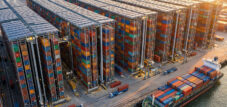
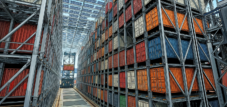
The BOXBAY system stores containers in a steel frame structure on up to 16 levels – the London facility thus even surpasses the original pilot plant in Dubai with eleven levels. Each individual container has direct access via a dedicated storage and retrieval machine (SRM). This principle is well-known from traditional intralogistics and established there as a crucial efficiency factor: no unnecessary intermediate movements, no shuffling. In the container sector, this represents a revolution, as restacking is the biggest single cost driver at conventional terminals.
The system's digital backbone comprises a custom-developed High-Bay Storage Terminal Operating System (HBS-TOS), energy management systems, highly efficient drive systems, and a business intelligence module. The interfaces to the seaside and landside infrastructure – container cranes, AGVs, truck gates, and rail connections – must be precisely synchronized, making implementation technically demanding and highly customized.
The fully automated system can increase cargo handling speed at the quay by up to 20 percent – a significant economic advantage for the cost-intensive container shipping industry. Ships spend less time in port, berth costs decrease, and fleet turnover increases. For a large container port handling several hundred ship calls per month, these effects add up to millions of euros.
Economic efficiency and investment calculation: What the business case really reveals
The investment costs for a container high-bay warehouse are on a completely different scale than those for conventional intralogistics projects. The London-based BOXBAY contract has a project volume of approximately €91.7 million for 27,000 TEU capacity – corresponding to a specific investment volume of around €3,400 per TEU capacity. For medium-sized high-bay warehouses in conventional intralogistics, investment costs range from €5 to €20 million, highlighting the significantly higher capital dimension of the container-specific variant.
The return on investment (ROI) of a high-bay container warehouse stems from several sources simultaneously. First, from space savings: when three times the storage density is possible on the same area, either land costs decrease or space is created for additional handling capacity. Second, from the elimination of shuffling: the removal of unproductive container movements, which previously accounted for up to 65 percent of all moves, directly saves on personnel, machinery costs, and energy. Third, from the increased ship handling speed, which reduces berthing time and thus berthing fees. Fourth, from the lower operating costs due to full electrification and the elimination of diesel van carriers.
The total cost of ownership (TCO) of an automated system must be considered in the long term. Maintenance costs, software updates, spare parts supply, and the structural robustness of the steel construction under salinity and weather exposure are factors that become crucial for profitability over a plant horizon of 20 to 30 years. Industry studies emphasize that life cycle costs must be considered early in the business case, as neglecting these factors leads to overly optimistic amortization calculations. Those who use only the purchase price as the basis for their decision will systematically underestimate the business case.
LTW Intralogistics Solutions

LTW Intralogistics – Engineers of Flow - Image: LTW Intralogistics GmbH
LTW offers its customers not individual components, but integrated complete solutions. Consulting, planning, mechanical and electrotechnical components, control and automation technology, as well as software and service – everything is networked and precisely coordinated.
In-house production of key components is particularly advantageous. This allows for optimal control of quality, supply chains, and interfaces.
LTW stands for reliability, transparency, and collaborative partnership. Loyalty and honesty are firmly anchored in the company's philosophy – a handshake still means something here.
Related to this:
Managing empty containers efficiently: How high-bay warehouses pay off for ports and hinterland areas
Port automation in a European context: Germany, Rotterdam and the competitive reality
Europe's leading container ports are engaged in intense modernization competition. Hamburg, Rotterdam, and Antwerp are vying not only for market share but also for technological leadership and attractiveness to major shipping companies. Since 2019, HHLA has invested more than €400 million in modernizing its container terminals in Hamburg, with a further €300 million planned for 2025. At the Container Terminal Burchardkai (CTB), horizontal container transport is being completely converted to automated guided vehicles (AGVs) and combined with automated storage block systems. This has already reduced the required space by more than 50 percent compared to conventional van carrier yards.
At the Altenwerder Container Terminal (CTA) in Hamburg – the world's first certified climate-neutral container handling facility – nearly 90 percent of the driverless transport vehicles already run on green electricity instead of diesel. HHLA has already reduced its Scope 1 and market-related Scope 2 CO2 emissions by 44.7 percent by the end of 2025 compared to the 2018 baseline and aims for complete climate neutrality by 2040. The share of electricity from renewable energy sources was 73.1 percent across the Group in 2025, and 100 percent in Germany.
By 2030, all 14 container cranes at the Altenwerder Container Terminal are to be replaced by highly automated, remotely controlled models. These investments are taking place under considerable competitive pressure: Rotterdam and Antwerp have been pursuing their automation programs on a large scale for years and are already further ahead than Hamburg in some areas. In this context, the empty container storage segment, which represents a structurally unresolved efficiency problem in Hamburg as in other European ports, is particularly suitable for a BOXBAY-style high-bay container warehouse.
Market opportunities in detail: Where the greatest leverage lies
The market opportunities for container high-bay warehouses can be structured according to application context, geography, and operator type.
The strongest and most urgent demand arises where three factors converge: extremely expensive port land, a high volume of empty containers, and intense pressure for automation. In this combination, the major North European ports (Hamburg, Rotterdam, Antwerp), Asian megaports (Busan, Singapore, Shanghai, Hong Kong), and the ports of the Middle East (Dubai, Abu Dhabi) stand out in particular. These locations possess the economic power, the political will, and the operational pressure to make investments of this magnitude.
A second, and so far less developed, market segment is that of hinterland terminals – the intermodal terminals of combined transport. These transshipment facilities at the interface of road and rail also suffer from a lack of space, especially since they are usually located in densely populated or logistically strategic locations. A compact high-bay container warehouse could multiply the capacity of an existing terminal without requiring the development of new land. The new intermodal terminal in Dortmund illustrates this trend: The expansion of rail capacity is shifting significant portions of current road transport to rail.
A third segment is the island depot or empty container depot, operated by shipping companies or leasing firms. Given that repositioning empty containers costs up to US$34.8 billion per year worldwide, any technology that stores empty containers more compactly and with easier access has an immediate impact on costs.
Sustainability dimension: Green added value as a market amplifier
Container high-bay warehouses have a sustainability dimension that is often underestimated in market analyses but is increasingly becoming a key selling point in its own right. The complete electrification of the system – no diesel van carriers, no emissions in the immediate terminal area – enables a decarbonization of port handling that is difficult to achieve with conventional systems. At terminals like the HHLA Container Terminal Burchardkai, the electrification of horizontal container transport can avoid approximately 11,243 tons of CO2 annually.
The EU AI Act, which becomes binding in 2026, imposes additional regulatory requirements on AI systems in port environments, but at the same time opens up opportunities for data-driven optimization systems, which are already integrated into modern high-bay warehouses. Ports that invest early in certifiable, low-emission automation solutions can leverage regulatory compliance as a competitive advantage – especially in light of the growing ESG requirements shipping companies place on their terminal partners.
HHLA demonstrates how far this path has already been traveled: 100 percent renewable electricity in Germany, a CO2 reduction of 44.7 percent compared to 2018, and the planning of hydrogen logistics for heavy-duty vehicles. Container high-bay warehouses fit seamlessly into this strategy: They require no combustion engines, produce no exhaust fumes, and, thanks to the integration of photovoltaics on the roof surfaces of the high-bay structure, are even potential energy producers.
Risks and challenges: What could slow down the market ramp-up
Despite the persuasiveness of the technological solution and the economic logic, there are a number of factors that can slow down or distort the market ramp-up.
The first risk is the capital intensity combined with long planning and approval horizons. Port projects of this scale often take five to ten years from the initial decision to the start of operations. The willingness to make upfront investments is not a given in an industry operating under margin pressure and geopolitical uncertainties.
The second risk is technological concentration: If BOXBAY is the only fully validated supplier, port operators have no alternative sources of supply, which limits their bargaining power and resilience. A monopoly is rarely comfortable for the customer, even if the product is superior. Once competitors like LTW Intralogistics or Konecranes develop and scale their own systems, this advantage will diminish.
The third risk lies in the operational complexities on the employee side. Automation in ports is a highly political issue in many countries. HHLA, as a company with employee representation, has experienced firsthand how involving employee representatives can lengthen implementation times. Unions rightly see high automation as a structural threat to traditional port jobs, which can lead to political resistance and labor disputes.
The fourth risk is technological in nature: The system complexity of container high-bay warehouses, the real-time integration with crane, AGV, and gate systems, as well as the cybersecurity requirements of critical infrastructure, increase the susceptibility to errors. Unlike in a conventional yard, a system failure in a fully automated high-bay warehouse cannot be bridged by manual improvisation – redundancy and fail-safe operation are therefore system-critical requirements.
Strategic recommendations for market participants
For port operators and terminal operators, the market situation presents a clear strategic picture: Now is an opportune time to adopt the technology because BOXBAY exists as a validated partner, while the competition has not yet entered the market on a broad scale. Those who complete reference projects early secure more favorable terms, technological expertise, and an efficiency advantage over competing locations. At the same time, a modular approach is recommended – not the immediate construction of a complete system, but rather the phased implementation in a clearly defined terminal segment (e.g., empty container depot), with the option for expansion.
For technology providers in traditional intralogistics – SSI Schäfer, Dematic, Jungheinrich, and especially LTW Intralogistics – the question of whether and how to enter the port segment has become strategically more pressing. The AS/RS market in conventional warehouses and distribution centers is highly competitive, price pressure is high, and margins are structurally under strain. Container high-bay warehouses offer these companies a rapidly growing adjacent segment where their core competencies – stacker cranes, control software, and system integration – can be directly applied. LTW has already demonstrated its expertise in heavy-duty handling with the armasuisse container warehouse; the next step would be consistent positioning in the mid-range terminal market, for which BOXBAY does not yet offer an optimal standard solution.
For investors and infrastructure funds, the container high-bay warehouse segment is an attractive long-term asset: it benefits from regulatory advantages due to Green Deal requirements, is more resilient to economic downturns than other parts of the logistics sector, and offers stable cash flows once capacity contracts with terminal operators are in place. Its integration into larger port expansion projects – such as the more than one billion euro expansion of London Gateway – demonstrates that container high-bay warehouses are financed as part of integrated infrastructure programs and thus have access to institutional capital.
For technology and consulting firms specializing in digitalization and AI, a market opportunity is emerging in the software layer: warehouse management systems, terminal operating systems, predictive maintenance, energy management, and business intelligence for container high-bay warehouses represent a distinct growth segment that is currently underserved. The EU AI Act 2026 establishes a regulatory framework that demands transparency and traceability of AI decisions in port operations – thereby rewarding providers who consider compliant AI design from the outset.
Geopolitical and structural megatrends as long-term drivers
Container high-bay warehouse technology is not an isolated innovation phenomenon, but is embedded in several overarching global trends that will ensure its long-term relevance.
First, there is the structural growth of global trade. Despite temporary disruptions caused by geopolitics, pandemics, and trade disputes, global container volume continues to grow in the long term. DP World alone plans to increase its worldwide container handling capacity by approximately 5.4 million TEU to around 107.6 million TEU by the end of 2025. This capacity expansion, coupled with space constraints, makes high-bay warehouses structurally more attractive.
Secondly, the mega-ship phenomenon. Ultra-large container ships with a capacity of 20,000 to 24,000 TEU generate extreme peak loads during unloading, which completely overwhelm conventional yards. A high-bay warehouse with direct container access can absorb these peak loads significantly better than a system that first has to work its way to the correct container by restacking.
Thirdly, there is the geopolitical trend towards reshoring and nearshoring logistics. The shortening of global supply chains – a trend accelerated by COVID-19 and geopolitical tensions – is leading to a decentralization of container flows. More ports with lower capacity are becoming hubs, and in smaller ports, space constraints are even more severe than in megaports. Modular, scalable container high-bay warehouses could find their second market precisely here – and this is exactly where the strategic opportunity lies for providers like LTW Intralogistics.
Fourth: the increasing importance of combined transport. The EU climate targets require a massive shift of freight transport from road to rail. Combined transport terminals at the central hubs of the European rail freight network are becoming critical infrastructure. Compact, high-density container high-bay warehouses could become a new standard solution here – provided the technology is adapted to these smaller, often confined sites.
A market at the tipping point of its commercialization
The market for container high-bay warehouses is in a state that economists describe as a "takeoff": Technological feasibility has been proven, the first commercial implementations are underway, the business case has been validated across multiple application scenarios – and the structural drivers are not going away anytime soon. As a first mover, BOXBAY has established a strong position that will translate into market share and reference projects in the coming years. The question is less whether this technology will prevail, but rather how quickly and by how many providers.
Alongside BOXBAY, LTW Intralogistics from Wolfurt exemplifies that access to this market doesn't necessarily require a billion-dollar joint venture. Backed by Doppelmayr's manufacturing excellence, a validated container storage reference project, and the profile of a flexible general contractor, a medium-sized specialist can address the market segment that lies between large port BOXBAY contracts and classic high-bay logistics warehouses – a segment with considerable growth potential.
For Germany, home to both SMS Group/AMOVA and one of Europe's largest port and intralogistics industries, container high-bay warehouses represent a strategic export product with global reach. The combination of proven engineering expertise in metal construction with advanced control technology and digital operating software is a classic competency profile that gives Germany and the German-speaking region a structural advantage in this market. The market has ceased to be a niche – it is on its way to becoming the standard.
Consulting - Planning - Implementation

Konrad Wolfenstein
I would be happy to serve as your personal advisor.
You can contact me at wolfenstein∂xpert.digital or
Just call me on +49 7348 4088 965 .
Your container high-bay warehouse and container terminal experts
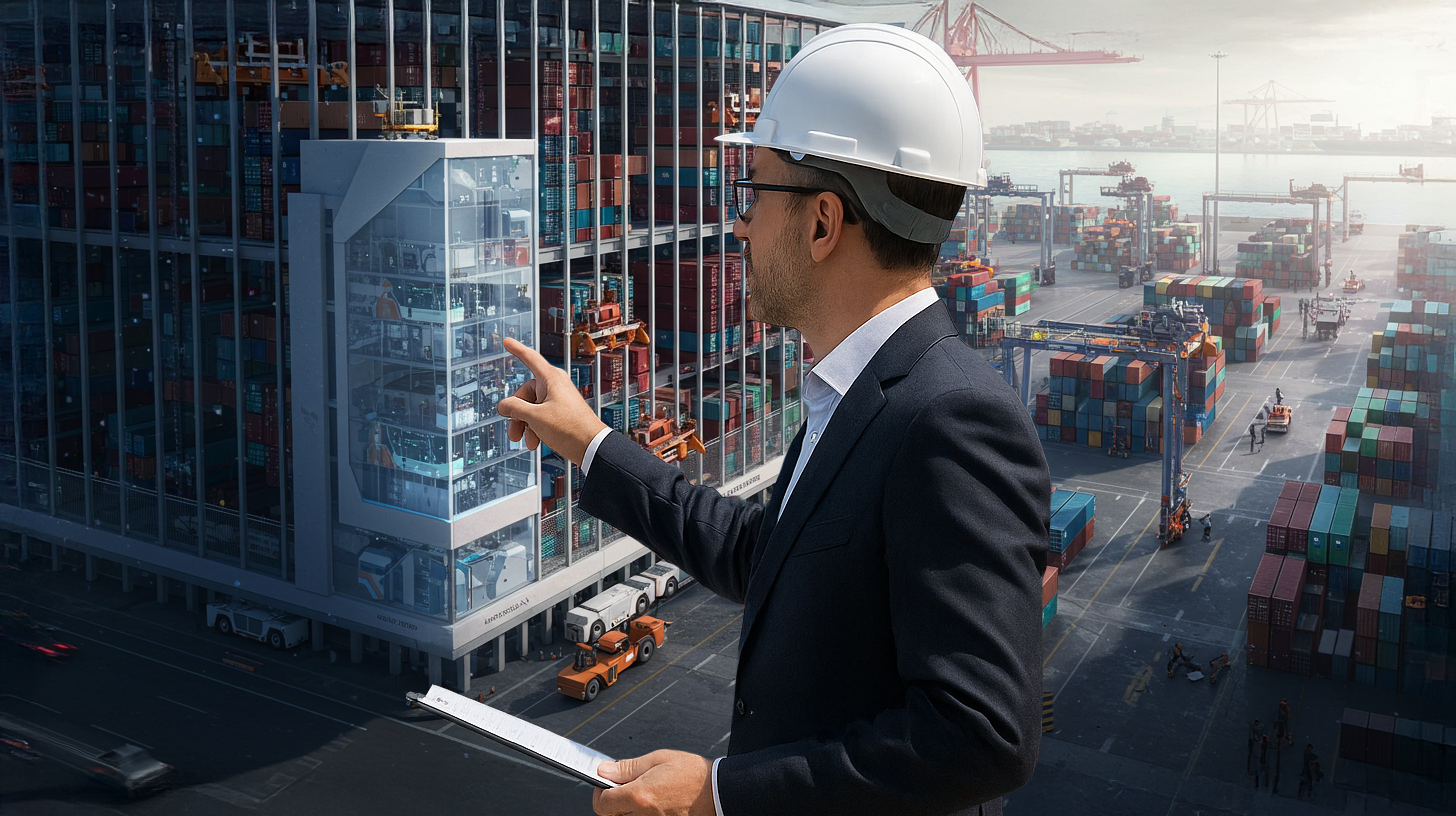
Container high-bay warehouses and container terminals: The logistical interplay – expert advice and solutions - Creative image: Xpert.Digital
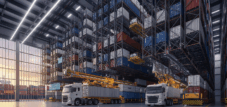
This innovative technology promises to fundamentally change container logistics. Instead of stacking containers horizontally as before, they will be stored vertically in multi-story steel racking structures. This not only allows for a drastic increase in storage capacity within the same area, but also revolutionizes all processes at the container terminal.
More information here: