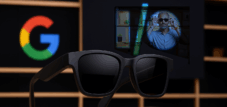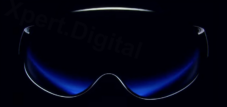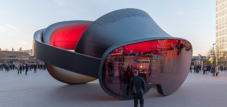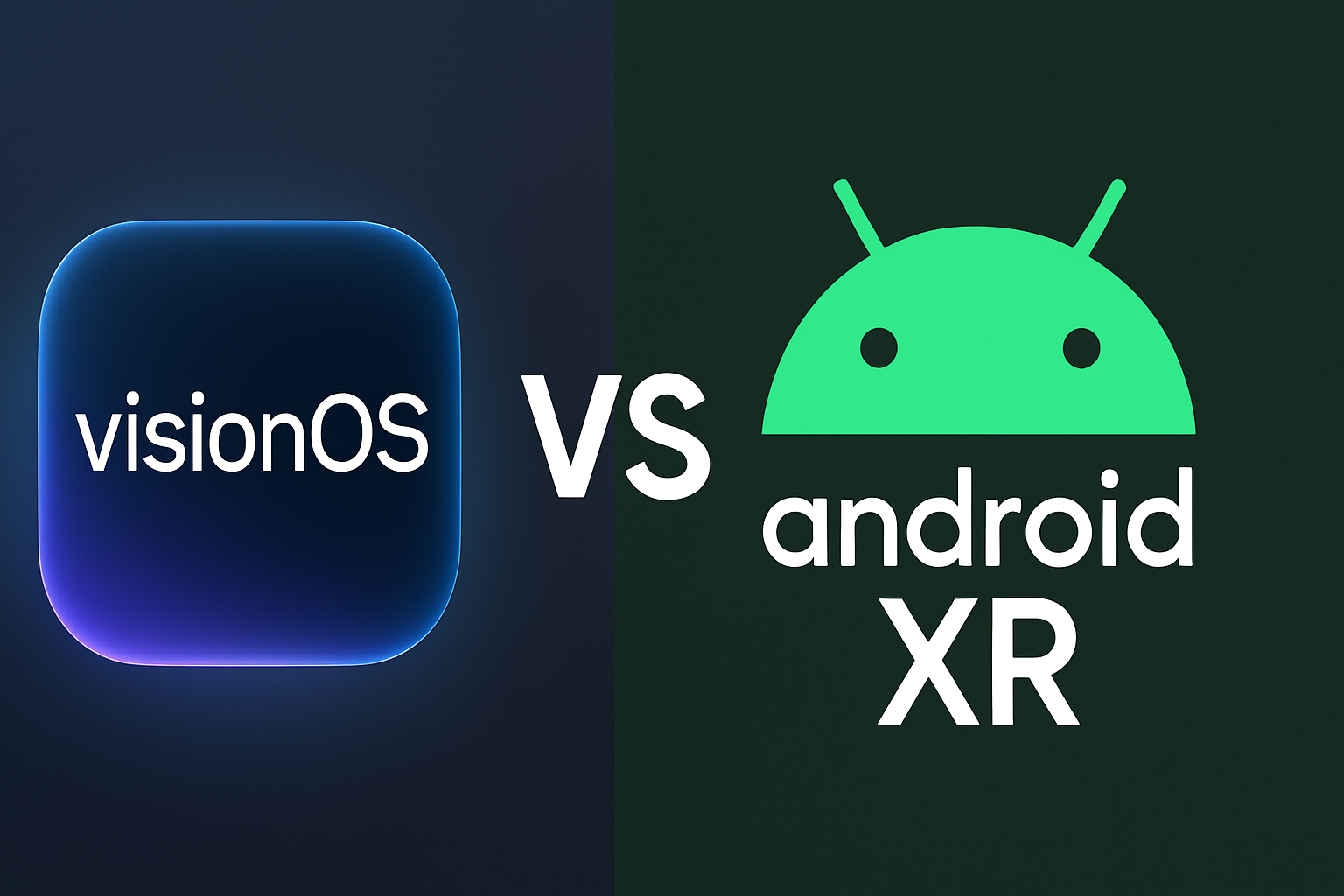
Difference between visionOS and Android XR: A comparison of the leading AR operating systems – Image: Xpert.Digital
Closed versus open system: How Apple and Google are approaching the Mixed Reality revolution differently
VisionOS and Android XR compared: Two contrasting philosophies for the computing of tomorrow
The development of spatial computing operating systems marks a crucial turning point in the technology industry. Apple's visionOS and Google's Android XR represent two fundamental approaches, each embodying a different philosophies for the future of computing. While visionOS is already available as a mature platform for the Apple Vision Pro and focuses on a closed, highly integrated ecosystem, Android XR pursues an open, diverse strategy with strong AI integration through Gemini. The technical foundations of both systems reveal remarkable parallels as well as fundamental differences in user interaction, hardware compatibility, and development approaches.
Related to this:

Basic system architectures and philosophical approaches
visionOS represents Apple's entry into spatial computing and is built on the proven foundations of iOS, iPadOS, and macOS. As the world's first consumer operating system designed entirely for spatial computing, visionOS utilizes a completely new, three-dimensional user interface controlled by eye and hand gestures as well as voice input. Its architecture enables real-time environment sensing through advanced environment mapping, precise hand and eye tracking for natural interactions, and seamless integration of 2D and 3D applications. Designed specifically for the Apple Vision Pro, the system embodies Apple's signature approach of a closed, highly integrated ecosystem.
Android XR, on the other hand, takes a fundamentally different approach and is designed as an open, unified operating system for extended reality devices. Based on the Android Open Source Platform (AOSP), the system was developed in collaboration with Samsung and combines years of investment in AI, AR, and VR technologies. Android XR is intended for a wide range of devices, including VR headsets, AR glasses, and mixed reality devices, a clear departure from Apple's single-device focus. The system integrates Google's AI assistant Gemini from the ground up and promises a more natural, conversational interaction with computers.
The differing philosophies are already evident in the naming: While Apple prefers the term "Spatial Computing" and avoids terms like "Augmented Reality" or "Mixed Reality," Android XR explicitly encompasses the entire spectrum from AR and MR to VR. These differences reflect different visions for the future of computing: Apple focuses on a premium single device with perfected integration, while Google aims for an open ecosystem with diverse device options.
User interaction and interface design
The user interfaces of both systems exhibit both similarities and significant differences in their approach to spatial interaction. visionOS introduces innovative concepts such as the "Infinite Canvas," which allows users to place any number of apps and windows within the space. The system offers dynamic scaling, enabling content to be enlarged and reduced seamlessly, as well as context-aware behavior that recognizes the environment and adjusts the display accordingly. Control is primarily achieved through precise eye-tracking combined with subtle hand gestures, with users selecting elements through eye contact and confirming by touching their index finger and thumb together.
Android XR implements a similar gesture control system, but with some technical differences. While visionOS doesn't require fingers to be visible in the camera's field of view for gestures, Android XR requires fingers to remain within the camera's view. Double-tapping a sensor area on the headset's edge activates an AR mode that overlays the outside world onto the internal displays via the cameras. The interface is somewhat similar to visionOS, but features a stronger integration of typical Android design elements and navigation patterns.
Particularly noteworthy is the continuous development of interaction possibilities. Apple is working on enhanced eye-tracking features for visionOS 3, including "eye scrolling," which will allow users to scroll content solely through eye movements, without additional hand gestures. This development demonstrates Apple's focus on refining natural interactions. Android XR, on the other hand, relies heavily on the integration of Google's Gemini AI, which aims to make voice interactions more natural and context-aware.
AI integration and assistance functions
The integration of artificial intelligence represents one of the most striking differences between the two platforms. Apple introduced Apple Intelligence with visionOS 2.4, but it appears to be an afterthought with considerable limitations. The AI features include writing tools for rewriting and summarizing text, image generators for non-photorealistic content, Genmojis, and smart reply functions. Confusingly, Apple Intelligence on the Vision Pro remains limited to English for now, even though other Apple devices already support multiple languages.
Android XR, on the other hand, was built from the ground up for the "Gemini era" and integrates Google's advanced AI technologies as a core component. Gemini acts as an ever-present assistant that can see the world from the user's perspective and provide context-aware help. The system allows users to talk about what they see, ask questions, and delegate tasks, all while keeping their hands free. For smart glasses, Gemini offers features such as real-time translation, navigation, and calendar management, all without having to take out the smartphone.
The different AI approaches reflect the respective corporate philosophies: Apple focuses on data privacy and local processing, while Google leverages its cloud-based AI expertise and comprehensive data integration. These differences are particularly evident in multimodal interactions, where Android XR, through Gemini 2.0, offers enhanced capabilities for natural language and context processing.
Application ecosystem and developer support
The application ecosystems of both platforms exhibit different levels of maturity and strategies. visionOS already boasts over 2,000 native apps and 1.5 million compatible iOS and iPad apps. Apple offers established development tools such as Xcode, SwiftUI, and RealityKit, allowing developers to leverage familiar frameworks. The system supports various app types: traditional windows with SwiftUI, 3D volumes for spatial content, and Spaces for immersive experiences. visionOS 2 introduced new APIs such as Volumetric APIs for concurrent 3D apps and TabletopKit for spatial table interactions.
Android XR is still in developer preview, but promises strong compatibility with existing Android apps. Developers can leverage established tools like ARCore, Android Studio, Jetpack Compose, Unity, and OpenXR. The platform allows existing mobile and tablet apps to "work out of the box," with additional XR-specific content planned for 2025. Initial developer feedback is positive, with the porting effort for Unity-based VR apps considered minimal, provided they upgrade to Unity 6.
The development approaches differ in their openness: While Apple maintains a curated, quality-controlled ecosystem, Google relies on the proven Android strategy of open development and broad device support. This is also reflected in the hardware partnerships: Apple develops exclusively for the Vision Pro, while Android XR supports partners such as Samsung, Sony, Lynx, and Xreal.
Hardware compatibility and device variety
A fundamental difference between the two platforms lies in their approach to hardware compatibility. visionOS is designed and optimized exclusively for the Apple Vision Pro, enabling tight integration between hardware and software. The system utilizes the M2 processor for complex spatial computing tasks such as eye and hand tracking, as well as room mapping. This exclusive hardware tie-in allows for highly optimized performance but limits consumer choice.
Android XR follows the proven Android model of hardware diversity and supports various device categories, from VR headsets to smart glasses. The first device will be Samsung's "Project Moohan," slated for release in 2025 and positioned as a direct competitor to the Vision Pro. The headset is expected to be lighter than the Vision Pro and will come with external battery packs of varying capacities. Other partners, such as Sony, Lynx, and Xreal, are working on their own Android XR devices, promising a broad product range.
Particularly noteworthy is Android XR's support for smart glasses, which are being developed as a separate device category. These glasses work in conjunction with the smartphone and offer optional in-lens displays for discreet information display. visionOS currently lacks a comparable smart glass strategy, although Apple is reportedly working on future AR glasses.
Android XR's diverse hardware options allow for different price points and use cases, while visionOS focuses on a single premium product. These strategies reflect different market approaches: Apple focuses on a high-quality, expensive device for early adopters, while Google aims for a broad ecosystem for various user segments.
Related to this:
Why Google's Android XR could outrank Apple's Vision Pro
The current market position of the two platforms differs significantly in terms of availability and commercial penetration. The Apple Vision Pro has been available since February 2024, initially only in the US, with planned expansion into other markets. Despite its technical innovations, the device is not considered a commercial success, partly due to its high price and limited availability. However, Apple sees the Vision Pro as the foundation for future AR glasses and is continuously investing in the further development of visionOS.
Android XR is nearing its market launch, with the first devices expected in 2025. The platform was announced in December 2024 and is currently in developer preview. Google's strategy aims for an open ecosystem with various hardware partners, which could potentially enable broader market adoption. The integration of Gemini as a core feature could give Android XR an advantage in AI-powered user interaction.
The different market strategies reflect differing visions for the future of spatial computing. Apple is focusing on the gradual evolution of its existing ecosystem strategy, while Google is attempting to democratize the product category validated by its Vision Pro with a more open, AI-centric approach. The coming years will reveal which approach proves more successful: Apple's premium integration or Google's open diversity with strong AI integration.
Spatial Computing: Which tech giant will win the race for Mixed Reality?
The comparison of visionOS and Android XR reveals two fundamentally different approaches to the future of spatial computing. With its mature, closed platform, visionOS establishes a quality standard for spatial computing, while Android XR aims for broader market penetration through openness, AI integration, and hardware diversity. Both systems will significantly shape the development of the XR industry, and their coexistence should ultimately lead to more diverse and innovative solutions for consumers. The coming years will be crucial in determining which approach will accelerate the adoption of spatial computing technologies and form the basis for the next generation of human-computer interfaces.
Related to this:
Your global marketing and business development partner
☑️ Our business language is English or German
☑️ NEW: Correspondence in your native language!

Konrad Wolfenstein
I and my team are happy to be available to you as your personal advisor.
You can contact me by filling out the contact form here wolfenstein@xpert.digital:or simply call me at +49 7348 4088 965. My email address is
I'm looking forward to our joint project.