The Chinese economy at a turning point: When even giants like BYD falter – Creative image: Xpert.Digital
China's economic miracle is crumbling: BYD crisis reveals structural weaknesses in the system
From world market leader to production halt: How BYD's fall reveals China's economic problems
The Chinese economy, long hailed as an unstoppable growth engine, is increasingly showing worrying cracks in its foundations. What was once considered the economic miracle of the 21st century is now revealing structural weaknesses that could shake the entire system. Particularly alarming is the fact that even industry leaders like the electric car manufacturer BYD, which until recently symbolized China's technological rise, are now struggling with significant difficulties.
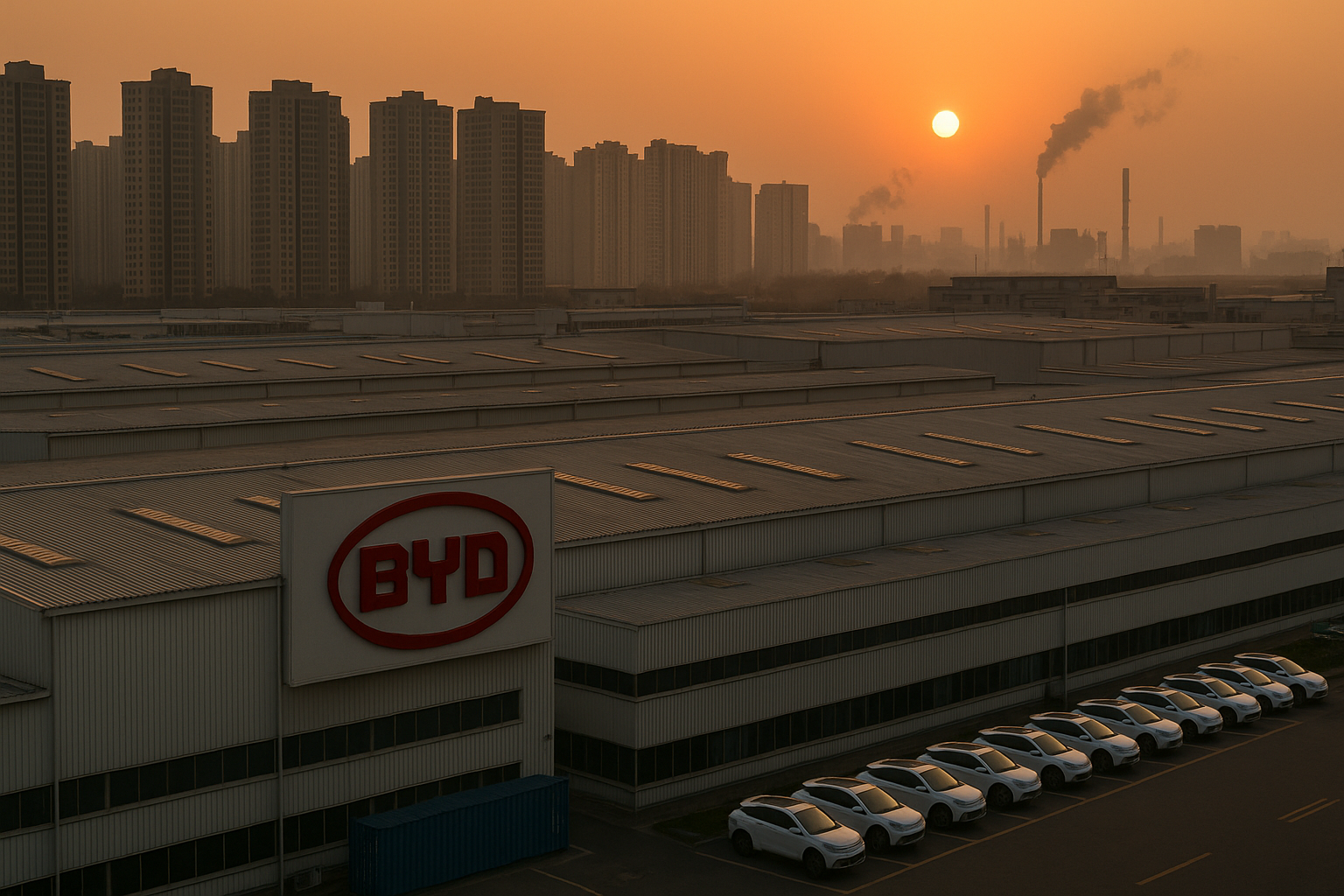
The desperation at BYD is symptomatic of a profound crisis that extends far beyond individual companies. The electric car giant, which transformed itself in just a few years from an unknown battery manufacturer to the world's largest producer of electric vehicles, has had to drastically reduce its production in recent months. Manufacturing capacity has been cut by up to a third at at least four of its seven plants in China. Night shifts have been eliminated, and planned expansions have been put on hold. This development is particularly noteworthy given that BYD overtook the German Volkswagen Group as the market leader in China in 2023 and even surpassed Tesla as the world's largest electric car manufacturer in 2024.
The figures speak for themselves: While BYD had set an ambitious sales target of 5.5 million vehicles for 2025, reality paints a different picture. In the first quarter of 2025, the company's sales grew by a meager 5.5 percent, while the Chinese electric vehicle market as a whole expanded by over 45 percent. The situation is particularly dire when it comes to inventory: At the end of May 2025, over 340,000 unsold BYD vehicles were piling up in dealer lots – a stockpile of more than three months' worth.
Related to this:

The ruinous price war and its consequences
In desperation, BYD resorted to drastic measures. In May 2025, the company slashed prices on 22 models by up to 34 percent. The popular Seagull mini-hatchback was now offered for the equivalent of just under US$7,800 – a price far below the production costs of many Western manufacturers. This aggressive pricing policy triggered a chain reaction: competitors like Geely, Chery, and SAIC-GM followed suit, and a ruinous price war ensued.
The effects of this price war are devastating. Profit margins are dwindling, and suppliers are under enormous pressure. In 2023, BYD took an average of 275 days to pay its suppliers – effectively turning them into involuntary lenders. Analysts estimate that BYD's true debt is around €39 billion, while only €3.3 billion is officially reported. The discrepancy arises from the systematic delay of payments to business partners.
Wei Jianjun, CEO of automaker Great Wall Motor, warned as early as May of a development reminiscent of the catastrophic real estate crisis. He spoke of an evergrande in the auto industry that had not yet exploded. His words proved prophetic: The situation worsened to such an extent that even the Chinese government had to intervene. The Communist Party newspaper Renmin Ribao reported on disorderly price wars that were wiping out profits across the entire supply chain.
The structural problems of the Chinese economy
The crisis in the automotive industry is just the tip of the iceberg. China's economy is grappling with fundamental structural problems that have accumulated over years. The investment-driven growth model of recent decades is increasingly reaching its limits. With an investment rate of over 40 percent of gross domestic product – exceptionally high by international standards – it is becoming ever more difficult to invest capital profitably.
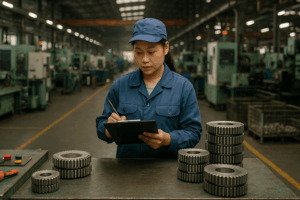
Total factor productivity, a measure of economic efficiency, has been declining continuously in China since at least 2014. This indicates increasing allocative and technological inefficiencies. Significant overcapacities have built up in many manufacturing sectors. The Chinese auto industry can produce almost twice as many vehicles as are actually sold, with factories operating at an average capacity utilization of only 49.5 percent.
The official economic growth forecast of 5 percent for 2024 is being questioned by many experts. Independent analysts, such as those at the research firm Rhodium Group, estimate that actual growth was only between 2.4 and 2.8 percent. The discrepancy between official figures and economic reality is widening.
The real estate crisis as an accelerant
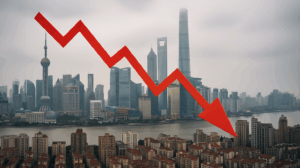
Parallel to the crisis in the automotive industry, the real estate crisis, which has been simmering for years, is intensifying. The sector, which once accounted for up to a third of China's economic output, is in a downward spiral. House prices have been falling for 21 consecutive months. Analysts at Goldman Sachs expect prices to fall by a further 10 percent by 2027 – in addition to the 20 percent declines already seen.
The crisis began in 2021 with stricter lending regulations intended to reduce financial risk in the sector. What was meant to be cautious regulation quickly spiraled into a conflagration. The collapse of real estate giant Evergrande was just the beginning. Millions of homes that had already been sold remain unfinished. Consumer confidence has been shattered, and many households are facing negative equity – the value of their property is less than their outstanding mortgage debt.
The government is desperately trying to stabilize the sector. A 300 billion yuan purchase program is intended to allow local governments to acquire unsold properties and convert them into social housing. But these measures are a drop in the ocean. Local government revenues from land sales, their main source of funding, plummeted by 16 percent in 2024.
Related to this:
The weakening domestic demand
A key problem facing the Chinese economy is weak domestic demand. Consumers are holding onto their money, unsettled by the housing crisis and youth unemployment at 16 percent. Consumer prices are stagnating, and in some areas there is even deflation – a warning sign for an economy that depends on growth.
This reluctance to consume is not limited to Chinese companies. European firms in China are reporting the worst sentiment in years. Only 29 percent of the companies surveyed by the EU Chamber of Commerce are optimistic about their growth prospects in China for the next two years. The fierce price competition in many sectors is squeezing profits, and predictability is dwindling.
B2B procurement: Supply chains, trade, marketplaces & AI-powered sourcing


B2B procurement: Supply chains, trade, marketplaces & AI-powered sourcing with ACCIO.com - Image: Xpert.Digital
More information here:
China's Lost Decade? Parallels to Japan's Economic Crisis of the 1990s
The international dimension: EU-China relations under tension
The economic turmoil in China is having far-reaching international repercussions. The EU-China summit planned for the end of July is taking place in an atmosphere of increasing tension. Trade relations, with an annual volume of over 700 billion euros and actually of enormous importance to both sides, are being strained by mutual accusations and protectionist measures.
The EU has imposed tariffs of up to 45 percent on Chinese electric vehicles to protect its domestic industry from a flood of subsidized imports. China responded with retaliatory tariffs on European products, including up to 34.9 percent on spirits imports. The spiral of escalation continues: export controls on rare earth elements, restrictions on medical devices, and mutual accusations of unfair trade practices.
EU Commission President Ursula von der Leyen spoke of a new China shock, as the People's Republic floods world markets with subsidized overcapacity. The system is clearly manipulated. At the same time, she emphasized that a complete decoupling from China would be neither efficient nor effective. Europe continues to pursue a targeted engagement, but demands fair competition.
Related to this:

Export pressure as a release valve
With an overheated domestic market and weak domestic demand, pressure is mounting on Chinese companies to export their excess capacity abroad. Already, 20 percent of all vehicles produced in China are exported – and this figure is rising. BYD is not only building plants in Turkey and Hungary, but is also planning a factory in Germany.
But export markets are shrinking. The US has effectively closed the market with 100 percent tariffs on Chinese electric cars. Japan and Korea could follow suit. The EU remains one of the few major sales markets, but even there, resistance to the flood of imports is growing.
The government intervenes – with questionable success
Faced with the escalating crisis, the Chinese government felt compelled to act. The heads of over a dozen automakers were summoned to Beijing. The message was clear: no more sales below cost, an end to the practice of selling cars with zero kilometers on them, and fair treatment of suppliers. Seventeen automakers subsequently promised to limit their payment terms to a maximum of 60 days.
But these interventions are like trying to put out a forest fire with watering cans. The structural problems – overcapacity, too many manufacturers, lack of consumer trust – remain unresolved. Of the 169 car manufacturers in China, more than half have less than 0.1 percent market share. Analysts expect a brutal market shakeout in which only five to seven dominant brands will survive.
The technological challenge
China's response to weak growth is the promotion of new productive forces through technological innovation. However, this strategy is also fraught with contradictions. The pursuit of technological self-sufficiency means a conscious decision to forgo the advantages of the international division of labor. If traditional industries are to be maintained in the country despite a lack of competitiveness, and if intermediate goods must be produced domestically for political reasons instead of being imported more cheaply, efficiency suffers.
The increasingly fragmented state planning and control of research and innovation could weaken creativity and productivity in the long term. International companies and scientists are deterred by policies that are more strongly aligned with Chinese strategic interests. The technology transfer from which China benefited for decades is drying up.
A lost decade?
The parallels to Japan's lost decade after the bursting of the housing bubble in the 1990s are undeniable. Overcapacity, non-performing loans, deflationary tendencies, declining productivity – China is now exhibiting all these symptoms. However, there are important differences: China is still a developing country with lower per capita income, urbanization is progressing, and the potential for catch-up growth theoretically still exists.
The question is whether the political leadership is prepared to implement the necessary, painful reforms. A genuine market correction would mean mass layoffs and bankruptcies – politically sensitive in a system that derives its legitimacy from economic success and social stability. The alternative, muddling along with state subsidies and market interventions, threatens only to postpone and exacerbate the problems.
Related to this:
Global impact
The crisis in China has far-reaching global consequences. German automakers, who profited from the Chinese market for decades, are experiencing double-digit sales declines. The market share of foreign brands in China has fallen from 64 percent in 2020 to just 30.6 percent. Even in the combustion engine segment, long the domain of Western manufacturers, Geely now sells more than Toyota.
China's overcapacity threatens to destabilize global markets. If Chinese manufacturers export their surplus production at dumping prices, producers worldwide come under pressure. Trade conflicts intensify, and protectionist measures increase. The vision of an integrated global economy gives way to a patchwork of trade blocs and tariff barriers.
The end of an era
The Chinese economy is at a historic turning point. The model of investment-driven growth that transformed China from a developing country into the world's second-largest economy in just four decades has run its course. The symptoms of the crisis—from BYD's production cutbacks to the housing bubble and weak domestic demand—reflect deeper structural problems.
The desperation, even among industry leaders like BYD, shows that no one is immune to systemic disruptions. Attempts to secure market share through aggressive price cuts only exacerbate the crisis. The overcapacity in the automotive industry is symptomatic of an economy that produces too much and consumes too little.
The coming years will show whether China can manage the difficult transition to a more sustainable, consumption-driven growth model. The alternative—a long period of stagnation amid rising social tensions—would have serious consequences not only for China but for the entire global economy. The upcoming EU-China summit will be a crucial test of whether, despite all the tensions, there is still room for constructive cooperation. Time is of the essence, because if even giants like BYD begin to falter, more is at stake than just the future of individual companies—it is about the stability of the entire global economic system.
We are here for you - Consulting - Planning - Implementation - Project Management
☑️ SME support in strategy, consulting, planning and implementation
☑️ Creation or realignment of the digital strategy and digitization
☑️ Expansion and optimization of international sales processes
☑️ Global & Digital B2B trading platforms
☑️ Pioneer Business Development

Konrad Wolfenstein
I would be happy to serve as your personal advisor.
You can contact me by filling out the contact form below or simply call me on +49 7348 4088 965 .
I'm looking forward to our joint project.
Write to me



Xpert.Digital - Konrad Wolfenstein
Xpert.Digital is a hub for industry focusing on digitalization, mechanical engineering, logistics/intralogistics and photovoltaics.
With our 360° Business Development solution, we support renowned companies from new business to after-sales.
Market intelligence, smarketing, marketing automation, content development, PR, mail campaigns, personalized social media and lead nurturing are part of our digital tools.
You can find more information at: www.xpert.digital - www.xpert.solar - www.xpert.plus
Keep in touch