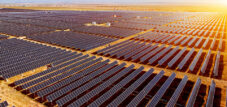
China's energy transition: Away from subsidies and fixed feed-in tariffs towards a market-oriented pricing system – Image: Xpert.Digital
China's Energy Transition 2025: The End of Subsidies, the Beginning of the Market
Farewell to feed-in tariffs: China's market-oriented pricing policy
China is facing a groundbreaking transformation of its energy sector: Starting June 1, 2025, the country will abolish its traditional subsidy system of fixed feed-in tariffs for renewable energy and instead introduce a market-based pricing system. This move is a significant milestone that not only fundamentally reforms the support system but also has the potential to influence the global market for green electricity.
In recent years, China has impressively demonstrated how quickly a nation can ramp up its renewable energy capacity. The country now boasts over 1,400 gigawatts of installed wind and solar power, having already surpassed its expansion target for 2030. The newly introduced pricing policy is intended to ensure that this rapid expansion is not solely reliant on government subsidies, but rather becomes more closely aligned with supply and demand.
This will entail far-reaching changes: Existing plants will be gradually integrated into the new system, while new projects after the cut-off date will be subject only to free market rules. An immediate consequence of this reform could be a surge in projects coming online in the short term to take advantage of the expiring feed-in tariffs. In the long term, however, the goal is to establish a self-sustaining economic model for renewable energies that will sustainably strengthen their competitiveness.
The following article examines in detail the background, objectives, and impact of this reform. It illuminates both the technical and economic aspects and clarifies why this step is considered the most significant change in Chinese renewable energy pricing since the last major restructuring in 2018. Furthermore, it addresses the opportunities and challenges this presents for all stakeholders – from government agencies and investors to project developers and consumers.
Related to this:
What will change in China's pricing policy for renewable energy from June 1, 2025?
From June 1, 2025, China will implement a fundamental shift in its pricing policy for renewable energy. Specifically, this means transitioning from fixed feed-in tariffs, where state-mandated rates applied to the electricity fed into the grid, to a market-based pricing system. With this move, all renewable energy producers will be required to sell their electricity through market transactions. The fixed feed-in tariff that existed previously will thus be eliminated. This brings China closer to the international trend in which electricity prices for renewables are increasingly determined by supply and demand. The country's goal is to foster greater competition and improve the cost-efficiency of projects. This decision marks a milestone in the history of China's energy transition and signals that renewable energy in the country is becoming increasingly market-ready.
Why is China undergoing this transformation?
China has long pursued the goal of comprehensively modernizing its energy sector and reducing its dependence on subsidies. With a rapid expansion of wind and solar energy – over 1,400 gigawatts of installed wind and solar capacity – the country has already surpassed its original plans for 2030. This success demonstrates that the renewable energy sector is no longer in its infancy, but rather at an advanced stage of development.
The gradual reduction and eventual phasing out of fixed feed-in tariffs is therefore a logical consequence to enable a "self-sustaining economic model." While subsidies played a crucial role in promoting new technologies and reducing costs in the initial phases, a competitive market is ultimately more economically sustainable for renewable energies. Another motivation is the creation of a framework in which companies can remain competitive through innovation and efficiency improvements.
What role do existing projects that went online before June 1, 2025 play?
For projects that were already commissioned before the cut-off date of June 1, 2025, the Chinese government has implemented a price difference adjustment mechanism. Specifically, this means that these plants will not be completely released into the free market overnight. Instead, there will be a gradual adjustment of the feed-in tariffs.
The existing feed-in tariff – the fixed feed-in tariff – will be gradually adjusted to the new market situation. On the one hand, this protects investors who have calculated their projects under specific financial conditions. On the other hand, it simultaneously provides them with an incentive to increase their efficiency and adapt to the new market mechanisms. Through this price difference mechanism (often in the form of compensation payments when the market price is below the previous fixed tariffs), China aims to guarantee a relatively smooth transition and avoid a shock to the industry.
How will the system be designed for new projects that emerge after June 1, 2025?
All projects commissioned after June 1, 2025, must be 100% market-driven from day one. This means there will no longer be fixed feed-in tariffs; instead, electricity prices will be determined entirely by market mechanisms. Companies essentially have two options:
- Submit your own bids, defining price and performance.
- Accept the market price, i.e., adapt to the current price level on the stock exchange or in tenders.
Prices are thus primarily determined through tendering processes. Provincial governments or other responsible bodies issue tenders for specific electricity volumes. Project developers submit their bids with their cost calculations, and a competitive process ultimately determines which contract they will be awarded. This model promotes competition among producers and generally leads to lower costs.
What exactly is meant by "market-oriented pricing"?
Market-oriented pricing refers to a system in which supply and demand are the primary factors influencing pricing. Instead of government-mandated feed-in tariffs, which guaranteed a fixed payment for each kilowatt-hour fed into the grid, electricity producers must now offer their electricity on the market. The price fluctuates depending on various factors:
- Availability of renewable energy sources (e.g., hours of sunshine, wind speeds)
- Electricity demand in the grid (private, commercial or industrial sector)
- Price trends of fossil fuels (e.g., coal, gas)
- Network capacities and bottlenecks in specific regions
Related to this:
The idea behind this is that a more realistic and therefore more sustainable price will emerge in the long term. This will encourage project operators to reduce their costs and operate their plants as efficiently as possible in order to remain competitive.
What goals does China pursue with this new pricing model?
Several goals are central to China's reform of price formation mechanisms:
- Cost reduction: Increased competition should further reduce the production costs for electricity from renewable energy sources.
- Competitiveness: Chinese companies and products should become more competitive in the global market.
- Technological innovation: Since subsidies no longer provide a permanent guarantee structure, the pressure on companies to be more technologically innovative and to prevail over competitors is increasing.
- Efficient resource allocation: Market-based mechanisms ensure that electricity is cheaper during periods of high availability, which also improves grid integration.
- Reducing dependence on subsidies: In the long term, state funds should be conserved in order to promote other areas and relieve the state treasury.
What is meant by the sustainable price equalization mechanism and why is it important?
The sustainable price adjustment mechanism is a complementary instrument to ensure a degree of planning and investment security despite market fluctuations. In practice, this often means that the state or certain institutional bodies can provide compensation during periods of very low market prices to prevent projects from becoming unprofitable. Conversely, during periods of high market prices, project operators may contribute to a fund or receive no additional payments.
This mechanism is important because, while renewable energies are now competitive, they are still susceptible to strong fluctuations. This is especially true for factors like wind or solar power plants, whose generation is not constantly available. A certain minimum price can help reduce investment risk and further promote expansion without undermining the fundamental principle of the free market.
What challenges might arise from switching to the new market approach?
A major issue is the uncertainty surrounding future price developments. Many project developers have so far based their calculations on stable, government-guaranteed tariffs. If the market price fluctuates significantly, the revenue model could become more unpredictable. This uncertainty could lead to a temporary "gold rush," with as many projects as possible rushing to connect to the grid before the June 1, 2025 deadline to secure any transitional arrangements.
Furthermore, companies are under increased pressure to improve efficiency. No longer receiving fixed wage agreements means that only those who produce cost-effectively and reliably will remain competitive. A wave of consolidation is looming, in which smaller providers may be swallowed up by larger ones or forced into bankruptcy. Depending on the region and available infrastructure, regional disparities may also emerge, as provinces may implement the regulations with varying degrees of stringency or speed.
What opportunities does this reform step offer?
First, increased competition arises, which often fosters innovation. Companies are forced to develop new technologies or optimize production processes, ideally accelerating technological maturity. Global market opportunities can also expand: those who manage to produce competitive products in a tougher price environment can gain a significant advantage in the export business.
Furthermore, consumers benefit from this development: In the long term, intense competition often leads to lower electricity prices, or at least to market-based prices. Finally, it is expected that China will further increase the share of renewable energies in its grid with this reform, as the electricity market will react more flexibly to energy flows and expansion can be carried out in an economically viable manner.
Why is this reform described as the biggest change in renewable energy pricing since 2018?
In 2018, China implemented a significant reform of its renewable energy support system, which included, for example, a gradual reduction of feed-in tariffs for solar and wind projects and the introduction of tendering procedures. These changes already represented a significant step towards market liberalization.
The reform scheduled to take effect on June 1, 2025, goes a step further by completely abolishing fixed rates and transferring all projects to a freer market. This will not only result in an adjustment of compensation rates but a complete rethinking of the market structure. It is being referred to as the "most significant change" primarily because it directly or indirectly affects all projects, whether new or existing. This makes the scope and impact of the reform considerably greater than in previous phases, which mostly focused on adjusting rates.
What does the reform mean for China's goals to increase the share of non-fossil energy and to achieve climate neutrality?
China has set itself ambitious goals: By 2025, the share of non-fossil energy is to reach 20%, and by 2060 the country aims for carbon neutrality. The transition to a market-based pricing system for renewable energy helps ensure that the expansion of renewable capacity takes place in an economically viable environment. If projects are profitable without permanent government subsidies, the foundation for an accelerated expansion of the sector will be laid.
In the long term, more projects are likely to be realized, and these will also be more efficient and better integrated into the electricity grid. A true market price creates incentives not only to produce electricity but also to feed it into the grid when it is needed. This is where flexibility tools such as electricity storage and load management come into play, which are also essential for achieving climate goals.
To what extent can the reform lead to greater market integration of renewable energies?
The reform ensures that renewable energies – that is, electricity from wind and solar power – are no longer treated as a "special case" with guaranteed market access. Instead, renewables, like other forms of generation, must compete in a trading or exchange system. In such a market regime, power plant operators trade their electricity directly with consumers or via trading platforms.
This market integration has several positive effects:
- Real-time price signals ensure that renewable energies are preferentially fed into the grid precisely when demand is high and supply is scarce.
- Flexibility incentives arise because operators need to develop appropriate strategies for times of low demand, for example via storage technologies or demand adjustments.
- The opening up of direct supply contracts (Power Purchase Agreements, PPAs) between companies and electricity consumers will be facilitated. This increases the diversity and stability of revenue sources.
What role do the provincial governments play in implementing the new rules?
Although the reform was decided at the national level, a significant part of its concrete implementation lies in the hands of the individual provinces. This is due to the fact that China has very differently structured regions – both in terms of population density and economic strength, as well as in terms of the potential for wind and solar energy.
Provincial governments must determine, for example, the precise structure of tenders, the technical requirements for projects, and the specific implementation of the price difference compensation mechanism. This could potentially lead to regional disparities: conditions might be more attractive in sunny provinces or windy regions, thus attracting investment. Provinces less suited to renewable energy could pursue other strategies, such as energy storage or more efficient grid integration.
Are there risks that the market price for renewable energies will fall below a profitable level?
Theoretically, yes. Especially during periods of high electricity generation – for example, on very sunny or windy days – the electricity supply could rise sharply, while demand might remain constant. Then prices would drop. However, the aforementioned price equalization mechanism usually kicks in to prevent sustainable projects from getting into financial difficulties in such a market situation.
Furthermore, it is expected that balancing mechanisms will emerge in the medium term to stabilize prices. For example, capacity markets or various storage solutions will be introduced to maintain grid frequency. Nevertheless, a certain entrepreneurial risk remains – but that is precisely the purpose of a market-oriented system, in which only those projects that are both cost-efficient and adaptable will prevail in the long term.
How might electricity prices develop for consumers?
In the short to medium term, the transition could primarily lead to price fluctuations. Prices could fall significantly during periods of high electricity feed-in, while they could rise during periods of energy scarcity. In the long term, however, increased competition creates an incentive for cost efficiency, which is why many experts expect average electricity prices to remain stable or even decline slightly.
For consumers, this could mean that their electricity bills reflect actual market conditions. At the same time, the importance of tariffs that shift electricity consumption to more favorable time periods is growing. This creates greater awareness of energy consumption: private households and businesses could use dynamic tariffs to adjust their consumption to times of abundant green energy availability.
Will subsidies or government support programs continue to exist?
While China aims to reduce its reliance on subsidies, it is unlikely to completely abandon state support measures. Rather, the focus is on developing more targeted support instruments. This may allow for the continued promotion of certain innovative technologies – such as novel storage solutions, hydrogen solutions, or offshore wind projects in challenging regions – because they still have higher costs compared to established technologies.
Furthermore, regional development programs could continue to provide incentives for establishing renewable energy in structurally weaker provinces. However, this type of support would have less to do with traditional feed-in tariffs and more to do with tax breaks, low-interest loans, or technology funds.
What strategies could companies pursue to adapt successfully?
Companies have several levers to succeed in a market-oriented environment:
- Cost efficiency: By optimizing their operational processes and reducing production costs, they can submit competitive bids.
- Technological innovation: Companies that develop, for example, improved solar cells, turbine designs, or intelligent control systems gain an advantage.
- Diversification: Those who invest not only in electricity generation, but also in storage or energy trading, can better cushion fluctuations in the market price.
- Long-term PPAs (Power Purchase Agreements) with industrial customers: Contractually agreed prices create planning security.
- Cooperation with financial institutions: Since market risks exist, especially in the first few years, a smart financing strategy is crucial.
How will the change affect the planning certainty of investors?
On the one hand, the transition can lead to uncertainties, as there are no longer any guaranteed feed-in tariffs. On the other hand, a new level of planning security is created through the long-term price stabilization mechanism. This mechanism is designed to mitigate extreme risks while simultaneously sending realistic price signals.
Furthermore, tenders help to secure a fixed purchase price for a defined period. Long-term power purchase agreements (PPAs) between producers and large industrial consumers also offer investors a degree of predictability. In this respect, planning certainty does not become negative, but simply changes its form: away from state-guaranteed tariffs and towards market-driven, yet still predictable, solutions.
In what ways does the reform contribute to better grid stability?
When renewable energy sources feed into the grid around the clock at fixed tariffs, their interest in supply and demand is relatively low. This can lead to overloads, shutdowns, or unfavorable grid loads in many regions.
The market-oriented approach sends price signals that enable load shifting and reward flexibility. This makes it worthwhile for a plant operator to better align their feed-in with demand. Combining this with storage solutions allows, for example, energy to be stored during periods of excess feed-in (and low prices) and only released into the grid when demand is high (and prices are more favorable). This smooths out the load profile and makes the grid more stable overall.
To what extent does the reform contribute to achieving the climate goals?
Market-oriented pricing makes renewable energies more competitive compared to fossil fuels as technology and production costs continue to fall. Since China has the world's largest electricity market, this development has far-reaching implications beyond its borders. If the costs of solar and wind energy can be reduced even further, it will create a strong pull effect on other markets, which in turn will drive global expansion.
Furthermore, it must be considered that the country aims to adhere to its long-term commitments under the Paris Climate Agreement and achieve carbon neutrality by 2060. The new price reform is a crucial element in making this goal achievable through market mechanisms, rather than relying solely on coercive measures or high subsidies.
To what extent does this step increase the competitiveness of Chinese companies in an international context?
Chinese manufacturers of solar panels and wind turbines have already made a name for themselves in recent years and are now among the global market leaders. By facing increased competition in their home market, these companies are learning to further optimize their costs and improve technologies more rapidly.
Companies that thrive in a tough environment with market-driven pricing often have a competitive advantage in other countries, where (partial) subsidies may still exist. This allows China to expand its export-oriented markets. Furthermore, new business models are emerging, for example in energy trading, grid technology, and load management software solutions, which can broaden the international reach of Chinese companies.
How does the introduction of tendering procedures fit into the new pricing system?
Tenders are an essential component of market-oriented pricing models. The central idea is that a specific quantity of green energy to be produced – or a specific power capacity – is put out to tender. Companies participating in the tender submit bids specifying a price per kilowatt-hour (or per kWh, per kW of installed capacity, etc.).
The contract is usually awarded to the lowest bidders until the defined volume is reached. This creates competitive pressure, which drives down bids and thus leads to competitive market prices. Ideally, this minimizes over-subsidization and inefficient structures. Furthermore, the model creates transparency and fair conditions because all market participants have the same opportunities and access to the same information.
What immediate impact will the reform have on manufacturers of wind and solar power plants?
Manufacturers of wind and solar power plants must prepare for greater price sensitivity. Operator projects will need to calculate more precisely the return on investment they can achieve in a potentially volatile market. This will place increased cost pressure on manufacturers. At the same time, greater demand for high-performance and efficient technology may arise, because efficiency improvements will make an even bigger difference in the market system.
Furthermore, the reform could initially drive up project volume, as many developers want to implement their projects before June 1, 2025, to benefit from transitional arrangements. For manufacturers, this could lead to a short-term boom. In the long term, however, the reform means that stable, but market-oriented demand will prevail, allowing particularly high-performing suppliers to thrive.
How does market-oriented pricing change the role of consumers?
Consumers are not merely passive consumers of electricity in a market environment. Because prices can vary at different times of day, incentives for load shifting are created. Larger consumers – for example, in industry – could strategically plan their production processes to benefit from low electricity prices. Private households could also adjust their tariffs to shift their consumption, for example, through smart home technologies.
Furthermore, this opens up opportunities for direct contracts between larger consumers and producers (Power Purchase Agreements). Companies that want to reduce their carbon footprint can thus secure electricity directly from renewable sources and cover their energy needs under predictable conditions. In the medium to long term, consumers will benefit from the fact that a more efficient market structure will likely lower or at least stabilize electricity costs.
Will this reform further exacerbate regional disparities in China?
Yes, that's quite possible. China is extremely large and characterized by very diverse conditions: coastal provinces with high population density and strong industry, rural regions in the interior with low peak consumption, areas with a lot of sunshine in the west and northwest, windy regions in the north, etc.
In a market-driven system, projects may preferentially locate where site conditions, network infrastructure, and political implementation are most attractive. Provincial governments that are ambitious and create favorable conditions will likely attract more investment. Other regions could fall behind or shift their focus, for example, to energy storage or green hydrogen.
Can the shift to market-oriented pricing affect other countries?
Absolutely. Since China is not only the largest market for renewable energy but also a major producer of the corresponding technology, any significant political change has repercussions for global markets. The transition to a free market could accelerate cost reductions, making renewable energy more attractive worldwide.
Furthermore, many developing and emerging economies look to China when designing their own support mechanisms. Seeing that a transition to market mechanisms succeeds in a country the size and complexity of China increases the likelihood that similar concepts will be implemented elsewhere. China is thus once again becoming a driving force for the global energy transition.
Why are decreasing subsidies often considered a sign of a technology's market maturity?
Subsidies are generally necessary when a technology is still relatively expensive and cannot yet compete with conventional energy sources. As soon as costs decrease—usually due to economies of scale, learning effects, and technological innovations—and a technology can establish itself in the market, permanent subsidies lose their original justification.
When a technology is released into a market environment with no (or only reduced) subsidies, it means that it has largely achieved competitiveness. In China's case, the massive installed capacity of over 1,400 gigawatts for wind and solar energy demonstrates that these sources are technologically and economically mature enough to succeed in a free market.
What could happen in the short term in the run-up to the deadline of June 1, 2025?
Analysts anticipate a boom in new projects as developers seek to secure the remaining advantages of the current system – particularly for projects that are completing tight permitting processes or are already in a late stage of development. Such situations are sometimes referred to as a "run system," where project developers try to get online quickly to potentially benefit from higher feed-in tariffs or a smoother transition.
This situation could temporarily overheat the market and strain supply chains. Manufacturers of solar modules and wind turbines are likely to initially enjoy full order books. In the long term, however, things will stabilize as the dynamics level off after the cut-off date and adjust to the new market situation.
How should the long-term impact on China's energy sector be assessed?
In the long term, the move away from fixed tariffs to a market-oriented system will likely make China's energy sector more robust and efficient. Companies that can thrive will be technological leaders, which in turn will strengthen China's global status as a pioneer in renewable energy.
Furthermore, better integration of renewables into the grid can lead to greater stability, as intelligent systems for managing production and demand – such as smart grids, storage technology, and load management – are deployed on a larger scale. At the political level, the financial burden of subsidies decreases, freeing up resources for other future-oriented topics. This highlights the long-term nature of the reform: it aims not only at expansion but also at the inclusive, sustainable, and cost-efficient development of the entire sector.
What role do Power Purchase Agreements (PPAs) play in this new market environment?
Direct purchase agreements, also known as Power Purchase Agreements (PPAs), allow companies or other large consumers to purchase electricity directly from a producer, bypassing the traditional electricity market or grid operators. In an environment with market-oriented prices and no longer fixed feed-in tariffs, PPAs are an effective tool for creating mutual benefits
- The electricity producer receives a long-term guaranteed sale at a price stipulated in the contract.
- The customer benefits from planning security and can also refer to the origin of the electricity (green, renewable), which can be significant for its sustainability balance sheet.
China is expected to give more scope to these PPAs, as they align with the basic idea of a liberalized market, promote competition and facilitate the integration of renewable energies.
In what ways could the new pricing mechanism promote the development of other technologies such as storage or hydrogen?
When electricity prices fluctuate more, the incentive to use storage technologies increases, allowing excess energy to be stored during periods of low prices and released again when demand (and prices) is high. This makes storage projects more economically attractive, as they can potentially generate additional profits.
The situation is similar with green hydrogen: when solar and wind power are temporarily abundant and electricity prices fall, this power can be used efficiently for electrolysis. The hydrogen produced in this way can either be stored, used directly in industry, or fed into the gas grid. This flexibility also makes other parts of the energy infrastructure more attractive. The reform can therefore act as a catalyst for a broader technology portfolio that extends beyond conventional power generation.
What lessons can other countries learn from this development?
Other countries that have strongly promoted the expansion of renewable energies through fixed feed-in tariffs may see China's move as a signal for the next stage of maturity: market orientation as a logical phase once the technology achieves economic competitiveness.
The lesson learned is that a phased and well-communicated transition is necessary. A clear timetable, differentiated transitional solutions, and reliable risk mitigation instruments (such as the price adjustment mechanism) are crucial to safeguarding investor confidence and fostering innovation. Furthermore, China's example demonstrates that regional differences must be considered during implementation to ensure nationwide reform success.
How does the new pricing policy affect consumer awareness and behavior?
Because the prices for electricity from renewable energy sources are more closely aligned with actual market conditions, variable tariffs can emerge, giving consumers the opportunity to better manage their consumption. During periods of high production and low prices, households or businesses could increase their electricity consumption and, for example, charge electric vehicles or run washing machines.
This growing awareness motivates consumers to use energy-efficient appliances and measures to benefit from price fluctuations. Over time, this fosters a culture of energy and cost awareness that is beneficial not only for the electricity system but also for climate protection.
Will there no longer be fixed fares after June 1, 2025?
According to available information, there will no longer be fixed feed-in tariffs for new projects connected to the grid after the cut-off date. However, there may still be a transition period for existing projects (built before June 1, 2025) during which the price difference compensation mechanism will apply.
It is unlikely that all types of tariffs will disappear completely, as certain special projects (e.g., research projects, demonstration plants in remote areas, innovative storage solutions) could still receive government support. However, the core message remains: free pricing will be the norm in the Chinese market.
What role does the time frame up to 2025 play for China?
China aims to increase the share of non-fossil energy to 20% by 2025. At the same time, the liberalization of the energy sector will accelerate during these years. By delaying the reform's implementation until June 1, 2025, the country is giving investors, companies, and government agencies time to prepare.
The transition period can be used to adapt existing processes, clarify legal uncertainties, and perhaps even accelerate grid modernization. Furthermore, this reform comes at a time when China possesses the necessary hardware and industrial base to avoid a sudden collapse in installations should feed-in tariffs be abolished.
What are the most important aspects of the reform and the expected benefits?
- Market-based pricing: From June 1, 2025, electricity will no longer be traded via fixed tariffs, but via the market.
- Differentiated treatment of existing projects: Older plants receive a phased transition via a price difference compensation mechanism.
- Competition and efficiency: Companies need to adapt more to the market, which promotes innovation and cost reduction.
- Investment security through balancing mechanisms: Price stability is ensured through complementary instruments to keep the market attractive and avoid uncontrolled fluctuations.
- Reduction of subsidies: State funds are relieved, renewable energies mature in a self-sustaining economic model.
- Contribution to climate goals: A free market that integrates renewable energies cost-effectively and efficiently is a key element for China's plan to become carbon neutral by 2060.
How is the reform assessed overall?
The reform is widely regarded as a necessary and logical step towards a mature energy transition. China is demonstrating that renewable energies are no longer solely dependent on subsidies, but have grown into a high-performing and competitive segment of the energy market.
While challenges exist, such as increased investment uncertainty and regional disparities in implementation, the opportunities outweigh them: more innovation, greater efficiency, increased competition, and a solid foundation for achieving ambitious climate goals. This step is groundbreaking for the global energy transition because it demonstrates that one of the world's largest economies is embarking on a path toward a market-oriented, low-subsidy approach to renewable energy. This could very well be the future "new normal" for many countries.
With over 1,400 gigawatts of installed wind and solar capacity, China has long since proven its pioneering role in renewable energy. The reform now announced, effective June 1, 2025, is not just another chapter in this successful expansion story, but a fundamental paradigm shift towards a self-sustaining and competitive market. Businesses, investors, and consumers alike are required to adapt to the new pricing system.
The reform thus represents a key element in leading China's energy transition into its next phase of development: away from dependence on subsidies and towards a fully integrated and innovative industry that makes a sustainable contribution to achieving climate goals. It is reasonable to assume that the experience gained will influence other countries sooner or later, as knowledge transfer now functions quickly and comprehensively in a globalized energy world. China is once again sending a signal here – and the world will be watching closely to see how this market-oriented approach fares in the world's largest energy market.
Related to this:
Your partner for business development in the fields of photovoltaics and construction
From industrial rooftop PV to solar parks and larger solar parking lots
☑️ Our business language is English or German
☑️ NEW: Correspondence in your native language!

Konrad Wolfenstein
I and my team are happy to be available to you as your personal advisor.
You can contact me by filling out the contact form here wolfenstein@xpert.digital:or simply call me at +49 7348 4088 965. My email address is
I'm looking forward to our joint project.