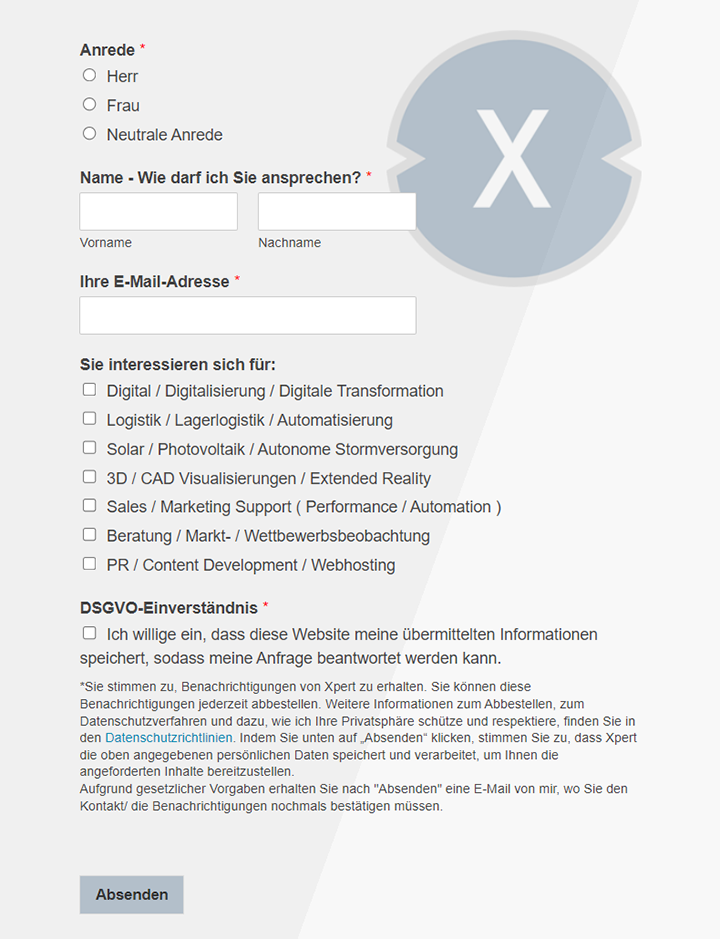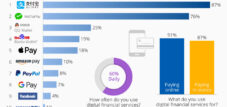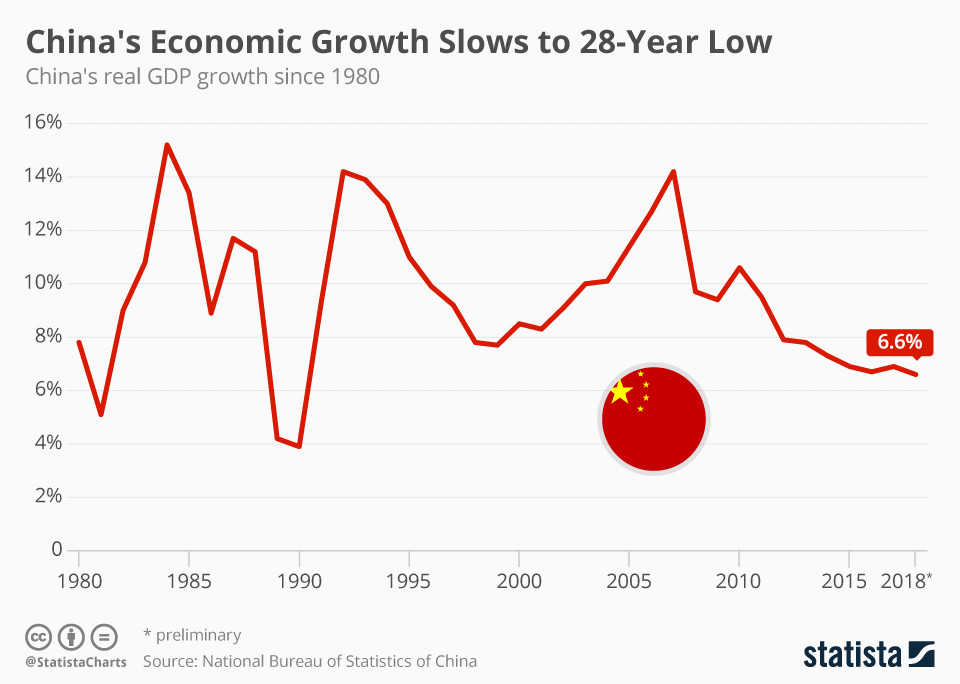
A week after the China Association of Automobile Manufacturers reported the first annual decline in Chinese car sales in more than two decades, the National Bureau of Statistics of China further data pointing to weakness in the world's second-largest economy. According to preliminary estimates, the country's gross domestic product (GDP) grew by 6.6 percent last year. That sounds impressive from a US or European perspective, but for the previously booming Chinese economy, different standards apply: 6.6 percent is the lowest growth rate since 1990.
Weak domestic demand, coupled with the cooling effect of the trade war with the United States on exports, contributed to the slowdown and continued the downward trend of several years (with 2017 being a surprising exception). Just last week, the Chinese government announced a 1.3 trillion yuan ($193 billion) stimulus package to boost the economy, the latest in a series of measures recently taken to prevent a total collapse of the country's growth.
China's economy is closely watched internationally, as many international companies view it as a key market for achieving their own growth targets. Apple recently lowered its revenue forecast for the holiday quarter, citing weak demand in the Chinese market as the primary reason for its underperforming results.
A week after China's Association of Automobile Manufacturers reported the first annual decline of Chinese automobile sales in more than two decades, the National Bureau of Statistics of China released more data pointing towards weakness in the world's second largest economy. According to preliminary estimates, the country's gross domestic product (GDP) grew by 6.6 percent last year. While that sounds great from a US or European perspective, different standards apply to the previously booming Chinese economy, where 6.6 percent is the lowest growth rate since 1990.
Lackluster domestic demand coupled with the cooling effects of the trade war with the United States on exports contributed to the slowdown, continuing a downward trend that has been going on for several years now (with 2017 a surprise exception). Just last week, the Chinese government announced a 1.3 trillion yuan ($193 billion) stimulus package to bolster the economy, the latest of several measures recently taken to prevent the country's growth from collapsing altogether.
China's economy is closely watched internationally, as many international corporations consider it a key market in reaching their own growth targets. Apple recently revised its revenue guidance for the holiday quarter downwards, citing weak demand in the Chinese market as the main driver behind its lackluster performance.


Keep in touch