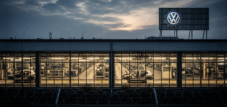
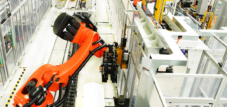
Bosch is fighting on two fronts: The battle against 22,000 job losses and the acute production halt due to short-time work – Creative image: Xpert.Digital
The Bosch case: Is this the end of the German industrial miracle? A corporation on the brink drags an entire nation down with it
Bosch earthquake: Why the German giant is now cutting 22,000 jobs – and this could just be the beginning
The German flagship corporation Bosch, once an unshakeable symbol of engineering prowess and stability, is in the grip of an unprecedented double crisis. A perfect storm of long-term strategic failures in the transition to electromobility and an acute geopolitical shock has plunged the company into one of its most difficult periods. The announcement of plans to cut a total of 22,000 jobs in Germany by 2030 is merely the most visible consequence of a profound problem that extends far beyond Bosch. While profits plummet and the future of the combustion engine division dwindles, a new chip crisis surrounding the manufacturer Nexperia ruthlessly exposes the fatal dependence of German industry on global supply chains and political power struggles between the US and China. The crisis at Bosch is thus more than just the story of a corporation in distress – it is a warning signal for the future viability of the entire German industrial model and raises the question of whether the prosperity built up over decades is at stake.
Related to this:


Bosch in the stranglehold of transformation: When the German flagship company becomes a hostage to geopolitical power games
Current developments at Bosch reveal a complex situation in which long-term structural deficiencies combine with short-term geopolitical shocks to create a perfect storm. The world's largest automotive supplier is navigating one of the most difficult phases in its corporate history, while at the same time a new chip crisis ruthlessly exposes the vulnerability of globally networked production chains. The dimensions of this development extend far beyond the individual corporation and raise fundamental questions about the future viability of the German industrial model.
At the end of September 2025, Bosch announced plans to cut another 13,000 jobs in Germany by 2030, in addition to the 9,000 job losses already announced for 2024. This puts a total of approximately 22,000 jobs at risk, a historic scale unprecedented in the company's more than 130-year history. The Stuttgart-Feuerbach site (around 3,500 jobs), Schwieberdingen (1,750), Bühl (1,550), and Homburg in Saarland (1,250 jobs) are particularly affected. At the Waiblingen site, the entire production of connection technology, affecting 560 employees, is to be discontinued by the end of 2028. These measures aim to reduce the annual costs of the Mobility division by €2.5 billion and increase the operating margin from its current meager 3.5 percent to the targeted seven percent.
The management team, led by Labor Director Stefan Grosch and Mobility Board Member Markus Heyn, cites the changed market situation in the automotive industry as the reason for the closure. Demand for components for combustion engines is declining steadily, while the anticipated ramp-up of electromobility is progressing significantly slower than originally projected. This is particularly evident in the employment figures. While the production of diesel injection components requires ten employees and gasoline injection systems three, electromobility requires only one. This productivity gap underscores the fundamental challenge of structural change. At the same time, substantial upfront investments in new technologies such as electromobility, hydrogen, and automated driving are severely impacting profitability, without the desired market successes having materialized.
In fiscal year 2024, Bosch's sales fell by one percent to €90.5 billion, while operating profit before interest and taxes plummeted from €4.8 billion to just €3.2 billion. The operating margin of 3.5 percent is thus far below the requirements of a competitive automotive supplier industry. In the Mobility sector, which accounts for more than 60 percent of the Group's sales at €55.9 billion, sales stagnated at the previous year's level. While the equity ratio of 44.3 percent remains solid, the Group's investment capacity is diminishing. For 2025, Bosch expects organic sales growth of only between one and three percent, with the operating margin projected to improve but still remain significantly below the target of seven percent.
Related to this:

The structural margin crisis of the European supplier industry
The problems at Bosch fit seamlessly into the picture of an entire industry under immense pressure to perform. According to a global automotive supplier study by Roland Berger and Lazard, the industry's average operating margin fell to just 4.7 percent in 2024, after temporarily stabilizing at 5.3 percent in 2023. Before the COVID pandemic, margins were around 6.7 percent. European suppliers fared particularly poorly with a margin of only 3.6 percent, while South Korean suppliers brought up the rear with 3.4 percent, and Chinese competitors were significantly more profitable at 5.7 percent.
This development is structural in nature and not merely cyclical. Suppliers are experiencing a phase of stagnation, as industry experts call it. On the one hand, production volumes are stagnating, while on the other hand, companies must fundamentally transform their business models. The costs of this transformation are immense, while returns are lacking. More than 40 percent of the world's 25 largest automotive suppliers are now rated as non-investment grade, which makes it difficult for them to access affordable financing. By comparison, in other industrial sectors such as medical technology, this figure is less than five percent.
Stagformation describes a state in the automotive supplier industry where production volume stagnates while companies must simultaneously manage major changes brought about by transformation, for example, to electromobility or digitalization. The term is a portmanteau of "stagnation" and "transformation": growth is lacking, but companies are nevertheless forced to invest heavily in new technologies, which puts significant pressure on margins and competitiveness.
The causes of this margin erosion are multifaceted. Stagnant or even declining vehicle production in Europe and North America is colliding with overcapacity in the supplier industry. At the same time, massive investments in electrification, software integration, and new production technologies must be managed, while automakers, due to their own strained profitability, are continuously increasing price pressure on suppliers. Added to this are rising energy and raw material prices, higher labor costs in Europe, and increasing requirements from ESG regulations and cybersecurity.
The situation is particularly dire for specialized suppliers in the field of conventional powertrain technology. While the demand for combustion engine components is expected to decline by 30 to 35 percent in the coming years, new expertise must simultaneously be developed in areas such as battery technology, power electronics, and software development. This transformation requires not only capital but also know-how that is lacking in many traditional supplier companies. The president of the Association of European Automotive Suppliers emphasizes that two-thirds of its members achieve a profit margin of less than five percent, and a quarter are even operating at a loss. This leaves them without the funds to finance the necessary investments for the transformation.
The chip shortage as a catalytic shock
Into this already tense situation erupted a new chip crisis in October 2025, ruthlessly exposing the automotive industry's vulnerability to geopolitical upheavals. At the center of the crisis is the Dutch semiconductor manufacturer Nexperia, part of the Chinese Wingtech Group, one of the world's largest suppliers of basic semiconductors such as diodes, transistors, and battery management chips. The company produces approximately 100 billion semiconductors annually, which are found in virtually every electronic device, from power windows and engine control units to LED systems in vehicles.
At the end of September 2025, the Dutch government took control of Nexperia, citing serious deficiencies in its corporate governance that threatened the economic security of the Netherlands and Europe. This followed pressure from the US, which had placed Wingtech on its sanctions list in December 2024 because the company allegedly continued to supply chips for weapons manufacturing to Russia even after 2022. The Dutch government wanted to prevent technological expertise from migrating to China and ensure that, in an emergency, the supply of these critical components could no longer be guaranteed.
The reaction from Beijing was swift and harsh. The Chinese government imposed an export ban on Nexperia products intended for further processing in China. This hit the European automotive industry hard, because although the wafers are manufactured in the Netherlands, Germany, and Great Britain, the cutting into individual chips, their final assembly, and the so-called packaging take place in Chinese plants. This last production step is particularly labor-intensive and was deliberately outsourced to China, where labor costs are lower. Following its acquisition by Wingtech, Nexperia had increased its Chinese packaging capacity by approximately 50 percent.
For the German automotive industry, this represented an existential threat. The Nexperia chips are certified for specific control units; alternative products would first have to undergo complex certification processes and be tested for quality and durability. This process takes months, during which production cannot be maintained. At Bosch, the shortage had a particularly rapid impact at the Salzgitter plant, where more than 1,000 employees work in the just-in-time production of engine control units. The plant also coordinates the entire production of control units within the Bosch Group. According to Mario Gutmann, a member of the IG Metall executive board and a Bosch works council member, short-time work was registered for these employees, although it was still unclear whether the employment agency would approve the application.
Horst Ott, the Bavarian district manager of the IG Metall union, reported that other automotive suppliers were also facing significant difficulties in certain areas and had already registered for short-time work. Starting next week, larger suppliers and every vehicle manufacturer are expected to be able to report on the impact of the supply bottlenecks on them. Until then, all crisis scenarios must be fully implemented; then it will become clear whether the emergency plans are effective or not. The phones at IG Metall were ringing off the hook, and works councils were seeking advice on the necessary company agreements for short-time work.
Volkswagen announced that vehicle production at its German plants is secured until October 30, 2025, but that short-term impacts on the Volkswagen Group's production network could not be ruled out. The Group was examining alternative procurement options. Christian Vollmer, Head of Production for the VW brands, stated that the company had an alternative supplier who could compensate for the Nexperia semiconductor shortage. The question, however, was how quickly this replacement would be available in sufficient quantities.
The macroeconomic dimensions of the dual crisis
The effects of the combined structural and acute chip crisis extend far beyond individual companies and affect the entire German economy. In an analysis, the Association of Research-Based Pharmaceutical Companies calculated three scenarios to determine the potential impact of a prolonged chip shortage on the German economy. In the best-case scenario, gross domestic product (GDP) would fall by 0.04 percentage points, while in the worst-case scenario, it would decline by 0.48 percentage points. This would correspond to a loss of up to €21 billion in economic output. The German government is now forecasting only minimal growth of 0.2 percent for 2025. Should the worst-case scenario materialize, Germany would experience its third consecutive year of economic contraction, a historically unprecedented development in the history of the Federal Republic.
The calculation is based on the assumption that the automotive and supplier industries will no longer receive semiconductors from the Chinese manufacturer Nexperia. In the first scenario, economists assume that production lines for approximately half of VW's output will be shut down for two weeks, which corresponds to a halt of one-fifth of total German passenger car production. By November, production would already be back at 95 percent of pre-crisis levels, and by December at 100 percent. In this case, GDP growth would be dampened by 0.04 percentage points. In the medium scenario, the production shutdown would last four weeks, resulting in a growth loss of 0.15 percentage points. In the worst-case scenario, production would be halted for eight weeks, which would reduce GDP by 0.48 percentage points.
What's particularly problematic is that the effects extend beyond the directly affected companies. If car manufacturers can't produce, they also won't order intermediate goods. The crisis then spills over to suppliers who aren't even dependent on chips, such as manufacturers of sheet metal, axles, or tires. In normal times, the automotive industry accounts for almost a tenth of the production of domestic metal producers. The share is even higher, at eleven percent, for plastics manufacturers. A production shutdown of several weeks in the automotive industry would therefore trigger chain reactions throughout the entire German industrial sector.
The long-term structural effects on the labor market are already severe. According to the German Association of the Automotive Industry (VDA), nearly 55,000 jobs have been lost in the German automotive industry in the past two years. This represents a seven percent decrease in employment to 718,200. The decline was particularly pronounced among automotive suppliers, with a drop of 11.5 percent to 236,700 employees. An EY study shows that approximately 19,000 jobs were lost in the German automotive industry in 2024 alone. At the end of 2024, just over 761,000 people were employed in the sector, the lowest figure since 2013.
The job cuts are concentrated among automotive suppliers. In addition to Bosch, ZF Friedrichshafen also announced the elimination of up to 14,000 jobs in Germany by 2028, Continental plans to cut another 3,000 jobs worldwide in its automotive sector, and Schaeffler is slated to eliminate 2,800 positions. In Baden-Württemberg, the heartland of the German automotive industry, a structural study commissioned by the state suggests that up to 66,000 jobs in the automotive sector could be lost by 2030. The question is no longer whether there will be massive job losses, but rather at what pace and to what extent.
The anatomy of an industrial dead end
The current situation reveals fundamental strategic missteps on several levels. First, the German automotive industry delayed the transformation to electromobility for too long and then implemented it too abruptly. While Chinese manufacturers systematically built up expertise in battery technology, power electronics, and software development over many years, German manufacturers and suppliers focused on optimizing existing combustion engine technology. When the politically enforced shift came, both the technological know-how and the industrial capacity to catch up were lacking. Bosch, for example, withdrew from its battery technology joint venture with Johnson Controls, while the Americans developed the now successful company Clarios from it.
Secondly, the European regulatory model proved counterproductive. While policymakers operated with increasingly stringent CO2 targets and de facto bans on combustion engines, accompanying measures to promote industrial transformation were lacking. Energy costs in Germany are significantly higher than in the US or China, bureaucratic hurdles hinder investment, and the charging infrastructure for electric vehicles has been expanded too slowly. The result is a crisis of consumer confidence, reflected in weak sales figures for electric vehicles. The hoped-for market ramp-up of electromobility failed to materialize, while at the same time the production of profitable combustion engine models was scaled back.
Thirdly, the Nexperia crisis reveals the dubious nature of a globalization strategy that has shifted critical production steps to geopolitically unstable regions. Semiconductor packaging may be cheaper in China, but dependence on Chinese production capacity makes the European automotive industry vulnerable to blackmail. The Dutch government reacted to American pressure, China countered with an export ban, and the victims are German workers who are being put on furlough. The just-in-time production philosophy, which for decades was considered the epitome of industrial efficiency, is proving to be a fatal weakness in times of geopolitical confrontation.
Fourth, automakers have systematically shifted cost pressures onto their suppliers without considering their investment capacity. OEMs are still achieving acceptable margins in some cases, while suppliers have to operate on margins of only 3 to 4 percent. These margins are insufficient to finance the necessary investments in new technologies. More than 40 percent of large suppliers are now classified as non-investment grade, which increases their refinancing costs and further weakens their competitiveness. The wave of consolidation that has already begun will accelerate. Many medium-sized suppliers will not survive the transformation.
Fifth, the focus on the automobile as a technology platform has led to the neglect of other business areas. Bosch is now responding with strategic portfolio decisions. The company has acquired Johnson Controls' climate control and household appliance business for eight billion euros, the largest acquisition in its history. The signal is clear: Bosch wants to move away from the automobile and is instead focusing on heat pumps, air conditioning systems, and building technology. These technologies are expected to generate sales of several billion euros by 2030. However, this diversification comes rather late and does not change the fact that the Mobility division continues to account for 60 percent of the group's sales and will not be profitable in the foreseeable future.
🎯🎯🎯 Benefit from Xpert.Digital's extensive, five-fold expertise in one comprehensive service package | BD, R&D, XR, PR & Digital Visibility Optimization


Benefit from Xpert.Digital's extensive, five-fold expertise in a comprehensive service package | R&D, XR, PR & Digital Visibility Optimization - Image: Xpert.Digital
Xpert.Digital possesses in-depth knowledge across various industries. This allows us to develop tailored strategies precisely aligned with the requirements and challenges of your specific market segment. By continuously analyzing market trends and monitoring industry developments, we can act proactively and offer innovative solutions. The combination of experience and expertise generates added value and provides our clients with a decisive competitive advantage.
More information here:
Bosch undergoing a transformation — Why thousands of jobs are at risk
The socio-political upheavals
The dimensions of the crisis extend far beyond economic indicators. In regions like the greater Stuttgart area, Saarland, and East Frisia, the automotive industry is the dominant employer. The elimination of thousands of jobs will destabilize entire regions. The IG Metall union speaks of the largest job cuts in Bosch's history and criticizes the company for not only squandering the trust of those who made it successful, but also leaving behind a trail of social devastation in many regions.
Highly qualified specialists are particularly affected. At the Hildesheim site, a total of 326 jobs are slated to be cut by the end of 2027, and nationwide, 1,500 jobs in the software and automotive electronics sectors are at risk. These employees have often invested years in their training and are now faced with the prospect of their skills no longer being needed. Leon Zeller, an apprentice at Bosch in Schwäbisch Gmünd, wonders if he will soon be out of a job. He and his family are deeply worried about the future. Morale is at rock bottom.
The reactions from employee representatives are correspondingly vehement. Frank Sell, Chairman of the Works Council for the Mobility division, categorically rejects a workforce reduction of this historic magnitude without simultaneous commitments to safeguarding the German locations. Instead of negotiating future plans at the sites as agreed, thousands more people are now to be forced to leave the company. The IG Metall union is demanding a continued commitment to refrain from compulsory redundancies. Such a ban on layoffs is in place for the division until the end of 2027. It remains to be seen whether Bosch will offer employees severance packages to encourage them to leave the company.
Management is urging swift action. Stefan Grosch emphasizes the immense time pressure and the fact that delays would only exacerbate the situation. He stresses the urgent need to improve competitiveness in the mobility sector and to continue reducing costs permanently. Regrettably, this will inevitably lead to further job cuts beyond those already announced. This is painful, but unavoidable. This argument is meeting with resistance from employees, who rightly point out that they are not responsible for past strategic errors.
What's remarkable is the continuity of personnel at the top of the company. Despite the massive job cuts, CEO Stefan Hartung's contract has been extended by five years, until 2031. The former McKinsey manager has been at the helm of the corporation for almost four years and is now tasked with managing the largest restructuring in Bosch's history. While thousands of jobs are being eliminated, the management is bolstering its own position. The message to the workforce is devastating. It's clear: the responsibility for this mess lies with the employees, not management.
Related to this:

The geopolitical dimension of industrial dependence
The Nexperia crisis exemplifies how deeply European industry is being drawn into a conflict between the US and China, a conflict in which it should not be a party. The Netherlands acted under pressure from the US, which had placed Wingtech on its sanctions list because the company allegedly supplied chips to Russia. China responded with an export ban that affects European companies. Neither the Dutch nor the German government has developed an independent position in this conflict, but is merely reacting to directives from Washington.
The German government announced mediation efforts and additional measures to combat the chip shortage, without specifying details. Foreign Minister Johann Wadephul of the CDU party had planned to discuss cooperation between the two countries during a visit to China, but the trip was unexpectedly canceled. The Foreign Office did not provide specific reasons. The political response appears helpless and lacking in strategy. While production is at a standstill and thousands of workers are placed on furlough, a strategic answer to the challenge is missing.
This situation highlights the fundamental problem of an industrial policy that has shifted critical production capacities to geopolitically unstable regions. Discussions about supply chain resilience have been ongoing since the COVID pandemic, yet concrete measures have failed to materialize. On the contrary, dependence on China has deepened in many sectors. Nexperia is just one example. Europe is even more reliant on Chinese supplies for rare earths, battery raw materials, and many other critical materials. Each of these dependencies can be used as leverage in a geopolitical conflict.
The reactions from China on Thursday, October 24, 2025, gave cause for cautious optimism. According to insiders, Nexperia's Chinese subsidiary was allowed to resume deliveries to customers in the People's Republic. However, the Chinese authorities stipulated that all future transactions must be conducted exclusively in yuan, instead of the previous US dollars. This was apparently intended to make the Chinese subsidiary less independent from its Dutch parent company. Nexperia declined to comment on the matter but warned of potential quality issues with products from the Chinese factory. The question of whether and when deliveries to European customers would resume remained open.
The Dutch company is now looking for alternative locations for packaging and testing its semiconductors produced outside of China. A Nexperia spokesperson emphasized that the company has been pursuing these plans for some time and that they are unrelated to the current dispute. This statement, however, is hardly credible. In fact, the conflict demonstrates the need to bring critical production steps back to Europe. Advanced packaging, in which multiple chips are combined or stacked on top of each other, requires higher technological standards and is largely automated. Experts see this as an opportunity to build up corresponding manufacturing capacities in Europe. However, this requires massive investments and will take years.
The Chinese challenge as a structural problem
Behind the current chip crisis lies the fundamental challenge that China has caught up or even surpassed it technologically in many areas of the automotive industry. In the world's largest car market, half of all new vehicles are already electrified, and German manufacturers are struggling in this area. The market share of electrified vehicles is steadily increasing globally, while the share of combustion engine vehicles is declining. Chinese manufacturers like BYD have firmly established themselves among the world's top-selling manufacturers and impress not only with their growth but also with their profitability.
For years, German automakers and suppliers made the mistake of underestimating Chinese competition. They assumed that the technological superiority of German engineering would be sufficient to defend their market leadership. This assumption has proven fundamentally wrong. Chinese manufacturers not only produce more cheaply, but they are now also technologically equal or superior, particularly in future-oriented fields such as battery technology, software, and autonomous driving. BYD increased its sales figures by over 500,000 vehicles in the first half of 2025 and boasts slightly above-average profit margins.
The European response to this challenge remains half-hearted. Tariffs on Chinese electric vehicles may help buy time in the short term, but they don't solve the underlying problem. German manufacturers must remain competitive in the Chinese market, which is increasingly dominated by local suppliers. The strategy of producing electric vehicles in China for the Chinese market is reaching its limits because Chinese competitors are faster, more flexible, and more cost-effective. At the same time, Europe lacks the infrastructure and demand to fully utilize the enormous production capacities that have been built up in recent years.
The situation is particularly problematic for suppliers. Chinese suppliers achieve significantly higher margins of 5.7 percent compared to their European competitors' 3.6 percent. They benefit from growing demand from domestic OEMs, government incentives, and private investment. European suppliers, on the other hand, suffer from low production levels, overcapacity, and rising labor costs. They are caught in a dilemma: they must invest in new technologies to remain competitive, but cannot finance these investments because their margins are too low. Many will not be able to manage this balancing act.
Future scenarios and their implications
The question is no longer whether the German automotive supply industry will shrink, but only at what pace and with what consequences. Several scenarios are conceivable, each with different implications for the economy and society.
In the most optimistic scenario, German suppliers will succeed in concentrating on profitable niches and developing new business areas through innovation. Bosch, for example, is focusing on by-wire technologies, in which mechanical connections are replaced by electronic controls. The company aims to achieve sales of more than seven billion euros with this technology by 2032. Bosch also sees considerable growth potential in the area of heat pumps and air conditioning technology. If this diversification succeeds, the mobility sector could decline in importance without causing the overall company to collapse. While employment would decrease, it would be controlled and without social upheaval.
In the medium scenario, job cuts continue, but are spread over a longer period and implemented in a socially responsible manner. Layoffs are avoided; instead, the focus is on severance packages, early retirement, and transfer companies. Demographic trends support this approach, as many employees will be retiring in the coming years. The labor supply in the automotive industry will decrease by 6.3 percent by 2035 due to age-related attrition. However, there is a risk that urgently needed skills will also be lost. Particularly in professions such as technical research and development, vehicle engineering, and mechanical engineering, a disproportionately high number of people work in the automotive industry. The labor supply in these professions will decrease by 2035, while their relevance will increase due to electrification.
In the most pessimistic scenario, the decline of the European automotive supply industry accelerates. The combination of structural problems, geopolitical upheavals, and technological disruption leads to a wave of bankruptcies. Medium-sized suppliers, lacking both the capital and technological know-how for the transformation, disappear from the market. Value creation shifts to China and the USA, where government industrial policy and lower energy costs offer more favorable conditions. German plants are closed, and the remaining production capacities concentrate on high-quality niche products. The number of employees in the automotive industry could fall by several hundred thousand by 2035.
The reality will likely lie somewhere between these scenarios, with significant differences between companies. Large, well-capitalized corporations like Bosch will survive, albeit considerably downsized and with a different product portfolio. Medium-sized suppliers, on the other hand, will disappear in large numbers or be acquired. Industry consolidation is inevitable and already well underway. Distressed M&A, or transactions in special situations, is becoming increasingly important. Such acquisitions offer the opportunity to preserve core operations, secure jobs, and provide investors with access to technology, personnel, and markets.
The political responsibility and the failure of industrial policy
The current crisis is also the result of years of political failure. The German government failed to develop a coherent industrial strategy for the transformation of the automotive industry in a timely manner. Instead of supporting companies in the necessary realignment, it continually imposed new regulations that increased costs without strengthening competitiveness. Energy costs in Germany are among the highest in the developed world, the bureaucratic burden is crushing, and approval processes take years.
At the same time, there was a lack of active support for future technologies. While China poured massive state investments into battery production, charging infrastructure, and the promotion of electric vehicles, Germany relied on the market to sort things out. This naive hope has proven to be a mistake. The US reacted with the Inflation Reduction Act, which is pumping hundreds of billions of dollars into the green transformation of industry and creating targeted incentives for locating production facilities in the US. Europe, on the other hand, is debating debt rules and stability criteria while its industry collapses.
The political reaction to the current chip crisis is indicative of this failure. Instead of developing an independent position vis-à-vis the US and China, they are allowing themselves to be manipulated by Washington. The Dutch government acted under American pressure without considering the consequences for European industry. The German government announced measures without specifying them. The cancellation of the foreign minister's trip to China demonstrates an inability to even keep diplomatic channels open. This is not industrial policy, but industrial harakiri.
What's needed is a comprehensive strategy encompassing several elements. First, massive investments in infrastructure are required, particularly in energy supply and digital networking. Electricity prices must be reduced to a competitive level, which is only possible through the massive expansion of renewable energies and improvements to the grid infrastructure. Second, permitting processes must be drastically accelerated. What takes months in China drags on for years in Germany. We cannot afford this waste of time.
Thirdly, active promotion of future technologies is needed. Battery production in Europe must be expanded, as must semiconductor manufacturing and advanced packaging. Dependence on China for critical components must be reduced, even if this means higher costs in the short term. In the long term, this investment in the resilience of supply chains is indispensable. Fourthly, the transformation must be socially responsible. The employees who have contributed to the success of the German automotive industry for many years must not become pawns in geopolitical power games. Training programs, transfer companies, and social security are necessary to facilitate the transition.
Fifth, European coordination is needed. The automotive industry is no longer a national affair. German suppliers provide parts to French and Italian manufacturers, and Czech factories produce for the German market. The value chains are European, and the response to the challenges must be as well. A European industrial program modeled on the Inflation Reduction Act in the US would be necessary to maintain the competitiveness of European industry. The debate about the debt brake and stability criteria must take a back seat to the goal of preserving the industrial base.
The inevitable reinvention of the German industrial model
The crisis at Bosch is symptomatic of a profound structural crisis in the German industrial model. The recipe for success of the past—producing high-quality products for the global market—no longer works in a world where Chinese competitors have caught up technologically and operate at significantly lower costs. The notion that German engineering and quality are sufficient to survive in global competition is outdated. The future of German industry lies not in defending the status quo, but in reinvention.
This reinvention requires a fundamental shift in thinking at all levels. Companies must be prepared to radically re-evaluate their business models and explore new avenues. Bosch, with its entry into climate technology and its diversification away from the automotive sector, demonstrates how this can be achieved. However, this transformation must not be carried out at the expense of employees. These employees have contributed to the company's success for decades and deserve respect and social security.
Policymakers must finally develop an industrial strategy worthy of the name. This means not only reducing regulations but also actively investing in infrastructure, education, and research. It means consistently advancing the energy transition to enable competitive electricity prices. It means reducing dependence on authoritarian regimes for critical raw materials and components. And it means strengthening European cooperation instead of pursuing unilateral national actions.
Society must prepare itself for the fact that this change will be painful. Entire regions will have to redefine their economic focus. Baden-Württemberg, which proudly calls itself an automotive state, will have to reinvent itself as a healthcare hub, as Minister-President Winfried Kretschmann emphasizes. This transformation requires not only economic adjustments but also a new self-image. The days when every resident of Baden-Württemberg could be woken up in the middle of the night and immediately knew that automotive manufacturing, mechanical engineering, and plant engineering were the most important industries are coming to an end.
The challenge is immense, but not insurmountable. Germany boasts a highly skilled workforce, excellent research institutions, and a strong industrial base. The capacity for innovation is there, as is the technological know-how. What is lacking is the political will to set the necessary course and the societal readiness to actively shape change instead of passively enduring it. The alternative to a managed transformation is uncontrolled decline. The choice is ours.
Your global marketing and business development partner
☑️ Our business language is English or German
☑️ NEW: Correspondence in your native language!

Konrad Wolfenstein
I and my team are happy to be available to you as your personal advisor.
You can contact me by filling out the contact form here wolfenstein@xpert.digital:or simply call me at +49 7348 4088 965. My email address is
I'm looking forward to our joint project.
☑️ SME support in strategy, consulting, planning and implementation
☑️ Creation or realignment of the digital strategy and digitization
☑️ Expansion and optimization of international sales processes
☑️ Global & Digital B2B trading platforms
☑️ Pioneer Business Development / Marketing / PR / Trade Fairs
Our global industry and economic expertise in business development, sales and marketing

Our global industry and economic expertise in business development, sales and marketing - Image: Xpert.Digital
Industry focus areas: B2B, digitalization (from AI to XR), mechanical engineering, logistics, renewable energies and industry
More information here:
A thematic hub offering insights and expertise:
- Knowledge platform covering global and regional economies, innovation and industry-specific trends
- A collection of analyses, insights, and background information from our key areas of focus
- A place for expertise and information on current developments in business and technology
- A hub for companies seeking information on markets, digitalization, and industry innovations