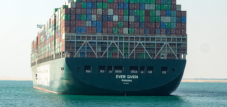
Battle of the North Sea ports: How Hamburg is outperforming Rotterdam and Antwerp in the India trade – Creative image: Xpert.Digital
Germany hesitates, Hamburg delivers: Why the port is arriving in India faster than Berlin's foreign economic policy
50 percent more containers: Why the Port of Hamburg is changing its entire Asia strategy
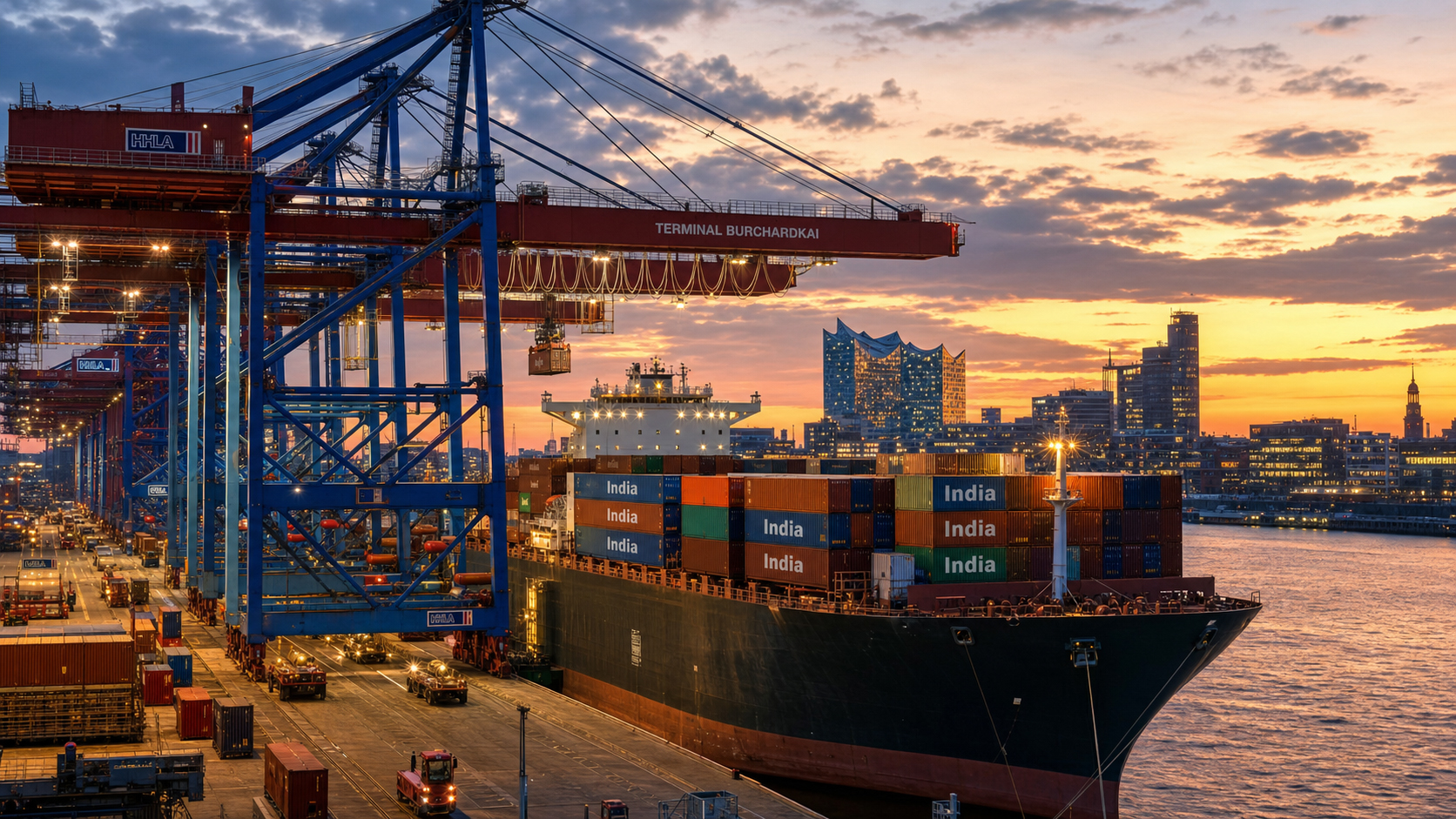
For years, the German logistics landscape has been almost hypnotized by China – but a quiet yet massive strategic revolution is currently taking place on the Elbe River. With a record throughput of around 290,000 TEU in 2025, India has rapidly climbed to sixth place among the Port of Hamburg's most important maritime trading partners. While foreign trade policy in Berlin often hesitates and searches for clear guidelines, Hamburg has long been taking action: Through a dense network of liner services, the development of genuine "knowledge alliances" on topics such as climate neutrality and digitalization, and a targeted strategy for complex supply chains, the port is positioning itself as Europe's central gateway to the subcontinent. But competition in the European Northern Range is fierce. An in-depth look at how Hamburg's bet on India is working – and what hurdles still need to be overcome.
A new heavyweight partner: How India Cargo is changing Hamburg's port profile
In the European port landscape, Hamburg has traditionally been the gatekeeper for trade with Northern Europe, Russia, and parts of Asia. However, in recent years, the focus of port operators has shifted significantly: India has gone from a peripheral issue to a strategic priority. While German foreign economic policy long concentrated on China, the USA, and within Europe, Hamburg has positioned itself relatively quietly but consistently as a central European hub for trade with India. This transformation is reflected in the figures: Between 2020 and 2024, container throughput between Hamburg and India increased by a good fifth, before a veritable leap occurred in 2025.
The year 2025 marks a turning point. Container traffic in direct trade between the port on the Elbe and the Indian coast reached a record level of around 290,000 TEU – almost 50 percent more than the previous year. This propelled India to sixth place in the ranking of Hamburg's most important partner countries for seaborne container traffic. For a port traditionally heavily reliant on trade with China, this growth represents not only a welcome diversification but also a strategic realignment: India is no longer a mere "complement" but an independent market whose dynamics could significantly influence the future of cargo handling volumes in Northern Europe.
This development coincides with a period in which geopolitical tensions, trade conflicts, and the search for "China+1" strategies are reshaping supply chain architecture. For Hamburg, the increase in traffic to India is doubly attractive: On the one hand, additional volumes offer short-term revenue potential; on the other hand, the port is positioning itself as a key player in a future, multipolar Asian logistics landscape, in which India is significantly enhanced as a production location, consumer market, and maritime hub.
Extensive scheduled services: Why twelve India connections are more than just timetables
The operational links between Hamburg and India are reflected in the stark TEU figures in the form of a tightly woven network. Twelve regular liner services connect the port on the Elbe with Indian ports – six of these are classic container services, supplemented by three RoRo connections and three conventional general cargo services specializing in heavy goods and project cargo. This mix is anything but random: it reflects the structure of bilateral trade, which involves not only standardized containerized goods but also high-value machinery, equipment, and vehicles with specific transport requirements.
Container services cover key Indian gateways such as Nhava Sheva (Jawaharlal Nehru Port), Mundra, Mumbai, Chennai, Ennore, and Hazira. This provides access to a broad spectrum of India's coastal economy – from industrial clusters in the west and automotive and mechanical engineering centers in the south to consumer and import hubs. This connectivity is of great importance to shipping companies and shippers: it reduces transit times, limits the number of transshipments, and enables complex supply chain setups that accommodate both export production for Europe and import flows for the Indian domestic market.
The presence of RoRo services underscores the importance of automotive and commercial vehicle transport, as well as rolling project cargo. German and European manufacturers utilize these connections, as do Indian producers shipping vehicles and machinery to Europe. Conventional general cargo lines, in turn, are relevant for heavy-lift projects such as power plant components, wind turbines, large industrial plants, and specialized machinery – classic sectors where German export strengths and Indian investment needs converge. The result is a multimodal service network that extends beyond mere container volumes and operationally reflects the industrial division of labor between Germany and India.
This gives Hamburg a structural advantage over its competitors in the Northern Range. While ports like Rotterdam and Antwerp-Bruges also have strong trade with Asia and India, Hamburg is explicitly positioning itself as a specialist for complex, value-added cargo. The mix of container, RoRo, and project cargo sends a signal to the market: the port aims not only to maximize throughput but also to be perceived as an integrated solution for industrial and logistics customers operating sophisticated supply chain setups between Europe and the Indian subcontinent.
More than TEU: How Hamburg stages its India traffic as a knowledge alliance
A key difference from traditional port marketing strategies lies in the fact that Hamburg is staging its India initiative not only with a focus on volume, but also as a "partnership on equal terms." Regular delegation trips to Chennai, Mumbai, and New Delhi are strategically used to highlight topics such as climate-neutral port development, shore power, digitalization, and terminal transformation. The Hamburg Port Authority and companies in the port industry not only present their own best practices, but also actively seek dialogue with Indian port operators, ministries, and logistics stakeholders.
Event formats like "Ports in Conversation – Hamburg meets Mumbai" exemplify this approach. The goal is not simply to attract additional cargo flows to Hamburg, but to foster a shared understanding of modern port and logistics development. Topics such as shore power connections for seagoing vessels, the decarbonization of terminal processes, the development of sustainable cruise terminals, and the integration of green corridor concepts are defined as shared learning areas. For Hamburg, this means actively contributing its position as a pioneer in environmental and climate issues to the partnership. For India, in turn, it offers the opportunity to benefit from decades of European experience in regulation, planning, and implementation.
Economically, this exchange of knowledge is more than symbolic. Those who establish standards, processes, and best practices early on in a technical field like port logistics shape procurement decisions, system architectures, and investment paths in the medium to long term. In other words, where shore power, terminal software, or automated handling systems are discussed today, contracts will be awarded tomorrow. Hamburg's strategy aims to be remembered by Indian decision-makers not only as a transshipment hub but also as a knowledge and technology partner – thereby indirectly opening up export opportunities for German port and logistics technology.
EU-India Free Trade Agreement: Tailwind for Hamburg's maritime realignment
The positive development in Hamburg's trade with India is not happening in a vacuum, but rather benefits from a changed trade policy environment. The conclusion of the free trade agreement between the EU and India, which is seen as a milestone in the logistics sector, significantly reduces tariffs on industrial goods, machinery, and electrical equipment, while simultaneously improving market access for maritime services and financial products. This combination is of particular importance for a port with a strong presence in mechanical engineering, logistics, and financial services.
The result: European machinery and equipment become cheaper for Indian importers, while entry barriers to the Indian market decrease for European exporters. At the same time, the agreement creates greater planning certainty regarding regulatory issues, which is crucial for long-term logistics chains and port investments. Hamburg benefits directly because it acts as a gateway for German exports and because many mechanical engineering and logistics companies are located in the metropolitan region. This creates a kind of "double leverage" for the port: increased export volume due to improved market conditions and a higher probability that this volume will pass through Hamburg, because the necessary network relationships, services, and expertise are already in place there.
Furthermore, the free trade agreement stimulates not only the flow of goods but also the flow of investment and services. European port and logistics companies gain easier access to Indian infrastructure projects, while Indian investors can more readily target European projects. In this interplay of trade, investment, and knowledge transfer, Hamburg becomes a physical and symbolic anchor point for EU-India economic cooperation. This gives the port a strategic advantage over ports with similar cargo volumes that are less deeply integrated into the trade policy division of labor.
Competition in the Northern Range: Rotterdam's and Antwerp's India strategies as a benchmark
As impressive as Hamburg's growth figures may seem, they must be viewed within the context of intense competition along the European North Sea coast. Rotterdam, Antwerp-Bruges, and other ports in the Northern Range are pursuing ambitious strategies to establish themselves as preferred hubs for trade with India. Rotterdam, for example, has invested heavily in digital port systems, automation, and hinterland connections in recent years and markets itself as Europe's "smartest port." Antwerp-Bruges is focusing on its role in the chemical and energy sectors, as well as synergies with inland shipping.
For Hamburg, this competition is a double-edged sword. On the one hand, competing investments improve the efficiency of the entire Northern Range and strengthen Europe as a maritime economic region. On the other hand, the pressure increases not only to maintain but also to expand its own locational advantages. Hamburg's particular strength lies in the combination of a high-performance container terminal network, a high density of specialized logistics service providers, a strong industrial base in the surrounding area, and a political environment that fundamentally recognizes the importance of the port economy – despite occasional conflicts. The large share of trade with India is an indicator that the port has succeeded in leveraging this combination to tap into a new growth market.
At the same time, it is clear that Hamburg must be careful not to be overwhelmed by structural disadvantages. The deepening of the Elbe River, land scarcity, noise pollution conflicts, and competitive pressure from deep-water ports remain real challenges. In the long term, the decisive factor in the India trade will be how well the port succeeds in further increasing the quality of its services, the reliability of its hinterland connections, and the efficiency of its port processes. India traffic represents volumes with high growth potential – but it is also mobile: If cost advantages or service quality diminish, it can be diverted to other hubs relatively quickly.
Your container high-bay warehouse and container terminal experts

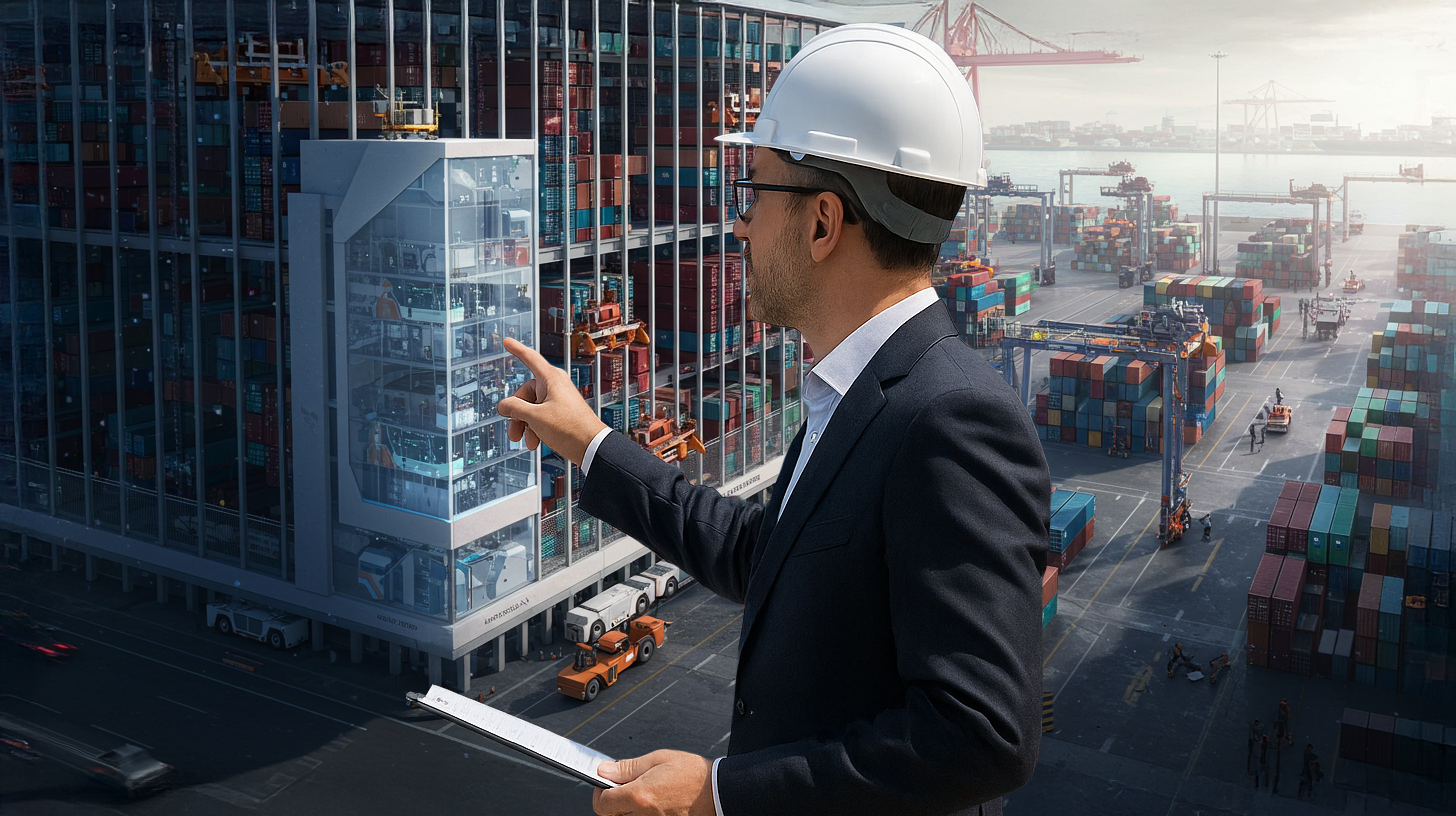
Container high-bay warehouses and container terminals: The logistical interplay – expert advice and solutions - Creative image: Xpert.Digital
This innovative technology promises to fundamentally change container logistics. Instead of stacking containers horizontally as before, they will be stored vertically in multi-story steel racking structures. This not only allows for a drastic increase in storage capacity within the same area, but also revolutionizes all processes at the container terminal.
More information here:
Hamburg's digital offensive: How Port Community Systems is accelerating trade with India
Digitalization as a lever: How Port Community Systems secures connectivity to India
Real-time supply chains: Why Hamburg's digital connectivity matters to Indian shippers
A key pillar of Hamburg's future competitiveness in trade with India is digitalization. European ports have massively expanded their Port Community Systems in recent years – digital platforms that bring together shipping companies, freight forwarders, terminal operators, customs authorities, and other stakeholders on an interoperable database. Hamburg, along with Rotterdam and Antwerp, is among the leaders in this area. This is relevant for trade with India for several reasons.
First, a high degree of digital integration reduces processing times and error rates in port logistics. Particularly in an environment where India has significantly improved its physical port processes and is now internationally competitive in key performance indicators such as container dwell times and vessel turnaround times, competition is increasingly shifting to the digital dimension. The speed and transparency of information flow between the hinterland, the port, and shipping companies determines where shipping companies consolidate their routes and where logistics companies establish their gateways. Second, a modern digital infrastructure enables integration into overarching, cross-border data spaces – a central theme in the EU-India dialogue on the interoperability of digital public infrastructures and the mutual recognition of electronic signatures.
Hamburg boasts a high-performance digital infrastructure, offering seamless processes for customs clearance, dangerous goods management, slot bookings, and hinterland logistics. For Indian shippers and logistics providers, who increasingly rely on digital platforms in their home markets, access to a European port with a similar level of digitalization is a clear locational advantage. Looking ahead, linking European port community systems with Indian logistics platforms could lead to a comprehensive, near real-time view of supply chains – an asset of particular value in volatile times characterized by disrupted routes, political risks, and fluctuating demand.
Climate-neutral port development: Green Corridors as a shared experimental field
Another strategic element of the Hamburg-India cooperation is the joint work on climate-friendly and environmentally sound port and shipping systems. In Europe, shore power facilities, alternative fuels such as LNG or, in the future, green hydrogen, electrical terminal equipment, and automated, energy-efficient handling processes have been promoted for years. Hamburg plays a prominent role in this, both in the container and cruise ship segments.
For India, which plans massive investments in its port infrastructure in the coming decades, this experience is more than just a "nice-to-have." It helps to avoid costly mistakes and shorten regulatory learning curves. Anyone planning new terminals today can consider shore power capability, alternative fuels, energy-efficient storage and handling technology, and automated processes from the outset. Hamburg contributes its experience from transformation processes in existing port areas, where, for example, old areas need to be revitalized, new uses integrated, and emissions targets met.
The vision of joint Green Corridors – that is, largely climate-neutral shipping routes between selected ports – is attractive to both sides. For European shipowners and shippers, it offers the opportunity to operationalize sustainability goals in concrete routes and to channel regulatory pressure (for example, from EU climate policy and taxonomy) toward transformative projects. For Indian partners, it opens access to technology, financing, and best practices that would otherwise have to be painstakingly developed over many years. Hamburg's role could be to act as the European anchor port for one or more of these corridors, with Indian ports such as Nhava Sheva or Mundra on the other side.
Hinterland, rail and inland ports: How Germany can scale its connectivity to India
A port alone cannot win business in India – the crucial factor is its interaction with the hinterland. Hamburg's strength lies in its efficient rail infrastructure and a network of inland ports that covers large parts of Germany, Central and Eastern Europe. This is particularly relevant for trade with India because a large proportion of the goods traded – machinery, cars, chemical products, consumer goods – do not remain in the Hamburg metropolitan region but are distributed deep into the hinterland.
The challenge lies in organizing these hinterland transport operations in such a way that the port can maintain its role as a gateway while simultaneously achieving environmental and transport policy objectives. Rail transport is the key instrument here: it enables bundled, comparatively low-emission transport over long distances and, with appropriate terminals, can be directly connected to industrial clusters, logistics centers, and urban consumer regions. This allows Indian goods arriving in Hamburg to be efficiently integrated into German and European value chains.
At the same time, Hamburg's role as an India hub opens up opportunities for inland ports and logistics centers further inland. They can position themselves as "India-ready" warehousing and distribution hubs, specializing in specific product categories – such as pharmaceuticals, textiles, machinery, or automotive components. This shifts part of the value chain from purely maritime transshipment to downstream logistics and processing. Economically, this strengthens not only the port but also the industrial base in the hinterland.
Risk factors: Political half-heartedness, regulatory pressure, and China reflexes
As convincing as Hamburg's India strategy currently appears, it is not immune to setbacks. One initial risk factor lies in Germany's unclear foreign economic policy. While Hamburg and its port industry are actively building partnerships, conducting delegation trips, and initiating concrete projects, political signals from Berlin sometimes seem hesitant or inconsistent. A clear stance from the German government on the India strategy—including trade, security, and industrial policy guidelines—would increase planning certainty for companies, but so far, such a stance is only evident in rudimentary form.
Secondly, pressure is increasing due to national and European regulations in the areas of environment, competition, and state aid. Decarbonization measures, emissions trading, and stricter regulations for port operations are sensible from a climate policy perspective, but if poorly coordinated, they can impair competitiveness compared to ports outside the EU. This poses a latent risk for trade with India, which can, in principle, be flexibly rerouted. If additional costs are not offset by higher service quality, faster processing, or better integration, shipping companies might prefer alternative gateways.
Thirdly, there is a risk that political and media debates, following the "China model," will be transferred to India. While India is democratically organized, it exhibits fault lines regarding human rights, the rule of law, and minority issues, which are receiving increasing attention in European discourse. Should this develop into a persistent political flashpoint, it could strain trade cooperation or at least introduce additional uncertainty. For Hamburg, this would mean being caught in a complex field of tension between economic opportunity, values-based foreign policy, and geopolitical rivalry.
The strategic perspective: What Hamburg needs to do now
From an economic perspective, the dynamic development of trade with India offers Hamburg a unique opportunity to redefine its role in the global port rankings. The combination of rapidly increasing cargo volumes, close operational connections, politically supported cooperation, and technological collaboration forms a foundation upon which long-term growth options can be built. Crucially, however, the port must not misjudge this current momentum as a given.
In the short term, Hamburg must ensure that capacities, processes, and digital systems keep pace with growth. Bottlenecks in terminal space, staff shortages, inefficient processes, or insufficient hinterland capacity would quickly become apparent and could damage its hard-earned image as a reliable partner. In the medium term, the goal is to remain at the forefront in key areas such as port automation, green energy supply, data integration, and customs processes so that Indian partners perceive Hamburg as a premium technological location.
In the long term, the port should actively define its role within the European context: as a leading hub for trade with India, as a testing ground for Green Corridors and digital platform integration, and as a bridge between German industry, European trade policy, and the Indian modernization project. If this succeeds, the current record of 290,000 TEU in trade with India could be just an intermediate step in a much larger shift in global trade flows – with Hamburg as one of the big winners.
Consulting - Planning - Implementation

Konrad Wolfenstein
I would be happy to serve as your personal advisor.
You can contact me at wolfenstein∂xpert.digital or
Just call me on +49 7348 4088 965 .
Our global industry and economic expertise in business development, sales and marketing

Our global industry and economic expertise in business development, sales and marketing - Image: Xpert.Digital
Industry focus areas: B2B, digitalization (from AI to XR), mechanical engineering, logistics, renewable energies and industry
More information here:
A thematic hub offering insights and expertise:
- Knowledge platform covering global and regional economies, innovation and industry-specific trends
- A collection of analyses, insights, and background information from our key areas of focus
- A place for expertise and information on current developments in business and technology
- A hub for companies seeking information on markets, digitalization, and industry innovations
Your container high-bay warehouse and container terminal experts
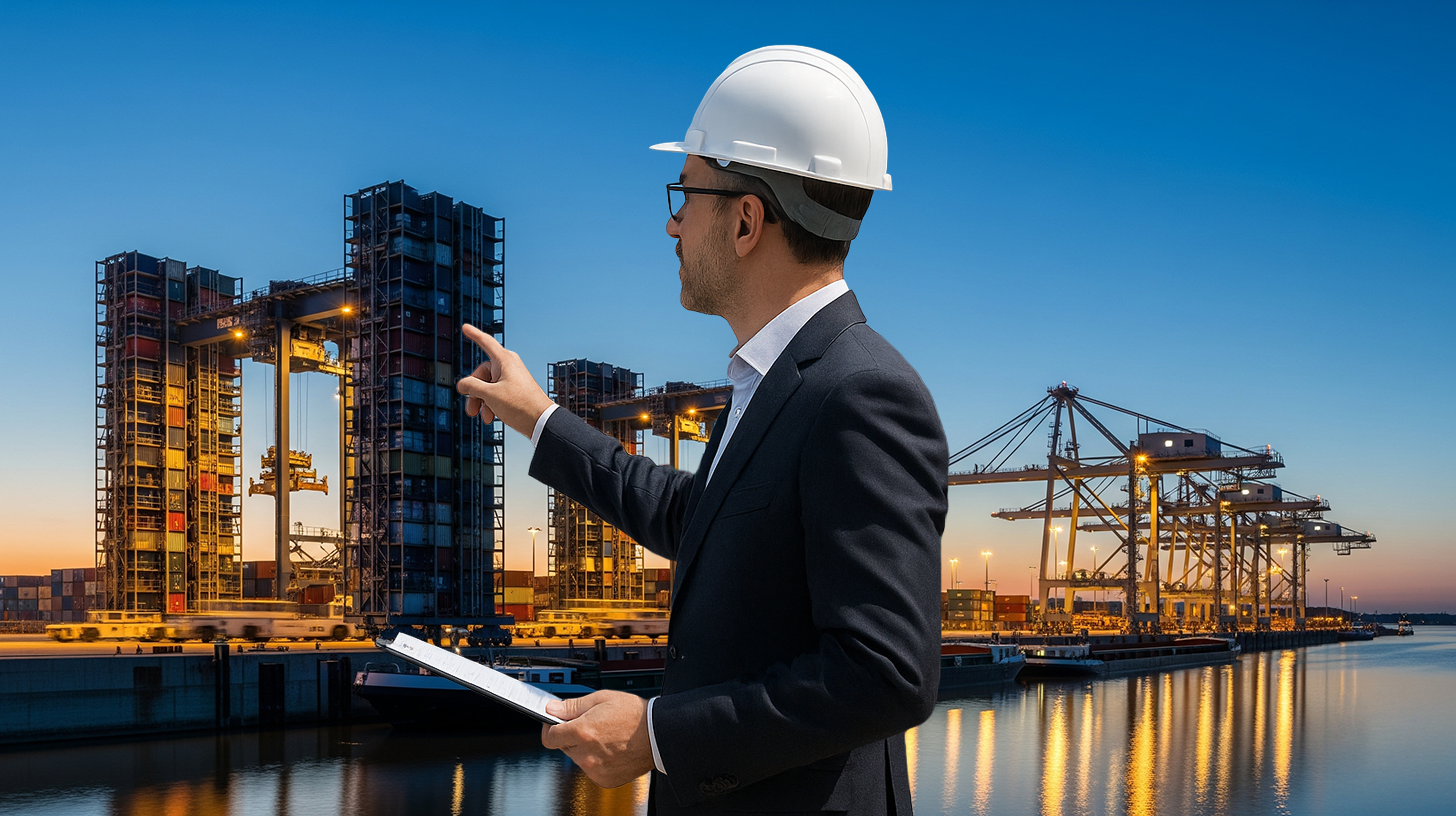
Container terminal systems for road, rail and sea transport in the dual-use logistics concept of heavy-lift logistics - Creative image: Xpert.Digital
In a world marked by geopolitical upheavals, fragile supply chains, and a new awareness of the vulnerability of critical infrastructure, the concept of national security is undergoing a fundamental reassessment. A state's ability to guarantee its economic prosperity, the provision of essential goods and services to its population, and its military capability increasingly depends on the resilience of its logistical networks. In this context, the concept of "dual-use" is evolving from a niche category of export control to a broader strategic doctrine. This shift is not merely a technical adjustment but a necessary response to the "paradigm shift" that demands a profound integration of civilian and military capabilities.
Related to this: