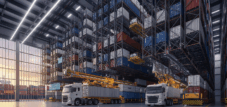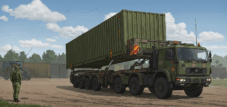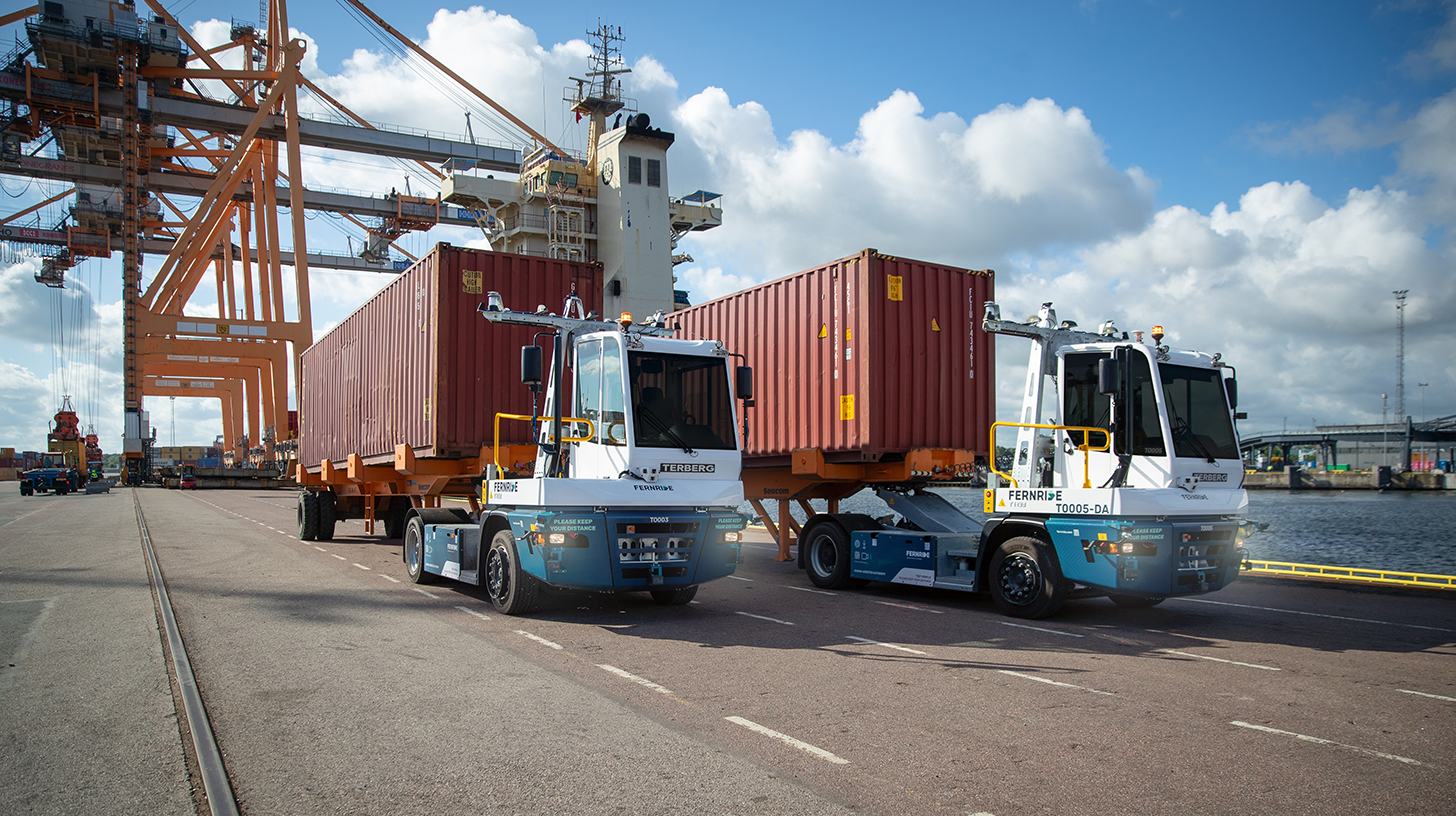
Autonomous container vehicles? Fernride ventures into defense logistics – The secret of human-assisted autonomy – Image: Fernride
The secret of tele-trucks: How one person controls dozens of trucks simultaneously and why this could transform the German Armed Forces
Teleoperation trucks in defense logistics
Munich-based technology company Fernride initiated a significant strategic shift in September 2025, expanding its activities from the purely civilian sector to defense logistics. With an additional €18 million financing round, the company is extending its business into a sector of increasing importance in Europe.
Revolutionary technology for two worlds
Fernride has been developing innovative solutions for autonomous logistics processes since 2019, specializing in the concept of "Human-Assisted Autonomy." This technology enables vehicles to operate without drivers, while remote operators can intervene from a control center in complex situations. The system combines artificial intelligence with human expertise, thereby bridging the gap between full automation and human control.
The technology is based on more than ten years of scientific research at the Technical University of Munich. The company was founded by Hendrik Kramer, Dr. Maximilian Fisser, and Jean-Michael Georg and emerged from the world-leading research laboratory for teleoperation at the Chair of Automotive Engineering at the Technical University of Munich.
Successful market positioning in civilian logistics
Before venturing into defense logistics, Fernride had already built an impressive track record in civilian logistics. Its most prominent customers include Hamburger Hafen und Logistik AG (HHLA), Volkswagen, and DB Schenker. These partnerships demonstrate the practical applicability and reliability of Fernride technology in real-world operating environments.
A particularly important milestone was the collaboration with HHLA at the TK Estonia terminal near Tallinn. There, Fernride began the transition to fully driverless operation of terminal tractors in July 2025. This makes the company the first in the world to receive TÜV SÜD certification for an autonomous terminal tractor in accordance with the EU Machinery Directive. This certification confirms that Fernride's autonomous vehicle platform meets EU standards for safety, cybersecurity, and system reliability.
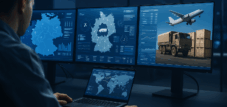
Fernride's technology allows a remote operator to monitor and control multiple vehicles simultaneously. In tests, an 18-year-old without a driver's license successfully remotely controlled a truck, highlighting the system's ease of use.
Strategic realignment towards dual-use applications
Fernride's entry into defense logistics comes at a time when the defense sector in Europe is experiencing a renaissance. Since the escalation of the conflict in Ukraine in February 2022, an increasing number of venture capitalists have been specifically investing in defense startups. This trend has also reached Fernride, which is now adapting its proven technology for military applications.
Thomas Müller, former CEO of the defense company Hensoldt and a member of the supervisory board at Airbus Defence, will join Fernride's advisory board. Müller brings decades of experience in the defense industry. He began his career in 1978 with the German Air Force, leaving in 1991 as a captain. He subsequently held various management positions at EADS, Airbus, and finally at Hensoldt, where he successfully established the company as an independent entity after its spin-off from the Airbus Group.
Innovative financing partners from the defense sector
The capital increase is being led by the venture capital firm Helantic, one of the first German funds to specialize exclusively in defense and dual-use investments. Founded by Christoph von Falck, Martin Buhl, and Marian Rachow, Helantic plans to invest a total of €100 million in innovative defense startups.
Helantic's focus is on the German market, which is considered particularly promising due to its highly qualified engineers and strong research landscape. Fifty percent of the fund's capital is earmarked for Germany, while 30 percent is intended for Central and Eastern Europe and 20 percent for global markets.
In addition to Helantic, other strategic investors, family offices, and venture capital firms are also participating in the financing round. This broad investor base underscores the confidence in Fernride's technology and market potential in both the civilian and military sectors.
Technological advantages for military applications
The application of remote-based vehicle technology in the military sector offers several strategic advantages. Autonomous and teleoperated systems can significantly reduce the risk to soldiers, especially in high-risk areas or during supply missions. At the same time, they allow for more efficient use of personnel, as one operator can monitor multiple vehicles simultaneously.
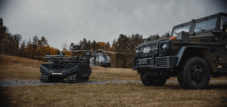
The German Armed Forces are already testing autonomous vehicles for various applications. As part of the research and technology study "Unmanned Ground Vehicles to Support Dismounted Forces," several unmanned ground vehicles were tested at the Jägerbrück training area. The Austrian Armed Forces' "TOM" (tele-operated ammunition handling) project also demonstrates the potential of teleoperated systems for ammunition supply.
Fernride CEO Hendrik Kramer confirmed to Handelsblatt that the startup is already conducting tests in cooperation with the German Armed Forces. This practical experience could be crucial in developing specific solutions for military requirements.
Your container high-bay warehouse and container terminal experts

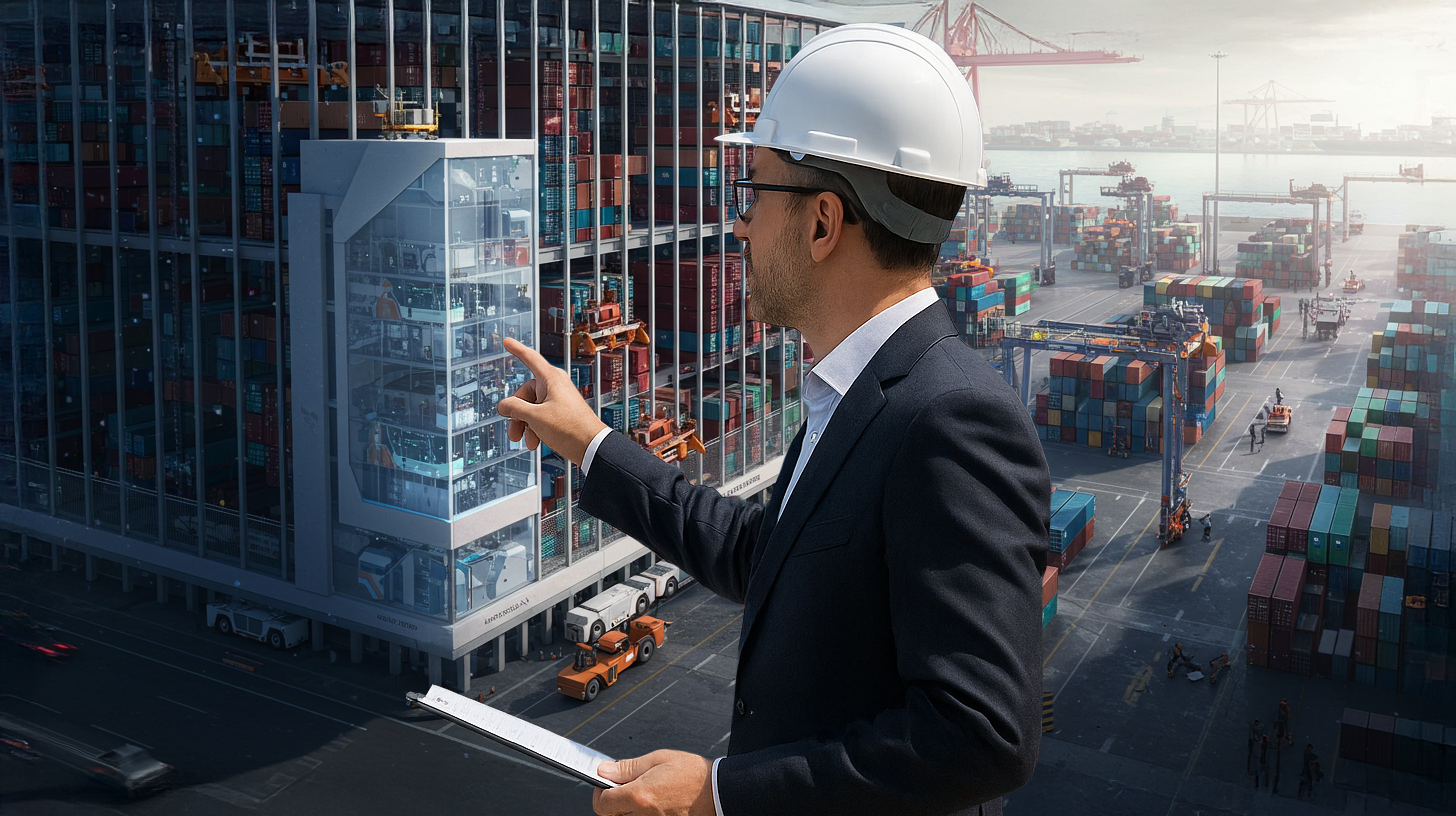
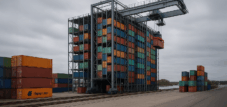
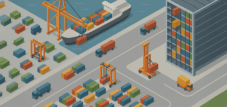
Container high-bay warehouses and container terminals: The logistical interplay – expert advice and solutions - Creative image: Xpert.Digital
This innovative technology promises to fundamentally change container logistics. Instead of stacking containers horizontally as before, they will be stored vertically in multi-story steel racking structures. This not only allows for a drastic increase in storage capacity within the same area, but also revolutionizes all processes at the container terminal.
More information here:
Remote ride and 75 million euros: Europe's leap into autonomous defense logistics
Market potential and European perspectives
The market for autonomous and teleoperated systems in defense logistics is developing rapidly. The European Defence Agency (EDA) has already launched a tender for "Autonomous Systems for Cross-Domain Logistics," which aims to test innovative technologies for military use. This initiative underscores the growing interest of European institutions in autonomous logistics solutions.
The total volume of Fernride funding, following the latest expansion, amounts to €75 million. These funds are intended to accelerate the development and deployment of dual-use solutions for autonomous logistics in Europe. Dual-use technologies offer the advantage of being usable for both civilian and military applications, which reduces development costs and increases scalability.
Safety and certification as cornerstones
A key success factor for Fernride's expansion into the defense sector is the company's comprehensive safety concept. The TÜV SÜD certification for the autonomous terminal tractor was a significant milestone, confirming compliance with European safety standards. This certification included a complete hazard and risk analysis, an assessment of the functional safety concept according to ISO 13849, and a cybersecurity concept that took into account relevant standards such as IEC 62443.
Benedikt Pulver, Head of Machine Safety at TÜV SÜD, emphasizes the importance of combining functional safety and cybersecurity for autonomous systems. These requirements are even more critical in the military sector, as additional threats such as electronic warfare and hostile cyberattacks must be considered.
Vision for the future of European defense
Hendrik Kramer sees the expansion into defense logistics as an important contribution to European sovereignty. Europe needs sovereignty in critical industries and technologies, and autonomous systems for container terminals and defense are crucial for this. Fernride's technology can help increase security, alleviate staffing shortages, and protect lives.
Thomas Müller, Fernride's new advisory board member, underscores this vision. Fernride's technology has already proven itself in civilian logistics, and its potential to protect lives and strengthen European defense forces is undeniable. Europe needs precisely these kinds of "Made in Germany" innovations to secure its technological sovereignty.
Challenges and opportunities
Entering the defense logistics sector presents both opportunities and challenges. On the one hand, it opens up a large and growing market with significant investment potential. On the other hand, additional regulatory requirements must be met and specific military standards adhered to.
The development of dual-use technologies also requires a careful balance between civilian and military requirements. While civilian applications often focus on efficiency and cost optimization, military applications prioritize robustness, security, and operational capability under extreme conditions.
Outlook on further developments
With the new funding and strategic realignment, Fernride is well-positioned for growth in both the civilian and military markets. The company plans to further develop its technology and gradually expand its range of applications. At its core is the vision of creating autonomous logistics systems that keep people out of dangerous situations while simultaneously increasing the efficiency of logistics processes.
The combination of proven technology, strong partnerships, and additional capital forms the basis for Fernride's ambition to establish itself as a European champion in autonomous logistics. This move into defense logistics not only marks a diversification of the business model but also contributes to strengthening European defense capabilities in an increasingly uncertain geopolitical environment.
Consulting - Planning - Implementation

Markus Becker
I would be happy to serve as your personal advisor.
Head of Business Development
Chairman SME Connect Defense Working Group
Consulting - Planning - Implementation
Konrad Wolfenstein
I would be happy to serve as your personal advisor.
You can contact me at wolfenstein∂xpert.digital or
Just call me on +49 7348 4088 965 .
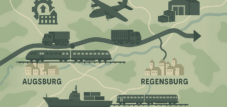
Your dual-use logistics experts
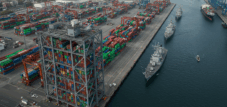
Dual-use logistics experts - Image: Xpert.Digital
The global economy is currently undergoing a fundamental transformation, a watershed moment that is shaking the foundations of global logistics. The era of hyper-globalization, characterized by the relentless pursuit of maximum efficiency and the "just-in-time" principle, is giving way to a new reality. This new reality is marked by profound structural breaks, geopolitical power shifts, and increasing fragmentation of economic policy. The once taken-for-granted predictability of international markets and supply chains is dissolving and being replaced by a period of growing uncertainty.
Related to this: