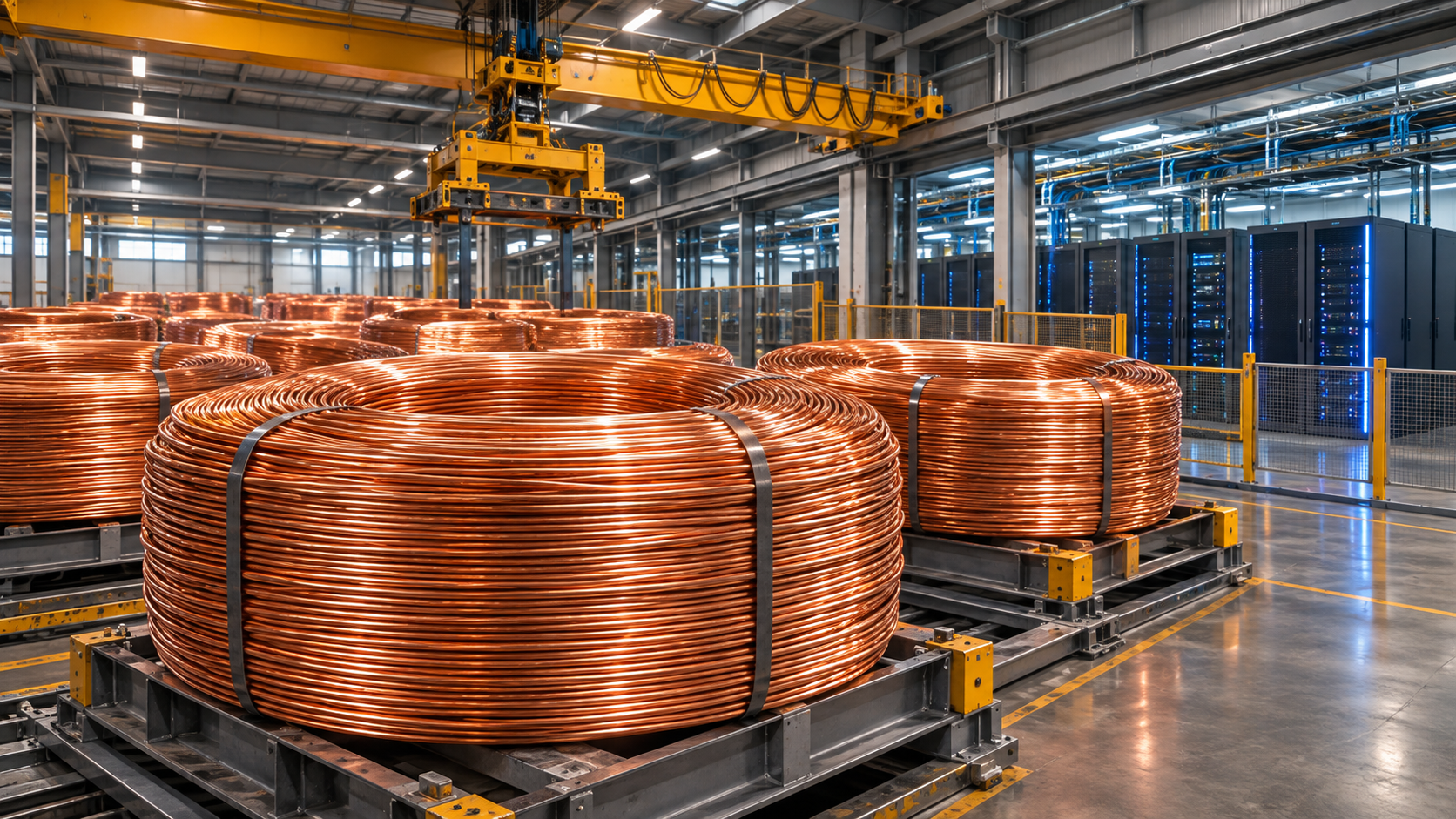
AI data centers need copper: Without copper wire and high-performance coil bearings, even the fastest chip is useless – creative image on the topic, with AI: Xpert.Digital
The hidden bottleneck of the AI boom: Why AI expansion needs far more than chips – The crucial role of copper
Copper for the AI cloud: Where data centers create new industrial opportunities
Tons of coils instead of shiny chips: The logistics behind the AI boom
The artificial intelligence boom is often described as a race for more powerful chips, larger data centers, and sufficient electricity. But digital expansion also depends on a less visible prerequisite: a robust industrial supply chain. Copper is needed for power cables, transformers, switchgear, and other components that supply data centers with energy. Before the metal can be used in such systems, however, it must be mined, processed, and converted into suitable semi-finished products—for example, copper wire for electrical conductors.
This brings another aspect into focus: logistics in wire rod mills. There, coils weighing many tons are stored, moved, and prepared for shipment. Increasing demand can place greater strain on these processes and exacerbate existing bottlenecks. However, this does not mean that every new data center automatically necessitates another wire rod mill or a larger coil warehouse. Crucial factors include the utilization of existing facilities, regional demand, and whether production or material flow is the limiting factor.
The expansion of AI thus opens up opportunities far beyond the chip industry. How viable these opportunities are only becomes clear when looking at the entire value chain – from the copper market to semi-finished product manufacturing and heavy-duty logistics.
Related to this:
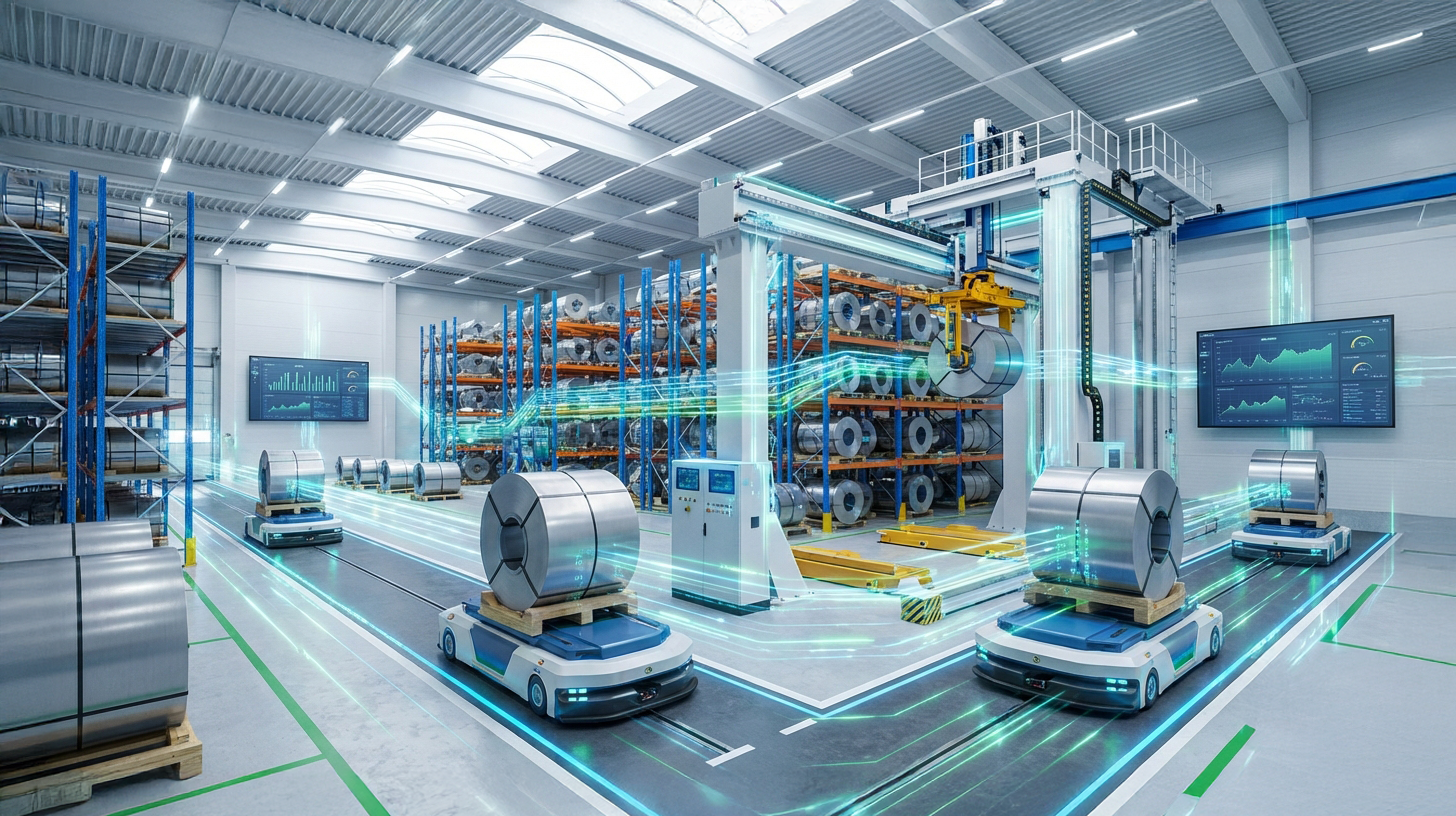
The Copper Factor of AI: Why Data Centers Are Driving a New Industrial Supply Chain
The expansion of artificial intelligence is often described as a race for more powerful chips, larger data centers, and cheaper electricity. This perspective is accurate, but incomplete. Behind the digital infrastructure lies an industrial value chain that extends from raw material extraction through metal refining and semi-finished product manufacturing to heavy-duty logistics. Copper connects these stages. Without suitable electrical conductors, transformers, power distribution systems, and grid connections, even the most advanced AI accelerators remain unused.
This isn't just about whether enough copper is mined worldwide. Equally crucial is whether the metal can be converted into the necessary intermediate products in a timely manner. For cables and numerous electrical conductors, copper wire rod fulfills this function. It is continuously produced in industrial plants, wound into coils weighing many tons, stored, and then delivered to processing companies. This creates a direct economic link from the AI data center to the copper wire rod mill and onward to its internal material flow.
This connection creates a market that is easily overlooked in public discourse. Increased computing power can trigger additional demand for semi-finished copper products. As production and delivery frequency rise, the demands on coil transport, intermediate storage, shipping preparation, and inventory management also increase under certain conditions. Heavy-load logistics specialists thus become part of the infrastructure that makes the expansion of AI possible in the first place.
However, it would be too simplistic from an economic perspective to immediately deduce the need for a new wire rod mill or an additional high-bay warehouse from every announced data center. Several steps lie between technological growth and a viable industrial investment. It is precisely at these stages that it is decided whether a plausible future trend will become a robust business model.
From the electricity demands of data centers to the need for industrial intermediate products
The scale of digital infrastructure expansion can initially be seen in the electricity demand. Global electricity consumption by data centers was around 415 terawatt-hours in 2024. A widely cited international baseline scenario projects approximately 945 terawatt-hours by 2030. This would more than double consumption within six years. The share of global electricity demand would rise from roughly 1.5 percent to almost 3 percent. This is a projection, not a development that has already occurred.
These figures describe a significant industrial expansion, but they need to be put into perspective. Even in 2030, data centers would not be the largest electricity consumers in the global economy. Their particular importance stems from the speed of their growth and their geographical concentration. When several high-performance facilities are built in the same region, local grids, substations, and available connection capacities can reach their limits much faster than global averages would suggest.
This spatial consolidation is important for copper requirements. An additional data center location requires more than just servers and building technology. Depending on the initial situation, network connections may need to be upgraded, transformers installed, cable routes expanded, and power distribution systems rebuilt. Some of the material requirements lie within the data center, while others are located off-site.
The economic impact therefore extends beyond the immediate building structure. It encompasses energy suppliers, grid operators, manufacturers of electrical equipment, cable companies, and metal processors. The expansion of AI infrastructure does not create an isolated demand for raw materials, but rather impacts existing industrial procurement structures.
Why copper is far more than just another building material
Copper plays a key functional role in this infrastructure. Its high electrical conductivity makes it attractive for many applications where high power must be reliably transmitted. In addition, it offers good thermal conductivity, malleability, and the possibility of recycling. Copper offers significant technical advantages, especially where installation space is limited, reliability is crucial, and electrical losses are costly.
In data centers, this includes power cables, electrical connections, and parts of the power distribution system. In the upstream infrastructure, copper is used, for example, in transformers, switchgear, and network components. It can also play a role in heat dissipation. However, the actual material used depends on the specific technical design. Not every cooling system uses the same materials, and not every data center has the same electrical architecture.
Therefore, blanket statements about the copper consumption of a single data center should be treated with caution. A figure per location is meaningless if connection capacity, expansion stage, redundancy, and the infrastructure involved remain unknown. A small business location is not comparable to a large campus for AI applications.
An economically sensible approach is to consider the functions involved. What electrical power must be provided? What distances must conductors bridge? What safety margins are planned? What equipment will actually be installed? Only from these parameters can a reliable requirement for cables, busbars, windings, and other copper-containing components be derived.
The AI boom coincides with an already growing copper market
Artificial intelligence is an additional driver of demand, but not the sole explanation for the growing need for copper. A comprehensive long-term market scenario anticipates an increase in global annual copper demand from approximately 28 million tons in 2025 to around 42 million tons in 2040. This would represent an increase of roughly 50 percent. Key drivers include data centers, general economic development, the expansion of power grids, renewable energies, electromobility, and further electrification processes.
This classification prevents an overestimation of the AI effect. Housing construction, mechanical engineering, industrial plants, and traditional electrical applications remain major consumption sectors. At the same time, new digital applications encounter the same raw material markets and, in some cases, the same processing facilities as the energy sector and industry.
For data centers, the same long-term scenario anticipates an increase in annual copper demand from approximately 1.1 million tons in 2025 to 2.5 million tons in 2040. However, the interpretation of such figures depends significantly on which facilities and associated infrastructure are included in the respective category. Therefore, differently defined forecasts are not directly comparable.
The crucial point is not that AI will displace all other copper consumers. Rather, it increases additional demand in a market already impacted by several structural growth sectors. This additional demand can be significant for investments and delivery times, especially when existing capacities are already operating at near full capacity.
Why a higher copper price doesn't immediately solve the supply problem
Rising prices generally incentivize increased raw material production. However, with copper, this mechanism operates with considerable time lags. New mining projects require exploration, engineering, financing, infrastructure, and permits. Long-term industry analyses indicate an average development time of approximately 17 years for a copper mine, from discovery to the start of production. Individual projects can deviate significantly from this.
This results in fundamentally different investment cycles. Under favorable conditions, a data center can be built within a few years. Developing new raw material sources often takes considerably longer. Energy infrastructure also frequently requires longer lead times than the actual construction of the data center.
This timing mismatch can lead to bottlenecks. These don't necessarily manifest as physically empty warehouses. More often, they are expressed as higher prices, longer delivery times, a smaller selection, or preferential treatment of particularly affluent customers.
Long-term scenarios warn of a potential supply gap of around ten million tons of copper by 2040 if significant supply adjustments do not occur. Such a figure is not a reliable prediction. It describes a conditional development to which companies and policymakers can respond through additional investments, recycling, technological advancements, and adjustments to demand.
For industrial planning, this means that raw material availability should be treated neither as permanently guaranteed nor as inevitably insufficient. A tiered risk assessment is required.
Copper wire rod as a link between the metal market and the cable industry
Several processing steps lie between refined copper and a ready-to-use electrical cable. A key intermediate stage is copper wire. This is then drawn out and processed into conductors, strands, or other electrical products, depending on the product.
In established continuous processes, copper cathodes are melted, cast into a continuous strand, and then rolled. This is followed by surface treatment, cooling, and winding. A documented industrial process description specifies cathodes with a copper content of more than 99.99 percent and wire diameters between 8 and 23.5 millimeters. Depending on the design, the finished coils can weigh between 3.5 and 8 tons. These values illustrate a specific industrial production practice and are not a universally applicable specification for every plant.
The connection to AI infrastructure arises primarily through the need for electrical conductors. Increased cable demand can drive up demand for suitable wire rod. However, not every additional ton of copper for a data center passes through a wire rod mill. Other applications require, for example, sheets, strips, tubes, or other semi-finished products.
This distinction is essential for market analysis. Equating the total copper-related demand of data centers with the potential sales of copper wire rod overestimates the directly accessible market. Only an analysis that considers the respective product path is reliable.
Additional demand does not automatically mean a new plant
Whether rising demand necessitates new wire rod production capacity depends first and foremost on the utilization of existing facilities. If an existing plant can produce more, additional quantities can potentially be made available through process improvements, fewer downtimes, or a revised production plan.
The distribution of demand is also crucial. A plant can have spare capacity and still not be the right supplier if product quality, delivery distance, or customer requirements don't align. Conversely, a regionally heavily utilized plant can expand economically even if spare capacity exists worldwide.
Therefore, at least three levels must be considered when making an investment decision: global demand trends, the regional competitive landscape, and the plant's specific sales base. Additional factors include electricity costs, metal supply, personnel, financing, and the efficiency of downstream logistics.
The economically relevant question is therefore not just how many additional tons of copper the AI expansion requires. It is at which point in the processing chain additional quantities can be produced profitably. A new plant is only one possible answer. Modernizing an existing facility or eliminating a logistical bottleneck can, under certain conditions, offer a greater return on investment.
The coil storage as a productive component of the wire rod mill
A coil storage area is often simply thought of as a space where finished goods are stored until pickup. However, in a high-performance factory, it fulfills several production-related functions. It receives material from manufacturing, separates different orders and grades, creates time buffers, and provides units ready for shipment.
The main challenge arises from differing production cycles. A continuous production line can operate relatively consistently over extended periods. Customer orders, truck arrivals, and other transport movements, on the other hand, are uneven. The warehouse bridges these two rhythms.
If this transfer process is unreliable, a downstream bottleneck can negatively impact production. If there is no free transfer point or a finished coil cannot be removed in time, the usable output of the entire line can decrease in the worst-case scenario. The warehouse therefore affects not only shipping costs but also the productivity of the production capital.
A documented manufacturer's description states that a large copper producer handles up to 800 coils per day. While this figure is not representative of every single plant, it illustrates that industrial-scale coil handling involves a high-frequency material flow with significant individual weights.
The economic value of a storage solution is therefore not solely determined by how many storage spaces it offers in a confined area. The crucial factor is whether it reliably handles the required material flow.
Why wire rod coils require special logistics expertise
The term "coil" encompasses various wound metal products. A strip coil and a copper wire coil can differ significantly in terms of geometry, stability, packaging, and handling. Therefore, a solution from another application area is not automatically transferable.
For copper wire rod, load bearing and storage must be appropriate to the specific characteristics of the product. Factors to consider include weight, dimensions, dimensional stability, packaging, and permissible contact points. Additionally, the surface must be protected from avoidable damage during material handling.
The technical design therefore doesn't begin with the question of a specific rack type. It begins with the load case. How is the coil supplied? What is its orientation? How may it be handled? Which product variants must pass through the same system? What special cases arise with damaged packaging or differing dimensions?
Only then can it be determined whether, for example, crane-guided systems, suitable heavy-duty vehicles, automated transport systems, or other solutions are appropriate. The decision between ground-level storage and a more compact storage structure must also be based on product and operational requirements.
The special expertise of a heavy-load logistics specialist therefore lies in the interplay of mechanics, material understanding, safety, and process planning. Pure load-bearing capacity is not sufficient as a quality criterion.
LTW Intralogistics Solutions

LTW Intralogistics – Engineers of Flow - Image: LTW Intralogistics GmbH
LTW offers its customers not individual components, but integrated complete solutions. Consulting, planning, mechanical and electrotechnical components, control and automation technology, as well as software and service – everything is networked and precisely coordinated.
In-house production of key components is particularly advantageous. This allows for optimal control of quality, supply chains, and interfaces.
LTW stands for reliability, transparency, and collaborative partnership. Loyalty and honesty are firmly anchored in the company's philosophy – a handshake still means something here.
Related to this:
Strengthening regional supply chains in the copper market
Throughput is more important than an impressive number of parking spaces
A warehouse may have sufficient space on paper, yet still become a bottleneck in practice. This is because storage capacity and throughput are different things.
A simple calculation illustrates the difference. If a hypothetical mill produces 300,000 tons of wire rod annually, and the average coil weight is five tons, this would theoretically result in 60,000 coils per year. Assuming 300 operating days, this would average 200 coils per day. These figures describe a model only and not a specific location.
The 200 coils do not automatically result in only 200 daily transport movements. A coil can first be stored, later moved, and then transported for loading. Additionally, inspections or special order configurations can trigger further handling steps.
Therefore, actual travel distances and peak times are relevant for system sizing. An averagely adequate system can be overloaded in the mornings or before a weekend when shipping orders are concentrated in one period. A slow loading process can also block upstream systems.
Proper planning therefore examines the entire process. Where do waiting times occur? Which movements can be avoided? Which orders need to be ready simultaneously? The best solution is not necessarily the fastest single device, but a coordinated system without unnecessary handovers.
How inventories tie up capital and secure supply
Copper storage is not just a matter of space. It ties up considerable working capital. Especially with a valuable metal, the financial holdings can constitute a significant part of the economic analysis.
Let's assume a mill maintains an average stock of 10,000 tons of copper wire rod. Assuming a purely hypothetical metal value of €9,000 per ton, €90 million would be tied up in the metal alone. Processing costs and other value components are not considered here. If the average stock were to decrease by 2,000 tons, this would correspond to a release of €18 million under the same assumptions. This is explicitly not a current price indication.
This scale explains why inventory management is relevant to profitability. A more precise material flow can help reduce unnecessary safety margins. However, inventory cannot be reduced arbitrarily. Eliminating all reserves may increase the risk of supply shortages or production interruptions.
The goal is therefore not to achieve the smallest possible inventory, but rather an economically appropriate stock level. It must balance delivery capability, transport uncertainty, production planning, and capital costs.
It is also important to distinguish between released liquidity and additional profit. Reducing inventory initially improves capital commitment. Ongoing positive effects on earnings arise, for example, from lower financing costs, reduced space requirements, or less handling effort.
Automation must be cost-effective for the entire operation
Automated coil storage systems can offer advantages if the quantities, frequency, and operating times justify the technical effort. Their benefits can include more consistent processing, traceable inventory, and reduced manual intervention. Manufacturers of such systems also describe features like automatic order pre-sorting and coordinated preparation for loading. These performance claims must be individually verified for the specific copper wire rod and the particular location.
A sound cost-benefit analysis considers all relevant costs. These include investment, building modifications, software, maintenance, spare parts, energy, and training. At the same time, potential savings must be realistically assessed.
The effect on production is particularly important. If modernized logistics actually prevents previously occurring disruptions, its economic contribution can be greater than the mere saving of transport time. However, this only applies if the existing bottleneck can be demonstrably proven to lie in the material flow.
Conversely, technically complex full automation may be unsuitable if product variants vary significantly, quantities are uncertain, or the system would frequently have to operate outside its intended standard parameters. In such cases, a partially automated solution may be more economically robust.
The correct measure is not the degree of automation, but the benefit achievable over the service life in relation to costs and risks.
Digital traceability makes material flows manageable
As throughput increases, the value of clear information grows. For each coil, it should be traceable what material it contains, which order it is assigned to, its location, and whether it is released for the next processing stage.
For this to work, production data, quality information, and warehouse management must be aligned. An automated transport system is of little use if the underlying inventory information is incorrect. Conversely, more reliable digital identification can reduce search times and errors, even without fully automating the mechanical aspects.
Traceability also serves an economic protective function. In the event of quality deviations, the affected material volume can be more precisely defined. This can prevent unnecessary shutdowns and facilitate the processing of complaints.
However, digitalization should not be confused with maximizing software complexity. Crucial factors are clear data ownership, robust interfaces, and defined procedures for handling malfunctions. The system must remain understandable even if a label is not read, communication fails, or manual correction is required.
A high-performance coil storage system is therefore always also an information system. It manages not only heavy products, but also the relationship between physical material and economic order.
Occupational safety and availability are both factors in the same equation
When dealing with loads weighing several tons, safety cannot be treated as an afterthought. It must be a fundamental aspect of the design of traffic routes, transfer points, access points, and maintenance areas from the very beginning.
For the design, situations where people and moving loads come into contact with each other are particularly relevant. Depending on the system concept, such encounters can be minimized through separate areas and defined transfer points. At the same time, special operating conditions must be taken into account, such as troubleshooting, cleaning, and maintenance.
Even an automated system needs a contingency plan for the failure of its own components. What happens if a central transport system stops? How are coils removed from a restricted area? Can production continue temporarily? Which spare parts need to be available on-site?
These questions have a direct impact on economic efficiency. A system with high theoretical output may perform worse on average over the year than a less complex solution if prolonged downtimes negate its advantage.
The decisive metric is therefore not just the maximum speed. What counts is the sustained usable performance under real operating conditions, including maintenance, malfunctions, and safe resumption of operation.
Higher copper demand does not guarantee higher profits for processors
A growing end market can improve sales opportunities. However, this does not automatically translate into increased margins for wire rod producers or other processors.
The value of the metal and the actual processing output are economically distinct. If the price of copper rises, a company's revenue may increase significantly, even if it processes the same quantity. At the same time, financing and hedging the metal reserves can become more expensive.
Therefore, factors such as processing revenue, energy consumption, capacity utilization, scrap, and delivery performance are crucial for profitability. A plant can benefit from higher volumes and still come under cost pressure. Conversely, a good supply of materials combined with weak demand can lead to unused capacity.
The profitability of upstream smelters is not directly linked to the copper price. Low smelting and refining costs can put pressure on their margins, even if the long-term demand outlook for the metal appears favorable.
For investors and industrial companies, a differentiated view of the value chain stages is therefore necessary. A positive raw materials hypothesis does not replace an examination of the business model or an analysis of the respective cost structure.
Regional supply chains are becoming more important than global averages
The copper industry is internationally interconnected. Mining, smelting, refining, and further processing do not necessarily take place in the same countries. This can lead to regional supply risks even with sufficient global metal production.
There is a significant geographical concentration, particularly in processing. China accounts for approximately twelve million tons of the roughly 29 million tons of copper smelting capacity reported worldwide. This figure describes smelting capacity, not the share of all stages of the copper industry.
This does not automatically force European companies to fully regionalize their operations. However, the value of reliable supply relationships, multiple sources of supply, and transparent transport chains does increase. Regional processing can offer advantages if shorter delivery times and greater security of supply offset any potentially higher production costs.
For wire rod, practical location factors also come into play: reliable power supply, access to suitable copper, distance to customers, available industrial space, and efficient transport links. A favorable individual location does not automatically guarantee a competitive overall location.
Intralogistics must also be factored into this calculation. A plant with a good supply of raw materials and efficient production loses competitiveness if loading, inventory management, or shipping are repeatedly unreliable.
Recycling relieves pressure on the supply chain, but does not replace a growing metal base
The recyclability of copper is a significant advantage. It opens up the possibility of reusing metal from end-of-life products and closing industrial cycles. Nevertheless, recycling cannot fully meet the additional demand of a rapidly growing economy in the short term. Long-term market scenarios therefore predict a continued substantial demand for primary copper, even with significant improvements.
The main reason lies in the time frame. Metal installed today in new buildings, power grids, or data centers is not immediately available for scrap. Growing inventories in long-lasting systems tie up material over extended periods.
Additionally, a distinction must be made between the quantity of scrap and the suitable metal quality. Not every scrap fraction is directly usable for demanding electrical applications. Depending on the composition and impurities, further processing steps are required.
For wire rod mills, this means that recyclability and product quality must be considered together. Increased use of secondary materials is not purely a logistical issue, but also affects metallurgy and process control.
Logistics can still make an important contribution: through the clean separation of material flows, traceable identification, and the orderly return of suitable residual materials. It creates the conditions for circular economies, but does not replace their metallurgical requirements.
Technological advances can change copper intensity
Long-term growth in demand does not mean that the amount of copper used per unit of computing power will remain unchanged. Electrical architectures, cooling methods, and the performance of hardware and software continue to evolve.
Material savings and partial substitution are therefore essential components of any serious scenario. Aluminum can be an alternative in certain electrical applications; fiber optics handle data transmission tasks. However, such solutions do not automatically replace all copper functions. In particular, power supply remains a separate technical challenge from information transmission.
More efficient AI models can also influence resource requirements. If the electricity demand for a particular application decreases, this can reduce the infrastructure requirements per unit of use. At the same time, lower costs can make new applications economically viable and thereby trigger additional demand.
The extent of each effect is uncertain. The range of possible developments is considerable: In different energy scenarios, expectations for global data center electricity consumption in 2035 range from approximately 700 terawatt-hours under strong headwinds to more than 1,700 terawatt-hours under particularly dynamic development.
For investments in wire rod and logistics, this means that adaptability has its own economic value. Expandable systems can be more advantageous than a maximum solution tailored to a single growth assumption.
A market opportunity only becomes a business opportunity through a concrete bottleneck analysis
For providers of heavy-lift logistics, the expansion of AI is a relevant market signal, but not yet a sufficiently defined sales market. The immediate customer is often not a data center operator, but rather a metal processor, cable manufacturer, or industrial production site.
The crucial analysis therefore begins with the respective plant. Is actual demand increasing there? What capacities already exist? Is production or logistics the limiting factor? How are coil sizes, delivery batches, and shipping times developing?
A new warehouse can also be beneficial even if annual production barely increases. This could be due to higher demands on delivery speed, additional quality grades, or a changed order structure. Conversely, a significant increase in volume can be managed without a major warehouse expansion if lead times and collection frequencies become more efficient.
This differentiation is crucial for market penetration. The general assertion that the AI boom will trigger new coil warehouses everywhere is not convincing. What is convincing is proof that a specific solution eliminates a concrete bottleneck, reduces capital commitment, or safeguards production output.
This shifts the role of the logistics provider. What's needed is not just a supplier of heavy equipment, but a partner who can integrate material flow, production management, and operational risks.
A robust investment strategy combines growth with resilience
Companies should base their planning neither on unlimited expansion nor on an imminent collapse of AI development. A more sensible approach is an investment strategy that can withstand multiple developments.
In a dynamic growth scenario, additional production and handling capacities are needed. Expandability, short implementation times, and reliable interfaces are then crucial. In a slower scenario, low fixed costs and phased implementation become more important. In a regionally limited scenario, the same global market trend can have very different consequences for individual locations.
A viable concept should therefore generate a demonstrable benefit even in the first phase of development. Later expansions must be technically prepared without tying up capital unnecessarily early on.
Success measurement should also remain concrete. Relevant metrics include actual throughput, availability, inventory accuracy, damage rate, and delivery time. These demonstrate whether an investment is fulfilling its purpose better than a general forecast.
The core economic principle is to harness growth while simultaneously limiting dependencies. Especially in a market with high expectations, this discipline represents a competitive advantage.
The industrial base determines the pace of digital expansion
The expansion of AI data centers creates an additional link between the digital economy and traditional industry. Copper serves as a prime example of the material prerequisites for a seemingly intangible technology. The raw material must be available, transformed into suitable semi-finished products, and reliably transported through production and delivery processes.
Copper wire rod mills play an important, but clearly defined, role in this context. They primarily serve the demand generated by cables and electrical conductors. Whether this leads to new production capacities depends on capacity utilization, regional demand, product requirements, and economic viability.
Coil storage and heavy-load logistics are not inevitable byproducts of every additional data center. They become a crucial investment area where increasing volumes or more demanding delivery structures overwhelm existing material flow. Their value then lies not only in storing heavy goods, but also in safeguarding production, quality, delivery capability, and tied-up capital.
The rationale, therefore, is that the AI boom opens up opportunities far beyond the chip industry. These opportunities are particularly robust where companies identify and economically overcome concrete physical bottlenecks. Digital expansion is not only accelerated by better algorithms. Its pace also depends on whether enough copper of the right quality, at the right time, and in the right form makes its way through the industrial value chain.
Consulting - Planning - Implementation

Konrad Wolfenstein
I would be happy to serve as your personal advisor.
You can contact me at wolfenstein∂xpert.digital or
Just call me on +49 7348 4088 965 .
Your intralogistics experts

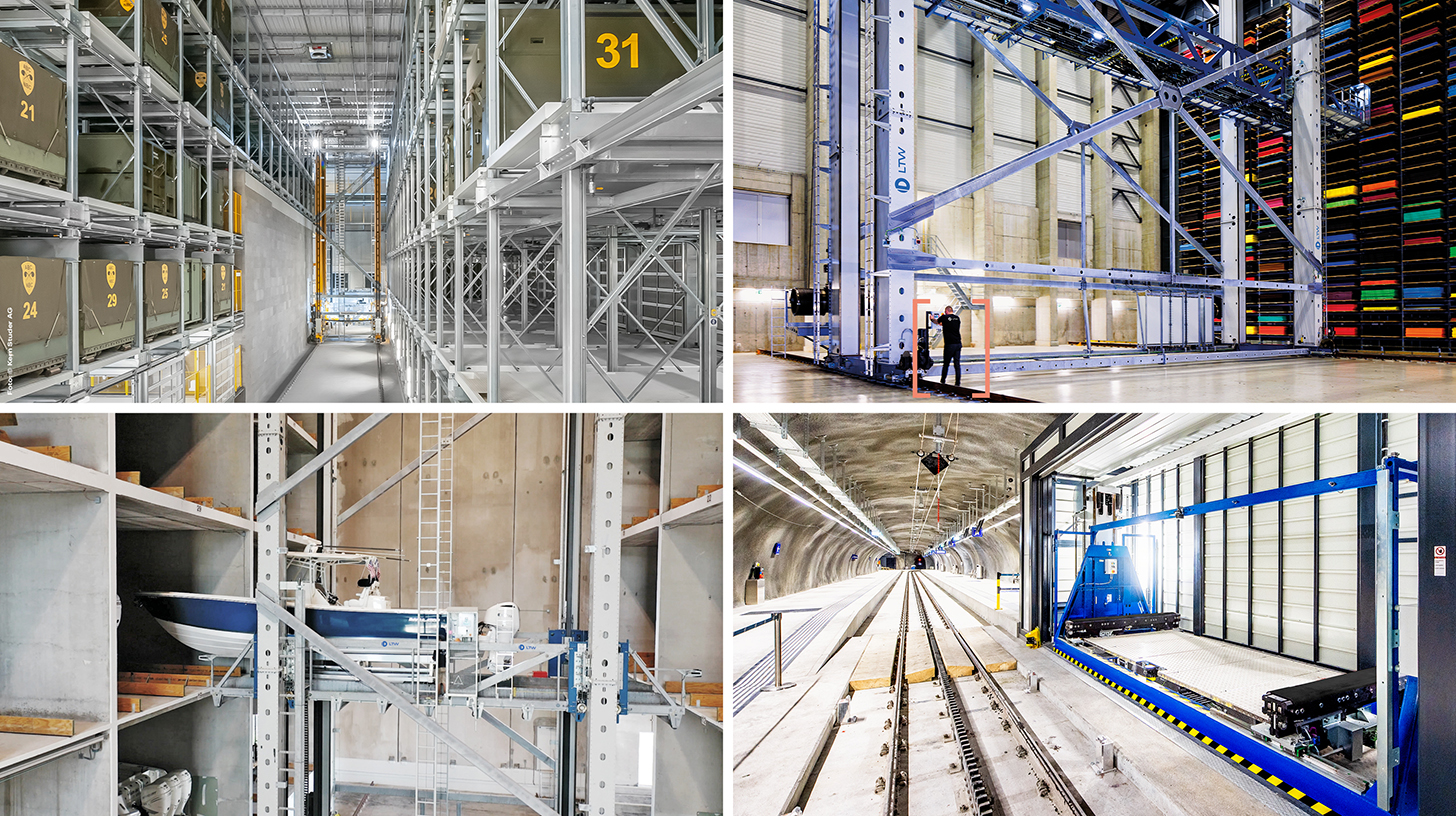
Consulting, planning and implementation of complete solutions for high-bay warehouses and automated storage systems - Image: Xpert.Digital
More information here: