
Published on: June 1, 2025 / update from: June 1, 2025 - Author: Konrad Wolfenstein
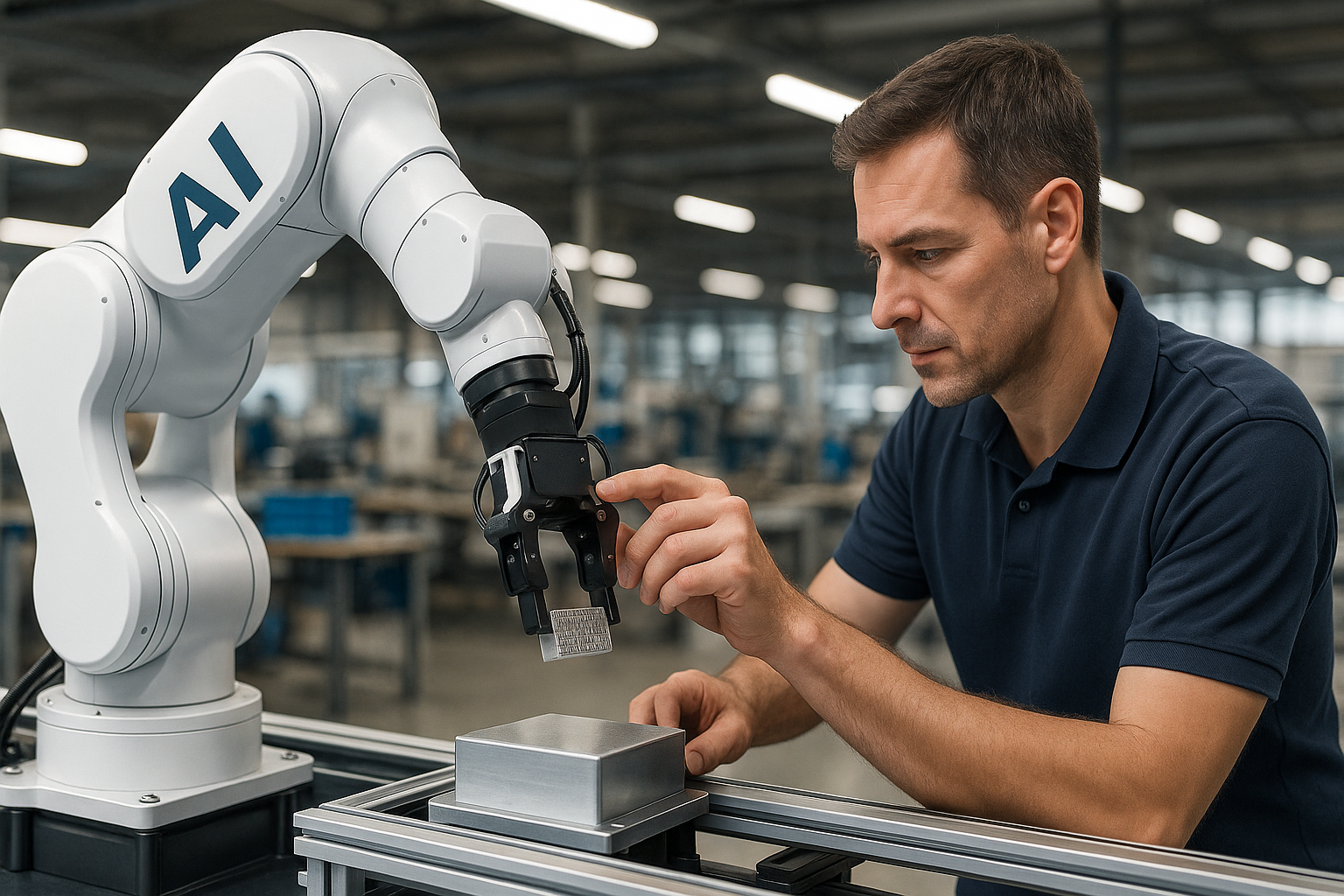
The potential for SMEs-AI-controlled robotics for medium-sized companies: transformation of the world of work and new competitive advantages-Image: Xpert.digital
Artificial intelligence in robotics: the key to new flexibility
Remember automation: AI robot for variable production environments
The integration of artificial intelligence into robotics opens up completely new perspectives for automation and increase in productivity. While traditional industrial robots ran on rigid, preprogrammed work processes, modern AI-controlled systems enable unprecedented flexibility and autonomy in production. This development is particularly important for medium -sized companies, since it for the first time makes the use of robotic systems in smaller lot sizes and variable production environments. Research in recent years shows that Foundation Models and Generative AI make it possible to replace classic algorithmic solutions with machine learning in most fields of robotics.
Suitable for:

Technological revolution through intelligent automation
Basics of AI-controlled robotics
Artificial intelligence in robotics represents a fundamental change in rigid, programmed machines towards learning -capable, adaptive systems. AI enables robots to see, feel and react independently to changes, which means that they can help optimize program processes. This technology is based on the combination of machine learning, computer vision and natural language processing, which means that robots are able to understand and carry out complex tasks. The latest generation of AI robots uses Vision-Language-Action models that can solve many tasks at the end-directly from the sensors to the engines.
Technological advances make robots to learn through demonstrations and continuously expand their skills. Particularly noteworthy is the development of systems that can understand and implement naturally language instructions, which significantly simplifies the operation for non-programmer. This development makes robotics accessible to medium -sized companies, which traditionally did not have the resources for complex programming.
Innovative application technologies
The modern AI methods allow a much higher autonomy of robotic systems than classic methods in which the behavior of the robot is pre-programmed or specified. In the event of problems during the execution, the AI methods can help derive solution tactics and safely resume the actual process. This robustness is particularly valuable for medium -sized companies because it minimizes unplanned standards and maintains productivity.
A particularly relevant example is the Stuttgart-based company SereaCT, which has developed a hardware-agicic solution with its vision Language Action Model (VLAM). This technology enables robots to carry out tasks without prior specific training and to be operated in natural language by chat instruments. Such systems revolutionize the way medium -sized companies can implement automation.
Economic transformation for medium -sized companies
Cost reduction and accessibility
The democratization of robotics by AI makes this technology accessible for the first time for the smaller medium -sized business. While conventional mobile robotics systems start at around 25,000 euros and solutions with an integrated robot arm are around 70,000 euros, companies such as IGUS are developing inexpensive alternatives. The Rebel robot with a price of 4,970 euros and a weight of only 8.2 kilograms shows how plastic technology can drastically reduce the costs.
This cost reduction is crucial for medium -sized companies that were previously excluded from automation due to high investment costs. The new low-cost robotics offers make it possible to invest in modern automation technologies and to increase their competitiveness. In addition, funding programs such as “Next in NRW” offer grants of up to 80% for small companies that want to implement AI and robotics projects.
Productivity increase and efficiency gains
A study by IW Consult and Google shows that AI could increase productivity in German -processing business by 7.8 percent, which corresponds to an additional added value of 56 billion euros. For medium -sized companies, this means specific competitive advantages through more efficient production processes and reduced operating costs. The integration of AI-controlled robots enables companies to optimally use their resources and at the same time improve the quality of their products.
Especially in the area of forward -looking maintenance (predictive maintenance) there are significant savings potential. Studies show that predictive maintenance can reduce machine lights by 30-50% and extend the lifespan of systems by 20-40%. This massive reduction of unplanned failures is reflected directly in higher overall system effectiveness and lower investment needs.
Collaborative robotics as key technology
Cobots in medium -sized use
Collaborative robots, so -called cobots, have proven to be particularly suitable for medium -sized companies. These lightweight robots can work directly with people without a protective fence and can be operated simply. MTAM GmbH shows a practical example with only 12 employees, which was able to significantly increase its production capacities by using a cobot. The cobot supports existing employees, does not replace them, and at the same time creates space for modern working methods.
The flexibility of cobots enables medium -sized companies to use them at various stations and to react quickly to changed production requirements. Since you can be served without any programming knowledge, smaller companies can also benefit from this technology without specialized IT departments. These properties make cobots an ideal solution for medium -sized companies, which often works with limited resources and space.
Areas of application and implementation
The possible uses for AI-controlled robotics in the middle class are diverse and range from quality control to material handling. In industrial robotics, AI-based image processing systems are successfully used for quality control, whereby the systems can continuously learn and also recognize the smallest defects. Cobots are particularly suitable for craft businesses for welding, polishing, drilling or milling tasks, which means that they relieve employees of repetitive and physically stressful activities.
A particularly innovative example is the programming of robots through naturally language instructions, gestures and exemplary demonstration. This development is a gamuchang, especially for the production of small lot sizes, since it makes robotic solutions for such production even economically interesting. Medium -sized companies can thus react flexibly to customer requirements and optimally use their production capacities.
Suitable for:

Coping with a shortage of skilled workers
Strategic personnel relief
The increasing shortage of skilled workers presents medium-sized companies with considerable challenges that can be alleviated by AI-controlled robotics. As the example of MTAM GmbH shows, companies can fully occupy layers again by using Cobots and accelerate the processing of orders. The robots take on repetitive and physically stressful tasks, while human employees can focus on more complex and creative activities.
This division of labor not only leads to relief for the existing workforce, but also to an upgrade of the jobs. Employees are freed from monotonous activities and can use their skills in more demanding areas. At the same time, automation enables continuous production, even if not all layers can be fully occupied.
Qualification and acceptance
The successful implementation of AI-controlled robots in medium-sized companies requires a strategic approach to employee qualification. Since modern cobots can be operated without programming knowledge, the training period for existing employees is significantly reduced. Companies such as Universal Robots even offer 84-minute training courses to convey the most important robotics know-how.
Acceptance among employees is crucial for the success of automation. With participatory approaches, such as the Rhineland Mittelstand-Digital Center, employees are included in the planning and implementation from the start. Design workshops and potential analyzes help to define sensible fields of application and to address the concerns of the workforce.
Generative KI: New possibilities for automation in medium -sized companies
Technological development trends
The future of AI-controlled robotics in the middle class is shaped by several technological trends. Foundation models and generative AI will make it possible to replace the programming of robots with natural language instructions. This development makes robotics accessible to companies without specialized programmers and enables quick adaptation to new requirements.
Another important trend is the development of humanoid robots, which serve as a projection surface of the current AI developments in robotics. While these are still in the research phase, they show the potential for future applications in various economic sectors. At the same time, specialized solutions for specific industries develop, such as the vision-length action models for logistics and production.
Strategic implementation and promotion
A strategic approach to AI implementation is crucial for medium-sized companies. Only 12 percent of small and medium -sized companies started implementing AI, which is both a challenge and a chance. Companies that invest now can secure decisive competitive advantages and strengthen their market position.
The support from funding programs such as “Next in NRW” with grants of up to 80% for small companies also realizes AI robotics projects for resource-limited companies. In addition, specialized consulting companies offer support from finding ideas to the application and implementation. This infrastructure makes it easier for medium-sized companies to find the start of AI-controlled automation.
Funding programs for AI: opportunities for small companies
AI-controlled robotic means a fundamental transformation of production and working methods for medium-sized companies. Technology not only offers solutions for current challenges such as shortage of skilled workers and cost pressure, but also opens up new opportunities for growth and innovation. By democratizing robotics, state -of -the -art automation solutions are accessible and economically presented for small and medium -sized companies for the first time. The combination of falling costs, improved user interfaces and comprehensive support creates ideal conditions for the broad adoption of these technologies. Medium-sized companies that now invest in AI-controlled robotics can secure decisive competitive advantages and strengthen their position in digital change.
Suitable for:
Your global marketing and business development partner
☑️ Our business language is English or German
☑️ NEW: Correspondence in your national language!

Konrad Wolfenstein
I would be happy to serve you and my team as a personal advisor.
You can contact me by filling out the contact form or simply call me on +49 7348 4088 965 (Munich) . My email address is: wolfenstein ∂ xpert.digital
I'm looking forward to our joint project.


