More than just a link: How a simple 2D matrix code becomes a high-tech weapon against product pirates – Image: Xpert.Digital
Never fall for counterfeits again? Protect yourself easily with a mobile phone scan and product detection: This code on your packaging instantly reveals the truth
The Global Challenge: The GS1 2D Matrix Code as a Tool in the Fight Against Product Counterfeiting
Why is protection against product counterfeiting a critical business and societal necessity today?
Protection against product counterfeiting has evolved from a niche concern to a central strategic necessity for businesses and an urgent societal responsibility. The reasons for this are multifaceted, ranging from massive economic damage to acute threats to consumer health and safety. The scale of the problem is global and systemic. According to reports from the Organisation for Economic Co-operation and Development (OECD) and the European Union Intellectual Property Office (EUIPO), counterfeit and pirated goods accounted for up to 2.3% of global trade in 2021, with an estimated value of US$467 billion. Within the European Union, these illegal imports reached up to 5.8% of total imports in 2019, equivalent to €119 billion.
The economic consequences are devastating. A study of the German economy quantified the damage caused by product and brand piracy at €54.5 billion, resulting in the loss of approximately 500,000 jobs. The German mechanical and plant engineering sector alone, a key industry, suffers losses exceeding €7 billion annually, according to the German Engineering Federation (VDMA). These figures illustrate that counterfeiting not only affects individual companies but weakens entire economies by devaluing innovations, undermining tax revenues, and distorting fair competition.
Beyond the purely economic losses, counterfeit goods pose a direct and often underestimated danger to consumers. Ninety-seven percent of seized goods are classified as products that present a "serious risk." This affects a wide range of industries, including cosmetics, children's toys, electronics, and automotive spare parts. A counterfeit brake pad set can lead to fatal failure, and an uncertified toy may contain toxic substances. The situation is particularly critical in the pharmaceutical sector. The World Health Organization (WHO) estimates that up to 10% of all medicines worldwide are counterfeit, and this figure is even higher in developing countries. These counterfeit medicines may contain incorrect active ingredients, no active ingredients at all, or even toxic substances, thus posing a life-threatening danger to patients who depend on effective and safe medications.
The dynamics of the problem have changed dramatically in recent years with the rise of e-commerce. Online marketplaces and direct mail have significantly lowered the barriers to entry for counterfeiters. This shifts the problem from large container shipments that can be intercepted at customs to countless small packages sent directly to end consumers. This fragmentation makes traditional law enforcement increasingly ineffective and necessitates new approaches that not only secure the B2B supply chain but also involve the end consumer in the protection process.
Ultimately, the threat extends far beyond the immediate financial damage and erodes the very foundation of a brand: trust. If a consumer unknowingly purchases an inferior counterfeit product, the negative experience is often attributed to the original brand, potentially leading to irreparable reputational damage. In safety-critical industries, an accident caused by a counterfeit product can result in enormous liability claims against the original manufacturer. A robust anti-counterfeiting strategy is therefore no longer merely a cost center for damage prevention, but a strategic investment in market value, risk management, and the long-term viability of the company.
Fundamentals of GS1 2D codes
What exactly is a GS1 2D code and how does it differ from a conventional barcode?
A GS1 2D code is a two-dimensional, matrix-shaped graphic that stores information both horizontally and vertically. This is the fundamental structural difference from a conventional, one-dimensional (1D) barcode, such as the EAN or UPC code, which encodes data exclusively in the horizontal sequence of bars and spaces of varying widths.
This two-dimensional structure has far-reaching consequences. The most important is a significantly higher data storage capacity in a much smaller space. While a classic 1D barcode typically contains only a single piece of information – the Global Trade Item Number (GTIN) for product identification at the checkout – a GS1 2D code can accommodate a wealth of additional data attributes alongside the GTIN. These include, for example, the batch or lot number, the expiration date, and a unique serial number for each individual product. This transforms the code from a simple price lookup tool into a rich, mobile data carrier that provides detailed information about the specific product.
Another functional advantage is omnidirectional readability. 2D codes can be scanned from any angle (0-360 degrees), which significantly improves the efficiency and speed of the scanning process. This is particularly beneficial in automated, high-speed environments, such as those common in production or logistics, as it eliminates the need for precise product alignment with the scanner.
What are the main types of GS1 2D codes for anti-counterfeiting purposes, and what are their specific characteristics and areas of application?
For counterfeit protection and enhanced product traceability, two main types of 2D codes have become established within the GS1 system: the GS1 DataMatrix and the QR code with GS1 Digital Link. Although both are based on 2D technology, they are optimized for different strategic use cases.
The GS1 DataMatrix is visually identifiable by its L-shaped boundary pattern (the "Finder Pattern") and a uniform matrix of square cells. Its greatest strength lies in its extremely high data density. It can store a large amount of information (up to 2,335 alphanumeric characters) in a very small physical area. This characteristic makes it the ideal solution for marking small objects where packaging space is limited. Typical applications are therefore highly regulated industries such as pharmaceuticals (marking individual drug packages), medical technology (marking surgical instruments), and the electronics and automotive industries (marking small components). A crucial feature is that a GS1 DataMatrix contains a special character sequence at the beginning of the data stream, signaling that the subsequent data is structured according to global GS1 standards. This distinguishes it from a generic DataMatrix code and ensures interoperability within the supply chain.
The QR code with GS1 Digital Link is easily identifiable by its three distinctive squares in the corners. It offers an even higher maximum data capacity than the DataMatrix (up to 4,296 alphanumeric characters), but tends to require slightly more space. Its key feature is the integration of the GS1 Digital Link standard. This standard formats the GS1 identifiers contained in the code (such as GTIN and serial number) into a standardized web address (URL). When this QR code is scanned with a standard smartphone camera, a web page opens directly in the user's browser. This makes it the preferred code for all applications that aim for direct interaction with the end consumer. Simultaneously, the same code can be scanned by point-of-sale systems in retail stores to extract data relevant to the sales process, such as the GTIN. This creates a multifunctional code that meets the requirements of the supply chain, marketing, and consumer protection.
The choice between these two code types is therefore more than a technical decision; it is strategic in nature. The GS1 DataMatrix is optimized for closed, highly regulated B2B supply chains, where the primary focus is on the efficient, machine-readable transmission of standardized data for compliance and traceability purposes. The QR code with GS1 Digital Link, on the other hand, is designed for open, consumer-oriented ecosystems. Its strength lies in bridging the gap between the physical product and the digital world to directly engage the consumer. The choice of code type thus depends significantly on whether a company's anti-counterfeiting strategy is primarily based on controlling the supply chain (a "push" approach) or on engaging and informing the end consumer (a "pull" approach).
QR code with GS1 Digital Link or DataMatrix: The most important differences explained
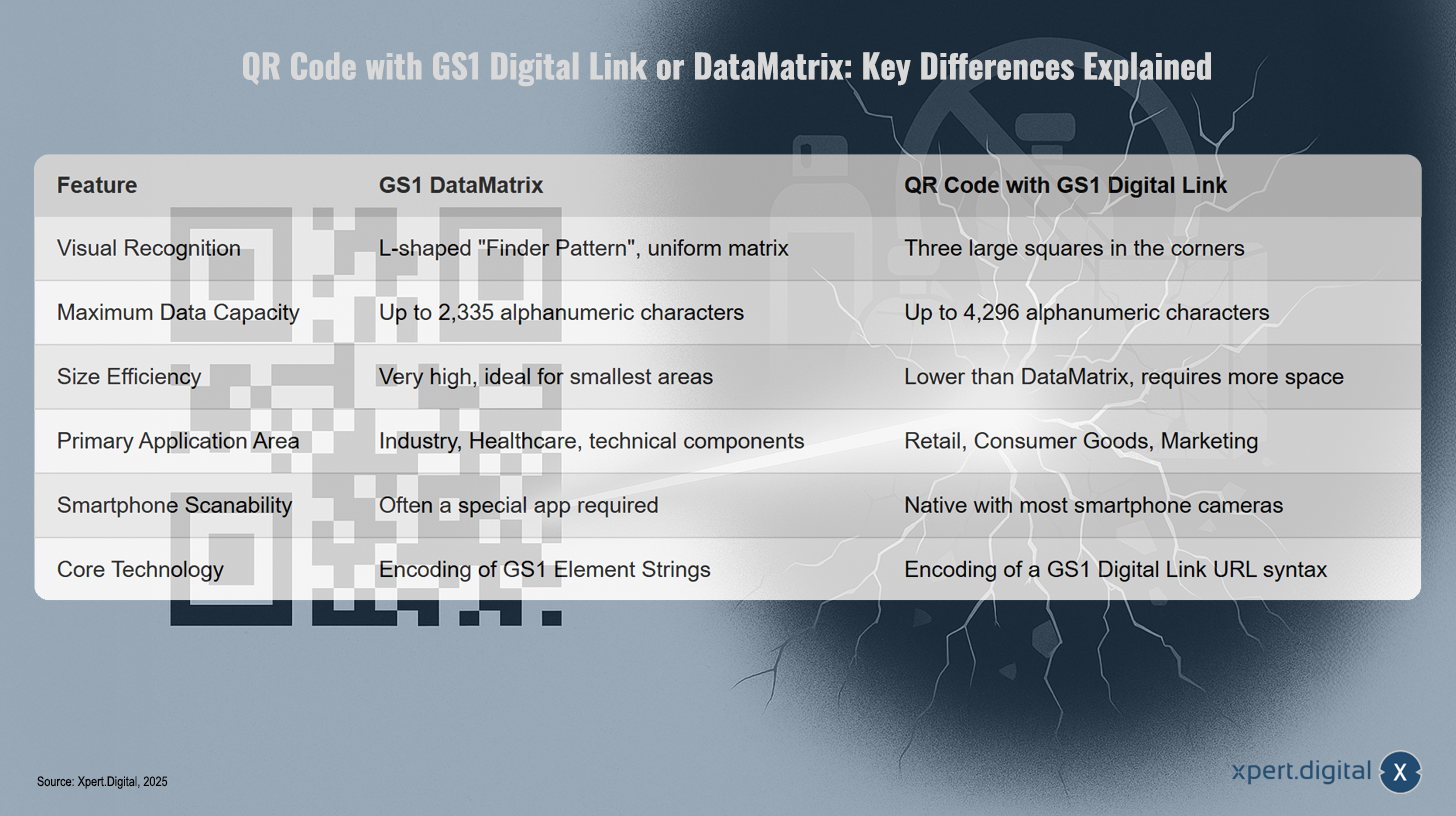
QR code with GS1 Digital Link or DataMatrix: The most important differences explained – Image: Xpert.Digital
The GS1 DataMatrix and the QR code with GS1 Digital Link differ in several key characteristics. Visually, the GS1 DataMatrix is characterized by an L-shaped "finder pattern" and a uniform matrix, while the QR code with GS1 Digital Link features three large squares in the corners. The maximum data capacity of the GS1 DataMatrix is up to 2,335 alphanumeric characters, while the QR code with GS1 Digital Link can hold up to 4,296 characters. In terms of size efficiency, the GS1 DataMatrix is very efficient and ideally suited for very small spaces, whereas the QR code with GS1 Digital Link requires more space. The primary applications of the GS1 DataMatrix are in industry, healthcare, and technical components, while the QR code is mainly used in retail, consumer goods, and marketing. Scanning GS1 DataMatrix codes with smartphones often requires a special app, whereas QR codes with GS1 Digital Link are natively recognized by most smartphone cameras. Technologically, GS1 DataMatrix is based on the encoding of GS1 Element Strings, while QR codes encode a GS1 Digital Link URL syntax.
The core principle: Serialization and unique identification
How does the principle of serialization with GS1 standards work to give each individual product a unique identity?
Serialization is the process by which each individual saleable product unit receives a unique, non-repeatable identifier. This represents a fundamental shift from traditional marking, which typically identifies products only at the batch or product level. In the GS1 system, serialization is based on the combination of two key identification elements: the Global Trade Item Number (GTIN) and a unique serial number (SN).
The GTIN identifies the product type – for example, a specific strength and pack size of a medication or a specific model of smartphone. It is the same for all identical products. The serial number, on the other hand, is a unique identifier that is assigned only once to a specific GTIN. The combination of the product type's GTIN and the unique serial number results in a so-called serialized GTIN (SGTIN), which is unique worldwide for every single package.
This SGTIN, often along with other important data such as the batch number and expiration date, is encoded in a GS1 2D code (typically a GS1 DataMatrix in the pharmaceutical sector) and printed directly onto the product packaging. This gives each physical item a unique "digital fingerprint" or "digital passport," enabling individual tracking and authentication throughout the entire product lifecycle. The manufacturer generates these unique numbers and stores them in a secure, central database. This database serves as a reference register of all legitimate products that have been manufactured and placed on the market, forming the basis for subsequent authentication checks.
What role do GS1 Application Identifiers (AIs) play in encoding tamper-proof information?
GS1 Application Identifiers (AIs) are two- to four-digit numerical prefixes that give a fixed meaning and structure to the data elements encoded in a barcode. They function as a kind of standardized "grammar" for the data. An AI unambiguously tells the scanning system what type of information follows and what format that information has (e.g., length, data type such as numeric or alphanumeric). This standardized syntax ensures that every GS1-compliant scanner worldwide can interpret the data stream correctly and without ambiguity, regardless of the scanner manufacturer or software.
Four AIs are of particular importance for counterfeit protection, as together they define the unique identity and critical attributes of a product:
How GS1 standards protect against product counterfeiting – the four key AIs
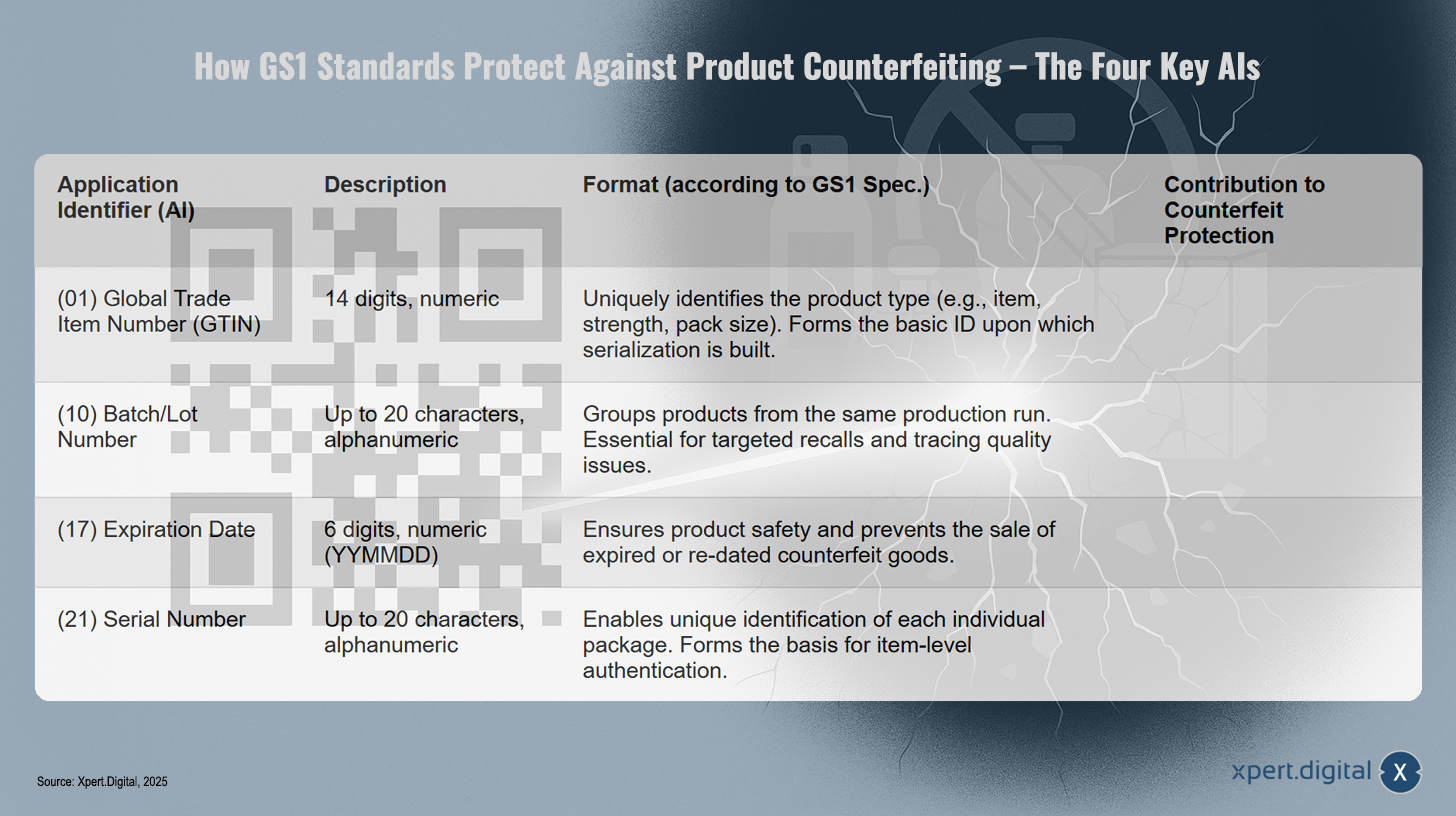
How GS1 standards protect against product counterfeiting – the four key AIs – Image: Xpert.Digital
GS1 standards protect against product counterfeiting through four crucial Application Identifiers (AIs). The first, the Global Trade Item Number (GTIN), consists of 14 numeric digits and uniquely identifies the product type, such as item, strength, or package size. It forms the base ID upon which serialization is built. The batch or lot number, containing up to 20 alphanumeric characters, groups products from the same production run and is essential for targeted recalls and tracing quality issues. The expiration date is specified by six numeric digits in the YYMMDD format and ensures product safety by preventing the sale of expired or re-dated counterfeit goods. Finally, the serial number, also up to 20 alphanumeric characters long, enables the unique identification of each individual package and is the basis for item-level authentication.
Linking these AIs and their associated data into a single 2D code generates a rich and structured dataset. This dataset forms the basis for all subsequent verification and traceability processes, making the code a powerful tool in the fight against product counterfeiting.
What is the GS1 Digital Link and how does it transform a product code into an interactive gateway to digital services for authentication?
The GS1 Digital Link is a global standard that translates established GS1 identifiers (such as GTIN and serial number) into the structure of a web address (URL). Instead of simply being a string of data interpreted by specialized scanners, the code now contains a direct link to the internet, understandable to any smartphone.
When a consumer scans a QR code containing a GS1 Digital Link with their smartphone camera, the link is automatically recognized and opens in the phone's web browser. This link leads to a server controlled by the brand owner. This server, often referred to as a "resolver," analyzes the information contained in the URL—such as the GTIN and, most importantly, the unique serial number—as well as the context of the scan (e.g., the user's location). Based on this analysis, the resolver can intelligently redirect the user to various online content.
This mechanism is particularly effective for authentication: The resolver checks the serial number contained in the URL in real time against the manufacturer's database, which stores all legitimate serial numbers. If the number is valid and is being scanned for the first time, the consumer can be redirected to a website that confirms the product's authenticity. However, if the number is invalid, has already been reported as sold, or has been scanned suspiciously often in different locations (a clear indication of a copied serial number on a counterfeit product), the resolver can display a warning message and instruct the consumer on how to proceed.
This process transforms static product packaging into a dynamic, interactive communication channel. It enables real-time verification by the consumer and simultaneously offers the possibility of providing further information such as recall details, sustainability certificates, instructions for use, or marketing promotions – all via a single scan.
The introduction of serialization represents a paradigm shift in the fight against counterfeiting. Traditional security features such as holograms or special printing inks are probabilistic; their authenticity is determined by an expert-based assessment of the probability that they are genuine. Serialization, on the other hand, is deterministic. A unique serial number is either recorded as valid in the manufacturer's official database or it is not. The answer to the question of authenticity is a clear, data-driven "yes" or "no." This eliminates subjectivity and makes authenticity verification scalable, automatable, and accessible to everyone.
Furthermore, the GS1 Digital Link changes the economic calculation of anti-counterfeiting measures. While serialization is primarily implemented as a defensive measure for regulatory compliance and to combat counterfeiting, thus incurring costs, the Digital Link opens up new revenue streams. The same QR code implemented for security can be used by marketing to direct customers to landing pages with special offers, loyalty programs, or cross-selling opportunities. Investing in serialization infrastructure thus becomes a cross-departmental strategic decision that not only incurs costs but can also generate a measurable return on investment.
🎯🎯🎯 Benefit from Xpert.Digital's extensive, five-fold expertise in one comprehensive service package | BD, R&D, XR, PR & Digital Visibility Optimization

Benefit from Xpert.Digital's extensive, five-fold expertise in a comprehensive service package | R&D, XR, PR & Digital Visibility Optimization - Image: Xpert.Digital
Xpert.Digital possesses in-depth knowledge across various industries. This allows us to develop tailored strategies precisely aligned with the requirements and challenges of your specific market segment. By continuously analyzing market trends and monitoring industry developments, we can act proactively and offer innovative solutions. The combination of experience and expertise generates added value and provides our clients with a decisive competitive advantage.
More information here:
How GS1 standards make supply chains safer and more efficient

How GS1 standards make supply chains safer and more efficient – Image: Xpert.Digital
Focus on the supply chain: Seamless traceability and aggregation
How do GS1 2D codes enable seamless traceability (track & trace) from the manufacturer to the end customer?
GS1 2D codes are the central element that enables seamless, item-level traceability, also known as track & trace. The system works by scanning the unique identifier (the SGTIN) in the 2D code at each critical point in the supply chain and digitally recording the event. These points are called "Critical Tracking Events" (CTEs). Such events include, for example, production, packaging, shipping from the factory, goods receipt at the distribution center, transfers, and finally, delivery to the end customer, such as at a pharmacy or retail store.
Each scan captures standardized information that answers four key questions: "What?", "Where?", "When?" and "Why?".
- What:
- The unique product identifier (SGTIN).
- Where:
- The location of the event, identified by a Global Location Number (GLN) that uniquely identifies each location (factory, warehouse, etc.).
- When:
- The exact timestamp of the event.
- Why:
- The business process that took place (e.g., "shipping", "receiving", "commissioning").
This event data is captured and shared in a standardized format, typically using the GS1 standard EPCIS (Electronic Product Code Information Services). EPCIS acts as a common language, enabling all trading partners to exchange traceability data seamlessly and interoperably. By chronologically linking these individual EPCIS events, a complete digital history is created for each product – a seamless chain of custody. This transparency allows supply chain actors to verify a product's legitimate path at any time and quickly identify deviations, such as a product appearing in an unexpected location. Such anomalies may indicate theft, gray market activity, or the introduction of counterfeit goods.
What is meant by aggregation and how is the hierarchical relationship between individual products, boxes and pallets technically represented and divided?
Aggregation is the process of establishing a hierarchical parent-child relationship between different packaging levels in logistics. In practice, this means that the unique identifiers of individual product units (the "children") are digitally linked to the identifier of the next larger packaging unit (the "parent").
The process typically unfolds as follows: Several serialized individual packages (e.g., medicine boxes, each with a unique SGTIN) are packed into a carton or box. This box is sealed and receives its own globally unique identifier: the Serial Shipping Container Code (SSCC). The SSCC is usually affixed as a GS1-128 barcode on a logistics label on the outside of the box. In the manufacturer's IT system, a digital link is then created that assigns the SGTINs of all contained individual packages to the SSCC of the box. This process can be repeated across multiple stages: Several boxes (each with its own SSCC) are packed onto a pallet, and the entire pallet is assigned a higher-level SSCC. This creates a nested, hierarchical data structure that digitally maps the physical reality of the packaging exactly (e.g., the pallet SSCC contains box SSCCs, which in turn contain individual product SGTINs).
This aggregation data is captured using an EPCIS aggregation event and shared with trading partners. The immense advantage of this method lies in the increased efficiency achieved through the principle of inference. A logistics partner receiving a sealed pallet no longer needs to open each box and scan each individual product to verify the contents. Instead, they scan only the single SSCC code on the pallet. Thanks to the previously shared EPCIS aggregation data, their system immediately and completely knows which boxes and individual product units are on that pallet. This is what makes item-level traceability practical and economically viable in high-volume supply chains. If a box is removed from the pallet, this is recorded as a "disaggregation event" to maintain data integrity.
Without aggregation, seamless serialization would be virtually impossible in practice. The need to manually scan thousands of individual products upon each incoming shipment would bring logistics processes to a standstill and incur unsustainable costs. Aggregation is therefore the crucial mechanism that ensures the scalability of traceability.
It becomes clear that the quality and standardized exchange of digital EPCIS data form the true backbone of an interoperable traceability system. The physical 2D code is merely the carrier of the primary identifier. The true value and security of the system arise from the standardized, shared digital event data. Incompatible or proprietary data formats would break the chain of information flow and undermine the entire concept of seamless traceability. This underscores the central importance of global standards like EPCIS and the necessity of close cooperation among all trading partners throughout the ecosystem.
Practical examples: Anti-counterfeiting measures in various industries
How exactly is the GS1 DataMatrix used within the framework of the EU Falsified Medicines Directive (FMD) to ensure patient safety?
The EU Falsified Medicines Directive (FMD; 2011/62/EU) mandates compulsory security features for prescription medicines to prevent counterfeit products from entering the legal supply chain. One of these key features is a unique identifier, which must be encoded in a GS1 DataMatrix code on the medicine packaging. This code contains four mandatory data elements structured by the GS1 Application Identifier:
- The Global Trade Item Number (GTIN) as product code (AI 01)
- A unique, randomized serial number (AI 21)
- The batch number (AI 10)
- The expiry date (AI 17)
The protection mechanism is based on a Europe-wide end-to-end verification system that extends from the manufacturer to the point of sale. The process is clearly defined:
Manufacturer: During production, the pharmaceutical company generates a unique identifier for each individual package, prints the GS1 DataMatrix code on it, and additionally equips the package with a tamper-evident seal (anti-tampering device). The manufacturer uploads the generated data to a central European data system, the hub of the European Medicines Verification Organisation (EMVO).
EMVO Hub and national systems: The EMVO Hub forwards the data to the respective national drug verification system (NMVS) of the country for which the drug is intended. In Germany, for example, this is the securPharm system.
Pharmacy/Hospital (Point of Dispense): Before the medication is dispensed to the patient, the pharmacist or hospital staff scans the GS1 DataMatrix code on the packaging.
Verification and Deactivation: The pharmacy's system connects in real time to the national verification system and checks the authenticity of the identifier. The NMVS compares the scanned data with the data uploaded by the manufacturer. If the code is valid and recorded as "active" in the system, its authenticity is confirmed. Immediately after successful verification, the serial number is marked as "dispatched" (decommissioned) in the system and therefore cannot be used a second time. If the scan triggers a warning—because the serial number is unknown, has already been marked as dispatched, or other discrepancies occur—the medication must not be dispensed and is quarantined for investigation.
This closed system ensures that every pack is checked for authenticity at the last and most critical point in the supply chain – immediately before delivery to the patient – which significantly increases patient safety.
What counterfeit-proof solutions do luxury goods and spirits manufacturers use with QR codes to combine authenticity, provenance, and customer experience?
In the luxury goods and spirits industry, where brand value, exclusivity, and origin play a central role, QR codes (often based on the GS1 Digital Link standard) are used as a strategic tool far beyond mere authentication. They serve as a bridge between the physical product and an exclusive digital brand experience.
Authenticity and provenance: A unique QR code on a bottle of wine, a premium spirit, or a designer handbag acts as access to the product's "digital passport." Scanning it with a smartphone takes the customer to a verification page that not only confirms authenticity but also tells the product's story (provenance). This can include information about the origin of the raw materials (e.g., the grapes from a specific vineyard), details of the production process, the bottling date, or the product's journey through the supply chain. This verifiable origin is particularly crucial for the growing and lucrative resale market, as it eliminates counterfeits and preserves the product's value.
Enhanced customer experience: Beyond mere verification, the scan becomes a gateway to exclusive content. A winemaker can provide tasting notes from the cellar master for that specific vintage, a fashion brand can offer styling tips or runway videos, and a spirits producer can invite customers to exclusive events or tastings. This creates a direct, personal, and lasting relationship with the customer, long after the initial purchase, transforming the product into an interactive experience.
Practical examples: Brands like Prada use serialized QR codes that link to a cloud-based certificate of authenticity and ownership history. In the wine and spirits industry, solution providers like Real Provenance or Prooftag often combine unique QR codes with physical security features such as holograms. This allows consumers to verify authenticity, learn more about the specific bottle, and trace its distribution, helping brands uncover unauthorized gray market activity. Some champagne houses place QR codes on the cap that only reveal the full contents after opening, thus confirming that the bottle has not been refilled.
How are parts traceability and compliance ensured in highly regulated industries such as the automotive and aerospace industries through GS1 standards?
In the automotive and aerospace industries, safety and quality are of the highest priority. Traceability of individual components is not only a matter of counterfeit protection, but a fundamental part of safety and quality management, as well as compliance with strict regulatory requirements such as AS9132 (aerospace) or AIAG B-17 (automotive).
The key to implementation here is Direct Part Marking (DPM). Instead of printing a GS1 DataMatrix code on a label, it is permanently applied directly to the surface of the component itself, for example, by laser engraving or dot peening. This ensures that the identifier is inextricably linked to the component and remains readable throughout its entire life cycle, even under extreme operating conditions such as high temperatures or chemical exposure.
The GS1 DataMatrix encodes a unique identifier (UID) that typically includes the manufacturer's ID, the part number, and a unique serial number. This system enables:
Complete cradle-to-grave traceability: Every safety-critical component, from the turbine blade in the aircraft engine to the airbag control unit in the car, can be traced seamlessly from its manufacture from raw materials through assembly in the factory to maintenance and repair processes throughout its entire service life.
Targeted and efficient recalls: If a specific batch of components turns out to be defective, manufacturers can use traceability data to pinpoint exactly which vehicles or aircraft these specific parts were installed in. This enables highly precise recall campaigns that are limited to the affected units, instead of costly and reputation-damaging mass recalls.
Ensuring conformity and interoperability: The use of global GS1 standards ensures that data can be consistently captured and exchanged between the countless suppliers, manufacturers and maintenance companies in these complex, global supply chains, which is essential for safety and compliance.
The industry-specific examples demonstrate that GS1 2D code technology is a flexible, modular system. While the core technology – unique serialization – is the same, its application is shaped by the primary drivers of each industry: In the pharmaceutical industry, it is patient safety that requires a closed verification system. In the luxury goods industry, it is the protection of brand value that leads to open, experience-oriented consumer solutions. And in the aerospace industry, it is the management of the lifecycle of safety-critical equipment that necessitates permanent marking that lasts for decades.
GS1 2D Codes: Cross-industry solutions for greater security and trust
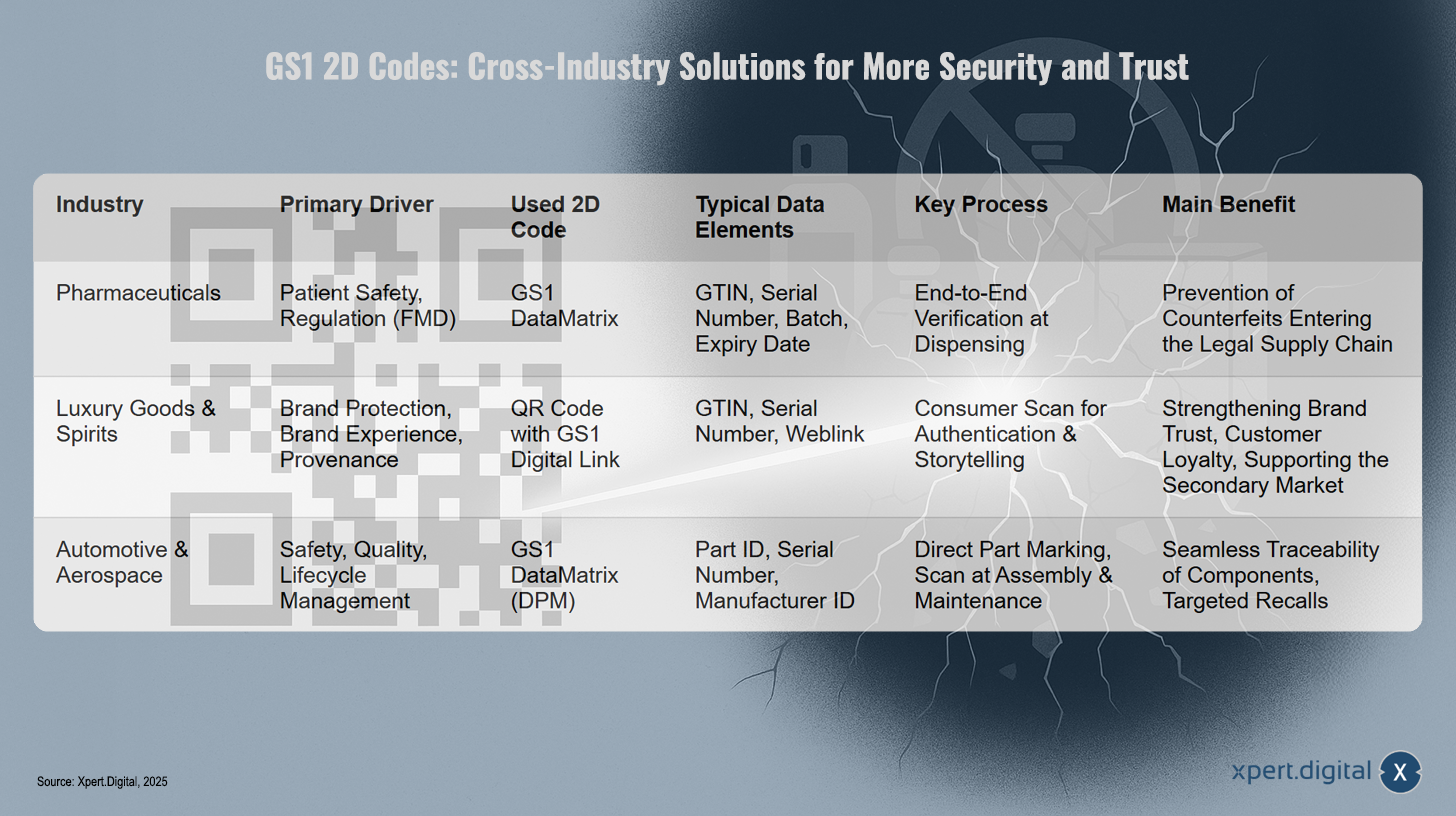
GS1 2D codes: Cross-industry solutions for greater security and trust – Image: Xpert.Digital
GS1 2D codes offer cross-industry solutions for enhanced security and trust. In the pharmaceutical industry, patient safety and compliance with regulatory requirements such as the FMD are paramount. Here, the GS1 DataMatrix code is typically used, containing data such as GTIN, serial number, batch number, and expiration date. These codes enable end-to-end verification at the point of sale, thus preventing counterfeits from entering the legitimate supply chain. In the luxury goods and spirits sector, QR codes with GS1 Digital Link primarily serve brand protection, enhance the brand experience, and ensure traceability. In addition to GTIN and serial number, they also contain web links, allowing consumers to easily authenticate and engage in storytelling, which strengthens brand trust, fosters customer loyalty, and supports the secondary market. In the automotive and aerospace industries, safety, quality, and lifecycle management are crucial. The GS1 DataMatrix code is frequently used as Direct Part Marking (DPM) in these sectors, encompassing part ID, serial number, and manufacturer ID. This allows for complete traceability of components as well as targeted recalls through scans during assembly and maintenance.
EU/DE Data Security | Integration of an independent and cross-data-source AI platform for all business needs

Independent AI platforms as a strategic alternative for European companies - Image: Xpert.Digital
AI Game Changer: The most flexible AI platform - Tailor-made solutions that reduce costs, improve your decisions and increase efficiency
Independent AI platform: Integrates all relevant company data sources
- Rapid AI integration: Tailor-made AI solutions for businesses in hours or days, instead of months
- Flexible infrastructure: Cloud-based or hosting in your own data center (Germany, Europe, free choice of location)
- Maximum data security: its use in law firms is irrefutable proof
- Deployment across a wide variety of enterprise data sources
- Choice of own or different AI models (DE, EU, USA, CN)
More information here:
Multi-layered anti-counterfeiting protection: Shaping the digital transformation with GS1 2D codes
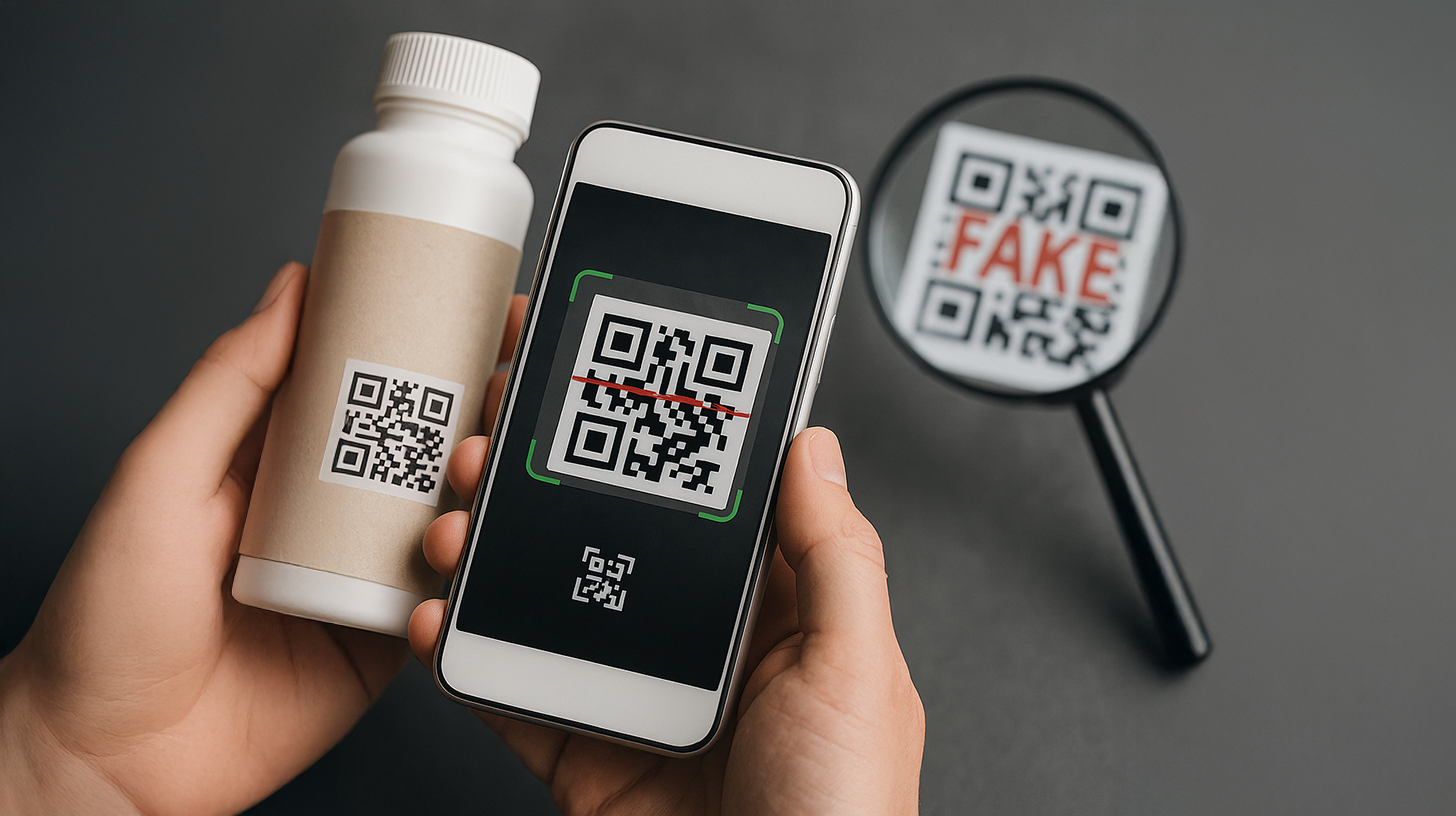
Multi-layered anti-counterfeiting protection: Shaping digital transformation with GS1 2D codes – Image: Xpert.Digital
Advanced security strategies to increase counterfeit protection
How can security be further increased by combining GS1 2D codes with physical features such as holograms?
The combination of a digital security feature such as the GS1 2D code with a physical security feature such as a hologram creates a multi-layered security solution whose protective effect exceeds the sum of its parts. This approach significantly raises the bar for counterfeiters, as they now have to overcome two fundamentally different technologies simultaneously.
A key approach is the direct integration of the QR code into a holographic security label. This works on several levels:
Overt and covert features: The hologram itself serves as an overt (visible to the naked eye) security feature, which, due to its complex, microscopic structure, is very difficult to copy exactly. Additionally, covert features such as microtext, nanotext, or UV-fluorescent inks can be integrated into the hologram. These can only be verified with special tools and represent a further layer of security.
Two-factor authentication for the product: This combination establishes a form of two-factor authentication. A counterfeiter would not only have to replicate the physically demanding hologram, but also guess or duplicate a valid, unique serial number from the manufacturer's digital system. A consumer or verifier can first perform a quick visual inspection of the hologram and then scan the QR code for final digital verification.
Tamper-evident: These security labels are often designed to be destroyed upon removal attempt or to leave a permanent mark (e.g., the word "VOID") on the product surface. This effectively prevents an authentic label from being removed from a genuine product and affixed to a counterfeit.
The strength of this hybrid solution lies in its synergy. The physical feature protects the digital one, and vice versa. A QR code on its own can be duplicated with a high-quality copier, with the digital data remaining identical. However, if this QR code is embedded in a hologram, a simple copy fails due to the hologram's physical complexity. Conversely, the unique serial number in the QR code protects the physical label. Even if a counterfeiter succeeds in perfectly replicating the hologram, scanning the embedded QR code would reveal an invalid or already used serial number, thus exposing the counterfeit. For high-value products, this multi-layered approach therefore offers exponentially greater security than a purely digital or purely physical solution.
What added value does combining GS1 standards with blockchain technology offer compared to traditional, centralized databases?
The combination of GS1 standards with blockchain technology addresses fundamental challenges regarding trust, data integrity and transparency in complex supply chains consisting of many independent actors.
In a traditional, centralized model, the manufacturer maintains a database containing all valid serial numbers. Other trading partners must query this central database to verify a product. This model has two major weaknesses: It creates a single point of failure and requires all partners to blindly trust the manufacturer's data integrity and availability.
Blockchain technology offers an alternative approach. It is a decentralized, immutable, and distributed ledger. When GS1 standards are used on a blockchain, EPCIS traceability events (the "what, where, when, and why") are recorded as transactions in this shared, distributed ledger. All authorized partners in the supply chain have access to an identical copy of this ledger.
The specific advantages of this combination are:
Decentralized trust: No single party owns or controls the data. The validity of a transaction is confirmed by a cryptographic consensus mechanism of the network. This eliminates the need to trust a central authority and creates a trustworthy environment between partners who might not otherwise necessarily trust each other.
Immutability: Once a transaction (e.g., a shipping event) has been recorded in the blockchain, it can practically no longer be changed or deleted. This creates a permanent, tamper-proof audit trail, which is invaluable for proving origin and combating counterfeiting.
Increased transparency and interoperability: All authorized participants see the same "single version of the truth." This reduces data discrepancies, reconciliation efforts, and disputes between partners. GS1 standards like EPCIS provide the necessary standardized data structure to make the information on the blockchain understandable and interoperable for all participants.
It is crucial to understand that blockchain does not replace GS1 standards, but rather offers an alternative, potentially more secure and trustworthy infrastructure for their application. GS1 provides the semantics—the “language” and “grammar” that gives data its meaning (e.g., “This GTIN was sent from this GLN at this time”). Blockchain provides a robust technological foundation for recording these standardized statements in a tamper-proof and transparent manner for all parties involved.
Implementation in practice: Challenges and solutions
What are the biggest technological hurdles in the introduction of serialization (e.g., print quality, line speed, data management, system integration)?
The introduction of serialization at the item level presents companies with significant technological challenges that extend across the entire production and IT sectors.
Printing technology and product handling: One of the biggest hurdles is reliably printing unique, high-quality 2D codes at high line speeds. Production lines are often not designed for precise marking. Factors such as conveyor belt vibrations, minimal variations in product positioning, or complex packaging geometries can lead to distorted, blurry, or incomplete codes that fail subsequent verification. The choice of printing technology (e.g., thermal inkjet, laser, thermal transfer printing) must be carefully matched to the substrate material (e.g., glossy cardboard, dark films, metal) to ensure the contrast required for scanning. While laser markers offer permanent markings, they often face the trade-off between high speed and optimal print accuracy.
Verification and quality control: It is not enough to simply print a code; it must also be verified inline immediately after printing to ensure it meets stringent quality standards such as ISO/IEC 15415. A code that is readable under ideal factory conditions may fail in a poorly lit warehouse or at a checkout with a different type of scanner. This necessitates investment in dedicated verification systems (verifiers) that evaluate codes based on several parameters, including contrast, modulation, axial unevenness, and error correction, and assign a quality grade. A poor-quality code is not just a technical problem, but a financial and regulatory disaster. It leads to scrap, rework, and, in the worst-case scenario, the rejection of entire shipments by trading partners, resulting in significant costs and delivery delays.
Data management and IT infrastructure: Serialization generates immense amounts of data. A large pharmaceutical company can easily generate billions of unique serial numbers per year. Managing this data requires a robust and scalable IT infrastructure. This is often represented in a multi-tiered model (Level 1 to Level 5): from device control on the production line (L1/L2) through the site management system (L3) and the company-wide enterprise system (L4) to communication with external partners and authorities (L5). Building and maintaining this complex architecture presents a significant challenge.
System integration: One of the most difficult and error-prone tasks is integrating the new serialization systems into the company's existing IT landscape, particularly into enterprise resource planning (ERP), warehouse management (WMS), and manufacturing execution systems (MES). Incompatibilities, complex interfaces, and data inconsistencies are common problems that can lead to system failures and corrupted data.
What organizational challenges do companies face when implementing serialization solutions?
The organizational challenges in implementing a serialization solution are often even greater than the technological ones and are frequently underestimated.
Cross-departmental coordination: Serialization is not an isolated IT or packaging project. It profoundly impacts processes in production, logistics, quality assurance, purchasing, sales, and marketing. The greatest risk of project failure is a lack of coordination between these departments. Therefore, establishing a cross-functional project team from the outset is essential to ensure that all requirements and dependencies are considered.
Training and skills development: All employees who come into contact with the new processes and technologies – from machine operators on the production line to warehouse workers, quality inspectors, and IT administrators – must receive comprehensive training. Companies must systematically develop internal expertise, as the topic is multidisciplinary and combines skills from IT, engineering, automation, and quality assurance.
Collaboration with trading partners: A serialization system only reaches its full potential when data can be seamlessly exchanged with suppliers, logistics providers, and customers. Early and clear communication is crucial to ensure that partners are technically and procedurally capable of receiving and processing the serialized data.
Change management and implementation strategy: Introducing serialization represents a fundamental shift in business processes. Instead of a "big bang" implementation, a phased approach is strongly recommended. A pilot project, initially limited to a single product line or location, allows the company to gather valuable practical experience, optimize processes, and resolve any initial issues before rolling out the solution company-wide.
What cost factors should be expected when implementing a track-and-trace system based on GS1 2D codes?
The costs of implementing a track-and-trace system are substantial and comprise various direct and indirect factors. Focusing solely on the initial hardware costs leads to a dangerous miscalculation of the total cost of ownership (TCO).
Hardware costs: These are the most obvious costs and include the purchase of printers (e.g. thermal inkjet, laser), camera systems for scanning and verification at each packaging line, as well as the necessary server and network infrastructure for data processing and storage.
Software costs: These include license fees for serialization software, especially for the higher-level site and enterprise-level systems (L3/L4). Pricing models vary widely, from monthly subscription fees for cloud-based SaaS solutions (ranging from $50 to $500 per month) to high one-time license fees for on-premises installations, starting at $75,000 and potentially much higher.
Integration and customization costs: This is often one of the largest and most difficult cost categories to calculate. Connecting serialization software to existing enterprise systems such as ERP and WMS requires specialized development work. Depending on the complexity, the costs for this can range from $5,000 to $15,000 for simple API connections to over $50,000 for complex integrations.
Implementation and training costs: These include the services of the solution provider or external consultants for system configuration, data migration, project management, and employee training. These costs can range from $10,000 to $30,000 or more.
Ongoing operating and maintenance costs: After implementation, there are continuous costs. These include annual software maintenance fees (often 15-20% of the original license cost), costs for consumables (ink, labels), and technical support fees.
Overall, the initial investment costs for a single packaging line in the pharmaceutical industry can range from $5 million to $15 million, depending on the complexity. It becomes clear that the "soft" costs for software, integration, and services often far exceed the pure hardware costs and constitute the largest part of the total investment.
GS1 2D code: Key to more transparent and secure product tracking
In conclusion, what are the decisive, strategic advantages of the GS1 2D matrix code for a comprehensive and future-proof anti-counterfeiting strategy?
The GS1 2D code is far more than just a technical upgrade of the traditional barcode; it is the cornerstone of a comprehensive and future-proof strategy for protecting against counterfeiting and for the digital transformation of the supply chain. Its key strategic advantages can be summarized in five core areas:
- Unambiguous, deterministic authentication: The code enables the transition from probabilistic, estimation-based security features to deterministic, data-driven verification. The question of authenticity is answered by a binary database query, offering a significantly higher level of security and reliability.
- Complete supply chain transparency: Through serialization and traceability at the item level, companies create unprecedented transparency from raw material to end consumer. This not only enables effective protection against counterfeiting, but also optimizes inventory management, allows for surgically precise recalls, and strengthens the overall integrity and resilience of the supply chain.
- Global regulatory compliance: GS1 standards form the foundation for meeting complex international regulations such as the EU Falsified Medicines Directive (FMD) or the US Drug Supply Chain Security Act (DSCSA). Implementing a GS1-based solution not only protects companies today, but also makes them future-proof for upcoming regulatory requirements worldwide.
- Direct channel to the consumer: The GS1 Digital Link, in particular, transforms the product itself into an interactive medium. Brands can build a direct relationship with the customer, create trust through transparency, provide valuable information, and sustainably strengthen customer loyalty through personalized experiences – far beyond the moment of purchase.
- Foundation for digital transformation: The global initiative "Sunrise 2027," which is driving the transition to 2D codes at the point of sale, signals an irreversible change. The introduction of GS1 2D codes is not an isolated project, but a fundamental step towards a digitized, data-driven, and networked global economy. It creates the technological basis for future innovations in sustainability, the circular economy, and personalized services.
In summary, the implementation of GS1 2D codes fundamentally changes the role of product packaging: from a passive container to an active, networked data hub. Packaging becomes a strategic asset – a data carrier and communication channel that creates measurable added value across the entire value chain, from logistics and marketing to customer service. Companies that actively shape this transformation today not only protect their products from counterfeiting but also lay the foundation for their future success in an increasingly digital world.
Your global marketing and business development partner
☑️ Our business language is English or German
☑️ NEW: Correspondence in your native language!

Konrad Wolfenstein
I and my team are happy to be available to you as your personal advisor.
You can contact me by filling out the contact form here wolfenstein@xpert.digital:or simply call me at +49 7348 4088 965. My email address is
I'm looking forward to our joint project.