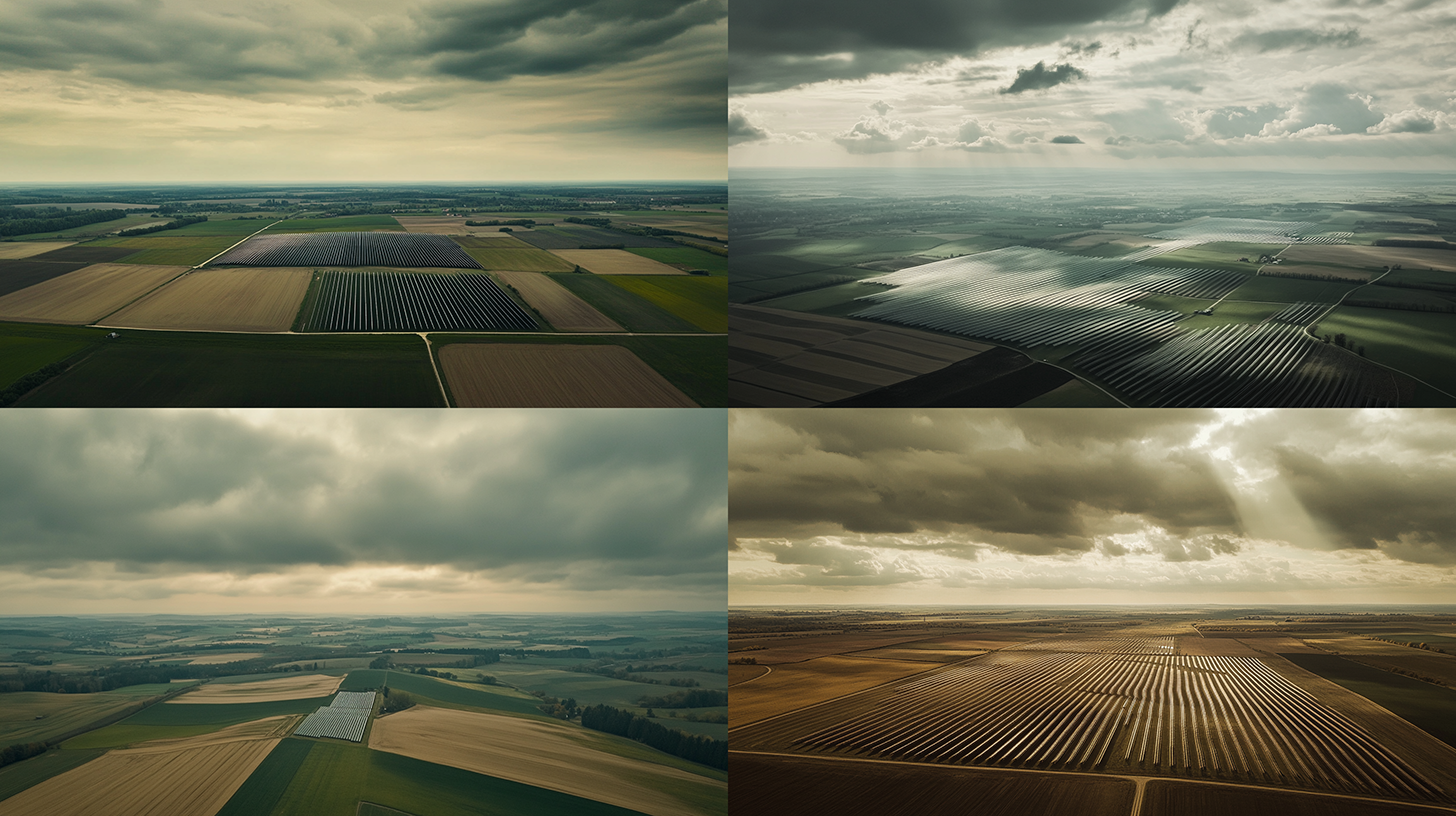
XXL solar parks: The boom in large-scale ground-mounted PV systems in Germany: Developments, trends and perspectives – Image: Xpert.Digital
Future of ground-mounted PV: Expansion targets until 2040
How Germany's photovoltaics sector is booming: Facts and forecasts
Solar energy in Germany is currently experiencing unprecedented expansion, particularly in the area of ground-mounted photovoltaic systems. The growing size and number of solar parks is a clear indication of the transformation of the energy supply. By the end of 2024, approximately 99 GW of photovoltaic capacity was installed in Germany, with around one-third of this being ground-mounted systems. The total capacity of all solar power plants installed in Germany exceeded 100 GW for the first time at the turn of the year 2024/2025. During 2024, approximately one million new photovoltaic systems with a total capacity of around 16-17 GW were commissioned, representing an increase of about 10% compared to the previous year. From 2025 onward, 9.9 GW of new ground-mounted systems are to be added annually to achieve the EEG target of 200 GW of ground-mounted PV by 2040.
Related to this:

The trend towards XXL solar parks
Current major projects in Germany
In recent years, several impressive large-scale projects have been realized in Germany. The Weesow-Willmersdorf solar park in Brandenburg, with a capacity of 187 MW and an area of 164 hectares, has long been considered Germany's largest solar power plant. With more than 465,000 solar modules, the plant can supply up to 50,000 households with clean electricity and saves 129,000 tons of CO₂ annually. It is noteworthy that the solar park was built without subsidies from the Renewable Energy Sources Act (EEG), which underscores the economic viability of modern solar parks.
New record-breaking projects are constantly emerging as part of the energy transition. Around 30 kilometers south of Leipzig, the groundbreaking ceremony took place for what will be Germany's largest photovoltaic power plant to date. A solar park with a total capacity of 650 megawatts is being built on approximately 500 hectares of contiguous land in the former "Witznitz II" open-cast lignite mine, as well as on an additional 150 hectares of compensatory land. The installation of 1.1 million solar modules is expected to make the project the largest photovoltaic power plant not only in Germany, but potentially in all of Europe.
Regional developments
The Sande Hybrid Energy Park, the largest ground-mounted photovoltaic plant in Lower Saxony, was recently opened. With a capacity of approximately 83 megawatts in its first phase and covering an area of about 95 hectares, the plant produces an average of around 80,000 megawatt-hours of electricity per year, theoretically supplying more than 26,600 households with CO₂-free energy. Its integration into an existing wind farm makes it a hybrid energy system that combines the advantages of both renewable energy sources.
Other significant projects include the Görlsdorf solar park in the municipality of Vierlinden, with a capacity of 87.6 MW, which is being built on an area of approximately 91 hectares and will supply around 35,000 households. Near Göttingen, a new solar park on the site of a former landfill has been connected to the grid; covering an area equivalent to 40 football fields, it will produce 31.5 million kilowatt-hours of electricity annually, enough to supply around 9,000 households.
Agri-PV: The innovative dual use of land
Concept and implementation
Agri-PV systems represent a particularly innovative development, as they combine the agricultural use of land with the generation of solar energy. In Tützpatz, near the Mecklenburg Lake District, one of Europe's largest agri-PV systems, with a capacity of around 80 megawatts, is being built on an area of 93 hectares (equivalent to 130 football fields). The project is divided into three sections: one section is used for poultry farming with mobile chicken coops, while the other sections are used for growing crops.
A unique feature of this system is the installation of the modules on trackers, which can be positioned almost vertically during harvesting and cultivation, thus freeing up space for agricultural machinery. This system enables efficient dual use of the land and helps to minimize potential conflicts of use between energy production and agriculture.
In Butzhausen, a large agri-solar park is also being built, which farmer Henning Kruse has financed entirely himself through a bank loan of ten million euros. Such projects demonstrate that individual farmers can also become important players in the energy transition.
Potentials and challenges
According to studies by the Öko-Institut, 287 gigawatts of solar energy could be installed on roadside verges, above parking lots, and on industrial and commercial areas alone, which is significantly more than the EEG target of 200 gigawatts of ground-mounted PV systems by 2040. Agricultural land with lower yields would then only need to be used to a very limited extent.
Furthermore, almost 5,000 GW would be available if technical potentials were exploited that create synergies with peatlands, bodies of water, or other high-quality agricultural land. Agri-PV systems, especially when planted over perennial crops such as grapes or fruit trees, can simultaneously provide reliable protection against hail damage and sunburn, thus eliminating the need for expensive and maintenance-intensive protective devices.
Related to this:
Technological innovations in modern solar parks
Integration technologies
Modern solar parks are increasingly being equipped with complementary technologies that improve their efficiency and grid integration. For example, the Görlsdorf solar park is being equipped with a battery storage system with a total capacity of approximately 13.4 megawatt-hours to allow for more flexible feed-in. The agri-PV park in Tützpatz is also integrating a battery storage system, which helps to feed the generated solar power into the grid more flexibly and according to demand, so that the solar power can also be used at night, for example.
This integration of storage technologies is a crucial step towards solving a major problem of renewable energies: fluctuating feed-in. By combining photovoltaics with energy storage, security of supply can be increased and grid load reduced.
Ecological design
In many new solar park projects, ecological design is just as important as energy production. One example is the planned community solar park in Dedendorf (Lower Saxony), which is designed as a "biodiversity solar park." Here, the spacing between the rows of modules is generously planned to allow more light to reach the ground and promote plant growth. The area will be sown with a native seed mix and grazed by sheep.
At the Görlsdorf solar park, a variety of environmental measures are being implemented to offset the construction and ensure the preservation of existing habitats for native animal species. These measures contribute to promoting biodiversity in the area and improving the local ecology.
Economic and social aspects
Financing models and citizen participation
The financing of solar parks has diversified in recent years. While some large-scale projects are being realized by energy suppliers like EnBW or Vattenfall, others rely on innovative participation models. The solar park planned in Dedendorf is being developed jointly by a green energy supplier and a citizens' energy cooperative, allowing local residents to participate. This approach promotes local acceptance and enables democratic participation in the energy transition.
Another financing model involves long-term power purchase agreements (PPAs), such as the one concluded with Salzgitter Flachstahl GmbH for the Sande hybrid energy park. These agreements offer planning security to both the plant operator and the electricity purchaser, making the projects independent of government subsidies.
Regional value creation and municipal finances
Solar parks can make a significant contribution to regional economic development. In the case of the Görlsdorf solar park, it is emphasized that the photovoltaic system will generate valuable revenue for the municipality for decades, in addition to electricity. Vierlinden's mayor, Constantin Schütze, explains: "The solar park with its battery storage not only contributes to securing our energy supply. It strengthens the financial resources of our municipality and creates valuable opportunities for us for decades to come."
These financial benefits for municipalities are an important factor for the local acceptance of solar parks and can help to strengthen structurally weak rural regions.
Next-generation solar parks: Potential and integration
Area potential and expansion possibilities
In Germany, significantly more land is available for the expansion of ground-mounted photovoltaic systems than is currently estimated to be needed for a fully renewable electricity system. This opens up great potential for the further expansion of solar energy. The use of already sealed or previously contaminated land is particularly promising, as in the case of the solar park near Göttingen, which was built on a former landfill.
The revitalization of former open-cast mining areas, as in the "Witznitz" project, also offers great potential. Here, the construction of the photovoltaic power plant leads to the revitalization of the previously underutilized area and additionally creates new cycling and riding trails for tourism in the region.
Integration into the energy system
The increasing size of solar parks and their technological advancements, particularly through the integration of battery storage, are improving grid integration possibilities. Some projects, such as the Sande Hybrid Energy Park, are already planning to produce green hydrogen using the generated solar power. Similarly, the "Witznitz" project, thanks to its existing grid infrastructure, is considering coupling renewable energy plants with electrolyzers for green hydrogen production.
This sector coupling – the linking of electricity production with other energy sectors such as heat, transport or industry – will play an even more important role in the future to increase the efficiency and flexibility of the energy system.
Solar parks of the future: Synergies between energy, agriculture and nature conservation
The rapid expansion of solar parks in Germany demonstrates the growing importance of photovoltaics for the energy transition. Particularly noteworthy is the development of increasingly larger projects that set new standards while remaining economically viable. Innovative concepts such as agri-PV and biodiversity solar parks address potential land-use conflicts and create new synergies between energy production, agriculture, and nature conservation.
The increasing integration of battery storage and the development of new financing models demonstrate the technological and economic progress of the solar sector. With the planned annual addition of 9.9 GW of ground-mounted solar installations from 2025 onwards, the importance of solar energy for the German energy system will continue to grow. The successful implementation of these expansion targets will depend crucially on resolving potential land-use conflicts and securing local acceptance through participatory models and regional economic benefits.
Related to this:
Your partner for business development in the fields of photovoltaics and construction
From industrial rooftop PV to solar parks and larger solar parking lots
☑️ Our business language is English or German
☑️ NEW: Correspondence in your native language!

Konrad Wolfenstein
I and my team are happy to be available to you as your personal advisor.
You can contact me by filling out the contact form here wolfenstein@xpert.digital:or simply call me at +49 7348 4088 965. My email address is
I'm looking forward to our joint project.