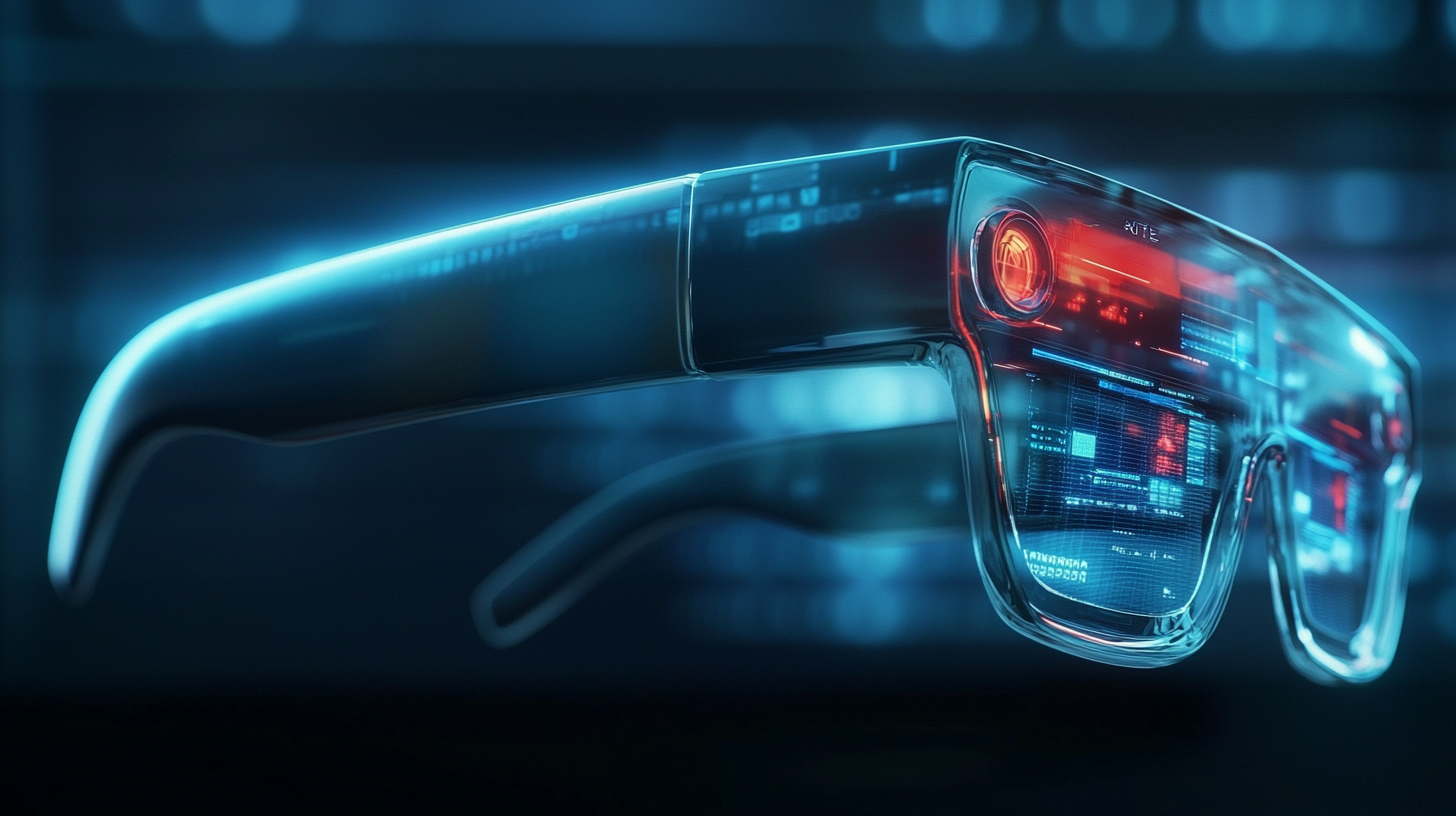
Xiaomi Smart Glasses and the transformation of AR glasses with artificial intelligence (AI) – Image source: Xiaomi / Creative image: Xpert.Digital
Xiaomi and the paradigm shift through smart glasses in the digital age
The transformation of everyday life: How augmented reality becomes reality with smart glasses
The merging of the digital and physical worlds through augmented reality (AR) is on the verge of fundamentally changing our everyday lives. Smart glasses, once a futuristic vision, are increasingly becoming a tangible part of our lives. Xiaomi, a company known for its innovation and commitment to accessible technology, is positioning itself as a key pioneer in this emerging field with its smart glasses series. These devices are more than just fashionable accessories; they represent a paradigm shift in how we interact with information, perceive our environment, and manage our daily tasks.
Related to this:
Xiaomi's smart glasses are a remarkable example of the convergence of design, technology, and functionality. They combine the familiar look of traditional glasses with the groundbreaking power of augmented reality and artificial intelligence (AI). This integration allows users to experience the world with a new level of information and interactivity. Imagine walking through an unfamiliar city and receiving real-time information about landmarks directly in your field of vision, or following a complex repair guide where each step appears as virtual overlays before your eyes. These are just a few examples of the transformative potential of AR glasses in everyday life.
Xiaomi Smart Glasses go far beyond simple information displays. Equipped with a variety of sensors and technologies, they function as personal assistants, health monitors, and communication hubs. Integrated sensors monitor vital parameters such as heart rate and activity levels, while advanced AI-powered voice control systems enable intuitive, hands-free operation. Seamless connectivity with other Xiaomi devices and the wider smart device ecosystem further enhances their usefulness, establishing them as a central interface in a connected lifestyle.
With models like the "Wireless AR Glass Discovery Edition" and the AI glasses announced for 2025, Xiaomi demonstrates its relentless pursuit of innovation and technological excellence. These devices set new standards in areas such as display technology, gesture control, and ecosystem integration, directly challenging established players like Meta with their Ray-Ban smart glasses . Xiaomi is positioning itself not just as another participant in the AR glasses market, but as a company that aims to significantly shape the future of this technology. Xiaomi's vision extends beyond simply offering a product; it aims to usher in a new era of augmented reality, in which AR glasses become an indispensable tool for anyone who wants to increase their productivity, enrich their experiences, and seamlessly interact with the digital world.
Related to this:
Fundamentals of Augmented Reality Technology and Market Development
To fully understand the significance of Xiaomi Smart Glasses and their impact on the market, it is essential to examine the fundamentals of augmented reality technology and its evolution over time.
Augmented Reality vs. Virtual Reality: Definitions and distinctions
Augmented Reality (AR) and Virtual Reality (VR) are often mentioned in the same breath, but it's important to understand the fundamental differences between these two technologies. Both aim to enhance our perception of reality, but they do so in different ways and with different focuses.
Augmented Reality (AR)
Augmented reality (AR) enriches the physical world we inhabit with digital information and overlays. Imagine a transparent window through which you see the real world, but onto which digital content is simultaneously projected. AR glasses, like those from Xiaomi, use transparent lenses to achieve precisely this effect. They allow virtual elements such as images, text, 3D models, or videos to be superimposed into the user's field of vision, while the user continues to perceive and interact with their real-world surroundings. AR is context-aware and aims to augment and enhance the real world with relevant digital information.
Virtual Reality (VR)
Virtual reality, on the other hand, creates a fully immersive, computer-generated environment that shields the user from the real world. VR headsets use opaque lenses that fill the entire field of vision, immersing the user in a simulated world. VR experiences are often interactive, allowing the user to move around and interact within the virtual environment. VR aims to create a separate, alternative reality into which the user can fully immerse themselves.
Hybrid technologies: The next step in the merging of reality and virtuality
This fundamental distinction in how reality and the digital world merge leads to different application areas for AR and VR. AR is ideal for applications that prioritize contextual information and interaction with the real world. Examples include navigation, where directions are overlaid onto the real environment; fitness tracking, where performance data is displayed in real time; and industrial applications, where maintenance instructions are projected directly onto machines. VR, on the other hand, is perfectly suited for immersive experiences, where the user is meant to be transported to another world. This includes areas such as gaming, virtual meetings, simulations, training, and immersive entertainment experiences.
Xiaomi's smart glasses take a hybrid approach, combining the advantages of both worlds. The "Wireless AR Glass Discovery Edition" is a prime example. It projects not only static information but also interactive holograms into the user's field of vision. These holograms can be manipulated and controlled via hand gestures, opening up a new dimension of interaction with digital content. This technology, previously found primarily in prototypes like Microsoft's HoloLens, is now finding its way into a consumer-oriented product, demonstrating Xiaomi's innovation leadership in the AR sector.
Historical development and current market leaders
The idea of augmented reality is not new. As early as the 1960s, Ivan Sutherland, a pioneer of computer graphics, developed the "Sword of Damocles," a rudimentary head-mounted display (HMD) considered a precursor to today's AR and VR headsets. In the following decades, there were repeated attempts to use AR technology in various fields, but for a long time the technological hurdles were too great for a widespread breakthrough.
Related to this:
- Virtual Reality: My first Metaverse in 1972 with the View-Master and its further development through the 90s to the present day (Konrad Wolfenstein)
- A look back at the pioneering era: From the beginnings to the present day
AR experienced its first surge in popularity in the early 2000s with the advent of smartphones and powerful mobile processors. Apps like "Layar" and "Wikitude" used smartphone cameras and sensors to display simple AR overlays on the screen. However, these early AR applications were often limited in their functionality and user-friendliness.
A significant turning point in the development of AR glasses was the introduction of Google Glass in 2013. Google Glass was one of the first commercially available AR glasses, promising to revolutionize the way we interact with information. Although Google Glass did not achieve commercial success due to privacy concerns, high price, and limited functionality, it paved the way for subsequent generations of AR glasses and drew public attention to the potential of this technology.
Today, the AR glasses market is dominated by a number of companies pursuing different strategies and focusing on various application areas. Key players include:
Meta (Ray-Ban Meta Smart Glasses):
Meta, formerly Facebook, is heavily focused on the consumer market and positions its Ray-Ban Meta Smart Glasses as fashionable lifestyle products with integrated cameras and audio functions. The focus is on social media integration and the easy capture and sharing of moments.
Microsoft (HoloLens):
Microsoft focuses primarily on the enterprise market with HoloLens, offering a powerful AR platform for industrial applications, design, training, and collaboration. HoloLens is known for its advanced spatial perception and its ability to project complex holograms into the real world.
Nreal (Nreal Air/Light):
Nreal also targets the consumer market, offering relatively affordable AR glasses like the Nreal Air and Nreal Light, aimed at smartphone users. The focus is on entertainment, media consumption, and simple AR applications.
Apple (Expected AR/VR Headsets):
Although Apple doesn't yet have dedicated AR glasses on the market, the company is expected to enter this market in the near future. Rumors point to a high-end AR/VR headset designed for both AR and VR applications, integrating Apple's ecosystem and design philosophy.
Xiaomi's glasses innovation: From smart audio solution to high-end AR
Xiaomi is entering this diverse and dynamic field with a dual strategy that appeals to both the mass market and professional users. With the "Mijia Smart Audio Glasses," Xiaomi offers a budget-friendly entry-level model that focuses primarily on audio functions and basic smart features. These glasses are aimed at users who value style, comfort, and basic connectivity. On the other hand, Xiaomi positions the "Wireless AR Glass Discovery Edition" as a high-end device that offers cutting-edge technology in terms of display quality, interaction, and functionality. These glasses target discerning users and professionals who want to unlock the full potential of augmented reality.
A notable aspect of Xiaomi's approach is its focus on wireless connectivity and energy efficiency. Unlike some other AR glasses that rely on integrated processing power, often resulting in heavy and bulky devices, Xiaomi's glasses communicate seamlessly with smartphones and other devices via NFC and Wi-Fi 6E. This approach allows much of the processing power to remain external, leading to lighter, more compact glasses and longer battery life. This strategy is crucial for the everyday usability of AR glasses and underscores Xiaomi's efforts to make AR technology accessible and appealing to a wider audience.
Technological innovations in Xiaomi Smart Glasses
Xiaomi Smart Glasses feature a number of technological innovations that set them apart from other AR glasses on the market and significantly improve their performance and ease of use.
Display and lens technology: From Micro-OLED to electrochromic systems
The display is the heart of every AR headset, as it makes the virtual world visible to the user. Xiaomi has made remarkable progress in this area, relying on advanced technologies such as micro-OLED and electrochromic lenses to ensure an outstanding visual experience.
The Wireless AR Glass Discovery Edition utilizes two state-of-the-art 1.6-inch micro-OLED panels. Compared to conventional LCD or LED displays, micro-OLED (Organic Light Emitting Diode) displays offer a number of advantages, particularly for AR applications. They are extremely compact, energy-efficient, and offer excellent contrast ratios and vibrant colors. The micro-OLED panels used in the Discovery Edition have a resolution of 3200 × 1600 pixels per eye and achieve a pixel density of 58 PPD (pixels per degree), resulting in crisp and detailed rendering of virtual content. With a brightness of 1200 nits, the displays remain easily readable even in bright environments and direct sunlight. This high display quality is crucial for an immersive and comfortable AR experience, as it seamlessly integrates the virtual world into the real environment and reduces eye strain.
Another highlight of the Discovery Edition is the electrochromic lenses. Electrochromic materials change their light transmission depending on an applied electrical voltage. In the Xiaomi Smart Glasses, a thin film of electrochromic material is used between the lens layers. By applying a voltage, the light transmission of the lenses can be dynamically adjusted to automatically adapt to changing ambient light conditions. This technology, previously used primarily in premium sunglasses, allows the Xiaomi Smart Glasses to ensure optimal vision and minimize glare in varying lighting conditions. The electrochromic lenses not only contribute to comfort but also improve the display of virtual content by optimizing contrast and color intensity.
In comparison, Xiaomi's earlier concept model from 2023 used a monochrome micro-LED display in the right glass. Micro-LED (Micro Light Emitting Diode) is another display technology that is gaining increasing importance in AR glasses. Micro-LEDs are even smaller and more energy-efficient than micro-OLEDs and potentially offer even higher brightness and contrast ratios. The monochrome micro-LED display of the concept model showed information in green and, despite its lower color depth, impressed with its energy efficiency and slim design. This concept model demonstrates Xiaomi's willingness to experiment and its commitment to evaluating different display technologies and integrating them into future products.
Interaction systems: Gesture control and voice commands
Intuitive and natural interaction is crucial for the usability of AR glasses. Xiaomi has invested in developing advanced interaction systems based on gesture control and voice commands to enable a seamless and immersive user experience.
The gesture control of Xiaomi Smart Glasses is based on a combination of infrared sensors and AI-based algorithms. Infrared sensors precisely capture the user's hand movements, while AI algorithms translate these movements into commands. Users can grab, rotate, zoom in or out, and position virtual objects in the field of view using finger movements. This gesture control opens up new possibilities for interacting with digital content in AR. It is particularly relevant for applications such as 3D modeling, interactive presentations, games, and remote maintenance and support applications. The precise gesture recognition reduces the need for physical controllers and enables more natural and intuitive control of the AR environment.
Alongside gesture control, Xiaomi Smart Glasses integrate advanced voice control powered by "XiaoAI," Xiaomi's own AI assistant. XiaoAI is capable of understanding and executing complex voice commands. Users can navigate, retrieve information, make calls, play music, control smart devices, and much more, all via voice command. For example, a user can say, "Navigate to the nearest café and show reviews," and the glasses will display navigation to the nearest café, along with reviews and opening hours, directly in their field of vision. Voice control perfectly complements gesture control, enabling hands-free operation of the glasses in many everyday situations. The interplay of gestures and voice creates an intuitive and versatile interaction system that significantly enhances the usability of Xiaomi Smart Glasses.
🗒️ Xpert.Digital: A pioneer in the field of Extended and Augmented Reality


Finding the right Metaverse agency, planning office, or consulting firm - Image: Xpert.Digital
🗒️ Finding the right Metaverse agency, planning office, or consulting firm – Search and search: Top Ten Tips for Consulting & Planning
More information here:
The next level of technology: Xiaomi Smart Glasses in use
Discover innovative applications with Xiaomi Smart Glasses
Xiaomi Smart Glasses offer a wide range of applications and practical benefits, encompassing both professional uses and everyday applications for end users.
Professional applications: From industry to medicine
In professional contexts, Xiaomi Smart Glasses unleash their full potential and can significantly improve efficiency, productivity and safety in various industries.
In industry, AR glasses enable remote support from experts. On-site technicians can perform complex repairs or maintenance work while receiving remote support from experienced specialists. These experts can overlay repair instructions, diagrams, or 3D models directly into the technician's field of vision, guiding them step-by-step through the process. The Discovery Edition, with its high-resolution 8K camera and 6DoF (Six Degrees of Freedom) tracking, is particularly well-suited for such applications, as it allows for precise spatial mapping and detailed visualization. This technology is essential for CAD applications, architectural visualizations, quality control in manufacturing, and complex assembly processes. AR glasses can also be used in logistics to assist warehouse workers with order picking and locating items by displaying directions and product information directly in their field of vision.
In the medical field, AR glasses are increasingly being tested and used for educational purposes. Medical students can study anatomical overlays on patient projections, thus developing a deeper understanding of human anatomy. Surgeons can use AR glasses to have real-time data and navigation information superimposed directly into their field of vision during operations, which can improve the precision and safety of surgical procedures. Xiaomi is collaborating with healthcare APIs in this area to enable the integration of vital data such as ECG readings or blood glucose levels into the AR environment. In patient care, AR glasses can help doctors and nurses quickly access patient information, operate medical devices, and visualize treatment protocols.
Everyday applications: navigation, fitness and entertainment
For end users, the Xiaomi Smart Glasses offer a variety of practical features that make everyday life easier, more enriching and more entertaining.
Real-time navigation
AR glasses can serve as an advanced navigation system. Street names, turn-by-turn directions, and route descriptions appear in the user's lower field of vision, allowing them to easily orient themselves in unfamiliar environments without taking their eyes off the road. Additionally, POI (Points of Interest) information such as opening hours, ratings, and contact details for restaurants, shops, and attractions can be displayed directly in the vicinity.
Fitness tracking
Integrated sensors in the smart glasses continuously measure vital parameters such as heart rate, step count, calorie consumption, and activity level. This data can be displayed in real time in the field of vision or synchronized with fitness apps to support the user's athletic activities and track their progress. The Mijia Smart Audio Glasses go a step further, integrating ultrasonic sensors in the temples that utilize bone conduction sound for motivating audio coaching. This technology allows the user to listen to music or instructions without covering their ears and to remain aware of ambient sounds, which is particularly beneficial during outdoor sports.
Gaming and Entertainment
AR games and entertainment applications benefit from the immersive nature of smart glasses and their precise motion tracking. Holographic chess games, where the chess pieces are virtually placed on a real table, or location-based hunting games similar to Pokémon GO, where virtual creatures appear in the real environment, become a new experience with AR glasses. The consumption of media such as videos, films, and live streams is also enhanced by AR glasses, as they can project virtual screens of any size and position within the user's surroundings.
A particular highlight of the Xiaomi Smart Glasses is their multitasking capability. Users can, for example, display a YouTube video in the periphery of their field of vision while simultaneously navigating, reading messages, or performing other tasks. This feature allows users to keep track of multiple information streams at once without losing focus on a task or constantly switching between different devices. This significantly increases productivity and efficiency in everyday life.
Technical specifications and ecosystem integration
Xiaomi Smart Glasses impress not only with their innovative features, but also with their well-thought-out technical specifications and their seamless integration into the Xiaomi ecosystem.
Hardware components in detail
The “Wireless AR Glass Discovery Edition” is a masterpiece of engineering, combining powerful technology in a lightweight and comfortable design. Xiaomi utilizes lightweight materials such as carbon fiber and magnesium-lithium alloys to reduce the glasses' overall weight to just 126 grams. This low weight is crucial for comfort, allowing the glasses to be worn comfortably for extended periods without causing fatigue.
Inside the glasses are powerful Qualcomm Snapdragon XR2 processors. These chips, specifically designed for AR and VR applications, provide the necessary computing power to render complex AR experiences in real time. The Snapdragon XR2 processors enable a latency of less than 3 milliseconds, which is critical for preventing motion sickness during rapid head movements and ensuring a smooth and responsive AR experience.
Regarding battery life, Xiaomi employs a modular system to optimize the balance between weight and endurance. A separate 5000 mAh battery pack can be worn on a belt or in a pocket and powers the glasses via a cable. This external battery concept enables runtimes of up to 8 hours with intensive AR use, which is significantly longer than many other AR glasses with integrated batteries. The modular approach also allows users to carry an additional battery pack if needed, further extending the glasses' runtime.
In addition to the components already mentioned, the Xiaomi Smart Glasses feature a variety of other sensors and technologies, including:
High-resolution cameras
The Discovery Edition is equipped with an 8K camera capable of capturing high-resolution photos and videos, essential for applications such as remote support and spatial surveying. It also features an integrated front-facing camera for video calls and facial recognition.
Environmental sensors
Environmental sensors such as accelerometers, gyroscopes, magnetometers, and ambient light sensors enable the precise detection of movements, orientation, and ambient light conditions. This data is crucial for spatial perception, gesture control, and automatic adjustment of display brightness.
Connectivity options
The glasses support state-of-the-art connectivity standards such as Wi-Fi 6E for fast and stable wireless connections and Bluetooth 5.0 for connecting to smartphones and other devices. NFC (Near Field Communication) enables easy and quick pairing with compatible devices.
Integration into the Xiaomi ecosystem
As part of the comprehensive Xiaomi Smart Home ecosystem, the Smart Glasses communicate seamlessly with other Xiaomi devices and offer deep integration into the user's connected lifestyle.
Smart Lock Integration
The smart glasses' facial recognition camera can be used to unlock compatible Xiaomi smart locks. The user simply needs to look at their front door or apartment door, and the glasses will recognize their face and unlock the door automatically.
Mi TV control
The smart glasses allow users to control Xiaomi Mi TVs using gaze tracking. For example, users can pause a video by looking away from the TV or change channels by looking in a specific direction. This intuitive control method makes operating the TV even more convenient and hands-free.
Mi Band Synchronization
The smart glasses can synchronize health data with Xiaomi Mi Band fitness trackers. Data collected by the Mi Band, such as heart rate, sleep data, and activity levels, can be displayed directly in the glasses' AR environment, and vice versa. This integration enables comprehensive monitoring of the user's health and fitness data.
This connectivity is enabled by the Mi AIoT platform, which manages over 200 million connected devices worldwide. Xiaomi plans to continuously expand the integration of its smart glasses into the ecosystem, and future updates will even allow users to control robotic vacuum cleaners, air purifiers, and other smart home devices via eye movement or voice command. This deep ecosystem integration makes the Xiaomi smart glasses a central control unit for the connected home and underscores Xiaomi's vision of a seamless and intelligent lifestyle.
Pricing policy and target groups
Xiaomi pursues a dual pricing policy to appeal to different target groups and facilitate market access.
1. Entry-level models
With models like the "Mijia Smart Audio Glasses," Xiaomi offers affordable entry-level options starting at around $63 (approx. €58). These glasses are aimed at budget-conscious users, students, tech enthusiasts, and those primarily seeking audio functionality and basic smart features. The Mijia series is currently officially available only in China, but this doesn't diminish the global impact of Xiaomi's technology.
2. Professional models
The "Discovery Edition" positions itself as a high-end device for professional users and discerning consumers. While its anticipated price of approximately $799 (around €740) is higher than entry-level models, it remains competitive compared to other high-end AR glasses on the market. The Discovery Edition targets engineers, medical professionals, designers, developers, and tech-savvy users who want to unlock the full potential of augmented reality. Although the Discovery Edition is not yet officially available globally, it can be obtained in Europe through importers like Banggood, though customs duties may apply.
This differentiated pricing policy allows Xiaomi to appeal to a broad range of users and conquer the AR glasses market across various price segments. The combination of affordable entry-level models and technologically advanced high-end devices strengthens Xiaomi's position as a versatile provider in the AR sector.
Planned Innovations
Xiaomi is optimistic about the future of augmented reality and is planning a series of innovations and further developments to make its smart glasses even more powerful, versatile and suitable for everyday use.
AI Glasses 2025: Xiaomi's Next Step
Xiaomi has announced the launch of AI glasses in the second quarter of 2025, which will represent a significant advancement in the integration of artificial intelligence into AR glasses. A key feature of these AI glasses will be the local processing of Large Language Models (LLMs). LLMs are powerful AI models capable of understanding and generating natural language, performing complex tasks, and providing contextual information. Local processing of LLMs within the glasses will enable faster response times, improved data privacy features, and the use of AI functions even without a constant cloud connection.
Planned features of the AI glasses include:
Real-time translation
The glasses are designed to translate spoken and written language in real time and display it visually as a text overlay in 74 languages. This feature will significantly facilitate communication in multilingual environments and reduce barriers.
Context-aware AR
The AI glasses are designed to recognize context-sensitive information and automatically display relevant AR overlays. For example, in a restaurant, the glasses could automatically recognize the restaurant's menu and display it as a virtual overlay in the user's field of vision. This context-aware AR will make interacting with the environment more intuitive and informative.
Emotion recognition
The AI glasses are designed to analyze facial expressions and recognize emotions. This functionality could be used in communication and social interaction to improve understanding and empathy. For example, the glasses could provide the user with subtle cues about their conversation partner's mood, thus contributing to more effective communication.
Xiaomi CEO Lei Jun has set an ambitious sales target of 300,000 units for the launch year of the AI glasses. This goal underscores Xiaomi's confidence in the technology and its commitment to the further development and commercialization of AR glasses.
Long-term vision: AR as an everyday companion
Xiaomi sees AR glasses not just as niche products for tech enthusiasts, but as future everyday companions that could achieve a similar status to today's smartphones. The company pursues a long-term vision in which AR glasses become a central interface for the metaverse and for a multitude of applications in all areas of life.
Planned long-term developments include:
Holographic telepresence
The integration of 3D avatars for virtual meetings and conferences. Users should be able to participate in virtual meetings in the form of lifelike holograms and interact naturally with other participants as if they were physically present.
Neuro-Adaptive Interfaces
Adapting the user interface (UI) of AR glasses to the individual cognitive patterns and preferences of the user. By analyzing brain activity and other biometric data, the glasses should be able to individually adjust the presentation of information and interaction methods to maximize usability and efficiency.
Energy-autonomous systems
The development of energy-autonomous AR glasses through the integration of transparent photovoltaic layers into the lenses. This technology aims to convert sunlight into electrical energy and continuously power the glasses, thereby extending battery life and reducing dependence on external power sources.
These long-term developments could make AR glasses a standard accessory by 2030, much like smartphones are today. Xiaomi is convinced that AR glasses have the potential to fundamentally change the way we live, work, and interact, ushering in a new era of computer-aided reality.
Xiaomi as a pioneer of AR transformation
Xiaomi's smart glasses successfully bridge the gap between technological cutting-edge technology and practical everyday usability. With the "Wireless AR Glass Discovery Edition" and its planned innovations, the company demonstrates its innovative potential and commitment to advancing augmented reality technology. By fusing high-resolution displays, intuitive gesture control, advanced AI, and deep ecosystem integration, Xiaomi is setting new standards in the AR glasses market and simultaneously driving the commercialization of AR.
Although challenges such as battery life, design acceptance, and privacy concerns remain, Xiaomi's plans for 2025 and beyond point to disruptive potential. Combined with aggressive pricing and a strong brand, Xiaomi could put not only established players like Meta, but the entire wearables industry under pressure to innovate and significantly shape the AR transformation. Xiaomi is thus positioning itself as a key pioneer in the exciting and dynamic world of augmented reality, helping to transform AR glasses from a futuristic vision into a tangible reality for millions of users worldwide.
We are here for you - Consulting - Planning - Implementation - Project Management
☑️ SME support in strategy, consulting, planning and implementation
☑️ Creation or realignment of the digital strategy and digitization
☑️ Expansion and optimization of international sales processes
☑️ Global & Digital B2B trading platforms
☑️ Pioneer Business Development

Konrad Wolfenstein
I would be happy to serve as your personal advisor.
You can contact me by filling out the contact form below or simply call me on +49 7348 4088 965 .
I'm looking forward to our joint project.
Write to me



Xpert.Digital - Konrad Wolfenstein
Xpert.Digital is a hub for industry focusing on digitalization, mechanical engineering, logistics/intralogistics and photovoltaics.
With our 360° Business Development solution, we support renowned companies from new business to after-sales.
Market intelligence, smarketing, marketing automation, content development, PR, mail campaigns, personalized social media and lead nurturing are part of our digital tools.
You can find more information at: www.xpert.digital - www.xpert.solar - www.xpert.plus
Keep in touch