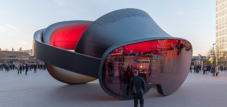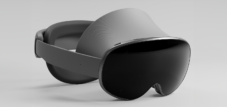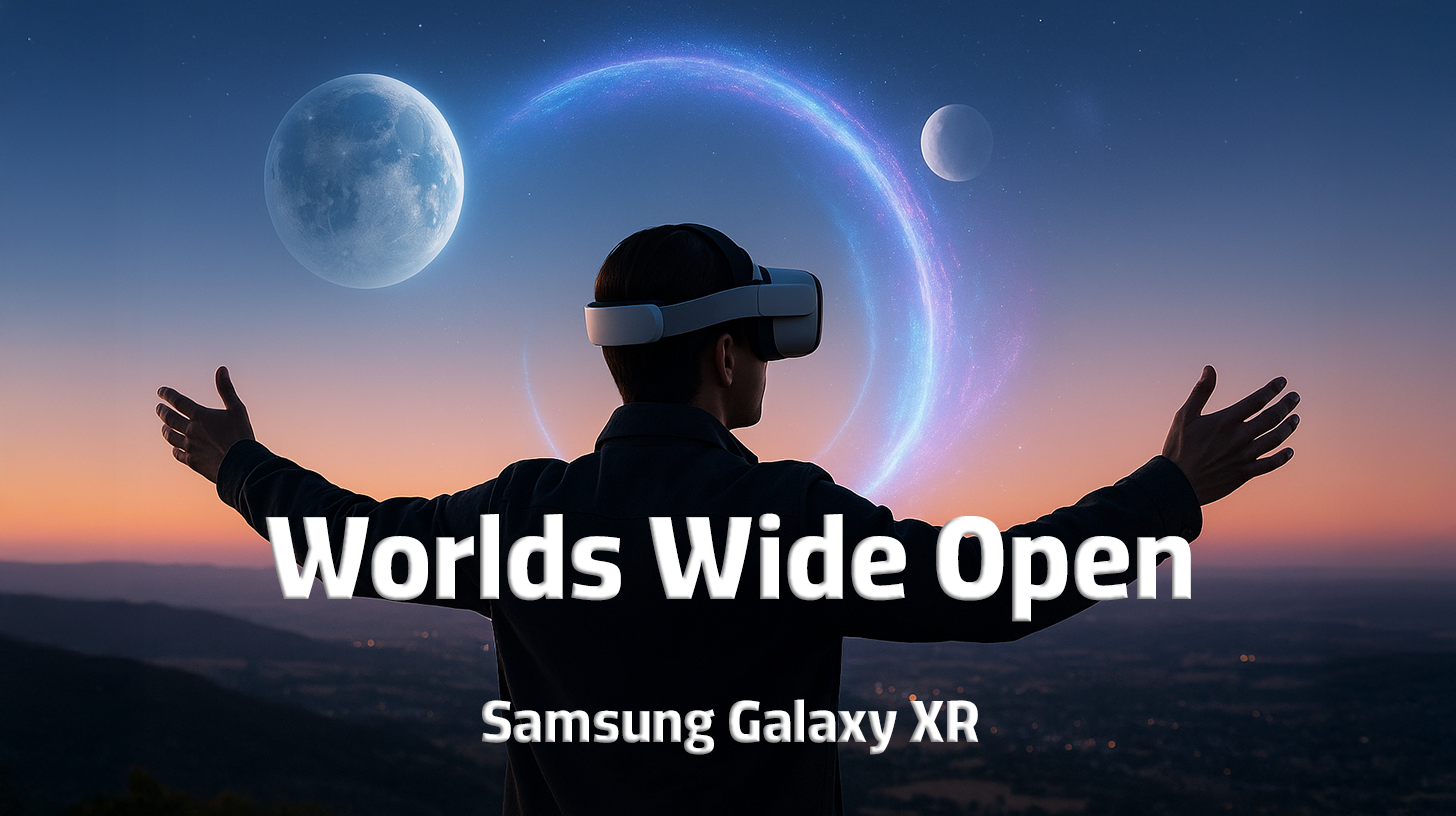
Samsung Galaxy XR | The XR event on October 22: Why is Samsung announcing the "Worlds Wide Open" event for Project Moohan? – Image: Xpert.Digital
The next big thing in mixed reality headsets? Samsung, Google, and Qualcomm are launching a new era with Android XR
Samsung Project Moohan and Android XR: The future of smart glasses? The beginning of the end for smartphones?
Samsung has announced a special Galaxy event titled "Worlds Wide Open" for October 22, 2025, at 4:00 AM Central European Summer Time. The South Korean technology company plans to officially unveil its long-awaited mixed-reality headset, Project Moohan, at the event. The event will be streamed live on Samsung's YouTube channel and marks a pivotal moment in the development of extended reality technologies.
The announcement comes at a strategically important time, as the market for XR devices is rapidly evolving. While Apple's Vision Pro failed to achieve resounding commercial success, smart glasses are poised to become the next major technological phenomenon. Samsung, with Project Moohan, is positioning itself as a serious competitor in this arena and aims to demonstrate its readiness to set new standards in immersive technologies.
Related to this:

What exactly is Project Moohan and what technology is behind it?
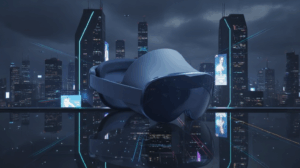
Project Moohan is the internal codename for Samsung's first mixed-reality headset, expected to launch as the Galaxy XR. The name Moohan is Korean for infinity, symbolizing the company's vision of limitless immersive experiences.
The headset is based on an impressive collaboration between three technology giants. Samsung provides the hardware expertise and display technology, Google contributes the Android XR operating system, and Qualcomm provides the necessary processing power with the Snapdragon XR2 Plus Gen 2 chip. This partnership combines the strengths of all three companies and creates an ecosystem that is both powerful and developer-friendly.
Project Moohan's technical specifications are impressive. The headset features two Sony micro-OLED displays with a 4K resolution per eye, totaling 29 million pixels. This surpasses the Apple Vision Pro, which operates at 23 million pixels. The displays achieve a pixel density of approximately 3,500 pixels per inch on a 1.03-inch panel for each eye and offer a 90Hz refresh rate.
What hardware features distinguish the Samsung headset?
Project Moohan's design clearly borrows from both Apple's Vision Pro and the Meta Quest Pro. The headset uses pancake lenses for a more compact design and integrates eye-tracking technology that can be used for user interface navigation, foveated rendering, and automatic lens spacing adjustment.
A key feature is its comparatively low weight of approximately 545 grams, which is significantly less than that of the Vision Pro. This advantage stems in part from the use of an external battery pack connected via a USB-C cable. This solution allows for better weight distribution and longer usage sessions. Another benefit is the compatibility with any standard USB-C battery pack, offering considerably more flexibility than proprietary solutions.
For interaction, the headset features multiple sensors for hand, eye, and voice control. Four infrared LEDs and AI-powered cameras enable precise tracking of eye movements and pupil positions. Hand control is achieved through strategically placed sensors that accurately detect hand gestures. In addition, multiple microphones are integrated to recognize speech patterns and enable natural voice control.
The headset also features a detachable magnetic light shield that can be removed for full immersion in virtual reality experiences or for greater presence in mixed reality applications. The flexible head strap is adjustable for a comfortable fit, even during extended use.
What makes Android XR so special and how does it differ from other platforms?
Android XR is a completely new operating system that Google developed specifically for extended reality devices. Created in collaboration with Samsung and Qualcomm, it's designed to scale across various form factors, from bulky headsets to slim smart glasses. The platform places artificial intelligence at the heart of immersive everyday experiences.
A fundamental difference from closed systems like Apple's VisionOS is the openness of Android XR. The platform is based on established standards such as OpenXR and WebXR, which allows developers to more easily port their applications across platforms. Many MetaQuest games should theoretically be relatively easy to transfer to Android XR headsets.
Modularity is another key feature of Android XR. Manufacturers and developers can integrate precisely the components they need and omit what is unnecessary. They can add their preferred Gemini model, implement eye and hand tracking, and allow users to seamlessly switch between virtual and mixed reality.
The platform already supports familiar Android development tools such as Android Studio, ARCore, Jetpack Compose, and Unity. Most Android apps are automatically made available on Android XR without requiring any additional development effort. Developers simply need to release their apps for XR, and they can be displayed as floating windows in virtual space.
What role does Gemini AI play in the Android XR experience?
Google's AI assistant Gemini is at the very heart of the Android XR experience. This multimodal AI simultaneously processes speech, gaze direction, and gestures, thereby understanding the context of the environment and responding accordingly. Users can ask Gemini anything they see while wearing the headset, and the AI can provide information, including how to interact with objects in mixed reality.
Gemini enables natural language commands to control the user interface or ask context-related questions about what is seen, whether in the real world or in XR applications. With Gemini Live's conversational capabilities, users can engage in natural dialogues and gain AI-powered insights into their environment.
The AI integration goes beyond simple voice commands. For example, Gemini can automatically recognize what's in the refrigerator and suggest suitable recipes. When traveling, the AI can translate restaurant menus in real time. The functionality is continuously expanding and aims to make the glasses a true everyday assistant.
Related to this:
Which applications and apps will be available on Android XR?
The application ecosystem for Android XR promises to be exceptionally diverse. Google has already announced that popular services like YouTube, Google TV, Google Photos, Google Maps Immersive View, Google Meet, and Chrome will be specifically optimized for the XR platform. The integration of Circle to Search allows users to circle anything they see and instantly search for it, whether it's digitally displayed or exists in the real world around them.
For entertainment, the platform offers support for 2D, 180-degree, and 360-degree video content. Google has even built special tricks into the software that use onboard AI to give regular 2D videos a sense of 3D depth. The display quality on Project Moohan is reportedly so clear that 4K nature videos on YouTube allow users to virtually immerse themselves in the landscapes.
In the gaming sector, titles like Les Mills XR BODYCOMBAT have already been announced, making the headset a great way to work out at home. Google is collaborating with the developers of Job Simulator to give its headsets a unique personality, including a new onboarding game.
For professional applications, users can create virtual workspaces or manipulate 3D models in the real-world environment. The platform allows users to run multiple apps simultaneously and freely position them within the virtual space. Developers such as MLB, Calm, and Adobe gained early access and are developing apps for Android XR.
How do smart glasses differ from VR headsets?
The distinction between smart glasses and VR headsets is fundamental to understanding the different approaches in XR technology. Smart glasses focus on integrating digital information into the physical world. They never completely remove the user from the real world, but rather overlay information onto the user's visible environment.
Smart glasses are generally much slimmer and lighter than VR headsets. They are designed for all-day use and often look like regular glasses. This makes them far more ergonomic and comfortable for extended wear. However, this also means they typically have less processing power and are unable to render complex virtual environments with the same level of detail as headsets.
VR headsets like Project Moohan, on the other hand, offer different levels of immersion. With a VR headset, you can decide how deeply you want to immerse yourself in a scenario. You can maintain a view of the real environment or fully immerse yourself in a virtual reality space. Some devices even offer very precise control over these gradations.
The use cases also differ considerably. Smart glasses are ideal for real-time information, support, and guidance. In the industrial metaverse, they can help engineers troubleshoot problems, build products, and collaborate with colleagues, regardless of their location. VR headsets, in addition to collaboration and communication, offer excellent opportunities for entertainment, complete virtual worlds, and access to rich, unique simulations.
How successful are smart glasses already on the market?
The smart glasses market is currently experiencing explosive growth, far exceeding initial optimistic forecasts. After a prolonged period of stagnation and the failure of predecessor models like Google Glass, smart glasses are finally reaching the mass market. The figures speak for themselves: the market recorded an impressive 110 percent growth in the first half of 2025, while global revenue growth of 210 percent was already reported for 2024.
Ray-Ban Meta Smart Glasses have proven to be a breakthrough product. Since their launch in October 2023, over 2 million units have been sold, and sales tripled in the first half of 2025 compared to the same period of the previous year. They are the best-selling eyewear collection in 60 percent of Ray-Ban stores in Europe, Africa, and the Middle East.
Meta CEO Mark Zuckerberg has admitted that demand still exceeds their production capacity. The success is particularly remarkable given that the glasses are very affordable at $299 and look like regular Ray-Ban sunglasses. The fact that they are also selling well in Europe, where Meta AI isn't even available yet, shows that the basic features like the camera, speakers, and hands-free calling are already proving popular.
The market size for smart glasses is estimated to reach various values between $878.8 million and $5.98 billion in 2024, with discrepancies attributed to differing product category definitions. Market researchers forecast values between $4.13 billion and $8.26 billion for 2030. Average annual growth rates range from 27.3 to 29.4 percent, with some analysts even predicting growth rates exceeding 60 percent by 2029.
Was the Apple Vision Pro a commercial success?
The Apple Vision Pro is frequently described as a flop in media reports, but this assessment needs to be considered more nuanced. By the end of 2024, the headset will have sold approximately 500,000 units. For comparison, this figure is almost exactly the same as the revenue Apple generated with the iPhone in 2008, in the first full calendar year after its launch.
While 500,000 units may seem small compared to current iPhone or Mac sales, it's impressive for a first, albeit expensive, foray into VR. For the first five months, the Vision Pro was only available in the US. In June 2024, Apple expanded sales to Australia, Canada, China, France, Germany, Hong Kong, Japan, Singapore, and the UK. It debuted in South Korea and the UAE in November.
According to IDC, Apple secured a 17 percent market share in terms of units sold in the first quarter of 2024, with 90,000 Vision Pro units sold, followed by 87,000 in the second quarter. However, sales jumped to 190,000 units in Q3 2024, representing a 211 percent increase over the launch quarter. Apple captured 9 percent of the AR and VR market in the third quarter of 2024, which is remarkable given the Vision Pro's price point, which is 7 to 11 times higher than that of leading headsets like the MetaQuest 3 and 3S.
The Vision Pro's main problem remains its high retail price of $3,500, which prevents wider acceptance among the mainstream audience. Nevertheless, the Apple Vision Pro is selling quite well for an AR/VR device. International expansion has offset declining sales in the US, where sales had fallen by 75 percent through August 2024.
🗒️ Xpert.Digital: A pioneer in the field of Extended and Augmented Reality

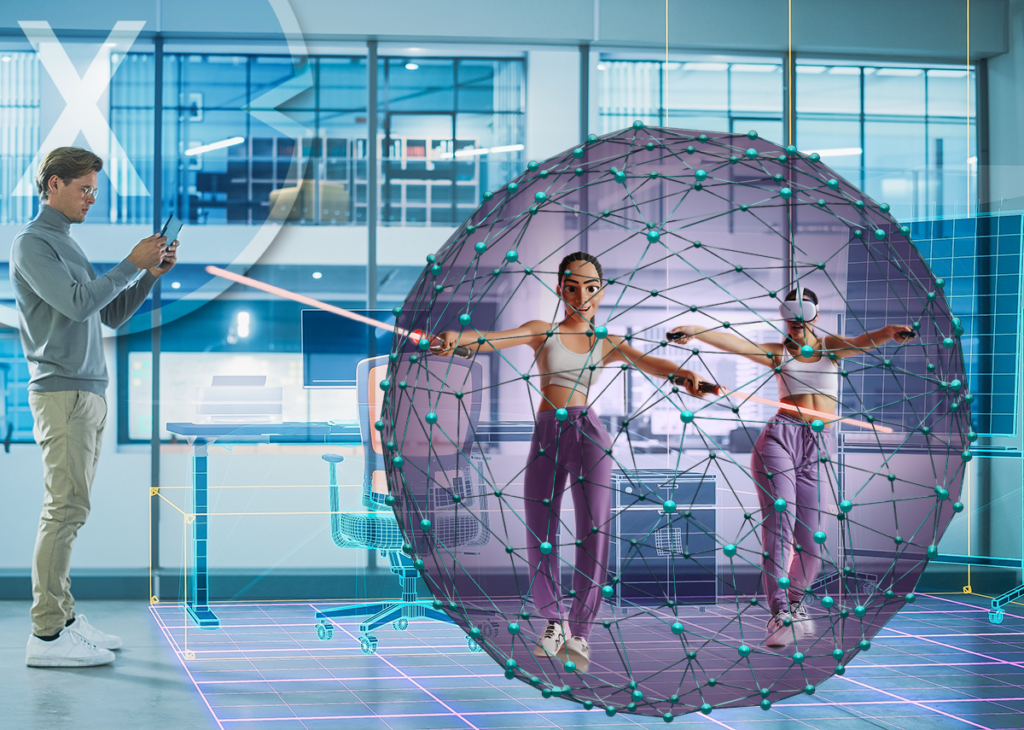
Finding the right Metaverse agency, planning office, or consulting firm - Image: Xpert.Digital
🗒️ Finding the right Metaverse agency, planning office, or consulting firm – Search and search: Top Ten Tips for Consulting & Planning
More information here:
Galaxy strategy: How Samsung is integrating Project Moohan into the ecosystem – These partners will determine the next XR generation
What pricing strategy is Samsung pursuing with Project Moohan?
Samsung is strategically positioning Project Moohan between the more affordable MetaQuest headsets and the high-end Apple Vision Pro. Reports from South Korea suggest a price between 2.5 and 4 million won, which is roughly equivalent to $1,800 to $2,900. Most sources anticipate a starting price around $1,800, which is significantly lower than the Vision Pro but still places it in the premium segment.
This pricing strategy is clever. Samsung undercuts Apple by more than a thousand dollars while offering comparable specifications and better AI integration. At the same time, Samsung remains significantly above the MetaQuest line, which starts at $499. The bet is clear: Samsung wants to win over enterprise customers and early adopters who want Vision Pro functionality but don't want to pay the Vision Pro price.
Samsung is reportedly planning a market launch of approximately 100,000 units. This limited initial run aligns with a measured risk strategy. The initial availability in South Korea and potentially China will allow Samsung to study real-world user behavior, identify durability issues, and optimize manufacturing before a wider release.
Interestingly, Samsung is offering reservations on its event website with a $100 credit that can be used towards the purchase of qualifying Galaxy products. This suggests that Samsung intends to position the headset as part of its broader Galaxy ecosystem.
Related to this:
- Samsung Android XR headset Project Moohan premieres at Mobile World Congress (MWC) 2025 in Barcelona
What role does Qualcomm play in the development of Android XR?
Qualcomm plays a central role in the Android XR ecosystem as the hardware platform provider. The Snapdragon XR2 Plus Gen 2 is the core of Project Moohan and was specifically designed for premium mixed reality applications. This chip is a performance-enhanced variant of the XR2 Gen 2 used in MetaQuest 3.
The technical improvements are remarkable. Compared to the standard XR2 Gen 2, the Plus version offers a 15 percent higher GPU clock speed and a 20 percent higher CPU clock speed. The GPU builds upon the foundations of the Snapdragon XR2 Gen 2 and delivers 2.5 times better GPU performance compared to the first generation. This additional GPU power can be used to enhance the visual quality of apps and games, or to deliver similar visuals to Gen 1 with up to 50 percent energy savings.
A key feature is support for up to 4.3K resolution per eye at 90 frames per second or 3.7K per eye at 120 Hz. This is a significant improvement over the standard XR2 Gen 2, which supports up to 3.1K per eye at 90 Hz or 2.7K per eye at 120 Hz. For demanding mixed reality applications, the chip supports 12 or more simultaneous cameras, compared to 10 for the standard chip.
The dedicated hardware-accelerated computer vision block enables enhanced, power-efficient, and highly accurate perception algorithms, including head tracking, 3D reconstruction, and more. Perception features include hand, head, controller, facial expression, depth estimation, and 3D reconstruction for intuitive interactions. The hardware-accelerated camera passthrough reduces end-to-end latency to approximately 12 milliseconds.
Related to this:

Which partners are working on Android XR devices?
In addition to Samsung as its first hardware partner, Google has announced a number of other companies that will develop Android XR devices. Sony, Lynx, and Xreal were explicitly named as partners who intend to bring hardware based on Android XR to market.
In the smart glasses sector, Google has announced that Gentle Monster and Warby Parker will be the first eyewear partners to develop glasses running Android XR. Google also plans to collaborate with Kering Eyewear and other partners in the future to create even more options for users. These partnerships are strategically important as they bring design expertise and retail reach to the ecosystem.
Xreal has announced Project Aura, a lightweight XR device that will join the Android XR ecosystem. This diversity of manufacturers and form factors aligns with Google's vision that there is no one-size-fits-all solution for XR and that users will use different devices throughout the day.
Magic Leap is another important partner. Google has announced that it will continue its partnership with Magic Leap, which was announced in May, bringing additional expertise in the field of augmented reality to the ecosystem.
What does the future of VR and smart glasses look like?
The future of VR and smart glasses promises transformative changes in how we interact with technology. Several key trends are emerging for the period from 2026 to 2030 that will shape the industry.
Hyper-realistic immersion is becoming the standard. By 2030, hyper-realism in VR is expected to be commonplace. Ultra-high-resolution displays with over 8K resolution per eye, using MicroLED and OLED-on-Silicon technologies, will deliver vibrant visuals without pixelation. Advanced haptic feedback through suits and gloves will simulate real sensations such as touch, texture, and temperature. Multi-sensory integration with innovations in smell and taste technologies will further enhance immersive experiences.
The integration of artificial intelligence and machine learning will significantly expand the functionality of XR devices. AI could be used to track user behavior, improve content recommendations, and personalize the VR experience. Machine learning algorithms can optimize the VR system for better performance, reduce latency, and improve overall user satisfaction.
The trend toward wireless and standalone devices will continue. With the advent of 5G technology, it's possible that future XR headsets will operate completely wirelessly, eliminating the need for bulky cables and external computers. Standalone devices like the MetaQuest are already paving the way for wireless, high-quality VR experiences.
Forecasts predict that more than 60 million XR devices could be sold annually by 2035, with a value of $47.1 billion. By 2045, this number could rise to over 200 million devices, valued at $217 billion. For comparison, 1.2 billion smartphones, valued at $609 billion, were shipped in 2024.
Which application areas will XR technologies transform?
Extended reality technologies have the potential to fundamentally transform numerous industries. In the healthcare sector, VR and mixed reality headsets are already being used to enhance training opportunities and enable outstanding patient care. Medical training institutions are using Meta Quest headsets along with custom applications to increase training effectiveness and improve team productivity.
AR glasses support complex surgeries by displaying medical data and anatomical models. Telemedicine applications enable remote patient care, allowing specialists to guide on-site staff. Organizations like LifeArc are using virtual reality to revolutionize drug development and design.
In the manufacturing industry, smart glasses enable the digitization of experienced employees' knowledge. Assembly instructions, quality checks, and safety information can be transmitted directly, which is particularly important when skilled workers are scarce. Virtual reality applications complement this by enabling safe training on virtual systems.
The automotive industry uses AR glasses in both development and production. Designers can virtually inspect full-size vehicle models, while assembly workers receive work instructions via the glasses. These applications justify higher investments and specialized hardware.
In education, XR enables the creation of interactive learning environments. VR is increasingly used in schools and universities to illustrate complex concepts. Students can experience historical events, observe scientific phenomena, or take virtual field trips.
What does the Android XR platform mean for developers?
For developers, Android XR offers exceptional opportunities and a comparatively low entry point. The platform is designed to meet developers where they already are. If a company is already using Android phones or tablets, or if the development team is familiar with common tools like Unity or OpenXR, the path to successful Android XR adoption is already paved.
The Android XR Software Development Kit supports users with a range of development tools, from WebXR and Android Studio to any 3D tools of their choice, from Blender to Maya. Developers gain access to pre-built code labs, frameworks, and libraries for spatial computing experiences. This means they don't have to start from scratch and can continue to publish their Android apps on the Google Play Store.
Most Android apps are compatible with Android XR without any additional development effort. Android XR handles device interaction and lifecycle management, allowing developers to focus on innovation. To differentiate an existing Compose app, developers can choose to automatically spatialize Material Design components and use Compose for adaptive layouts in XR.
The platform supports a variety of development approaches. Jetpack XR allows developers to use familiar Android APIs and frameworks to reduce the learning curve and develop for a range of XR devices. Unity offers full access to content production capabilities and makes it easy to port apps from other platforms to Android XR. OpenXR streamlines development with its royalty-free open standard, and WebXR harnesses the power of web technologies to create XR experiences directly in a browser.
How will competition develop in the XR market?
Competition in the XR market is intensifying rapidly, with several major technology companies vying for market share. Meta's success with Ray-Ban smart glasses has not gone unnoticed. Both Apple and Google are reportedly working on their own smart glasses, while Meta is further expanding its portfolio with rumored high-fashion AI glasses in partnership with Prada.
This round of competition validates what many in the XR industry have suspected: smart glasses, not headsets, could be the breakthrough form factor for mainstream adoption. For business leaders, this competition is good news. More players mean better products, competitive pricing, and faster innovation cycles.
Meta currently holds the largest market share in the XR space. IDC found that over 70 percent of global AR and VR headset shipments in 2024 were attributed to Meta. With Ray-Ban Meta glasses already having sold 2 million units and plans to reach 10 million annually by 2026, Meta is well-positioned.
Apple is taking a different approach with the Vision Pro, which focuses on premium spatial computing. Reports suggest that Apple may be shifting its attention to smart glasses as the likely next step in its XR roadmap, with a planned 2026 launch focused on acoustic interaction and Apple Intelligence.
Samsung is strategically positioning itself between these extremes with Android XR. The open Android approach could appeal to both developers and consumers who desire greater freedom in software and accessories. The partnership with Google and Qualcomm creates an advantage that Apple's closed approach cannot easily replicate.
Related to this:

What can we expect at the Samsung event on October 22nd?
The Samsung Galaxy Event Worlds Wide Open on October 22nd at 4 AM CEST promises to be a pivotal moment for the XR industry. Samsung will officially unveil Project Moohan, including the final product name, full technical specifications, pricing, and availability information.
In addition to the headset itself, Samsung is expected to unveil VR motion controllers, which have not yet been revealed. These controllers will likely offer precise input options for games and applications, going beyond hand and eye tracking.
Android XR will play a central role at the event. Google will likely demonstrate the platform's latest features and capabilities, including the deep integration of Gemini AI. Partnerships with app developers and content providers are also expected to be announced to strengthen the initial ecosystem.
The focus will be on multimodal AI capabilities. Samsung describes the event as the beginning of a new era of AI-native devices, emphasizing the seamless connection between everyday utility and immersive new experiences. The demonstration will showcase how natural interactions through voice, gestures, and gaze enable the most intuitive way to use the devices.
For viewers in different time zones: The event begins at 10 p.m. ET on October 21, which corresponds to 4 a.m. CEST on October 22, 11 a.m. Japan Time on October 22, and 7:30 a.m. Indian Standard Time on October 22. The livestream will be available on the Samsung Newsroom website and Samsung's official YouTube channel.
The announcement of Project Moohan marks the beginning of a new era for extended reality, where open platforms, powerful AI integration, and diverse hardware options converge to make immersive technologies accessible to millions. Whether Samsung will succeed with this vision remains to be seen in the coming months, but the stage is set for an exciting competition for the future of human-computer interaction.
Your global marketing and business development partner
☑️ Our business language is English or German
☑️ NEW: Correspondence in your native language!

Konrad Wolfenstein
I and my team are happy to be available to you as your personal advisor.
You can contact me by filling out the contact form here wolfenstein@xpert.digital:or simply call me at +49 7348 4088 965. My email address is
I'm looking forward to our joint project.
☑️ SME support in strategy, consulting, planning and implementation
☑️ Creation or realignment of the digital strategy and digitization
☑️ Expansion and optimization of international sales processes
☑️ Global & Digital B2B trading platforms
☑️ Pioneer Business Development / Marketing / PR / Trade Fairs
Our global industry and economic expertise in business development, sales and marketing

Our global industry and economic expertise in business development, sales and marketing - Image: Xpert.Digital
Industry focus areas: B2B, digitalization (from AI to XR), mechanical engineering, logistics, renewable energies and industry
More information here:
A thematic hub offering insights and expertise:
- Knowledge platform covering global and regional economies, innovation and industry-specific trends
- A collection of analyses, insights, and background information from our key areas of focus
- A place for expertise and information on current developments in business and technology
- A hub for companies seeking information on markets, digitalization, and industry innovations