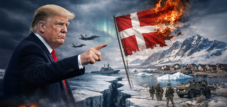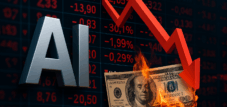
World in a state of emergency – the underestimated hotspots of the week from January 12th to 16th, 2026 – Image: Xpert.Digital
While everyone is talking about Greenland, the really dangerous fault lines are shifting elsewhere
1. Iran on the brink of escalation – and the geopolitical risk premium returns
In the week of January 12-16, 2026, Iran has become the most dangerous geopolitical flashpoint – with significantly greater global implications than the media-driven but symbolic Greenland debate would suggest. After roughly two weeks of mass protests against the regime, estimates indicate well over 500, and in some cases nearly 2,000, dead, with over 10,000 people arrested. Security forces are using live ammunition, and hospitals are reporting hundreds of eye injuries from gunfire against demonstrators.
In parallel, the US government is intensifying the pressure: President Trump is openly threatening military strikes and cyberattacks, announcing punitive tariffs of 25 percent on countries that continue to do business with Iran, and deploying an aircraft carrier strike group toward the Middle East. Iran is responding with temporary airspace closures, portraying US bases in the Gulf as legitimate targets, and warning neighboring states that they could be drawn into a potential exchange of fire. Several Western countries are urging their citizens to leave Iran; New Zealand is temporarily closing its embassy in Tehran.
Economically, this complex situation has multiple effects. First, it increases the political risk premium across all asset classes: Gold climbs to new record highs of around $4,600 per ounce during this period, while the dollar index weakens – both clear signals that investors view the US policy mix of geopolitical aggression and institutional erosion with growing skepticism. Second, despite the tensions with Iran, oil prices remain surprisingly subdued because OPEC+ is simultaneously extending its supply cuts, and the EIA expects a structurally well-supplied market in 2026 with an average Brent price of around $56 per barrel – about 19 percent lower than in 2025. Markets are thus pricing in the risk that lies more in uncontrollable escalation and financial market shocks than in a classic oil supply shock.
Third, the conflict is shifting the regional order: Qatar, Saudi Arabia, European states, and India are adjusting flight routes, troop presence, and security protocols, which impacts insurance premiums, freight costs, and confidence indicators in trade and investment. For companies with supply chains through the Gulf region, operational uncertainty is increasing; at the same time, pressure is mounting on Europe to further decouple energy supplies and payment systems from crisis regions.
2. Venezuela after the military strike – resource policy between regime change and legal uncertainty
Just a few weeks after the US military strike that led to the capture of Venezuelan President Nicolás Maduro in early January, diplomatic follow-up actions dominated the news during the week under consideration: Venezuelan opposition leader Machado traveled to Washington, met with the US president, and sought political and economic support for a transition. At the same time, the CIA director traveled to Venezuela to discuss security and energy issues with the new leadership.
From an economic perspective, this opens up two opposing scenarios. On the one hand, a political transition could bring additional oil capacity to the market in the medium term if sanctions are eased and investments in the dilapidated infrastructure become possible again. This would exacerbate the supply glut already anticipated by the EIA, which is pushing Brent prices into the mid-$50 range and causing US gasoline prices to fall to an average of around $2.90 per gallon in 2026.
On the other hand, the path to this goal is fraught with considerable risks: The military removal of a head of state by the US increases perceived political volatility worldwide, particularly in resource-rich emerging economies. Investors must anticipate the possibility that future governments will renegotiate contracts, question foreign investment, or be highly selective in granting contracts in exchange for political guarantees. For Latin America as a whole – from Argentina to Colombia – this creates a tension between potentially greater export opportunities and growing dependence on shifting political constellations in Washington.
3. Gaza between ceasefire and humanitarian catastrophe
This week's attention is focused not only on Iran, but also on the "cold peace" in the Gaza Strip. While the US government announces a second phase of the ceasefire and introduces a kind of "administrative council" for the post-war order, the military strikes continue, albeit with a change in intensity. A severe winter storm collapses tents, floods makeshift shelters, and claims additional lives; at the same time, large parts of the infrastructure remain destroyed, and the UN estimates that over 60 million tons of rubble will need to be cleared in the long term.
The economic dimension extends far beyond Gaza. First, the conflict is tying up significant political and fiscal resources in the US and Europe, overshadowing other priorities—from global poverty reduction to climate finance. Second, reconstruction is becoming a multi-billion-dollar project, demanding public funds, development banks, and private investors alike. At a time when interest rates remain high and fiscal discipline is politically difficult to enforce, Gaza is competing with other major projects for scarce resources—such as the energy transition, digital infrastructure, and resettlement programs in climate-vulnerable regions. Third, the conflict is exacerbating political polarization in Western societies, thereby impairing the ability to consistently implement long-term foreign and economic policy strategies.
4. Global “Unrest Economy”: Iran, Uganda, Sudan, Ukraine and natural disasters
This week vividly demonstrates that the global economy is not defined by a single major conflict, but rather by a multitude of interconnected crises. In Sudan, an RSF drone attack on an army base kills 27 people; the government returns to Khartoum after years of temporary relocation, despite the precarious security situation. In Uganda, protests against President Museveni escalate, seven people die, and the opposition leader is arrested – yet another example of how fragile states can descend into violence just before elections.
In Ukraine, massive drone and missile attacks on energy infrastructure are leading to further deaths and long-term damage to electricity and heating networks; 2025 was already the deadliest year for civilians since the start of the invasion in 2022. This form of "chronic war economy" ties up production capacities, forces states into high levels of military and reconstruction debt, and shifts investment flows – for example, towards the arms industry and critical infrastructure.
Added to this are climate-related disasters: Severe floods kill at least 100 people and destroy thousands of homes in Mozambique, South Africa, and Zimbabwe, while in Australia, nearly 900,000 acres of forest and farmland burn. Such events impact food prices, insurance premiums, migration patterns, and public finances. From an economic perspective, climate risk is becoming less of an abstract future factor and more of an ongoing cost on the balance sheets of governments, businesses, and households.
5. Attack on Fed independence – systemic risks from the Powell investigations
One of the most economically significant, but politically highly sensitive, developments of the week is the criminal investigation against US Federal Reserve Chairman Jerome Powell. The Justice Department has served grand jury subpoenas on the Fed chairman and the institution; the charges formally revolve around statements regarding multi-billion-dollar renovations of the Fed headquarters, but are clearly connected to the president's repeated attacks on the central bank's interest rate policy.
Economically, what's at stake here isn't a construction project, but the independence of the world's most important central bank. Several observers see this as a systematic use of the judicial system to discipline undesirable decision-makers – following previous, unsuccessful legal proceedings against former FBI Director Comey and New York Attorney General Letitia James. The capital markets are reacting with mixed reactions
– US stocks are fluctuating but remaining near their highs; the major indices are experiencing only moderate declines or slight rebounds.
– Yields on longer-term US Treasury bonds are rising relative to shorter maturities, and the yield curve is steepening – a pattern consistent with a premium for political and inflation risks.
– Gold is reaching new record highs, while the dollar is weakening against a basket of currencies.
The central uncertainty: If the Fed has to anticipate future political interventions, it might be tempted to address inflation risks too late or to loosen monetary policy too aggressively during an economic downturn. Both would undermine price stability and the credibility of the US currency in the long run. For Europe and other regions, this means the need to hedge more effectively against US policy risks – for example, by diversifying currency reserves, strengthening the capital markets union, or expanding alternative benchmarks for global financial agreements.
Our global industry and economic expertise in business development, sales and marketing


Our global industry and economic expertise in business development, sales and marketing - Image: Xpert.Digital
Industry focus areas: B2B, digitalization (from AI to XR), mechanical engineering, logistics, renewable energies and industry
More information here:
A thematic hub offering insights and expertise:
- Knowledge platform covering global and regional economies, innovation and industry-specific trends
- A collection of analyses, insights, and background information from our key areas of focus
- A place for expertise and information on current developments in business and technology
- A hub for companies seeking information on markets, digitalization, and industry innovations
Forget the headlines: These three invisible forces are currently shaping our economy
6. Markets between AI euphoria, interest rate reality and energy prices
Despite these political tensions, the financial markets exhibited a remarkable volatility during the week under review: On the one hand, many stock exchanges traded near all-time highs, while on the other hand, volatility was significantly heightened by geopolitical and institutional shocks. In the US, the major indices temporarily declined but recovered over the course of the week; Europe even reached new record highs, while Asia's leading indices were driven by tech and healthcare stocks.
In the commodities sector, structural trends are overshadowing short-term headlines. OPEC+ has reaffirmed its November 2025 decision to pause production cuts for the entire first quarter of 2026. Eight core countries—including Saudi Arabia, Russia, and the United Arab Emirates—are keeping their output constant, signaling that they prioritize price stability over market share gains. Meanwhile, the EIA forecasts an average Brent price of around US$56 for 2026 and expects global oil production to slightly exceed demand; inventories are projected to rise further in 2026 and 2027.
For end consumers in the US, this is expected to mean noticeably lower gasoline prices: Average prices are projected to be just over $2.90 per gallon in 2026, around 6 percent less than in 2025. At the same time, the EIA forecasts an average of just under $3.50 per million Btu for natural gas at the Henry Hub in 2026, before prices rise significantly in 2027 as a result of increased LNG exports and higher electricity demand.
During the second week of January, electricity prices rose in almost all major markets across Europe; weekly average prices frequently exceeded €100 per megawatt-hour, with peaks exceeding €150 in Germany. This increase was driven by high demand, colder temperatures, temporarily weaker wind and solar production, and a further rise in CO₂ certificate prices to nearly €90 per ton for contracts expiring in 2026.
This combination of falling fossil fuel prices globally, continued high European electricity and CO₂ costs, and record gold prices characterizes a transitional economy: The classic energy price shock is giving way to a structural burden from climate policy and grid bottlenecks, while geopolitical uncertainty and institutional erosion in the US are having an effect more through risk premiums in financial markets than through oil prices.
7. EU-Mercosur: a quiet but strategic quantum leap in world trade
Beyond the daily crises, a trade policy milestone was reached this week, the long-term economic significance of which is likely to be considerably greater than many a spectacular headline. After more than 25 years of negotiations, the EU member states agreed on January 9 to sign the partnership agreement with the Mercosur bloc (Argentina, Brazil, Paraguay, Uruguay); the formal signing is scheduled for January 17.
The agreement creates a free trade area encompassing around 700 million people and nearly 30 percent of global economic output, gradually eliminates more than 90 percent of tariffs in bilateral trade, and is intended to provide European companies, particularly in the automotive, machinery, chemical, and pharmaceutical sectors, with significantly improved market access. To mitigate agricultural policy concerns in Europe, strict safeguard clauses, limited quotas for sensitive products such as beef and sugar, and additional agricultural funds of €45 billion were prioritized.
Geostrategically, the deal is a response to the "weaponization" of trade and dependencies: While the US pursues confrontational tariff policies and China expands its spheres of influence through infrastructure investments, the EU is attempting to diversify supply chains and secure access to raw materials – from agricultural commodities to critical metals – through comprehensive, rules-based trade agreements. Conversely, Mercosur countries gain access to a large sales market under stricter environmental and social standards, which could incentivize more sustainable production methods in the medium term.
In the short term, the agreement may trigger little market movement; however, in the medium term, it will influence investment decisions in industry, logistics, and agriculture on both sides of the Atlantic. Combined with the EU's existing free trade agreements—for example, with Canada, Japan, or Mexico—the global trade structure is gradually shifting away from purely bilateral major-power agreements toward dense, multilateral networks.
8. AI and Semiconductors: From Hype to Physical Infrastructure
Parallel to the political upheavals, a fundamental economic trend continues: the AI-driven restructuring of the semiconductor and infrastructure industries. According to the industry association WSTS, the global semiconductor market is expected to reach around US$975 billion in 2026 – an increase of more than 25 percent compared to 2025; Bank of America analysts even consider an early surpassing of the US$1 trillion mark possible. Logic and memory chips, in particular, are growing by over 30 percent year-on-year, driven by the demand for high-bandwidth memory (HBM) and specialized AI processors.
This is reflected on the stock markets in record highs for semiconductor indices and massive investment plans: SK Hynix is planning investments in the tens of billions for advanced packaging technologies alone, while foundry heavyweights like TSMC report that their 2-nanometer capacities are largely sold out until 2027. At the same time, observers are warning of DRAM shortages for the automotive industry because manufacturers are prioritizing higher-margin data center contracts.
On the user side, headlines such as Apple's planned use of Google Gemini for a comprehensive Siri upgrade, OpenAI's expansion into health-related data apps, and multi-billion-dollar data center projects in the US illustrate how quickly AI is evolving from a demo to critical infrastructure. Governments are increasingly viewing data centers as strategic assets; network investments, water rights, and local permitting processes are becoming bottlenecks in scaling.
Regulatory action is also being implemented by policymakers. The EU is specifying the implementation of the AI Act, which stipulates a risk-based approach with strict obligations for high-risk systems and transparency requirements for generative models. In the US, a patchwork of ambitious state laws is emerging (California, Texas, Colorado), which the White House intends to partially contain through a federal framework and potential preemption provisions. For companies, this means an increasingly complex compliance landscape in which the training, deployment, and marketing of AI systems must be aligned with several, sometimes conflicting, sets of rules.
Also noteworthy is a shift in investor sentiment: According to a recent BlackRock survey, only about 20 percent of surveyed clients see the major US tech companies as the most exciting opportunity to profit from the AI boom; 54 percent prefer energy providers and 37 percent infrastructure companies that supply the power and cooling needs of AI data centers. This shifts the AI trade away from "pure" software and platform stocks toward physical "pick-and-shovel" beneficiaries – grids, power plants, transformers, construction, and cooling technology. This is a clear indication that by 2026, the AI story will have reached the point where real-world capacity and grid stability, rather than just algorithms and marketing, will define the limits to growth.
9. Climate, energy and long-term structural shifts
While the political debate is dominated by acute crises, the parameters of climate and energy policy continue to shift in the background. 2026 is already considered a key year for the implementation of numerous climate plans: New climate and energy packages are coming into force in Europe, Germany and the EU are working on the concrete design of climate protection instruments, and in China, reaching the emissions peak in the current decade will be a litmus test for the credibility of its climate targets.
The early weeks of the year illustrate how closely physics and economics are now intertwined: Cold spells in Europe are driving up short-term electricity and gas demand, leading to higher regional prices despite ample global gas availability. At the same time, the price of CO₂ certificates is rising to new highs, further increasing the cost of fossil fuel-based power generation and sending investment signals toward renewable energies and flexibility options (storage, load management, hydrogen).
Major climate conferences and energy summits throughout the year – from the North Sea Summit and ECOSOC forums to COP31 – also set political frameworks for grid expansion, offshore wind, hydrogen corridors, and climate finance. This creates a dual challenge for companies in industry, logistics, and energy supply: In the short term, they must cope with volatile energy and CO₂ prices; in the long term, they face significant investments in decarbonization, efficiency, and resilience.
10. A world living a double life between structural change and perpetual crisis
The week of January 12-16, 2026, reveals a world in which the most vocal conflict—the Greenland dispute—is by no means the most economically significant. In the shadow of this symbolic debate, several profound trends are taking shape:
Firstly, the global “economic turmoil” is intensifying. From Iran to Sudan and Uganda, and on to Ukraine and Gaza, multiple hotspots are emerging, each influencing regional markets, trade routes and investment decisions, but collectively resulting in a new normal of high political volatility.
Secondly, key institutions of the global economy are coming under pressure. The criminal investigation against the Fed chairman, the use of the judiciary as a political tool, and the willingness to use military force to enforce economic and strategic goals are sending signals that could lead to long-term risk premiums on US assets, currency reserves, and global contracts.
Third, a profound structural transformation is taking place in energy, trade, and technology. OPEC+ and the EIA signal a well-supplied oil market with falling prices, while Europe grapples with high electricity and CO₂ costs as well as increasing climate ambitions. The EU-Mercosur partnership is quietly but significantly shifting the geographical center of global trade. At the same time, the AI and semiconductor industries are making the leap from experimental applications to hard infrastructure, reshaping capital flows, energy demand, and regulation.
This has a clear implication for economic decision-makers: those who focus solely on the symbolic conflicts in 2026 are overlooking the structural forces that will define the framework of the next decade – the erosion of institutional independence, the reorganization of trading blocs, the physical underpinning of the AI economy, and the gradual shift of climate risk into current cash flows. The real challenge lies in structuring business models and portfolios in such a way that they not only survive these ongoing crises but also strategically capitalize on the often unspectacular opportunities that arise from them.
Your global marketing and business development partner
☑️ Our business language is English or German
☑️ NEW: Correspondence in your native language!

Konrad Wolfenstein
I and my team are happy to be available to you as your personal advisor.
You can contact me by filling out the contact form here wolfenstein@xpert.digital:or simply call me at +49 7348 4088 965. My email address is
I'm looking forward to our joint project.
☑️ SME support in strategy, consulting, planning and implementation
☑️ Creation or realignment of the digital strategy and digitization
☑️ Expansion and optimization of international sales processes
☑️ Global & Digital B2B trading platforms
☑️ Pioneer Business Development / Marketing / PR / Trade Fairs
🎯🎯🎯 Benefit from Xpert.Digital's extensive, five-fold expertise in one comprehensive service package | BD, R&D, XR, PR & Digital Visibility Optimization

Benefit from Xpert.Digital's extensive, five-fold expertise in a comprehensive service package | R&D, XR, PR & Digital Visibility Optimization - Image: Xpert.Digital
Xpert.Digital possesses in-depth knowledge across various industries. This allows us to develop tailored strategies precisely aligned with the requirements and challenges of your specific market segment. By continuously analyzing market trends and monitoring industry developments, we can act proactively and offer innovative solutions. The combination of experience and expertise generates added value and provides our clients with a decisive competitive advantage.
More information here: