The bottleneck is at minus 25 degrees: Why frozen food logistics is becoming an economic stress test – creative image on the topic, with AI: Xpert.Digital
Over 60 percent staff turnover: When there's a shortage of personnel in the cold storage warehouse – what that means for the supply of goods
Automation in cold storage: When the investment really pays off
Why the Christmas season exposes the weaknesses of frozen food logistics
When demand for holiday meals surges during the Christmas season, frozen food must reach retailers reliably and on time. However, the most significant challenges often lie away from the sales floor: in cold storage facilities, seasonal order peaks collide with temperatures as low as minus 25 degrees Celsius, limited operating hours, and sometimes high staff turnover. This can restrict available capacity – especially when reliable delivery is crucial.
For companies, a key question therefore arises: How can the required performance be ensured sustainably and at reasonable costs? Automation can support demanding and difficult-to-plan processes, but it's not a guaranteed success. Whether it pays off depends on where the actual bottleneck lies, how reliably the technology operates under deep-freeze conditions, and whether it can be integrated into existing processes. The crucial factor is not just how many working hours are saved, but whether the warehouse can reliably deliver even under high capacity.
The success of the Christmas business is not only decided at the checkout, but also in places where hardly anyone wants to work
When grocery retailers prepare for the Christmas season, the focus is usually on product ranges, prices, sales promotions, and store deliveries. Less visible is a crucial prerequisite without which this planning can be futile: frozen food must be stored, moved, assembled, and delivered on time under demanding conditions. Whether holiday meals are actually available therefore depends not only on the customer's shopping experience or at the checkout, but also on the personnel and technical capacity of the freezer warehouses.
In these facilities, seasonal demand peaks meet working environments with temperatures as low as minus 25 degrees Celsius. Employees cannot remain there indefinitely. Therefore, shift schedules, shift changes, and the organizational safeguarding of work are integral parts of capacity planning. At the same time, staff turnover in deep-freeze warehouses can exceed 60 percent. Where a workforce changes frequently under such conditions, ensuring supply security becomes a significant business challenge.
The crucial question, therefore, is not simply how many people a warehouse can employ. It is how reliably a specific output can be achieved under extreme temperature conditions – and at what overall cost. Against this backdrop, automation is gaining importance. However, its economic benefit depends on whether it actually eliminates the critical bottlenecks, rather than merely upgrading individual work steps.
A high turnover rate is a warning sign, but not yet a complete diagnosis
A staff turnover rate exceeding 60 percent initially indicates significant instability. However, this figure alone is insufficient for a reliable economic assessment. Crucial factors include the time period under consideration, the calculation method, and which employee groups are included. Are only permanent employees counted, or also seasonal workers and employees of external service providers? Does it refer to voluntary resignations or all departures? Does the rate pertain to a single location or multiple companies?
Without these distinctions, a generally applicable industry average cannot be derived from the aforementioned figure. Nor should it be treated as an annual rate without further scrutiny. Nevertheless, its significance as a risk indicator remains: if a substantial portion of the workforce needs to be replaced within the period under consideration, this ties up resources for recruitment, training, and deployment planning on an ongoing basis.
The economic relevance also lies in the points at which employees leave the company. The loss of an experienced employee at a critical handover point can be more significant than several departures in easier-to-learn roles. A simple headcount obscures such differences. Therefore, for corporate management, not only the overall turnover rate is important, but also its distribution according to job function, experience, shift, and qualifications.
The figure should therefore be neither dramatized nor downplayed. It is an opportunity to systematically investigate the actual causes and consequential costs.
Cold weather changes the economic logic of personnel deployment
A deep-freeze warehouse is not simply an ordinary warehouse with a lower temperature. The cold affects the organization of work and thus the relationship between paid working time and actual available process output.
When employees need to be relieved after limited shifts, additional coordination is required. Handovers must be seamless, replacements must be ready on time, and routes between areas with different temperatures must be taken into account. The specific limits of their deployment depend on the respective working conditions and safety measures. From an economic perspective, it is crucial to understand that an employee's mere presence should not be equated with continuous availability for work in the deep-freeze area.
This can lead to an overestimation of available capacity when workforce planning simply adds up shift hours. A company needs not only a sufficient number of employees overall, but also a suitable distribution of their shifts. If there is no replacement, a work step can be interrupted even though, on paper, enough personnel hours were planned.
At the same time, a demanding work environment increases the importance of reliable processes. Unclear responsibilities, unnecessary steps, or poorly prepared tasks not only cause time losses but can also increase employee workload. Process quality and working conditions are therefore not separate issues; together, they influence the sustainable performance of a location.
Why the Christmas season exacerbates existing weaknesses
The Christmas season does not necessarily create new structural problems. Often, it reveals weaknesses that can still be compensated for in normal operations through time reserves, improvised solutions, or additional staffing.
When demand for holiday meals and other food items requiring refrigeration increases, larger quantities must be moved within narrow timeframes. At the same time, the importance of on-time delivery grows. An item that is only available after the intended sales occasion no longer fulfills the same economic function as one that is delivered promptly.
This creates double the pressure for cold storage facilities. They have to deliver more performance while simultaneously being able to afford fewer delays. If there are already difficulties with recruitment and employee retention, these will have particularly serious consequences during peak season. New employees have to be trained, while experienced staff are already under considerable strain.
The seasonal peak also affects coordination between warehousing, transport, and retail. A delay in order picking can jeopardize a vehicle's departure. Conversely, a late delivery can complicate stocking in a store. The bottleneck is therefore not limited to the frozen food sector.
Christmas is therefore less the cause than a stress test: it shows whether a warehouse only works under average conditions or remains reliable even under high utilization.
Actual staffing needs arise from performance, not from staffing plans
A common misconception is to derive staffing needs from the number of available jobs or from historical shift schedules. For sound planning, the starting point must instead be the required process output.
First, it is necessary to determine the quantities of goods that need to be processed and when. Next, it is essential to examine which work steps are required and how much productive time they will consume under the specific conditions. Only then can it be determined how many qualified employees, including relief staff and reasonable reserves, are needed.
This relationship changes, especially with high staff turnover. Two shifts with the same number of employees may not achieve the same output. Differences in experience, training, and process knowledge can lead to a fully staffed shift still falling short of its planned output.
In addition, there is the need for onboarding new employees. Those undergoing training require support. This time is initially unavailable to experienced employees for other tasks. Therefore, the short-term capacity gain from additional hires may be smaller than the sheer number of new hires would suggest.
A sound staffing plan therefore takes into account not only attendance, but also qualifications, availability, and training level. Only this combination makes personnel planning an economically viable capacity calculation.
The hidden costs of frequent staff turnover
The immediately visible costs of employee turnover are usually relatively easy to quantify: job postings, selection interviews, administrative processing, and onboarding. However, the less obvious consequences are also economically significant.
When experienced employees leave a company, knowledge about processes, specific features, and recurring issues is lost. New employees have to acquire this knowledge. In the meantime, processing can slow down, while queries and corrections increase. Managers and experienced colleagues take on additional coordination tasks.
A complete cost calculation therefore requires combining several cost levels: the direct costs of staff turnover, the temporarily reduced output, the additional support required, and potential consequential costs arising from delays or errors. It is crucial to ensure that the same effects are not counted multiple times.
The situation becomes particularly problematic when high employee turnover and high workload coincide. Then, not only are there no trained staff, but there's also no time to properly introduce new employees to their tasks.
A sound personnel strategy, therefore, does not evaluate employee retention solely based on additional wage costs. It compares these expenditures with the avoidable costs of unstable staffing. A seemingly inexpensive job can become costly if it constantly needs to be filled.
Why a single disruption can affect the entire delivery performance
The efficiency of a warehouse is not the average of all processes, but is determined by the limiting factors at each stage. A well-functioning receiving department is only of limited use if order picking fails to provide the required quantities on time. Similarly, rapid order processing is of little use if loading is stalled.
In deep-freeze operations, staff availability at individual stations can therefore have a disproportionately large impact. If a qualified worker is missing at a critical workstation, queues may form in upstream areas and downstream processes may experience downstream downstream downstream processes.
As capacity utilization increases, such effects become harder to mitigate. Time reserves shrink while additional orders continue to arrive. A small backlog can therefore persist for several processing steps.
This has an important consequence for management: not every additional worker and not every automated function improves overall performance to the same extent. The crucial factor is whether the measure alleviates the actual bottleneck.
Those who evaluate investments solely based on locally saved working time may therefore arrive at incorrect priorities. A project with limited direct personnel savings can be more economically valuable if it stabilizes a critical handover point and thereby makes the entire supply chain more reliable.
Product availability is an economic performance with multiple levels
The importance of a cold storage facility extends beyond simply moving goods as cheaply as possible. Its primary function is to provide the required products in the necessary quantity, quality, and timeframe.
This distinction is crucial. Low storage costs are not a success if they are achieved at the expense of insufficient capacity, thereby resulting in lost sales opportunities. Conversely, very high technical performance is not automatically economical if it is hardly used outside of short peak periods.
A shortage of goods can have several consequences for retailers. Customers can switch to other products, postpone their shopping, or forgo a purchase altogether. The actual economic impact depends, among other things, on the product's substitutability and the availability of alternatives.
Therefore, a failed delivery should not be automatically equated with a completely lost revenue. Likewise, it should not be assumed that replacement purchases will compensate for all losses. Reliable analyses must differentiate between revenue shifting, margin changes, and actual sales losses.
The performance of the cold storage facility should therefore also be assessed based on its contribution to ensuring product availability. This broadens the perspective from a mere cost center to a function that safeguards revenue and customer relationships.
Automation is primarily a decision about reliability
Under the conditions described, automation gains in importance because it can change the relationship between available human working time and achievable warehouse performance.
Their benefits lie not only in performing tasks with fewer personnel. Equally important is the ability to plan certain material movements more effectively and to relieve employees of particularly strenuous tasks. If less human labor is directly required in the frozen food area, the organizational effort for shift changes and recurring staff replacements can be reduced.
However, this does not imply a general promise of personnel-free logistics. Automated systems require monitoring, maintenance, troubleshooting, and coordinated processes. Some personnel requirements may disappear, while others may change.
The economic question, therefore, is not whether humans or machines are fundamentally superior. It is which division of tasks, under the given operating conditions, enables the most reliable and cost-effective overall performance.
This perspective is particularly important for the Christmas season. A solution is not valuable simply because it achieves high performance under ideal conditions. It must also remain manageable despite changing order structures, short-term deviations, and technical malfunctions. Reliability arises only from the interplay of technology, organization, and qualified personnel.
LTW Intralogistics Solutions

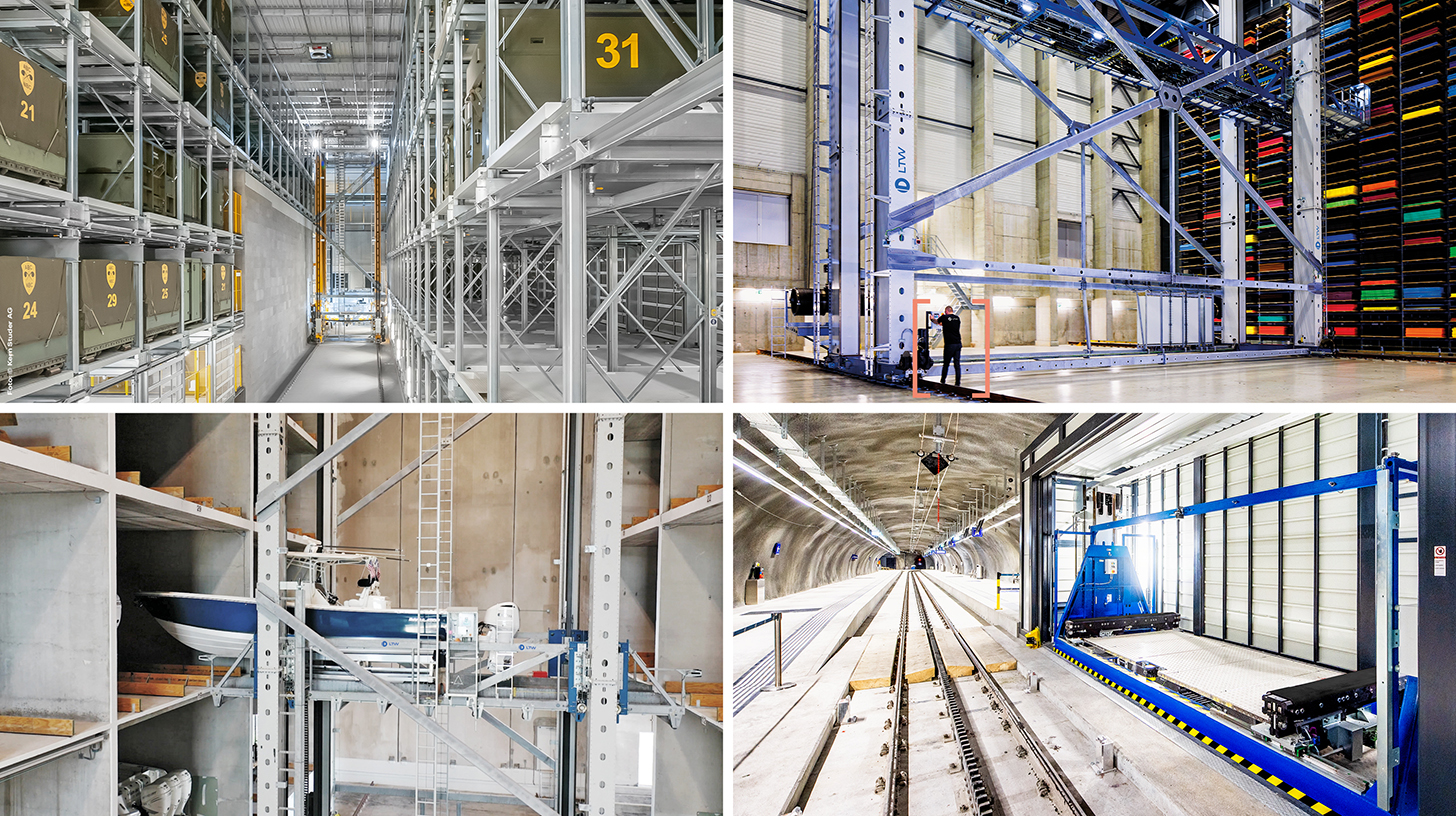
LTW Intralogistics – Engineers of Flow - Image: LTW Intralogistics GmbH
LTW offers its customers not individual components, but integrated complete solutions. Consulting, planning, mechanical and electrotechnical components, control and automation technology, as well as software and service – everything is networked and precisely coordinated.
In-house production of key components is particularly advantageous. This allows for optimal control of quality, supply chains, and interfaces.
LTW stands for reliability, transparency, and collaborative partnership. Loyalty and honesty are firmly anchored in the company's philosophy – a handshake still means something here.
Related to this:
Innovative approaches to gradual automation in frozen food logistics
The entire warehouse does not need to be automated at once
Between largely manual labor and comprehensive automation lies a wide range of differentiated solutions. For many businesses, this intermediate zone is particularly attractive from an economic perspective.
A sensible starting point can be to automate recurring transport operations or clearly defined material flows. The prerequisite is that these activities actually account for a significant portion of the workload or capacity problem. A technically attractive individual application is of little use if it bypasses the crucial bottleneck.
Similarly, it can be advantageous to modify certain activities spatially and organizationally to reduce the amount of working time required in extreme cold. Whether and how this is possible depends on the building, the product range, the processes, and the temperature control requirements.
A phased approach can limit investment risks and allow for practical experience. However, this creates interfaces between manual and automated processes. These must be carefully planned to avoid new waiting times or duplication of effort.
The appropriate level of automation is therefore not determined by a general technology trend. It results from a concrete bottleneck analysis. The crucial factor is whether a clearly defined problem is measurably improved and whether the solution can be meaningfully expanded later.
Cold-weatherproofing must be part of the technical inspection
An automation solution that works in a normally heated hall is not automatically suitable for deep-freeze operation. The intended temperature environment must explicitly match the operating conditions of the technology.
The suitability of drives, power supply, sensors, electronic components, and mechanical parts must be examined. Equally important is how the system handles transitions between areas with different temperatures. The specific design must be appropriate for actual operation, not just a theoretical temperature value.
For economic efficiency calculations, this means that general performance data is insufficient. Reliable information about achievable performance and availability under the intended conditions is required. This includes maintenance requirements, accessibility, and restart after malfunctions.
Furthermore, it is necessary to examine how technical interventions can be organized. A solution may be convincing in normal operation but still be problematic if minor malfunctions can only be rectified with considerable effort.
Technical verification is therefore not a subsequent procurement step. It is a core element of the investment decision. Only when the suitability for cold temperatures and operational manageability have been sufficiently clarified do cost and performance promises become economically meaningful.
A sound investment calculation requires more than just job savings
The simplest automation calculation compares acquisition costs with expected personnel savings. For deep-freeze warehouses, this approach is often too narrow.
On the cost side, in addition to the technology itself, integration, structural modifications, software connectivity, training, and start-up must be considered. Ongoing expenses for maintenance, spare parts, energy, and necessary technical support must also be factored in. Depending on the solution, further contractual or system-related costs may arise.
On the benefits side, there are potential savings in working time and staff turnover. Additionally, more stable processes, reduced training requirements, and better handling of peak loads can create economic value.
Not every one of these advantages can be immediately quantified precisely. However, that's no reason to ignore it. Instead, verifiable ranges should be used. Uncertain assumptions must remain identifiable so that the calculation doesn't create a false sense of precision.
The time perspective is particularly important. High initial costs are offset by benefits that only materialize over several years. Therefore, not only the simple amortization period but also the distribution of cash flows over time and different business developments should be considered.
A convincing investment is not the one with the most attractive single assumption. It is the one whose economic benefits remain sustainable even if capacity utilization, personnel costs, or technical availability turn out to be less favorable than hoped.
Scenarios reveal more than a seemingly exact target value
A sound basis for decision-making considers several plausible scenarios. For a deep-freeze warehouse, particularly relevant factors include stable normal operations, a pronounced peak season, and a challenging combination of staff shortages and increased goods volume.
In a favorable scenario, there are enough trained employees available, demand develops as planned, and the technology operates with few disruptions. This can demonstrate whether automation makes economic sense even without exceptional problem pressure.
In the medium scenario, the usual fluctuations occur. Individual positions remain vacant, orders change, and processes need to be adjusted. This scenario should reflect everyday reality as accurately as possible.
In the worst-case scenario, several stressors coincide. This combination is particularly crucial for security of supply. The question then becomes whether the site can still provide its essential services and what additional costs will arise.
The alternative to automation should be examined just as carefully. Manual operation also requires investment, for example in employee retention, training, work organization, or additional capacity.
A fair comparison therefore does not pit modern technology against an unchanged and unaffected initial state. It compares realistic courses of action under the same assumptions.
Peak capacity and economic utilization must match
Focusing solely on the Christmas season can lead to over-sizing. A system designed for just a few particularly busy weeks may only be partially utilized for an extended period.
This does not mean that seasonal peaks should be ignored. Rather, it is necessary to clarify what proportion of peak capacity a location should maintain permanently and what flexibility can be reasonably achieved elsewhere. Key factors here are the duration of the peak, the predictability of demand, and the economic consequences of limited supply capacity.
A warehouse that is consistently undersized can create recurring bottlenecks. Conversely, an oversized warehouse ties up capital and incurs ongoing costs without fully realizing its potential benefits.
Solutions that can be expanded incrementally or adapted to changing quantities are therefore of interest. However, their actual flexibility must be tested in practice. A theoretically modular technology is of little use if additional units require long lead times or if other parts of the system cannot scale accordingly.
The economically appropriate capacity is therefore not automatically the maximum expected demand. It results from a reasoned assessment of investment costs, ongoing capacity utilization, adaptability, and the value of guaranteed delivery capability during peak periods.
Employee retention remains crucial even in automated warehouses
Automation can alleviate staffing problems, but it does not replace a sound human resources policy. A company that pushes ahead with technological modernization while simultaneously allowing fundamental organizational weaknesses to persist risks outsourcing rather than solving its problems.
Reliable work schedules, appropriate working conditions, transparent processes, and thorough onboarding are key factors in employee retention. The most effective measures on-site must be analyzed based on the actual reasons for employee departures.
General explanations fall short. Not every resignation is solely due to coldness. Likewise, it cannot be claimed without further investigation that higher compensation alone will sufficiently reduce employee turnover. Workload, management style, predictability, and development opportunities can all play different roles.
With increasing automation, job profiles are also changing. This creates demands for monitoring, technical support, and handling deviations. Employees must be prepared for this.
The sensible perspective, therefore, is not to pit employee retention against technology. Both approaches can complement each other: Improved processes reduce workloads, while a stable and qualified workforce reliably operates the technical systems. This connection is particularly important economically in a demanding environment.
Data quality determines whether the right problems are solved
Anyone wanting to improve a cold storage facility needs a realistic picture of its processes. Average values alone are often insufficient.
A daily average can mask recurring backlogs at certain times. A monthly productivity metric can obscure differences between shifts. An aggregated turnover rate reveals little about whether employees leave shortly after joining or only after a longer period of employment.
Therefore, an analysis based on time windows, activities, and experience levels is advisable. This includes the required working time per process, waiting times, errors and rework, as well as the development of backlogs. Interruptions due to missing shift changes or unclear handovers should also be recorded.
Investment decisions also require a distinction between losses that are technically caused and those that arise from organizational issues. A poorly coordinated order flow will not necessarily improve simply by speeding up individual shipments.
Data should not only enable control. Its primary purpose is to separate cause and effect. Only when it is clear where performance is being lost can measures be prioritized and their results later evaluated in a transparent and verifiable way.
Technical availability is not the same as operational delivery capability
An automated system may be formally available, yet the site may still fail to meet its delivery targets. Conversely, a technical malfunction may remain manageable if the operation has suitable alternative options.
This distinction is important because individual plant performance indicators do not automatically reflect the overall system's performance. What matters is whether orders can be processed completely and on time. This requires the coordinated flow of materials, data processing, personnel, and transportation.
As automation increases, the risks change. The dependence on readily available personnel can decrease, while the importance of technical components and their maintenance increases. This shift is not inherently detrimental, but it must be managed consciously.
This includes defined procedures for handling disruptions, clear responsibilities, and realistic restart plans. It should also be examined which processes can be temporarily reorganized and where a failure would directly limit overall performance.
Economically, what matters is not only the probability of a disruption, but also its duration and impact. A rare event with serious consequences can be more significant than more frequent but easily manageable interruptions. Security of supply therefore requires a consideration of the entire operation.
The introduction itself must not become a seasonal risk
A worthwhile long-term investment can cause additional burdens in the short term. During the introduction of new technology, processes must be adapted, employees trained, and interfaces tested. This phase does not automatically create additional capacity immediately.
For a business approaching its peak season, timing is therefore particularly important. The shorter the time until the seasonal peak, the less room there is for unplanned adjustments and learning processes.
This doesn't categorically rule out short-term improvements. It does, however, argue against the expectation that comprehensive structural problems can be reliably resolved without sufficient lead time. Immediate measures and long-term modernization should be planned separately.
In the short term, clearer priorities, more stable shift organization, and targeted relief for critical stations may be more important than a comprehensive technical overhaul. In the medium term, changes can then be implemented that have been sufficiently tested before the next peak period.
A viable implementation plan therefore defines more than just a technical commissioning date. It specifies when the required performance must be demonstrated under realistic conditions. Only this demonstration provides the basis for basing seasonal commitments on the new solution.
The cost issue affects the entire value chain
The economic benefits of more stable frozen food logistics are distributed among several stakeholders. A warehouse operator may bear investment and operating costs, while retailers benefit from improved product availability.
This distribution can complicate decision-making. If each stage optimizes only its own costs, measures that would benefit the entire supply chain may be neglected. Conversely, unilateral performance demands can generate additional costs that are not adequately addressed elsewhere.
Therefore, coordinated quantity planning, timely information about promotions, and transparent expectations regarding delivery performance are particularly important. The more frequently requirements change, the more difficult cost-effective capacity planning becomes.
Flexibility also deserves attention. Companies that need to process large additional volumes at short notice must have the necessary capabilities. These capabilities incur costs, even if they are not used constantly.
A proper analysis therefore doesn't just ask how cost-effective a single warehousing process is. It examines which agreements enable a reliable and overall economical supply. Especially during seasonal peaks, the quality of cooperation determines whether existing capacities are used effectively or overloaded by avoidable fluctuations.
The most convincing strategy combines relief, stability, and adaptability
The challenges of frozen food logistics cannot be solved with a blanket demand for automation, nor with the hope of consistently sufficient staffing levels. Locations, product structures, and workflows vary too greatly for that.
A well-founded economic perspective focuses on the actual bottleneck. Where high employee turnover, limited operating time in cold-weather environments, and recurring peak demand converge, enhanced technical support is particularly worth considering. Its benefits can extend beyond saved working hours if it stabilizes delivery performance and reduces the need for constantly training new employees.
At the same time, every investment must demonstrate its effectiveness under realistic conditions. Cold-weather suitability, integration, maintenance, staff qualifications, and seasonal utilization must therefore all be considered in the same decision. None of these issues should be treated as mere details after the fact.
The strategic task is to deploy human labor where it makes a significant contribution and to systematically reduce burdensome or difficult-to-plan routine tasks. A good cold storage facility is not characterized by the greatest possible use of technology, but by a robust distribution of tasks.
This quality becomes particularly evident during the Christmas season. What matters then is not the theoretically installed capacity, but the capacity that is available on time under real-world conditions. This is precisely the economic core of modernization: transforming a capacity prone to personnel and organizational vulnerabilities into a reliably predictable supply.
Consulting - Planning - Implementation

Konrad Wolfenstein
I would be happy to serve as your personal advisor.
You can contact me at wolfenstein∂xpert.digital or
Just call me on +49 7348 4088 965 .
Your intralogistics experts

Consulting, planning and implementation of complete solutions for high-bay warehouses and automated storage systems - Image: Xpert.Digital
More information here: