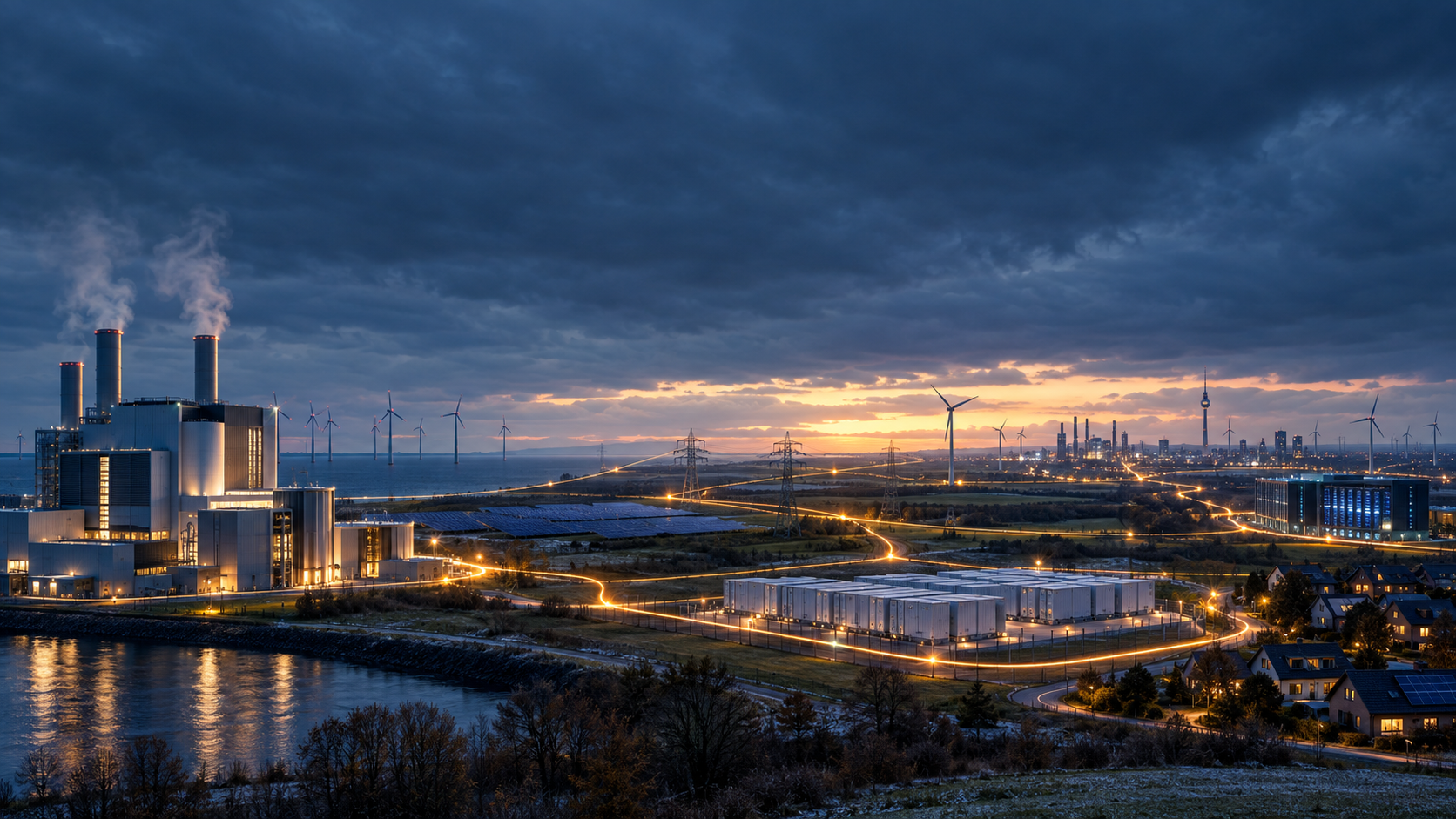
Germany's energy transition put to the test: Why batteries and gas-fired power plants belong together – Creative image on the topic, created with AI: Xpert.Digital
Is a dark doldrums approaching? Why storage alone cannot save our power grid
The end of the electricity gap: What the perfect interplay of batteries and power plants looks like
Hydrogen trap or real salvation? The truth about Germany's new gas-fired power plants
Germany's energy transition stands at a crucial turning point – yet it risks becoming entangled in a misguided either-or debate. On one side are the proponents of massive battery storage systems as emission-free saviors, on the other the advocates of classic, dispatchable gas-fired power plants. But those who pit these two technologies against each other risk nothing less than the future security and affordability of our electricity. While batteries form the backbone for daily, short-term flexibility in the grid, power plants remain as a rarely used, but economically indispensable safeguard against weeks-long periods of low wind and solar power generation. With the recently approved, multi-billion-euro capacity market from Brussels, the architecture of the German electricity market is now being fundamentally restructured. The real challenge, therefore, is not: storage or power plants? It is about the intelligent, digitally controlled interplay of both worlds – and the question of how hydrogen, smart electricity tariffs, and European solidarity will prevent us from going dark in winter.
Those who only demand storage facilities or only power plants are not building a climate-neutral system – but rather the next supply gap
The false either-or debate
The German energy debate is often framed as a competition between batteries and gas-fired power plants. On the one hand, there are battery storage systems as a modern, emission-free, and rapidly scalable technology. On the other hand, there are dispatchable power plants, which their proponents see as an indispensable safeguard against electricity shortages and their critics as a regression to fossil fuels. This juxtaposition is politically appealing, but misleading from an energy economics perspective. Batteries and gas-fired power plants address different problems within the same system. Those who pit them against each other confuse short-term flexibility with long-term security of supply.
Batteries are particularly powerful when electricity needs to be shifted over minutes or hours. They can transfer solar power from midday to evening, cover short-term peak loads, compensate for frequency fluctuations, and absorb renewable energy surpluses. Flexible power plants, on the other hand, become especially valuable when a shortfall persists, storage levels decrease, and high loads occur simultaneously. Their crucial contribution lies not in producing as many kilowatt-hours as possible, but in being reliably available in a few critical situations.
The key economic question, therefore, is not which technology is fundamentally superior. The crucial question is which combination of renewable energies, electricity grids, batteries, flexible demand, European imports, and dispatchable power plants provides the desired security of supply at the lowest overall cost. A system with insufficient guaranteed capacity risks shortages, extreme prices, and emergency political measures. A system with excessively subsidized capacity places an unnecessary burden on consumers and weakens investment incentives for storage and flexibility. The economically sound path lies somewhere between these two pitfalls.
What Brussels actually approved
The European Commission's approval of the German capacity mechanism marks a fundamental shift in the electricity market architecture. From 2031, market participants will no longer be paid solely for electricity generated and system services. They can also receive compensation for ensuring that guaranteed capacity is available when needed. The estimated total costs of the approved framework range from €15.6 billion to €35.2 billion. Depending on the auction results, annual costs of approximately €1 billion to €3 billion are expected for 2031, and from approximately €0.9 billion to €2.3 billion per year thereafter until 2045.
The commonly used shorthand statement that Germany is subsidizing gas-fired power plants with 35 billion euros is inaccurate. The approved mechanism is fundamentally open to various technologies. In addition to new and existing generation facilities, storage facilities, controllable consumers, and, in the future, cross-border capacities can also participate. The contracts can have terms of up to 15 years. The actual costs incurred depend on the tendered volumes, the bids, the financing costs, and the market revenues of the awarded plants.
At the same time, it would be naive to downplay the importance of new gas-fired power plants. The initial tenders are primarily aimed at long-term capacities that can continuously supply electricity during periods of low wind and solar output lasting several days. A battery can technically meet this requirement if it has sufficiently large energy storage capacity. However, from an economic standpoint, batteries with very long discharge times for rare events are currently often more expensive than power plants whose fuel is stored separately and only used when needed. Therefore, gas-fired power plants are likely to receive a significant share of the early contracts.
For public assessment, the distinction between power output and work output is crucial. A power plant with a capacity of one gigawatt can be permanently operational yet only generate electricity on a few days of the year. Its climate impact depends not only on its size, but also on the fuel used, its efficiency, its operating hours, and the timing of the transition to climate-neutral energy sources. A large power plant fleet operating at low capacity can emit less CO₂ than a smaller fleet that runs regularly to cover residual load.
The capacity mechanism is therefore not simply a subsidy for gas-fired power plants, but neither is it a neutral administrative act without technological consequences. It is a new insurance model for the electricity system. Its quality will be measured by whether it provides sufficient security without permanently financing excessive capacity or stifling innovation.
Electrification changes more than just annual consumption
Germany's electricity demand will increase significantly due to the electrification of transport, buildings, industry, and digital infrastructure. Electric vehicles are replacing gasoline and diesel, heat pumps are displacing oil and gas heating systems, electric furnaces and electrolyzers are transforming industrial processes, and data centers are creating large additional loads with high availability requirements. This increase is not at odds with the energy transition. It is a crucial mechanism for decarbonization because electricity from renewable sources replaces fossil fuels in other sectors.
Electrical applications are often more efficient than their fossil fuel alternatives. A heat pump generates heat not only by converting electricity but also by utilizing ambient heat. An electric motor converts energy into motion much more efficiently than a combustion engine. Therefore, electricity consumption can increase while overall final energy consumption decreases. The sensible objective is not to achieve the lowest possible electricity consumption, but rather to provide heat, mobility, industrial production, and digital services in the most cost-effective and low-emission way possible.
However, simply looking at the annual electricity volume isn't enough for planning purposes. What's crucial is when and where the power is needed. When millions of electric vehicles are charging in the early evening, heat pumps are running simultaneously during a cold spell, and industrial plants are ramping up production, peak loads can rise sharply. Grids and guaranteed capacities must be designed for peak hours, not for the annual average.
Long-term grid planning therefore assumes a significant increase in gross electricity consumption, depending on the scenario. The ranges are wide because they depend on assumptions about industrial development, hydrogen production, building renovation, electromobility, energy efficiency, and the speed of the transformation. This very uncertainty argues against rigid, single-prognostic forecasts. Germany needs a robust infrastructure that can handle several plausible development paths.
Poorly coordinated electrification would unnecessarily increase the demand for power plants, storage facilities, and grids. Intelligently controlled electrification, on the other hand, can itself become a source of flexibility. Vehicles, thermal storage systems, industrial processes, and selected computing loads can shift their electricity consumption over time, as long as mobility, comfort, and production remain unaffected. The economic value of electrification therefore increasingly depends on its controllability.
Flexibility requires automation, not sacrifice
Energy consumption flexibility is sometimes portrayed as if households should organize their lives around wind and sun. This model would be neither attractive nor suitable for mass adoption. Flexibility must operate in the background. Drivers should be able to specify when their vehicle needs to be ready and with what range. An energy management system then optimizes the charging process. Residents define a desired room temperature, while the heat pump, building thermal mass, and buffer storage adjust operation within defined comfort limits.
For this to work, Germany needs smart metering systems, secure communication channels, interoperable devices, and transparent tariffs. Since 2025, electricity suppliers have been required to offer dynamic tariffs. However, the mere existence of such products does not create systemic flexibility. Without smart meters, automated control, and easily understandable contract terms, dynamic tariffs will remain a niche market for particularly interested customers.
Time-varying prices indicate when electricity is scarce or plentiful. A home energy storage system shouldn't be charged from the grid on a sunny summer morning if large amounts of photovoltaic energy are available at midday. Similarly, an electric vehicle doesn't necessarily need to be charged during the evening peak load if it won't be needed until the following morning. Automated systems can implement such shifts without the user having to constantly monitor market prices.
However, timing signals alone are not enough. Electricity can be cheap nationwide even if a regional grid is overloaded. An additional kilowatt-hour of consumption can help utilize wind power locally in northern Germany, while causing additional grid strain in a bottleneck region of southern Germany. Location-variable grid fees, flexible grid connection agreements, or regional incentives can help ensure that storage facilities, electrolyzers, and controllable loads are operated where they generate the greatest system benefit.
The social dimension should not be underestimated. Owners of electric vehicles, heat pumps, and home storage systems can react more strongly to price signals than renters or low-income households without controllable large energy consumers. A tariff reform that unilaterally burdens inflexible customers would lose public acceptance. A fair framework should reward flexibility but at the same time maintain predictable offers for consumers who cannot react or who consciously prefer price stability.
Batteries take over the daily precision work
Battery storage systems are particularly well-suited for tasks that occur frequently and at short notice. They react to frequency fluctuations within milliseconds, shift solar power to evening hours, reduce peak loads, and stabilize local grids. Because of their modular design, they can be installed in private homes, commercial buildings, industrial plants, substations, and large storage facilities. Construction time is usually significantly shorter than for thermal power plants.
At the end of 2025, Germany had more than two million battery storage systems with a total usable storage capacity of approximately 24 to 25.5 gigawatt-hours. The largest share continued to be comprised of residential storage systems combined with photovoltaic installations. While large-scale batteries grew rapidly, they still represented a relatively small segment in terms of total energy capacity. These figures also highlight the strength and limitations of the technology: While installed capacity may be high, the amount of stored energy is not automatically sufficient to weather prolonged periods of energy scarcity.
A simple example illustrates the difference. A storage system with a capacity of one gigawatt and two gigawatt-hours of energy can theoretically deliver its full power for two hours. After that, it needs to be recharged. This can be extremely valuable for peak evening demand. However, the same storage system cannot bridge a three-day period of low wind and solar power generation on its own. A longer discharge time requires additional battery capacity, which must be paid for, even though it may only rarely be fully utilized.
Batteries nevertheless reduce the demand and operating hours of conventional power plants. They prevent a power plant from having to start up only for a short peak load, absorb electricity that would otherwise be curtailed, and smooth out rapid load changes. A battery storage system can also bridge the time until a thermal power plant is up and running. In hybrid systems, the battery can take over rapid control tasks, while the power plant operates more efficiently and with less wear and tear.
However, as storage capacity expands, the business model changes. Early storage systems benefit from large price differences between cheaper midday hours and expensive evening hours. When many batteries charge and discharge simultaneously, they reduce precisely this price difference. This is positive for the overall system and consumers, but it lowers the revenues of new projects. Future storage systems will therefore have to combine several revenue streams: energy trading, balancing power, grid services, peak load management, and potentially capacity payments.
The enormous number of grid connection requests should not be confused with actual expansion. In 2025, requests were submitted for several hundred gigawatts of storage capacity. Only a fraction of this will be financed, approved, and built. Multiple requests, immature projects, and speculatively secured grid connection points distort the picture. For the energy transition, what matters is not the virtual project pipeline, but the actually installed and grid-serving capacity.
The dark doldrums are primarily an energy problem
A "dark doldrums" refers to a period in which wind and solar power simultaneously contribute only minimally. The term is often used generically, although the challenge depends heavily on duration, season, temperature, geographical extent, electricity demand, and import possibilities. A windless night in summer is quite different from an energy economics perspective than a cold, cloudy, and windless winter week across large parts of Europe.
For shortfalls lasting only a few hours, batteries, pumped storage, flexible demand, and electricity imports can compensate for a large portion of the difference. If the situation persists, the bottleneck becomes not the discharge capacity, but the available energy content. Batteries can reserve their remaining capacity for particularly critical hours. However, without sufficient renewable energy generation, they require another power source to recharge.
Therefore, comparing installed gigawatts alone is insufficient. A gas-fired power plant and a four-hour battery can have the same nominal output, but they cannot provide the same amount of energy during a multi-day shortage. Capacity markets must realistically assess the reliable contribution of different technologies. Storage systems require discounts depending on their discharge time, state of charge, and the probability of several consecutive hours of scarcity.
Even gas-fired power plants are not automatically fully secure. They require fuel, functioning gas or hydrogen networks, qualified personnel, spare parts, grid connections, and sufficiently robust backup systems. The energy crisis following the Russian attack on Ukraine demonstrated that natural gas supplies carry a geopolitical risk. A power plant is only as reliable as its entire fuel and infrastructure chain.
Security of supply therefore requires a probabilistic approach. Not every conceivable extreme situation needs to be covered exclusively by German facilities. At the same time, planning cannot assume that imports, batteries, or gas will be available in unlimited quantities in every situation. A robust strategy combines different resources whose failure risks are as uncorrelated as possible.
Peak load reduction is valuable, but not limitless
Flexible consumers and batteries can significantly reduce the highest simultaneous power demand. This is particularly valuable economically because the last gigawatts needed to cover the annual peak load are rarely required, yet still have to be financed. Every permanently avoided peak load can save investments in generation, grids, and reserves.
However, the achievable potential is not a fixed quantity. It depends on the composition of consumption, storage duration, weather, market rules, and user needs. An electric car can postpone charging, but not indefinitely. A thermal storage system can temporarily relieve the burden on a heating system, but buildings will still cool down. Industrial companies can only interrupt processes within technical and contractual limits. Batteries are only helpful if they are sufficiently charged before a period of scarcity.
Planning must therefore avoid two opposing misconceptions. The first is to automatically translate every additional kilowatt-hour of electricity consumption into a proportional increase in peak load. This ignores the possibilities of digital control. The second error is the assumption that flexible loads can disappear indefinitely during a crisis. In reality, flexibility can significantly reduce the need for guaranteed capacity, but it cannot completely replace it.
The Federal Network Agency's supply security monitoring illustrates the scale of the challenge. Depending on the development of renewable energies, grids, demand, and flexibility, additional controllable capacity of approximately 22 to 36 gigawatts may be required by 2035. These figures represent gross additions before decommissioning. This wide range is not a weakness of the analysis but rather an expression of real uncertainty. It also demonstrates how costly delays in grid development, renewable energies, and demand flexibility can be.
Gas-fired power plants are becoming a rarely used insurance policy
The economic advantage of flexible gas-fired power plants lies in their comparatively low investment per kilowatt, their controllability, and the ability to store large amounts of energy separately from the power plant as fuel. They are therefore suitable for covering the residual load that remains after wind, solar energy, storage, load shifting, and imports.
Different types of power plants fulfill different tasks. Open-circuit gas turbines can start up quickly and have relatively low investment costs. Their efficiency is lower, which is less of a concern if they are used infrequently. Combined cycle gas turbine (CCGT) power plants are more expensive, but they use fuel more efficiently and are better suited for longer operating hours. Gas engine power plants and modern combined heat and power (CHP) plants can be deployed in a decentralized manner and are particularly flexible.
Low utilization, however, leads to a financing problem. A power plant that is only needed during a few hours of scarcity may not generate enough revenue in the normal electricity market to cover its fixed costs. In the energy-only market, it would have to refinance a significant portion of its investment through rare, very high prices. This is theoretically possible, but in practice involves high political and regulatory risks. Governments could intervene in the event of extreme prices, changing price caps or retroactively introducing special levies.
Capacity payments transfer some of this risk from investors to electricity consumers. This can reduce financing costs and accelerate construction decisions. However, it carries the risk of artificially keeping inefficient plants on the market, procuring excessive quantities, or disadvantaging new technologies. Gas-fired power plants should therefore not be treated as privileged infrastructure, but rather as participants in a competitive reliability market.
Contracts must include clear availability requirements. Those paid for guaranteed capacity must deliver in times of shortage or face significant penalties. Additionally, emission limits, technical upgrade requirements, and verifiable interim targets are necessary. Capacity payments must not guarantee operating hours or fuel sales. Payment should be for the ability to provide capacity, not for a right to fossil fuel-based electricity production.
New: Patent from the USA – install solar parks up to 30% cheaper and 40% faster and easier – with explanatory videos!

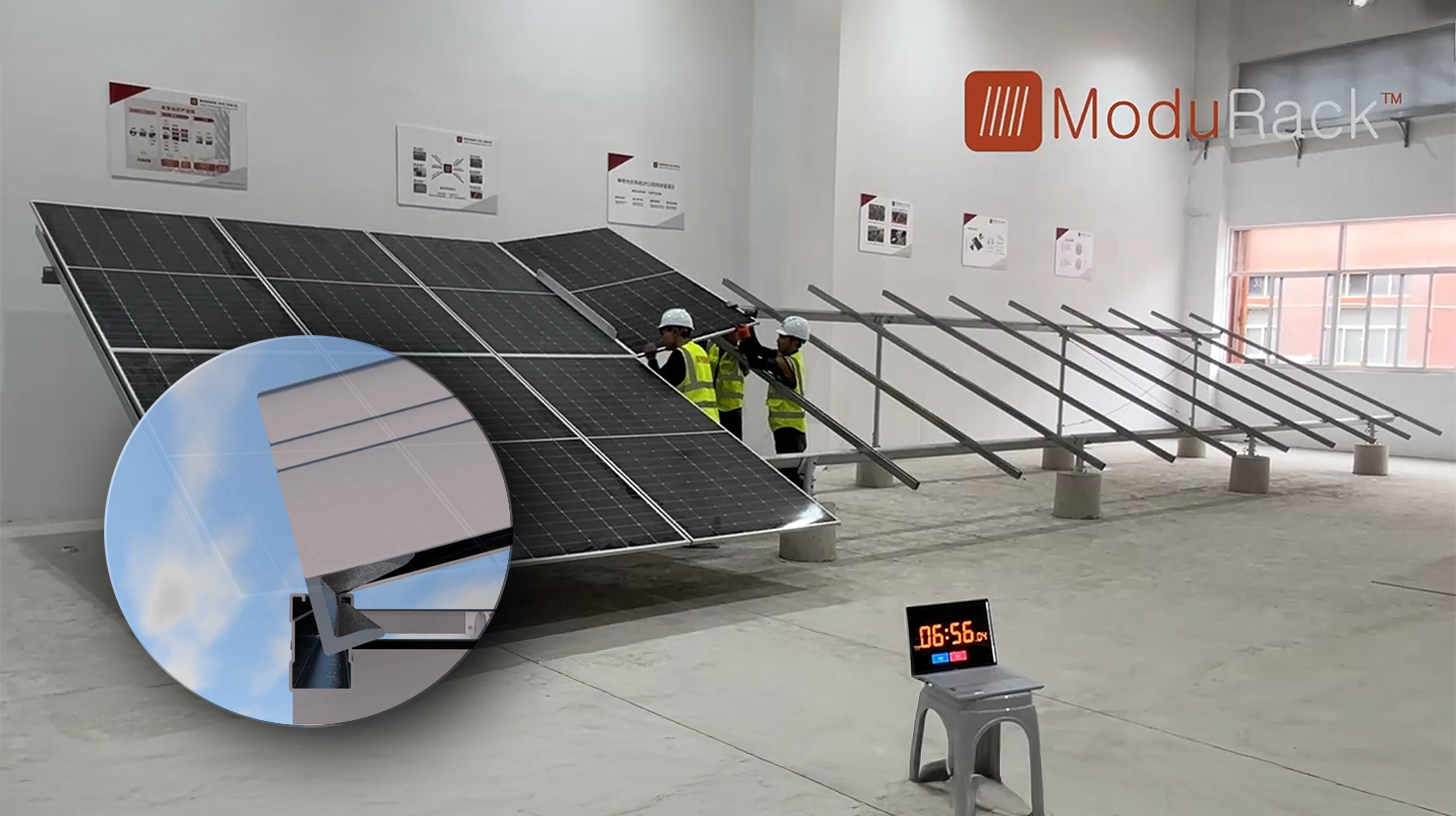
New: Patent from the USA – Install solar parks up to 30% cheaper and 40% faster and easier – with explanatory videos! - Image: Xpert.Digital
The core of this technological advancement is the deliberate departure from conventional clamp mounting, which has been the standard for decades. The new, more time- and cost-effective mounting system addresses this with a fundamentally different, more intelligent concept. Instead of clamping the modules at specific points, they are inserted into a continuous, specially shaped support rail and held securely in place. This design ensures that all forces – whether static loads from snow or dynamic loads from wind – are distributed evenly across the entire length of the module frame.
More information here:
Decentralized energy generation for a robust system
Hydrogen capability must not become a marketing gimmick
New gas-fired power plants are to be converted to hydrogen or other climate-neutral fuels in the long term. This perspective is necessary to ensure that additional capacity remains compatible with the goal of climate neutrality. However, the term "hydrogen-capable" is imprecise. It can mean that a power plant can already burn high proportions of hydrogen, that a later technical conversion is planned, or simply that there is sufficient space at the site for such a conversion.
The technical conversion is only one part of the challenge. Crucial factors also include the availability of climate-neutral hydrogen, transport infrastructure, storage, safety requirements, and economic viability. A hydrogen-capable power plant without a connection to a hydrogen network is little more than an option for decarbonization. Contracts should therefore include concrete technical standards, deadlines, and consequences for non-compliance.
The reconversion of hydrogen into electricity involves significant conversion losses. Electricity is first used to produce hydrogen, then the gas must be compressed, transported or stored, and later converted back into electricity. The overall efficiency is considerably lower than with direct intermediate storage in batteries. However, this does not mean that hydrogen is unsuitable. Batteries are efficient, but storing large amounts of energy for weeks or seasons is expensive. Despite its lower efficiency, hydrogen can be economically viable for rare and prolonged periods of energy shortage.
Another bottleneck is the competition for climate-neutral hydrogen. The steel industry, chemicals, shipping, and parts of the aviation sector need molecules for processes that are difficult to electrify directly. Power plants could therefore compete with industrial applications for limited quantities. Germany should not base its backup strategy on the premature assumption that cheap green hydrogen will be available in unlimited quantities.
A phased approach makes sense. New plants must be technically adaptable, built in suitable locations, and have binding decarbonization pathways. At the same time, other climate-neutral options should not be excluded, provided their total emissions and sustainability impacts can be reliably demonstrated. However, technological neutrality must not lead to vague promises about the future legitimizing the continued operation of natural gas.
Decentralized systems can make the system more robust
Large power plants benefit from economies of scale, experienced operators, and efficient grid connections. However, a purely centralized strategy would leave opportunities in industrial parks, municipal utilities, and district heating networks untapped. Smaller gas turbines, engine-based power plants, and combined heat and power plants can be built close to the point of consumption, supporting local grids and contributing to regional supply in the event of a disruption.
Combined heat and power (CHP) is only efficient if the generated heat is actually used effectively. A power plant does not become economically or ecologically advantageous simply because it could extract heat. Modern district heating networks must enable electricity-driven operation. Large heat pumps, electrode boilers, industrial waste heat, and thermal storage systems can be combined with flexible CHP. The thermal storage system decouples the timing of electricity generation from heat consumption.
Flexible biogas plants can also contribute to a reliable power supply. Instead of producing electricity at a constant output year-round, biogas can be stored and used selectively during periods of high residual load. The sustainable potential is limited, and questions regarding land use, methane losses, and competing land uses remain relevant. However, existing plants can make a valuable contribution if their operation is consistently aligned with system demand.
Decentralized resources require aggregators, standardized communication, and reliable measurement. Thousands of small plants can collectively form a virtual power plant, provided their availability is verified and their control systems are secure. A capacity market whose prequalification can only be managed by large utilities would be formally technology-neutral, but in practice centralized. The regulations must offer smaller plants and bundled portfolios realistic opportunities for participation.
Europe's electricity market is part of the hedging mechanism
Germany is integrated into the European electricity market. Cross-border transmission lines enable exchange with countries whose weather, demand, and generation structures differ. Scandinavian hydropower, Alpine storage facilities, French nuclear energy, renewable energy surpluses from other regions, and flexible consumers abroad can help to mitigate German supply shortages.
Imports generally reduce the need for purely national reserves. Not every country experiences its highest load or lowest generation simultaneously. A larger market area balances regional differences and utilizes power plants and storage facilities more efficiently. A national self-sufficiency strategy would therefore tend to require more capacity and higher costs.
At the same time, imports cannot be considered guaranteed without limits. Cold and windless weather conditions can affect several countries simultaneously. Neighboring countries are also electrifying, closing conventional power plants, or struggling with their own grid bottlenecks. Therefore, the reliable import contribution must be assessed using European probability models, not based on individual historical peak values.
Opening up the capacity mechanism to suitable foreign resources is economically logical, but challenging. Germany must ensure that contracted capacities actually deliver during periods of simultaneous scarcity and that sufficient cross-border transmission capacity is available. National mechanisms can become mutually expensive if each country tries to cover the worst-case scenario on its own. Common reliability standards and coordinated European planning could reduce the overall demand.
Energy-only market or capacity market
In the energy-only market, suppliers receive revenue for the electricity they sell and for system services. Scarcity manifests itself in high prices. These prices reward power plants, storage facilities, importers, and consumers who reduce their demand. The model is fundamentally technology-neutral because the price signal, rather than an authority, determines which response is economically viable.
Its weakness lies in the so-called missing money problem. Political interventions, price caps, and rare shortages can lead to investors not expecting sufficient returns. Even if extreme prices are permitted, financing a long-life power plant based on a few uncertain hours is expensive. Banks and equity investors demand high risk premiums.
A capacity market also pays for the promised availability. This stabilizes revenues, reduces investment risks, and can limit extreme fluctuations in the spot market. At the same time, a crucial decision shifts to the regulator: it must determine how much capacity should be procured. If too much is tendered, consumers pay for years for unneeded capacity, and price signals for storage and load shifting are weakened. If too little is procured, the security of supply problem persists.
The most economically sound solution is therefore not a rigid central plan, but a competitive mechanism with regularly updated demand analysis. A sloping demand curve can prevent small changes in volume from triggering extreme price spikes. Different contract durations can accommodate the financing needs of new facilities without unnecessarily tying up existing capacity. Existing power plants, new builds, storage facilities, flexible consumers, and suitable foreign resources should compete based on comparable reliability standards.
The energy-only market remains important even with capacity payments. It continues to determine which plant is used in a given hour. The price signal must remain strong enough to highlight short-term shortages and reward flexibility. A capacity market should complement the electricity market, but not replace it.
True technological openness requires different standards
A tender may appear neutral on paper but in practice be tailored to a specific technology. A long, uninterrupted supply obligation favors fuel-based power plants. An extremely short response time favors batteries. High minimum outputs exclude small plants. Long contracts exclusively for new builds can disadvantage demand flexibility, even though it might be more advantageous.
The goal should therefore not be schematic equal treatment, but technology-inclusive comparability. Batteries require realistic deductions based on discharge duration and state of charge. Flexible consumers need verifiable baseline values so that a claimed load reduction can actually be measured. Power plants must demonstrate fuel security and technical availability. Foreign capacities require rules that take into account both scarcity and grid availability.
Hybrid concepts can be particularly valuable. A battery located next to a gas-fired power plant reacts instantly as the turbine starts up, reducing inefficient part-load operation. Renewable energy plants with storage can offer a more stable feed-in profile. An industrial site can combine on-site generation, battery storage, thermal storage, and flexible processes. Market rules should permit such portfolios as integrated resources.
At the same time, prequalification must limit speculation. Projects should demonstrate available land, progress in obtaining permits, financing, and realistic grid connections. Guarantees, milestones, and increasing penalty payments can prevent immature projects from winning tenders only to later fail. However, the requirements must not be so complex that only large corporations can meet them.
The location determines the system value
An additional megawatt doesn't have the same value everywhere. Northern Germany often produces large amounts of wind power, while a significant portion of industrial consumption is located in the west and south. Grid expansion is intended to compensate for these differences, but it takes time and encounters permitting and public acceptance issues. A power plant or storage facility located behind the wrong grid bottleneck can hardly improve local supply.
Capacity tenders therefore require a spatial component. Possible options include regional procurement volumes, location bonuses, prioritized grid connections, or requirements based on transparent network analyses. However, overly broad regional quotas can create local market power and increase costs. Location allocation must be precise enough to address bottlenecks, but broad enough to maintain competition.
This question is particularly pressing for battery storage systems. Many projects are applying for connections to the same attractive grid nodes. Grid operators need criteria to prioritize mature and system-serving projects. Flexible connection agreements can allow storage systems to connect earlier if they agree not to charge or feed power into the grid in certain situations.
The fuel infrastructure also needs to be planned spatially. Hydrogen-capable power plants require plausible access to future hydrogen pipelines, storage facilities, or alternative supply routes. Combined heat and power (CHP) plants require long-term usable heat sinks. Black-start capable plants need a particularly robust on-site power supply. A location decision based solely on land price and electricity connection would be too simplistic.
Climate protection is decided by operating hours
The installed capacity of gas-fired power plants is not a direct measure of emissions. Crucial factors are the amount of electricity generated, the efficiency, the fuel used, upstream methane emissions, and the timing of the transition to climate-neutral energy sources. A large power plant that operates only infrequently can be compatible with a climate-neutral electricity system. A smaller plant with high operating hours would be more problematic.
Batteries help reduce the operating times of fossil fuel power plants. They shift renewable energy, reduce curtailment, and cover short peaks. Grid expansion, flexible demand, and European energy trading have a similar effect. The better these elements function, the more gas-fired power plants become a rarely used safety net for regular energy producers.
The CO₂ price must support this operational logic. Capacity payments can cover fixed costs, but must not negate the variable emission costs. If a subsidized gas-fired power plant could artificially offer electricity at a lower price on the market than storage facilities or flexible consumers, the mechanism would create perverse incentives from both a climate policy and economic perspective.
The actual operating hours should therefore be publicly evaluated. If new gas-fired power plants run significantly more often than planned, this indicates shortcomings in the expansion of renewable energies, in grids, storage, or flexibility. The capacity market must not become a substitute for these investments. It should hedge the residual risk, not mask the gradual transformation of the rest of the system.
The electricity bill only shows part of the costs
Financing through a levy will increase electricity bills. However, it would be incomplete to focus solely on the visible increase. Consumers already pay for energy, grids, balancing power, redispatch, reserves, taxes, and levies. Insufficient security of supply also incurs costs: through extreme prices, production interruptions, emergency measures, and expensive short-term procurement.
A capacity market can increase one cost item while simultaneously reducing others. Predictable revenues reduce financing costs. Sufficient capacity can limit extreme scarcity prices. At the same time, risks arise from overprocurement and long-term contractual commitments. Therefore, the overall system costs are crucial, not the isolated amount of a levy.
The economically optimal security standard lies neither in zero reserve nor in absolute protection against every theoretical event. Additional reliability is sensible as long as its cost is lower than the expected damage from avoided power outages. This trade-off must be transparent because different consumers incur very different costs of damage. A brief power outage might be inconvenient for a household, but extremely expensive for a data center or a continuous industrial process.
The distribution of costs is also relevant. A flat-rate levy per kilowatt-hour burdens energy-intensive consumers differently than a charge based on peak demand or consumption during critical hours. A more cost-causation-based model could reward flexibility, but would be more complex. Simplicity, social balance, international competitiveness, and systemic impact must be weighed against each other.
Trust requires transparency. Tender volumes, bids, awards, contract durations, availability, and annual costs should be published in a comprehensible manner. Equally important is the question of whether the required capacity decreases with increasing flexibility. A mechanism that simply grows and extends existing contracts would quickly take on the character of a permanent subsidy structure.
Delay is now the most expensive scenario
Germany is under time pressure because power plants, grids, pipelines, and permits have long lead times. New capacity cannot be ordered only when a supply gap becomes apparent. Battery storage systems can be built more quickly, but they also require land, grid connections, financing, and supply chains. Consumption flexibility requires smart meters, standards, contracts, and public acceptance.
Regulatory uncertainty leads investors to wait and see. Without clear capacity rules, a gas-fired power plant developer doesn't know whether a purely market-based investment is profitable. A storage investor struggles to evaluate their project when grid fees, connection conditions, and capacity market rules are unclear. Industrial companies cannot monetize flexibility as long as products and compensation are lacking.
Clarity does not mean enshrining all rules as unchangeable regulations for decades. It means a credible path, transparent adjustment formulas, and binding deadlines. Investors can cope better with predictable updates than with abrupt policy shifts. Therefore, the capacity market, grid connection reform, smart meter rollout, and hydrogen regulations must be treated as a cohesive package.
Acceleration must not eliminate competition. Emergency procedures and direct individual contracts may seem attractive in the short term, but can become expensive and favor established providers. Standardized permits, parallel procedures, early network assessments, clear auction documents, and binding project milestones are more sensible.
A resilient electrical system is built in layers
The economically robust strategy consists of several successive layers. The first layer is the expansion of renewable energies. Large quantities of inexpensive wind and solar power reduce fuel imports, emissions, and the operating time of thermal power plants. Without sufficient renewable generation, the demand for gas and later hydrogen will increase unnecessarily.
The second level encompasses networks and European connections. A larger balancing area makes better use of regional differences and reduces curtailment. The third level is digitally controlled demand. Electric vehicles, heat pumps, industrial loads, and suitable computing processes must be able to react automatically to prices and network conditions.
The fourth level comprises short-term storage. Batteries handle daily load shifting, frequency control, peak shaving, and a growing share of balancing power. Their locations and operating modes should be geared towards system benefits. The fifth level covers longer-lasting shortages. This includes pumped storage, flexible bioenergy, thermal storage, hydrogen, other climate-neutral fuels, and, during the transition phase, natural gas.
The sixth level is institutional governance. Capacity requirements must be regularly calculated using realistic assumptions about weather, imports, outages, and demand. Tenders must be technology-inclusive, geographically differentiated, and open to pooled smaller resources. Sanctions ensure availability, while emissions and retrofit requirements protect climate targets.
This layered model avoids both extremes. Batteries alone cannot fully and economically cover prolonged periods of low wind and solar output with current cost structures. Gas-fired power plants alone would result in high fuel costs, import dependency, and unnecessary emissions. The most cost-effective system arises from the interplay of both technologies with grids, flexible demand, European trading, and long-term storage.
It is not the technology, but the coordination that decides
Germany doesn't have to choose between a battery economy and a power plant fleet. It needs to determine which tasks each resource performs, where it yields the greatest benefit, how its output is compensated, and how quickly fossil fuel operating hours decrease. Batteries should win out for the frequent, fast, and automatable flexibility work. Dispatchable power plants should cover the rare, long-lasting, and economically particularly dangerous residual risk.
The new capacity mechanism can trigger necessary investments. However, its success does not depend on the maximum amount of funding approved. Crucial factors are broad competition, careful quantity calculations, effective sanctions, and a willingness to adapt the mechanism to increasing storage and demand flexibility. Otherwise, there is a risk of an expensive parallel system that socializes investment risks and simultaneously weakens price signals for innovation.
The most important climate indicator will not be the number of installed gigawatts of gas-fired power plants. What matters is how little fossil gas these plants burn, how reliably they deliver during critical hours, and whether they actually switch to climate-neutral fuels. For batteries, what counts is not the number of connection requests, but the actual installed, available, and grid-serving energy and power capacity.
A reliable energy transition won't happen by declaring one technology the winner. It will happen when each technology takes on the task for which it is best suited, both technically and economically, and when they compete for measurable system benefits. Germany's real choice, therefore, is not: batteries or gas-fired power plants. It is: intelligent coordination or permanently expensive fragmentation.
The expert voices behind the debate
Professor Dr. Matthias Huber heads the Institute for New Energy Systems at the Ingolstadt University of Applied Sciences. His work focuses on cross-sectoral energy systems, smart grids, regional supply concepts, energy markets, and optimization methods for integrating renewable energies.
Marco Wünsch holds a degree in industrial engineering and management and works at Prognos in Berlin. He focuses on future energy supply, modeling of electricity and heat generation, energy consumption, and the role of combined heat and power (CHP) in Germany and Europe.
Your partner for business development in the fields of photovoltaics and construction
From industrial rooftop PV to solar parks and larger solar parking lots
☑️ Our business language is English or German
☑️ NEW: Correspondence in your native language!

Konrad Wolfenstein
I and my team are happy to be available to you as your personal advisor.
You can contact me by filling out the contact form here wolfenstein@xpert.digital:or simply call me at +49 7348 4088 965. My email address is
I'm looking forward to our joint project.