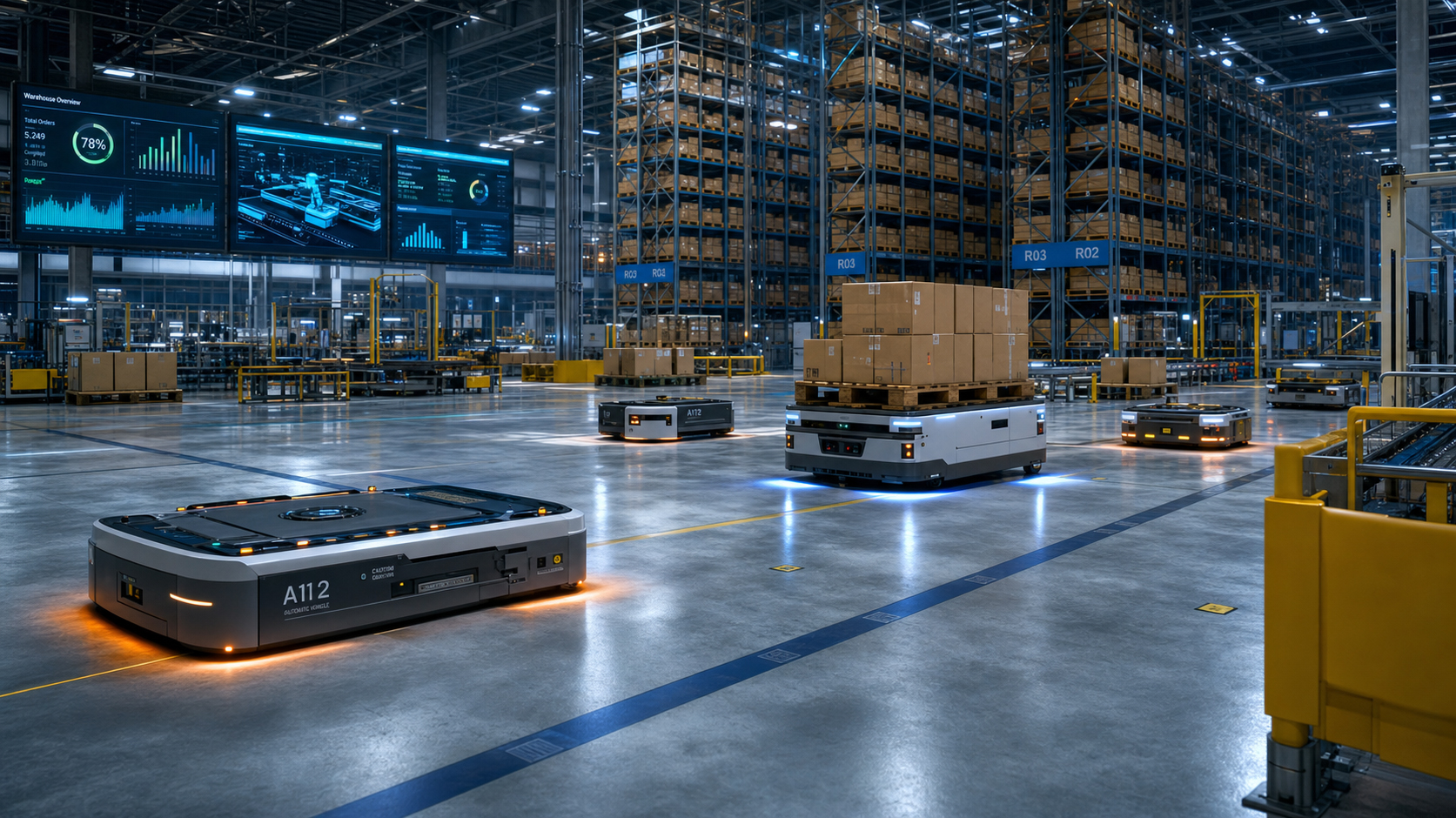
AGV oder AMR? Welcher Logistik-Roboter wirklich zu Ihrem Lager passt – Zwei Kürzel, eine Industrie, unzählige Missverständnisse – Kreativbild: Xpert.Digital
Versteckte Kosten bei Transportrobotern: Wann sich AGVs und AMRs wirklich rechnen
Das Ende der starren Routen? Wie AMRs die Intralogistik erobern (und wo AGVs unschlagbar bleiben)
Lights-Out-Lager: Wie KI und dynamische AMRs die Intralogistik der Zukunft steuern
In der modernen Intralogistik führt kein Weg mehr an mobilen Robotern vorbei. Angesichts eines sich dramatisch verschärfenden Fachkräftemangels und des rasanten Wachstums im E-Commerce setzen immer mehr Unternehmen auf fahrerlose Systeme, um ihre Materialflüsse zu automatisieren und zukunftsfähig zu machen. Doch wer sich heute mit der Anschaffung solcher Technologien beschäftigt, stößt unweigerlich auf ein begriffliches Labyrinth: AGV (Automated Guided Vehicle) und AMR (Autonomous Mobile Robot) dominieren den Diskurs. Oft werden die beiden Begriffe im Betriebsalltag synonym verwendet, doch technologisch und strategisch verbergen sich dahinter grundverschiedene Konzepte. Während klassische AGVs auf vorprogrammierte Routen und physische Führungslinien setzen, navigieren AMRs dank intelligenter Sensorik und KI frei und dynamisch durch komplexe Lagerumgebungen. Doch welches System ist das richtige? Ist das in der Anschaffung teurere AMR immer die bessere Wahl, oder hat das klassische AGV in hochstrukturierten Umgebungen weiterhin die Nase vorn? Dieser Artikel beleuchtet die technologischen Unterschiede, analysiert die Wirtschaftlichkeit beider Systeme und zeigt auf, worauf es bei der strategischen Investitionsentscheidung für die Intralogistik wirklich ankommt.
Mobile Roboter in der Intralogistik: AGVs und AMRs im strategischen Vergleich
Wer heute mit Entscheidungsträgern aus Logistik, Fertigung oder E-Commerce spricht, stößt unweigerlich auf die Abkürzungen AGV und AMR. Beide beschreiben Fahrzeuge, die autonom Güter durch Hallen und Lager transportieren, beide haben denselben grundlegenden Zweck: Waren von A nach B bewegen, ohne dass ein Mensch am Steuer sitzt. Und dennoch werden die Begriffe im betrieblichen Alltag so unterschiedlich verwendet, dass sie manchmal mehr Verwirrung stiften als Klarheit schaffen. Mal werden sie synonym benutzt, mal wird ihre Trennlinie schärfer gezogen, als es die technische Realität erlaubt. Dieses terminologische Durcheinander ist kein Zufall — es ist ein Spiegel einer Branche im Umbruch, in der sich Technologien schneller entwickeln als die Sprache, die sie beschreiben soll.
Das Fundament dieser Diskussion ist so alt wie die Automatisierungstechnik selbst: Die erste Generation fahrloser Transportsysteme, damals noch unter dem deutschen Begriff Fahrerloses Transportsystem (FTS) geführt, entstammte den 1950er Jahren und orientierte sich an physischen Führungsschienen oder eingebetteten Drähten im Boden. Was heute als AGV vermarktet wird, ist die Weiterentwicklung dieser Systeme — technisch gereifter, softwaregesteuerter, aber in seiner konzeptionellen Grundidee der vordefinierten Wegführung treu geblieben. AMRs hingegen repräsentieren eine konzeptionelle Neuausrichtung: Statt dem Fahrzeug einen Weg zu weisen, gibt man ihm ein Ziel — und überlässt es der eingebetteten Intelligenz, den optimalen Pfad selbst zu finden.
Technik hinter den Begriffen: Navigation als Schlüsseldimension
Der entscheidende technologische Unterschied zwischen AGVs und AMRs liegt nicht in der Bauform, der Traglast oder dem Einsatzgebiet — er liegt in der Navigationsarchitektur. AGVs operieren klassischerweise auf Basis physischer oder semi-physischer Führungssysteme: Magnetbänder auf dem Boden, eingebettete Induktionsschleifen, QR-Code-Raster oder Reflektormarken an Wänden und Säulen, von denen ein Laserscanner seine Position trianguliert. Diese Systeme sind präzise, zuverlässig und in industriellen Umgebungen seit Jahrzehnten bewährt. Der Roboter folgt einer vorprogrammierten Route, hält an, wenn ein Hindernis auftaucht, und wartet, bis der Weg wieder frei ist.
AMRs durchbrechen diese Logik. Sie verwenden eine Kombination aus LiDAR-Sensoren, Kameras, Ultraschalldetektoren und hochleistungsfähigen Onboard-Computern, um ihre Umgebung in Echtzeit zu kartieren und gleichzeitig ihre eigene Position innerhalb dieser Karte zu bestimmen. Das dahinterstehende Verfahren heißt SLAM — Simultaneous Localization and Mapping, auf Deutsch: simultane Positionsbestimmung und Kartierung. Der Roboter erschafft beim ersten Durchlauf quasi eine digitale Karte seiner Umgebung, aktualisiert sie kontinuierlich und leitet daraus in jedem Moment seine optimale Route ab. Erkennt er ein Hindernis — ob ruhende Palette, fahrenden Gabelstapler oder querenden Mitarbeiter — weicht er eigenständig aus und wählt eine alternative Strecke, ohne auf menschliche Eingriffe oder Systemanpassungen angewiesen zu sein.
Für die Praxis bedeutet das: Ein AGV, das normalerweise Route A fährt und bei einer Blockade auf die vorprogrammierte Route B ausweicht, ist in einem strengen Sinne nicht autonom — es führt eine vordefinierte Fallback-Logik aus. Ein AMR hingegen generiert seine Ausweichroute dynamisch aus dem aktuellen Zustand seiner Umgebung. Der Unterschied ist konzeptionell bedeutsam, in der Außenwirkung jedoch oft schwer wahrnehmbar, was die terminologische Verwirrung erklärt. Hinzu kommt, dass die Hersteller selbst keine einheitliche Nomenklatur verfolgen: Viele Systeme, die als AMR vermarktet werden, nutzen QR-Code-basierte Rasternavigation für die Positionierung und weisen damit strukturelle Ähnlichkeiten mit klassischen AGV-Systemen auf.
Der Markt in Zahlen: Explosive Dynamik mit strukturellen Unterschieden
Hinter der akademischen Begriffsklärung verbirgt sich einer der am schnellsten wachsenden Teilmärkte der globalen Automatisierungswirtschaft. Der kombinierte globale Markt für AGVs und AMRs wurde 2025 auf rund 6,4 Milliarden US-Dollar geschätzt und soll bis 2030 auf 15,6 Milliarden US-Dollar anwachsen, was einer jährlichen Wachstumsrate (CAGR) von rund 21 Prozent entspricht. Andere Quellen beziffern das Marktvolumen bis 2030 auf bis zu 22 Milliarden US-Dollar, je nachdem, welche Applikationsfelder und geografischen Regionen einbezogen werden. Die installierte Basis beider Systeme zusammen soll bis 2030 die Marke von drei Millionen Einheiten übersteigen.
Innerhalb dieses Wachstums zeigen sich allerdings deutliche Verschiebungen zugunsten der AMR-Technologie. Während für traditionelle AGV-Systeme im Segment Förderfahrzeuge und Transportroboter moderate Wachstumsraten zwischen vier und 18 Prozent prognostiziert werden, erwartet der Markt für AMRs eine CAGR von rund 30 Prozent zwischen 2024 und 2030. Das ist kein marginaler Unterschied — es ist ein struktureller Wandel, der widerspiegelt, dass die Nachfrage nach flexibler, anpassungsfähiger Automatisierung schneller wächst als die Nachfrage nach klassischen, pfadgebundenen Systemen. Bereits Anfang 2026 setzen über 80 Prozent aller Großlager auf Automatisierung, wobei AMRs zunehmend das operative Rückgrat dieser Infrastrukturen bilden.
Für Europa zeichnet sich ein eigenständiges Bild: Der europäische AGV-Markt allein soll von 1,67 Milliarden US-Dollar im Jahr 2025 auf 3,12 Milliarden US-Dollar bis 2031 wachsen, bei einer CAGR von rund 10,78 Prozent. Deutschland nimmt dabei mit einem Marktanteil von 24,54 Prozent im Jahr 2025 die Spitzenposition in Europa ein — eine Dominanz, die durch die hohe Dichte an Automobilherstellern, Zulieferern und Logistikdienstleistern erklärt wird. Gleichzeitig verzeichnet der europäische AMR-Markt das stärkste Wachstum im weltweiten Vergleich, da Europa als bedeutendster globaler Marktanteilshalter im AMR-Segment gilt. Die Pharmaindustrie entwickelt sich in diesem Kontext zur Wachstumsbranche mit der höchsten Dynamik — mit einer CAGR von 11,82 Prozent bis 2031.
Die technologische Konvergenz: Wenn die Grenzen verschwimmen
So klar die konzeptionellen Unterschiede auf dem Papier sind, so fließend werden sie in der industriellen Realität. Technologischer Fortschritt und wirtschaftlicher Wettbewerb treiben eine Konvergenz voran, die beide Kategorien zunehmend schwerer voneinander abgrenzbar macht. AGV-Hersteller integrieren fortschrittliche Hinderniserkennung, dynamisches Umrouting innerhalb vorab kartierter Bereiche und lernfähige Flottenmanagement-Software in ihre Systeme. Das Ergebnis sind hybride Architekturen, die je nach Anwendungsfall sowohl auf feste Routen als auch auf dynamische Pfadfindung zurückgreifen können.
Auf der anderen Seite nutzen einige AMR-Hersteller QR-Code-Raster oder andere physische Orientierungshilfen als Ergänzung zur SLAM-Navigation — nicht aus technologischer Notwendigkeit, sondern weil diese hybriden Ansätze in bestimmten Umgebungen präziser und stabiler funktionieren. Bodenbeschaffenheit, Lichtverhältnisse, die Dichte von Umgebungsmerkmalen und die Dynamik einer Produktionshalle beeinflussen, welcher Navigationsansatz die bessere Positionsgenauigkeit liefert. ABBs Visual SLAM-Technologie etwa kombiniert KI-gestützte 3D-Bildverarbeitung mit gewöhnlichen Kameras und erreicht dabei eine Positionsgenauigkeit von plus/minus 5 Millimetern — ohne dass Änderungen an der Halleninfrastruktur notwendig wären, und mit einer Reduzierung der Inbetriebnahmezeit um bis zu 20 Prozent.
Diese Konvergenz hat praktische Implikationen für Käufer und Betreiber: Die Kategorie des Systems ist kein verlässlicher Indikator für seine Leistungsfähigkeit in einem konkreten Einsatzszenario. Ein gut konfiguriertes AGV-System mit moderner Sensorik und ausgereifter Flottensteuerung kann in einer stabilen Fertigungsumgebung effizienter und kostengünstiger betrieben werden als ein AMR, der für diesen Anwendungsfall zu viel technologischen Overhead mitbringt. Umgekehrt scheitert ein AGV in einem dynamischen Distributionszentrum mit häufig wechselnden Layouts bereits an konzeptionellen Grenzen, die kein Software-Update überwinden kann.
Wirtschaftlichkeit im Detail: Investitionskosten, Betrieb und Amortisation
Die ökonomische Bewertung eines AGV- oder AMR-Projekts ist komplex und kann nicht auf einen einfachen Preisvergleich reduziert werden. AGVs haben in der Regel niedrigere Anschaffungskosten, da ihre Navigationsarchitektur technisch weniger aufwendig ist. Allerdings verursachen sie häufig erhebliche Installationskosten: Das Einbringen von Magnetbändern, das Anbringen von Reflektoren oder die Schaffung störungsfreier Bodenmarkierungen ist mit baulichen Maßnahmen verbunden, die sowohl Zeit als auch Budget binden. Bei Layouts, die sich regelmäßig ändern — sei es durch neue Produktlinien, saisonale Umbauten oder wachsende Lagerkapazitäten — steigen die Betriebskosten eines AGV-Systems überproportional, da jede Routenänderung einen Eingriff in die physische Infrastruktur erfordert.
AMRs sind in der Anschaffung teurer, da hochwertige LiDAR-Sensoren, leistungsfähige Onboard-Computer und die zugehörige SLAM-Software ihren Preis haben. Allerdings reduzieren sie den Bedarf an Infrastrukturinvestitionen erheblich: Eine Inbetriebnahme ist oft in wenigen Tagen oder Wochen möglich, Layout-Änderungen erfordern lediglich eine Software-Aktualisierung der gespeicherten Karte. Der Total Cost of Ownership (TCO) über einen Zeitraum von fünf Jahren fällt für AMRs in dynamischen Umgebungen daher häufig günstiger aus, obwohl der CAPEX höher ist. Der Preis für ein fahrerloses Transportsystem beginnt — je nach Hersteller und Ausstattung — bei rund 45.000 Euro pro Einheit, wobei komplexe AMR-Systeme für schwere Lasten erheblich teurer sein können.
Eine Fallstudie aus der Praxis illustriert die Wirtschaftlichkeit treffend: Ein Unternehmen, das drei fahrerlose Transportfahrzeuge statt zweier manuell betriebener Gabelstapler einsetzt, benötigt nur noch einen Bediener pro Schicht statt zwei. Bei 18 Schichten pro Woche ergibt sich eine Einsparung von rund 129.000 Euro pro Jahr nach dem Break-even-Punkt, der in diesem Beispiel nach 12,1 Monaten erreicht wird. Der ROI nach fünf Jahren liegt bei 396 Prozent. In Hochlohnländern wie Deutschland und bei Drei-Schicht-Betrieb fällt die Wirtschaftlichkeit noch günstiger aus — die hohen Arbeitskosten sind der stärkste einzelne Treiber der Automatisierungsrendite.
Xpert Partner in der Lagerplanung und -bau

Sicherheit, Normen, Nutzen: So wählen Sie das passende Robotersystem
Der demografische Rückenwind: Fachkräftemangel als Beschleuniger
Kein ökonomischer Faktor treibt die Nachfrage nach mobilen Robotern in Deutschland derzeit so stark an wie der strukturelle Fachkräftemangel in der Intralogistik. Die Phase zwischen 2025 und 2035 gilt als besonders kritisch, da die geburtenstarken Jahrgänge der Babyboomer-Generation in den Ruhestand treten und die Zahl der Erwerbsfähigen im logistikrelevanten Bereich erheblich abnimmt. In Sektoren wie Kommissionierung, Verpackung und innerbetrieblichem Materialtransport ist der Mangel an qualifiziertem Personal bereits heute spürbar — mit direkten Auswirkungen auf Produktivität, Liefertreue und Wettbewerbsfähigkeit.
Eine Studie von TMG Consultants, für die zwischen März und Juli 2024 über 2.500 Unternehmen aus der produzierenden Industrie befragt wurden, offenbart das Ausmaß des Nachholbedarfs: 63 Prozent der befragten Unternehmen haben ihre Intralogistik nicht oder nur ansatzweise automatisiert, weitere 22 Prozent verfügen über teilautomatisierte Prozesse. Gleichzeitig berichten 94 Prozent derjenigen Unternehmen, die bereits in Automatisierungslösungen investiert haben, von positiven Resultaten. Das Delta zwischen Nachholbedarf und positivem Feedback ist immens — und es signalisiert, dass die Automatisierungswelle in der deutschen Intralogistik trotz der bereits hohen Wachstumsraten noch am Anfang steht.
Moderne AMR-Systeme können laut aktuellen Berichten die Zahl der Arbeitsunfälle um bis zu 80 Prozent reduzieren und die Wegzeiten von Technikern um 30 bis 40 Prozent senken. Dies schlägt sich nicht nur in unmittelbaren Kostenvorteilen nieder, sondern verbessert auch die Arbeitsbedingungen der verbleibenden Belegschaft erheblich — ein Faktor, der in einer Arbeitnehmergesellschaft mit wachsender Anspruchshaltung gegenüber der Arbeitsqualität zunehmend an Bedeutung gewinnt. Die OECD geht davon aus, dass Automatisierung in der Summe nicht zu einem deutlichen Anstieg der Arbeitslosigkeit führt, da die Nachfrage nach qualifizierten Arbeitskräften für Wartung, Programmierung und Systemintegration parallel steigt.
Branchenspezifische Anforderungen: Nicht jedes Umfeld ist gleich
Die Entscheidung zwischen AGV und AMR lässt sich nicht pauschal treffen — sie muss für jede Branche und jeden konkreten Anwendungsfall neu bewertet werden. In der Automobilindustrie, die in Deutschland mit einem Anteil von 27,91 Prozent der größte Einzelabnehmer von AGV-Systemen ist, überwiegen die Vorteile systemgebundener Navigation: Die Produktionslinien sind hochgradig strukturiert, die Materialflüsse präzise getaktet und die Anforderungen an Wiederholgenauigkeit und Verlässlichkeit extrem hoch. Ein AGV, das in einem Takt von 58 Sekunden eine Komponente an einem Montageplatz bereitstellt, muss diese Aufgabe ohne jede Abweichung ausführen — und hat in stabilen Umgebungen dabei klare Vorteile gegenüber einem AMR, das seine Routen erst berechnen muss.
Im E-Commerce und in der Distributionslogistik kehren sich die Anforderungen nahezu vollständig um. Die weltweiten E-Commerce-Umsätze haben sich von zwei Prozent des Gesamteinzelhandels im Jahr 2010 auf rund 15 Prozent im Jahr 2022 entwickelt und sollen bis 2028 mehr als 22 Prozent erreichen. Diese Wachstumsdynamik erzwingt eine Lagerinfrastruktur, die nicht nur schnell, sondern auch radikal flexibel ist: Lagerlayouts ändern sich, Sortimente rotieren, Stoßzeiten verlangen nach schneller Skalierung. In diesem Kontext ist die Anpassungsfähigkeit von AMRs, die ohne physische Umbaumaßnahmen auf neue Layouts reagieren, ein entscheidender Wettbewerbsvorteil.
Die Pharmaindustrie stellt wiederum eigene Anforderungen: Strikte Hygienevorschriften, lückenlose Rückverfolgbarkeit jeder Materialbewegung und die Notwendigkeit, Engpässe in Verpackungsprozessen durch Fachkräftemangel zu überbrücken, machen AMRs zu einer attraktiven Lösung. Gleichzeitig erfordert die hochregulierte Umgebung eine besonders sorgfältige Validierung der eingesetzten Systeme — was die Einführungsphase verlängert, aber langfristig die Betriebssicherheit erhöht.
Flottenmanagement und KI: Die neue Intelligenzebene
Ein AGV oder AMR allein ist selten die relevante Einheit — es sind Flotten aus Dutzenden oder Hunderten von Fahrzeugen, die koordiniert eingesetzt werden müssen. Das Flottenmanagement hat sich dabei zu einer eigenständigen technologischen Disziplin entwickelt, die zunehmend von Methoden der Künstlichen Intelligenz durchdrungen wird. KI-basierte Orchestrierungsplattformen übernehmen die Aufgabe, Aufträge zu priorisieren, Fahrzeuge zuzuordnen, Ladevorgänge zu planen und Kollisionen in Echtzeit zu vermeiden — und tun das in Dimensionen, die menschliche Disponenten schlicht nicht bewältigen können.
Auf dem Deutschen Materialfluss Kongress 2026 in Dortmund diskutierten Experten unter dem Motto „Next Stop: Beyond Automation“ genau diese Entwicklung: KI und Robotik rücken ins Zentrum der Branchenagenda, und die Frage ist nicht mehr, ob sie Einzug in die Logistikhallen halten, sondern wie schnell. Anbieter wie Geekplus — der für das Geschäftsjahr 2025 erstmals schwarze Zahlen vermeldete und einen Umsatzanstieg von 31,6 Prozent im Jahresvergleich verzeichnete — belegen, dass die AMR-Branche aus der Frühphase in ein Stadium der wirtschaftlichen Reife eingetreten ist, in dem wiederkehrende Softwareumsätze und internationale Expansion die Ertragsstruktur prägen. Über 75 Prozent des Umsatzes großer Anbieter stammt bereits aus dem Ausland, wobei die Region Amerika um mehr als 50 Prozent wächst.
Das langfristige Ziel dieser technologischen Entwicklung ist das sogenannte Lights-Out-Lager: eine Anlage, die rund um die Uhr mit minimaler menschlicher Aufsicht betrieben wird, vollständig gesteuert von einer KI, die Roboterflotten koordiniert, Bestandsveränderungen antizipiert und Wartungsbedarfe vorausschauend plant. Bis 2034 soll der AMR-Markt auf 32,1 Milliarden Euro anwachsen, getrieben durch die Expansion in neue Branchen wie Pharmahandel und Lebensmittellogistik. Der Weg zum vollautonomen Lager ist keine Frage des Ob mehr — sondern des Wie schnell.
Regulatorischer Rahmen: Sicherheit als Enabler und Hürde zugleich
Mobile Roboter bewegen sich im selben physischen Raum wie Menschen — und das macht Sicherheitsstandards zu einem unverzichtbaren Teil der wirtschaftlichen Kalkulation. In Europa gilt für fahrerlose Transportfahrzeuge und AMRs seit 2020 die DIN EN ISO 3691-4, die die frühere Norm DIN EN 1525 abgelöst hat und die sicherheitstechnischen Anforderungen an die modernen Maschinenrichtlinien angepasst hat. Diese Norm definiert nicht nur Anforderungen an die Fahrzeuge selbst, sondern auch an die Betreiber: Eine ordnungsgemäße Bereichseinteilung, eine projektspezifische Risikobewertung und eine systematische Gefährdungsbeurteilung sind obligatorisch.
Für mobile Roboter mit Greifarm — sogenannte mobile Manipulatoren — kommt die ISO/TS 15066 hinzu, die spezifische Anforderungen an die kollaborative Robotik stellt. Die Kombination aus mobiler Plattform und Greifer erfordert eine besonders differenzierte Normenbewertung, da sich die Geschwindigkeiten beider Systemkomponenten addieren können und zusätzliche Freiheitsgrade berücksichtigt werden müssen. Der Ruf nach einer harmonisierten Norm, die die bislang getrennten Regelwerke für FTS und mobile Robotik zusammenführt, wird in der Branche immer lauter — und ist auch regulatorisch im Gange.
Die Sicherheitsnormierung erfüllt eine doppelte Funktion: Sie schützt Mitarbeiter vor Kollisionen und Unfällen — und sie schafft das Vertrauen, das Unternehmen benötigen, um Menschen und Roboter ohne trennende Gitter im gemeinsamen Raum arbeiten zu lassen. Kollaborative Szenarien, in denen AGVs oder AMRs und menschliche Arbeitskräfte dieselben Gassen nutzen, setzen eine zuverlässige und normenkonforme Sensorik voraus — und sind ohne diese schlicht nicht zulassungsfähig. Die Normarbeit ist damit nicht nur technische Bürokratie, sondern der Türöffner für neue Einsatzmöglichkeiten.
Systemauswahl als strategische Entscheidung: Die richtigen Fragen stellen
Wer heute ein Automatisierungsprojekt mit mobilen Robotern initiiert, sollte die Systemwahl nicht primär entlang der Frage AGV oder AMR treffen — sondern entlang eines Kriterienkatalogs, der die spezifischen operativen Anforderungen in den Mittelpunkt stellt. Ändert sich das Hallenlayout häufig? Ist die Umgebung dynamisch, mit vielen Menschen und wechselnden Hindernissen? Oder handelt es sich um eine stabile, hochstrukturierte Produktionsumgebung mit klar definierten Materialflüssen? Welche Traglastanforderungen bestehen — von leichten Behältern bis zu Palettenladungen von mehreren Tonnen? Wie hoch sind die Anforderungen an die Integration mit bestehenden Lagerverwaltungssystemen (WMS) und ERP-Plattformen? Und welcher Anbieter kann nicht nur das Fahrzeug liefern, sondern auch die langfristige Betriebsunterstützung, Softwareaktualisierungen und eine wachstumsfähige Flottenstrategie?
Daifuku — weltweit eines der führenden Unternehmen in der automatisierten Intralogistik mit über einem Jahrhundert Erfahrung im Materialflusssegment — hat sein Portfolio genau auf diese Bandbreite ausgerichtet. Die SOTR-Serie (Sorting Transfer Robot) bietet skalierbare Lösungen für Sortier- und Transportaufgaben in drei Leistungsklassen: SOTR-S für leichte Nutzlasten und flexible Sortieranwendungen, SOTR-M als skalierbare Lösung für den Transport von Behältern und Trays, und SOTR-L für schwere Lasten in anspruchsvollen Sortier- und Transportumgebungen. Ergänzt wird dieses Portfolio durch die Smart Handling-Sparte, die eine umfassende Palette von Gabelstapler-AGVs, Tunnel-AGVs, Montage-AGVs und Schlepper-AGVs für den Schwerlasttransport bereitstellt. Dieser systemische Ansatz — vom leichten Behältertransport bis zum mehrere Tonnen schweren Fördergut — spiegelt die Realität moderner Intralogistik wider: Kein Betrieb hat nur eine einzige Transportanforderung, und kein Anbieter, der nur eine Technologieklasse bedient, kann die Komplexität realer Produktions- und Logistikumgebungen vollständig abbilden.
Ein Markt auf dem Weg zur Reife: Strukturelle Treiber und Grenzen
Der Markt für mobile Roboter ist kein Nischenphänomen mehr — er ist ein strukturelles Element der globalen Industrieautomatisierung. Drei langfristige Treiber sorgen für eine Nachfrage, die auch konjunkturelle Schwankungen überdauern dürfte: erstens der demografische Wandel, der die Verfügbarkeit von Arbeitskräften für repetitive Intralogistikaufgaben dauerhaft einschränkt; zweitens das ungebremste Wachstum des E-Commerce, das den Druck auf Fulfillment-Geschwindigkeit und Lagerflexibilität erhöht; und drittens die steigende Verfügbarkeit leistungsfähiger KI- und Sensorik-Komponenten zu sinkenden Preisen, die die Eintrittsbarrieren für mobile Robotik kontinuierlich senkt.
Gleichzeitig gibt es strukturelle Grenzen, die das Wachstum bremsen. Die Integrationstiefe von AGV- und AMR-Systemen in bestehende IT-Infrastrukturen ist komplex und erfordert spezialisiertes Know-how, das nicht in jedem mittelständischen Unternehmen vorhanden ist. Die Normierungslandschaft ist, wie beschrieben, im Wandel und schafft gelegentlich Unsicherheit bei Investitionsentscheidungen. Und die Marktlandschaft der Anbieter ist trotz Konsolidierungstendenzen noch stark fragmentiert — mit Hunderten von Herstellern, deren Langlebigkeit und Servicefähigkeit schwer zu bewerten ist. Unternehmen, die sich für einen Anbieter entscheiden, binden sich häufig über viele Jahre an dessen Softwareökosystem, Ersatzteilversorgung und Weiterentwicklungsstrategie. Die Wahl des richtigen Partners ist damit mindestens so entscheidend wie die Wahl der richtigen Technologie.
Deutschland steht in diesem Markt vor einer doppelten Herausforderung: Einerseits ist es europäischer Spitzenreiter in der Roboterautomatisierung — 40 Prozent aller in der EU betriebenen Industrieroboter stehen in Deutschland —, andererseits offenbart die TMG-Studie einen erheblichen Nachholbedarf gerade in der Intralogistik. Die produzierende Industrie hat ihre Kernprozesse automatisiert, aber die internen Materialflüsse, die diese Prozesse verbinden, arbeiten oft noch mit manuellen Methoden. Genau hier liegt das größte unerschlossene Potenzial — und genau hier werden AGVs und AMRs in den kommenden Jahren den stärksten Wachstumsschub erfahren.
Jenseits der Etiketten: Was wirklich zählt
Die Diskussion über AGV versus AMR ist letztlich eine Diskussion über technologische Mittel und operative Zwecke. Die Etiketten sind hilfreich für Ingenieure, Systemarchitekten und Beschaffungsspezialisten, die präzise über Navigationsarchitekturen, Sensorausstattungen und Softwarekonzepte sprechen müssen. Für den Betreiber, der seine Kommissionierzeiten senken, seinen Durchsatz erhöhen und seinen Fachkräftemangel kompensieren will, sind sie sekundär. Was zählt, ist, ob das System die Aufgabe zuverlässig erfüllt, sich in die bestehende Infrastruktur integriert, sicher mit Menschen zusammenarbeitet und mit dem Unternehmen mitwachsen kann.
Die beste Automatisierungslösung ist nicht die technologisch aufwendigste — sie ist die, die den spezifischen Anforderungen eines konkreten Betriebs am besten entspricht. Ein einfaches, zuverlässiges AGV-System, das seit zehn Jahren fehlerlos läuft, ist jeder schlecht konzipierten AMR-Implementierung überlegen. Und ein durchdacht eingesetzter AMR-Schwarm, der die Flexibilität eines dynamischen Distributionszentrums entscheidend steigert, ist jeder AGV-Installation überlegen, die an Layoutänderungen scheitert. Der Kompass für die richtige Entscheidung ist nicht die Technologieklasse — er ist das Verständnis des eigenen Betriebs und die Kompetenz des Partners, der bei der Systemintegration begleitet.
Ihre Intralogistik-Experten

Beratung, Planung und Umsetzung von Komplettlösungen für Hochregallager und automatisierte Lagersysteme - Bild: Xpert.Digital
Mehr dazu hier:
Ihr globaler Marketing und Business Development Partner
☑️ Unsere Geschäftssprache ist Englisch oder Deutsch
☑️ NEU: Schriftverkehr in Ihrer Landessprache!

Konrad Wolfenstein
Gerne stehe ich Ihnen und mein Team als persönlicher Berater zur Verfügung.
Sie können mit mir Kontakt aufnehmen, indem Sie hier das Kontaktformular ausfüllen oder rufen Sie mich einfach unter +49 7348 4088 965 an. Meine E-Mail Adresse lautet: wolfenstein∂xpert.digital
Ich freue mich auf unser gemeinsames Projekt.
☑️ KMU Support in der Strategie, Beratung, Planung und Umsetzung
☑️ Erstellung oder Neuausrichtung der Digitalstrategie und Digitalisierung
☑️ Ausbau und Optimierung der internationalen Vertriebsprozesse
☑️ Globale & Digitale B2B-Handelsplattformen
☑️ Pioneer Business Development / Marketing / PR / Messen
Unsere globale Branchen- und Wirtschafts-Expertise in Business Development, Vertrieb und Marketing


Unsere globale Branchen- und Wirtschafts-Expertise in Business Development, Vertrieb und Marketing - Bild: Xpert.Digital
Branchenschwerpunkte: B2B, Digitalisierung (von KI bis XR), Maschinenbau, Logistik, Erneuerbare Energien und Industrie
Mehr dazu hier:
Ein Themenhub mit Einblicken und Fachwissen:
- Wissensplattform rund um die globale wie regionale Wirtschaft, Innovation und branchenspezifische Trends
- Sammlung von Analysen, Impulsen und Hintergründen aus unseren Schwerpunktbereichen
- Ein Ort für Expertise und Informationen zu aktuellen Entwicklungen in Wirtschaft und Technologie
- Themenhub für Unternehmen, die sich zu Märkten, Digitalisierung und Brancheninnovationen informieren möchten