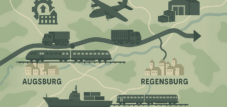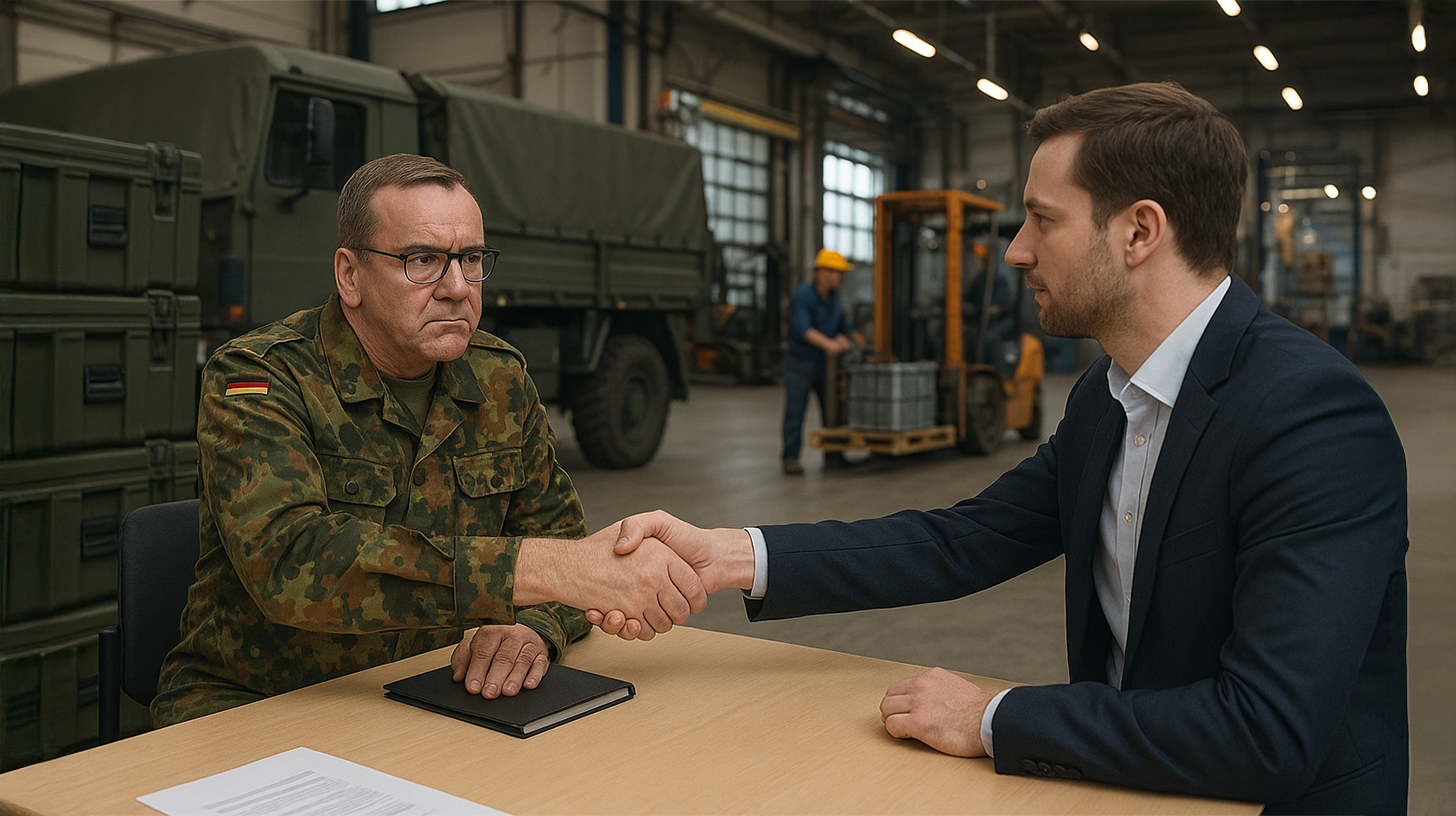
Defense logistics and industry are at odds: Mr. Pistorius, you're talking to the wrong people – we're ready! – Creative image: Xpert.Digital
German Armed Forces dilemma: When money doesn't equal equipment
Arms crisis? Why Germany oscillates between billions and stagnation
The sluggish arms buildup is not solely the result of hesitant companies. A complex, fragmented procurement system and contradictory political signals are equally hindering progress. Industry and government are thus in the same boat – and rowing against each other.
1. Ten billion more – but hardly any new equipment
- Since 2022, over €120 billion in special and additional funds have been approved, most recently again through the suspension of the debt brake.
- Nevertheless, contracts are still missing: The 20 Eurofighters that were so confidently announced for 2024 have still not arrived.
- Result: Troops wait, warehouses remain empty, production lines remain small.
2. Pistorius's warning to industry
The minister demands: "There is no longer any reason to complain. Industry knows perfectly well that it is now responsible for delivering."
Key points of his criticism:
- Delayed deliveries even for agreed-upon projects.
- Insufficient capacity for ammunition, drones, and tanks.
- Calls for planning certainty are no longer valid after billion-euro aid packages.
3. What the minister is ignoring: bureaucratic obstacles
At the same time, even government agencies are warning of self-inflicted obstacles:
The procurement of defense technology is significantly delayed and complicated by various obstacles. Lengthy tendering procedures mean that only a third of the processes benefit from the acceleration law, causing delays of months to years. The complex cascade of approvals, particularly for export and IT security checks, can comprise up to 14 individual steps, making capacity building virtually impossible to predict.
Additional challenges arise from the lack of purchase guarantees, as exemplified by the Eurofighter reorder without a concrete contract. This leads companies to hesitate to invest in new technologies. Internal over-regulation within government agencies, criticized in a 71-point plan, results in high personnel costs and delays decision-making processes.
Another significant problem is the parallel oversight by multiple ministries. Agencies such as BAAINBw, BMF, and BMWK sometimes conduct duplicate reviews, leading to unclear responsibilities and additional bureaucracy. These structures significantly hinder the efficient and rapid procurement of defense technology.
The president of the procurement office therefore counters the widespread view that her office alone is the blocker: "Industry sometimes has stronger constraints than we do."
Related to this:


4. Where industry actually needs to deliver
- Industrialization instead of manufacturing: Small series still dominate – widespread production lines are lacking.
- Courage to make advance investments: The risk of setting up an additional production line is "manageable".
- Internal process slimming: Even within corporations, internal controlling paralyzes projects.
5. Where the state needs to step on the gas pedal
- Genuine framework and option agreements for repeat orders create planning security.
- Expand direct awards and shorten review procedures, as even the opposition demands.
- Legally fix target figures – so that politicians don't make new promises without backing them at every trade fair.
- Strengthen personnel and IT in the procurement office so that the ideas of the "Turning Point Bureaucracy Reduction" project do not fall by the wayside.
6. A joint wake-up call – not the next blame game
As long as the ministry, parliament, procurement office, financial controlling, and industry all point the finger at each other, every "turning point" remains empty rhetoric. Only when
- legally binding requirements are enshrined,
- Procedures radically streamlined and
- Companies invest in advance
Can Germany achieve the promised capabilities – and truly deter Europe?.
Mr. Pistorius, the problem isn't just in the factories, but also in your stacks of files. Anyone who wants genuine military capability must simultaneously speed up wrenches and stamps. Industry is ready – if only the government would finally clear the way.
Hub for Security and Defense - Advice and Information

Hub for Security and Defense - Image: Xpert.Digital
The Security and Defence Hub offers expert advice and up-to-date information to effectively support companies and organizations in strengthening their role in European security and defence policy. Working closely with the SME Connect Defence Working Group, it particularly promotes small and medium-sized enterprises (SMEs) that wish to further develop their innovative capacity and competitiveness in the defence sector. As a central point of contact, the Hub thus creates a crucial bridge between SMEs and European defence strategy.
Related to this:
Consulting - Planning - Implementation

Markus Becker
I would be happy to serve as your personal advisor.
Head of Business Development
Chairman SME Connect Defense Working Group
Consulting - Planning - Implementation
Konrad Wolfenstein
I would be happy to serve as your personal advisor.
You can contact me at wolfenstein∂xpert.digital or
Just call me on +49 7348 4088 965 .
Your dual-use logistics experts
Dual-use logistics experts - Image: Xpert.Digital
The global economy is currently undergoing a fundamental transformation, a watershed moment that is shaking the foundations of global logistics. The era of hyper-globalization, characterized by the relentless pursuit of maximum efficiency and the "just-in-time" principle, is giving way to a new reality. This new reality is marked by profound structural breaks, geopolitical power shifts, and increasing fragmentation of economic policy. The once taken-for-granted predictability of international markets and supply chains is dissolving and being replaced by a period of growing uncertainty.
Related to this: