


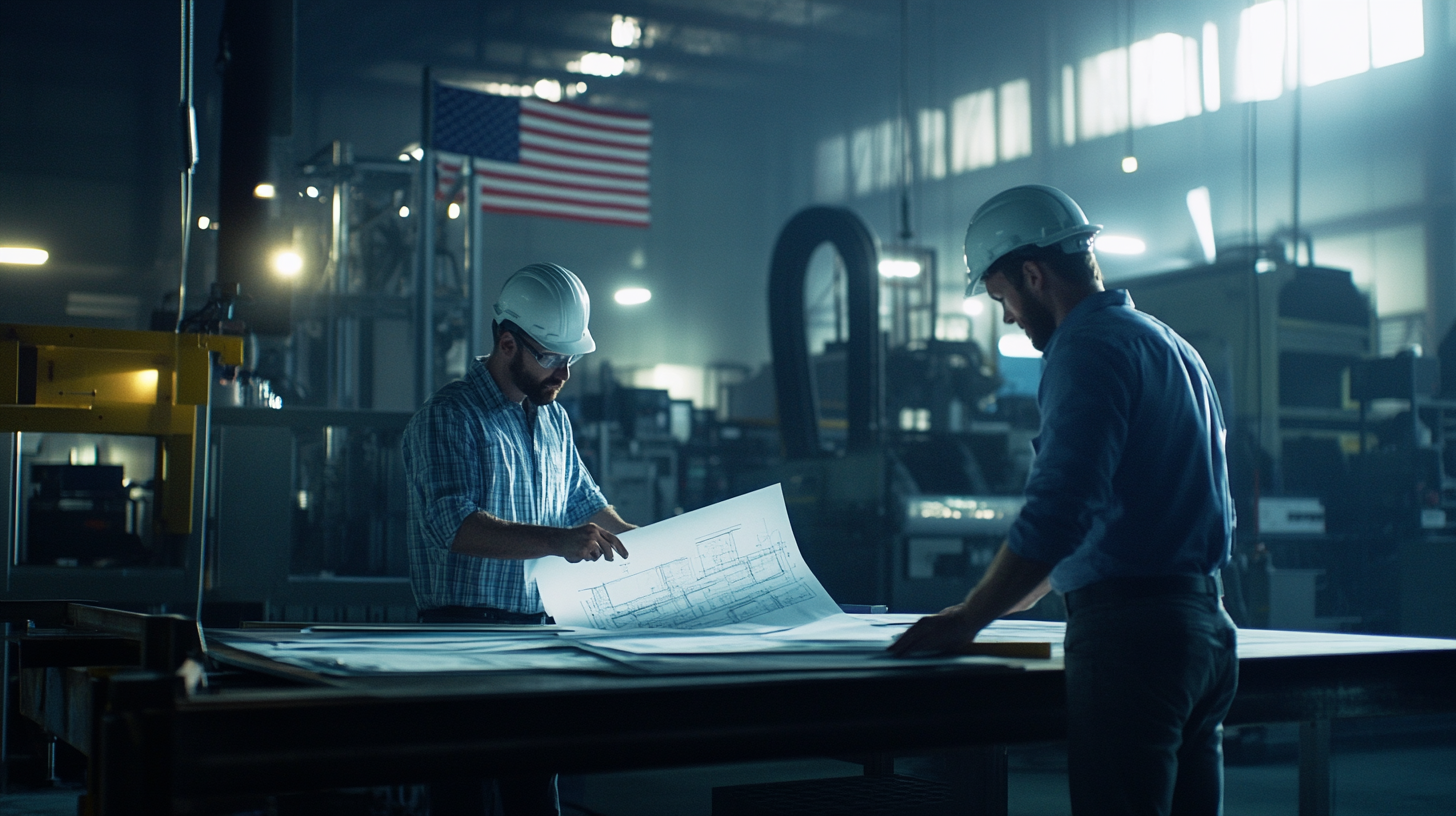
Mechanical engineering and industry: US experts wanted? Focus and expansion in the US market – Image: Xpert.Digital
US expansion for German companies: New paths, local production and strategic advantages
Following Donald Trump's election victory and the resulting political uncertainties in Germany, many German companies are increasingly considering expanding their operations in the USA. Export-dependent sectors such as mechanical engineering and the automotive industry are particularly affected, having been alarmed by Trump's announced import tariffs.
Main reasons for focusing on the US market
1. Increased import duties
Trump's plans to drastically increase tariffs on European goods have prompted many German companies to rethink their production strategies. German SMEs, in particular, which are heavily dependent on exports, are forced to explore alternatives to secure their competitiveness in the US market. Relocating production to the US could be one solution to avoid tariffs while simultaneously benefiting from potential tax breaks.
2. Tax relief and energy prices
The prospect of tax breaks for companies setting up operations in the US, coupled with comparatively low energy costs, makes the US market attractive to German firms. Especially given the high energy costs in Germany, relocating production is increasingly seen as economically viable.
3. Supply Chain Resilience
Global supply chains have been disrupted for years by geopolitical tensions and the COVID-19 pandemic. Many companies are therefore increasingly relying on a strategy of local production for local markets. This means that goods intended for sale in the US are also produced there. Trump's election victory provides many companies with an incentive to further pursue this strategy.
Demand for US experts
As considerations regarding production relocation grow, so does the demand for experts with specific knowledge of the US market. Interim managers with expertise in areas such as:
- Finances
- Production relocations
- Supply Chain Management
These experts help companies conduct feasibility studies and develop concrete action plans for a possible expansion or relocation to America.
Related to this:
Challenges and opportunities
Opportunities
Companies that already manufacture in the US or are planning to expand production could benefit from Trump's policies. Tax breaks and a stable energy supply offer long-term advantages.
challenges
Despite these opportunities, there are also concerns. Some companies are hesitant due to the uncertain political situation in the US or high investment costs for setting up new production facilities. Furthermore, the shortage of skilled workers in US industry could pose an obstacle.
New planning and strategy changes?
German industry is facing a crucial phase in which it must realign its strategies for the US market. Donald Trump's election victory has prompted many companies to reconsider their production locations and focus more strongly on the US market. At the same time, considerable uncertainty remains as to whether these shifts will be profitable in the long term.

Focus on the US market: Opportunities and challenges for German industrial companies
In a rapidly changing global economy, where political decisions and economic frameworks are gaining increasing importance, the USA is becoming a growing focus for many German industrial companies. Since the US elections and the presidency of Donald Trump, numerous German companies have been intensively evaluating the possibility of expanding their presence in the American market. The prospect of tax breaks and more favorable production conditions in the United States is leading to an intensive examination of potential expansion strategies. There is a particularly high demand for specialists in areas such as finance, production relocation, and supply chain management who can support companies in reviewing and implementing such strategies.
Production relocation as a reaction to trade policy changes
During his presidency, Trump announced plans to drastically increase import tariffs, causing considerable concern among many German medium-sized companies with significant business activity in the US. The threat of higher tariffs and other protectionist measures prompted a reassessment of existing business models and supply chains. For numerous German companies, relocating production to the US became a more attractive option, allowing them to avoid potential tariff costs and benefit from the tax breaks offered to US-based firms. Consequently, the demand for qualified interim managers and experts experienced in international production relocations increased, as companies sought to gain a comprehensive understanding of the economic and organizational challenges involved.
The concrete implementation of production relocations, however, requires long-term planning and a solid strategic foundation. Although the announcement of Trump's policies prompted many companies to reconsider their strategies, no actual production relocation had been decided upon at that time. Nevertheless, the ongoing pressure from high energy costs in Germany and the prospect of more favorable production conditions in the US suggests that such a decision could very well be on the agenda of German companies in the future. Some of these companies have already commissioned external experts, including specialized consulting firms like Xpert.Digital, to analyze the feasibility and financial implications of relocating production to the US.
Optimistic sentiment regarding the US economy
In the executive suites of German industrial companies, there is currently an optimistic, even euphoric, mood regarding business prospects in the USA. Many executives see the USA as a land of economic opportunity and hope that a stronger market presence will provide access to an enormous sales market. The comparatively low energy prices, the business-friendly tax regulations, and the stable demand in the USA are considered key factors that could support the growth ambitions of German companies.
This optimism, however, is not based solely on short-term political changes, but also on the concept of a "good citizen" approach: German companies seeking long-term success in the American market are increasingly relying on a local production presence to position themselves as responsible corporate citizens within US society. This approach not only helps them avoid potential tariffs, but also gain the trust of American consumers and business partners. Nevertheless, this strategy remains a long-term investment that extends far beyond a single US presidential term and requires comprehensive calculation and strategic planning.
Cooperation models as an alternative to individual relocation
At the same time, some companies are hesitant to relocate production independently due to the uncertain political climate in the US. Particularly among medium-sized businesses, there is increasing consideration of collaborations and joint production facilities. These companies, which are not in direct competition with each other, are increasingly exploring the possibility of joining forces and establishing shared production sites in the US. By pooling their resources and sharing risks and investment costs, they could potentially operate more economically.
Such collaborations could not only reduce financial burdens but also increase the chances of successfully entering the complex American market. Experts and consulting firms like Xpert.Digital play a crucial role as intermediaries and project managers, facilitating coordination and collaboration between the participating companies and efficiently implementing shared goals. This could represent an attractive alternative for German SMEs to capitalize on opportunities in the US market without having to bear the entire investment costs and risks alone.
Strategy shift towards local production
German companies' considerations regarding the relocation of production capacities to the USA coincide with a period in which globalized supply chains are increasingly being questioned. The risks of what is often called "unfettered global logistics" are becoming ever more apparent in times of economic and political uncertainty. Events such as trade conflicts, pandemic-related disruptions in supply chains, and increasing political tensions have led many companies to rethink their strategies. The new trend is toward so-called "nearshore production," where products are manufactured as close as possible to the target markets.
For German companies serving the US market, establishing a local production facility could be the answer to the challenges of global logistics. Local production could reduce delivery times and costs, mitigate the risk of supply chain disruptions, and simultaneously avoid the customs duties that would be incurred when importing goods into the US. It would also allow them to respond more flexibly to US market demand and thereby strengthen their competitive position.
Challenges and perspectives of US expansion
Although the opportunities in the US market are promising for German companies, there are numerous challenges that should not be overlooked. The cultural differences between the German and American business worlds often present a significant hurdle. While in Germany, for example, long-term planning and high product quality are paramount, American companies are frequently more focused on short-term profits and high flexibility. These differences can lead to misunderstandings and friction if German companies transfer their business models to the US without adaptation.
Furthermore, the legal and regulatory frameworks in the USA can differ significantly from those in Germany. For example, labor law, product liability, and environmental standards vary considerably from state to state. For German companies seeking success in the USA, it is therefore crucial to understand these differences and adapt their business strategies accordingly.
Another obstacle is the intense competition in the US market. In many sectors, such as automotive and mechanical engineering, German companies already face established American and international competitors. To hold their own in this market, a targeted differentiation strategy is necessary, one that highlights the strengths of German products – such as high quality, reliability, and innovation – while simultaneously meeting the specific needs of American consumers.
The US market as a strategic growth opportunity
The US market undoubtedly offers enormous potential for German industrial companies, but also presents various challenges. Expansion into the US should not be viewed merely as a short-term reaction to political changes, but rather as a strategic investment in the future. By building local production capacities and adapting to specific market requirements, German companies can strengthen their competitiveness while simultaneously reducing the risks associated with global supply chains.
Given the opportunities and risks of the American market, it is crucial for German companies to gather comprehensive information and carefully prepare their expansion plans. Engaging experienced experts and specialized consulting firms can help them overcome the complex legal, cultural, and economic challenges and achieve long-term success in the US market.
Related to this: