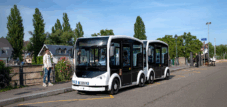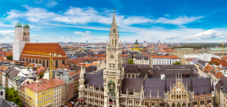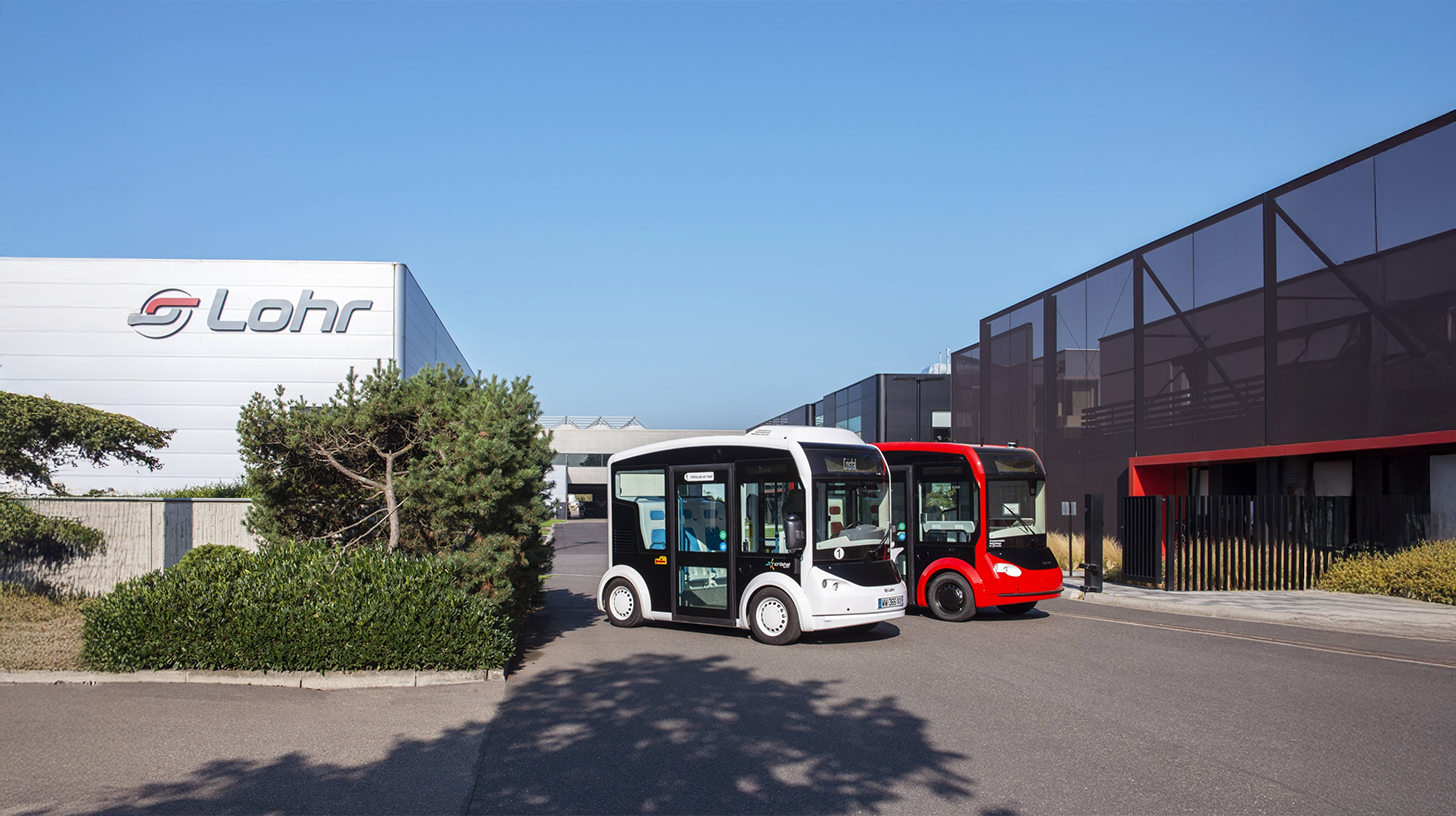
Transformation of urban mobility in Munich: CRISTAL mini city buses are transforming public transport – Image: Lohr Group
Clean and quiet in Munich city center - with the CRISTAL mini city bus from 16.9.2025 on line 167
Munich is now testing minibuses that can be coupled together like trains – the solution for the “last mile”?
Munich's public transport company is ushering in a new era of urban mobility with the innovative CRISTAL mini-city bus. Since September 16, 2025, the French electric minibuses have been operating on a trial basis on line 167 in Hadern, demonstrating a pioneering concept: modular, coupling vehicles that can flexibly adapt to varying passenger needs.
Related to this:

The technology behind the innovation
The CRISTAL from Lohr Industrie represents a significant advancement in sustainable public transport technology. The French company, based near Strasbourg, developed a fully electric, modular shuttle system that has been successfully operating for years in various French cities, including Saverne in Alsace, Ajaccio in Corsica, and Avignon in Provence.
The CRISTAL's technical specifications impress with their practicality: With a range of 120 to 170 kilometers and a top speed of 50 kilometers per hour, the system is ideally suited for urban use. The batteries can be fully charged within 2.5 hours, while a 50 percent charge is achieved in just one hour. With a gradient climbing capability of 20 percent, the system effortlessly masters the topographical challenges of urban landscapes.
The revolutionary feature of the CRISTAL lies in its automated mechanical coupling system. The individual modules can be coupled or uncoupled in less than two minutes. A train can consist of one to four vehicles and transport up to 64 people. This flexibility makes it possible to serve different urban areas simultaneously and adjust capacity as needed.
From Barcelona to Zurich: What Germany can learn from the global shuttle trend
Munich's pilot project in Hadern
The pilot project in Munich demonstrates the practical application of this innovative technology. The CRISTAL buses operate as line E167 on a section of the existing route 167 between the Waldfriedhof cemetery and Großhaderner Straße. At the Großhaderner Straße stop, the three buses split: one continues to the Am Hedernfeld stop, the other to Blumenau. On the return journey, the vehicles rejoin at Haderunstraße and travel together to the Waldfriedhof cemetery.
Each individual bus can accommodate up to ten passengers, allowing the three-bus set to transport a total of 30 passengers. The vehicles are fully accessible and equipped with automatic electric ramps for people with reduced mobility, as well as wheelchair access. This makes them particularly valuable for connecting suburban areas, where elderly people and those with mobility impairments often live.
Strategic importance for the transport transition
The CRISTAL project in Munich is part of a broader strategy to electrify public transport. MVG has already put over 100 electric buses into operation and aims to fully electrify its bus fleet by 2035. With this goal, Munich is making a significant contribution to cleaner air and noise reduction in the city.
The small electric buses address a specific problem in public transport: the efficient service of suburban areas and densely populated neighborhoods where large buses cannot operate or are not profitable due to low ridership. This concept is scheduled to be implemented on the new Line 152 between Neuaubing and Freiham starting in early 2026.
Related to this:

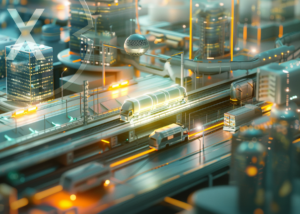
Europe-wide developments in electromobility
The introduction of CRISTAL buses in Munich reflects a European trend towards the electrification of public transport. According to recent studies, the share of electric buses among new registrations in the EU rose from 1.6 percent in 2018 to 4.3 percent in 2019, reaching significantly higher levels in 2020. Worldwide, 480,000 buses were already electric in 2020, and this number continues to grow.
Cities like London, with over 500 electric buses, Paris with a similarly sized fleet, and Leicester, with plans for complete electrification by 2030, demonstrate the Europe-wide shift. German cities such as Hamburg, Berlin, and Stuttgart are also investing heavily in electric bus fleets and contributing to improved urban air quality.
The future of autonomous systems
The CRISTAL system is already paving the way for the next stage of development: autonomous driving. According to the manufacturer, the first driverless shuttle-sized vehicles are expected to be type-approved and ready for series production as early as 2027/2028. Autonomous buses could significantly reduce operating costs in public transport and enable an improved service at the same price.
Several projects in Germany are already testing autonomous shuttle systems. The RABus project in Baden-Württemberg successfully tested autonomous vehicles in Mannheim and Friedrichshafen. In the Rhine-Main region, the KIRA project is the first in Germany to test autonomous vehicles for public transport at automation level 4 with passengers.
🎯🎯🎯 Benefit from Xpert.Digital's extensive, five-fold expertise in one comprehensive service package | BD, R&D, XR, PR & Digital Visibility Optimization


Benefit from Xpert.Digital's extensive, five-fold expertise in a comprehensive service package | R&D, XR, PR & Digital Visibility Optimization - Image: Xpert.Digital
Xpert.Digital possesses in-depth knowledge across various industries. This allows us to develop tailored strategies precisely aligned with the requirements and challenges of your specific market segment. By continuously analyzing market trends and monitoring industry developments, we can act proactively and offer innovative solutions. The combination of experience and expertise generates added value and provides our clients with a decisive competitive advantage.
More information here:
CRISTAL in Munich: Testing autonomous, barrier-free shuttles
Last-mile challenges
CRISTAL technology addresses one of the biggest logistical and transport policy problems of modern cities: the efficient handling of the first and last mile. In sparsely populated areas, traditional bus and train lines run less frequently, and the network of stops is limited. On-demand transport can offer a solution here by providing customized departure times on request, including at additional, virtually defined stops.
App-based shared rides with minibuses can significantly improve mobility options and reduce dependence on private cars. Already, one in three local public transport companies in Germany offers flexible, on-demand minibus services. This development demonstrates the great potential for a transport revolution, even in rural areas.
Related to this:
Economic and ecological advantages
The electrification of urban mobility offers both economic and environmental advantages. While electric vehicles often have higher purchase costs than diesel vehicles, a comprehensive total cost of ownership analysis shows that they are usually cheaper over their entire lifespan, especially in the stop-and-go traffic of urban areas.
The MVG's 100 electric buses will potentially avoid almost 60,000 tons of CO2 over their service life. Such savings contribute significantly to achieving climate goals and simultaneously improve air quality in cities.
Integration into existing transport systems
A key success factor for innovative mobility solutions like the CRISTAL is their integration into existing transport systems. As a MaaS solution, the vehicles complement public transport and can be operated intermodally. They can be used for new routes or to supplement the existing network, in both scheduled and on-demand service.
Integration into existing fare, ticketing, and information systems is crucial. In Munich, the test ride with the CRISTAL buses is free of charge during the trial period, which is intended to promote acceptance and gather valuable experience for later regular integration.
International Perspectives and Comparisons
The development of urban mobility is a global phenomenon. Cities worldwide are experimenting with various approaches to improving their transport systems. In France, detachable electric buses have already proven successful in several cities. Barcelona, Zurich, and Valence are also testing autonomous electric shuttles.
This international development demonstrates that Munich, with the CRISTAL project, is part of a global movement towards sustainable urban mobility. The insights gained can not only benefit the Bavarian capital but also serve as a model for other German and European cities.
Social impact and accessibility
An important aspect of CRISTAL technology is its impact on social inclusion. The vehicles' complete accessibility enables people with limited mobility to participate in public life. Ingrid Appel from the Munich Senior Citizens' Advisory Board described the service as valuable, especially for people using walkers.
Flexible public transport services in suburban areas can help reduce social inequality by providing better mobility for people without their own car. This is particularly important for older people, young people, and low-income households, who often rely on public transport.
Technological advancement and innovation
CRISTAL technology represents just one component in the development of intelligent transportation systems. Future developments are expected to bring even greater integration of various mobility options. Mobility hubs, as central transportation interchanges, could enable efficient transfers between different modes of transport.
The integration of artificial intelligence and advanced sensor technology will further increase the efficiency of autonomous systems. Dynamic load management for charging infrastructure will help to make the electrification of transport more cost-effective.
Political framework and funding
The successful implementation of innovative mobility solutions depends significantly on supportive political frameworks. The Munich CRISTAL project is supported by the Mobility Department of the City of Munich and financed by funds allocated by the City Council in August 2025.
At the federal level, the government promotes alternative drive systems in public transport through various programs. The EU's Clean Vehicles Directive stipulates that between 2021 and 2025, at least 45 percent of all newly purchased buses must have a low-emission alternative drive system.
CRISTAL in Munich: Will modular e-buses rethink the city?
The CRISTAL pilot project in Munich is more than just a test of new technology – it's a building block for the transport revolution in German cities. The insights gained will not only be valuable for the further development of Munich's public transport system, but can also help other cities plan similar projects.
The combination of electrification, modularity, and planned automation makes the CRISTAL system a promising approach for the urban mobility of the future. If the system proves successful in test operations, it could become an important addition to public transport and help reduce dependence on private cars.
The test operation in Munich will run until the end of October 2025. The findings from this project will show whether the modular electric buses truly have the potential to sustainably transform urban mobility and make a significant contribution to the transport revolution.
Consulting - Planning - Implementation

Markus Becker
I would be happy to serve as your personal advisor.
Head of Business Development
Consulting - Planning - Implementation
Konrad Wolfenstein
I would be happy to serve as your personal advisor.
You can contact me at wolfenstein∂xpert.digital or
Just call me on +49 7348 4088 965 .