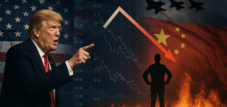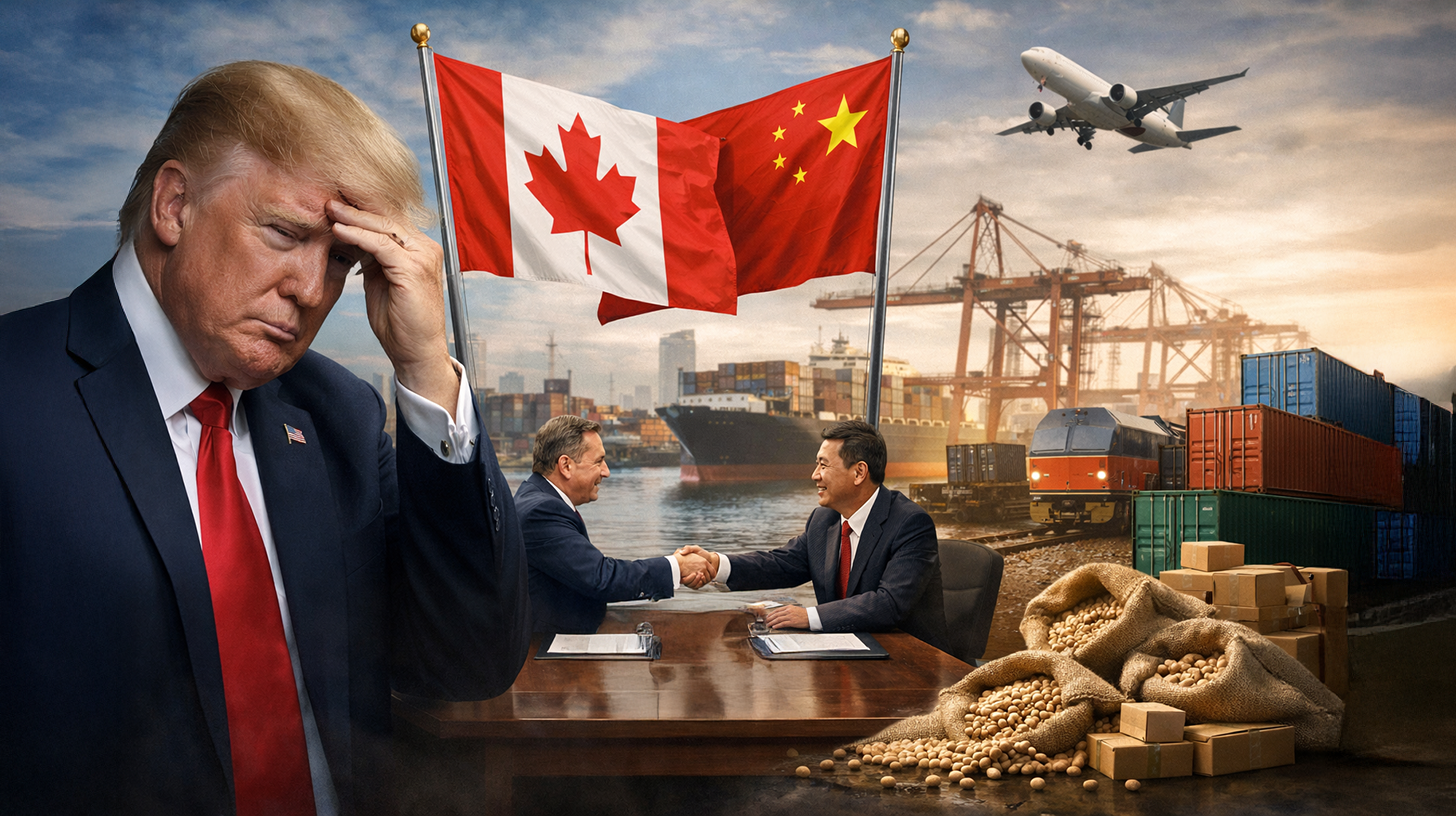
Donald Trump's own goal? Trade agreement between Canada and China: Barrier reductions and tariff cuts agreed – Image: Xpert.Digital
How US tariffs are driving Canada's economy directly towards China – The end of the North American alliance as we know it
A frontal assault on the dollar? Currency pact between Canada and China alarms the US
It's a scenario that seemed impossible just a few years ago: Canada, traditionally the closest economic and political partner of the United States, is executing a historic about-face and opening its doors wide to China. The first visit by a Canadian prime minister to Beijing in eight years is not merely a diplomatic gesture, but an act of economic self-defense. Driven by the aggressive tariff policies of the Trump administration, which spares no one, not even its neighbors, Prime Minister Mark Carney is daring to break with transatlantic tradition.
The agreement is explosive: While Washington is building walls, Beijing is lowering tariffs for Canadian farmers and investing billions in Canada's resource sector. In return, Ottawa is opening the market to Chinese electric cars – a move that is setting off alarm bells in Detroit and Washington. But behind the bare figures of the trade volume lies far more than a simple barter deal. It's about access to crucial minerals for the energy transition, about an attack on the dominance of the US dollar through new currency swaps, and about whether the Western alliance can still withstand this economic pressure.
This analysis sheds light on the background of this daring geopolitical gamble. It reveals how economic constraints are forging new alliances, which winners and losers this realignment produces, and why this Canadian go-it-alone approach could be the first domino to fall in a crumbling global economic order. Learn why Canada's eastward expansion is not merely a local decision, but signals a massive shift in the global balance of power.
Canada's turn towards Beijing signals a massive shift in the global economic order
The agreement between Canada and China is far more than a typical trade deal between two countries. The first visit by a Canadian prime minister to Beijing in eight years underscores a fundamental realignment of global trade relations, driven by American tariff policies that are pushing even its closest allies into the arms of other partners. The timing of this rapprochement reveals just how fragile the transatlantic economic order, built up over decades, has become and raises fundamental questions about the future of the common global trading system.
Economic constraints as a trigger for a new strategy
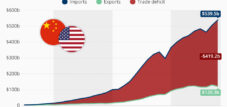
The economic circumstances that prompted Canadian Prime Minister Mark Carney's trip to Beijing are of vital importance. With a bilateral trade volume exceeding US$762 billion in 2024, the United States is by far Canada's most important trading partner. Approximately 49.2 percent of all Canadian imports come from the United States, while about 75 percent of Canadian exports go to the American market. This one-sided dependence proved to be a strategic weakness under the Trump administration.
The announced US tariffs of 35 percent on Canadian goods not covered by the USMCA free trade agreement are hitting Canada particularly hard. Previously, punitive tariffs of 100 percent on Canadian electric vehicles and 25 percent on steel and aluminum had already severely strained relations. Canadian industry is facing an existential threat, especially in the key sectors of auto manufacturing, steel processing, and raw material exports. The Trump administration is using this dependence as leverage to force far-reaching concessions, ranging from increased defense spending to the elimination of protections for Canadian agriculture.
In this situation, China presents itself as an economic lifeline. As Canada's second-largest trading partner, with a trade volume of 64.2 billion Canadian dollars in the first half of 2025, the Middle Kingdom possesses the economic scale to replace a portion of American demand. The tariff reductions now agreed upon target precisely those areas where Canada is suffering under American pressure. The reduction of the Chinese tariff on Canadian rapeseed from 84 to 15 percent, effective March 1, opens up a market that was enormously important for Canadian farmers in 2024, with exports totaling almost five billion Canadian dollars.
Unequal concessions and their economic rationale
The structure of the trade agreement reveals a compelling economic logic that extends far beyond short-term tariff reductions. Canada's willingness to allow up to 49,000 Chinese electric vehicles into its market at an extremely low preferential tariff of just 6.1 percent appears at first glance to be a huge concession. After all, the previous administration under Justin Trudeau, following the US example, had only imposed 100 percent tariffs on Chinese electric cars in 2024. This about-face, however, makes sense for several reasons.
First, 49,000 vehicles represent less than three percent of the Canadian new car market, thus offering controlled access that will not immediately threaten the domestic auto industry. Second, the government promises that more than half of these vehicles will be affordable electric models under 35,000 Canadian dollars, addressing consumer demand for affordable EVs. Third, and this is particularly interesting, Ottawa expects significant Chinese joint investment in Canada's electric vehicle supply chain within three years.
These anticipated investments target Canada's strategic advantage. The country possesses large deposits of all six raw materials crucial for battery production: lithium, graphite, nickel, cobalt, copper, and rare earth elements. While China dominates the global processing of these materials, accounting for nearly 50 percent of production, it requires secure sources of these raw materials. Canada offers political stability, high environmental standards, and proximity to North American markets. The announced investments in solar, wind, and storage technologies suggest that China could use Canada as a base for a North American presence, partially circumventing American restrictions.
Global economic consequences and the breakdown of world trade
The agreement between Canada and China fits into a larger pattern of global trade fragmentation. The Trump administration's "America First" policy and targeted tariffs are forcing traditional allies to strategically reposition themselves. Canada is not alone in this. After 25 years of negotiations, the European Union signed the Mercosur agreement with South America in January 2026. At the same time, negotiations on a major trade agreement between the EU and India are nearing completion.
This development reflects a fundamental shift in global trade. The World Trade Organization system, which has provided the framework since 1995, is increasingly losing its significance. Instead, overlapping regional trading blocs are emerging, operating under different rules. The traditional distinction between free trade and protectionism is giving way to a complex system in which political power is often more important than economic efficiency.
China is skillfully exploiting this situation. The "Belt and Road Initiative" reached a record high in the first half of 2025 with projects worth US$124 billion. The shift in focus is noteworthy. While roads and bridges previously dominated, China is now concentrating on technology, green energy, and raw material processing. At US$23.2 billion, more than double the previous amount of funding flowed into these sectors. This positions China as an alternative to the American-dominated technology sector.
Currency as a financial foundation
The extension of the currency swap agreement between the Chinese central bank and the Bank of Canada for another five years underscores the financial importance of the partnership. The 200 billion yuan (approximately 24.7 billion euros) agreement allows both countries to conduct business in their local currencies without having to use the US dollar as an intermediary currency.
This aspect is of enormous strategic importance. The dominance of the US dollar in international payments gives the US a powerful tool for sanctions and exerting pressure. China has been trying for years to promote the use of the yuan and reduce its dependence on the dollar. The agreement with Canada, a G7 member, lends credibility to these efforts and could serve as a model for other Western countries.
For Canada, the agreement reduces exchange rate risks in trade with China and makes it easier for banks to process yuan payments. Toronto has served as the yuan settlement center in the Western Hemisphere since 2014. The extension strengthens this position and could establish Toronto as an alternative financial center alongside New York should tensions with Washington persist.
A look at the industries: Who will win in the realignment?
The impact on different sectors of the economy varies. For Canadian agriculture, especially canola growers, the tariff reduction is a huge relief. China is the world's largest importer of canola, and the collapse following the 84 percent tariffs in 2025 had severe consequences. Prices fell by a quarter, and cultivated areas were drastically reduced. Reopening the market stabilizes prices and secures the future of an industry that employs over 50,000 people.
In the energy sector, Canada benefits from China's hunger for crude oil. The expansion of the Trans-Mountain Pipeline has significantly increased export capacity to Asia. China's oil imports from Canada rose by 81 percent at the beginning of 2025. With the US imposing sanctions on suppliers like Venezuela and Iran, Canadian oil is a reliable alternative. The agreed-upon cooperation in energy, gas, and uranium lays the foundation for a long-term energy partnership.
The technology and battery sector could be the biggest winner in the long run. Canada has large lithium reserves, but hardly mines them. Of over 400 projects, only two mines are active, one of which is operated by the Chinese company Sinomine. The expected Chinese investments could bring the processing of these raw materials to Canada, instead of shipping them unprocessed to China. This would create good jobs and establish Canada as a battery producer.
But there are also losers. The Canadian auto industry, which is closely intertwined with the US, views the opening to Chinese electric cars critically. Ford publicly warned Carney against a tariff reduction. Unions fear that cheap imports will jeopardize domestic production. The limit of 49,000 cars is intended to mitigate this, but it remains to be seen how things will develop.
Political risks and the limits of diversity
The rapprochement with China is risky. Canada is entering a difficult political situation in which the world's two largest economies are diverging. This so-called decoupling between the US and China is affecting more and more sectors, from computer chips to rare raw materials. Canada must strike a balance: diversifying its economy without destroying its security alliance with Washington.
Past experience has shown how quickly trade with China can collapse. The arrest of Huawei CFO Meng Wanzhou in Vancouver in 2018 triggered a severe crisis. China responded by detaining two Canadians and imposing trade sanctions. Relations remained frosty until 2024. The current rapprochement comes at a time when China's human rights record is under international scrutiny. Canada's government will face domestic pressure to address these issues, which could strain the partnership.
Furthermore, the fundamental dependence on the US remains. Even in the best-case scenario, China will not be able to replace the US as its primary partner. The North American economy has grown together over decades, with shared production chains and regulations. China can, at best, be a complement, not a replacement. The revision of the USMCA agreement in July 2026 will show whether Canada can meet the US demands without relinquishing its newfound freedom from China.
Trump's policies and their unintended consequences
Ironically, American trade policy under Trump could achieve precisely what it aims to prevent. The US is using tariffs to discipline allies and isolate China. But this aggressive approach is driving old partners into new alliances. Canada is merely the most prominent example of this trend.
History shows that unilateral tariffs rarely achieve their intended goal. The tariffs of the 1930s exacerbated the Great Depression because trading partners retaliated, and trade collapsed. The Trump administration seems to be ignoring this. The threat to make Canada the 51st US state may appeal to voters, but it undermines trust in the US as a reliable partner and pushes Canada toward China.
In the long run, this could weaken the US. If key allies like Canada diversify their trading partners and use other currencies, the US's economic dominance diminishes. China is skillfully presenting itself as a more stable partner. Prime Minister Carney put it diplomatically when he described the relationship with China as more predictable than the one with the US. Such a statement from a G7 leader would have been unthinkable years ago.
Our global industry and economic expertise in business development, sales and marketing


Our global industry and economic expertise in business development, sales and marketing - Image: Xpert.Digital
Industry focus areas: B2B, digitalization (from AI to XR), mechanical engineering, logistics, renewable energies and industry
More information here:
A thematic hub offering insights and expertise:
- Knowledge platform covering global and regional economies, innovation and industry-specific trends
- A collection of analyses, insights, and background information from our key areas of focus
- A place for expertise and information on current developments in business and technology
- A hub for companies seeking information on markets, digitalization, and industry innovations
No longer America's little brother: Canada's daring solo venture between the powers
Cooperation in times of crisis and the rise of regional blocs
The deal between Canada and China is a symptom of a deep crisis in the international trading system. The World Trade Organization, intended as a global arbiter, is virtually powerless. The US has been blocking key positions for years, making the enforcement of rules impossible. China has announced that it will relinquish its special rights as a developing country, portraying itself as a defender of the system and thus gaining support in the Global South.
The new trade framework is fragmented. Besides the EU agreements with South America and India, many countries are negotiating new partnerships. The BRICS nations are building their own trade structures. This is not a departure from globalization, but rather a reorganization of the global economy into competing blocs with their own rules.
For medium-sized countries like Canada, this presents both opportunities and risks. The opportunity lies in skillfully maneuvering between the blocs to gain advantages. Canada can be attractive to various sides as a supplier of raw materials and a technology partner. The risk is getting caught in the crossfire and being forced to take punitive measures.
Consequences for the structure of the Canadian economy
The new strategy profoundly alters Canada's economic structure. For decades, the country was a supplier of raw materials and a manufacturing hub for North America. This brought prosperity, but also dependence. Carney's strategy of diversifying across multiple partners aims to reduce this vulnerability.
Promoting domestic raw material processing could create higher-quality jobs. Instead of just exporting lithium as a raw material, Canada would manufacture battery components and motors. However, this requires massive investments in infrastructure and training. Chinese funding could facilitate the start of such projects, but it also carries the risk of creating new dependencies.
The energy sector is experiencing a comeback. Climate protection debates dominated for a long time, but now reality has shifted priorities. Canada's oil and gas reserves are once again considered a strategic advantage. Being able to export energy to Asia reduces dependence on the US and creates price advantages through a larger customer base.
Agriculture must adapt to fluctuating markets. China's opening to rapeseed is a success, but China often uses agricultural imports as political leverage. Canadian farmers need to find new markets and protect themselves. Modern agricultural technology could help with this.
The role of Premier Carney as economic architect
Mark Carney's background as the former head of the central banks of Canada and England shapes his style. He is not a typical politician, but rather an expert with in-depth knowledge of global markets. This helps him understand and explain the strategic implications of the new trade policy.
His approach is pragmatic and avoids ideological blinders. He recognized early on that the relationship with the US under Trump could no longer be based on the old trust. His statement that the old integration is over is a sober assessment. He does not position Canada as anti-American, but as a self-confident actor with its own interests.
The trip to China was meticulously planned to project strength without completely severing ties with Washington. The emphasis on the much deeper nature of the relationship with the US was intended to appease American hardliners. At the same time, the rapprochement with Beijing demonstrates that Canada no longer wishes to be treated as an unquestioned "little brother.".
Domestically, this is risky. The conservative opposition accuses him of jeopardizing the security partnership with the US. Many citizens are skeptical of the Chinese regime. Carney must prove that the economic benefits outweigh the risks and that Canada can act independently without selling out its values.
Long-term scenarios and opportunities
What happens next depends on many factors. Several scenarios are conceivable.
Ideally, a stable, mutually beneficial partnership will emerge. China will invest in Canadian raw material processing and green technology. Canada will supply food and energy. The US will recognize that its pressure is counterproductive and renegotiate the USMCA agreement in a sensible manner. Canada will serve as a bridge and benefit from both sides.
In the worst-case scenario, the conflict between the US and China escalates into a complete separation. The US demands a clear decision from Canada and threatens to expel it from security alliances. China uses trade as leverage. Canada faces a choice between the lesser of two evils. The economy suffers from uncertainty, investments dry up, and a recession ensues.
A middle ground is most likely. Canada must continue to balance: seeking economic diversification while remaining aligned with the US in terms of security policy. The relationship with China will remain pragmatic, focused on raw materials and energy, without becoming "best friends." The US will continue to exert pressure but must recognize that total obedience is no longer possible. Canada will attempt to find additional partners through agreements with the EU and India.
European perspective and parallels to Canada
What is happening in Canada is also important for Europe. The EU faces similar problems: US protectionism, China's power, and the pressure to become self-reliant. The agreements with South America and India follow the same logic as Canada's rapprochement with China. Europe is seeking alternatives to its dependence on individual superpowers.
The starting point is different, however. The EU is economically stronger than Canada and has more negotiating power. But it is politically divided, with 27 member states and differing interests. France's opposition to the South American trade agreement demonstrates this. The EU must find a compromise.
The partnership with the US is even more important for Europe, especially for security through NATO. Economically, the US is also its most important market. Too close a rapprochement with China would anger Washington. Europe must therefore be even more cautious than Canada.
Nevertheless, Europe can learn from Canada. More trading partners increase resilience. Domestic raw materials and processing reduce dependencies. The willingness to work pragmatically, even with difficult partners, expands the scope for action. Europe should take advantage of this without abandoning its values.
Impact on global supply chains
The agreement aligns with the trend of restructuring supply chains. The pandemic and the war in Ukraine have demonstrated the vulnerability of global production. Companies are now increasingly focusing on production closer to home or in friendly countries.
Canada is positioning itself as an attractive location. Political stability, the rule of law, natural resources, and proximity to markets are advantages. Chinese investments could help establish entire production chains – from mining to manufacturing – in Canada.
For companies from Europe and Asia, Canada could be a location to serve the North American market and avoid US tariffs. Products "Made in Canada" usually have duty-free access to the USA. This is particularly attractive for battery manufacturers.
The challenge lies in capacity and skilled labor. Canada has only 40 million inhabitants. The government is relying on immigration, but that takes time. Investments in automation and AI could help, but they cost money and require expertise.
The struggle for raw materials and critical minerals
The deal demonstrates the central role of minerals in modern politics. Lithium, cobalt, nickel, and other materials are the oil of the energy transition. Whoever controls them wields power. China recognized this early on and dominates the supply chain, from mining to battery production.
Canada has the raw materials, but has neglected processing. That's its weakness. Many projects are planned, but hardly any mines are operational. Processing mostly takes place in China. Chinese investments could change that, but they would also create new dependencies.
The government has designated critical minerals as essential for national security in 2025. This allows for government stockpiling and coordination with allies. The question is whether Canada can develop its own processing capacity or whether Chinese companies will take over.
The EU already concluded a raw materials partnership with Canada in 2021. This offers Canada the opportunity to be a supplier to the West without being solely dependent on China. The balance between Chinese investment and Western partners will be crucial.
The future of the USMCA and the 2026 negotiations
The review of the USMCA agreement, scheduled for July 2026, is becoming a test of its mettle. Normally a routine matter, it threatens to turn into a political battle in which Trump demands concessions.
The US wants to abolish Canada's dairy protection scheme and exclude Chinese parts from the auto industry. They are demanding more money for defense and stricter border controls. And they want Canada to distance itself technologically from China.
Carney is trying to preempt the pressure. He abolished the digital tax for US corporations and promised higher military spending. Stricter laws are intended to address security concerns at the border.
Nevertheless, conflicts remain. Canada will not sacrifice its dairy farmers without something in return. That is hardly politically feasible. The question is whether the US will compromise or opt for confrontation.
The "China card" gives Canada some leeway. The veiled threat of turning more towards Beijing could persuade the US to back down. But this is risky. The US could respond with harsh penalties. Carney's skill is being put to the test.
Consequences for the currency and the financial markets
Increased trade with China and the currency agreement are influencing Canada's monetary policy. The Canadian dollar has traditionally been strongly pegged to the US dollar. More trading partners could loosen this peg and make the currency more independent.
This presents both opportunities and risks for the central bank. Less dependence on the US exchange rate means more freedom to pursue its own goals. But it also makes economic analysis more complicated.
Canadian companies must prepare for fluctuating exchange rates. Trading in yuan brings new risks. New trading platforms for the yuan could emerge in Toronto. The question is whether Canadian banks can handle it or whether international giants will dominate the business.
In the long term, Toronto could be strengthened as a financial center. As a bridge between Western and Asian markets, it could create many good jobs.
Environment and sustainability in the new partnership
An often overlooked point is the environmental impact. Canada has ambitious climate goals and insists on clean resource extraction. China is often less stringent, which is detrimental to the environment.
The agreement emphasizes cooperation on climate. China is a leader in solar and wind power. Canada has potential in hydropower, wind, and solar energy. A partnership could advance climate protection.
It is crucial whether Chinese projects comply with Canadian environmental standards. The government promises rigorous audits. Indigenous groups are demanding a voice and protection. Chinese investors must learn to navigate this. This makes projects more expensive, but also more sustainable.
E-mobility is at the heart of the cooperation. If affordable electric cars come to Canada and more people switch to them, it will help the climate. A prerequisite is that the electricity is clean. Canada's electricity is already relatively green, but expansion must keep pace with demand.
The crisis of the liberal model and new orders
The agreement profoundly reveals a crisis in the Western economic model. The idea that free trade and open markets automatically lead to democracy has proven naive. China has become an economic superpower without becoming democratic. The West is now reacting with isolationism.
In this situation, the distinction between democracy and authoritarianism becomes less important in trade. Canada, a democracy, is approaching China not out of sympathy, but out of necessity. Pragmatism trumps principles. This is not a uniquely Canadian characteristic, but a trend.
The question is whether a balance can be found in separating trade and politics, or whether the world will split into two camps. Canada's attempt to keep both options open could be a model for others – or it could fail and force the country to make a clear choice.
Technology and innovation as a point of contention
Technology transfer is a sensitive issue. The West accuses China of stealing or coercing technologies. The US has introduced strict controls to slow China's rise in chips and AI.
Chinese investments in Canada could unlock access to knowledge that the US wants to protect. Canada is strong in AI and battery technology. Will Chinese investors try to acquire this expertise?
In 2022, the government tightened investment screening. Chinese companies were required to sell stakes in resource projects. This is intended to prevent the outflow of important knowledge. At the same time, the country needs capital.
Striking a balance between openness and protection is difficult. China wants to be profitable through technology. Canada must define what needs to be protected and where cooperation is acceptable. This requires a smart industrial policy.
Regional differences and domestic conflicts
The consequences of this strategy are unevenly distributed across Canada. The west, with its natural resources, benefits from exports to China. Industrial Ontario fears for its automotive industry. Quebec is focusing on energy. The coastal regions are hoping for fish exports.
This could lead to tensions. The provinces have a lot of power. A national strategy must reconcile all interests. Ontario is calling for a tougher stance against Beijing, while others disagree.
Prime Minister Carney must find a consensus and explain the benefits for everyone. Those who lose out must be compensated. Whether this can be achieved politically will become clear when the opposition exploits the issue.
A major change with an uncertain outcome
The agreement between Canada and China is a turning point. It shows that even close US allies are willing to forge new paths when the economy demands it. Aggressive US policies are driving partners away and could undermine American hegemony.
For Canada, this rapprochement is a risky balancing act. The direct benefits – open markets, investments – are real. So are the long-term risks – new dependencies, political entanglements, loss of knowledge.
The next few years will show whether Canada's strategy succeeds or whether the country is caught in the crossfire. For Europe and other countries, this is a lesson in the possibilities and limitations of independence in a fragmented world. The era of easy answers is over. Flexibility and smart strategies will now determine success.
Your global marketing and business development partner
☑️ Our business language is English or German
☑️ NEW: Correspondence in your native language!

Konrad Wolfenstein
I and my team are happy to be available to you as your personal advisor.
You can contact me by filling out the contact form here wolfenstein@xpert.digital:or simply call me at +49 7348 4088 965. My email address is
I'm looking forward to our joint project.
☑️ SME support in strategy, consulting, planning and implementation
☑️ Creation or realignment of the digital strategy and digitization
☑️ Expansion and optimization of international sales processes
☑️ Global & Digital B2B trading platforms
☑️ Pioneer Business Development / Marketing / PR / Trade Fairs
🎯🎯🎯 Benefit from Xpert.Digital's extensive, five-fold expertise in one comprehensive service package | BD, R&D, XR, PR & Digital Visibility Optimization

Benefit from Xpert.Digital's extensive, five-fold expertise in a comprehensive service package | R&D, XR, PR & Digital Visibility Optimization - Image: Xpert.Digital
Xpert.Digital possesses in-depth knowledge across various industries. This allows us to develop tailored strategies precisely aligned with the requirements and challenges of your specific market segment. By continuously analyzing market trends and monitoring industry developments, we can act proactively and offer innovative solutions. The combination of experience and expertise generates added value and provides our clients with a decisive competitive advantage.
More information here: